Monday, January 16, 2012

Will Mobile and Fixed Network Broadband Prices Start Increasing?


Scarcity, which many would say has been a key reason network owners have had business advantage, has generally been declining over the last several decades, as regulators have allowed competition for the first time, as public firms have been privatized, as cable, satellite and wireless firms have entered markets and as new technology has lowered costs.

But some would argue that a degree of scarcity is returning to both mobile and fixed markets, which could have important ramifications for the extent of competition and therefore pricing in broadband access markets.

In some markets, the capital requirements of competing in a fiber to customer environment, or fourth generation mobile network business, might actually reduce some competition, as some contestants find they cannot afford to make capital investments of their own.

You might well expect telecom executives to say that “scarcity” does convey business advantage, and that network owners are behaving rationally in making access to their networks as “scarce” a possibility as they possibly can.

In fact, analysts at HSBC argued early in 2011 that “a degree of pricing power is (at long last) becoming apparent in the telecoms sector, at least in Western European markets, thanks to scarcity emerging as a factor on both the fixed-line and the mobile sides of the industry.”

In fixed line, the capital required in the shift from copper-based infrastructure to fiber
platforms is reasserting the importance of scale at the expense of the un-bundlers, and resulting in a more benign pricing environment,” HSBC said.


Meanwhile, in mobile, the finite nature of mobile spectrum has already led operators to begin rationing capacity based on price.

Scarcity is the reason telecom always had been a monopoly in the past. It was deemed too expensive to build more than one network. In essence, that remains the thinking, in countries where there are robust mandatory wholesale requirements.

“We believe that this vital ingredient has been largely missing in both the fixed line
and mobile elements of the sector over the last decade, but is now making a reappearance; as a consequence, we think that telecoms should – at long last – begin to enjoy a measure of pricing power,” HSBC has argued.

The new element is the need to upgrade copper networks to optical fiber access, an undertaking expensive enough, with financial returns risky enough, to make would-be competitors think very hard about building their own networks. In fact, even regulators seem cognizant that the capital investment decisions are highly risky, encouraging rather new thinking about allowing investors to reap more of the rewards of their investments.

The point is that if scarcity does re-emerge in access, prices and revenue should improve.

Sunday, January 15, 2012

Social and Mobile are Hard to Separate

The U.S. domestic social network audience represents 66 percent of U.S. Internet users in 2012, according to eMarketer. So it is safe to say that social networks are a foundation application for most Internet users.

Increasingly, it also is correct to note that social networking is a lead mobile application as well. Social networking increasingly is used on mobile devices.

Mobile social media usage across the five leading European markets (France, Germany, Italy, Spain and the United Kingdom) grew 44 percent in 2011, with 55.1 million mobile users in those countries accessing social networking sites or blogs using their mobile devices during September 2011.
In September 2011, 55.1 million EU5 mobile users made use of social networking sites or blogs on their mobile device, representing 23.5 percent of the total mobile audience. 
Nearly half – 46.8 percent – of this audience reported accessing social networking sites on a daily basis.

Mobile social media consumption might be even higher in the U.S. market., according to comScore, which reports that 72.2 million Americans used social networking sites or blogs on their mobile device in August 2011, an increase of 37 percent in the past year. 
The study also found that more than half read a post from an organization, brand or event while on their mobile device.
“Social media is one of the most popular and fastest growing mobile activities, reaching nearly one third of all U.S. mobile users,” said Mark Donovan, comScore SVP.
In August 2011, more than 72.2 million people accessed social networking sites or blogs on their mobile device, an increase of 37 percent from the previous year. Nearly 40 million U.S. mobile users, more than half of the mobile social media audience, access these sites almost every day, demonstrating the importance of this activity to people’s daily routine.
Some might say that the Internet is social; social is mobile; mobile is Internet.


The Social Universe

You Cannot Keep Up with Google, in Mobile or Desktop Mode

Marketers spend inordinate amounts of time, it seems, trying to figure out better ways to convince Google that content they want to share is important, and ought to rank favorably and high in search results.


And, as you might fear, some people spend lots of time just trying to "game the system," something Google also spends quite a lot of time attempting to prevent. 


One might argue that such efforts are doomed to fail, in the long run, simply because the environment changes so quickly, and because Google works virtually every day to weed out such attempts at manipulation. 


About 20 percent of daily queries are new requests; specific terms or questions Google has not seen before. That means a losing battle for anybody who really tries to insert such "trending" key words into copy. There simply are too many changes in trends to keep up with, and those trends change all the time. 


Ultimately, all you can do is product interesting, relevant content, frequently, and let the cream rise to the top. Search engine optimization "experts" always will argue that SEO works. You'd expect them to say that; it's how they make their money. 


As a purely practical matter, few people or companies will ever have enough time to do all, or most, of what SEO experts recommend. What works today might not work in a couple of months. What worked two years ago doesn't work today. Nobody knows how the algorithms will change tomorrow. 


So some of us are simply going to do the best we can, without worrying about "optimization" beyond a few simple pointers. Google says it conducted more than 6,000 discrete search algorithm and performance experiments in 2010 alone. 


It is safe to say no other content producer has time to match that, or even much ability. Most of us can barely keep up with even the broadest of trends, such as the growing shift to mobile consumption of content. Even that is complicated, since "mobile" now includes small screen phones, medium screen e-readers and full-screen tablets and notebooks, plus "big screens" such as TVs. 


Then add the changes in user interface, touchscreen versus keyboard-and-mouse being the most important, and content producers have lots to consider, just in terms of form factor and user input methods. And mobile access, which implies a greater trend to touch interfaces, is getting to be more important.


Google says mobile search has grown 500-percent over the last two years, replicating the rate Google saw with its desktop search engagement. 


Overall, including mobile and desktop searches, Google queries amount to more than a billion requests every day.

Saturday, January 14, 2012

Can "Freemium" Model Work for "Access"

Freemium, where no-cost versions of a product are offered, with a revenue model built on incremental services or more-robust features, is a well-established model in the content, application and gaming businesses. So the issue is whether freemium can work in the retail telecom business or mobile business.

To be sure, entrepreneurs have thought about, and some have tried, to create sustainable "free calling" services that are supported by advertising. It really has never worked, but the notion continues to appeal. 


Over the last decade or two, lots of entrepreneurs have tried to create "free" broadband access services that are funded by advertising or sales of additional products. Municipal Wi-Fi networks are recent examples.

In some ways, the model has been tweaked by some firms that use free Wi-Fi as an amenity to boost sales of other products, ranging from coffee and food to hotel stays.

FreedomPop, for example, hopes to use the LightSquared network, which has not yet received permission to operate, as a way of offering "free broadband and voice services to all Americans."

FreedomPop is lead by Niklas Zennstrom, co-founder of Skype, and his venture capital firm Atomico. The company hopes to launch in 2012, in what it calls "under-served markets."  FreedomPop

In the communications service provider space, it arguably has been the case that there have been more experiments with advertising-supported approaches, but we will probably continue to see some variants of the freemium model in telecommunications.

Over the past decade and a half, for example, lots of U.S. firms have contemplated, and a few have attempted, to create “free” broadband access services, with the intention to make revenue by advertising or selling premium tiers of service. There are no examples of outstanding success one easily can point to, though.

But that is not going to keep firms from trying. FreedomPop, a start-up backed bySkype and Joost co-founder Niklas  Zennström, hopes to create a freemium service for broadband access in the U.S. market.  

FreedomPop says it will launch in 2012, with a revenue model similar toDropbox, the cloud-based storage service that also uses a freemium model. Dropbox offers up to 2 Gigabytes for free, and sells access to additional storage for a monthly fee in different tiers. Netblazr, a Boston-based access provider, uses a co-op model, giving small businesses free best effort digital subscriber line in exchange for the right to to put a microwave radio at that location, helping Netblazr create its network. Netblazr

Advisory Committee Maintains LightSquared Will Cause GPS Interference

The Space-Based Positioning, Navigation, and Timing national executive committee, which is made up of nine federal agencies that coordinate GPS issues, has concluded that LightSquared's proposed wireless network would significantly interfere with GPS devices.

Based on two rounds of tests by federal agencies and separate tests by the Federal Aviation Administration, the group said it had unanimously concluded that LightSquared's original and modified network plans "would cause harmful inference to many GPS receivers." LightSquared interference

"Based upon this testing and analysis, there appear to be no practical solutions or mitigations that would permit the LightSquared broadband service, as proposed, to operate in the next few months or years without significantly interfering with GPS," the group told the Commerce Department, which continues to study the interference claims. GPS receivers, rather than mobile phones, seem to be most affected. 

Some speculate that LightSquared faces little chance of gaining approval from Commerce Department officials or the Federal Communications Commission.


Auto Vertical Illustrates Key Few Mobile Opportunities

Consumers express strong support for automobile communications features, Accenture found when it surveyed 7,000 drivers in seven countries.

When asked about future technologies, 83 percent of respondents would like to have in-vehicle technologies that can automatically contact a vehicle recovery organization when their vehicle breaks down, and 75 percent want a system that automatically calls the nearest emergency center if a crash were to occur. Auto M2M

Why is that important? It illustrates the potentially-important role that machine-to-machine communications could play as a significant revenue driver for mobile service providers.

Virtually every executive, at every communications service provider organization, is at some level constantly thinking about significant-sized new lines of business that can offset declining voice, texting, video or other revenues.

But the opportunities a small rural telco or competitive local exchange carrier or ISP might consider are vastly different from the types of opportunities a major global telco can consider. Revenue scale and asset base are key constraints.

An organization that earns $100 million year can look at an incremental $50 million a year opportunity and it is a big deal.
An organization earning a billion a year can look at an initiative that generates $500 million, and that is a big deal. A major global telco cannot bother with incremental revenue at those sorts of levels.

In fact, there actually are a relatively small number of initiatives that a large global telco actually can consider, when looking to affect its top-line revenue in a significant way.

“Needle-moving” new lines of business generally have to represent fairly-large areas of activity with substantial revenue.

Put another way, “C” title executives at global telco organizations cannot, and arguably should not, be bothering with any proposed growth initiatives that are incapable of providing $1 billion a year in new revenue.

Not $1 billion of potential revenue for all providers in the market; $1 billion for each actor. An opportunity “has to be big to be interesting,” notes Amobee CEO Trevor Healey.  Tier-one opportunities

As you might guess, thinking naturally runs to ways to leverage the existing networks business in some way. You would be hard pressed to find any proposed new initiatives of any size that do not build on the customer base, assets and network services capabilities telcos and mobile service providers already possess.

hat does not, by the way, mean that the new businesses necessarily will be run by “telco people” who do not have the background. In all likelihood, the new initiatives will succeed only when professionals with skill sets and perspective in the proposed new businesses are running them, and when telco executives do not handicap those professionals.

Consider the range of initiatives you often hear about. Broadly speaking these are financial services (mobile payments is part of this), machine-to-machine services, mobile advertising or specialized services provided to some business verticals, such as health care or security, for example.

That's about it. In the near term, most of the revenue will come fairly directly from “things service providers already do.”  One thinks of efforts to create new services for some industry verticals or ways to generate more revenue from business partners. Cloud computing probably falls within this basket of initiatives, building on what telcos already do.  

Other initiatives, such as mobile banking and payments, will take a while to reach the serious level of revenue contribution. Mobile advertising likely is that sort of investment as well.

That is not to say that all sorts of experiments get conducted, all the time, at various other levels within a service provider organization. But it typically is true that unless any of those experiments can suggest why they can generate $1 billion of incremental revenue every year, they won't become part of the strategic discussion.

The Accenture study reinforces the fact that consumers are currently focused on IVI safety-driven technologies.

However, it also shows that in the future, they would like their cars to be equipped with more communication- and information-related capabilities – creating the ‘connected vehicle’.

For example, the survey shows that nine out of 12 technologies consumers would most like to have in their vehicles are safety-related.

Specifically, 83 percent would like anti-lock breaking systems, while 74 percent and 72 percent, respectively, would favor having night vision and reversing sensors.  

The survey also shows that in the future, 63 percent of the respondents would like to use car-to-car communications, and 59 percent would be interested in having Smartphone controls on their steering wheel.  

Moreover, 58 percent of consumers would like to be able to read and dictate e-mails while in their vehicle, and 57 percent would be interested in having a windshield that acts as a visual monitor, showing the driver’s vehicle speed, for example, as well as what is happening on the road ahead.

To be sure, such auto vertical apps are but one vertical that could benefit from machine-to-machine communications. Health applications, utility operations and other sensor applications also frequently are mentioned as lead M2M opportunities.

Social Networks are "Over-Valued?"

As Facebook prepares for a much-expected initial public offering, it might be worthwhile to review the difference between value and "valuation." If you follow the history of technology innovation, a good general principle is that observers, including market researchers, tend to over-estimate the near term impact and growth, and under-estimate the longer-term growth.

Another way of putting matters is to note that important new technologies take longer to achieve dominance than people expect. Important mass market technologies take longer to hit critical mass than most expect, but then seem to hit an inflection point and accelerate suddenly. It's an "S" curve.

Market valuation, though, also seem to under-estimate value in the early phases, than over-estimate after the inflection point. In other words, sentiment is too frothy, once a new technology has clearly gotten traction, and is on the way to mass adoption. At some point, overly optimistic expectations come back down to align with underlying value.

If it happens on a widespread scale, you get an investment "bubble." So some would say there is a danger now of a valuation overshoot, to be followed by a correction, in the "social" software business.


Friday, January 13, 2012

ESPN Commentator on Why He Believes in Tim Tebow


I believe in Tim Tebow


ReillyBy Rick Reilly
ESPN.com
Archive
Tim Tebow and JacobTim Tebow FoundationTim Tebow with Jacob Rainey, one of the many people dealing with health problems Tebow hosted at Broncos games this season.


Every week, Tebow picks out someone who is suffering, or who is dying, or who is injured. He flies these people and their families to the Broncos game, rents them a car, puts them up in a nice hotel, buys them dinner (usually at a Dave & Buster's), gets them and their families pregame passes, visits with them just before kickoff (!), gets them 30-yard-line tickets down low, visits with them after the game (sometimes for an hour), has them walk him to his car, and sends them off with a basket of gifts.
Home or road, win or lose, hero or goat.

Broadband, in all Forms, Grows in 2011, Mobile Broadband Grows Fastest

By some estimates, 2011 was the year when mobile broadband subscriptions surpassed fixed broadband connections globally for the first time, according to Ericsson.

Others would say mobile broadband subscribers surpassed wireline broadband subscribers in 2010 (558 million in June 2010, compared to  500 million in 2009).

In 2016, Pyramid Research forecasts there will be 592 million LTE subscriptions in service, equivalent to 7.3 percent of all cellular subscriptions at that time, and almost certainly surpassing the world’s total of fixed-line broadband connections.

The largest LTE device segment will be dongles used to connect PCs, through 2014. But after 2014, the PC segment will be replaced by smart phone connections. LTE forecast

To date, 35 mobile operators have launched commercial LTE networks, a range of 197 devices have become available and the technology is maturing since the first network became live in late 2009.

Still, three out of five device models (60 percent) are discrete modems, either routers or PC add-on devices. 

The initial focus of all operators is mobile broadband access for PCs, Pyramid Research points out, and these subscriptions represent around 80 percent of all mobile data traffic, even though they account for fewer than four percent of mobile subscriptions.

Also, a  total of 17.4 million broadband lines were added globally during the third quarter of  2011.
Fiber to home, building or cabinet connections grew by 19 million lines during the third quarter.

Broadband Forum says that now fiber technologies account for 16 percent of total broadband market share and will soon catch up to cable, which stands at 19.5 percent. Broadband growth

Kindle Dominates E-Reader Category

Some will not consider e-readers "tablets." But there now is little question about which device leads the e-reader category. Over the last two years, Amazon's Kindle has dominated the category. That has implications for e-reader manufacturers, content distributors and publishers. Amazon leads category

From a communications service provider perspective, e-readers and tablets constitute a major new potential market for "connected device" mobile broadband subscriptions, both indirectly, in the case of Wi-Fi devices,  and directly, in the case of devices that can connect directly to either 3G or 4G mobile networks.

Nor is the trend necessarily restricted to e-readers or tablets. Since  Amazon's Kindle reader software can be used on a variety of devices, including smart phones and PCs of various types, the potential change in consumer behavior exceeds what one might assume from sales figures for e-readers.

In fact, the growing base of Wi-Fi-only tablets and e-readers creates a new market for personal hotspot devices and features to support user tablets and e-readers. In that sense, even the adoption of "Wi-Fi-only" devices contributes directly to demand for mobile broadband subscriptions.

DeviceGraph.jpg

When Will Mobile Payments Hype Hit the "Disillusionment" Phase?

For U.S. or other service providers hoping that mobile payments and mobile banking will become lucrative revenue streams, some now argue, and more likely will argue, that the effort is doomed, difficult or destined to failure.

The reasons are numerous, ranging from organizational culture issues to consumer resistance, lack of retailer incentives, insufficient base of end user or retailer terminals, uncertain or insufficient revenue models, lack of end user demand, or technology uncertainty and user interface issues. All of those are valid objections at the moment.

If a report published recently by Lightspeed is indicative of the mood of the American public, the vast majority really don’t care much about mobile payments, some would say.  Too much hype?

Lightspeed foundthat only about a third of bank customers were actually using smart phones, for example.

Of those smart phone users, only eight  percent thought mobile banking was very important and another 13 percent thought it was somewhat important.

When asked about mobile payments less than five percent thought it very important, and 11 percent somewhat important. All of those are typical, at the moment, just as it is conceivable to generate more optimistic expectations in some polls that show much-higher interest.


But it would be helpful to keep in mind that hype cycles are normal for consumer or business technology innovations. Some people would probably say “mobile payments” has not yet reached the peak of its hype cycle. Others might say it already has, but some of us would say the degree of “negativity” isn’t high enough, yet, to warrant that view.

But that will happen.But when it does, you are going to hear quite a lot of negative sentiment. It has happened with virutally every new and important application or technology, and there is no reason to believe mobile payments will escape the cycle of expectations.  Be ready for the skepticism.

But Steve Jobs was able to avoid hype cycles, if you think about it. Not all Apple products have succeeded (Newton and Lisa, for example). But that might be because Apple, virtually alone among successful big consumer products companies, does not “take surveys” to try and figure out what products to create, on the well-founded theory that consumers cannot give you accurate assessments of products they never have seen.

In fact, as some would note, had Apple ever taken a survey on consumer demand for an “easy to use” PC, it would not have built the Apple computer.

Also, the coming value of mobile payments, wallets and mobile commerce will proceed on many different fronts, on a pace that end users will dictate by their behavior, as well as the complexity of the ecosystems that must be created.

Beyond the eventual “trough of disillustionment,” the real business will be built.

Massive Defections from BlackBerry?

Only 25 percent of BlackBerry owners have another BlackBerry on their smart phone wish list, Drippler apparently believes.


The other 75 percent want out of the RIM ecosystem and most of them want either an Android device or iPhone. Massive unhappiness

That might not be especially surprising, given the growth of consumer preferences for either Apple or Android devices. Smart phone forecast

Microsoft devices now are the wild card, though.

How Much Mobile Broadband Substitution Will Long Term Evolution Enable?

Few seem to doubt these days that mobile solutions have become functional substitutes for fixed line network products, with voice service being the obvious example. The new issue, especially as fourth generation networks are deployed and marketed, is the potential amount of potential product substitution for fixed line broadband. 


The key issue, for many fixed network competitors, is how much product substitution will occur, and how fast.
There seems little opposition to the notion that some significant potential for product substitution does exist, and not only in emerging markets where mobile broadband “will be broadband” much as “mobile voice is voice” and as the mobile phone is the primary way people in many markets will use the Internet.

Surveys by U.K. regulator Ofcom might be illustrative. Of all U.K. households in which at least one person is using mobile broadband services, 44 percent do not have a land-line broadband connection.

Since the first quarter of  2009 the number of U.K. households using both fixed and mobile broadband has been stable, at just under one in ten households, while those using solely fixed broadband  increased by two percentage points to 58 percent in the first quarter of  2011

Seven percent of U.K. households have only a mobile connection. Ofcom report

This mobile-only proportion is even larger among younger age groups and those who belong to lower socio-economic groups, the Ofcom report suggests.

Unsurprisingly, customers who rent their properties are also far more likely to use only a mobile broadband connection compared with those who own their own property.

This data demonstrates that substitution is a reality. There is no doubt that for a significant share of the U.K. population, mobile broadband  takes the place of a land-line connection to the Internet.

“We expect this group to grow steadily over the next four years as mobile network performance improves and prices remain competitive with land-line services,” says Declan Lonergan, Yankee Group analyst.

That doesn’t mean “most” consumers will do so; only that for many customer segments, this does make sense.

Sign of the Times at Best Buy

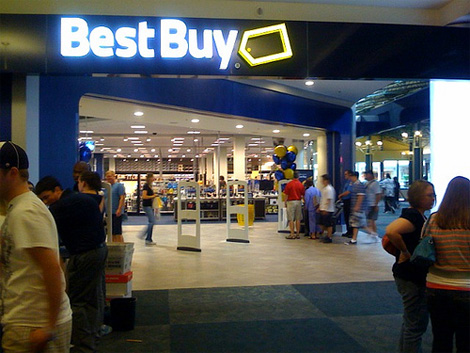
Best Buy, the U.S. electronics retailer, is reorganizing its retail sales groups into one "connectivity business group" that will focus on sales of mobile phones, computers, tablets, e-readers and the appropriate service plans at Best Buy and Best Buy Mobile stores.

The products inside the CBG group make up more than half of Best Buy's in-store sales as well as representing the fastest growing sectors for the company, outside of computers. That tells you quite a lot about what "consumer electronics" means these days, as well as where the sales volume is generated. 

Mobile phones and service plans are the largest generator of revenue at Best Buy.

The group will be comprised of 35,000 employees. Best Buy reorganizes around connected devices

Thursday, January 12, 2012

LTE Will Mean Higher Mobile Broadband Substitution

Few seem to doubt these days that mobile solutions have become functional substitutes for fixed line network products, with voice service being the obvious example. The new issue, especially as fourth generation networks are deployed and marketed, is the potential amount of potential product substitution for fixed line broadband.

There seems little opposition to the notion that some significant potential for product substitution does exist, and not only in emerging markets where mobile broadband “will be broadband” much as “mobile voice is voice” and as the mobile phone is the primary way people in many markets will use the Internet.

Some would say the emergence of the mobile personal hotspot is a major enabler, as well, allowing a single mobile connection to serve multiple devices, instead of “one PC.”

Surveys by U.K. regulator Ofcom might be illustrative. Of all U.K. households in which at least one person is using mobile broadband services, 44 percent do not have a land-line broadband connection.

Since the first quarter of  2009 the number of U.K. households using both fixed and mobile broadband has been stable, at just under one in ten households, while those using solely fixed broadband  increased by two percentage points to 58 percent in the first quarter of  2011

Seven percent of U.K. households have only a mobile connection. Ofcom report

This mobile-only proportion is even larger among younger age groups and those who belong to lower socio-economic groups, the Ofcom report suggests.

Unsurprisingly, customers who rent their properties are also far more likely to use only a mobile broadband connection compared with those who own their own property.

This data demonstrates that substitution is a reality. There is no doubt that for a significant share of the U.K. population, mobile broadband  takes the place of a land-line connection to the Internet.

“We expect this group to grow steadily over the next four years as mobile network performance improves and prices remain competitive with land-line services,” says Declan Lonergan, Yankee Group analyst.

That doesn’t mean “most” consumers will do so; only that for many customer segments, this does make sense.

Wednesday, January 11, 2012

Screen Size Matters, But Mobiles are About Content Consumption

Mobile device screen size should make a difference in user behavior, one reasonably would expect, with lead applications varying with size of screen and input method. "Specifically, larger screen devices seem to fulfill productive needs while smaller screen devices tend to satisfy communication or entertainment needs," say researchers at In-Stat.

That should make sense. But the reported behavior might not always match actual behavior, particularly for tablets. PCs of all types remain a virtual requirement for content creation, while a variety of appliances can be used for content consumption.

Tablets and smaller-screen devices arguably represent a different lead experience, even though PCs, tablets and smart phones all are multi-purpose devices. That is to say, PCs (desktops and notebooks) can be used to consume or create content, but are virtually a requirement for creating content more complex than email or text messages.

Smart phones arguably still are balanced "communication" and "content consumption" devices. And though in surveys people tend to suggest they "work" on tablets, much of that "work" is one form or another of content consumption.

“The majority of tablet owners have a screen size between 9 and 11 inches, a size optimized for sophisticated uses that require a lot of interaction,” says Stephanie Ethier, In-Stat senior analyst. “The top uses for tablets are web browsing, email, and downloading and using applications, which are productivity-based uses. "

Portable media players, which can be virtually identical to tablets except for the smaller-than-5-inch screen, are used primarily to support entertainment-focused uses, like listening to music and watching video,” she says.

My own non-scientific observation is that tablets get used more often for "entertainment" than for work, though the "productivity" argument is used to justify buying them.

Tuesday, January 10, 2012

Google Social Search Will Change SEO, Again

Not everybody will care, but Google's new "social" and "location" and "personal" approach to search is going to have some implications for the way search engine optimization gets done, not least of all because Google+ entries now apparently become part of the ranking algorithm. Google search gets more social

Instead of trying to figure out how to get sites to appear high up in organic search results, businesses will have to figure out how to attract real people to post information about them on Google. Google Search 

Google Wants to Buy T-Mobile USA?


You can expect to hear lots of rumors about "who wants to buy T-Mobile USA" in the coming months, if only because T-Mobile USA parent Deutsche Telekom really needs a "plan B" that allows it to gracefully exit the U.S. market and redeploy capital elsewhere.

In that vein, SNL Kagan says it has been told both Dish Network and Google have submitted formal offers to buy the firm. One never knows whether, in fact, such bids have been made, or how serious such bids might be.  Rumors of that sort get "leaked" all the time as trial balloons, sometimes in hopes of spurring serious thinking on a transaction.

That Dish Network plans to build a Long Term Evolution fourth generation network is not in doubt, and Dish executives have not shied away from saying they will buy or build as makes sense, financially.

A Google bid would be more complicated, given Google's status as primary backer of an open mobile operating system and owner of Motorola Mobility, a handset manufacturer and retailer. But, these days, it is quite hard to avoid all possible channel conflict.

Most people can think of all sorts of reasons why Google would not want to own T-Mobile USA. Operating a service provider business is a lower-margin business than Google is used to, is a difficult business that might slow the rest of Google down, raise new regulatory concerns and also make many of its other businesses a bit harder to run.

On the other hand, most people could probably think up ways it would benefit Google's other mobile-related businesses if Google had a ready made way to create products, define handsets and then get quick adoption in the market on at least one leading network.

It's the sort of thinking one suspects is happening at Amazon, about why it wants to be a supplier of tablet devices, and might well want to get into the smart phone business as well.

Smart phones and tablets both have become important content consumption platforms, and both Amazon and Google are in the content business, in different ways.

But it's just a rumor, at the moment.

Intuit Launches GoPayment Mobile Payments in Canada

Mobile Marketing Intuit Begins Global Push with GoPayment Mobile Payment SolutionIntuit's "GoPayment" dongle system, now is available in Canada. GoPayment is similar to Square, so if you understand what Square does, you also understand GoPayment.

The basic idea is simple, and elegant. Merchants often want to sell products in locations where a cash register and credit card terminal are not available.

In other cases a merchant cannot justify the cost of owning and operating such equipment. GoPayment turns an Apple iPhone, Android phone or a BlackBerry phone into a terminal that can accept debit cards and credit cards.


Google Social Search

Google search keeps getting more social, adding the ability to integrate web content, profiles, personal results and other content, including local content.

Social Search will include Google+ posts, for example plus user personal photos, making any single user's search results highly personal (and private).


Now, typing just the first few letters of a friend’s name brings up a personalized profile prediction in "autocomplete" mode. A results page for a friend will include information from their Google+ profile and relevant web results that may be related to them.


In addition, you’ll find profile autocomplete predictions for various prominent people from Google+, such as high-quality authors from our authorship pilot program.


Once you select that profile, if you’re a signed-in Google+ user, you’ll also see a button to add them to your circles right on your search results page.
Since some of the information you’ll now find in search results, including Google+ posts and private photos, is already secured by SSL encryption on Google+, Google decided that the results page should also have the same level of security and privacy protection.

"Search plus Your World" will become available in mid-January 2012  to people who are signed in and searching on https://www.google.com in English.

On the Use and Misuse of Principles, Theorems and Concepts

When financial commentators compile lists of "potential black swans," they misunderstand the concept. As explained by Taleb Nasim ...