Wednesday, August 22, 2012

Singapore Mobile Operators Launch Mobile Payments

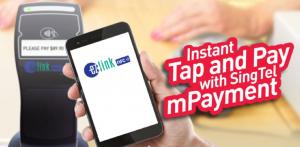
SingTel, Singapore’s largest mobile operator, along with telco M1, today announced availability of mobile payment service using new subscriber information modules (SIMs) for NFC-enabled Android phone models including the Sony Xperia S and Samsung Galaxy S Advance. M1 is also offering NFC service on the Samsung Galaxy S III.

SingTel and Mi are enabling subscribers to pay for retail purchases payment service provider EZ-Link Pte. M1 subscribers also will be able to use M1’s new co-branded prepaid card application, which supports MasterCard PayPass.

The launches follow StarHub’s  launch of its mobile payment system SmartWallet in early August 2012.

The SmartWallet will offer three payment applications that mirror the M1 choices.

StarHub plans to make three Android NFC phones available, as well, including the Samsung Galaxy S III.

All three telcos are part of a consortium chosen by Singapore telecoms and information services regulator Infocomm Development Authority to build an interoperable NFC infrastructure.


Mobile Commerce is E-Commerce

Some of us would argue that, over time, "mobile commerce" will subsume e-commerce. Others, of course, will argue that e-commerce will become mobile commerce. It works, either way. 

Apple: Biggest Equity Value, Ever

IaaS is Amazon, 19 Companies Earning $20 Million Annually, Lots of Firms Making Only $10 Million

Once you eliminate Amazon from the list of infrastructure as a service suppliers, you have a list of 19 vendors that earn $20 million annually. There are many earning $10 million in annual revenue, according to Lydia Leong, Gartner analyst. 

The data suggests that to succeed in this market, you have two possible routes, Leong argues. A company needs a giant sales channel with a ton of feet on the street and existing relationships, or a company needs excellent online marketing and instant online sign-ups. 

A third possible route is that you make it easy for people to white-label and resell your service, says Leong. 

As with most other new businesses, there will be a ton of consolidation as surviving providers amass enough scale to survive. 

Are Millennials Really Different?

Millennials, people between the ages 18 to 29 or so (some would include people up into the mid-30s), are "different," many would argue. 

Gen Y in the Workplace

Nearly Half of US Consumers Think They Don't Need LTE

About 47 percent of consumers polled by Piper Jaffray say they "don't need 4G Long Term Evolution," and another 26 percent think all 4G network technologies are the same. 

About 15 percent of those polled said that 4G LTE is the best network technology, the survey by Pipe Jaffray suggests. 

The findings should not be surprising. One could have gotten similar results about third generation services for quite a long time in markets such as Western Europe, or the United States, as well.

That is hardly unusual. Even though China reached a milestone in February 2012 when the number of mobile phone users in the country surpassed one billion, representing penetration of 74 percent, the 3G penetration rate is still low at 14 percent, for example, China Daily reported.

The total number of 3G subscribers in India is just about 2% of the total number of cellphone users. India has 893.8 million cellphone users according to the Telecom Regulatory Authority of India, (TRAI).

2006 study of 3G adoption in Western Europe, at a time when nearly 90 percent of 3G license holders in six Western European markets had launched 3G services three years prior,  3G penetration rates were still generally low, ranging from one percent to 12 percent, with a median of about 3.5 percent adoption. 

The big problem was "lack of 3G content and applications." That should be qualitatively different with 4G, as it is the Internet that generally will supply content and applications. But will it be any different in the early going?


LTE
Piper Jaffray's survey also found that consumers are ambivalent about which U.S. carrier has the best 4G LTE network. Among those polled, 51 percent indicated they don't know who has the best 4G network, or that all 4G networks are the same. 

That finding should not be surprising, either. Few consumers likely have a good grasp of the differences, or have had a chance to test and use most of the services for a length of time. 

As Tablet Sales Reach 400 Million Units in 2016, Will Apple iPad Keep Lead?

When one includes Android and other tablets as well as e-readers, nearly 100 million tablets were sold in 2011. But 400 million units will be sold by 2016, Business Insider predicts, 400 times the number sold in 2011. 

Through the first six months of the year, tablet prices have seen a pretty steep drop off, despite the iPad's continued dominance. The average selling price of the iPad is down more than 11 percent from its 2011 price. The introduction of mini tablets, beginning with the Kindle Fire, disrupted the pricing dynamics of the market and will drive the huge drop in ASP over the next few years, BI says. 

Tablets are poor substitute for PCs if you are trying to run data intensive spreadsheets, but they vastly improve upon the media consumption experience, BI says. That is one reason some argue that tablets are a new product category of computing device, not a "replacement" for PCs, as such. As it turns out, what people want to do on computing appliances has changed over the last couple of decades. They work less, they consume media more. 
tablet sales

Quick Fixes and Fixations

“One pill makes you larger, and one pill makes you small,” sang Jefferson Airplane lead singer Grace Slick . Some might say that was just a...