Friday, March 27, 2020

Airline Industry Could Lost 80% of International Travel Next 9 Months

Coronavirus could cost airlines at least 650 million passenger trips, because of Coronavirus, over the next nine months. This is a drop of 80 percent previously expected, according to Juniper Research. 


Significantly, after modeling both medium-impact and high-impact scenarios, Juniper Research now believes a low impact is now not possible.

The high impact scenario assumes that a severe disruption to international travel will continue for nine months, with travel restrictions and a reduced demand for international travel continuing.

Fixed Network Internet Access Prices are Remarkably Consistent Globally

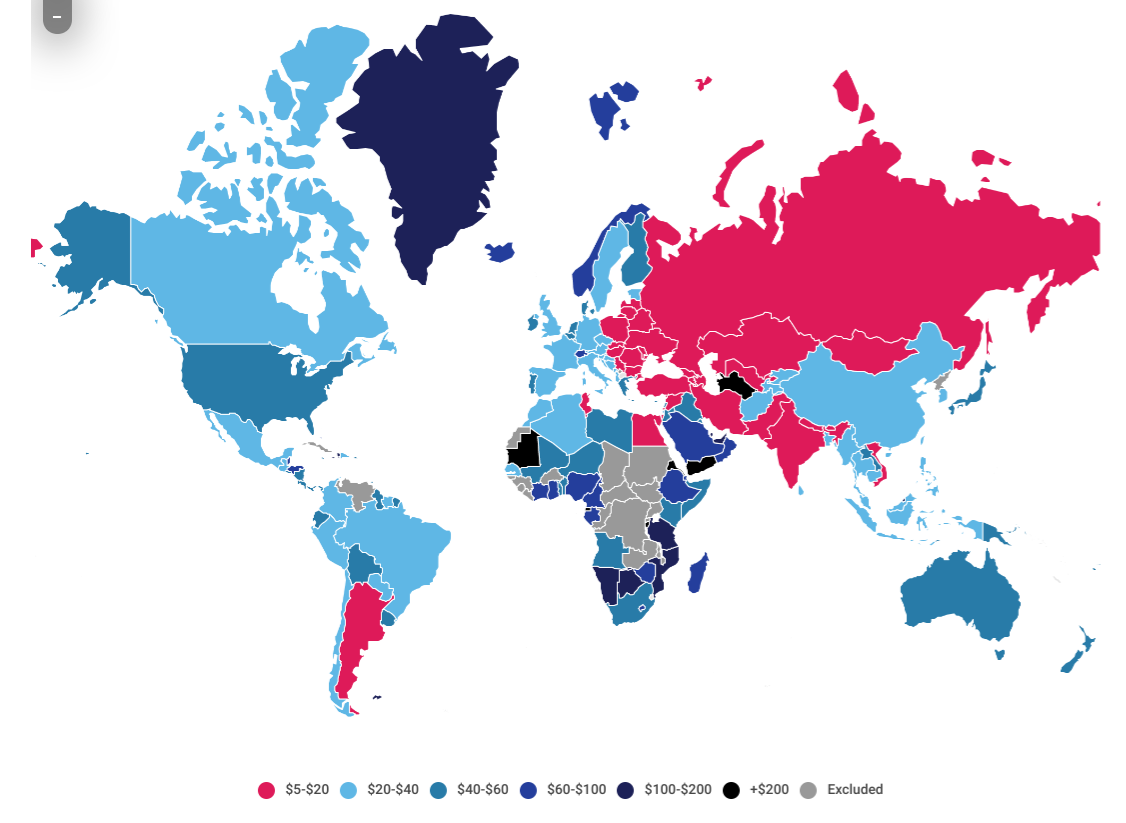
One often hears it argued that U.S. consumers already pay the highest prices for mobile data globally. Of course, that statement has to be placed in context. Consider fixed network internet access. A casual glance would suggest that prices vary substantially. 


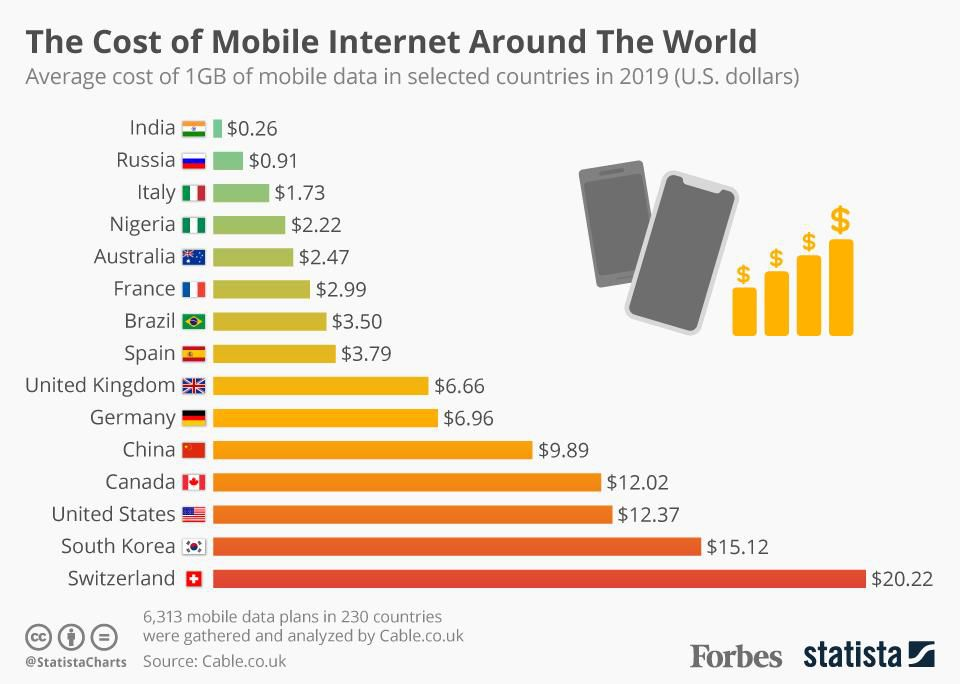
That also would--at first glance--to be the case for mobile data. 


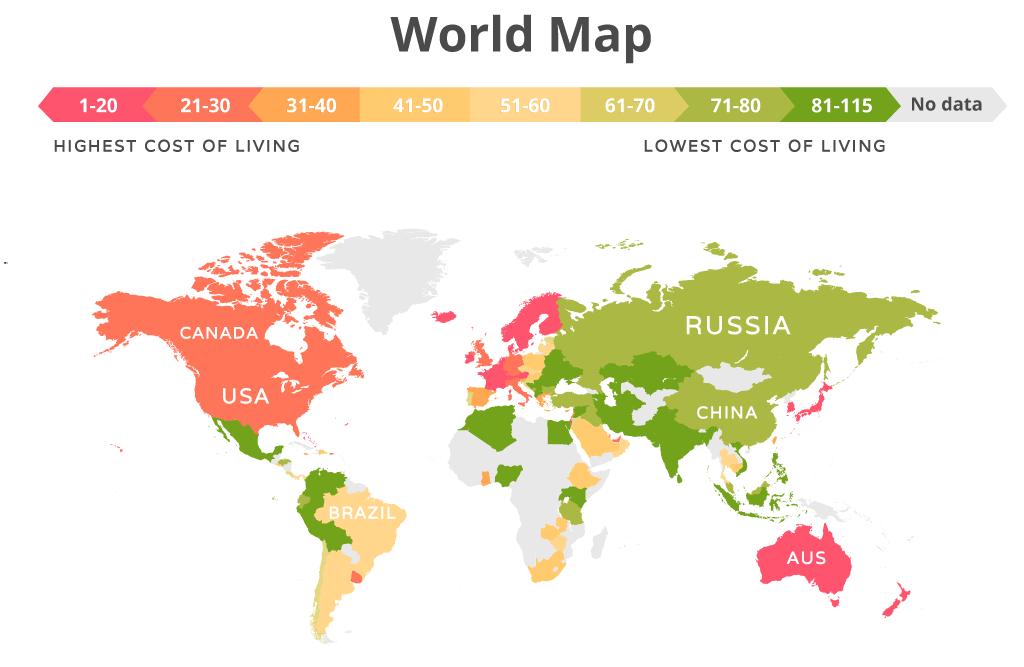
Matters are different when one adjusts for differences in general price levels in each country. The cost of living, for example, is highest in North America, Japan and Korea, Australia and New Zealand and Western Europe. Not surprisingly, costs for almost any product are higher in those countries, on a global basis. 


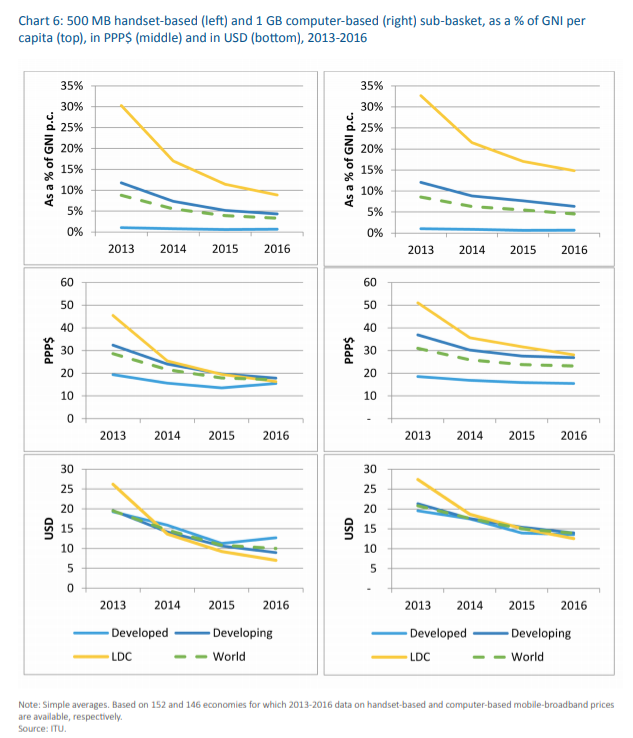
However, adjusting for such differences, it turns out that consumer fixed network internet costs, in real terms, are about $50 per month, globally. 

Mobile data retail prices, likewise, are lowest, in real terms, in developed nations, including the United States.


Nominal prices are one thing; real prices, adjusted for local cost of living, is something else. In real terms, fixed or mobile internet access costs about the same, most places globally.

Thursday, March 26, 2020

Enterprise Execs Expect IT, Communications Spending to Drop because of Covid-19

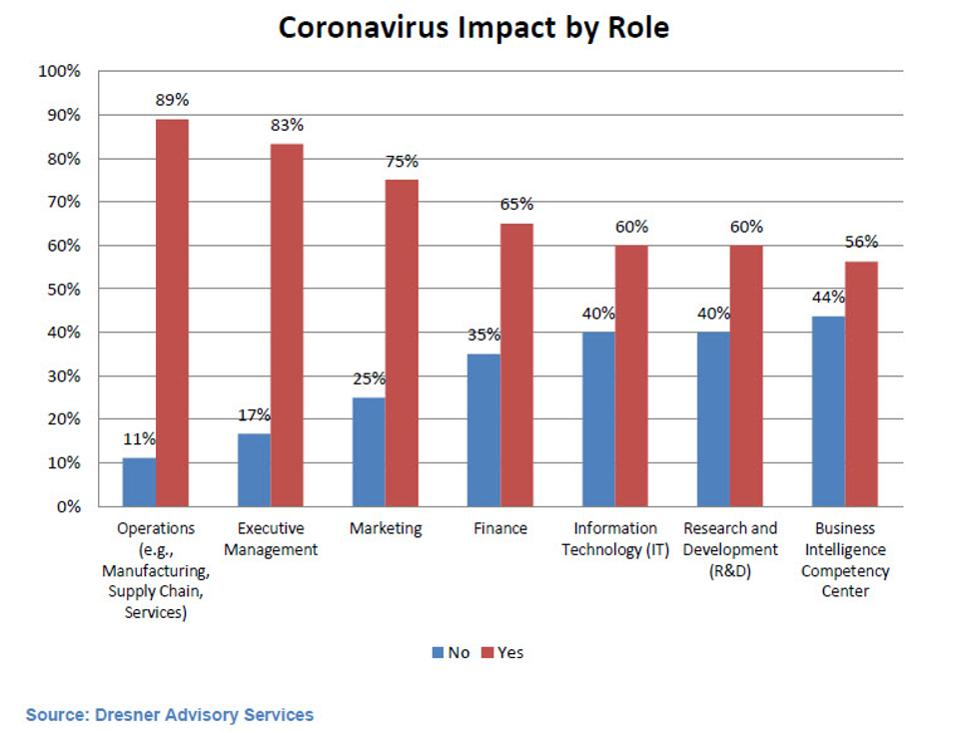
Enterprise budgets almost always bear a direct relationship to revenue expectations, so it comes as no surprise that 61 percent of respondents to a new survey say their information technology budgets are affected by the Covid-19 pandemic, according to a survey undertaken by Dresner Advisory Services. 

It is not hard to guess that the primary change is smaller budgets, as spending virtually always is reduced in a recession, especially when a steep decline in revenue is anticipated. And that is the inevitable result when most parts of an economy are deliberately shut down. 


The information technology industry alone might see a revenue dip of possibly 1.4 percent or so if the annual growth rate falls to about two percent over 2019 levels. Prior to the pandemic, Forrester Research had expected annual information technology spending to be in the 3.4 percent range.

But that is based on a recovery in the second half of 2020. If a recession happens, Forrester says there is a 50 percent chance that IT spending will decline by perhaps two percent for the full year. 

In either a second-half 2020 recovery or recession, Forrester predicts computer and communications equipment spending will be weakest, with potential declines of five percent to 10 percent. 

Technology consulting and systems integration services spending will be flat in a temporary slowdown and could drop by up to five percent  if firms cut back on new projects.

Software spending growth will slow to between two percent and four percent, best case; zero growth if a recession lingers. 

About 89 percent of respondents say operations are affected, while 75 percent say marketing is affected, according to the Dresner survey. 


About 93 percent of respondents in education say the pandemic has had impact, largely because all classes essentially now are taught online only. Some 88 percent of consulting firms report project cancellations or delays. Fully 83 percent of respondents in the advertising industry report impact, most likely because advertising is early to be cut back in any recession. 

Healthcare is affected at least in part because of increased strain on facilities and staff. But more than 53 percent of respondents in every industry segment reported impact. 


Wednesday, March 25, 2020

Videogame Play is Not Breaking the Internet

With so many people now working at home, with schools closed, entertainment video and game play bandwidth consumption are new concerns for internet service and app providers. Some note that it is streaming video that represents the single biggest source of new demand on access networks. 

Streaming Netflix at high-definition settings uses up to 3000 MB per hour. Netflix in 4K will use even more. A virtual Zoom meeting, using 1080p settings consumes 1.8 Mbps, or about 810 MB per hour. 

Fortnite and Minecraft both reportedly use about 100 megabytes of data per hour, according to Chris Hoffman, How-To Geek editor. Most games likely consume 40 MB to 150 MB per hour. 

The point is that online games do not use as much bandwidth as some might think. 

Game downloads are another issue. Many digital game downloads are huge. For example, Red Dead Redemption 2 is a 105 GB download. But many are less demanding of bandwidth to support the app download. Fortnite is a  35 GB download, for example.

Tuesday, March 24, 2020

Covid-19 is Not "Breaking the Internet"

The sudden adoption of “stay at home” policies in many countries will provide a “stress test” for communications networks at the same time, revealing which networks are resilient, and which are less so. So far, there are few reports of problems, though perhaps it is inevitable that speculation about breaking the internet will prove irresistible storylines

The real story is the absence of reports about actual service degradation. A few service providers already have released data on the spike in usage.

Verizon reported that between March 12 and March 19, 2020, total voice usage on Verizon networks was up 25 percent, with the primary driver being use of conference call services.

Cisco reports that traffic on the Webex backbone connecting China-based Webex users to their global workplaces has increased as much as 22 times since the Covid-19 outbreak began. During the same time period, Webex also saw four to five times as many users in Japan, South Korea and Singapore, with the average time spent on Webex video meetings doubling among users in those countries.

Mobile voice usage was up 10 percent, while call duration was up 15 percent. Presumably much of that is related to the use of conference calling services. Still, voice traffic requires so little bandwidth that none of that would affect user experience overall. 

Virtual private network traffic was up 25 percent and web traffic was up 22 percent. 


From March 9 to March 16, 2020, Verizon noted a 75 percent increase in gaming; a 12 percent increase in video streaming and web streaming boosts of just under 20 percent.


On March 19, OpenVault reported that data usage during business hours grew more than 41 percent. Average usage during the 9 am-to-5 pm daypart has risen to 6.3 GB, 41.4 percent higher than the January figure of 4.4 GB. 

Peak hour (6 pm–11 pm) usage has risen 17.2 percent from five gigabytes per subscriber in January to 5.87 GB in March. 

Overall daily usage has grown from 12.19 GB to 15.46 GB, an increase of 26.8 percent.

European Community networks, on the other hand, might be less resilient, judging by the EC request that streaming services reduce resolution to limit bandwidth consumption. 


A new analysis by Nokia also confirms unprecedented growth of internet traffic as a result of government policies keeping workers and students at home because of the Covid-9 virus pandemic.  

Most networks have seen 30 percent to 45 percent  growth over a year, with Covid-19 period increases of perhaps 20 percent to 40 peak increases, typically in the evening hours over the past four weeks. 

“So far, networks appear to be meeting demand, but they were designed to grow that much in a year, not in days,” Nokia says. 

The edge and peering links of Content Delivery Networks (CDNs) seem to have enough headroom, but there is stress mostly on the aggregation networks and service edge routers, where demand may be reaching capacity maximums, Nokia says.

“We are also seeing unprecedented growth in latency-sensitive applications during business hours,” Nokia says, including 300 percent growth in teleconferencing apps in the United States, and 400 percent growth in gaming.

Monday, March 23, 2020

Nokia Sees Covid-19 Traffic Spikes

A new analysis by Nokia confirms that unprecedented growth of internet traffic as a result of government policies keeping workers and students at home because of the Covid-9 virus pandemic.  

Most networks have seen 30 percent to 45 percent  growth over a year, with Covid-19 period increases of perhaps 20 percent to 40 peak increases, typically in the evening hours over the past four weeks. 

“So far, networks appear to be meeting demand, but they were designed to grow that much in a year, not in days,” Nokia says. 

The edge and peering links of Content Delivery Networks (CDNs) seem to have enough headroom, but there is stress mostly on the aggregation networks and service edge routers, where demand may be reaching capacity maximums, Nokia says.

“We are also seeing unprecedented growth in latency-sensitive applications during business hours,” Nokia says, including 300 percent growth in teleconferencing apps in the United States, and 400 percent growth in gaming.

What Happens After Covid Pandemic Ends?

Economists do not agree on what will happen to economic growth globally once the Covid-19 pandemic ends. What seems clear is that it matters when it ends.

Though some early on might have believed a recession is not inevitable, that seems a dashed hope.

Almost everyone seems to agree that a couple of quarters of reduced revenue is inevitable, with full-year gross domestic product down 12 percent to 13 percent. 

When asked about the potential impacts on revenue and, or, profit this year, 58 percent of chief financial officers surveyed by PwC in the first week of March 2020 expect a decrease, while 40 percent say it’s too difficult to assess at the moment. 

A majority of respondents (90 percent) believe their business would return to normal within three months if the coronavirus were to end immediately.

Global gross domestic product could shrink from $2 trillion to $9 trillion from the Covid-19 pandemic, roughly one percent to two percent from pre-pandemic levels, depending on the severity of the pandemic, a study by Brookings indicates. Some believe economic growth has a chance to grow in the second half of the year.

Some believe that might be optimistic. Other estimates suggest seven percent drop in U.S. GDP in 2020 alone, representing a recession as bad or worse than that 2007/9 economic contraction. But at least one study of the economic impact of the global influenza pandemic of 1918 suggests growth might not suffer for very long, and could in fact see economic growth accelerate after a couple of years. 

“A recession is now all but certain, according to a Wall Street Journal survey of 34 economists, which projects a downturn that would last months at least, and would in some ways rival—and possibly even surpass—the severity of the 2007-09 slump,” according to the Wall Street Journal

Much could eventually hinge on how long “social distancing” is kept in place. A couple of weeks will not be structurally damaging. But months of such policies will cause significant economic distress, high unemployment and many smaller business bankruptcies. 

A study by the United Nations Conference on Trade and Development looking at the impact of the 2008 great recession found that global gross domestic product growth took about four years to return to 2007 levels. 


If the aftermath of the Covid-19 pandemic has economic effects similar to the sharp global recession of 2008, it might well take seven to eight years for jobs, gross domestic product or household net worth to return to 2007 levels. 

Jobs did not recover to the 2007 level until seven years later, in 2014. GDP per person did not recover to 2007 levels until 2013. Household net worth took about eight years to recover to 2007 levels. 


Looking only at gross domestic product, the 2008 recession caused a dip in gross domestic product that recovered to 2007 levels after two years. 


U.S. unemployment did not return to 2007 levels for a decade. 


“The Great Recession created an unusually large and long-lasting gap between actual and potential GDP,” says the Congressional Budget Office. The gap did not close until 2017, a decade later, according to CBO’s August 2018 Economic and Budget Outlook.


Nobody yet can predict whether long-lasting changes in business and consumer behavior will be permanent after the Covid pandemic passes. Supply chains already were changing, in advance of the pandemic, for example, so that trend virtually certainly will remain intact. 

For suppliers in the connectivity business, some speculate there could be longer-term moves by businesses in the direction of remote work that are permanent. It might be easy to predict that more personal and business activities will be conducted virtually, online and remotely, for example. That might be mildly helpful for connectivity providers, though the trend has been in place for many decades. 

Related trends such as use of videoconferencing, telemedicine and cocooning might arguably also remain bigger changes that have connectivity provider implications. More work-from-home might get a boost as well. 

Some believe there will be a permanent reduction in business travel, for example. 

But consumer behavior in a crisis often does not actually become permanent. How many of us actually believe the present shift to buying of “essentials” remains intact after the crisis passes? Who doubts that consumption of “non-essential” or aspirational products will not return to past levels? 


All that happens against a productivity and economic growth background that might explain behavior more than episodic recessions or expansions, though. The U.S. Bureau of Labor Statistics, in 2014, predicted that “the 2007–2009 recession and other factors will have an adverse effect on the U.S. economic outlook through 2022. 

One poll of consumer spending suggests spending levels remained depressed after the 2008 recession for at least seven years, never reaching pre-recession levels during that period. 

In other words, the impact on growth, jobs and spending from 2008 would last 13 years. 

“The aging of the population, lack of business investment during the recession, and high long-term unemployment are expected to place constraints on potential GDP growth, BLS said in 2014. “As such, U.S. GDP is not expected to attain the higher growth rates that are typically seen following recessions.”

A “new normal” of slower growth was predicted. Those predictions turned out to be wrong on the low side. 

That thinking is predicated on changes in consumer behavior some say remained permanently altered in the wake of the great recession of 2008. Certainly consumer spending appeared more restrained than many expected six years after the recession. 

Some argue that changed consumer buying preferences in the immediate wake of the 2008 global recession would become more-established behavior longer term. One such trend was consumer willingness to experiment with lower-priced brands. 

Still, it is hard to separate other secular trends from the specific changes wrought by the disruption. Customers in 2020 are more likely to buy organic products or  fair-trade goods, for example. But those trends were in place even before the 2008 global recession, and tends to run counter to the “lower-priced goods” trend some say that recession introduced. 

But a decade after 2008, some would note that a search for value remains intact. What is not clear is “why?” A counter argument could be made that the general experience with online shopping has accustomed consumers to lower prices, generally, and that this behavior is not a lasting result of the 2008 recession.

Also, millennials facing job market toughness might have developed receptiveness for value for income-related reasons. 

Some changes might have happened with savings rates, though that also might be explained, in part, by millennial job issues. 

The point is that it is very hazardous to predict how consumer or business behavior might change over a 10-year period, based on reaction to a recession or biological shock. We could well see a several-year period where behavior seemingly has altered, only to see the effects disappear after that. 

It seems safe to say that larger trends such as the application of cloud computing, artificial intelligence, internet of things and edge computing will continue. Some might call that “digital transformation.” 

What remains to be seen is whether shifts to remote work, work from home and some other trends become permanent features of business behavior at much-higher levels than was the base case before the Covid pandemic. 

History suggests we might not know for a half decade or so.

Quick Fixes and Fixations

“One pill makes you larger, and one pill makes you small,” sang Jefferson Airplane lead singer Grace Slick . Some might say that was just a...