Saturday, January 28, 2012

FTC To Host Workshop on Mobile Payments


The Federal Trade Commission will host a workshop on April 26, 2012 in Washington,D.C. to examine the use of mobile payments in the marketplace and how this emerging technology impacts consumers.

This event will bring together consumer advocates, industry representatives, government regulators, technologists, and academics to examine a wide range of issues, including the technology and business models used in mobile payments, the consumer protection issues raised, and the experiences of other nations where mobile payments are more common. 


By some surveys, consumer trust issues remain significant.


Topics may include:

What different technologies are used to make mobile payments and how are the technologies funded (e.g., credit card, debit card, phone bill, prepaid card, gift card, etc.)?

Which technologies are being used currently in the United States, and which are likely to be used in the future?

What are the risks of financial losses related to mobile payments as compared to other forms of payment? What recourse do consumers have if they receive fraudulent, unauthorized, and inaccurate charges? Do consumers understand these risks? Do consumers receive disclosures about these risks and any legal protections they might have?

When a consumer uses a mobile payment service, what information is collected, by whom, and for what purpose? Are these data collection practices disclosed to consumers? Is the data protected?

How have mobile payment technologies been implemented in other countries, and with what success? What, if any, consumer protection issues have they faced, and how have they dealt with them?

What steps should government and industry members take to protect consumers who use mobile payment services?

To aid in preparation for the workshop, FTC staff welcomes comments from the public, including original research, surveys and academic papers.

Electronic comments can be made here. Paper comments should be mailed or delivered to: 600 Pennsylvania Avenue N.W., Room H-113 (Annex B), Washington, DC 20580.

The workshop is free and open to the public; it will be held at the FTC's Satellite Building Conference Center, 601 New Jersey Avenue, N.W., Washington, D.C.

FTC To Host Workshop

Technologists Versus Hollywood: A Long History

On January 17, 1984, by a five to four vote, the the U.S. Supreme Court ruled that video cassette recorders (VCRs) did not infringe on Hollywood studios’ copyrights. Keep in mind the issue here: it wasn't the use of a VCR to create and sell illegal copies of content; it was the existence and use of the devices.

The ruling in Sony Corp v. Universal City Studios, though, was an important but not unusual case of new technology being opposed by Hollywood and other content interests. In some ways, the clash is inevitable.

New technology nearly always us seen as enabling infringement of copyright of artists, even though, as content owners found out, technology also can create the foundation for new and large content markets. Though its day has passed, Blockbuster Video and the ability consumers now have to lawfully buy and own copies of movies and TV shows was the result of the decision.

Keep in mind that the technology in question was not even a consumer product. In 1976 a VCR costing $3,000, adjusting for inflation, about $11,360 in 2010 dollars. 
.
But it also has to be said that the costly eight-year battle didn't help Sony, as its Betamax standard lost out to JVC’s rival VHS standard. Photocopiers provide another example of the tension. 


So do issues around game cartridge backup devices.

The point is that there is a long history of conflict between new enabling technologies and defenders of copyrights and intellectual property. There are legitimate issues, to be sure. But it also is true that copyright owners generally resist important new technologies related to the distribution of content and information.

In fact, some would say that the evolution of consumer consumption of video, for example, has been a story of ever-increasing ability of consumers to "watch what they want, when they want it," ever since the invention of the VCR.

Others would argue that better technology reduces consumer incentives to pirate content.


Technology and copyright interests often clash because copyright holders fear the new technologies will disrupt existing business models and will undermine intellectual property rights by enabling new forms of piracy. It is a legitimate concern, though some would say quite often overblown.

The recent battle over the "Stop Online Piracy Act" was one example of such tensions. The growing battle over Anti-Counterfeiting Trade Agreement will be the next fight. 

Friday, January 27, 2012

Amazon Kindle Fire is Having Quite an Impact

Android Tablets by SessionsThe Amazon Kindle Fire is having quite an impact on end user sessions. In just two months, the Kindle Fire has gone from zero sessions to 36 percent of all Android tablet sessions.

On the chart you can see that the Samsung Galaxy Tab dominated Android tablet application sessions as recently as November 2011.

Just two months later, In January 2012, Kindle Fire represented 36 percent of sessions, the same percentage as held by the Galaxy Tab.

Other data suggests that tablet and e-reader ownership doubled in just two months, as well. Unprecedented growth

The share of adults in the United States who own a tablet of some sort nearly doubled from 10 percent to 19 percent between mid-December 2011 and early January 2012.

The ownership of e-readers also surged from 10 percent to 19 percent over the same time period. Tablet ownership doubled in two months

That is an unprecedented growth rate for any consumer electronics device. Tablet ownership also had been on a strong adoption path earlier in 2011 as well, but doubling in 30 days from a base of 10 percent seems never to have occurred before.


Mobile Banking, For Many, IS banking

Mobile banking is becoming banking, a PwC survey suggests. Mobile banking will be the norm by 2015 and consumers will be willing to pay up to $15 per month for mobile banking services that offer convenience and value.

Key to the PwC research is its prediction that by 2015 mobile will overtake branch networks as the dominant channel of customer interaction with financial institutions.
Another finding is that the bar is getting raised: to attract Gen Y customers, financial institutions need to improve their digital banking products.
The PwC research is based on a survey of 3,000 customers globally.
“The research reveals that customers are willing to pay for social media notifications, an electronic wallet for loyalty cards and financial tools provided by banks," says PwC. 


Siri Getting Used?

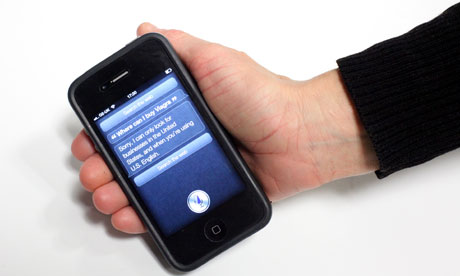
siri iphone jane martinson blogTell the truth: do you really do anything with Siri other than show people what a cool thing it is?

Maybe I'm hanging around with the wrong people, but I rarely encounter anybody who really uses it, other than to show somebody what it can do.

It's entertain  ing, and provides a "wow" factor, but really, who uses it?


Google Mobile Wallet Facing Headwinds?

Google’s head of consumer payments Vikas Gupta has resigned, AllThingsD reports. 


Separately, former vice president Stephanie Tilenius also has left to work in another position at Google. 


To be sure, it would not be unusual if an entrepreneur whose firm was acquired by Google eventually left to perhaps start another company. 


Nor would it be unusual if an executive gets moved to another post, at a firm as large as Google.


But some will wonder whether the changes mean Google has found it more difficult than originally expected to get traction for its Google Wallet initiative.

And, as part of that, Bedier will be taking on a larger role within Google Wallet, though his title will not be changing.

Gupta joined the Google about 18 months ago after Google acquired Jambool, a virtual goods payment platform where he was a founder and CEO.

Osama Bedier, Google’s VP of Payments appears to be assuming the leadership role for the Google Wallet effort. Nothing is easy where mobile payments and wallet efforts are concerned, it seems.

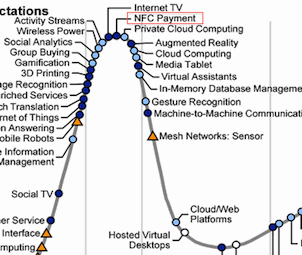
Nor should we expect a smooth, linear growth pattern. In fact, the normal expectation is for overheated expectations, followed by a period of disillusionment, before actual mass adoption begins.


Mobile payments and mobile wallet expectations likely are approaching a peak of inflated early optimism. The "crash" of expectations surely will follow, before the business actually materializes in robust form.

more Evidence That Texting is Displacing Talking

The latest data from CTIA: The Wireless Association provides more evidence that texting is displacing talking among U.S. consumers.

Since about June 2008 some 60 million additional users have become mobile subscribers.

Since that time, though, the amount of voice traffic has been flat. Usage has shifted dramatically to texting, rather than talking.

That doesn't mean a mobile device is useful "only" as a messaging device. People still do talk.

It's just that a greater percentage of total communications are occurring in text mode.

Latest CTIA data

Online Ads To Beat Print Spend For First Time

Online advertising will will exceed print spending in 2012 for the first time, eMarketer now predicts. 


U.S. online ad spending will grow by 23.3 percent in 2012, eMarketer projects, to $39.5 billion. It expects print advertising to reach $33.8 billion in sales, down from $36 billion in 2011. The shift has been a long time coming, and represents a key watershed for the media business.

Where a rational observer might have argued that online was a subsidiary medium, with print being primary, the crossover point now has been reached. One might now argue that online media are primary, and print is secondary.


At least in part, though, the shift is powered by growing digital revenues for former print publishers. Newspapers in 2012 will continue to be a bright spot. 


Researchers at eMarketer forecast that digital ad revenues for newspapers will grow 11.4 percent to $3.7 billion, after rising 8.3 percent to $3.3 billion last year. 


At the same time, print advertising revenues at newspapers will fall  percent to $19.4 billion in 2012, after dipping 9.3 percent to $20.7 billion last year.  

Google Has a Vested Interest in "Speed"

Though low latency, faster access networks often are seen primarily as an access provider issue, Google has a direct financial interest in the fastest-possible degree of end user Internet access, which would explain Google's experiments with, and support for, faster broadband access, ranging from municipal Wi-Fi to white spaces to fiber to the home.

It is more than a subjective matter of "better end user experience." Faster access, and lower latency, mean users can view more pages and content in a shorter amount of time. For a company that makes its money from advertising, that means a potential increase in the number of impressions.

Now Google appears to be testing ways to reduce page load time by 10 percent to 40 percent by changing the way the Transmission Control Protocol operates.TCP is a key protocol used by all users of the Internet, and all web pages.

Google also appears to be working on methods for speeding up error correction methods, which would likewise speed up end user experience and delivery of pages.

Google also is said to be developing algorithms to improve experience on “noisy mobile networks” by reducing latency.  Google working on faster web experiences.:

Apple, Samsung Earn 81% of All Mobile Phone Profits

Profitability, more than anything else, now is shaping the global smart phone business, one might argue after considering the latest estimate by Strategy Analytics of market share in the global handset business.

Globally, Apple and Samsung have, over the last 12 months, surged to the top of the charts in terms of smart phone sales volume. In the past, the “smart phone” category has not been significant, as all devices were feature phones or basic phones.

As the market begins to shift to a smart phone buyer pattern, differences in firm strategy and execution have lead to a rapid change in market leadership.

Global smart phone shipments grew 54 percent annually to reach a record 155 million units in the fourth quarter of  2011, according to Alex Spektor, Strategy Analytics associate director. That apparently has proven to be a decisive change.

In the past, Nokia has been the global share leader, but Nokia has not been able to translate that prior success into smart phone success, where Apple has changed the game and Samsung apparently has been able to keep pace.

Apple overtook Samsung to become the world’s largest smartphone vendor by volume with 24 percent market share. Apple’s global smartphone shipments surged 128 percent annually to 37.0 million units, as distribution of the iPhone family expanded across numerous countries, dozens of operators and multiple price points.”

Apple took the top spot for share on a quarterly basis, but Samsung became the market leader in annual terms for the first time with 20 percent global share during 2011. With global smartphone shipments nearing half a billion units in 2011, Samsung is now well positioned alongside Apple in a two-horse race at the forefront of one of the world’s largest and most valuable consumer electronics markets, Strategy Analytics says.

In contrast, Nokia’s smart phone market share was cut in half from 2011 to 2011, dropping from 33 percent in 2010 to 16 percent in 2011.

That is one reason there has been so much focus on the Nokia partnership with Microsoft, as many would argue the Windows Mobile operating system represents the best shot Nokia will have to avoid collapse.

The other observation of note would be that profitability might now be emerging as the key differentiator, even though design and consumer demand clearly are driving the market overall.

Samsung’s most-recent quarterly earnings also set records. Samsung Electronics Co declared $4.7 billion in quarterly operating profit. jumping 76 percent year over year.

Between them, Apple and Samsung earned fully 81 percent of all profits in the mobile handset business.


Apple in the fourth quarter of 2011 shipped 37 million smart phones worldwide, up 117 percent from 17 million in the second quarter. This represented the strongest sequential quarterly growth among the top-five smart phone brands, according to IHS ISuppli.

“Samsung advanced in 2011 because of its strategy of offering a complete line of smartphone products, spanning a variety of price points, features and operating systems,” says Wayne Lam, IHS senior analyst.

On the other hand, the market share battle between Apple and Samsung reflects the competition between the two leading smartphone operating systems and ecosystems: Apple's iOS and Google's Android, says Lam.

“The relatively small growth of Sony Ericsson and Motorola may indicate that the Android smart phone market is becoming too crowded as the various licensees compete for limited consumer mind share and shelf space,” Lam says.  


Thursday, January 26, 2012

User Experience on PCs, Tablets, Smart Phones: Huge Latency Issues


Latency is getting to be a bigger deal for mobile user experience. Apps that load quickly on a PC take much longer to load on a smart phone or tablet, Yankee Group reports, using Keynote Systems data.

Also, according to Yankee Group analyst Carl Howe, typical users now carry as many as five different mobile devices. But each of those devices might be optimized in different ways, in terms of latency.

Load times among sites differ because in most cases, content owners are not customizing the content they deliver to the device, says Howe. The majority of the sites Keynote Systems monitored, including major online brands Craigslist and Apple, sent the same content to smart phones and tablets, for example.

Facebook, Bing, Kayak, MSN, Amazon and IMDB all sent significantly more objects and bytes to tablets than to smart phones. These sites detected the larger screens of tablets and sent them more information, says Howe.

The one company that behaves significantly differently is Google, which sent roughly 450 KBytes to smart phones while sending only about 200 KBytes to tablets.

Google chooses to add several location-based options such as “Restaurants” and “Coffee” to smart phone content but doesn’t serve up those features to tablet users, probably because many tablets don’t offer location services by default. As a result, smart phones receive more content from Google than tablets do.

Those findings are interesting for several reasons. Since different devices feature different screen sizes and input and output capabilities, get used in different ways, at different locations, at different times of day, customizing the experience makes sense.

But tailoring a user experience based on what device is used, when it used or where it is used is not so different from tailoring an experience based on what application a user wants to engage with. And that’s where legitimate concerns about unfair business advantage bump up against end user preferences.

When a user wants to watch a video, conduct a video call or play an interactive game, issues such as latency and consistency of bandwidth availability are important performance parameters.

The policy issue is whether users or service providers ought to be able to manage network experience to enhance end user experience. For such reasons, some think “best effort only” access is not optimal.

Microsoft to Pay AT&T Employees to Sell Windows Devices

Windows Phone had just a 2.7% share of the global market at the end of Q3 2011Microsoft apparently plans to pay AT&T staff $10 to $15 for each Windows Phone handset sold as a direct result of a recommendation to a customer. It isn't illegal. Lots of products get promotional support of one sort or another.

Subsidies Verizon Wireless is paying to entice consumers to buy Apple iPhones might also be penalizing Android devices, some now argue. Though top Android devices cost as much as Apple iPhones, high-end Android devices often sell for prices $100 to $200 higher than the iPhone.

In other words, Verizon is trying to recoup some of its cash flow and operating margin by making Android handset users pay more for their devices than Apple iPhone users.

Verizon is betting that buyers who want the high-end Android phones will pay, so they're marking those models up.

John Hodulik, an analyst at UBS AG has estimated that the iPhone subsidy could be as high as $400 per iPhone customer. If 13 million of the devices get sold in a year that implies a which $5.2 billion hit to earnings. Some argue that devices should not be subsidized, since doing so means consumers have to sign contracts. But iPhone subsidies are quite a big expense for firms such as Verizon Wireless.

From at least one perspective, contracts and subsidies offer value for consumers and service providers, with users getting devices they want at $400 lower prices, while service providers can smooth out recurring service revenues and reduce customer churn.

Apple has set a standard entry price of its newest smartphones at $199, with higher end models available with more storage. This year however, Verizon has set a new contract price for its high end Android phones at $299.

The implications are clear enough. If you like high-end Android devices, do not buy them from Verizon.

Both the Motorola Droid RAZR and the just released Google-branded Samsung Galaxy Nexus are $299 with a two year Verizon contract, and both are listed as costing $649 without a contract.

In contrast, Apple's 16GB iPhone 4S is offered for only $199, even though it costs the same $649 without a contact. Apple is getting a $450 subsidy, compared to just $350 for Android licensees Motorola and Samsung.

Verizon's $199 Android phones, including the Samsung Droid Charge, Motorola Droid 3 and Droid Bionic, cost $499, $459 and $589 respectively without a contract, making their subsidies worth just $300 to $390, or $150 to $60 lower than Apple's, one might note.  

The closest Verizon's phones currently come to an iPhone subsidy appears to be the HTC Thunderbolt, which is being offered for $149, a $420 subsidy compared to its $569 full retail price. However, this involves a special promotional discount of $100, making the "sale" price of Android models still higher than regular price of any of Verizon's iPhones. Verizon Wireless can do what it wants, of course. But consumers should also do what they want.


Apple Makes Enterprise Inroads

Some 21 percent of surveyed enterprise information workers are using one or more Apple products for work, Forrester Research says.

Almost half of enterprises (1000 employees or more) are issuing Macs to at least some employees and they plan a 52 percent increase in the number of Macs they issue in 2012.

Managers and executives are more than twice as likely to use Apple products, suggesting an adoption pattern where the ability to use the device is something of a “perquisite,” much as at one time the ability to use a BlackBerry was a perquisite for enterprise executives.

But younger information workers (IT staffs for example) are twice as likely to use Apple products as older ones. 


Higher income workers are more likely to use Apple products as well, but there is a “younger worker” issue here. Most of the sample of 10,000 global information workers earns less than $50,000 a year, but the adoption rate of Apple products is almost 17 percent even in the bottom quartile of workers who make less than $12,000 per year.

Keep in mind, also, that the survey was global in scope, and Information workers in countries outside North America and Europe were more likely to use Apple products for work. Annual salaries also might tend to be lower in non-European and North American settings.

Wi-Fi Offload Causing Price Hikes?

Wireless service providers have been encouraging users to switch their mobile connections to Wi-Fi networks, when they can, as a way of managing their mobile data plans, and to improve user experience.

As it turns out, users have been heeding that advice to such a degree that AT&T now is raising mobile broadband prices and data caps, to encourage users to rely more on their mobile connections.

The ironic results show the unpredictable effects of operator policies intended to preserve user experience. Wi-Fi alleviates congestion on mobile networks. But Wi-Fi also is a substitute form of access, and AT&T now seems to be signaling that it wants to recapture more of the revenue-generating value of mobile access.

"AT&T said at a recent conference that they are seeing customers walk up to the edge of their tier and then use a lot of Wi-Fi to stay below the tier," Jefferies & Company Inc. equity analyst Thomas Seitz says.

Something similar can be noted elsewhere. Utility or water consumers often are encouraged to "use only what you need," in part to forestall the need to build expensive new generation facilities, dams and so forth.

But as consumers in Denver have found, because they reduced their use of water so much, Denver Water has had to raise rates, to cover fixed costs as revenue (water consumption is the revenue model) has decreased, precisely because conscientious consumers are behaving in a conservation mode.

Something quite similar might be happening in the mobile space. Mobile service providers globally have a vested interest in higher usage of broadband features, since that creates new revenue streams. But the desire to alleviate congestion by offloading traffic to Wi-Fi, also siphons off some usage that might otherwise be monetized by users who buy more-expensive access plans.

Offloading mobile broadband access to Wi-Fi might "help" consumers manage their consumption, as it helps operators alleviate congestion. But such measures can backfire, AT&T seems to be saying. 

Users Unclear About 4G Value

As you might expect, early adopters have clearer expectations about new technology, or at least want to "play" with new technologies, in a way that mainstream consumers do not share.

A recent study by Analysys Mason suggests that is the case for potential smart phone customers.

Many are not sure why they ought to buy and use smart phones, nor are they clear about why "fourth generation" networks have value.


More than six percent of all surveyed
mobile users believe that they lready have a 4G handset, which is obviously not yet true.

More than half of them do not understand mobile network generations or are unsure of the connectivity generation of their phone. The study also suggests that about 28 percent of
iPhone users believe that they have a 4G-capable handset.

Some 46 percent of iPhone 4 users also believe they already have 4G devices, even though no iPhones currently support 4G Long Term Evolution or WiMAX connections.

Also, except for PC dongle users, for whom the clear advantage is speed, and, in some cases, improved latency performance, the specific advantages of 4G are unclear.

That state of affairs is not unusual for broadband networks. Up to this point, the main advantage between one generation of broadband and the next is "speed." People instinctively understand "faster."

But 3G mobile networks did not lead immediately to significantly new uptake of new applications, until quite recently, when, for most users, 3G has meant a better web browsing experience. So far, it is not clear that most users can perceive the advantage of a "better" mobile web experience using 4G, as opposed to 3G, with the salient exception of mobile PC users.


Yes, Follow the Data. Even if it Does Not Fit Your Agenda

When people argue we need to “follow the science” that should be true in all cases, not only in cases where the data fits one’s political pr...