Tuesday, December 7, 2010

Moving Beyond the Click

The Internet has been called "the most measurable medium," in part because of the industry’s reliance on click-through rates (CTRs) to measure online advertising. But while clicks can be measured, they do not necessarily matter, at least not to the extent that many might have believed.

There are several reasons why CTRs are not the appropriate measure of display advertising’s effectiveness. Perhaps most notably is the fact that the majority of Internet users do not click on display ads, and the percentage of users who do is continuing to decrease over time.

New Google Maps, Tablet

How Internet Interconnection Works, as a Business Matter

You can decide what it tells you about the interconnection dispute between Comcast and Level 3 Communications.

Manpower Forecast of 2011 Hiring Plans

Seasonally adjusted data for the United States indicates the most optimistic first-quarter hiring sentiment in three years; yet 73 percent of employers indicate they will keep staff levels unchanged.

While we're seeing positive signals in the data, only time will tell if we've reached the inflection point in the U.S. labor market recovery, Manpower says.

To be sure, by formal definitions, and by some, not all data, the U.S. economy is in recovery mode. Sooner or later, the U.S. economy always recovers, with or without external "help." But it is some measure of the tenor of the times that the "most optimistic" forecast has 73 percent of survey respondents not doing anything about investing in growth, at least to the extent that hiring people is required for growth.

All of that is important for all firms in the communications and entertainment businesses, and most consumers, of course.

Groupon Thinks It Will be Facebook; Will it Be Yahoo?

It remains to be seen whether Groupon, which rejected a Google takeover last week, rumored to be about $6 billion, has made a once-in-a-lifetime decision that financially emulates Facebook or Yahoo. In other words, only time will tell whether Groupon should have taken Google's offer, given the misgivings many financial analysts might have had about Google "overpaying" for the asset. That phrase tends to indicate a good deal for the seller, and Groupon has passed, in hopes of doing even better, as Facebook has, as an independent company.

The story doesn't always end that way. Yahoo co-founder Jerry Yang refused to sell to Microsoft Corp. for $47.5 billion in 2008. After rejecting the deal, Yahoo saw its valuation cut in half. In retrospect, Yahoo missed its chance, and won't get another that rich, ever.

At Facebook, founder Mark Zuckerberg turned down a $1 billion offer from Yahoo in 2006. Less than five years later, the social- networking service is valued at more than 40 times that.

Morgan Stanley Bullish on Google Instant on Mobile

Scott Devitt, Morgan Stanley analyst, thinks Google Instant, especially as used on mobile phones, is a big winner, and will drive revenue growth. If so, that also implies upside for search revenue and its possible effectiveness. Devitt also believes rapidly-growing e-commerce activity seen in the fourth quarter of 2010 also portends more strength for search advertising.

Google Instant, which makes searching more efficient by displaying search results as users type, could drive increased user loyalty and market share, Devitt believes. As a secondary benefit, it could also drive revenue upside.

Given the rapid growth in mobile usage and penetration, Google Instant on mobile may eventually prove more important to Google than its desktop search, as important as that has been.

Content Marketing A Growing Trend

Next year, marketers will need to rethink their approach to advertising and marketing and intensify their focus on creating magnetic content that will naturally attract consumers, rather than relying solely on the interruption model of advertising, which consumers are responding to less and less, says Geoff Ramsey, eMarketer CEO. " Think pull vs. push."

Magnetic content can include anything created on behalf of a brand: an ad, YouTube video, online game, Facebook page, Twitter promo or mobile app, ideally something that consumers might want to want to engage with and pass along to others.

This content entertains, amuses, informs, serves a function or satisfies a consumer need. It’s welcome instead of annoying or interruptive.

Google Maps for Mobile 5

Google "Maps for Mobile 5" adds offline support and three-dimensional rendering.

Most modern Android phones from the original Droid onward should be able to enjoy most if not all the new features, depending on hardware capabilities (3D rendering) and 'distinct multitouch' hardware support.

It will launch soon, compatible at the very least with the:
  • Galaxy S
  • Droid
  • Droid X
  • Droid 2
  • Droid Incredible
  • Evo
  • Nexus S
  • G2

Monday, December 6, 2010

Which TV Channels Can’t Cord-Cutters Live Without?

Needham & Co. analyst Laura Martin polled 300 multichannel video subscribers, asking them to list which TV channels they must have available online before they would consider terminating their subscriptions.

Might Sprint Wind Up Buying Spectrum From Clearwire it Already "Owns"?

It's hard to see how Clearwire and Sprint coexist harmoniously, forever, as difficult as it might be to imagine all the work and money it would take to simply have Sprint buy all of Clearwire.

A partial step, though, might entail Sprint winning a bid to buy excess spectrum Clearwire wants to sell, possibly as much as 40 MHz in most markets, which would give Sprint an ability to build its own Long Term Evolution network, using its own spectrum, with full management control over the process.

Some might argue spectrum ownership and full control is required for a company such as Sprint, which operates that way for the other of its networks. Whether Sprint had any better options than combining its original 4G spectrum with Clearwire is not clear. But it has gotten to be a somewhat rocky relationship, by virtually all reports.

It is an inherently difficult situation when a firm owns a clear majority of assets, but does not have management control. Though it has only a minority stake in Verizon Wireless, the relationship has been troublesome for Vodafone as well, one might note. Getting clear ownership and control of its own 4G spectrum would make life much easier for Sprint.

read more here

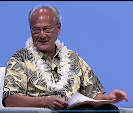
Mark Zuckerberg on Facebook

Sens. Snowe and Warner want WiFi in all federal buildings

Sens. Olympia Snowe (R-Maine) and Mark Warner (D-Va.) introduced legislation on Friday that would require all public federal buildings to install WiFi base stations in order to free up cell phone networks.

The Federal Wi-Net Act would mandate the installation of small WiFi base stations in all publicly accessible federal buildings in order to increase wireless coverage and free up mobile networks. The bill would require all new buildings under construction to comply and all older buildings to be retrofitted by 2014. It also orders $15 million from the Federal Buildings Fund be allocated to fund the installations.

Net Neutrality: Watch What They Do, Not What They Say

It is very difficult to square Mr. Genachowski's statement that the marketplace rather a central public authority, the FCC, should pick winners and losers on the Internet with the realities of his net neutrality proposal, argues Randolph May, president fo the Free State Foundation.

The FCC Chairman has argued that "no central authority, public or private, should have the power to pick which ideas or companies win or lose on the Internet; that's the role of the market and the marketplace of ideas.

Some might argue the FCC's proposals therefore are internally contradictory: it makes the FCC the arbiter. Others obviously will disagree.

Mobile App Usage is Highly Concentrated

The chances any single mobile app will get traction, becoming one of the 11 or 12 a smartphone user actually interacts with, are quite small, according to a new survey of about 7,000 consumers, conducted on behalf of Moosylvania,

In fact, just 10 of all the 100 apps male users say they interact with most have 46 percent of the usage. Just two apps have 27 percent share of all usage among the top-100 apps. The top-five apps have 39 percent of all the usage among the top-100 apps. It is terrifically difficult to break into the small circle of apps that even one percent of users, male or female, say they use regularly.

About half of consumers are using the mobile web as much as they’re using apps, so marketers should be very clear what they’re trying to achieve when deciding which approach to take, Moosylvania argues.

There is a clear Pareto distribution, commonly known as a "long tail," for apps. For male users, Google Maps is the most-used, by about 14 percent of male respondents. Facebook is second, at about 13 percent. App number ten, Yelp, is used by less than one percent of males.

Females, on the other hand, prefer Facebook quite a lot. Facebook is the top application used by 27 percent of female respondents. Google Maps is second at about seven percent. The 10th-most-used app by females, "calendar," is used by less than one percent of respondents.

The top-five mobile apps used by the female respondents represent 46 percent of all the top-100 apps females use. Just the top two apps represent 34 percent of all app use by females surveyed.

That highly-concentrated profile, plus the fact that 44 percent of all app users indicate that all or nearly all of their apps were free, suggests how difficult the "mobile app business" really is, as a business opportunity for app developers.

The study suggests females are more likely to have more free apps than men. About 52 percent of women indicated all or nearly all of their apps were free, versus 38 percent of males surveyed.

Males average approximately 31 apps on their smartphones and actively use about 12 of them. On average, females have about 26 apps on their phones and actively use about 11 of them.

There are 300,000 apps available that can be found on the majority of platforms, and out of those, a handful of apps completely dominate, leaving 299,900 fighting for an audience of any size, the study suggests.

You can see the full results at http://tracker.moosylvania.com.

Clearwire Still Pursuing Spectrum Sale

Clearwire Corp still hopes to raise as much as $2 billion in new financing by selling excess wireless spectrum, according to its Erik Prusch, Clearwire CFO. That option would in many ways be less messy than possibly having T-Mobile USA join the ownership group.

Clearwire Corp. originally though it could raise as much as $2.5 billion $5 billion, so the current talk of "perhaps $2 billion" might suggest a bit less interest than earlier had been thought.

AT&T, Deutsche Telekom AG, Time Warner Cable and Sprint Nextel Corp. have been rumored to have some interest.

Clearwire earlier was said to be offering spectrum up to 40 Mhz of bandwidth per market. While an argument can be made for bids from any number of potential companies, T-Mobile USA is in some ways the most-motivated. It badly needs spectrum to support its own 4G efforts, has considered leasing capacity from LightSquared, and even if money were no object, would find daunting any other spectrum to buy in the near term, even though at some point other former TV broadcast spectrum should be made available for auction as well.

Time Warner Cable, for its part, could emerge from the process as the only U.S. cable company with its own, fully-owned national wireless footprint, were it to win the auction.

Sprint Nextel, if it actually is bidding, could be signaling it wants to distance itself from the Clearwire relationship, at least in part. Owning its own 4G spectrum would allow Sprint to better control both of its costs, its timetable for upgrades and deployments, as well as its ability to package services. Full control of its own spectrum would allow Sprint to move immediately to build a 4G network using the Long Term Evolution air interface, a move that will at some point allow Sprint Nextel to leverage production volume of LTE handsets and devices.

Verizon and AT&T historically have emerged from most spectrum auctions as key winners, and as the leaders in the U.S. market, arguably have the greatest strategic interest in protecting their lead, at least in part by locking up spectrum that could be used by a competitor. All of that suggests the chances of T-Mobile USA succeeding later, if it does not try to get the Clearwire spectrum, might not be so great.

Also, as the providers with the biggest customer bases, both Verizon and AT&T have the greatest need for more spectrum, and should already be considered front-runners for winning the re-purposed TV spectrum.

AI Impact: Analogous to Digital and Internet Transformations Before It

For some of us, predictions about the impact of artificial intelligence are remarkably consistent with sentiments around the importance of ...