Saturday, February 11, 2012
You Have to See This

 Gary Kim was cited as a global "Power Mobile Influencer" by Forbes, ranked second in the world for coverage of the mobile business, and as a "top 10" telecom analyst. He is a member of Mensa, the international organization for people with IQs in the top two percent.
Friday, February 10, 2012
What Drives Enterprise Tablet Adoption?
 An informal survey of 70 enterprise executives suggests a number of reasons why enterprises are adopting tablets. One driver is increasing amounts of work conducted by workers outside normal working hours and outside the office.
That trend isn't new, but workers are telling information technology staffs that they would prefer replacements for bulky laptops, and smart phones aren’t quite meeting their needs.
Business partners, especially independent sales representatives, also are asking for content support for iPads from partner sales organizations, as well.
To bring down costs, retailers are looking for ways to reduce space, and are replacing training kiosks with tablets.
By providing employees with tablets, companies can significantly reduce the use of paper and improve their efforts to "go green," as well. Enterprise tablet adoption drivers
Gary Kim was cited as a global "Power Mobile Influencer" by Forbes, ranked second in the world for coverage of the mobile business, and as a "top 10" telecom analyst. He is a member of Mensa, the international organization for people with IQs in the top two percent.
Google May Open Retail Store
Google may open its first stand-alone retail store at its European headquarters in Dublin, Bloomberg reports. The move follows reports that Amazon will open its first retail outlet as well, in its home city of Seattle.
The Google Store would be open to the public and sell unspecified “Google merchandise,” Google’s Irish unit said in a local planning application. Google May Open Retail Store
So retail may be a new front in Google’s competition with Apple Inc., whose 361 stores have fueled sales of iPods, iPhones and iPad tablet computers.
Google earlier opened a store inside of a London branch of Currys and PC World, units of Dixons Retail Plc, as a trial for selling laptop computers, some would also note.
The Google Store would be open to the public and sell unspecified “Google merchandise,” Google’s Irish unit said in a local planning application. Google May Open Retail Store
There is a decades-long history of PC manufacturers, especially those selling heavily online, to open branded retail locations, Dell being among the firms that have done so, and retreated. Apple itself was heavily criticized for opening its Apple Stores, the thinking being that Apple earnings would be harmed.
But with Apple's wild success, even Microsoft and Sony have committed to retail outlets.
But with Apple's wild success, even Microsoft and Sony have committed to retail outlets.
So retail may be a new front in Google’s competition with Apple Inc., whose 361 stores have fueled sales of iPods, iPhones and iPad tablet computers.
Google earlier opened a store inside of a London branch of Currys and PC World, units of Dixons Retail Plc, as a trial for selling laptop computers, some would also note.
Retail stores, though not a feature of the network-based video entertainment business or fixed line services (cable TV and satellite TV, or landline telephone services, for example), have become essential for sales of mobile services. Apple has shown how retail can help sales of devices. What remains to be seen is if similar results are possible for intangible "services and apps," or whether the winning formula will wind up being devices such as Kindles for Amazon, and smart phones for Google.
Gary Kim was cited as a global "Power Mobile Influencer" by Forbes, ranked second in the world for coverage of the mobile business, and as a "top 10" telecom analyst. He is a member of Mensa, the international organization for people with IQs in the top two percent.
Thursday, February 9, 2012
New Mobile Devices are Changing Behavior
Wireless and untethered devices are starting to change the ways people interact with, and consume, all sorts of media and content.
In 2011, the majority of all mobile phone owners consumed mobile media on their smart phones and tablet devices, marking an important milestone in the evolution of mobile from primarily a communication device to a content consumption tool. At the end of 2011, more than eight percent of all digital traffic was consumed beyond the “classic web” across devices such as smart phones and tablets. Content consumption is the big change
To put the rapid uptake of tablets in perspective, it took seven years to reach nearly 40 million smart phones compared to less than two years to reach nearly 40 million tablets, demonstrating the vast appeal of these devices and consumers’ desire for connection.
It would not be stretching matters to argue that widespread adoption of smart phones and now tablets has significantly changed digital media consumption patterns.
In December 2011, 8.2 percent of all web page views occurred on devices other than PCs, for example, with mobile devices accounting for 5.2 percent of traffic, tablets driving 2.5 percent.
Americans spend more than 33 hours per week watching video across their available screens, according to the latest Nielsen Cross-Platform Report.
The shift to wireless (using the mobile networks) and connected devices (using Wi-Fi) also seems to be accelerating. It is no secret that sales volumes in consumer electronics and computing devices now have shifted strongly to smart phones, tablets and e-readers, and away from PCs.
As but one example, PC shipments in Western Europe totaled 16.3 million units in the fourth quarter of 2011, a 16 per cent decline from the same period of 2010, according to Gartner.
For the full year, PC shipments also declined 16 percent from 2010, dropping for four straight quarters.
"Despite aggressive pricing and special holiday deals for PCs, consumers' attention was caught by other devices, such as smart phones, media tablets and e-readers," said Meike Escherich, principal analyst at Gartner. And those devices are changing the way people behave.
One of Google’s studies of tablet use over a two-week period, which had users recording every occasion that they used their tablet, shows that tablets really are not PCs, any more than smart phones are used in the same way that PCs are used.
Most consumers use their tablets for fun, entertainment and relaxation while they use their desktop computer or laptop for work, Google User Experience Researchers Jenny Gove and John Webb say. About 91 percent of the time that people spend on their tablet devices is for personal rather than work related activities.
And, as it turns out, when a consumer gets a tablet, they quickly migrate many of their entertainment activities from laptops and smart phones to this new device.
The most frequent tablet activities are checking email, playing games and social networking. The study also found that people are doing more activities in shorter bursts on weekdays (social networking, email) while engaging in longer usage sessions on weekends (watching videos/TV/movies).
Tablets are multi-tasking devices with at least 42 percent of activities occurring while doing another task or engaging with another entertainment medium. Tablets aren't PCs
As it turns out, lots of things people can do on PCs don’t “need” to be done on PCs. Content consumption, email and other communications actually represent most of what many business users really “have to do” on a PC.
Also, tablets are more accurately described as “untethered” devices than “mobile” devices, to the extent that tablets primarily are used at home. Unlike smart phones that go everywhere and laptops that travel between work and home, few consumers take their tablets with them when they leave the house.
In 2011, the majority of all mobile phone owners consumed mobile media on their smart phones and tablet devices, marking an important milestone in the evolution of mobile from primarily a communication device to a content consumption tool. At the end of 2011, more than eight percent of all digital traffic was consumed beyond the “classic web” across devices such as smart phones and tablets. Content consumption is the big change
To put the rapid uptake of tablets in perspective, it took seven years to reach nearly 40 million smart phones compared to less than two years to reach nearly 40 million tablets, demonstrating the vast appeal of these devices and consumers’ desire for connection.
It would not be stretching matters to argue that widespread adoption of smart phones and now tablets has significantly changed digital media consumption patterns.
In December 2011, 8.2 percent of all web page views occurred on devices other than PCs, for example, with mobile devices accounting for 5.2 percent of traffic, tablets driving 2.5 percent.
Americans spend more than 33 hours per week watching video across their available screens, according to the latest Nielsen Cross-Platform Report.
The shift to wireless (using the mobile networks) and connected devices (using Wi-Fi) also seems to be accelerating. It is no secret that sales volumes in consumer electronics and computing devices now have shifted strongly to smart phones, tablets and e-readers, and away from PCs.
As but one example, PC shipments in Western Europe totaled 16.3 million units in the fourth quarter of 2011, a 16 per cent decline from the same period of 2010, according to Gartner.
For the full year, PC shipments also declined 16 percent from 2010, dropping for four straight quarters.
"Despite aggressive pricing and special holiday deals for PCs, consumers' attention was caught by other devices, such as smart phones, media tablets and e-readers," said Meike Escherich, principal analyst at Gartner. And those devices are changing the way people behave.
One of Google’s studies of tablet use over a two-week period, which had users recording every occasion that they used their tablet, shows that tablets really are not PCs, any more than smart phones are used in the same way that PCs are used.
Most consumers use their tablets for fun, entertainment and relaxation while they use their desktop computer or laptop for work, Google User Experience Researchers Jenny Gove and John Webb say. About 91 percent of the time that people spend on their tablet devices is for personal rather than work related activities.
And, as it turns out, when a consumer gets a tablet, they quickly migrate many of their entertainment activities from laptops and smart phones to this new device.
The most frequent tablet activities are checking email, playing games and social networking. The study also found that people are doing more activities in shorter bursts on weekdays (social networking, email) while engaging in longer usage sessions on weekends (watching videos/TV/movies).
Tablets are multi-tasking devices with at least 42 percent of activities occurring while doing another task or engaging with another entertainment medium. Tablets aren't PCs
As it turns out, lots of things people can do on PCs don’t “need” to be done on PCs. Content consumption, email and other communications actually represent most of what many business users really “have to do” on a PC.
Also, tablets are more accurately described as “untethered” devices than “mobile” devices, to the extent that tablets primarily are used at home. Unlike smart phones that go everywhere and laptops that travel between work and home, few consumers take their tablets with them when they leave the house.
That shipments of tablets are expected to grow from 72.7 million units in 2011 to 383.3 million units by 2017, according to NPD, would not surprise many observers.
Growth in emerging markets, expected to account for up to 46 percent of worldwide shipments by 2017, an increase from the 36 percent share in 2011, might be more surprising.
The tablet forecast also illustrates an important change in connected appliance trends. In the past, “PCs” have been one category of appliances, while MP-3 players, phones and digital organizers, game devices, cameras and e-reading devices have been distinctly different categories.
These days, many of those devices have overlapping functions. Taken as a whole, the changes suggest the crucial role “content consumption” now plays as a lead application for most devices. Though PCs, cameras and organizers still largely have “work or business” use cases, virtually all the other devices are oriented around content consumption.
If results of a U.K. consumer poll are any indication, tablet PCs are about to change Web browsing, gaming and reading preferences.
According to survey conducted by Cooper Murphy Webb, Apple’s iPad is the preferred method of reading newspapers and magazines among consumers already owning the device. Tablets change behavior
The poll also found that a plurality of iPad owners prefer the device for reading books and gaming. Perhaps surprisingly, respondents indicated they used their dedicated gaming consoles and iPads about equally when gaming. If that holds up, it could mean trouble for game console suppliers.
And a significant percentage prefer the iPad for Web browsing as well. That finding is less surprising, if one assumes the tablet device is designed to be used as a content consumption device.
Gary Kim was cited as a global "Power Mobile Influencer" by Forbes, ranked second in the world for coverage of the mobile business, and as a "top 10" telecom analyst. He is a member of Mensa, the international organization for people with IQs in the top two percent.
Google to Sell Branded Home Entertainment System
Google is developing a home entertainment system that streams music wirelessly throughout the home and would be marketed under the company's own brand, according to the Wall Street Journal. One obvious implication is that Google now will enter the consumer electronics business in a more significant way.
The Google Nexus smart phone has been positioned as a bit of a "demonstration project," to show what Android ideally can provide in a device experience. Google is more centrally involved as a backer of the Android mobile operating system. And, most recently, Google has acquired Motorola Mobility, which has put Google into the mobile handset business.
Many will worry about the potential implications for Google, which now will face at least some potential channel conflict with at least some potential licensees, though not in the mobile handset business.
The effort does put Google into the branded consumer electronics business in a new way. But in a broad sense, the move indicates the arguably growing degree of competition between Google and Apple. Apple has been masterful at using content to drive hardware sales, and future lines of business for both Google and Apple might overlap more centrally as hardware, software and revenue models built on content and transactions using hardware become more important. Apple, Google competition heating up
The effort does put Google into the branded consumer electronics business in a new way. But in a broad sense, the move indicates the arguably growing degree of competition between Google and Apple. Apple has been masterful at using content to drive hardware sales, and future lines of business for both Google and Apple might overlap more centrally as hardware, software and revenue models built on content and transactions using hardware become more important. Apple, Google competition heating up
Gary Kim was cited as a global "Power Mobile Influencer" by Forbes, ranked second in the world for coverage of the mobile business, and as a "top 10" telecom analyst. He is a member of Mensa, the international organization for people with IQs in the top two percent.
Global Fixed Broadband Revenue: $191 Billion in 2012
Global fixed broadband revenue expected to generate $191 billion and reaching $217 billion in 2012, according to ABI Research.
If one assumes 2012 global telecom revenue will be $2.1 trillion, then fixed broadband would represent about nine percent of total revenue.
Gary Kim was cited as a global "Power Mobile Influencer" by Forbes, ranked second in the world for coverage of the mobile business, and as a "top 10" telecom analyst. He is a member of Mensa, the international organization for people with IQs in the top two percent.
Google to Launch Cloud Service
Google is rumored to be launching a cloud-storage service that would compete head-to-head with Dropbox, SugarSync and others.
The search giant’s cloud service will be called Drive and it’ll not only be free to consumers up to a certain size limit but it will also be folded into Google Apps for enterprise customers. Google to launch cloud service
Gary Kim was cited as a global "Power Mobile Influencer" by Forbes, ranked second in the world for coverage of the mobile business, and as a "top 10" telecom analyst. He is a member of Mensa, the international organization for people with IQs in the top two percent.
Teens Text, Don't Talk (You Knew That)
If it seems like American teens are texting all the time, it’s probably because on average they’re sending or receiving 3,339 texts a month, Nielsen says.
Using recent data from monthly cell phone bills of more than 60,000 mobile subscribers as well as survey data from over 3,000 teens, The Nielsen Company analyzed mobile usage data among teens in the United States for the second quarter of 2010 (April 2010 – June 2010).
 Gary Kim was cited as a global "Power Mobile Influencer" by Forbes, ranked second in the world for coverage of the mobile business, and as a "top 10" telecom analyst. He is a member of Mensa, the international organization for people with IQs in the top two percent.
Visa Introduces Suite of Mobile Services for U.S. Financial Institutions - MarketWatch
Visa has launched a suite of mobile services that allow financial institutions to offer their account holders mobile banking services, including account history and balances, as well as the ability to transfer funds between accounts and receive near real time transaction alerts on their mobile devices.
Developed with Monitise, the new platform is available as part of Visa's card issuer platform, Visa DPS.
Developed with Monitise, the new platform is available as part of Visa's card issuer platform, Visa DPS.
Additional services are currently in development including mobile check deposit, mobile (NFC) payments, mobile offers, and support for V.me by Visa, Visa's digital wallet service. Visa Introduces Suite of Mobile Services
"The services offered by Visa DPS are a one-stop solution for Visa clients who want to serve their customers through the mobile channel without making significant investments in hardware, software or mobile expertise," said John Partridge, President, Visa Inc.
"The services offered by Visa DPS are a one-stop solution for Visa clients who want to serve their customers through the mobile channel without making significant investments in hardware, software or mobile expertise," said John Partridge, President, Visa Inc.
Gary Kim was cited as a global "Power Mobile Influencer" by Forbes, ranked second in the world for coverage of the mobile business, and as a "top 10" telecom analyst. He is a member of Mensa, the international organization for people with IQs in the top two percent.
A4A Calls on the U.S. Government to Safeguard GPS, the Backbone of NextGen
If you pay attention to any part of the global telecom business, you know that government and regulatory policies literally create, and can limit or destroy, any particular business plan, in any particular segment of the business. Spectrum allocations provide an excellent example. LightSquared and Dish Network both want permission to create new Long Term Evolution fourth generation mobile networks, but neither effort can proceed without authorization from the Federal Communications Commission.
LightSquared has been battling the objections of the Global Positioning System industry, and now apparently faces formal public opposition from the airline industry.
Airlines for America (AfA), the industry trade organization for the leading U.S. airlines, called for the development of a governmentwide policy to protect the aviation Global Positioning System (GPS) spectrum in order to avoid any future threat of spectrum interference. You can read between the lines: AfA is opposed to granting of the LightSquared request to use its satellite spectrum for terrestrial operations.
“GPS is critically important to the millions of customers who airlines fly every day, and is the heart of a multibillion dollar system to modernize the air navigation system,” said AfA Senior Vice President for Safety, Security and Operations Tom Hendricks. More opposition to LightSquared
“GPS is critically important to the millions of customers who airlines fly every day, and is the heart of a multibillion dollar system to modernize the air navigation system,” said AfA Senior Vice President for Safety, Security and Operations Tom Hendricks. More opposition to LightSquared
Gary Kim was cited as a global "Power Mobile Influencer" by Forbes, ranked second in the world for coverage of the mobile business, and as a "top 10" telecom analyst. He is a member of Mensa, the international organization for people with IQs in the top two percent.
Wednesday, February 8, 2012
Because of Mobile, TV Now is a 2-Screen Experience
During Super Bowl XLVI, 41 percent of Google searches related to “Super Bowl ads” made during the game were made from mobile devices.
Nor is that sort of behavior unusual. About 45 percent of respondents polled by Nielsen who own both smart phones and tablets say they routinely multitask while watching television.
Separately, Velti commissioned a nationwide U.S. poll that indicated nearly 60 percent of mobile users planned to look at, or use their mobile device, during this year's Super Bowl.
The study, conducted by Harris Interactive, also suggested that 30 percent of viewers under the age of 45 would be watching the game with their device in hand, while 47 percent of all viewers age 18 and older expected to check or use their device up to 10 times during the game.
You might say much television viewing has become a two-screen experience, with complicated implications for content marketing or advertising. On one hand, the Google data suggests users were prompted to engage more heavily with brands featured during commercial breaks during the Super Bowl.
On the other hand, the Velti study suggested 13 percent of viewers were likely to use their mobile devices during game play. About 26 percent reported they were likely to look at or use their mobile device during commercial breaks.
So commercial breaks were twice as likely to be the times when users were turning to the second screen. For advertisers spending $3.5 million for each 30-second spot, use of the second screen might be seen as a positive.
“Mobile is the second screen that completes the full circle of user engagement, turning advertising into content," said Krishna Subramanian, Velti chief marketing officer.
That might be true when the content users are looking for on the second screen is related directly to a brand’s ad and message.
On the other hand, users often will be multitasking in other ways that compete with TV ads--at the Super Bowl or not--for attention. A study by Razorfish and Yahoo found that 38 percent of survey respondents found use of the Internet on a mobile or tablet device, watching TV, an enhancement to the viewing experience.
That suggests an opportunity to build more directly on television as a “two screen” experience, rather than a single screen experience. TV executives with long memories will remember the last 30 years of thinking about “interactive TV,” when researchers, suppliers and pundits looked for ways to create compelling experiences based on viewer input and response.
As it turns out, users already have voted on how they want to interact, and it involves the Internet and a second screen of some sort, including PCs, notebooks, tablets and smart phones.
The Razorfish study suggests the top five content categories that seem to encourage multitasking are:
According to an analysis by Altimeter Group, 32 percent of the ads had no references to websites or social media sites, And only Best Buy had an "Act Now" promotion.
Mobile devices now make TV a "two screen" experience.
Nor is that sort of behavior unusual. About 45 percent of respondents polled by Nielsen who own both smart phones and tablets say they routinely multitask while watching television.
Separately, Velti commissioned a nationwide U.S. poll that indicated nearly 60 percent of mobile users planned to look at, or use their mobile device, during this year's Super Bowl.
The study, conducted by Harris Interactive, also suggested that 30 percent of viewers under the age of 45 would be watching the game with their device in hand, while 47 percent of all viewers age 18 and older expected to check or use their device up to 10 times during the game.
You might say much television viewing has become a two-screen experience, with complicated implications for content marketing or advertising. On one hand, the Google data suggests users were prompted to engage more heavily with brands featured during commercial breaks during the Super Bowl.
On the other hand, the Velti study suggested 13 percent of viewers were likely to use their mobile devices during game play. About 26 percent reported they were likely to look at or use their mobile device during commercial breaks.
So commercial breaks were twice as likely to be the times when users were turning to the second screen. For advertisers spending $3.5 million for each 30-second spot, use of the second screen might be seen as a positive.
“Mobile is the second screen that completes the full circle of user engagement, turning advertising into content," said Krishna Subramanian, Velti chief marketing officer.
That might be true when the content users are looking for on the second screen is related directly to a brand’s ad and message.
On the other hand, users often will be multitasking in other ways that compete with TV ads--at the Super Bowl or not--for attention. A study by Razorfish and Yahoo found that 38 percent of survey respondents found use of the Internet on a mobile or tablet device, watching TV, an enhancement to the viewing experience.
That suggests an opportunity to build more directly on television as a “two screen” experience, rather than a single screen experience. TV executives with long memories will remember the last 30 years of thinking about “interactive TV,” when researchers, suppliers and pundits looked for ways to create compelling experiences based on viewer input and response.
As it turns out, users already have voted on how they want to interact, and it involves the Internet and a second screen of some sort, including PCs, notebooks, tablets and smart phones.
The Razorfish study suggests the top five content categories that seem to encourage multitasking are:
- Reality shows
- News programs
- Comedy episodes
- Sports events
- Food programming
According to an analysis by Altimeter Group, 32 percent of the ads had no references to websites or social media sites, And only Best Buy had an "Act Now" promotion.
Mobile devices now make TV a "two screen" experience.
Gary Kim was cited as a global "Power Mobile Influencer" by Forbes, ranked second in the world for coverage of the mobile business, and as a "top 10" telecom analyst. He is a member of Mensa, the international organization for people with IQs in the top two percent.
Tuesday, February 7, 2012
Facebook Hopes to Tap Mobile Ad Revenue
What does "display advertising" look like on a smart phone? For Facebook that might mean “featured stories,” inserted into end user news feeds. Facebook to tap mobile ads
Mobile advertising is complicated for a number of reasons, not the least of which is that on a smart phone, screen real estate is sharply limited, compared to a PC screen.
The other issue is that there are a few "mobile" screens to deal with, including smart phones and tablets of various sizes. Even where a larger tablet screen (10 inches or larger) is available, the difference in user input capabilities (touch screen versus keyboard and mouse) has to be considered.
In Facebook's case, there also is the specific challenge of creating ad formats for "Timeline," the new way Facebook shows profile pages.
Facebook also might want to create ways of linking a mobile message back to brand ads and content on other parts of Facebook, rather than leaving the Facebook environment.
Gary Kim was cited as a global "Power Mobile Influencer" by Forbes, ranked second in the world for coverage of the mobile business, and as a "top 10" telecom analyst. He is a member of Mensa, the international organization for people with IQs in the top two percent.
Chrome for Android Launches
In 2008 Google launched Google Chrome. Now Google has launched Chrome for Android Beta, which brings many of the things you’ve come to love about Chrome to your Android 4.0 Ice Cream Sandwich phone or tablet.
Like the desktop version, Chrome for Android Beta is focused on speed and simplicity, but it also features seamless sign-in and sync so users can take your personalized web browsing experience with them, across devices.
Unfortunately, Chrome is only available for people using the latest version of Android called Ice Cream Sandwich. Right now, Ice Cream Sandwich is only on a few devices. Unless you own a Galaxy Nexus, Nexus S, or Asus Transformer Prime.
With Chrome for Android, users can search, navigate and browse fast. Users can scroll through web pages as quickly as they can flick their fingers. When searching, top search results are loaded in the background.
Chrome for Android is designed from the ground up for mobile devices. Tabs so they fit just as naturally on a small-screen phone as they do on a larger screen tablet. Users can flip or swipe between an unlimited number of tabs using intuitive gestures, as if you’re holding a deck of cards in the palm of a hand, each one a new window to the web.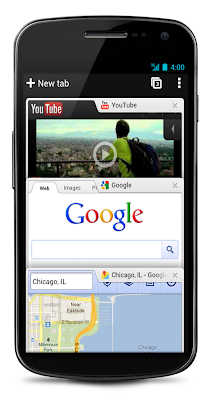
Unfortunately, Chrome is only available for people using the latest version of Android called Ice Cream Sandwich. Right now, Ice Cream Sandwich is only on a few devices. Unless you own a Galaxy Nexus, Nexus S, or Asus Transformer Prime.
With Chrome for Android, users can search, navigate and browse fast. Users can scroll through web pages as quickly as they can flick their fingers. When searching, top search results are loaded in the background.
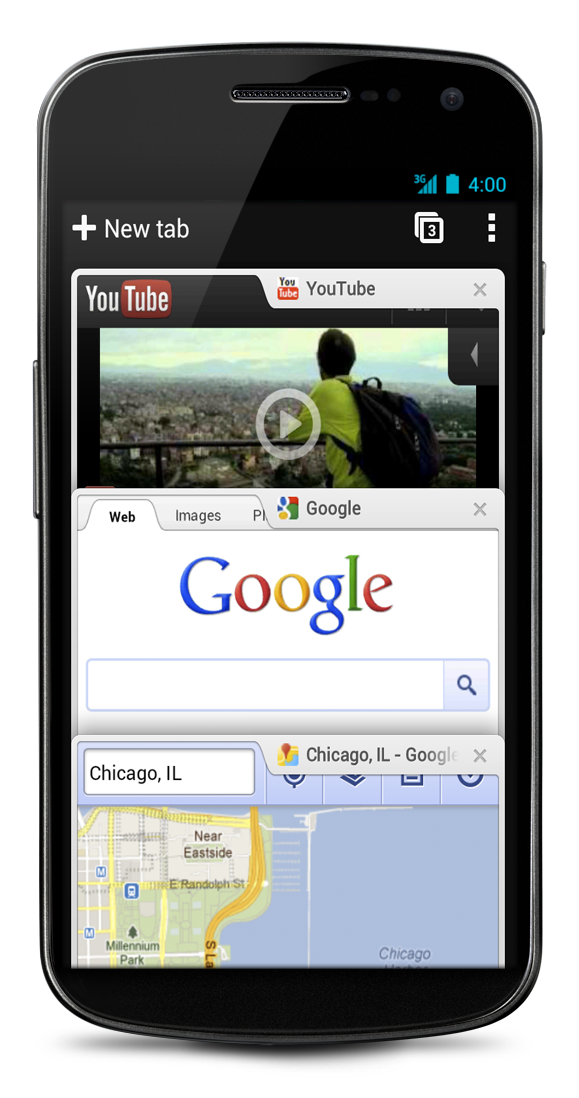
Chrome for Android is designed from the ground up for mobile devices. Tabs so they fit just as naturally on a small-screen phone as they do on a larger screen tablet. Users can flip or swipe between an unlimited number of tabs using intuitive gestures, as if you’re holding a deck of cards in the palm of a hand, each one a new window to the web.
 Gary Kim was cited as a global "Power Mobile Influencer" by Forbes, ranked second in the world for coverage of the mobile business, and as a "top 10" telecom analyst. He is a member of Mensa, the international organization for people with IQs in the top two percent.
Mobile Execs See Mobile Payments as "Breakthrough Category" in 2012
The next breakthrough category is seen to be mobile commerce.
Survey respondents tend to believe financial sector participants will be the leaders in mobile payments, specifically firms such as Visa and MasterCard that run huge branded payment networks.
Missing from the list of options, though, are "banks" and other participants that provide the credit or debit card functions.
Perhaps of note, since 2011, respondents have boosted their opinions of the established payment networks, lowered their view of prospects for Isis, and now take a higher view of start-ups, Amazon and Apple.
PayPal is viewed less favorably than in 2011, which some observers might find just the opposite of what might happen in 2012.
Gary Kim was cited as a global "Power Mobile Influencer" by Forbes, ranked second in the world for coverage of the mobile business, and as a "top 10" telecom analyst. He is a member of Mensa, the international organization for people with IQs in the top two percent.
Mobile Internet Usage Doubles

Global internet usage on mobile devices, exclusive of tablets, has almost doubled to 8.5 percent in January 2012, up from 4.3 percent in 2010, according to StatCounter.
The other important observation is that mobile broadband already has passed fixed network broadband, in terms of number of users or subscribers.
StatCounter Global Stats data also suggest mobile access to the Internet has been doubling every year since 2009. Other studies confirm the trend.
Nokia leads worldwide, most probably driven by its dominance in India, while Apple is second globally but leads the U.S. and U.K. markets.
Global use of mobile devices to access internet
(excludes tablets)
Jan 2009: 0.7%
Jan 2010: 1.6%
Jan 2011: 4.3%
Jan 2012: 8.5%
Mobile phones and PC dongles have been the main drivers of mobile broadband usage, so far. The big question is how much of a role tablets will play in the future.
The other important observation is that mobile broadband already has passed fixed network broadband, in terms of number of users or subscribers.
StatCounter Global Stats data also suggest mobile access to the Internet has been doubling every year since 2009. Other studies confirm the trend.
Nokia leads worldwide, most probably driven by its dominance in India, while Apple is second globally but leads the U.S. and U.K. markets.
Global use of mobile devices to access internet
(excludes tablets)
Jan 2009: 0.7%
Jan 2010: 1.6%
Jan 2011: 4.3%
Jan 2012: 8.5%
Mobile phones and PC dongles have been the main drivers of mobile broadband usage, so far. The big question is how much of a role tablets will play in the future.
Gary Kim was cited as a global "Power Mobile Influencer" by Forbes, ranked second in the world for coverage of the mobile business, and as a "top 10" telecom analyst. He is a member of Mensa, the international organization for people with IQs in the top two percent.
Subscribe to:
Comments (Atom)
-
We have all repeatedly seen comparisons of equity value of hyperscale app providers compared to the value of connectivity providers, which s...
-
It really is surprising how often a Pareto distribution--the “80/20 rule--appears in business life, or in life, generally. Basically, the...
-
One recurring issue with forecasts of multi-access edge computing is that it is easier to make predictions about cost than revenue and infra...


