Wednesday, August 29, 2012

How Important Has App Ecosystem Become?

[image]It is a given these days that a robust applications environment is essential for an operating system or device to attain huge success in the consumer market. What is less clear is whether any device manufacturer "needs" its own app ecosystem, or can succeed by leveraging the OS ecosystem. 

A somewhat related question is whether other participants in the mobile business "need" their own ecosystems to enhance their specific roles within the ecosystem. The value and feasibility of mobile service provider app stores provides an example. 

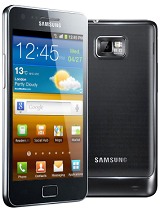
Samsung also is a case in point. Up to this point, Samsung has achieved significant success in the smart phone business by leveraging Android and the Android apps ecosystem. One might argue that nothing has changed, just because of the Apple patent infringement win. 

Google Play arguably provides equal benefit to every manufacturer of Android handsets. And, at least so far, it is hard to see that Google's ownership of Motorola has bestowed any particular advantage on Motorola, or any particular disadvantage to any Android licensee. 

Microsoft does face a problem, though, in building a critical mass of developers and apps for Windows Mobile. It's just a classic "chicken and egg" problem. Developers don't have lots of incentive to develop for an ecosystem with negligible numbers of users. Users don't have unusual incentives to buy a device using an OS that has significantly fewer apps available. 

That doesn't mean Microsoft can't get it done, but the end user device installed base will matter. 


Need More Spectrum?

Though it might seem unlikely, there is some debate about whether additional mobile spectrum really is needed. 

In some cases, the issue is "who has it" and who does not. But most in the business argue consistently that spectrum resources are inadequate for future needs. Others think the carriers just want more spectrum to avoid using other methods of handling capacity demands. 

Licensed spectrum normally is considered the basic raw material for creating a mobile business. But Wi-Fi offload shows there are other tools potentially useful for improving the performance of any network using any discrete amount of spectrum. 

Better antenna technologies, signal coding, network architectures or even mergers and acquisitions can alleviate apparent physical shortages, some would argue. 

But some would point out that 16 percent of the airwaves best suited for mobile broadband are available for that purpose.  

A significant majority – nearly 85 percent – of the crucial spectrum needed to support consumer demand is occupied primarily by government agencies and television broadcasters, Mobile Future says. 


How "Machine to Machine" and "Cloud Computing" Figure into Mobile Commerce

Machine to machine communications, sometimes referred to a new "Internet of things," is viewed as a major growth opportunity by most larger mobile service providers in developed markets, for obvious reasons. 

To create large networks of distributed, small sensors that often are mobile or untethered, and must operate at relatively low costs per unit, mobile networks are ideal. Much of the discussion about real-world applications now focuses on telemetry applications in the energy and transportation industries, for example. 

Separately, lots of companies and developers are working on mobile wallets, mobile payment systems and mobile commerce systems that aim to glean real-time intelligence about potential customers and shoppers, before, during and after a visit to a retail location.

Underneath it all, software and applications are designed to work with heavy reliance on external data center processing of data. So it already is possible to forecast that cloud computing, M2M networks, smart phones and 4G networks will be used together to create new mobile commerce opportunities and services. 

In retail environments, retailers are looking at mobile apps as ways to identify all shoppers, connect them with their shopping profiles, and either sell them something or at least gain enough data about them to help make a sale during the next visit, an article in the Harvard Business Review suggests. 

That typically involves ways to correlate past purchase data, current offers or loyalty systems with present location, for example.  But there might be new ways to combine mobile commerce systems with machine to machine networks, or make the mobile network itself use the phone as a sensor, to create more shopper intelligence. The issue, for some, will be privacy issues. 

When a family or group shops together, data theoretically can be gleaned from the person who checks out. Typically, nothing is learned about the others who do not actually check out, bur are exercising buying influence in the store.

Facial-recognition software might be used to identify groups' sizes and estimate members' ages, which could allow stores to provide the customers with targeted displays, without requiring any detailed personal knowledge. 

For example, a car dealership could put minivan ads on monitors as a family walks up to the showroom door.

In a more intrusive application, a RFID reader could, in principle,  wirelessly glean details from a credit card that never leaves a pocket or purse, as a person enters a store. 

Encouraging shoppers to use a shopping app while inside the store is one less objectionable way to correlate location inside the store with delivery of context-dependent coupons or suggested products. 

High-speed processing, typically using cloud-based mechanism, is a must, because customers don't linger long at any one physical spot when shopping. 

Tuesday, August 28, 2012

In U.K. Fixed Business, Data Revenues Will Not Replace Lost Voice Revenues

Smart Phones Will be a Majority of Devices Sold in 2013, Globally

Smart phones will account for the majority of global mobile phone shipments in 2013, for the first time, about two years earlier than previously predicted by IHS iSuppli. Among the reasons are a strong demand for lower-cost smart phones in developing regions.

Smart phone shipments in 2013 are forecast to account for 54 percent of the total mobile phones sold, up from 46 percent in 2012 and 35 percent in 2011, according to IHS iSuppli.

“Over the past 12 months, smart phones have fallen in price, and a wider variety of models have become available, spurring sales of both low-end smartphones in regions like Asia-Pacific, as well as mid-range to high-end phones in the United States and Europe,” according to IHS iSuppli.

By 2016, smart phones will represent 67.4 percent of the total mobile phone market.

Feature phones, which lack the sophisticated functionality of smartphones, in 2011 represented 46 percent of sales, but will drop to 41 percent in 2012.

By 2016, feature phones will have market share of 28 percent.

Entry-level and ultra-low-cost handsets will have14 percent share in 2012 and 4.2 percent share by 2016.

Samsung Resale Prices Drop, Apple Patent Win Seen as Cause

Significantly more customers of Samsung are putting their smart phones up for sale on Gazelle.com. Gazelle.com reports a 50 percent increase in placements of Samsung smart phones in the last week of August, which has led to a 10 percent drop in prices for those devices.

“Consumers seem to be jumping ship,” says Anthony Scarsella, chief gadget officer at Gazelle.com. “We expect this trend to continue, especially with this latest verdict.”

It is possible that Samsung users suspect the next generation of Samsung phones may be very different from those on the market today. That could be an issue since consumers get used to certain key features of their phones, and they might not be so sure that will be the case in the future. 

Indian Consumer Fixed Services Market To Reach Rs 240 Billion In 2012

The Indian consumer fixed services market is on pace to reach Rs 240 billion in 2012, a 2 percent increase from 2011 revenue of Rs 235 billion, according to Gartner. At an exchange rate of 44 rupees to one U.S. dollar, that implies about $5.5 billion in fixed network revenue. 

By way of comparison, 2012 mobile voice revenue should reach about $25 billion. 

Consumer fixed voice revenue is forecast to reach Rs 148 billion in 2012, a seven percent decline from 2011. From 2012 through 2016, voice revenue will further decline by 25 percent, Gartner says. 


“Voice traffic continues to shift to mobile,” said Neha Gupta, senior research analyst at Gartner. 

The Indian consumer fixed line services market will see growth from broadband and Internet access sectors, which will collectively grow to Rs. 92 billion in 2012. 

In 2012, household broadband penetration will cross six percent. 


Apple Genius Bar Seems to Pay Dividends

The conventional wisdom suggests that "good customer service" is a business asset. The conventional wisdom might be right, at least for Apple. 

Nearly 60 percent of Apple product owners said they are somewhat or much more likely to make another Apple purchase following their tech support experience, according to NPD Group. The positive tech service also helped change consumer perception of Apple, NPD says. 

Some 31 percent of survey respondents said they had a much more positive view of Apple after their service, NPD reports. 

That service left almost all of the 40 percent of Apple owners who took their Apple devices to the Genius Bar very happy. 

Nearly 90 percent of consumers who used Apple’s tech service said they were extremely or very satisfied.

Price help. Some 88 percent of Genius Bar consumers said their service was free. 

Coquitel Uses Mesh Wireless for Isolated Communities

Unlicensed spectrum and self-configuring “mesh” radios continue to be an attractive option for bringing voice and data communications to isolated communities.

Coquitel is about to provide such service to 10 Puerto Rico communities with a potential customer base of 150,000 people. Cooquitel was built with open source software and inexpensive hardware designed by Village Telco, a nonprofit organization in South Africa.

The mesh network will use unlicensed spectrum and is based on Village Telco’s “Mesh Potato," a weatherproof 802.11g wireless access and VoIP connection point designed for unstable electrical power conditions.The design principles are simple enough. The system is designed to support “pay as you go” affordable and simple to bill communications.

The idea is to make the process of setting up service as simple as creating a nw wordpress blog.

The costs are intended to allow a break even point in six months, and should be capable of being used by any business person, without special training.

In fact, it runs on about three watts, and can be powered by solar or battery power. Costing about $80 each,  the Mesh Potato  Mesh Potato is intended to be mounted outdoors, on a pole or the roof of a house. Users can connect to it with a standard ATA telephone connection or over Wi-Fi.

The unit also is designed to accept direct 240V current or any input between 10 volts and 40 volts DC, meaning the MeshPotato can be powered by a car battery.

The Mesh Potato uses an omnidirectional antenna with a maximum power of 20db (100mW), so it can operate within most countries’ wireless regulations and arguably works best in a local community with multiple user locations.

As always, backhaul is the key issue for the self-organizing network.

MasterCard, Everything Everywhere Announce NFC Mobile Payments Effort

MasterCard has signed an exclusive five-year deal to develop a mobile payments system for Everything Everywhere over the next half decade, using near field communications. 

After the initial payment capability, the plan is to then extend that platform into the usual mix of loyalty cards, money transfers and online payments using the smart phone as a point of sale device. 

Orange, one of EE's consumer brands, earlier had launched "Quick Tap," a mobile payments system that has had little success. 


One of the first products to launch through the partnership will be a co-branded pre-paid solution for mobile devices that allows customers to make payments using NFC at more than 100,000 retailer locations in the United Kingdom.

Strategically, the venture aims to enable consumers to have the same simple shopping experience whether they're paying in-store, online or using their mobile device. 

How Should We Regulate Declining Industries?

UBS researchers remind us of some salient facts about the U.S. fixed network voice business, namely that both the total number of lines in service, as well as profitability of voice services are dropping. 

Where at one point there were almost 100 million fixed network voice lines in service, there now are perhaps 50 million in service, about half of which are supplied by U.S. cable companies.

Mobile substitution accounts for much of the change. But the changes also should warn us about the growing risk of investing in the fixed network business. The issue is whether the evidence so far shows conclusively that investing in the fixed network at typical rates (14 percent to 19 percent of revenue) is sustainable and even rational in the long term if aggregate revenue does not grow. 

To be sure, up to this point telcos have added enough new revenue in the form of entertainment video and broadband access to basically offset voice losses. But telcos are reaching, if they have not already reached, saturation of the broadband access business. 

Telco share of video markets still is growing. But even there, there will be some upward limit on market share, and strategically, there is concern about the health of that business over the long term as well. 

It might have made sense to regulate telcos one way when the assumption was that they were spinning off large monopoly profits. That no longer is a reasonable assumption. 


undefined

Mobile, Cable Markets Destined to be Concentrated

There's a good reason antitrust regulation exists in principle, though we might disagree about when and how to apply it. The reason is that a robustly competitive communications market will resolve itself into a stable pattern over time, with few leaders.

If you think about it even casually, there is a reason for that pattern. Over time, people gravitate to products and providers they prefer. That's why Apple consistently gets 60 percent to 70 percent of tablet sales. 

In the fixed network communications or video business, there are slightly different dynamics, since the market originally was a highly-regulated monopoly business, with one authorized provider. Only since 1985 has the U.S. market been "competitive" in a legal framework sense,  to growing degrees. 

That highly unequal outcomes have been seen would not be surprising to anybody who studies market structure. In a highly capital intensive and competitive market, few entities really can risk the amount of capital required to compete. In a roughly $1.8 trillion global telecom business, annual capital spending of about $345 billion is typical. 

The U.S. cable industry alone invests about $13 billion a year in a business generating about $98 billion annually, or about 13 percent percent of revenue. 

AT&T and Verizon in recent years have been plowing about 14 percent to 16 percent of revenues back into capital investment. 

The point is that "not so many" contestants can afford to spend that amount of money, every year, on capital investment. There are genuine economies of scale in the telecom and cable TV businesses and those advantages manifest themselves over time. 

So whether you look at the India mobile communications business or the U.S. cable TV business, there are a few firms leading each industry. At some important level, that will "always" raise antitrust issues. 

It has been clear for a couple of decades that no U.S. cable TV company would be allowed to gain more than 30 percent installed base of video customers. Thinking roughly along those lines seems also to have driven antitrust thinking about the proposed AT&T purchase of T-Mobile USA, as well. 

At some point, at least in the U.S. markets, the leaders in mobile, video or fixed network services will be forced to diversify into other lines of business simply because they have reached the limits of success in their original businesses. 


RankMSOBasicVideoSubscribers
1Comcast Corporation22,294,000
2DirecTV19,966,000
3Dish Network Corporation14,071,000
4Time Warner Cable, Inc.12,653,000
5Cox Communications, Inc.14,756,000
6Verizon Communications, Inc.4,353,000
7Charter Communications, Inc.4,341,000
8AT&T, Inc.3,991,000
9Cablevision Systems Corporation3,257,000
10Bright House Networks LLC12,079,000
11Suddenlink Communications11,250,000
12Mediacom Communications Corporation1,059,000
13CableOne, Inc.622,000
14WideOpenWest Networks, LLC1460,000
15RCN Corp.1333,000
16Knology Holdings256,000
17Atlantic Broadband Group, LLC254,000
18Armstrong Cable Services239,000
19Midcontinent Communications229,000
20Service Electric Cable TV Incorporated1217,000
21MetroCast Cablevision169,000
22Blue Ridge Communications1168,000
23WaveDivision Holdings, LLC1159,000
24General Communications142,000
25Buckeye CableSystem1133,000

Monday, August 27, 2012

Advertising and Commerce are Business Models for Many Apps, Just not Facebook, at the Moment

For applications and services that do not envision a "subscription" revenue model, and assuming "donations" is not feasible, either advertising or commerce (selling things) consistently are viewed as the best alternatives. 

Of course, what is necessary might not be sufficient. In other words, successful apps and services not using a "subscription" revenue model will mostly have to rely on either advertising, or commerce, or both. But not every firm that tries, will succeed.

So far, Facebook might be considered by some a firm that has not yet "succeeded" with its advertising or commerce models. That doesn't mean Facebook will fail, only that it has not yet clearly succeeded. 

According to the survey by youth marketing agency The Beans Group, 91 per cent of 16- to 24-year-olds in the United Kingdom say they are not interested in buying products or services directly through Facebook

The apparent  lack of confidence in Facebook commerce likely is a surprise to some brand marketers.  Ant Stone, content marketing manager at STA Travel, says: “We are making an assumption that everyone is on Facebook or Twitter and we want to provide the same sort of services that we provide outside these channels, so we are reflecting our retail space on Facebook.


“This study  might prioritize the areas we step into first. We might not go for the f-commerce route, we might spend more time and resource in the smartphone quarter,” he says. 
According to Vision Mobile, "purchasing,"  either in form of in-app purchases or an actual application purchase, are the two most popular revenue models for app store developers. 

iOS and Android Adoption Explodes Globally

The global smart phone business still appears to be a two horse race. In fact, the rate of iOS and Android device adoption has surpassed that of any consumer technology in history, according to Flurry.

In fact, smart device adoption is an order of magnitude faster than that of the 1980s PC rate of adoption, twice as fast as the 1990s Internet access adoption and three times faster than social network adoption.

Overall, Flurry estimates that there were over 640 million iOS and Android devices in use during the month of July 2012.


If Semiconductor Sector Contracts, Can Consumer Electronics Be Far Behind?

IHS iSuppli recently downgraded its outlook on the semiconductor market, from three percent growth for 2012 to a contraction of 0.1 percent. 

That would represent the first annual decline since 2009. “The expected decline in 2012 represents a major event for the global semiconductor market,” said Dale Ford, senior director at  IHS

Yes, Follow the Data. Even if it Does Not Fit Your Agenda

When people argue we need to “follow the science” that should be true in all cases, not only in cases where the data fits one’s political pr...