Tuesday, March 12, 2019

What are Comcast's Mobile Objectives?

Not everyone might agree that Comcast has no intention of ever competing with AT&T and Verizon, as Comcast now claims.

Cable has in the past used a “crawl, walk, run” approach to new services, ranging from voice to business services. So it makes sense to disavow larger ambitions in the early going.

Nor might it ultimately matter that Comcast now is losing money on mobility services, as all observers seem to agree. The Xfinity mobile service is not profitable at the moment.

Of course, initial losses are not uncommon for any service provider launching new services of any type in the telecom business.

Some of that arguably is due to scale. Profits are hard to come by whenever a mobile service provider has a small subscriber base, and Comcast says its mobile service is not yet profitable.

And though Comcast might be growing its gross additions at up to a 20-percent rate per quarter (Comcast has not reported net gains), it had something more than 1.2 million accounts at the end of 2018.

Though some estimate cable operators might by perhaps 2020 be getting half of all industry net account additions, that is a ways off.  

Startup costs likely also are an issue (marketing, phone installment plans, wholesale capacity purchases and operations).

But scale might not be the chief initial issue. Actual acquisition costs might be running between $1600 and $1800 per new account, even if Comcast has reported acquisition costs of about $1260 per new account, according to one analysis by BTIG.

Consider that Tracfone, which also operates an a mobile virtual network operator, with perhaps 21.7 million subscribers, generates earnings (cash flow) of about 10 percent on that base of customers.  

Eventually, owner’s economics are going to look more appealing. And that means a move away from operating as an MVNO, and towards facilities in some way. So though Comcast and other cable operators might be adding to MVNO numbers right now, it remains unclear whether they will do so in the future.

Some researchers believe the U.S. mobile virtual network operator business will grow in coming years, while others suspect it will decline. It might be argued that the biggest influences will be cable operator entry into mobility and the level of competition within the U.S. industry, which seems to encourage former MVNO customers who are price conscious to switch to one of the leading four national service providers.

Global MVNOs seem to be losing accounts, overall, though growth continues in some markets.

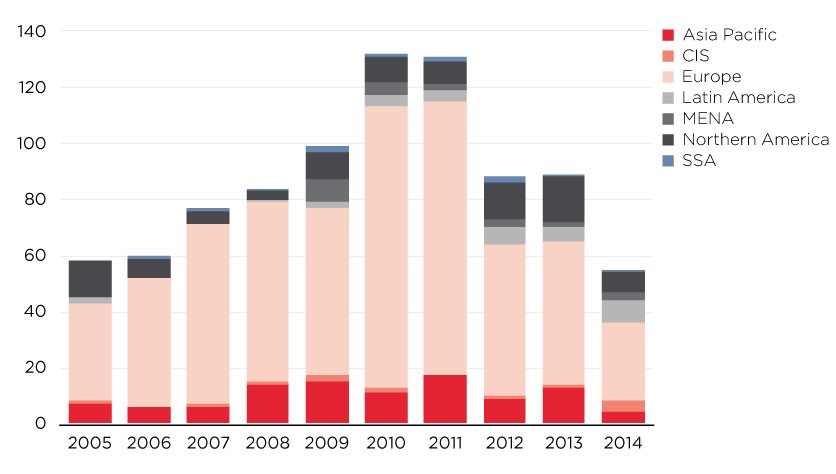
Most can agree that MVNO accounts peaked in the U.S. market about 2012, and in 2018 represented less than five percent of all U.S. mobile accounts. One supplier, Tracfone has perhaps 65 percent market share of MVNO accounts.


Monday, March 11, 2019

SD-WAN Market Grew 28% in 4Q 2018

Software-defined networking (SD-WAN) software revenue, including appliance and control and management software, rose 26 percent quarter over quarter to reach $359 million in the fourth quarter of 2018, says Josh Bancroft, IHS Markit senior research analyst.

Those are the building blocks for service provider SD-WAN services, which Vertical Systems Group has estimated at about $282 million in managed service revenues in 2018.

Providers actively selling managed SD-WAN services in the U.S. include the following companies (in alphabetical order): Aryaka, AT&T, CenturyLink, Cogent, Comcast, Fusion Connect, GTT, Hughes, Masergy, MetTel, Sprint, Verizon, Windstream and Zayo, Vertical Systems says.


VMware led the SD-WAN software market revenue share with 20 percent, followed by Cisco at 14 percent and Aryaka at 12 percent, IHS Markit says.

For the foreseeable future, both direct and channel sales will continue to drive SD-WAN market growth.

Respondents to IHS Markit surveys have shown a preference for self-managed SD-WANs using on-site hardware and software. But managed services are gaining share.

source: IHS Markit

Sunday, March 10, 2019

The Trouble with Antitrust: Past, Present, Future

Antitrust issues are at the forefront of the proposed merger of T-Mobile US with Sprint, but also with concerns about the market power of firms such as Facebook and Google.

The point of antitrust legislation is consumer protection. So the empirical issue is whether antitrust action actually works, in practice. Do such actions (breakups, for example, as some suggest for Facebook and Google) protect consumers and provide benefits such as lower prices?

The answers might not always be clear. Firm actions are not always unambiguously pro-competitive or anti-competitive.

“When prices decline sufficiently so that no firm in an industry is earning economic profits and some firms exit, this outcome may reflect a highly competitive market,” note economists Robert Crandall and Clifford Winston of the Brookings Institution.

In other cases, a large competitor might be engaging in predatory pricing to drive out its rivals.

If one contestant adds lots of capacity, is that an example of an implied threat to cut prices drastically, or a way to add more competition?

“Almost any action by a firm short of outright price fixing can turn out to have pro-competitive or anti-competitive consequences,” the economists notes.

After studying the impact of antitrust actions, they say they can “find little empirical evidence that past interventions have provided much direct benefit to consumers or significantly deterred anti-competitive behavior.”

So “authorities would be well advised to prosecute only the most egregious anticompetitive violations,” they note, as such actions are inconclusive. Looking at the big textbook examples of major antitrust action, they find

* the breakup of Standard Oil had little effect on either consumers or on profits
* The American Tobacco case did little to spur meaningful competition
* the decree did not reduce Alcoa’s dominance
* price of a movie ticket rose in the two decades following the Paramount decision and there was little market entry by new competitors
* After antitrust action, USM’s revenue gains were more than twice the sum of its four major competitors’ gains
* After the AT&T breakup, long distance prices did fall, but that is attributable to “equal access” rules, not the breakup
* Monopoly cases against Safeway and A&P had little impact on market structure
* The charge of American Airlines predatory pricing at hubs is inconclusive

One generic problem is that antitrust cases take so long to conclude that industry structures often already have changed by the time a decision is rendered. That was true in the Standard Oil, Alcoa, IBM and Microsoft cases, they say. In other cases, including American Tobacco, Paramount and United Shoe Machinery cases, negligible consumer price or industry structure changes happened.

Also, mergers may harm or benefit consumers. It depends. Mergers that enable firms to acquire market power may only raise consumer prices, while mergers that enable firms to realize operational and managerial efficiencies can reduce costs and thereby lower prices, the economists notes.

After reviewing about a hundred merger reviews and cases, the authors say “regulators are not sorting out good mergers from bad ones with much accuracy” and that “antitrust authorities overreach and attempt to block productive mergers.”

“We can only conclude that efforts by antitrust authorities to block particular mergers or affect a merger’s outcome by allowing it only if certain conditions are met under a consent decree have not been found to increase consumer welfare in any systematic way, and in some instances the intervention may even have reduced consumer welfare,” they say.

“We have not found any evidence that antitrust enforcement has deterred firms from engaging in actions that would have seriously harmed consumers,” they add.

In the end, “any deterrent effect of the antitrust laws may be relatively small compared with the well demonstrated ability of competitive markets to deter anti-competitive monopolies, collusion and mergers,” they conclude.

The point is that antitrust actions often fail to achieve the objectives of greater competition and consumer price benefits.

“The apparent ineffectiveness of antitrust policy stems from several causes:
1) the excessive duration of monopolization cases, which portends that the particular issue being addressed will evolve into something different—often of less importance—by the time it is resolved;
2) the difficulties in formulating effective remedies for monopolization and effective consent decrees for proposed mergers;
3) the difficulties in sorting out which mergers or instances of potentially anticompetitive behavior threaten consumer welfare;
4) the substantial and growing challenges of formulating and implementing effective antitrust policies in a new economy characterized by dynamic competition, rapid technological change and important intellectual property (Carlton and Gertner, 2002);
5) political forces that influence which antitrust cases are initiated, settled or dropped (Weingast and Moran, 1983; Coate, Higgins and McChesney, 1995), including situations where firms try to exploit the antitrust process to gain a competitive advantage over their rivals (Baumol and Ordover, 1985);
6) the power of the market as an effective force for spurring competition and curbing anticompetitive abuses, which leaves antitrust policy with relatively little to do.”

There are some who say the emphasis on consumer welfare has to change. Bigness itself now seems to be the rationale for action. In what some claim is a return to earlier principles, the argument is that a focus on consumer welfare, especially prices now is inadequate.

Instead, antitrust should focus on potential harm to competitors, reduced innovation, jobs, reduced market entry, decreases in product quality, and privacy.

Since traditional antitrust has been relatively ineffective, one wonders how it might be any more effective when a number of harder-to-measure outcomes are substituted. We have done poorly enough when quantitative measures were used; we are likely to do far worse when qualitative measures are the substitute.

Saturday, March 9, 2019

T-Mobile US Promises Mobile Substitution for Fixed Internet Access

Perhaps the most-startling new argument T-Mobile US is making in support of its merger with Sprint is the ability to use the 5G network to provide the equivalent of fixed network internet access without using fixed wireless, relying solely on the mobile network to reach about half of all U.S. homes.

The “broadband in a box” solution that New T-Mobile does not appear to require use of an exterior antenna of any sort, the company says in a new filing with the Federal Communications Commission.

“New T-Mobile will simply ship a box to the customer’s home for the customer to self install,” says T-Mobile US.

That claim also suggests the network supporting the offer will not be “fixed wireless” but the mobile network itself, a use case that has become a reality in the 4G era for lighter users. But T-Mobile US seems to suggest the 5G mobile network will be a platform for full competition with fixed internet access services, generally.

By 2024, T-Mobile expects to cover about half of U.S. homes with the in-home Internet service, relying on the mobile network, not fixed wireless, providing average download speed in excess of 100 Mbps or higher (with a minimum speed of 25/3 Mbps), the company says.

“New T-Mobile will use this low cost structure to aggressively capture share by pricing its service at (redacted) per month below what in-home broadband providers typically charge today,” making the story “lower prices for fixed network internet access.”

That would be the latest example of mobile substitution that began with voice services.

Is T-Mobile US Sprint Merger in Trouble?

I never claim to understand all the politics of communications law and regulation, but it does seem to me that the latest filing by T-Mobile US, and the pause of the merger review by the Federal Communications Commission, does suggest policymakers are not yet convinced the Sprint merger with T-Mobile US is really in the public interest. Indeed, merger opposition is not a new story. The AT&T effort to buy T-Mobile US was rebuffed, for example.

Initially, the claim was that the merged company would be a stronger competitor to AT&T and Verizon, which is true as far as it goes. A much-bigger company with much-greater scale--in a scale business--should do better.

Ignore for the moment the fact that no equity analyst I ever have heard from thinks “lower prices” are an outcome. Instead, they believe higher prices are the outcome. That is not to say market concentration and prices are related is a simple and obvious way.  

Still, most might agree the merger is better for Sprint and T-Mobile US. It is not so clear it is good for consumers , at least in terms of the amount of price competition in the U.S. mobile market. That noted, it remains unclear how much competition the U.S. mobile market can sustain, long term.

But some of us would argue the answer is yet unknown, as Comcast, Charter and possibly other large entities with scale could be big forces. The U.S. market arguably is big enough, with enough ways to create new business models blending app, services and access, that the “best” answer might not be “two or three” pure-play mobile service providers.

Someday, we might find that mobile access is something that is part of the core value proposition for bundles of vale that bridge apps, services, devices and network services. We just do not know where the larger business is headed, except to note that “access alone” is getting to be a dangerously-thin way to earn revenue on a sustainable basis.

I’ve argued in the past that among the most-sustainable outcomes is for Comcast and Charter to combine assets with T-Mobile and Sprint, for example, pairing one mobile firm with one cable leader. Other combinations might be proposed, but none seem to have the clean “we provide access services” rationale as well as cable-plus-mobile.

That is the analogy to AT&T and Verizon’s operation as entities with mobility and fixed assets.

The filing leads with the argument that “new” T-Mobile will challenge the cable operator “monopoly” of fixed network internet access. “New T-Mobile will not only raise the performance bar and enhance competition for mobile wireless services, but also enter into and disrupt in-home broadband,” the document says. Some of us believe that is a reasonable or plausible claim.

But it strays from the basic argument that new T-Mobile actually is good for mobile consumers. And that suggests T-Mobile believes it has not won that argument. Some of us have argued the deal would face a high bar because the U.S. mobile market already is concentrated.

In the mobile business, as well as the fixed business, competition is going to occur in different ways, in the future. So both T-Mobile US and Sprint are long-term asset sellers, if this merger is not approved. Some might argue that would be better for both innovation and competition, long term.

Friday, March 8, 2019

East Asia Leads FTTH Net Gains

Almost 82 per cent of global fiber to the home  fiber to the home net additions came from China in the third quarter of 2018,  which reported a six percent quarterly growth in fiber connections, according to Point Topic.

Argentina in the same quarter saw net additions rise 21 percent; Brazil saw 19 percent net additions; the United Kingdom added 11 percent while France gained 10 percent.

As in recent previous quarters, 70 percent of all new fixed broadband subscribers were added in East Asia.

According to the latest research by Point Topic, in the third quarter of  2018 the number of global fixed broadband subscribers exceeded one billion, having increased by 2.6 per cent quarter-on-quarter.

5G: What Matters is Ability to Create Economic Value

Most observers spend way too much time worrying about which firm or country is ahead or behind in 5G. Ultimately, what matters is how much value any firm or nation can wring out of a platform. We have seen this before, in fixed network broadband generally.

If being “way ahead in broadband” means people are watching television, the direct productivity or economic development value might be questionable. “Is there a broad economic societal payoff from increasing broadband speeds from 10 Mbps to 25 Mbps, or are the benefits mostly private in nature (e.g., faster movie downloads)?” asks George Ford, Phoenix Center chief economist.

“Do counties with mostly 25 Mbps broadband connections fare better economically than counties with mostly 10 Mbps broadband connections?” Ford rhetorically asks. “I find no evidence of such an effect here, at least with respect to the growth in jobs, personal income, or labor earnings between 2013 and 2015.”

“Broadband (and higher speed broadband) is not randomly distributed across geography, but rather is deployed in areas where the ratio of demand to costs is favorable, complicating the task of discovering broadband’s influence on economic outcomes,” Ford notes.

To cite just one example, “population density in counties with predominately 25 Mbps service averages 603 persons per square mile, but only 32 persons-per-square-mile for counties with predominately 10 Mbps broadband service,” Ford notes.

That matters because infrastructure is cheaper to deploy in urban areas than rural areas. So population density alone might explain speed differences, as a matter of supply.

Average population for the treated counties (where 25 Mbps is a minimum speed) is 251,490, but a paltry 22,013 for the control group (10 Mbps service)—a 10-fold difference, says Ford. But there are other important differences.

The average number of jobs in the treated group is 150,288, while only 10,605 in the control group. If one assumes stronger economic activity also creates higher demand for faster broadband, the difference between areas with 25 Mbps and 10 Mbps is explainable.

Similar size differentials are observed for total earnings as well as personal income. In other words, higher-income consumers can afford to pay for more-expensive broadband.  Large differences are also seen in the share of persons with a college education (22 percent in 25-Mbps areas compared to 14 percent in 10-Mbps areas).

In a broad sense, the issue is whether economic growth is driven by something other than broadband speeds. In other words, faster broadband gets deployed where demand is highest, and those areas also tend to be areas of higher household income and higher economic growth generally.

What matters is the ability to wring value from broadband.

“Stated simply, merely counting broadband connections or penetration, without regard to any consideration of value, assumes that all types of broadband connections are equal and that all societies are equal and identical in how they value Internet access by speed and connection mode; that all users of broadband place equal value upon that connection and all such connections can be produced at equal cost,” notes George Ford, Phoenix Center chief economist.

That is not to say faster internet access is immaterial. Faster broadband might lead to technological advances that do much more than simply increase broadband speeds, Ford notes.

The point is that it is hard to identify the relationship between broadband and economic growth.

Enterprises Say They are Deploying Edge Computing

Around 10 percent of enterprise-generated data is created and processed outside a traditional centralized data center or cloud, according to Gartner. By 2025, Gartner predicts this figure will reach 75 percent, says Santhosh Rao, Gartner senior research director.

As the volume and velocity of data increases, so too does the inefficiency of streaming all this information to a cloud or data center for processing.”

That is the reason many are convinced edge computing will be important: possibly 75 percent of computing shifts to venues outside private data centers and hyperscale data centers, eventually.

Some processing will continue to be done by devices. Other processing will happen locally, inside a building, at what some call a gateway. “Edge servers can form clusters or micro data centers where more computing power is needed locally,” says Rao.

“Servers deployed in 5G cellular base stations will host applications and cache content for local subscribers, without having to send traffic through a congested backbone network,” says Rao.

And there are signs enterprises believe edge computing has its place. About 37 percent of 100 service provider executives surveyed by 451 Research on behalf of Vertiv already have deployed at least some edge computing to complement their mobile operations, Vertiv says. An additional 47 percent say they plan to deploy their own infrastructure edge assets.
Though most of the infrastructure edge use cases (including multiservice edge computing) involve the need for ultra-low latency performance, there are some use cases where bandwidth also is fundamental.
Virtual reality video quality similar to high-definition TV quality requires bandwidth of 80 Mbps to 100 Mbps, compared to 5 Mbps for HD video streaming, for example.

source: Vertiv

Bandwidth Charges Might Drive Edge Computing

Eventually, we might find that avoiding local access bottlenecks and high bandwidth bills is as big a driver of edge computing as the need for ultra-low latency processing speed, even if low latency always is said to be the driver for edge computing.

“If you need to analyze a large amount of data, your internet connection might not be able to cope with the data flow, and it would result in your inability to extract real value from data,” says Riccardo Di Blasio.

In other cases, WAN bandwidth charges might be the issue. “If you are an oil and gas company which is drilling in Angola and requires computing, today the alternatives are to either build your own data centers like in the 90s, (with all the cost, and scale limitations associated with) or to use a cloud provider (where the nearest data center will be probably in the UAE or South Africa, at least 5,000 miles away) with enormous costs and pretty lousy SLAs,” says Di Blasio.

By 2025, almost 20 percent of data created will be real-time in nature, rather than being sent to the core of the network for processing, says B.S. Teh, Seagate SVP. That is the sort of use case that benefits from local processing at the edge, or close to where the data actually is generated.
“We see edge as a big driver of growth,” he said. Some growing use cases, such as video surveillance will benefit from edge processing, sometimes not because latency is always so important, but simply to avoid wide area network transport costs.
The top reason for using edge computing is ultra-low latency. But there are other drivers, including use cases where processing at the edge alleviates the need to move bulk data generated by bandwidth intensive apps across the wide area network.
Wikibon compared the three-year management and processing costs of a cloud-only solution using AWS IoT services compared with an edge-plus-cloud solution, to support cameras, security sensors, sensors on the wind-turbines and access sensors for all employee physical access points at a remote wind farm.
At a distance of 200 miles between the wind-farm and the cloud, and with an assumed 95 percent reduction in traffic from using the edge computing capabilities, the total cost is reduced from about $81,000 to $29,000 over three years. The cost of edge-plus-cloud computing is about a third the cost of a cloud-only approach, Wikibon estimated.

Thursday, March 7, 2019

Why AT&T Should Not Invest Too Heavily in FTTH

A telco executive once told me, nearly two decades ago, that the investment in fiber to the home was not intended to boost revenues or necessarily to gain market share on other key competitors, but instead simply to allow the firm to remain in business.

In other words, the rationale for FTTH was strategic, and not necessarily motivated by classic return on investment criteria. That arguably remains the case: it is not that FTTH upgrades are unnecessary, but that the return is thin enough that deployment cases have to be looked at quite carefully.

AT&T and Verizon, for example, now are flat in terms of net additions, with nearly all the telco segment losses coming from other telcos still heavily reliant on copper connections. In other words, at current levels of investment, AT&T and Verizon are holding their subscriber bases, but not gaining on cable competitors.

The big unknown is what happens if either firm were to dramatically increase investment. Verizon is largely FTTH already, so the issue is what happens if investments to boost consumer internet access speeds were to be made.

AT&T has added perhaps four million new FTTH lines over the past few years. AT&T says it will have connected 14 million U.S. homes with fiber-to-home facilities by the end of 2019.  If AT&T passes a total of 62 million homes, that implies FTTH will be about 23 percent of total passings.

Keep in mind that the entertainment group (consumer services including all internet access services) represents about 15 percent of the company’s adjusted EBITDA. In other words, earnings from 62 million homes generates just 15 percent of AT&T total. There is limited upside, one might argue.

At a high level, and for immediate purposes, AT&T has passed less than a quarter of consumer locations with FTTH. Still, while not growing its internet access market share, it is holding steady, overall. A rational executive might conclude that scarce capital is best deployed elsewhere, to reduce debt and build the 5G network.

Still, you might wonder why AT&T apparently has been so slow to upgrade, given recent evidence that, where it chooses to build optical fiber access facilities, it can get 50-percent take rates, as well as higher dual-play revenues (video entertainment plus internet access). The key is that those areas tend to be the areas of highest household income. So spot builds make more sense than full-town or full-city upgrades, given other demands for investment or debt repayment.

And AT&T has to prioritize mobility. Recall that mobility represents half of AT&T's revenue.

WarnerMedia represents about 17 percent of the company’s revenue and adjusted EBITDA. That’s more revenue and profit than AT&T makes from consumer fixed network operations.

And recall that WarnerMedia earns money from lots of customers and content and service providers not on AT&T’s network. It is an “app,” not a network service confined just to AT&T.

Business wireline represents about 17 percent of the company’s adjusted EBITDA.

In terms of revenues, mobility represents 40 percent, entertainment group 26 percent and business wireline about 15 percent of total quarterly revenue of $45.7 billion.

The business issue is whether any massive expansion of FTTH would produce revenue gains great enough to justify the move, and what the opportunity costs might be.

In fact, opportunity cost probably is the bigger issue. With capital limited, does it make more sense to invest in 5G and the mobile platform, or put lots more capital into the fixed networks business that drives a minority of revenue for both AT&T and Verizon.

Verizon earns 87 percent of its profits from its mobile network.  

But it is not clear how much upside exists for AT&T, in terms of fixed network internet access revenue. You might argue that the best case for AT&T, for a massive upgrade of its consumer access network, is about 10 percent upside in terms of consumer market share.

That is by no means insignificant, depending on the assumptions one makes about the cost of the upgrades. Still, given that as important as it is, fixed network internet access now is a mature business, there are limits to how much capital a telco “ought” to invest, compared to deploying capital elsewhere.

Realistically, a major telco has to expect it will, under the best of circumstances, and in a two-provider market, split share with a competent and motivated cable TV provider. If cable now has about 60 percent share, and AT&T about 40 percent share, that implies a sort of share ceiling of 50 percent. That is one driver of revenue. The other is revenue per account.

But typical account revenues have not risen as much as one might expect, given consumer shifts to higher-speed services that tend to cost more.

Basically, internet access prices in the developed world have tended to move roughly in line with growth in gross domestic product, and are flat to declining in terms of spending as a percentage of gross national income per person, according to the International Telecommunications Union.  

So there are important reasons why scarce capital has to be put places other than massive consumer FTTH upgrades. Consumer fixed network operations produce relatively little revenue or profit for AT&T.

So a rational executive would invest just enough to hang on to most of the revenue, as long as possible, while investing for revenue growth elsewhere. Just saying.

Yes, Follow the Data. Even if it Does Not Fit Your Agenda

When people argue we need to “follow the science” that should be true in all cases, not only in cases where the data fits one’s political pr...