Wednesday, May 30, 2012

An "uh oh" Moment for Online Advertising Proponents

The standard argument about online advertising volume, for decades, has been that, over time, "eyeballs" (audiences) lead to advertising. It's a reasonable argument. So the next challenge is that, if online audiences and proportional advertising to those audiences begin to hit a 1:1 relationship, it is hard to argue that lots more revenue growth is possible, in the near term.


To get more ad revenue, online sites would have to grow their audiences. According to Mary Meeker, online share of advertising spend now is very close to online's share of media audience. 


That would suggest it is unreasonable to expect online advertising revenues to grow very fast, or much more beyond present levels, unless audience attention really shifts lots more. 


The one place where there is a clear gap is the mobile venue, where advertising dramatically lags attention, by about an order of magnitude.


It takes no special insight to predict that attention now will be focused squarely on mobile advertising, as it remains the channel where revenues most lag attention. Conversely, print is the medium where spending is vastly overdone, in terms of audience attention. 


The "bad" news is that we should be watching for signs that online advertising revenues begin to decelerate, in terms of growth. 
undefined 
KPCB Internet Trends - 2012


Internet Will Be Four Times as Large in Four Years, Cisco Says

Annual global Internet traffic in 2016 will be four times the volume of 2011, Cisco says.


The annual Cisco Visual Networking Index Forecast predicts annual global IP traffic of 1.3 zettabytes – (a zettabyte is equal to a sextillion bytes, or a trillion gigabytes). 


The projected increase of global IP traffic between 2015 and 2016 alone is more than 330 exabytes, which is almost equal to the total amount of global IP traffic generated in 2011 (369 exabytes). 


The growth will be driven by:
  1. An increasing number of devices: The proliferation of tablets, mobile phones, and other smart devices as well as machine-to-machine (M2M) connections are driving up the demand for connectivity. By 2016, the forecast projects there will be nearly 18.9 billion network connections―almost 2.5 connections for each person on earth, ― compared with 10.3 billion in 2011
  2. More Internet users: By 2016, there are expected to be 3.4 billion Internet users ― about 45 percent of the world's projected population according to United Nations estimates.
  3. Faster broadband speeds: The average fixed broadband speed is expected to increase nearly fourfold, from 9 megabits per second (Mbps) in 2011 to 34 Mbps in 2016.
  4. More video: By 2016, 1.2 million video minutes―the equivalent of 833 days (or over two years) ―would travel the Internet every second.
  5. Wi-Fi growth:  By 2016, over half of the world's Internet traffic is expected to come from Wi-Fi connections.

Tim Cook Talks About Apple


Portions of Tim Cook, Apple CEO, talk at "AllThingsD" conference. 

Skype Carries 100 Billion Minutes a Quarter

Cheap and free Internet calls have driven Skype usage in the first quarter of 2012, jumping 40 percent to 100 billion minutes of calls in the first quarter, up from the first quarter of 2011, according to Microsoft. Skype also has about 250 million registered users. 


What isn't so clear is how much gross revenue Skype makes, though it is reasonable to guess it now is in the low single-digit billions per quarter. Skype never has made much in the way of profit, and that probably hasn't changed.


Skype illustrates a major issue for service providers, namely that new Internet-enabled products displace traditional usage, but do not come close to generating the same level of revenue or profit as the older services. Essentially, the legacy market essentially becomes an important feature or capability, but not a "business" in the same sense. 


Mobile service providers now worry about the health of their messaging business, which in some markets is showing the same trend as was seen in the VoIP market: traffic shifts and revenue declines. As was the case with voice, the new messaging providers earn revenue that is an order of magnitude less than the legacy services they are displacing. 

Tuesday, May 29, 2012

Amazon Will be a Mobile Service Provider in Japan

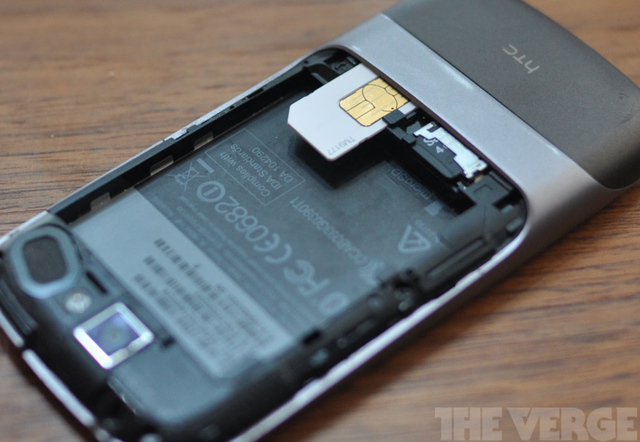
via assets.sbnation.comAmazon is set to enter the Japanese mobile service provider market, selling prepaid 500 MByte SIM cards for a flat rate of about $25, Nikkei reports.

The cards will be usable on NTT Docomo’s LTE network. The news comes as Facebook is said to be considering building its own smart phone.

Facebook also is rumored to be looking at its own browser as well.

To be sure, the move is probably more aimed at helping Amazon sell  mobile content than anything else.

But that alone shows that a new segment could open up in the mobile business, namely lots more entry by application providers into the mobile virtual network operator business, bur as specialized content providers, not traditional voice and data access providers.

Microsoft's recent investment in the new company that will own the Nook tablet and content business illustrates a couple of important strategic shifts now happening in the mobile device and application markets. 
The biggest shift is the growing importance content, advertising and commerce operations are assuming for device and application suppliers.


Some believe the "Four Horsemen" of the Internet include Facebook, Apple, Google and Amazon. Others might say the list actually is "Five Horsemen" and include Microsoft. Either way, the notion is that  handful of firms have the ability, at least in principle, to create and own a complete and walled-off ecosystem in which consumers use a single company’s hardware, operating system and storefront to search online, buy apps and purchase digital media and  physical products.

If that proves to be true then a couple of predictions are easy to make. Facebook and Amazon will produce their own smart phones. Facebook might also have to produce a tablet. Apple will have to create a mobile payment service, as will Microsoft.

Google and Facebook will have to get more share of the e-commerce and mobile commerce transactions, and all will deepen the activities they now already support around mobile advertising, promotion and loyalty.

The rumor surfaced that Facebook is getting closer to releasing its own branded smart phone, an obvious attempt at owning a stack component (hardware) that’s currently missing from its line-up, is part of that trend.

“A smartphone would be a logical next step for Amazon,” ABI Research Analyst Aapo Markkanen says.

Traditionally, mobile phones simply were devices carriers had to provide to sell voice and messaging services.

These days, matters are more complex. In addition to communications, hot consumer devices frequently are used for content consumption. That means smart phones are more important to application providers as platforms for selling content and advertising.

Everyone expects a mobile device to handle voice and texting. Beyond that, more users expect the ability to consume content and conduct transactions. That changes the strategic importance of being a device manufacturer.

For mobile service providers, phones have been a sort of prop to produce revenue indirectly, in the form of service subscriptions. But that also now is increasingly true for application providers.

For Apple, which merchandises all sorts of content to sell devices, the tight bundling of content and commerce is a major reason it can sell so many devices. That also is true for some other mobile device manufacturers. But not for all.

For Google and Amazon, devices are a way to sell more advertising, content and merchandise. Microsoft has a slightly different take, as it always has preferred to sell operating systems to partners who make phones. But Microsoft has to succeed in mobile operating systems to profit from the device ecosystem that supports the advertising, commerce and content businesses.

Such thinking is not terribly new. Consumer electronics manufacturers have for decades understood that content was important for the devices business. Sony is probably the best example of that. Apple arguably was the first consumer devices firm to really achieve that integration, with its iPod and iTunes.

These days, gaining the ability to lock consumer into a particular content ecosystem is the reason producing devices matters.

There has been lots of speculation about whether Apple, for example, might want to become a virtual mobile service provider as well. It is getting harder to ignore the speculation.

New Chromebooks Coming June 15, 2012

Samsung has just announced a new Chromebook and the first Chromebox


The newest Chromebook is a fast and portable laptop for everyday users, but most people don't use one.


Google seems to be focusing its adoption efforts on several verticals, including schools, retailers, call centers and airlines.


These focus areas probably build on areas where Google has had success so far. 


Google says more than 500 schools have used these devices. Retailers such as Dillards are planning to deploy Chromeboxes in more than half of its US stores, while others such as Kaplan are moving their New York-based call center to Chromeboxes.


Chromebooks will be available online June 15, 2012, in the United States,  United Kingdom, France, Germany, Netherlands, Italy and Spain. More countries will follow in the coming months. In the U.S., Chromebooks will be available from Amazon and Best Buy  and internationally from leading retailers.

The new Chromebook and Chromebox, based on Intel Core processors, are nearly three times as fast as the first-generation Chromebooks. 
The new Chromebook boots in less than seven seconds and resumes instantly. 

The new versions also have a new user interface said to make it easier to find and launch apps, and use alongside browser or other apps. Commonly-used apps can be pinned to the screen for quick access, with multiple windows displayed side-by-side.


Since most of my "PC" usage is for content creation, I never use a tablet as a "replacement" for a notebook. I also travel quite a lot and use cloud apps on a number of machines. The Chromebook is the device always packed in my backpack.


As a "cloud" device, you can't do much without a Wi-Fi connection. That means on airplanes I just do something else (that's when the tablet gets used, mostly for reading, for example). The only "offline" format I have found troublesome are PDFs. But then I find PDFs annoying on all my machines.


You might still have trouble finding anybody you know using a Chromebook on a regular basis, though.

66% of U.K. SMBs Have Adopted Cloud Services, or Plan to

The ability to work in a more mobile and flexible way was identified in an IBM study as the number one reason for small and mid-size businesses to use cloud-based apps. IBM says the survey shows interest has moved from cost savings to more-strategic advantages.

About two thirds of the senior managers surveyed had either already implemented cloud services or intended to in the future, with 45 percent of U.K. businesses looking to do so within the next two years.

The increased ability for employees to work with greater mobility and flexibility was identified as the most popular reason to move to cloud services (39 percent of respondents), with cost efficiencies named as the second most popular reason (33 percent of respondents).

Multiple Fixed Networks "Make No Sense"

Multiple networks make no sense, TM Forum’s Founder and Chairman, Keith Willetts argues in “Unzipping the Digital World. In some markets, including Singapore, Australia, Malaysia and New Zealand, that is the way regulators have decided to use as the framework for fixed network broadband services. 


He shares his views in this video interview

OTT Destroys Voice, Text Business, Isn't Just Share Shifting

Mobile operators’ SMS revenues may be under pressure from mobile messaging apps such as WhatsApp, iMessage and others. The only real issue is where, when and how much over the top apps will reduce mobile service provider revenue.

To be sure,  Informa Telecoms & Media still forecasts that mobile operators will still generate a total of $722.7 billion in revenues from text messaging revenues between 2011 and 2016.

Third-party providers of over the top (OTT) messaging services will earn about $8.7 billion in 2016. That disparity in revenue illustrates the issue.

The big problem is not that OTT providers take so much revenue from mobile service providers, so much as OTT messaging essentially destroys the existing business, rather than shifting share to new contestants.

Text messaging revenue could decline 40 percent over the next three or four years in the European and Middle East markets, many executives predict. About 84 percent of respondents to a Telco 2.0 survey thought the main reason for such declines was the expected price reductions mobile service providers would adopt to compete with OTT services and apps.

In many ways, that is precisely what service providers have encountered when facing over the top voice apps. The OTT providers do not so much take revenue away from incumbent service providers as destroy the market.

Informa Telecoms & Media estimates that every 10 percentage points increase in smart phone penetration could cost Western European operators $1.19 billion in voice and messaging revenues and $306 million for their Eastern European counterparts.

In 2010, for example, mobile operators made on average only $13.21 per user per year from mobile VoIP services.

In other words, VoIP turns out not to be such a great product for incumbent service providers.

In fact, some might argue there is almost no way incumbent service providers can avoid losing both voice and messaging revenue to over-the-top applications, no matter what they do.
Mobile service providers lost an estimated $13.9 billion in text messaging revenue in 2011, as subscribers turned to outside social messaging apps, according to researcher Ovum.

Globally, Informa forecasts that SMS traffic will total 9.4 trillion messages by 2016, up from 5.9 trillion messages in 2011. However, SMS’s share of global mobile messaging traffic will fall from 64.1 percent in 2011, to 42.1 percent in 2016. Traffic is not revenue, though.

At the same time, global mobile instant messaging traffic will increase from 1.6 trillion messages in 2011 to 7.7 trillion messages in 2016, doubling its share of global messaging traffic from 17.1 percent in 2011 to 34.6 percent in 2016.

“There will not be a uniform decline in mobile operators’ SMS traffic and revenues as a result of the adoption and use of over-the-top messaging services,” says Pamela Clark-Dickson, senior analyst, Mobile Content and Applications, at Informa.

Text messaging traffic on the KPN Netherlands network shows the impact of changing use of text messaging and OTT apps. SMS traffic has been declining since the third quarter of 2010, it appears, after hitting a plateau in early 2010.

While Informa is forecasting either slowing growth or even a small decline in person-to-person SMS revenues in some developed regions and countries, total global SMS revenues will increase at a compound annual growth rate of three percent over the next five years.

Western Europe will generate the highest amount of SMS revenues globally between 2011 and 2016, totalling $174.1 billion, followed by Asia Pacific Developing, where SMS revenues will total $173.8 billion between 2011 and 2016.

Mobile Broadband Changes "Broadband"

U.S. broadband adoption seems to have flattened markedly since about 2010. For some, that might represent a problem. But something else is happening. For a growing number of U.S. consumers, wireless broadband has become the preferred way of using broadband and the Internet, much as wireless has become the preferred way of using "voice."

In 2010, some noted a digital divide between white Americans and Hispanic Americans. Back then, it was noted that 45 percent of Latinos had a home broadband connection, compared with 65 percent of whites.

At the same time, 52 percent of black Americans had a home broadband connection.

But much has changed. mobile broadband is used by two thirds of all adult Internet users. Also, as many note, for many users, the smart phone and tablets have started to displace the desktop PC as the computing device used most often. That shifts demand, to a large extent, from fixed modes to mobile modes.

Many expect that multi-device data plans will enhance and encourage that shift, boosting use of tablets for mobile broadband access.


Broadband and dial up adoption over time

26% of U.S. Internet Users Might Buy a Tablet This Year

Recent studies by Ipsos MediaCT examining penetration and ownership of tablet PCs shows dramatic increases in buying of tablets.

In fact, tablet ownership is now 16 percent among 18 year olds and has increased across all demographic groups.

Ipsos expects more than a quarter of U.S. online consumers could purchase a tablet before the end of 2012.

Samsung Galaxy S3 Will Test the "Big Screen" Theory

The Galaxy S3, which tracks the user's eye movements to keep the screen from dimming or turning off while in use, and features a giant 4.8-inch screen, is launching in 28 European and Middle East countries. The U.S. launch will probably come in July 2012.

The Galaxy S3 is deemed by some observers to be the single device best positioned to compete with the Apple iPhone, including the upcoming version of the Apple iPhone.

The smartphone, running on Google's (GOOG.O) Android operating system, boasts a 4.8-inch (12.2 cm) screen, one of the largest on smartphones ever, and much bigger than the 3.5-inch display on the iPhone 4S.


In the first quarter of 2012, Samsung sold 44.5 million smart phones, giving it 30.6 percent market share. Apple sold 35.1 million iPhones, taking 24.1 percent market share.

Monday, May 28, 2012

Will Developing World Mobile Innovations Come Back to Developed Regions?

Innovation traditionally has taken established paths. New technology has been made available to people in developed nations, while the rest of the world getting access as markets scale and prices come down.

Likewise, technology has been developed in universities, commercialized for enterprises, then migrates into the mid-market, then small and medium business. Eventually, consumers might adopt, as well.

But those diffusion pathways are changing. These days, it is very likely that innovations are created in the universities, then popularized first in the consumer markets, before being adopted later by businesses of all sizes.

In similar fashion, technology innovations can be created in the developing regions and then find their way back to developed regions.

So Nokia looking to use Kenya to debut a free classifieds service (think a mobile-phone version of Craigslist), complete with a first-ever feature that lets people shop using voice commands to browse for goods.

In fact, the traditional model of developing new products is quietly reversing course. Call it "trickle-up innovation," where ideas take shape in developing markets first, then work their way back to the West.

"If it's radically innovative and reduces costs, it's going to get looked at and will accelerate," says Michael Chui, McKinsey Technology analyst. Consider almost anything related to mobile phones.

For the average developing market mobile user, a mobile feature phone costs a few months’ salary. Using the devices can represent over 10 percent of their monthly income, UNICEF believes.

Batteries can be hard to recharge locally, so long battery life is necessary. Handset cost and low recurring costs, including apps that require very little bandwidth, also are necessary. All of those innovations would be helpful in developed markets as well, though.

The Long Road to Streaming TV

As haltingly slow as the process is, we continue to glacially create all the infrastructure required to enable streaming delivery of television at a revenue-significant level. Better broadband is the first requirement, as is the consumer habit of watching TV on lots of devices connected to the Internet.

Better ways of aggregating content, providing navigation and ease of use also are needed. In many ways, Xbox now provides some of that functionality. Boxee and Roku are other examples.

But content availability remains the biggest blockage. AT the moment, online content still does not feature most of what consumers expect when they buy video entertainment services. To be sure, a growing number of consumers decide to live without traditional video services. But those consumers remain a small percentage of all consumers.

Still, even once the infrastructure to support robust video streaming is in place, there will be key obstacles, namely content availability.

Historically, even content availability has not proven it can create a large market.

According to a new report released by The Diffusion Group (TDG), video-on-demand services provided by PayTV operators should be, but are not, generating significantly higher viewing and advertising revenue. Total VOD use is small, representing only one percent of all U.S. TV viewing.

By some measures, VOD is doing better. Magna Global has estimated that U.S. homes with VOD, a "category that includes both traditional multichannel VOD offerings and over the top services," will hit 70.1 million homes, about 57 percent of all TV homes at the end of 2016.

TDG attributes that failure as a reflection of VOD's inadequate advertising support and awkward program guides that limit availability and viewing of ad-supported VOD content. That also suggests the "for fee" VOD has not gotten widespread interest.

VOD in recent years has contributed about $2 billion a year worth of revenue for U.S. video entertainment providers. U.S. cable TV companies alone booked about $98 billion in 2011 revenue. That doesn't include the sizable revenue earned by satellite and telco providers as well.

The point is that VOD, as a service, has been a modest success, though it has had three decades to make its case.

Content availability is the single biggest key needed to unlock the streaming TV business. But if video on demand is any indication, even that might not be enough to create a robust streaming video business.

Platform Wars Explain Apparent Facebook Phone Interest

The platform wars are driving application providers into what might be unusual territory. In order to compete with Facebook, Google attempts to build a social network. In order to compete with Google, Facebook attempts to build a phone. Lots of device or app firms have launched their own browsers.

And the "platform wars" are occurring on a number of fronts.

The fight over the TV is really a fight over the next massive consumer platform that is coming up for grabs. Of platforms there are few: Google owns search, Amazon owns digital retail, Facebook owns social, and Apple owns consumer devices. Microsoft owns, well, nothing at the moment, despite its handsome revenue stream from Windows and Office, argues James McQuivey of Forrester Research.

But Microsoft’s Xbox 360 is already the most-watched net-connected TV device in the United States and soon, the world. With more than 70 million consoles in households worldwide, as many as half of them connected to the Internet, depending on the country, Microsoft can rapidly drive new video services into tens of millions of households, McQuivey argues.

Significantly missing from those lists of platforms are cable or telco access service providers. At least for the moment, telcos and cable operators are not "platforms."


Rumors about Facebook creating its own smart phone are not new. Now there are rumors that Facebook is considering buying mobile browser Opera, a move that would strengthen Facebook's platform status without requiring an immediate move into the actual device business.

Separately, there are rumors Facebook is hiring engineers as part of a project to create its own smart phone.

You might ask why Facebook would want to enter competition with Google, Apple, Microsoft, Mozilla and Yahoo. The answer is that, right or wrong, such a move would be viewed as a way of allowing Facebook to grow its status as a platform, much as Google, Apple and Amazon have done.

Keep in mind that Facebook also has talked about becoming an ad network, able to sell inventory outside Facebook. A browser would help, in that regard.

Google itself makes far more money from advertising on the iPhone than it does on its own Android devices, some would note. That suggests the rationale for an ad-supported company to control its own devices and use its own operating systems.

Is Private Equity "Good" for the Housing Market?

Even many who support allowing market forces to work might question whether private equity involvement in the U.S. housing market “has bee...