In a nutshell, the key challenge for Netflix is to "grow members and revenue faster than content spending," as the latest Netflix shareholder letter mentions. In other words, Netflix has effectively become a programming network, not just a content delivery service.
And as has been true for all programming networks, original and unique content is the growth driver. That doesn't mean every bit of content, or even most content, has to be unique to a particular network. But virtually all popular networks have one or more "signature series" that define the network and pull in viewers.
Netflix will have to invest to do so, and that means there is going to be a tension between doing so and then adding enough additional new subscribers to keep its profit margins intact.
Wednesday, April 24, 2013
Netflix Success Challenge in a Nutshell

 Gary Kim was cited as a global "Power Mobile Influencer" by Forbes, ranked second in the world for coverage of the mobile business, and as a "top 10" telecom analyst. He is a member of Mensa, the international organization for people with IQs in the top two percent.
Apple Financial Results Answer No Key Questions
Apple's fiscal 2013 second quarter ended March 30, 2013 included quarterly revenue of $43.6 billion and quarterly net profit of $9.5 billion, compared to revenue of $39.2 billion and net profit of $11.6 billion for the same quarter of 2012.
Despite posting results most companies would be happy to report, such as "average weekly growth of 19 percent, Apple's quarterly results do not answer any of the strategic questions observers now have about the company.

What is the "next big thing" to drive Apple sales and customer delight?
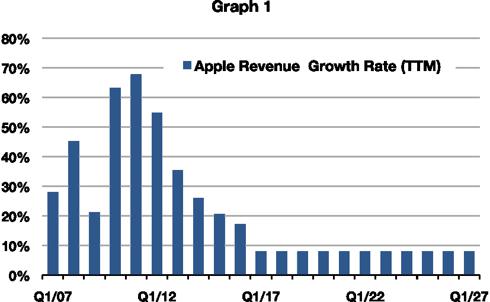
Can Apple create yet another big new market? Perhaps most importantly, has Apple lost the creative edge and become a "normal company" with a "normal growth rate?
In fact, some think single-digit growth rates are where Apple is headed, in perhaps five years.
Nor, it appears, will it be possible to resolve any of those questions until perhaps September 2013, or possibly even 2014, when Apple says it will launch the next round of new products. "Our teams are hard at work on some amazing new hardware, software, and services that we can’t wait to introduce this fall and throughout 2014," CEO Tim Cook said.
And while the big strategic questions are not narrowly financial, financial performance is an issue. Gross margin was 37.5 percent compared to 47.4 percent in the year-ago quarter, for example.
Apple estimates its gross profit margin will dip a bit further in the next quarter, and the company faces sharply declining rates of growth. Questions about Apple strategy also revolve around the likely impact on margins if lower-cost iPhones, despite the company's denials, are launched, as is the case for lower-cost iPads as well.
International sales accounted for 66 percent of the quarter’s revenue, and growth was driven by the iPhone and iPad. Apple sold 37.4 million iPhones in the quarter, compared to 35.1 million in the year-ago quarter.
Apple also sold 19.5 million iPads during the quarter, compared to 11.8 million in the year-ago quarter.
By way of comparison, sales of sold just under four million Macs, compared to four million in the same quarter of 2012 show a slight decline.
Despite posting results most companies would be happy to report, such as "average weekly growth of 19 percent, Apple's quarterly results do not answer any of the strategic questions observers now have about the company.
What is the "next big thing" to drive Apple sales and customer delight?
Can Apple create yet another big new market? Perhaps most importantly, has Apple lost the creative edge and become a "normal company" with a "normal growth rate?
In fact, some think single-digit growth rates are where Apple is headed, in perhaps five years.
Nor, it appears, will it be possible to resolve any of those questions until perhaps September 2013, or possibly even 2014, when Apple says it will launch the next round of new products. "Our teams are hard at work on some amazing new hardware, software, and services that we can’t wait to introduce this fall and throughout 2014," CEO Tim Cook said.
And while the big strategic questions are not narrowly financial, financial performance is an issue. Gross margin was 37.5 percent compared to 47.4 percent in the year-ago quarter, for example.
Apple estimates its gross profit margin will dip a bit further in the next quarter, and the company faces sharply declining rates of growth. Questions about Apple strategy also revolve around the likely impact on margins if lower-cost iPhones, despite the company's denials, are launched, as is the case for lower-cost iPads as well.
International sales accounted for 66 percent of the quarter’s revenue, and growth was driven by the iPhone and iPad. Apple sold 37.4 million iPhones in the quarter, compared to 35.1 million in the year-ago quarter.
Apple also sold 19.5 million iPads during the quarter, compared to 11.8 million in the year-ago quarter.
By way of comparison, sales of sold just under four million Macs, compared to four million in the same quarter of 2012 show a slight decline.
Gary Kim was cited as a global "Power Mobile Influencer" by Forbes, ranked second in the world for coverage of the mobile business, and as a "top 10" telecom analyst. He is a member of Mensa, the international organization for people with IQs in the top two percent.
Tuesday, April 23, 2013
Apple and AT&T are Borrowing Money to Pay Dividends
In an unorthodox move that reflects relatively low interest rates and the high tax rate on bringing cash from overseas accounts back to the United States, Apple says it will begin to borrow money to fund share buybacks and a higher dividend.
AT&T is doing so as well. In 2012, AT&T dividend payments were nearly $4 billion more than its free cash flow. And AT&T sees free cash flow being some $5 billion lower in 2013. Something has to give, some would say.
In 2012, AT&T spent $12.8 billion to buy back shares, and another $10 billion to pay dividends. Company-wide, AT&T increased long-term debt by $5 billion in 2012.
AT&T is doing so as well. In 2012, AT&T dividend payments were nearly $4 billion more than its free cash flow. And AT&T sees free cash flow being some $5 billion lower in 2013. Something has to give, some would say.
In 2012, AT&T spent $12.8 billion to buy back shares, and another $10 billion to pay dividends. Company-wide, AT&T increased long-term debt by $5 billion in 2012.
Given the super-low interest rates on corporate debt, there is an argument to be made for using debt to fund either share repurchases or dividends. Some might not agree it is a terribly good argument, though.
Gary Kim was cited as a global "Power Mobile Influencer" by Forbes, ranked second in the world for coverage of the mobile business, and as a "top 10" telecom analyst. He is a member of Mensa, the international organization for people with IQs in the top two percent.
Apple iPad Sales Growth Rate to Drop by an Order of Magnitude

At least according to eMarketer, the order of magnitude projected slowing of iPad sales in the U.S. market is one worry.
Observers are looking for the next big thing from Apple, and there is growing concern about just how disruptive the next product category can be.
Some worry that Apple does not promise "new products" until the fall of 2013. Some would say that is a long time in the consumer technology business. On the other hand, if Apple is planning an assault on entirely new categories, getting it right is important.
If you have a hard time imagining a "magical" TV or wearable computer, you probably are not alone. It has been a while since Apple introduced a product that flopped, like Newton, or simply has failed to capture the imagination (Apple TV).
What comes next might be quite important, and it will be important that Apple gets it right. It seems hard to believe a "new and improved iPhone" is going to do it.
 Gary Kim was cited as a global "Power Mobile Influencer" by Forbes, ranked second in the world for coverage of the mobile business, and as a "top 10" telecom analyst. He is a member of Mensa, the international organization for people with IQs in the top two percent.
ESPN could cost $20 a Month, A La Carte
ESPN could cost subscribers $20 monthly if cable operators break up programming bundles and offer smaller packages of networks, Liberty Media Chairman John Malone John Malone speculates.
That estimate illustrates the reasons why a la carte access to video networks would not necessarily be more affordable for video subscribers, compared to what they already pay, in every instance. If a typical viewer watches a dozen channels, each costing about $5 a la carte, monthly bills would still amount to $60, if no expensive sports programming were offered.
Add in ESPN and monthly bills climb to about $80. That would not necessarily represent a smaller sum than many subscribers now pay.
That estimate illustrates the reasons why a la carte access to video networks would not necessarily be more affordable for video subscribers, compared to what they already pay, in every instance. If a typical viewer watches a dozen channels, each costing about $5 a la carte, monthly bills would still amount to $60, if no expensive sports programming were offered.
Add in ESPN and monthly bills climb to about $80. That would not necessarily represent a smaller sum than many subscribers now pay.
Gary Kim was cited as a global "Power Mobile Influencer" by Forbes, ranked second in the world for coverage of the mobile business, and as a "top 10" telecom analyst. He is a member of Mensa, the international organization for people with IQs in the top two percent.
Global Internet Access Speeds Up 25% in a Year, Peak Speeds Up 35%
Year-over-year, average global Internet access speeds grew by 25 percent, with nine of the top 10 countries also demonstrating growth. In fact, only the Netherlands (3.3 percent), Hong Kong (5.4 percent) and Japan (19 percent) reported growth below 20 percent between 2011 and 2012.
Year-over-year, global average peak connection speeds grew 35 percent, Akamai reports.
Quarter-over-quarter, the global average connection speed rose five percent to 2.9 Mbps. A total of 98 countries/regions that qualified for inclusion saw average connection speeds increase from the third quarter of 2012, ranging from 0.1 percent growth in the Netherlands and Luxembourg to 23 percent growth in Côte d'Ivoire.
Global average peak connection speeds enjoyed a quarter-over-quarter increase of 4.6 percent to 16.6 Mbps. Hong Kong again claimed the highest peak connection speed at 57.5 Mbps, a rise of 6.2 percent from last quarter.
Global broadband (>4 Mbps) and high-speed broadband (>10 Mbps) adoption improved by 2.7 and 2.1 percent respectively for the quarter. Global broadband adoption rates rose slightly to 42 percent, while high-speed broadband was 11 percent.
Year-over-year, global average peak connection speeds grew 35 percent, Akamai reports.
Quarter-over-quarter, the global average connection speed rose five percent to 2.9 Mbps. A total of 98 countries/regions that qualified for inclusion saw average connection speeds increase from the third quarter of 2012, ranging from 0.1 percent growth in the Netherlands and Luxembourg to 23 percent growth in Côte d'Ivoire.
Global average peak connection speeds enjoyed a quarter-over-quarter increase of 4.6 percent to 16.6 Mbps. Hong Kong again claimed the highest peak connection speed at 57.5 Mbps, a rise of 6.2 percent from last quarter.
Global broadband (>4 Mbps) and high-speed broadband (>10 Mbps) adoption improved by 2.7 and 2.1 percent respectively for the quarter. Global broadband adoption rates rose slightly to 42 percent, while high-speed broadband was 11 percent.
Gary Kim was cited as a global "Power Mobile Influencer" by Forbes, ranked second in the world for coverage of the mobile business, and as a "top 10" telecom analyst. He is a member of Mensa, the international organization for people with IQs in the top two percent.
Mobile Money Has Implications for Commerce, Not Just Banking
 In 2001, SMART Money in the Philippines, run by SMART Communications, a wireless telecom, was the one and only mobile payment system operating in the world. By 2006, there were 10 such systems. Today there are more than 150, in both the developed and emerging worlds, and 90 more are on the drawing board in the emerging world alone, according to Knowledge@Wharton and Ernst and Young.
 Today, nearly 20 percent of Kenya’s gross domestic product moves through M-PESA, the nation’s mobile-money system operated by Safaricom, its leading mobile network.
Also, more than half of Kenya’s 22 million adults have M-PESA accounts, twice as many as have bank accounts. Most of those transactions are used to send money from urban areas to recipients in rural areas.
Moreover, there is evidence that all those new users also are spurring the spread of ;hysical banking facilities as well. For example, between 2005 and 2010 the number of bank branches in Kenya doubled (from 500 to 1,000), a growth that many attribute to pressure from M-PESA.
International remittances are another area where mobile service providers have gotten into the "mobile money" business. Airtel Money, which is available in 11 countries in Africa and the Middle East, enables its 15 million users send and receive minutes of airtime, and trade those minutes for money.
According to the Bank’s Global Financial Inclusion Database, there are 20 nations in the world where more than 10 percent of the population has used mobile money in the past year. As The Economist noted in analyzing this data, 15 of those countries are in Africa.
Potential customers for mobile money include the 1.8 billion people who, according to the World Bank, have a mobile phone but no bank account.
The remittance market is about $400 billion a year globally through formal channels and, it’s been estimated, about $1 trillion through formal and informal channels.

In developed economies, where banking is not a problem, as such, other values will drive mobile money, in particular the value of data about who is buying, what and where they are buying. In other cases, "owning the customer relationship" might be the value.
Gary Kim was cited as a global "Power Mobile Influencer" by Forbes, ranked second in the world for coverage of the mobile business, and as a "top 10" telecom analyst. He is a member of Mensa, the international organization for people with IQs in the top two percent.
Consumers, Businesses Boosted Technology Spending 35% Over the Last Year
 Individuals and households report at least a 35 percent increase in spending on consumer electronics products over the past 12 months, according to the latest Consumer Electronics Association report on the consumer electronics market.
 But consumer sentiment is weakening. That would normally lead to lower spending, overall. The issue is whether technology spending will diverge from that pattern, as might be the case. Apple is a big part of the story.
Gary Kim was cited as a global "Power Mobile Influencer" by Forbes, ranked second in the world for coverage of the mobile business, and as a "top 10" telecom analyst. He is a member of Mensa, the international organization for people with IQs in the top two percent.
AT&T has a Problem: Dividends Exceed Cash Flow
AT&T undoubtedly will announce higher earnings per share, year over year, for the first quarter of 2013.
But there is trouble brewing. In 2012, AT&T dividend payments were nearly $4 billion more than its free cash flow. And AT&T sees free cash flow being some $5 billion lower in 2013. Something has to give.
The problems largely are attributable to the fixed network segment, which accounts for roughly 47 percent of the company's total revenues. From 2008 to 2012, the fixed network segment's revenues declined from $67.9 billion to $63.5 billion to $61.2 billion to $60.1 billion to $59.6 billion in past years.
Free cash flow also might have peaked in 2012, when AT&T reported $19.4 billion of FCF. In 2013, AT&T forecasts free cash flow of a bit over $14 billion, a level more consistent with 2010 and 2011 when FCF was $15.7 billion and $14.6 billion, respectively.
In 2012, AT&T spent $12.8 billion to buy back shares, and another $10 billion to pay dividends. Company-wide, AT&T increased long-term debt by $5 billion in 2012. You do the math.
But there is trouble brewing. In 2012, AT&T dividend payments were nearly $4 billion more than its free cash flow. And AT&T sees free cash flow being some $5 billion lower in 2013. Something has to give.
The problems largely are attributable to the fixed network segment, which accounts for roughly 47 percent of the company's total revenues. From 2008 to 2012, the fixed network segment's revenues declined from $67.9 billion to $63.5 billion to $61.2 billion to $60.1 billion to $59.6 billion in past years.
Free cash flow also might have peaked in 2012, when AT&T reported $19.4 billion of FCF. In 2013, AT&T forecasts free cash flow of a bit over $14 billion, a level more consistent with 2010 and 2011 when FCF was $15.7 billion and $14.6 billion, respectively.
In 2012, AT&T spent $12.8 billion to buy back shares, and another $10 billion to pay dividends. Company-wide, AT&T increased long-term debt by $5 billion in 2012. You do the math.
Gary Kim was cited as a global "Power Mobile Influencer" by Forbes, ranked second in the world for coverage of the mobile business, and as a "top 10" telecom analyst. He is a member of Mensa, the international organization for people with IQs in the top two percent.
Municipal Broadband Provider Greenlight to Go 1 Gbps
 Greenlight, the municipal service provider in Wilson, North Carolina, has been selling video entertainment, voice and Internet access for some time, but now plans to add 1 Gbps symmetrical service as well.
 Pricing details are not available, but at present, the 100-Mbps service sells for $150 a month.
Gary Kim was cited as a global "Power Mobile Influencer" by Forbes, ranked second in the world for coverage of the mobile business, and as a "top 10" telecom analyst. He is a member of Mensa, the international organization for people with IQs in the top two percent.
U.K. EE Finds LTE a Mixed Success
Major capital spending programs undertaken by service providers have implications. Such programs, even when necessary, divert cash that might have been used some other way, for example. Long term, the investments often are quite necessary. In the near term, the programs can hit earnings.
Also, near term, investment sums can vastly outweigh the upside from new services, customer gains or boosts to average revenue per account. That seems to be the case for U.K.-based EE, which launched Long Term Evolution services using existing 1.8 GHz spectrum.
First quarter 2013 revenues fell by 5.4 percent, year over year. The launch of LTE services also has had other effects, such as boosting the amount of money EE now spends on device subsidies.
Granted, it is too soon to make a full assessment. EE is early in its launch of 4G service, and LTE customer penetration is only about 1.2 percent.
Longer term, higher LTE revenue is expected. The issue is how much higher revenues can be lifted, and how operating costs might change.
Few think LTE will prove a "problem" longer term, as users switch to use of smart phones and smart phone apps that consume more bandwidth. That should translate into significantly higher user spending on data services.
On the other hand, the full business case has new device subsidy and small cell implications. Those elements will offset the higher revenue. Nobody seems to think the net result will be anything but positive. But "how positive" will be a bigger issue as competition intensifies.
Also, near term, investment sums can vastly outweigh the upside from new services, customer gains or boosts to average revenue per account. That seems to be the case for U.K.-based EE, which launched Long Term Evolution services using existing 1.8 GHz spectrum.
First quarter 2013 revenues fell by 5.4 percent, year over year. The launch of LTE services also has had other effects, such as boosting the amount of money EE now spends on device subsidies.
Granted, it is too soon to make a full assessment. EE is early in its launch of 4G service, and LTE customer penetration is only about 1.2 percent.
Longer term, higher LTE revenue is expected. The issue is how much higher revenues can be lifted, and how operating costs might change.
Few think LTE will prove a "problem" longer term, as users switch to use of smart phones and smart phone apps that consume more bandwidth. That should translate into significantly higher user spending on data services.
On the other hand, the full business case has new device subsidy and small cell implications. Those elements will offset the higher revenue. Nobody seems to think the net result will be anything but positive. But "how positive" will be a bigger issue as competition intensifies.
Gary Kim was cited as a global "Power Mobile Influencer" by Forbes, ranked second in the world for coverage of the mobile business, and as a "top 10" telecom analyst. He is a member of Mensa, the international organization for people with IQs in the top two percent.
Netflix Now Bigger than HBO
Netflix, which ended 2012 with 27.15 million domestic subs, added just over two million net new subscribers in the first quarter 2013 results.
HBO ended 2012 with 28.7 million subscribers. That means Netflix finally has more subscribers than HBO.
Nor is it possible to describe Netflix as a "DVD by mail" service, given the overwhelming preference for streaming delivery. These days, it is the most successful streaming service. None of which means its challenges are over.
You might also say Netflix is the most popular "cable network" as well.
Netflix has faced strong doubts about its prospects several times in the past. But Netflix has surmounted every set of those challenges, most crucially questions about its business model.
Some would say the next set of challenges for Netflix will involve scaling its original programming operations and managing the heavier financial requirements that will entail. There are doubters. There always are, where it comes to Netflix.

HBO ended 2012 with 28.7 million subscribers. That means Netflix finally has more subscribers than HBO.
Nor is it possible to describe Netflix as a "DVD by mail" service, given the overwhelming preference for streaming delivery. These days, it is the most successful streaming service. None of which means its challenges are over.
You might also say Netflix is the most popular "cable network" as well.
Netflix has faced strong doubts about its prospects several times in the past. But Netflix has surmounted every set of those challenges, most crucially questions about its business model.
Some would say the next set of challenges for Netflix will involve scaling its original programming operations and managing the heavier financial requirements that will entail. There are doubters. There always are, where it comes to Netflix.
Gary Kim was cited as a global "Power Mobile Influencer" by Forbes, ranked second in the world for coverage of the mobile business, and as a "top 10" telecom analyst. He is a member of Mensa, the international organization for people with IQs in the top two percent.
Monday, April 22, 2013
46% of All Smart Phone Shipments in 2018 Will be "Low End"
At some point, it has been clear, there will be very little difference between "phone sales" and "smart phone sales."
As you might also guess, shipments of lower-cost smart phones will grow the most. Devices selling for less than US$250 will grow from 259 million units in 2013 to 788 million units in 2018, according to ABI Research.
Mid-range devices costing up to $400 are expected to grow from 635 million to 925 million units by 2018.
Though observers might not have thought the point would be reached so quickly, in many emerging markets, voice profits already are low enough that selling data plans will make the difference between success and failure, in some cases.
As you might also guess, shipments of lower-cost smart phones will grow the most. Devices selling for less than US$250 will grow from 259 million units in 2013 to 788 million units in 2018, according to ABI Research.
Mid-range devices costing up to $400 are expected to grow from 635 million to 925 million units by 2018.
Though observers might not have thought the point would be reached so quickly, in many emerging markets, voice profits already are low enough that selling data plans will make the difference between success and failure, in some cases.
Gary Kim was cited as a global "Power Mobile Influencer" by Forbes, ranked second in the world for coverage of the mobile business, and as a "top 10" telecom analyst. He is a member of Mensa, the international organization for people with IQs in the top two percent.
Verizon's device Payment Plan Isn't A Great Deal
People who routinely replace their devices about every year might like Verizon's device payment plan, which separates installment payments for a device costing at least $350 from the service contract.
But users looking to save money will be disappointed. The service plan is not discounted, so the installment plans don't appear to save users any money. In fact, since there is a finance charge, people likely will wind up spending more.
The only advantage is that users can buy another new device in a year. Most people probably will just want to buy a subsidized device and take the contract.
But users looking to save money will be disappointed. The service plan is not discounted, so the installment plans don't appear to save users any money. In fact, since there is a finance charge, people likely will wind up spending more.
The only advantage is that users can buy another new device in a year. Most people probably will just want to buy a subsidized device and take the contract.
Gary Kim was cited as a global "Power Mobile Influencer" by Forbes, ranked second in the world for coverage of the mobile business, and as a "top 10" telecom analyst. He is a member of Mensa, the international organization for people with IQs in the top two percent.
Maybe Video Won't Crash the Mobile Internet
Bandwidth growth shows it is so difficult to accurately and consistently forecast the volume of change, even when the direction of change is clear enough. Everybody expects bandwidth consumption to keep growing. But we rarely get the magnitudes right.
Nor do we necessarily and normally hit the limits linear extrapolation suggests will be encountered, because actors behave rationally. Faced with higher prices for a product, they substitute other products, especially when suppliers encourage such substitution.
One might argue the potential explosion of video bandwidth will not happen in precisely the way observers and forecasters now predict, because users and suppliers will change their behavior. In other words, when there is no financial penalty for using bandwidth to watch video, people will watch.
When there are incremental costs, behavior will change. And that is why, in the end, even mobile video will not crash the networks, though one could make a decent argument for that eventuality, extrapolating in a linear way from today's trends.
One might explain the Internet bubble demand forecasting failures. There were false signals being sent, in part because of fraudulent activity on the part of bandwidth sellers. But even when that is not the case, we tend to overestimate the degree of bandwidth demand growth.
At least one reason is that people and service providers have learned to act in ways that alter behavior. In other words, given service provider and end user self interest, mobile bandwidth growth has slowed because both suppliers and consumers benefit financially by doing so.
By 2017, almost 21 exabytes of mobile data traffic will be offloaded to the fixed network by means of Wi-Fi devices and femtocells each month, Cisco estimates. 4G Americas says Wi-Fi offload of mobile traffic is at 35 percent today in the United States and is estimated to be 68 percent by 2016.
Without Wi-Fi and femtocell offload, total mobile data traffic would grow at a compound annual growth rate of 74 percent between 2012 and 2017 (16-fold growth), instead of the projected 66 percent CAGR (13-fold growth), 4G Americas says.
Cisco notes that tthe global average for daily data consumption over Wi-Fi is four times that of cellular, averaging 55 MBytes per day for Wi-Fi, and 13 MBytes for cellular.
Average Daily Wi-Fi and Mobile Data Consumption

Some think the same sort of trend ultimately will characterize mobile broadband bandwidth growth rates as well, In fact, there is little reason to doubt that future trend, given historical precedents.
In March 2011, for example, AT&T projected that data bandwidth growth would be on the order of eight to 10 times over then-current levels between the end of 2010 and the end of 2015.
That forecast appears to be based on an expectation that volumes would roughly double in 2011 and then increase by a further 65 percent in 2012.
Instead, AT&T seems to be seeing something like 40 percent annual growth. To be sure, 40 percent annual growth is significant. It means bandwidth consumption doubles about every two to three years.
Cisco estimates mobile broadband grew about 70 percent in 2012, and will grow at a compound annual growth rate of 66 percent from 2012 to 2017.
Some believe Wi-Fi offload will slow the rate of mobile broadband growth. On the other hand, even such offloading, at high rates of perhaps 80 percent, would slow the rate of growth by about 50 percent.

 Gary Kim was cited as a global "Power Mobile Influencer" by Forbes, ranked second in the world for coverage of the mobile business, and as a "top 10" telecom analyst. He is a member of Mensa, the international organization for people with IQs in the top two percent.
Subscribe to:
Posts (Atom)
-
We have all repeatedly seen comparisons of equity value of hyperscale app providers compared to the value of connectivity providers, which s...
-
It really is surprising how often a Pareto distribution--the “80/20 rule--appears in business life, or in life, generally. Basically, the...
-
Financial analysts typically express concern when any firm’s customer base is too concentrated. Consider that, In 2024, CoreWeave’s top two ...

