Friday, October 2, 2015

A Spectrum-Based New Strategy for Sprint?

A time-tested strategy in markets dominated by a few large providers is to attack a niche in the market. The issue is whether Sprint might be able to leverage its present spectrum assets to compete in a more-specialized way, as hard as that is to do when Sprint has been slugging it out as one of four national providers of service to all consumers and businesses.

The notion is that instead of slugging it out as a network that works “everywhere,” Sprint becomes a network that works where most people live. That is a gamble in a market where “coverage” and “speed” have been key marketing platforms.

Sprint would have to be willing to reposition as a specialist, however. It would have to break with the notion that Sprint has the best coverage map, and instead argue that it is the best choice for consumers living in urban areas, who want to upgrade their phones as soon as possible, especially if they are die-hard Apple brand believers, and who are willing to lease instead of own phones.

There is some new language required to capture that positioning in a simple, elegant way. But that approach would build on spectrum assets Sprint already has, much as T-Mobile US now seems to be talking about the values of a denser network.

Observers often note that 600 Mhz, 700 MHz and 800 MHz spectrum is “more valuable” because it propagates further, outdoors and indoors. Sprint and T-Mobile have more spectrum in the 2 GHz range, however.

That means less propagation distance, but more bandwidth (it’s the physics). And in urban areas, coverage arguably is not nearly the problem that bandwidth happens to be. That’s an example of turning a weakness into a strength.

The strategy is not without risks. Niches have proven difficult to sustain.

Up to this point, smaller providers have specialized as prepaid providers, with language or other affinity group markets. A few have tried to create brands around music, youth, sports or children’s content. Some have focused on “older” users.

BlackBerry was successful for quite some time with a business email niche. Nextel gained traction as a business-focused brand with key strength in construction and several other markets.

Few of those niches have proven enduring over time.

The issue is what T-Mobile US and Sprint can do to close the gap with AT&T and Verizon. So far, T-Mobile US, and more recently, Sprint, have turned up the heat by increasing value and competing on price. Both seem to have reversed long-term patterns of subscriber losses.

Where they go from here is the big question. The danger is that, at some point, the “compete on value and lower price” squeezes profit margins so much that the attack is not sustainable.

That might still work. At some point, it is conceivable that the market could reach a stable market share structure where none of the four leading providers has an absolute need to disrupt the market any longer.

A more likely outcome is that neither Sprint nor T-Mobile US remain independent companies long enough to test that thesis, but that new owners might do so.

Indeed, some might well argue that, ultimately, Sprint and T-Mobile US are destined to become parts of other firms who need a mobile product as part of their service  bundles.

In the interim, both firms have to operate today as going concerns. A change in strategy, built around spectrum attributes, might be conceivable.

3 Cable TV Companies Might Own 75% to 80% of the U.S. "Broadband" Market

The entire premise behind regulating the few large former monopoly telecom providers differently from everybody else in the same markets is that they continue to wield near-monopoly power in the market.

Most observers would agree that, in most local markets, a cable TV provider and a telco dominate triple-play markets, even if there is significant share held by third parties in some instances.

The policy issue is whether it makes sense to continue and operate as though one of those contestants (large telcos) is so fundamentally powerful, compared to cable TV, that such suppliers must be regulated more severely than all the other contestants.

To be sure, there has been some leveling of regulatory framework. Net neutrality rules apply equally to cable TV, telco, mobile and other ISPs.

But some observers would challenge the notion that the framework still makes sense. Some providers have market power, to be sure. But that is true in every established market.

And fixed network markets arguably are past prime, and clearly shrinking, in any case. Voice and linear video are shrinking markets, while high speed access, clearly the strategic service, now is dominated by cable TV providers.

Assuming pending mergers are approved just  three companies--all cable TV operators-- would have what some would call “an effective broadband monopoly” across the vast majority of the United States, using the FCC’s definition of broadband as a minimum of 25 Mbps.  

Comcast, Charter and Altice would control 75 percent to 80 percent or more of 25 Mbps-plus subscribers.  

While that should slowly drop as AT&T and Google Fiber add new markets, it will be a slow process.

Third-party ISPs also will enter the high speed access market, but total market share for such providers is expected to be quite low, on a national basis.

Where it comes to determining what happens to the market, it will continue to be the case that what the top half dozen companies do affects most potential customers.

The mobile segment, which in the past might have been considered separately from the fixed network business, is going to change as well. Much as the long distance market used to be separate from the local access business, the mobile segment will cease, in any serious way, to be a separate market .

Most of the long distance business essentially was absorbed by AT&T and Verizon Communications. A smaller portion was retained by Sprint, but that business has dwindled to near-insignificance.

Eventually, the “independent” portion of the mobile business, represented primarily by T-Mobile US and Sprint, seem destined to be acquired by other providers, likely cable TV interests. There remains some possibility that app or device suppliers eventually could enter the market, but it seems unlikely they would do so by acquiring either T-Mobile US or Sprint, outright.

Thursday, October 1, 2015

AT&T Testing Wireless Local Loop

As part of its argument for approval of its acquisition of DirecTV, AT&T said it would be able to deploy as many as 13 million new fixed wireless local loop networks in rural areas, and AT&T seems to be working on the economics now.

The service was said to be capable of downstream speeds between 15 Mbps and 25 Mbps.

AT&T says it is currently testing fixed wireless local loop technology in select areas of the country, including sites in Alabama, Georgia, Kansas and Virginia, and is seeing speeds of around 15 to 25 Mbps, according to Fierce Wireless.

If the program reaches close to such numbers, AT&T will become the biggest fixed wireless provider in the United States.

Also, should the deployment be as large as expected, some fixed wireless suppliers will see a surge of business that dwarfs anything they have ever seen, especially in the U.S. market.

The question some of us have is whether TV white spaces could be a potential platform, even if AT&T has said it is looking at using some of its fourth generation Long Term Evolution network and spectrum.

Nor is it outside the realm of possibility that other new platforms and middle mile partners could emerge.

Both Google, with its Project Loon balloon-based access, as well as Facebook’s unmanned aerial vehicle program, envision operating as wholesale backhaul platforms, with mobile service providers as the last mile access providers.

None of those middle mile backhaul platforms obviates the need for an access link. But such middle mile platforms could help with the overall business model, which AT&T has said is untested.

AT&T Projects 2 Million-Plus Net New Additions in 3Q 2015

AT&T expects more than two million net adds in the third quarter of 2015, with gains in “every customer category (postpaid, prepaid, connected devices and reseller).”

At such levels, AT&T would rival T-Mobile US in terms of net account additions. The caveat, some would say, are the relative contributions from key postpaid accounts, compared to either prepaid or machine-to-machine accounts.

To be sure, M2M or Internet of Things accounts are expected to represent the next big wave of revenue growth for mobile operators in developed nations. On the other hand, M2M account additions also represent far less revenue per account than accounts supporting mobile phones.

In the second quarter of 2015, AT&T added 2.1 million accounts, about a million of which were connected car accounts. Postpaid accounts were 410,000 while 331,000 net new accounts were prepaid.

In the same quarter, T-Mobile US added about one million new postpaid accounts, generally considered the most-important type of mobile phone account. About 760,000 of the postpaid accounts were phone customers. The balance were tablets.

T-Mobile US also added 178,000 branded prepaid customers, largely through its MetroPCS arm. The firm also added roughly 870,000 wholesale accounts.

AT&T expects positive branded voice net adds in the third quarter of 2015, with growth of mobile service earnings (EBITDA) margins.

AT&T reiterated its guidance for full-year adjusted earnings per share, double-digit revenue growth and continued consolidated margin expansion, even with foreign exchange pressure from the company's international operations.

The company also expects capital spending to increase from second-quarter levels and free cash flow (cash from operating activities minus capital expenditures) to be greater than $4.5 billion for the quarter. The Company also reaffirmed all other full-year guidance.

Mobile Now Drives 80% of U.S. Telecom Industry Revenue

U.S. mobile segment revenue--which now represents 80 percent of U.S. telecom industry revenue--will grow about four percent in 2016, after rising three percent in 2015, according to Moodys Investors Service.

Organic operating income for the U.S. telecom sector overall will grow around two percent annually through 2016.

That is most of the good news.

Fixed network revenue will be flat to negative in 2016, while competitive pressures--called “fierce”--in the mobile segment will limit profit margins, says Moodys Investors Service.

Results will be significantly affected by AT&T’s DirecTV acquisition, however. Operating profits industry wide might increase by about 10 percent this year, as a result of that acquisition.

Some might say that profit boost shows why AT&T did the deal. Others might note the importance of acquisitions as a growth contributor, giving slowing mobile revenue growth that essentially represents all of industry net growth.

Ongoing margin erosion in the fixed network segment also is expected, “as lower-margin modern services continue to replace higher-margin legacy services and somewhat offset wireless growth."

Fixed network operators will “mostly focus on cutting costs in response to shrinking margins,” Moodys predicts.

Moodys maintained its stable outlook on the telecom sector and believes that continued subscriber growth in smartphones and tablets will offset flat-to-negative wireline revenue growth.

"Growth in mobile video, higher network speeds, the availability of equipment installment plans and the expansion of machine-to-machine connections will continue to fuel wireless growth, which is the backbone of the telecom industry," said Dennis Saputo, a Moody's Senior Vice President.

And while merger and acquisition activity has been high in 2015, Moody's believes that the 600-MHz incentive spectrum auction in March 2016 will dominate sector capital investment activity in 2016.

That auction also could mark a turning point for the mobile market, marking the first new entry of new players from “outside” the telecom industry in decades.

The last big move into the industry was that of Craig McCaw, a cable TV industry magnate, with McCaw Cellular. Those assets eventually were purchased by AT&T.

"Bids could surge to $60 billion if non-traditional bidders such as cable multiple system operators and technology companies participate," said Saputo. Bids by one or more cable operators would not be unexpected.

Many consider it is only a matter of time before one or more cable operators makes a major move into the mobility segment of the business.

Bids by app providers might be more significant, though, and could mark entry into the market of firms that have other business models in mind. It always is difficult to compete with new providers that essentially “give away what you sell.”

But that has proven to be a salient feature of market dynamics and strategy in the Internet era. Google Fiber, even if using a traditional subscription model, arguably has disrupted industry pricing and feature norms.

And then there is Android, Nexus, Hangouts, municipal Wi-Fi, as well as Internet access by balloon or unmanned aerial vehicles.

Many have speculated about the value to Apple of owning yet one more piece of the value chain and ecosystem, even if a traditional mobile virtual network operator approach might be questionable.

As Apple integrates hardware and software, so additional value could be obtained if access were integrated as well. The degree of value has been the question, in relation to investment.

Wednesday, September 30, 2015

Android Support of RCS Gets Google Boost

Some of us might argue the biggest boost to next generation carrier messaging (Rich Communications Services) could well come from a commitment to support RCS by Google, across its Android platform.

Google says Jibe Mobile is joining Google to help us bring RCS to a global audience. Jibe is a leading provider of RCS services and they’ll continue helping carriers easily deploy RCS to their users.

Deploying RCS to create an even better messaging experience on Android will take time and collaboration throughout the wireless industry, says Mike Dodd, Android RCS
software engineer. “We’re excited to team up with mobile operators, device makers and the rest of the Android ecosystem to support RCS standards and help accelerate their deployment in a more consistent way.”

Tuesday, September 29, 2015

Carrier OTT VoIP Has Been a Modest Success, At Best

By 2020, mobile voice services sold as part of fourth generation Long Term Evolution services will generate about $100 billion in revenue, according to Juniper Research estimates. By that time, over the top voice services on 4G networks will generate about $10 billion, up from about $2 billion at present.

Most of that revenue--about $4.4 billion--will be earned in China and northeast Asia.

If those projections prove correct, we can reasonably conclude that mobile operator efforts to enter the OTT voice arena have been modest successes at best. By about 2018, mobile revenue globally will be about $816 billion, according to Spirent.

Carrier voice still will represent about 48 percent of total revenue at that point, or about $392 billion. OTT VoIP revenues globally might be about $25 billion by 2018, according to Spirent.

The larger trend is simply the diminution of voice revenues, down 30 percent to 50 percent in Western European markets since about 2010, for example. In fact, Juniper Research says, voice revenues peaked in 2005 in Japan, and by 2008 in most developed countries.

In many cases mobile carrier call volumes actually have grown, however, as traffic shifts off the fixed network to mobile and as competitive pressures force mobile operators to provide bigger voice usage allowances.


Most mobile VoIP services now are offered as a free or low cost service, only a small minority of OTT players had generated a significant revenues from the service.

The more successful service providers have indirect revenue models.

The point is that, so far, few service or app providers have been largely unable to create a significant  mobile VoIP revenue stream, and most of the successes rely on indirect monetization.

Monday, September 28, 2015

Verizon Launches Hum for Connected Vehicles

Verizon Telematics has launched hum, an aftermarket vehicle technology and subscription service providing roadside assistance, diagnostic features, parking tools and other features of connected cars.

Subscribers install hum using an onboard diagnostic (OBD) reader that is plugged into the vehicle’s OBD port, and a Bluetooth-enabled device that is clipped to the visor.

The monthly subscription also includes a smartphone app allowing subscribers to monitor their vehicle health, contact help, and manage maintenance needs, even when they are not behind the wheel.

Hum helps users dispatch advanced roadside assistance, alerts emergency personnel of a car’s location if a crash is detected, and assists authorities in locating a vehicle that has been reported stolen.

Two year subscription plans start at $14.99 per month plus taxes, fees and equipment for the first vehicle (including the hardware, valued at $120) with the option to add other vehicles for less.

Sunday, September 27, 2015

New Front in Net Neutrality Wars?

Whatever the eventual implications widespread ad blocking might have on Internet app and content variety and openness, it is within the realm of possibility that new forms of net neutrality debates will emerge, with the focus on device suppliers rather than app providers or access providers, which up to this point have taken the brunt of criticism.

The reason is simply that Apple’s move to enable ad blocking by developers on iOS 9 devices creates the potential for gatekeeping on Apple’s part. That is not to say Apple would take such steps; only to note that it could.

The potential form of control would be an Apple-sponsored “fast running” version of iOS, with integrated ad blocking, or a standard version that allows apps to block ads if they choose to do so, or allows consumers to add their own ad blockers, but does not come automatically designed to run faster because ad blocking is more efficiently integrated into the operating system.

In a hypothetical case, Apple’s “fast browser” option would eliminate all ads, by default. The “slower” version would allow all ads by default, while allowing each app or each user the ability to add such features.

Of course, the “fast” version might use a subscription model, generating direct revenue for Apple.

As many have noted, that would lead to many apps and sites becoming less sustainable, or not sustainable at all. But such fast and slow operating systems might lead to yet another wave of debate and action around network neutrality.

If fast lanes or favored apps are violations, why not fast or slow browser operation?

Huge Chunks of the Internet Could Disappear, Eventually, Because of Ad Blocking

The Internet is a loosely-coupled ecosystem, it often is helpful to remember. Unlike a vertically-integrated business or industry, unless all key elements are aligned, the value chain does not work very well.


That technical architecture also is a business architecture, underpinning and limiting the possible major business models. So when a key element of the value chain shifts, there is impact across the ecosystem.


We seem to have arrived at point where the existing value chain is under stress from any number of forces and trends. Observers do not agree, but strong forms of network neutrality (including the notion that all bits must always be treated alike) and now ad blocking are emerging as issues.


To be sure, even strong forms of net neutrality do not fundamentally change today’s value chain and business models. But they could be quite important forces over the long term, ironically as ad blocking increases.


The fundamental issue is that advertising and quality of service are two methods by which lower cost or “no incremental charge” services and apps have been provided to end users and customers (both retail end user customers and business-to-business customers).


If existing revenue models get stressed, as ad blocking eventually will do, either new models will be discovered or much content, and many services, will disappear, as will many present and potential suppliers of content and services.


Most people nowadays probably understand that if an app or service is “free,” then the users (or, more precisely, their personal data) are the product.


Part of that cost comes from surreptitious tracking of your browsing habits by outfits that sell that information to advertisers.


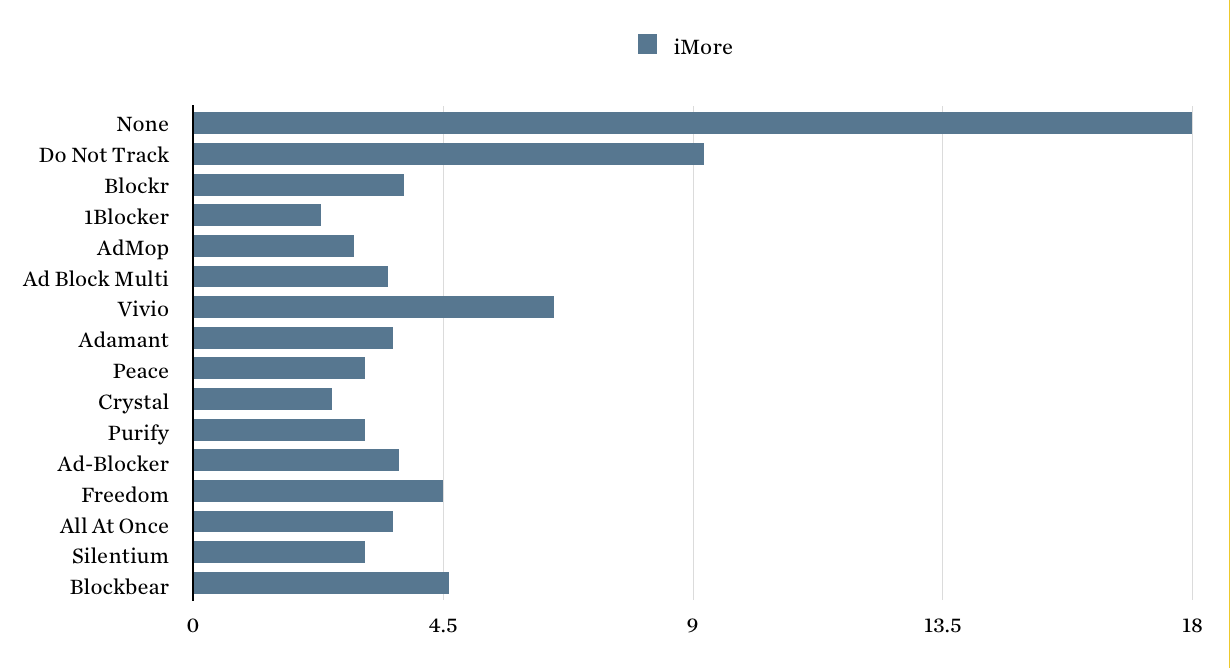
The other cost comes from ads that are placed on webpages. The rise of ad blocking flows from that latter fact. One test showed an ad blocker improved page load time from 18 seconds to less than 4.5 seconds, when using a number of ad blockers.


As helpful as advertising is to defray the cost of free or low-cost apps and services, there now is growing end user experience impact.


Webpages load slowly. Videos pop up unannounced and – worse still – start to play without your consent, consuming bandwidth on accounts that typically have usage caps of some sort. That arguably is a bigger problem for mobile users than fixed users, but that is the issue: more use of the Internet comes on mobile devices.


Ooyala’s Q2 2015 Global Video Index showed that nearly half of all video plays and ad impressions for publishers occurred on mobile devices.


Ooyala said 44 percent of all video views in the quarter were on mobile devices, an increase of 844 percent since the second quarter of 2012, and a compound annual growth rate that exceeds 110 percent.

Ooyala also found that 49 percent of all ad impressions for publishers were on mobile devices during the quarter, a jump of some 11 percent from the previous quarter.


So it’s not surprising that use of ad-blocking software is growing. That might not be a good thing, beyond the benefits end users derive from the practice. If revenue models are premised on advertising, then the death of advertising is going to have severe repercussions on the rest of the ecosystem.

Improved user experience is one thing. It is hard to argue that is a bad thing. But business model collapse is probably not a great thing. Huge chunks of the ecosystem could disappear.

Saturday, September 26, 2015

Jana Builds Sponsored Data Business

Let us be clear: Facebook does not participate in sponsored data or zero rating programs. Its Free Basics program does not involve any financial transfers from Facebook or its apps to Internet services providers, nor do ISPs pay anything to Facebook.


source: Jana
On the other hand, others might wish to do so. Jana, for example, has done so successfully, in multiple markets, offering airtime in exchange for taking some action desired by sponsors, such as trying an app.


Clients like LINE  pay Jana to get their apps in front of users who spend more than ten minutes a day on WhatsApp, for example.


The idea is not new. Entrepreneurs have tried to launch various ad-supported services for decades. Jana might be succeeding because of its ability to use billing systems more affordably than ever before, and because it can mine data better, at low cost.


Think of the issue with micropayments. Generally speaking, it has been difficult to sell products at cents when billing costs represent dollars of cost.


The same problem holds for rewards of usage that are relatively limited, when the cost of authorizing and then fulfilling a specific transaction is not very low.


Internet.org Rebrands "No Data Plan" Service as Free Basics

Internet.org has been rebranded as Free Basics, a mobile app and website which provides no-charge access to some 60 apps without the need for buying a mobile data plan. The new name obviously better describes what the service entails.

The organization also is helping third parties create new Wi-Fi services in rural areas of India. Called Express Wi-Fi, that initiative provides support for entrepreneurs who want to sell Wi-Fi access.

The initiative aims to enable Wi-Fi  at lower retail prices than has been possible before. Part of the effort might well entail stripping out bandwidth-intensive elements such as advertising and video.

Facebook has already set up such hotspots in partnership with Internet service providers in parts of Uttarakhand and Bangalore.

Friday, September 25, 2015

Mobile Web Audience Grew 42% Year over Year

Mobile media now is driving growth in digital media business, underscoring mobile’s role in just about every important trend in Internet access, content consumption and value of the Internet overall.

Mobile web audiences grew 42 percent over the past year, while use of mobile apps grew 21 percent, year over year, comScore says.


Fixed Network Business Case Remains Challenging

No single access platform ever is the “best” or “only” solution for a communications objective. Though mobile widely has become the key enabling platform in much of the world, there are times when satellite or fixed wireless is the only economically-viable option.

Likewise, despite the bandwidth advantages of a fiber-backed fixed network, the business case
is severe, in many cases.

By some estimates, fiber to the home or fiber to the curb has a positive business case in less than 50 percent of instances, and far less than that in the developing world, according to the International Telecommunications Union.

70% of People Globally Will Have Internet Access by 2020, ITU Says

Of an estimated 9.2 billion mobile subscriptions expected to be in service by 2020, 7.7 billion will have mobile Internet access, according to the International Telecommunications Union. At that point, about 70 percent of the world’s population will be using a smartphone.

If those forecasts are correct, then dire warnings about the global digital divide will be a sharply less important reality. We likely still have some ways to go in terms of supplied bandwidth, and there still will be coverage gaps.


Goldens in Golden

There's just something fun about the historical 2,000 to 3,000 mostly Golden Retrievers in one place, at one time, as they were Feb. 7,...