In Africa, that already is happening. Mobile operators as banks
Thursday, January 5, 2012
Visa CEO Says Mobile Service Providers Will Not Become Banks
In Africa, that already is happening. Mobile operators as banks
Gary Kim was cited as a global "Power Mobile Influencer" by Forbes, ranked second in the world for coverage of the mobile business, and as a "top 10" telecom analyst. He is a member of Mensa, the international organization for people with IQs in the top two percent.
Sprint Puts Investment in LightSquared on Hold
“The companies have agreed to realigning our deployment timeline to coincide with potential FCC actions,” Scott Sloat, a spokesman for Overland Park, Kansas-based Sprint, said. Until approval is received, “both companies believe it is prudent to pull back on expenses,” he said. Sprint Puts Investment in LightSquared on Hold
Tests continue to show interference issues, though. LightSquared is not the only entity proposing to re-purpose satellite spectrum to build new broadband Long Term Evolution fourth generation mobile networks. Dish Network also is asking the FCC for permission to build a network simialr to LightSquared.
The obvious potential here is the possibility that as many as three brand new LTE networks could be built in the U.S. market, in addition to the networks Sprint, Verizon Wireless and AT&T also are building. Some will argue that is too many 4G networks, but the business models and market segments might be different.
Dish Network will have a primary interest in providing mobile broadband services that augment its moves into new forms of TV distribution. Clearwire's LTE network, as will LightSquared's proposed network, are designed as wholesale platforms for other retail providers to use.
Gary Kim was cited as a global "Power Mobile Influencer" by Forbes, ranked second in the world for coverage of the mobile business, and as a "top 10" telecom analyst. He is a member of Mensa, the international organization for people with IQs in the top two percent.
Google TV Gets "Surprising" Traction
But Google has been aiming to make Google TV capabilities a native feature of the TV set, and seems to be getting some traction in that regard. Google TV getting traction
Just how soon "many" makes and models will have embedded Google TV is not so clear. It might take several years. How long before Google TV is widely available?
Apple, on the other hand, might be planning to build and sell it own TVs. Apple might build its own TVs.
Gary Kim was cited as a global "Power Mobile Influencer" by Forbes, ranked second in the world for coverage of the mobile business, and as a "top 10" telecom analyst. He is a member of Mensa, the international organization for people with IQs in the top two percent.
Mobile Wallet is an Ecosystem: You Can't "Own" It
The ecosystem has been necessary even in the arguably less-complex traditional credit card business. But mobile commerce, involving credentials, offers, marketing, advertising, in-store promotions, payment and content services, are much more complex.
Gary Kim was cited as a global "Power Mobile Influencer" by Forbes, ranked second in the world for coverage of the mobile business, and as a "top 10" telecom analyst. He is a member of Mensa, the international organization for people with IQs in the top two percent.
More Evidence Text Message Market is Changing
Finland's largest carrier, Sonera, for example, recorded a 22 percent decline in texting on Christmas Eve in 2011, versus the same night in 2010.
It isn't that people are communicating less. They are just using different methods of communicating. Text Messaging Declines
Hong Kong also apparently saw a similar decrease on Christmas, dropping 14% from the same day in 2010. Netherlands service provider KPN provided an early warning when it announced significant declines in messaging volume earlier in 2010. KPN text message declines
Dutch telecoms regulator, OPTA, which shows a significant decline in the number of SMS sent in the Netherlands in first half of 2011 compared to the previous six-month period.
The country's largest operator, KPN, has also reported declining year-on-year messaging volumes over the last few quarters due to what it calls "changing customer behavior."
Wireless Intelligence says text messaging volumes are falling in France, Ireland, Spain and Portugal as well.
According to OPTA, the total number of SMS sent in the Netherlands stood at 5.7 billion for the first six months of the year, down 2.5 percent from 5.9 billion in the second half of 2010, even though total text messaging revenue rose slightly (0.6 percent) to EUR378 million during the period.
Gary Kim was cited as a global "Power Mobile Influencer" by Forbes, ranked second in the world for coverage of the mobile business, and as a "top 10" telecom analyst. He is a member of Mensa, the international organization for people with IQs in the top two percent.
Google Chrome Gets Faster, Safer
"One of the things people like best about Chrome is that it loads web pages quickly," Google's Chrome blog says. "To get you where you want to go even faster, Chrome will now start loading some web pages in the background, even before you’ve finished typing the URL in the omnibox."
On the security front, improvements to Chrome’s Safe Browsing technology should help protect you from additional types of malware attacks. Google Chrome Blog
To help protect you against malicious downloads, Chrome now includes expanded functionality to analyze executable files (such as “.exe” and “.msi” files) that you download. If a file you download is known to be bad, or is hosted on a website that hosts a relatively high percentage of malicious downloads, Chrome will warn you that the file appears to be malicious and that you should discard it.
I've just loaded it and it does seem to execute faster. I'm amazed.
Gary Kim was cited as a global "Power Mobile Influencer" by Forbes, ranked second in the world for coverage of the mobile business, and as a "top 10" telecom analyst. He is a member of Mensa, the international organization for people with IQs in the top two percent.
Who Are the Top 10 Power Influencers in Mobile?
Gary Kim was cited as a global "Power Mobile Influencer" by Forbes, ranked second in the world for coverage of the mobile business, and as a "top 10" telecom analyst. He is a member of Mensa, the international organization for people with IQs in the top two percent.
The Digital Living Room
You can argue about whether the shift to "interactive television" has happened, or what that actually means.
Gary Kim was cited as a global "Power Mobile Influencer" by Forbes, ranked second in the world for coverage of the mobile business, and as a "top 10" telecom analyst. He is a member of Mensa, the international organization for people with IQs in the top two percent.
Does Social Messaging Displace Text Messaging?
Apple's iMessage is a service that seeks to replace text messaging, and in at least this case, seems to do precisely that.
The iMessage service sends messages (text, images or video) using any broadband access mechanism, defaulting to text messaging if the recipient cannot receive such messages. It probably is important to note that the biggest potential effects would be seen where one iOS 5 user sends lots of messages to other iOS 5 users.
Gary Kim was cited as a global "Power Mobile Influencer" by Forbes, ranked second in the world for coverage of the mobile business, and as a "top 10" telecom analyst. He is a member of Mensa, the international organization for people with IQs in the top two percent.
Apps Consume Much More Bandwidth than Web Sessions
The test compared PC and tablet web browsers to view the Wall Street Journal home page, with an iPad Wall Street Journal app to reach the same home page.
The data consumed using the Web browser on the iPad and on a PC to access the WSJ home page was similar, both averaging around 2.2 megabytes in total consumption (sent and received). The same test was run accessing the The Weather Channel site, which revealed similar results (around .9MB in total consumption).
Although the iPad Web browser consumed slightly more data than the PC web browser for TWC, the difference was not enough to warrant further investigation, says Greg Wolf, a principal with NetForecast who conducted the test. However, using the iPad apps to read the WSJ and TWC tells is a very different story.
The WSJ on average consumed 47MB of data when downloading a daily issue, while TWC consumed on average 7MB just to display the main menu.
In other words, the WSJ iPad app consumed 21 times more data than accessing the WSJ homepage using a Web browser, and the TWC app consumed over 7 times more data than accessing the TWC main menu using a Web browser.
Putting aside the obvious fact that the experience of using a native iPad app is designed to deliver a richer, multimedia experience, the point here is that this experience comes at a price. App data consumption much higher than web sessions
Gary Kim was cited as a global "Power Mobile Influencer" by Forbes, ranked second in the world for coverage of the mobile business, and as a "top 10" telecom analyst. He is a member of Mensa, the international organization for people with IQs in the top two percent.
Video and Cloud Killer Apps for 4G?
About half of the respondents seem to think 4G mobile service is just "faster" access.
2012 in mobile
Gary Kim was cited as a global "Power Mobile Influencer" by Forbes, ranked second in the world for coverage of the mobile business, and as a "top 10" telecom analyst. He is a member of Mensa, the international organization for people with IQs in the top two percent.
Apple TV: a Content Device Needs Content
Gary Kim was cited as a global "Power Mobile Influencer" by Forbes, ranked second in the world for coverage of the mobile business, and as a "top 10" telecom analyst. He is a member of Mensa, the international organization for people with IQs in the top two percent.
9% of U.S. Consumers Have Abandoned Video Service
Perhaps the important finding is why people are considering doing so. The 11 percent who report they are considering abandoning subscription TV services say they now can watch almost all of their favorite shows online.
One would guess that, as typically is the case when product substitution occurs, that the first “switchers” are users for whom the existing solutions have low value, compared to product price.
The classic example is the person who doesn’t watch much television in the first place and does not have children or other family members who do enjoy television, making a $100 a month fee “high” in relationship to value.
In the case of the "typical end user," video cord cutting seems to be more of a barrier than some might think. Highly-motivated end users might put up with quite a lot of hassle to avoid buying video. For most, such efforts will be too much bother. 9% of U.S. Consumers Have Abandoned Video Service - Carrier Evolution
Gary Kim was cited as a global "Power Mobile Influencer" by Forbes, ranked second in the world for coverage of the mobile business, and as a "top 10" telecom analyst. He is a member of Mensa, the international organization for people with IQs in the top two percent.
Mobile Payments, Commerce Big in 2012?
There's an unusual finding in Chetan Sharma's most-recent survey of 150 mobile service provider and suppler executives looking at what will be hot in mobile in 2012. The respondents believe mobile payments and mobile commerce will be more popular consumer applications than location services and music, and will be only modestly less popular than messaging.That is almost shocking. The only way to make sense of the findings is that "commerce" is broadly defined to include checking product availability and prices from a mobile, browsing shopping sites on a mobile device, or looking for a particular store.
The clue is that there appear to have been separate questions asked about use of near field communications, for example. Still, the fact that mobile payments and mobile commerce are considered the second most popular consumer application of 2012 is instructive, even if most observers might agree that the bulk of that activity will take the form of commerce rather than payments.
The other noteworthy finding is that many of the executives expect Amazon will enter the mobile market in a more-direct way in 2012. Mobile executives views on 2012
Gary Kim was cited as a global "Power Mobile Influencer" by Forbes, ranked second in the world for coverage of the mobile business, and as a "top 10" telecom analyst. He is a member of Mensa, the international organization for people with IQs in the top two percent.
Western Europe Mobile Churn Will Grow in 2012
During 2012, several European Union countries will slide into recession and governments will press ahead with tough austerity measures, Yankee Group believes. The most affected countries will include Greece, Italy, Spain, Portugal and Ireland, but others, including the U.K. and France, will also be impacted.
“As they did during the last recession, customers will optimize their mobile consumption behavior in an attempt to minimize monthly spend,” say Yankee Group researchers.
During the first year of the recession between the fourth quarter of 2008 and the fourth quarter of 2009, monthly churn increased by 0.14 percentage points. That might not sound like much, but leads to about a 17-percent increase in churn rate over a year’s time.
During 2012, similar switching behavior will contribute to another increase in churn rates. Western Europe Mobile Churn Will Grow in 2012 - Carrier Evolution
Gary Kim was cited as a global "Power Mobile Influencer" by Forbes, ranked second in the world for coverage of the mobile business, and as a "top 10" telecom analyst. He is a member of Mensa, the international organization for people with IQs in the top two percent.
Lower Mobile ARPU in Latin America
Excluding Venezuela and Argentina, voice ARPU in Latin American markets are declining at about two percent per quarter, according to Yankee Group analysts.
“Simple linear projections indicate nominal voice ARPU won’t stop declining until late 2017,” Yankee Group says. “By then regional voice ARPU would be just over U.S.$5.80, about 40 percent less than it is today.” Lower Mobile ARPU in Latin America - Carrier Evolution
Gary Kim was cited as a global "Power Mobile Influencer" by Forbes, ranked second in the world for coverage of the mobile business, and as a "top 10" telecom analyst. He is a member of Mensa, the international organization for people with IQs in the top two percent.
"Voice as a Feature" is Business Customer Future
Another way of saying that is to note that “application-specific networks,” built to deliver a single lead application, no longer are the norm. Instead, virtually all major networks now are “multi-service” networks.
In some ways that has helped service providers, who now can sell multiple anchor products on a single network (voice, video and data). On the other hand, modern networks also fundamentally separate “access” from “applications,” meaning “over the top” competition now is easy.
That of course also has the added danger of removing service providers from direct customer relationships on a wider range of products, services and experiences.
According to analysts at the Ericsson Consumer Lab, traditional communication verticals such as telephony and video conferencing will continue to exist as profitable businesses. "Voice as a Feature" is Business Customer Future - Carrier Evolution
Gary Kim was cited as a global "Power Mobile Influencer" by Forbes, ranked second in the world for coverage of the mobile business, and as a "top 10" telecom analyst. He is a member of Mensa, the international organization for people with IQs in the top two percent.
Broadband is Cable's New Anchor Service
That is not to dismiss the importance of the legacy video revenue, any more than it makes sense to dismiss the continuing importance of voice revenues for mobile or fixed network communications providers. But growth rates point to where all the networks are going.
It's all based on broadband.
Gary Kim was cited as a global "Power Mobile Influencer" by Forbes, ranked second in the world for coverage of the mobile business, and as a "top 10" telecom analyst. He is a member of Mensa, the international organization for people with IQs in the top two percent.
Kindle Fire Has Changed Tablet Market
Google executive chairman Eric Schmidt has said the company plans to launch a high quality tablet device "within the next six months."
The sources believe that Google will launch the own-brand tablet in March to April of 2012, featuring a seven-inch panel and Android 4.0 with a price less than $199 to compete against Amazon's Kindle Fire. Google tablet PC believed to be targeting Kindle Fire
Gary Kim was cited as a global "Power Mobile Influencer" by Forbes, ranked second in the world for coverage of the mobile business, and as a "top 10" telecom analyst. He is a member of Mensa, the international organization for people with IQs in the top two percent.
Why Do People Use Landline Voice?
Gary Kim was cited as a global "Power Mobile Influencer" by Forbes, ranked second in the world for coverage of the mobile business, and as a "top 10" telecom analyst. He is a member of Mensa, the international organization for people with IQs in the top two percent.
Wednesday, January 4, 2012
Social Signals as Polling Data
In research Global Point has done in the past, its data tends to be about two weeks ahead of polls. Social signals and polling
The Twitter "positive" activity indicated that something was going on, that Rick Santorum was fast gaining traction.
Gary Kim was cited as a global "Power Mobile Influencer" by Forbes, ranked second in the world for coverage of the mobile business, and as a "top 10" telecom analyst. He is a member of Mensa, the international organization for people with IQs in the top two percent.
Tuesday, January 3, 2012
4G, Business Access Both Benefit From Growing 10-Mbps Ethernet Trend
But a change in business customer bandwidth buying would run a close second. Many would argue that 10 Mb/s Ethernet is the new T-1.
According to Vertical Systems Group, most business buyers choose access speeds someplace between T-1 at 1.5 Mbps, to T-3, at 45 Mbps.
Carrier Ethernet is the most popular technology choice within the intermediate-speed category, Vertical Systems estimates. By 2014, Ethernet connections will exceed all other intermediate-speed options by a factor of about 2.5, Vertical Systems Group also predicts. Carrier Ethernet enables 4G
Gary Kim was cited as a global "Power Mobile Influencer" by Forbes, ranked second in the world for coverage of the mobile business, and as a "top 10" telecom analyst. He is a member of Mensa, the international organization for people with IQs in the top two percent.
Kindle Fire Cut Into iPad Sales
That wouldn't strike many people as unexpected. Amazon says it sold more than four million Kindles in December 2011.
Selling at $199, compared to $499 for the lowest priced iPad, the Kindle Fire would be expected to take some "tablet" share, even if some observers would say the Kindle Fire is an e-reader, not a tablet. Kindle Fire Cut Into iPad Sales
McCourt now estimates sales of 13 million iPads in the quarter, down from 16 million, while boosting his projection on iPhone sales to 29 million, from 27 million. He now estimates that the company sold 4.8 million Macs in the quarter, down a hair from his previous projection of 4.9 million. iPad sales down
He estimates the Amazon Kindle Fire sold four million to five million units this holiday season, likely trimming iPad sales by one to two million units.
Gary Kim was cited as a global "Power Mobile Influencer" by Forbes, ranked second in the world for coverage of the mobile business, and as a "top 10" telecom analyst. He is a member of Mensa, the international organization for people with IQs in the top two percent.
Is Communications Spending Growing, or Not?
Also, even nominal spending can be deceptive. If a flat dollar amount of spending over time also is accompanied by large decreases or increases of overall income, for example, the nominal spending can disguise “real” changes.
Ignore for the moment changes in product value or features over time that also complicate comparisons. If “X” amount of spending on any product also is accompanied by significant changes in a household or national budget, for example, then the implications can be quite significant.
As a percentage of spending, a flat amount automatically will represent a larger percentage of spending.
In other words, the product of a fraction always changes as either the nominator or denominator changes. That noted, it is possible that spending patterns are changing, for the first time in decades. There is evidence that between 2007 and 2010, for example, U.S. households were spending much more on “telephone equipment,” which has to represent purchases of mobile phones. That should, in principle, lead to higher spending on mobile communication services.
There also was a predictable increase in spending on “communication services,” which probably reflects increases in video subscription rates, plus some incremental spending on mobile services for all those mobile devices people seem to be buying.
Keep in mind that those percentage increases might, or might not, represent a significant change in the percentage of household spending on services or devices.
Logic might suggest that most people do not spend much, in any given year, on fixed line phones or fax machines, for example.
So a 16-percent change on a small base might not represent much actual sales volume. A four-percent growth of spending on “information processing” equipment, which presumably includes personal computers, tablets and possibly other personal mobile devices, might represent a bigger change in dollar volume.
On the other hand, logic also would suggest that people are spending more on tablets and smart phones, which could mean they are maintaining spending on legacy products, and adding new devices (increasing spending overall), substituting new products for older products (substituting new products for older products), or cutting back someplace else in budgets to add the new products.
Looking back at the 1990 to 2008 period, for example, one can note “huge” increases in nominal consumer spending on communications and information technology.
Since 1990, though, those changes also have been more than matched by broader increases in household income, holding the percentage of household spending on communications flat over the entire period.
One might also note that such figures also are not typically “inflation adjusted” to show changes in constant dollar terms.
Since 1990, consumer spending on information and communications technology has grown from $197 billion to $545 billion, 5.1 percent of national disposable income in 1990, peaking at 5.9 percent in 2000, and falling to 5.4 percent in 2008. Those figures include both recurring spending on services and product purchases.
Spending on communications services has tripled over the same period, from $77 billion to $243 billion, and at 2.3 percent of national disposable income, up from 1.8 percent in 1990 but below its peak of 2.5 percent in 2001.
Basically, the story is one of large increases in consumer value. Consumers are spending more on communications and information technology, but a steady percentage of disposable income. Yet consumer value has grown exponentially in the intervening years, one might argue.
The problem is that changes in product quality are not reflected in retail price metrics. That is a common “problem” where we look at software and computing devices, where a constant dollar amount buys more processing power and features every 18 months to 24 months.
U.S. communications expenditures as a share of national disposable income has been flat since 1997, but users have added over 100 million broadband and video connections and over 100 million wireless connections, according to the Bureau of Economic Analysis.
Such potential changes bear watching. It would be a very-big deal indeed if typical consumer spending on communications services and mobile devices were to deviate from their historical patterns in a markedly upward direction.
One might argue we already have seen a slight upward trend, measured as a percentage of total household spending. The other angle is that communications spending always will represent a very-small fraction of overall household spending, dwarfed by housing, food, medical care and other categories, for example.
Gary Kim was cited as a global "Power Mobile Influencer" by Forbes, ranked second in the world for coverage of the mobile business, and as a "top 10" telecom analyst. He is a member of Mensa, the international organization for people with IQs in the top two percent.
Ultrabooks, Not Tablets, will be Center Stage at CES
That's okay. People clearly are getting used to devices that boot up fast, and a slim notebook that boots fast is a definite improvement. Others would note that "ultrabooks" draw inspiration from the Apple Mac Air, and that's okay as well.
Among the advantages tablets demonstrate to most users is that they boot up fast. CES
.
Gary Kim was cited as a global "Power Mobile Influencer" by Forbes, ranked second in the world for coverage of the mobile business, and as a "top 10" telecom analyst. He is a member of Mensa, the international organization for people with IQs in the top two percent.
People Like Siri, but Don't Use It
But I typically still type in Google search terms. I can't explain why all of us seem to be using text input where speech input is available. In my case I've had the feature for two years, and never have abandoned text entry when searching.
You might argue that Siri is a better, more natural way to "ask questions," rather than "a way to search." But it doesn't seem to have changed behavior much.
Gary Kim was cited as a global "Power Mobile Influencer" by Forbes, ranked second in the world for coverage of the mobile business, and as a "top 10" telecom analyst. He is a member of Mensa, the international organization for people with IQs in the top two percent.
Growing Roles for Devices for Mobile Commerce, Content
Separately, Apple says it will hold a media event in late January 2012, with speculation that it has something to do with either advertising or content. That would illustrate the growing content consumption role of devices in general, with a strong tie to mobile commerce.
The Kindle Fire interface, for example, features tabs for “Newsstand, Books, Music, Videos, Docs, Apps, Web.” That is perhaps the most-logical way to organize a content consumption device.
But each tab is a gateway to commerce, namely, the ordering of new content to put in user libraries.
Kindle Fire users seem quite happy with the product, in general, according to analyst Gene Munster.
Piper Jaffray analyst Gene Munster said half of the 8,529 Fire reviews he surveyed gave the tablet 5 out of 5 stars, compared with 48 percent of those polled who gave the tablet a 5-star review on 13 December and 47 percent who gave the tablet a 5-star review on December 8, 2011.
Gary Kim was cited as a global "Power Mobile Influencer" by Forbes, ranked second in the world for coverage of the mobile business, and as a "top 10" telecom analyst. He is a member of Mensa, the international organization for people with IQs in the top two percent.
Google+ Keeps Growing, Despite Skepticism
Many predicted Google+ would fail. That doesn't seem to be happening. According to Experian Hitwise, Google+ not only has grown significantly since the summer 2011 launch, but has hit a record new peak of visitors in December 2011.
One hears almost nothing, in early January 2012, about Google+ "failing" to get traction.
Gary Kim was cited as a global "Power Mobile Influencer" by Forbes, ranked second in the world for coverage of the mobile business, and as a "top 10" telecom analyst. He is a member of Mensa, the international organization for people with IQs in the top two percent.
Monday, January 2, 2012
Sprint Grants LightSquared 30-Day Extension
Getting FCC clearance is a condition of a 15-year spectrum-and-equipment-sharing deal between the two companies, allowing LightSquared to use the Sprint national network, and giving Sprint rights to user LightSquared spectrum. Sprint Grants LightSquared gets 30 more days
Gary Kim was cited as a global "Power Mobile Influencer" by Forbes, ranked second in the world for coverage of the mobile business, and as a "top 10" telecom analyst. He is a member of Mensa, the international organization for people with IQs in the top two percent.
Tumblr Changed Blogging
Gary Kim was cited as a global "Power Mobile Influencer" by Forbes, ranked second in the world for coverage of the mobile business, and as a "top 10" telecom analyst. He is a member of Mensa, the international organization for people with IQs in the top two percent.
97% of U.S. Homes Use Broadband, Ofcom Says
About six percent of households appear to use mobile only, while four percent use both fixed and mobile broadband.
Ofcom data
Gary Kim was cited as a global "Power Mobile Influencer" by Forbes, ranked second in the world for coverage of the mobile business, and as a "top 10" telecom analyst. He is a member of Mensa, the international organization for people with IQs in the top two percent.
Mobile Broadband Revenues Nearly Equal Fixed Line Revenue in 2010
By some measures, service providers now make nearly as much money from mobile broadband services as they do from fixed broadband. Ofcom analysis Over time, mobile broadband is likely to become even more important, if for no other reason than that mobile broadband is sold on a per-device, nearly a per-user basis, while fixed broadband is sold per household.
Granted, fixed mobile connections generate more revenue per line. But mobile units will outnumber fixed connections by such a margin that aggregate revenue will continue to shift in the direction of mobile services.
Gary Kim was cited as a global "Power Mobile Influencer" by Forbes, ranked second in the world for coverage of the mobile business, and as a "top 10" telecom analyst. He is a member of Mensa, the international organization for people with IQs in the top two percent.
How Big Does a Distributor Have to Be?
In other words, contracts generally forbid sales of channels a la carte, which would represent one potential source of innovation. So far, Comcast, Time Warner Cable, AT&T, DirecTV, Dish Network, Verizon and others have lacked leverage.
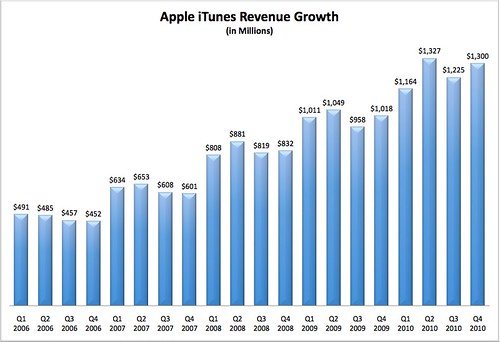
But then there's Google, Apple and Amazon. Apple's iTunes customer base arguably got to be so large that music publishers had to do business with Apple, on the general terms Apple wanted. That includes such basic matters as retail pricing, royalty rates and ability to "unbundle" discs and sell songs one at a time.
Some might argue that, over time, content owners "must" lose power to the huge new distributors. In that view, Amazon, Apple and possibly some others will amass audiences so large that the distributors will gain the upper hand. Who "owns" video distribution?
Certainly many would argue that perpetual annual price increases for video entertainment services at their current rate are unsustainable. And one almost-certain way to put a brake on costs is for distributors to gain the ability to say "no" to programmer demands.
Network economics would change, of course. If programmers cannot "force" distributors to buy channel bundles, and distributors do not restrict channel bundles so rigidly, programming choices could explode.
Though telco, cable and satellite distributors might not prefer to sell smaller packages of channels, or simply programs, newer distributors might well prefer to sell that way. Think iTunes rather than a Comcast video subscription.
Many lightly-viewed networks would no longer be viable. Many shows would have a harder time getting exposure to an audience. But new promotion methods would arise. YouTube Channels might become more important venues for specialty networks.
Some might question the long-term viability of the channel metaphor. But channels are akin to "genres" of music. People have favorite artists and songs. But they also have preferences for genres. The same will be true for video and movies. Both channels and a la carte can coexist.
Cable operators, though, are not likely to be as supportive of a la carte access to discrete programs as will Amazon and Apple, who have device and business ecosystems well suited to a la carte buying. Apple and Amazon have numerous other ways to make money than by selling advertising.
Video distributors make money on subscriptions and advertising, and both revenue streams potentially are disrupted by a la carte sales.
But the question remains: how big does a distributor have to be before content providers must be on the platform? In music, the answer has been "as big as Apple." So far, nobody in the video distribution business has yet reached that scale, apparently.
But there are lots of potentially-huge channels. In the online world, Apple, Amazon and Google might come to mind. In the physical world, Wal-Mart, Target or Best Buy already have tried to make a move. So far, though, all we have seen is cracks. The old order is not yet crumbling.
Gary Kim was cited as a global "Power Mobile Influencer" by Forbes, ranked second in the world for coverage of the mobile business, and as a "top 10" telecom analyst. He is a member of Mensa, the international organization for people with IQs in the top two percent.
Sunday, January 1, 2012
Time Warner Cable Takes Stand on Sports Programming Cost
Gary Kim was cited as a global "Power Mobile Influencer" by Forbes, ranked second in the world for coverage of the mobile business, and as a "top 10" telecom analyst. He is a member of Mensa, the international organization for people with IQs in the top two percent.
Saturday, December 31, 2011
Apple iPhone Gets 66% Share at AT&T Retail Stores
Gary Kim was cited as a global "Power Mobile Influencer" by Forbes, ranked second in the world for coverage of the mobile business, and as a "top 10" telecom analyst. He is a member of Mensa, the international organization for people with IQs in the top two percent.
Cable Bills "Tripled" in 10 Years?
There are a couple of obvious issues. Those are nominal prices, not adjusted for inflation. Using a rough rule of thumb about prices doubling every decade, a $40 inflation-adjusted price in 2001 would be about $80 in 2011, which is about what SNL Kagan says is the case.
Beyond that, there is the other problem also experienced by PC suppliers, namely that performance increases are not captured by the retail sales data. The 2011 channel line-up is, generally speaking, much more extensive than in 2001.
Whether that actually provides value for end users is another question. But the "product" itself is different. Also some will compare the "total bill" for all services in 2001 with the total monthly bill in 2011, and argue for a "tripling" of bills. That also is erroneous.
In 2001 arguably few subscribers were buying triple-play packages of voice, video and data. In 2011 that was more the norm than the exception. So the price for a three-service package is compared to what essentially was a one-service package in 2001.
One easily can argue that nominal cable retail prices have climbed. But it also is true that consumers are buying a different mix of "products," including high-definition services and devices, digital video recorder service and service at more outlets, for example. Cable bills
Gary Kim was cited as a global "Power Mobile Influencer" by Forbes, ranked second in the world for coverage of the mobile business, and as a "top 10" telecom analyst. He is a member of Mensa, the international organization for people with IQs in the top two percent.
A Tablet Christmas
It would be reasonable to assume that the Kindle Fire represented much of that activity. Amazon says it sold more than four million Kindles during the month of December, for example. That means 59 percent of activation events could have been for the Kindle Fire alone.
Gary Kim was cited as a global "Power Mobile Influencer" by Forbes, ranked second in the world for coverage of the mobile business, and as a "top 10" telecom analyst. He is a member of Mensa, the international organization for people with IQs in the top two percent.
No Killer App for Verizon LTE?
With data-download speeds up to 10 times faster than previous technologies, it might seem that Verizon's "fourth generation," or 4G wireless network, would be a hot commodity in a mobile device-crazed world, says Kapustka.
But lack of a compelling new "4G-only" application is one possible reason why Verizon had sold fewer than 2 million 4G LTE-capable smart phones during the first nine months of 2011. he argues. Some of us also would argue that 3G is quite good enough for most smart phone users, at the moment.
By way of comparison, more than four million people bought the new Apple iPhone 4S the first weekend it went on sale, from Verizon as well as from AT&T and Sprint, Kapustka argues.
But we should not underestimate sales, either. Verizon sold more than a quarter-million units of its first 4G LTE phone, the HTC ThunderBolt, in just two weeks after its mid-March 2011debut. Those sales arguably were made to “early adopters” who had a reason to buy.
Gary Kim was cited as a global "Power Mobile Influencer" by Forbes, ranked second in the world for coverage of the mobile business, and as a "top 10" telecom analyst. He is a member of Mensa, the international organization for people with IQs in the top two percent.
No Significant Cord Cutting Yet, But Maybe Serious Cord Avoidance
So far, the numbers seem to be on the side of doubters. Keeping matters in perspective, Comcast Corp., lost 442,000 video subscribers in the first nine months of 2011, fewer than in the same period last year. But Comcast also has about 22.4 million video customers and 49.4 million accounts if you include buyers of Comcast voice and high-speed broadband products.
Time Warner Cable Inc. lost 319,000 over the same period, according to the Wall Street Journal. Losing cable customers
Also, losses at cable companies are mostly defections of customers to rival satellite or telco providers, rather than outright defections from the ranks of video service providers. So the actual amount of abandonment arguably remains fairly low. No Significant Cord Cutting Yet, But Maybe Serious Cord Avoidance - Carrier Evolution
Gary Kim was cited as a global "Power Mobile Influencer" by Forbes, ranked second in the world for coverage of the mobile business, and as a "top 10" telecom analyst. He is a member of Mensa, the international organization for people with IQs in the top two percent.
Friday, December 30, 2011
Verizon says LTE outages are IMS related
All three outages were caused by problems in Verizon’s service delivery core, the IP Multimedia Subsystem (IMS) which is used for signaling on the LTE network.
While IMS has been around for some time, Verizon’s is the first implementation in an LTE network and it has continued to be a problem spot ever since April 2011, when a software bug originating deep within the IMS core led to a complete failure, kicking LTE customers off both Verizon’s 3G and 4G networks nationwide.
Gary Kim was cited as a global "Power Mobile Influencer" by Forbes, ranked second in the world for coverage of the mobile business, and as a "top 10" telecom analyst. He is a member of Mensa, the international organization for people with IQs in the top two percent.
On the Use and Misuse of Principles, Theorems and Concepts
When financial commentators compile lists of "potential black swans," they misunderstand the concept. As explained by Taleb Nasim ...
-
We have all repeatedly seen comparisons of equity value of hyperscale app providers compared to the value of connectivity providers, which s...
-
It really is surprising how often a Pareto distribution--the “80/20 rule--appears in business life, or in life, generally. Basically, the...
-
One recurring issue with forecasts of multi-access edge computing is that it is easier to make predictions about cost than revenue and infra...