Monday, August 26, 2013

Will LTE Displace Public Wi-Fi?

Does Long Term Evolution change user behavior? And if so, does behavior change in ways that help mobile service providers make more money? Also, could the substantial use of public Wi-Fi lessen as users shift Internet access back to the mobile network?

A study by U.K. service provider  EE suggests some behavioral changes are happening. Basically, the faster 4G speeds seem to encourage people to use the mobile network more, and public Wi-Fi networks less, for access.

To the extent that use of 4G involves a price premium for identical usage cap plans, service provider revenue is, by definition, higher on 4G, compared to 3G.

What is not yet clear is the potential creation of important new revenue-generating  apps.

It does appear that 4G users on EE’s network are using both public Wi-Fi hotspots and home broadband services less. In April 2013 about 27 percent of respondents surveyed said they did not use public Wi-Fi, or were using it less.

By the end of July 2013, about 43 percent of respondents indicated they were using public Wi-Fi less.

Likewise, where in April 2013 about 21 percent of respondents indicated they were using their home broadband (fixed connection) less, by the end of July 2013 23 percent of the 4G users reported using the fixed connection less.


Those trends--less use of public Wi-Fi and less use of at-home fixed connections--could have implications for average revenue, beyond any price premium paid for a 4G plan, compared to a 3G plan.

As users find their 4G connections more useful, they might start using more data on the mobile network, compared to public Wi-Fi and fixed broadband. That could encourage users to buy larger usage plans, which would generate more revenue for mobile service providers.

At the very least, that could mean heavier reliance on mobile broadband access, compared to Wi-Fi access. At a larger level, there could be implications for mobile broadband substitution of fixed network access.

A pattern of lower usage is one indicator of possible customer churn.

The study also shows people are sharing videos and pictures over 4G, leading to network upload traffic overtaking download traffic at key events. Think of the example of people at a sports event or big concert. This is another example of “faster speed” changing behavior.

Also, the study suggests 33 percent of 4G users stream more video over 4G than
they did using 3G, with BBC iPlayer, Netflix and Sky Go the favourite TV services.

On the other hand, people  are  using some apps less. The study shows a drop in music and app downloading and streaming, for example. Where in April about 15 percent reported music or app downloading or streaming, just 11 percent did at the end of July 2013.


What isn’t completely clear yet are behavior patterns on smart phones and tablets.
Though people seem to browse the web on 4G phones as much as they do on a fixed connection, streaming patterns on tablets diverge from fixed network behavior.

In other words, iPhones get used all day, while tablet usage rises to a peak in the evening. “The pattern of 4G is generally more variable than 3G,” EE reports. “We also see bigger relative peaks on the commute home and in the evening, largely because of streaming activity.”

“4G is being used at peak times for data-intensive activity, such as streaming, social media activity and apps that makes the most of 4G speeds, EE says.


Though most of the attention will be paid to ways traffic shifts between Wi-Fi and mobile networks, use of tablets also is an issue. Since many tablet users routinely rely on Wi-Fi only as their access method, any greater use of mobile network access will translate into revenue for mobile service providers.

It will come as no surprise that the notebook or desktop computer is used most heavily on an at-home fixed broadband network. But tablet use of at-home roughly mirrors PC usage patterns. 

Saturday, August 24, 2013

Licensed Wi-Fi?

Amazon reportedly has tested spectrum that could support either mobile or untethered network access, using Globalstar spectrum originally licensed for satellite applications, but which Globalstar now has asked to reposition as the foundation for a terrestrial network featuring Long Term Evolution for mobile services.

But Globalstar also is interested in a different concept for at least some of its spectrum. Terrestrial Low Power Service is a proposed new 802.11 based service that enables a privately managed extension to the 2.4 GHz 802.11 band and is compatible with the existing 802.11 ecosystem of devices.

Basically, TLPS would add a new licensed Wi-Fi channel of 22 MHz that is adjacent to the existing Wi-Fi spectrum in the 2.4 GHz frequencies. At least in principle, that means Globalstar could offer a managed, quality-assured version of Wi-Fi that most likely would not provide mobility service, but could support in-home, in-building and public Wi-Fi service.

Though still using a traditional licensed spectrum approach, TLPS leverages the ecosystem of adjacent unlicensed Wi-Fi spectrum devices. In principle, a firmware change would allow any Wi-Fi device to use the licensed TLPS spectrum, plus all the unlicensed Wi-Fi spectrum.

That still represents a licensed spectrum approach, but in a new way, leveraging the installed base and popularity of unlicensed Wi-Fi devices and usage scenarios.

The TLPS approach is one new example of a larger trend, namely the blending of application and business cases for services that use both licensed and unlicensed spectrum. One clear example is the way Wi-Fi now gets used to offload perhaps an overwhelming majority of mobile data traffic from the mobile to the fixed network.

Some studies suggest that 80 percent of data used on mobile devices is consumed using Wi‑Fi connections to fixed networks, OECD says.

In fact, the potential value of TLPS is precisely that it would allow firmware-upgraded devices to use a managed-quality version of Wi-Fi with perhaps three times the range of traditional Wi-Fi, with quality of service assurances in some cases.

Traditional licensed service providers, such as mobile operators, might not be too keen on greater availability of unlicensed spectrum, though additional shared spectrum generally is viewed positively.

But experience has shown that even when unlicensed spectrum operations appear to be competitive with services based on licensed spectrum, such unlicensed operations actually are complementary to licensed access.

The ability to offload traffic to Wi-Fi means mobile operators can save on capital investment that would be necessary if 100 percent of traffic were carried on the mobile network.

As regulators and policy makers ponder the additional licensing of new spectrum, using both shared and unlicensed approaches, the natural tendency to oppose issuance of new unlicensed spectrum might need to be examined.

As Wi-Fi already has shown, unlicensed local distribution, and perhaps even unlicensed access, can be highly complementary to operations using licensed spectrum.

While LightSquared Lawsuit Remains Unresolved, So Does a Test of Spectrum Sharing

While the fate of bankrupt LightSquared remains unresolved for the moment, also unresolved is a spectrum sharing plan proposed by LightSquared that could give a boost to LightSquared plans to emerge from bankruptcy, but also would be important for any new owner of the asset.

Lenders holding some $1.4 billion in claims against bankrupt satellite-communications firm LightSquared have joined a lawsuit by by Philip Falcone, LightSquared CEO, who alleges that DISH Network is trying to secure LightSquared licenses to valuable radio frequencies at a discount.

The lawsuit involves a complicated set of financial transactions in which two entities controlled by Charlie Ergen, Dish Network chairman, are alleged to have acted in ways that favor either Ergen or Dish Network, in Dish Network’s effort to buy LightSquared.

In part, that is because an entity controlled by Ergen secretly bought enough LightSquared debt to become a “secured lender” to LightSquared, which means that since LightSquared is in bankruptcy, Ergen has the ability to influence decisions by LightSquared.

Aside from those issues, LightSquared still is hoping the Federal Communications Commission will act on a request by LightSquared to trade about 10 MHz of spectrum that causes interference with GPS devices, for access on a shared basis to 5 MHz of spectrum now used by the National Oceanic and Atmospheric Administration (NOAA).

That request is viewed by some observers as a key test of how well spectrum sharing between commercial and government entities actually can work.

If LightSquared is able to demonstrate that its proposed spectrum sharing does not cause problems for NOAA, other spectrum sharing efforts likely will get a boost. The National Telecommunications and Information Administration (NTIA) has created a program to evaluate such spectrum sharing concepts.

The federal government has called for releasing about 500 MHz of government spectrum for shared use by mobile and fixed wireless providers.

Friday, August 23, 2013

10% of U.K. 5-Year-Olds have Mobile Phones

About 10 percent of all children five years old have  mobile phones, according to a new study. Some of you may realize this means those youngsters have mobile phones before they can read.

The typical age at which a U.K. child gets a mobile is 11. Some studies have found that U.S. kids tend to get their first phone at about age 12. 

Children spend an average of £11 a month on mobile costs, less than the parental average of £19, though just a quarter of parents cap their offspring's mobile phone bill, rthe study, conducgted by uSwitch.com, showed.
More than a million current under-16s had their first phone aged five, the study of 1,420 parents suggested.
When shopping for handsets, parents spend an average of £246 on themselves, more than the £125 they typically spend on the children's devices, uSwitch said.

How 1 Philippines Telco Monetizes Over the Top Messaging

Mobile service providers globally face big problems in the messaging space, as users are showing high preference for no incremental cost over the top messaging services, and less interest in paying for text messaging services.

But the issue for an access provider is how to monetize over the top apps. Globe Telecom in the Philippines thinks it has an answer. It sells access to a bundle of over the top apps including Viber, Facebook Messenger, Kakao Talk, WhatsApp, WeChat and Line, for 30 peso ($0.70) a day.

That fee also provides unlimited texting and unlimited calls to other Globe/Touch Mobile users.

In other words, Globe Telecom has created a low cost communications service including voice, text messaging and messaging app access, without requiring a bigger subscription to a full data plan.


Amazon Weighing its Own Mobile Network?

Speculation about whether leading application providers will ever want to become Internet access providers in their own right is not new. In fact, as Google has formally become an Internet service provider (Google Fiber, Starbucks Wi-Fi and other smaller tests) and has owned mobile spectrum, plus been a bidder on new spectrum, at least one app provider already has made the leap.

Now Amazon is said to have conducted testing of mobile or wireless network performance, using spectrum controlled by satellite communications company Globalstar. To be sure, companies test all sorts of things from time to time. 

So the move does not necessarily mean Amazon has decided to become more active in the ISP business. One might simply note that Amazon is indirectly involved already. It buys capacity from mobile service providers to deliver content to Kindle devices. 

As T-Mobile US and SoftBank-owned Sprint make assaults on the existing structure of the mobile market, many would argue an equally big disruption could come from the entry of a major application provider such as Amazon into the mobile or untethered ISP business. 

Some say Amazon is testing a new untethered protocol, not Long Term Evolution. 

Thursday, August 22, 2013

Google Project Loon (Internet by Balloon) Continues Testing

Project Loon is an effort Google is making to evaluate whether it is possible to provide Internet access using free-floating balloons that will drift with the wind west to east south of the equator.

Given a sufficiently large fleet of balloons with a bit of maneuverability, Google wants to understand whether such balloons can be used to provide low-cost Internet access to hundreds of millions, if not a billion people in the southern hemisphere.

Recently, Project Loon says, it has been  conducting research flights in California’s Central Valley, testing power systems (solar panel orientation and batteries), envelope design, and radio configuration. 

"On our most recent research flight we overflew Fresno, a nearby city, to get statistics on how the presence of lots of other radio signals (signal-noise) in cities affects our ability to transmit Internet," Project Loon says.

"It turns out that providing Internet access to a busy city is hard because there are already many other radio signals around, and the balloons’ antennas pick up a lot of that extra noise," Project Loon staffers say.

This increases the error-rate in decoding the Loon signal, so the signal has to be transmitted multiple times, decreasing the effective bandwidth.

That is just one of the practical issues Project Loon has to overcome. At a completely different level, there is the issue of how nations might react to balloons overflying airspace. Project Loons do not orbit in space, and neither do they fly as high as airliners. 

But that might raise some sovereignty issues. Not every national government truly wants its people to have unfettered access to information. 

Are Mobile Networks a Viable Substitute for Fixed Networks?

Are mobile networks a viable substitute product for services provided by fixed networks? 

As with most big questions, the answers are nuanced. Though some would still point to the utility of emergency calling services, most consumer observers and users have voted with their wallets in favor of the notion that mobile voice is, in fact, a nearly perfect substitute for fixed voice service. 

The extent to which mobile works equally as well for business voice is less obvious, but views continue to change. 

Perhaps the bigger issue is whether mobile is a viable substitute for wired network broadband services. 

And there the notion of “perfect substitute” works less well. Mobile networks require spectrum resources that are more finite than the bandwidth that can be delivered by waveguide networks, and always will be more finite. 

In principle, waveguide networks can use spectrum far broader than available to mobile or any other over the air networks. 

And each waveguide network can reuse the same bandwidth as that used by its competitors, in the same locations, something that is impossible for mobile and other over the air networks using licensed spectrum. 

In developed markets, the contrasts are more stark. In emerging markets, the practical choice is not between a more-limited mobile network and a fiber network, but between a mobile network and no network. 

 The other crucial difference between fixed and mobile networks lies not just in bandwidth, but in the cost of using that bandwidth. 

On a cost-per-bit basis, a wired network will always have an advantage over a mobile network. 

A laptop‑based wireless broadband basket (offers within the 500 MB per month range) cost USD 13.04 on average across the OECD in purchasing power parity (PPP) terms, although it reached USD 30 in some countries. 

That is equivalent to $26 per GB of usage. As always, price per GB drops as the size of usage buckets increases. Average expenditure was USD 37.15 for a 10 GB basket. A 5 GB basket for tablets cost USD 24.74 on average, but varied from USD 7.98 (Finland) to USD 61.84 (New Zealand). 

Consider that many wired network plans either have no usage limits (Google Fiber and some others) or usage limits as high as 250 GB a month, for prices of perhaps USD 50. 

The point is that although mobile Internet access might be roughly comparable for moderate usage scenarios, wired networks win, hands down, for high usage scenarios. And mobile networks are more expensive at low usage levels. 

 Using the OECD data, one can calculate that the price per gigabyte of usage is about $3.71 to $4.81 for a mobile broadband plan (just a dongle). The wired network might cost $5 to $10 per GB.

Why Over the Top TV Won't Necessarily Save You Money

It's too early to say whether most consumers will save money if, one day, they are able to buy TV shows one by one, or at least channel by channel. Logic suggests people should be able to save money.

They might buy fewer channels, since most people actually watch seven to 12 of all the channels they pay for as part of a cable TV, satellite TV or telco TV subscription. In principle, that could offer some savings.

The same logic might apply to purchases of single shows. 

And you might think that "cutting out the middleman" (cable TV, satellite TV or telco TV supplier) would offer a further chance to save money on retail purchases of content.

Maybe. Maybe not. Ignore for the moment the issue of whether higher Internet access spending will be one incrementally higher cost to pay, since all that TV consumption will chew through perhaps a gigabyte an hour. 

If a person watches TV five hours a day, that's 35 gigabytes a week, and 140 GB a month. If there is more than one viewer in a household, the numbers will likely be higher, since it is quite rare for two or more people to prefer to watch exactly the same content, at exactly the same time, in the same location within a home. 

Also, use of digital video recorders also will consume bandwidth at the same rate as watching real-time TV. 

DirecTV pays $1 billion a year for Sunday Ticket. DirecTV earns about $725 million a year in Sunday Ticket revenue from about 2.8 million subscribers, Citigroup estimates.

Switching to online delivery will not automatically change those economics in a helpful way, either for a provider or a subscriber. 

Perhaps the answer to many such questions involves asking what Google might do. But you see the point: content costs alone, irrespective of marketing, network and operations costs, make content an "expensive" item. 

And make no mistake, nobody in the content business is dumb. Content distribution changes only when content owners think they can switch, and still make as much, or more money than before. 

So only after widespread licensing of content occurs will we be able to ascertain whether linear TV is necessarily more expensive than over the top alternatives. In many cases, some of us would be willing to bet, "saving money" will not be so easy. 

Wednesday, August 21, 2013

More Book Reading on Smart Phones than Tablets, Study Finds

People actually spend more time reading books on their phone overall compared to tablet usage, according to Readmill CEO and cofounder Henrik Berggren. 
Chart: Time spent on games, books and videos, by form factor

Smart phones are dramatically ahead of tablets when it comes to time spent reading books, according to a new study which tracks usage of the one billion smart devices now active in the world.

According to mobile app researcher Flurry, almost 90 percent of time spent reading books on these devices is done using smartphones. 


Amazon is 5X Bigger Than All Other Cloud Vendors Combined

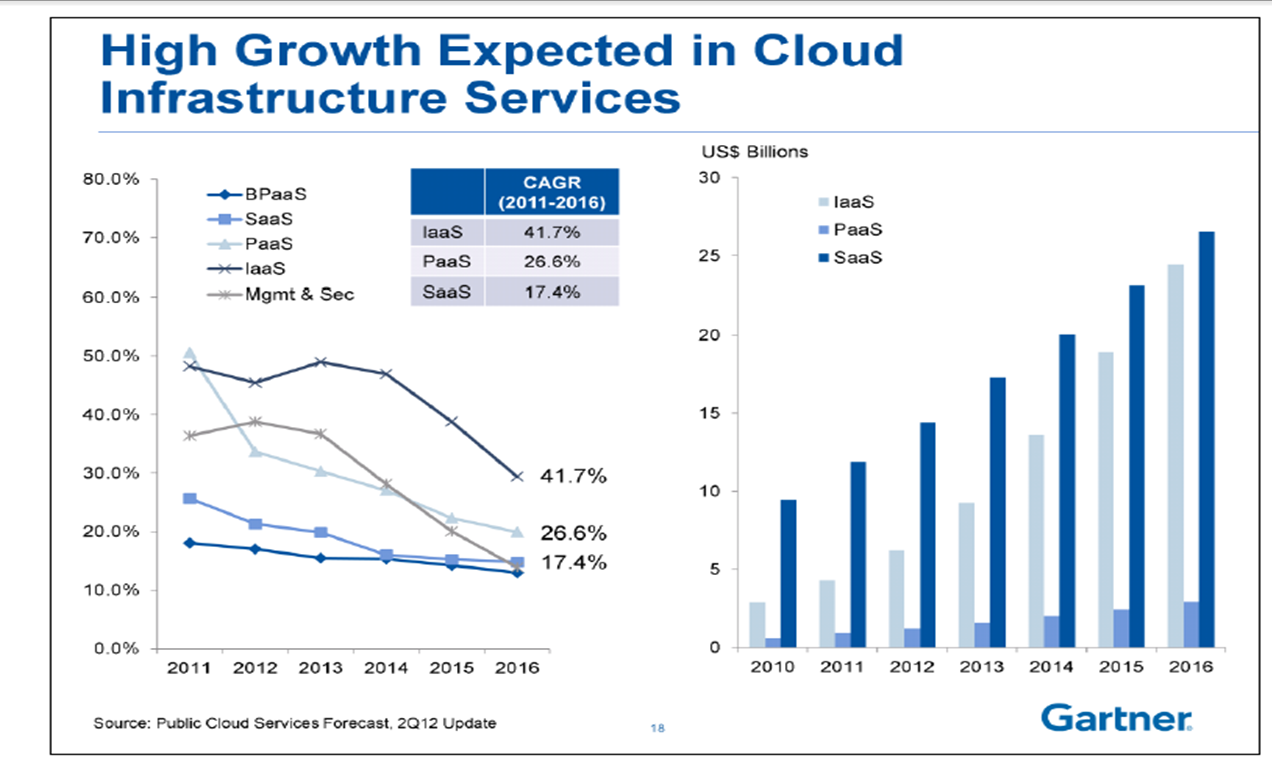
cloud-computing-gartnerAWS is simply dominant, at the moment, in cloud computing, you might conclude from a Gartner analysis that shows Amazon's AWS is five times bigger, in terms of the utilized compute capacity, of the other 14 cloud providers Gartner looked at. 

Telcos and telco-related entities probably still will be found most often in the infrastructure as a service part of the business. 


Czech 4G Auctions Coming in November 2013

The Czech telecoms regulator has restarted the country’s 4G spectrum auction process, after a halt because of concern about excessive prices. The previous licensing process was cancelled when the bid amounts massively exceeded the reserve prices.

The CTU concluded that if the licensees had to pay such high prices, they would have less capital available to actually build out the networks, and furthermore would be under pressure to keep prices high.

The spectrum auction will begin by mid-November after a previous attempted sale was aborted in March.

As has been the pattern elsewhere, regulators indicate their belief that a minimum of four national suppliers are necessary.

The CTU intends to reserve a large block of spectrum for a potential newcomer to the market, which already includes Telefonica, T-Mobile and Vodafone.

The three incumbents also are worried that the new entrant might be able to acquire spectrum at a discount. But it might be reasonable to assume that the fourth entrant will have a tough time competing against the three incumbents. In most Eastern and Central European markets, the three top providers have substantial market share.

In Hungary, Vodafone, the smallest of the three mobile providers, has 23 percent share. T-Mobile, the leader, has 46 percent. Telenor has 31 percent share.

In Croatia, T-Mobile has a roughly equivalent market share, while VIPnet has almost that much share. The point is simply that the established providers are entrenched. But most mobile markets are concentrated.

Whether, over the long term, that can change is the question. Many would argue the capital intensity and maturation of mobile markets makes the prospects for new disruptors difficult.

Tuesday, August 20, 2013

OTT Messaging is Not Cannibalizing Text Messaging, Portio Research Says

Trying to figure out how much “damage” Skype and other over the top voice apps have done to international voice is a difficult exercise. Skype gets used where the alternative would have been “no call,” so Skype usage volumes partly represent incremental usage that actually does not cannibalize existing revenue.


On the other hand, there also are instances where Skype or other over the top apps will be used as a substitute for a long distance call using the public network.


The same sort of issue applies to messaging apps displacing text messaging. Some over the top messaging is activity that would not have happened were text messaging the only alternative.


And some OTT messaging gets used in place of text messaging.


Also, as typically is the case for Internet apps, usage is not the same thing as revenue.


“During 2012 and 2013 we have seen many reports that operators are losing $20 billion to $30 billion in SMS revenue to OTT messaging apps,” said Karl Whitfield, a Director at Portio Research. “We see reports that OTT traffic will be double that of SMS by the end of 2013. This is wrong on both counts.”


It may be true that SMS revenues are levelling off and that OTT is on the rise, but SMS is still generating revenues of $15.3 million per hour, 24/7, that’s a massive $133.8 billion in 2013, Whitfield says.


Over the top apps generate about $3 million an hour, by way of comparison.


Worldwide SMS revenue has gone up year after year since the early 1990s and will continue to be above 2010 levels until 2017, Whitfield said.


In fact, in some markets, SMS and OTT apps are coexisting, serving end users in different ways.


There is a huge uptake of OTT messaging in Japan, particularly with local player LINE, yet the SMS market remains healthy and stable, he says.


The same goes for South Korea, where KakaoTalk is enjoying huge success; here again the SMS market remains stable and is not declining as many predicted.

Where SMS has seen a decline, in markets such as Spain and Greece, there has been an overall fall in subscribers and revenues at the same time.


“Our research into mobile messaging completely contradicts what some other industry observers are saying,” said Whitfield.


Karl Whitfield


Global OTT and P2P Messaging Traffic (Billions)


2010
2011
2012
2013F
2014F
2015F
2016F
2017F
P2P SMS
5,812
6,546
6,623
6,687
6,654
6,522
6,304
5,931
OTT Messaging
1,494
3,840
6,774
10,452
14,970
20,437
26,359
32,141


Will You Save Money Buying Future Online TV?

Even though everybody sort of assumes that in some future time, when consumers can buy video content channel by channel, if not program by program, most consumers will save money. That might not be the case.

Bandwidth consumption that today is bundled into the cost of the entertainment video subscription will become disaggregated. Users will pay separately for Internet access and content. And that might mean users pay more for Internet access, as well as more for their content.

Assume a one-hour TV show streamed to a TV requires 1GB at standard definition, and 2 GB, for an hour of HDTV. Assume you are a typical users and consume five hours of video a day. Assume half your consumption if HDTV and half is standard definition.

That implies 75 hours of standard definition TV consumed per person, per month. At 1 GB per hour, that’s 75 GB of data. The 75 hours of HDTV represent 150 GB of data consumption, for a total of about 225 GB of data consumption a month, for linear entertainment television.

For those of you who believe you could save money someday by buying only the channels you want online, and assuming there is only one person in your household, the cost of watching TV would include the cost of your bandwidth and the cost of your subscription or subscriptions.

That might not be an issue for a single-person household with a monthly usage allowance of 300 GB. Assume the monthly cost is about $70 for such a plan.

The math gets trickier for multiple-person households, especially if many users are watching different programs. But assume 300 GB will do.

Assume a household now pays $120 a month for Internet access and video entertainment service.

Assume the TV service is dropped, in favor of buying online alternatives. If there was a bundled plan discount, and that is lost, assume the household pays $75 a month for Internet access (300 GB), and then buys five channels costing $12 each. That implies $60 for the five channels, plus $75 for the access, for a total of $135 a month.

Surprise, surprise. You wind up paying more than you used for, for just five channels of video and Internet access.

The economics become worse as you add more channels, or if multiple users or higher viewing mean you need to buy more bandwidth, at about $10 per gigabyte.

Bundles Lift Revenue per Customer, Drive Revenue Growth, Reduce Churn, Even in Tough Markets

Portugal Telecom provides instructive guidance on the importance for fixed network service providers of triple play packages and video services, even in markets with negative growth of voice services and tough economic conditions a a backdrop.

In the second quarter of 2013, overall revenue fell 5.5 percent. But in Portugal, broadband access revenues grew 8.5 percent. Video entertainment revenues grew 9.8 percent. Uptake of triple-play bundles grew 16.7 percent and fiber to home revenues grew 25 percent.

Without those revenue contributions, results would have been far worse. Also, bundles reduce customer churn and raise average revenue per unit because consumers are buying more than one product.


Mergers, Joint Ventures or Investments as Routes to Controlling AI Model Costs

Just how artificial intelligence model providers might improve their economics is a key business model issue.  A shift to inference operatio...