Friday, March 2, 2018

Many Believe Artificial Intelligence Will Destroy More Jobs than it Creates

Artificial intelligence cannot fail to reshape work. Many workers fear (rightly or wrongly) that AI will replace them. More optimistic observers rightly argue that new jobs will be created.

But we have seen big changes in economic eras before. And one clear danger is that the people losing jobs to AI will not be the people getting the new AI-related jobs. In the transition from an industrial to an information economy, big and sustained job losses have occurred in some regions and industries, to some specific workers.

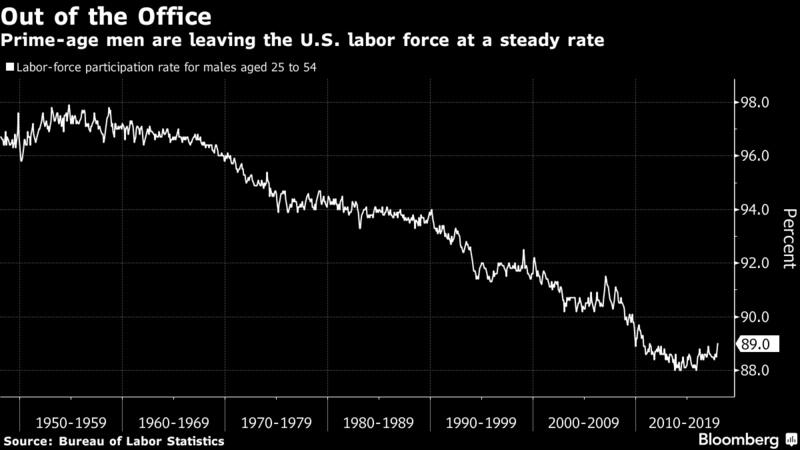
There is plenty of evidence that many of those workers never again were able to replace the lost income or jobs. Among the biggest losers in the U.S. economy are males 25 to 54. Labor force participation for people in that demographic has been dropped steadily since 1950.

That 70-year trend might well add new demographics as we make the transition from an early-stage information economy to a middle-age information economy where artificial intelligence is applied to most activities, as was the case for computing and software.

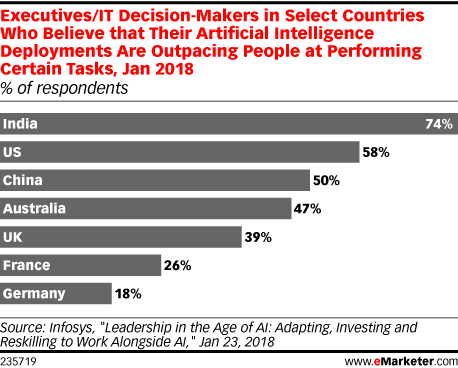
About 74 percent of polled workers in India agree that AI is better than people for at least some tasks. About 58 percent of surveyed U.S. workers agree that AI is better than people at some tasks.


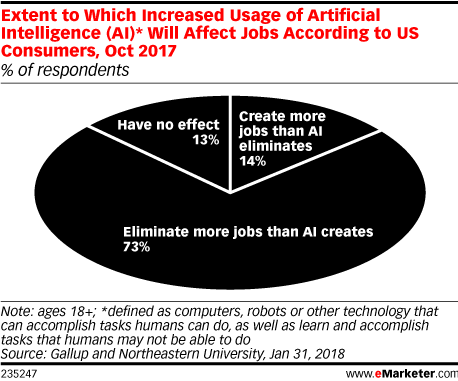
Fully 73 percent of U.S. respondents to a Gallup poll believe AI will reduce more jobs than it creates.


Thursday, March 1, 2018

Telcos Look to AI to Reduce Costs

One thing about ecosystems and value chains is important: one segment's cost is another segment's revenue. That happens at the firm level as well.

Artificial intelligence, many fear, will eliminate and reshape many, if not most, jobs. Not to worry, optimists say, new jobs will be created. While that is true, the social consequences might be anything but benign.

Telecom service providers, for example, now expect that artificial intelligence will allow companies to reduce headcount, boosting productivity but at the cost of jobs. That always is the challenge with higher productivity. The ability to produce more for less drives economic growth, but has uneven implications for workers.


Consider the changes in job markets over the last six or seven decades, as the United States moved from an industrial to information-driven economy.


The labor force participation rate of prime-age men--25 to 54 years old--steadily decreased since 1950.


To be sure, major economic shifts do eliminate some jobs and create others. The social problems happen because the people who lose old jobs are quite often not the people gaining the new jobs.


source: Bureau of Labor Statistics

The point is that smaller workforces have been a service provider objective for decades. AI is going to push the trend.

Wednesday, February 28, 2018

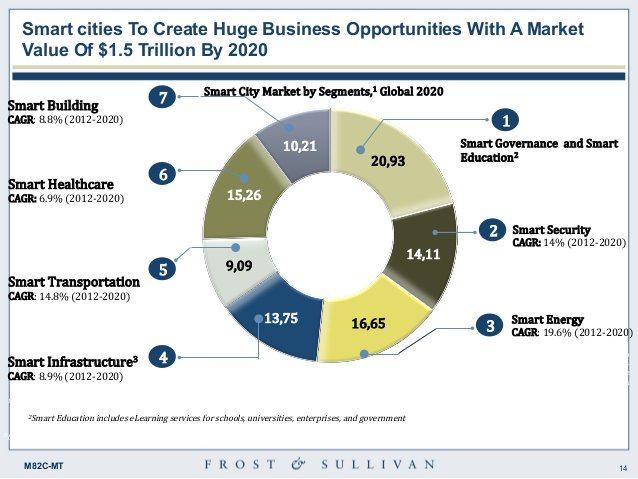
How Big a Revenue Opportunity are "Smart Cities" IoT Services?

By some estimates smart cities represent the biggest opportunity for mobile service providers.

Others might disagree, connected home or connected car or manufacturing will be bigger market opportunities.

IoT technology revenues across 12 key smart city technologies and verticals is predicted to grow from around $25 billion in 2017 to $62 billion in 2026, according to ABI Research.

Among the drivers are smart meters and video surveillance, representing $20 billion of the expected revenue.

Of course, “smart cities” might include so many verticals that it is not a single market.


Will 5G Make Packet QoS (Prioritization) Unnecessary?

Network neutrality remains as obscure a topic as ever, despite efforts to reduce it to a bumper sticker slogan. Virtually everyone agrees on the original and basic version: no blocking websites; no censoring online content; no throttling, degrading or discrimination of network performance based on content.

Also, disclosure to consumers about how networks are managed.

Where there is disagreement is when network neutrality is stretched to cover any number of other practices, such as zero rating or packet prioritization. The former is exclusively a matter of business practices. Can, or should, an internet service provider allow consumers access to services, apps or sites without charge?

The latter is a matter of importance for some classes of apps that actually require deterministic performance.

“AT&T is not interested in creating fast lanes and slow lanes on anyone’s internet,” says Bob Quinn, AT&T senior EVP. “What we do care about is enabling innovative new technologies like autonomous cars, remote surgery, enhanced first responder communications and virtual reality services, which are real-time interactive services that require end-to-end management in order to make those services work for consumers and public safety.”

“I think we can all agree that the packets directing autonomous cars, robotic surgeries or public safety communications must not drop,” said Quinn.

The Restoring Internet Freedom decision really is about freedom, no matter whether one is for or against the order. A key issue is “who gets the freedom.” Freedom is for consumers, we agree. Freedom is for app and content providers, we agree. The FCC’s Restoring Internet Freedom order adds freedom for access providers.  

If you read the document, you are quickly “in the weeds” of telecom policy. But like the decision or not, the decision is fundamentally about freedom.

At one important level, the heart of the matter is our understanding of network neutrality rules, which historically has had a weak and strong form. Though many proponents of net neutrality have argued “net neutrality is dead,” others would argue that all the FCC has done is move back to the original form of net neutrality, and away from the “strong” form some have advocated.

Paradoxically, the original “weak” form protects and enhances freedom, while the “strong” form restricts freedom.

That original form was the the Four Freedoms principles articulated in 2004 and was then formally adopted by a unanimous Commission in 2005.

These include the freedoms for consumers to (1) ‘‘access the lawful internet content of their choice’’; (2) ‘‘run applications and use services of their choice, subject to the needs of law enforcement’’; (3) ‘‘connect their choice of legal devices that do not harm the network’’; and (4) ‘‘enjoy competition among network providers, application and service providers, and content providers.’’

Repealing common carrier regulation does not repeal those principles.  “We reaffirm and honor this longstanding, bipartisan commitment,” the FCC says.

To be clear, those principles mean ISPs cannot block lawful content. The principles also have been understood to include a bar on “throttling” or degrading access to some apps based on the ownership of those apps.

Some proponents of strong forms of net neutrality rightly point out that some instances of content or site blocking by ISPs have occurred. It also is fair to say that the internet freedoms principles bar such action, and that the FCC remains committed to the “no blocking” rules.

Perhaps the bigger issue, though, is whether “best effort” access is the only class of service any internet user can buy or use. This is more complicated.

Major applications providers routinely use content delivery networks (CDNs) that improve quality of experience by reducing packet latency. In other words, CDNs do not “treat all bits equally” and instead use mechanisms to speed delivery and predictability of packet arrival beyond those possible using strict “best effort” mechanisms.

That normally is done by placing content stores closer to the edge of networks, thereby avoiding full transits of the public internet across wider distances.

AT&T’s point is simply that consumer internet access is not the issue. Though some believe there is demand for packet prioritization services, others think the market is so competitive that no ISP could actually make such a program work.

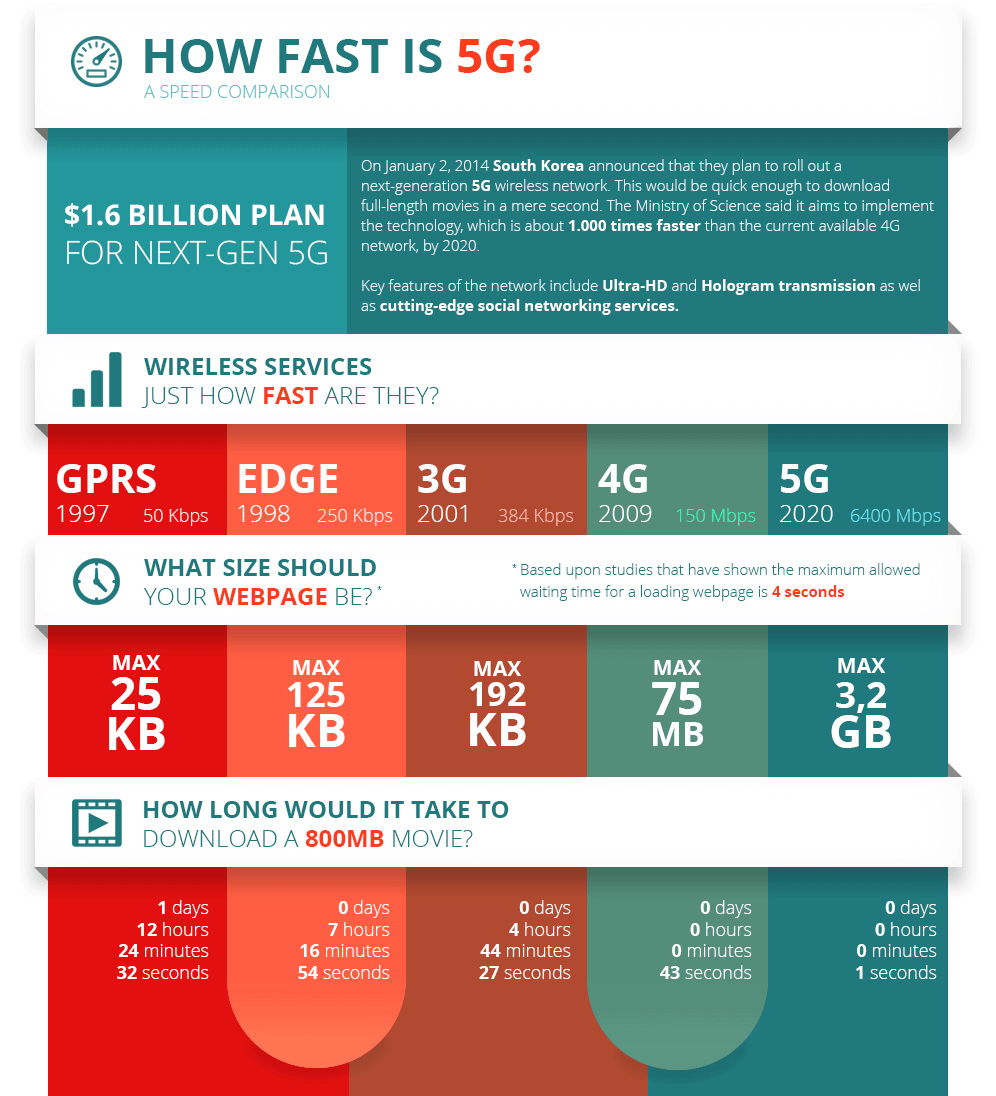
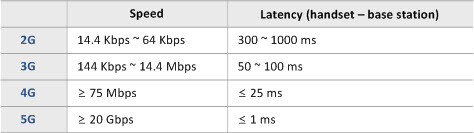
Think about coming 5G networks. If latency is just a few milliseconds, and bandwidth is upwards of several hundred megabits per second, up into the low gigabits per second, where is the value of packet prioritization?

In other words, at least some general purpose access networks will be so good that the market for prioritized delivery simply does not exist, for consumer internet services.

That would likely be true even for apps that benefit from low latency and more-predictable packet arrival (streaming video and audio; video conferencing; voice communications).

In other words, there might not be demand for fast lanes, because the general purpose networks will eliminate the need.
Monday, February 26, 2018

FCC Readies Spectrum Auctions in 28-GHz, 24-GHz Bands

Assuming the U.S. Congress clarifies rules on upfront payments, the U.S. Federal Communications Commission will hold spectrum auctions in the 28-GHz and then 24-GHz bands in November 2018, for 5G network use.


“It is my intention for the United States to hold an auction beginning this November of spectrum in the 28 GHz band, followed immediately thereafter by an auction of spectrum in the 24 GHz band,” said Ajit Pai, FCC chairman.


That will follow auctions of 600-MHz spectrum, opening up spectrum sharing for 150 MHz of spectrum in the 3.5-GHz band.


“I intend to propose the next steps needed to make the 3.7 to 4.2 GHz band available for commercial terrestrial use,” said Pai.


In addition to those spectrum moves, Pai also noted that the FCC Spectrum Frontiers Order opened up nearly 11 GHz of spectrum in the bands above 24 GHz for mobile use.


“We followed up by making an additional 1,700 MHz of millimeter wave spectrum in the 24 and 47 GHz bands available for terrestrial 5G wireless use,” said Pai. “Last year, we began to explore unlicensed use in the 6 GHz band.”


Pai says the FCC also is moving to remove barriers to wireline deployment, which addresses issues like easier and cheaper ways to attach equipment to utility poles, said Pai. “We’ve also updated our rules for high-speed, dedicated services by lifting rate regulation where appropriate.”


“In sum, we are creating huge incentives for the private sector to invest in the 21st-century networks used for backhaul,” he said.


All that new spectrum represents at least an  order of magnitude more spectrum than presently is available for all mobile service providers. Combined with small cell architectures and spectrum aggregation, there could be two orders of magnitude more effective spectrum available for 5G use.

Ninth Circuit Rules FTC Does Have Authority to Oversee Internet Access

With the caveat that the U.S. Ninth Circuit Court of Appeals often makes rulings that are overturned (79 percent), the Ninth Circuit Court of Appeals unanimously ruled that the Federal Trade Commission acted within its authority in bringing a claim against AT&T over its data-throttling practices.

Some will say that the decision validates the oversight the Federal Trade Commission will exercise over internet access services, as proposed by the Federal Communications Commission in its recent Restoring Internet Freedom order.

Window of Opportunity for Paid Prioritization is Shutting

Despite some fears, in some quarters, about paid prioritization of packets, is that a realistic fear? If the value of packet prioritization--paid or not--is guaranteed performance (low latency), 5G (and advanced 4G) should--by definition--eliminate the problem, and therefore the possibility of profiting from services that offer higher quality assurances..

In other words, the potential value of packet prioritization is quality assurance for applications that require low latency (packet arrival times).

But when a 5G network routinely has latency in single-digit milliseconds, is prioritization still needed, and if so, for what apps? In other words, does 5G actually eliminate the problem that packet prioritization is said to solve?

And, if that is true, then fears about paid prioritization are misplaced. As much as some internet service providers might like to sell packet prioritization services, there might not be a market for such services on 5G networks.

Perhaps paid prioritization could still have value on fixed networks, but user experience itself might force fixed networks to upgrade performance, simply to keep pace with 5G networks, and therefore close the window of opportunity for packet prioritization, even on many fixed networks.


The point is that the feared “packet blocking and throttling” still is barred by Federal Communications Commission policy, while “paid prioritization” has a slim window for relevance until 5G arrives.

The stated fears about removing common carrier regulation from internet access will prove misplaced.

On the Use and Misuse of Principles, Theorems and Concepts

When financial commentators compile lists of "potential black swans," they misunderstand the concept. As explained by Taleb Nasim ...