Sunday, October 13, 2019

Can Telcos Become Platforms?

In many emerging industry segments, when executives are asked what role their firm might aspire to, they often have said they were aiming to become a platform. What has been less clear is whether established firms such as connectivity providers might likewise aspire to become platforms. 

Perhaps it matters how a “platform” is defined, and how it is different from marketplaces and retailers in general. 

Some define a platform as a business model that creates value by facilitating exchanges between two or more interdependent groups, usually consumers and producers. Using that definition, a shopping mall is a platform. 

Using that same definition, Amazon is a platform. So are Google, Facebook, and other apps of that sort. Irrespective of what the specific value is for end users, the platform brings together advertisers and merchants with potential customers. 
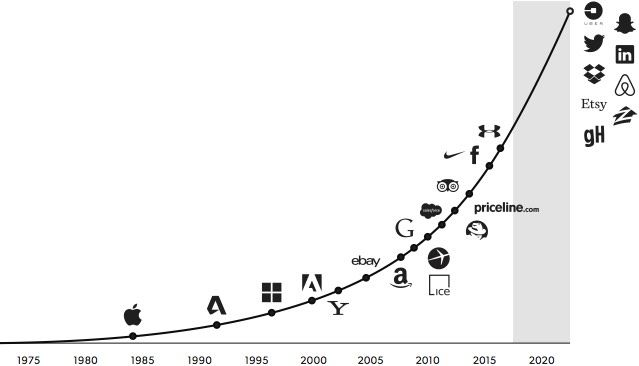

Using a different definition, Apple might also be a platform, as many considered Wintel to be in the 1980s and 1990s. 

Another way of looking at matters is that platforms feature “two-sided” business models. Such models involve an intermediary that enables exchanges between at least two distinct sets of actors. 

Examples include credit cards (cardholders and merchants); health maintenance organizations (patients and doctors); operating systems (end-users and developers); yellow pages (advertisers and consumers); video-game consoles (gamers and game developers); recruitment sites (job seekers and recruiters); search engines (advertisers and users); and the internet. 

But that definition involves a subtlety: all market transactions involve two actors, one buying, one selling; one producing, one consuming. The notion of platform impliciting involves the notion that some economic value is produced by the platform that enables such transactions at greater scale. An advertising network or social media app might provide a good example. 

Facebook enables advertisers to reach an audience, for example, at scale. But network effects, in and of themselves, are not what defines platforms. Telecom networks have network effects, but arguably are not historically platforms. 

True, traditional communication networks bring users together--as does Facebook--but not users with advertisers, or customers with retailers. That might be less true in the future. Telcos who sell video entertainment services might become platforms to the extent that they connect advertisers with audiences, while also providing services to subscribers. 

That is another twist on two-sided markets: sometimes revenue is earned from serving the interests of both actors. In the case of video entertainment, suppliers earn subscription revenues from subscribers, and also advertising revenues from retailers. In some other cases the same might happen when telcos also become support app providers trying to reach their subscribers. 

The point is that the shift from a traditional one-sided (revenue from subscribers) telco model and a platform or two-sided business model is a big change.


Saturday, October 12, 2019

Google Stadia Will Stress U.K. Usage Caps

If Google Stadia, the streaming gaming service, actually does consume as much as 15.75 GB per hour when used at the highest settings, then a significant number of home internet customers in the United Kingdom are going to blow through their data allowances, Broadband Now believes.

That estimate is based on statistics from the NPD Group suggesting that the 34 million gamers play 22 hours per week on average. “If these individuals switched to using Stadia as their primary gaming platform, they would eat through even the highest data caps (usually around 1 TB, or 1,000 GB), coming in at roughly 1,386 GB monthly,” says Broadband Now. 


“We estimate that approximately six million out of the 34 million daily gamers would eat through their  data caps if Google Stadia becomes their primary gaming destination,” Broadband Now says.

That, in general, illustrates the business problem internet service providers face: data consumption keeps going up, but ability to pay is relatively fixed. That is why performance goes up, but average monthly bills tend to stay flat. 

Prices per gigabyte are highest in lesser developed countries, as you might guess, adjusted for purchasing power parity, but really low in developed countries, looking at cost as a percentage of gross national income per person. But the clear trend over time is for internet access costs to fall. 


Enterprise Revenue Trends

Why Connectivity Cannot be the Only Driver of the Connectivity Business

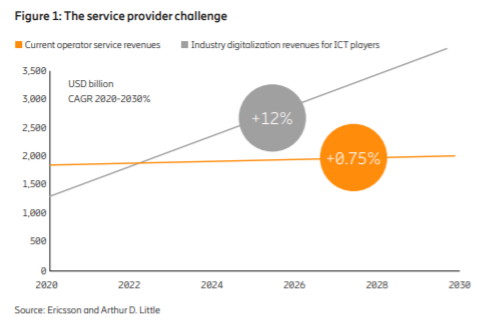
Ericsson offers a fairly simple argument for why big service providers have to consider moving into other areas of the information ecosystem: growth will not be found in the consumer connectivity business. 

Simply put, growth rates in the consumer communications business are forecast to grow only about 0.75 percent per year to 2030, while the broader information technology business grows at a compound annual growth rate of 12 percent per year.  

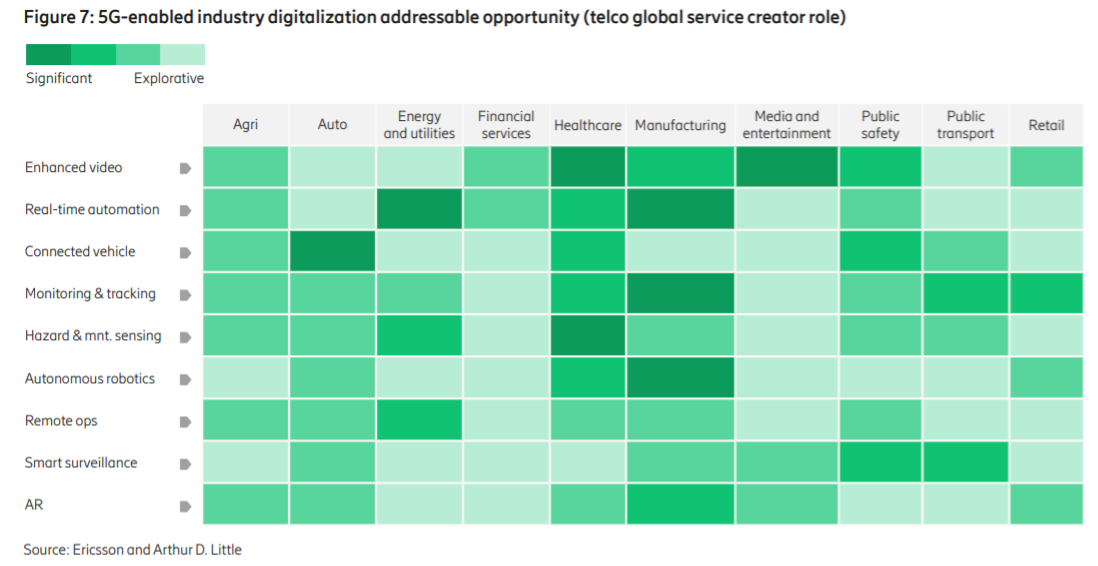
The service enabler role shows the biggest growth opportunity for service providers and includes providing digital platforms on which businesses can configure and integrate value-enhancing digital capabilities into their processes. That is a huge challenge, but offers high rewards, if connectivity  providers can create service platforms, system integration and content management roles. 

Service enablement also logically includes becoming a supplier of edge computing facilities, managing devices, software and data. 


Friday, October 11, 2019

5G: Less Impact than You Expect Now, More than You Expect Later

New technologies almost always have less impact than expected at first, and important new technologies almost always have greater impact than expected later in their adoption cycle. Get ready for that to be true of 5G as well. 

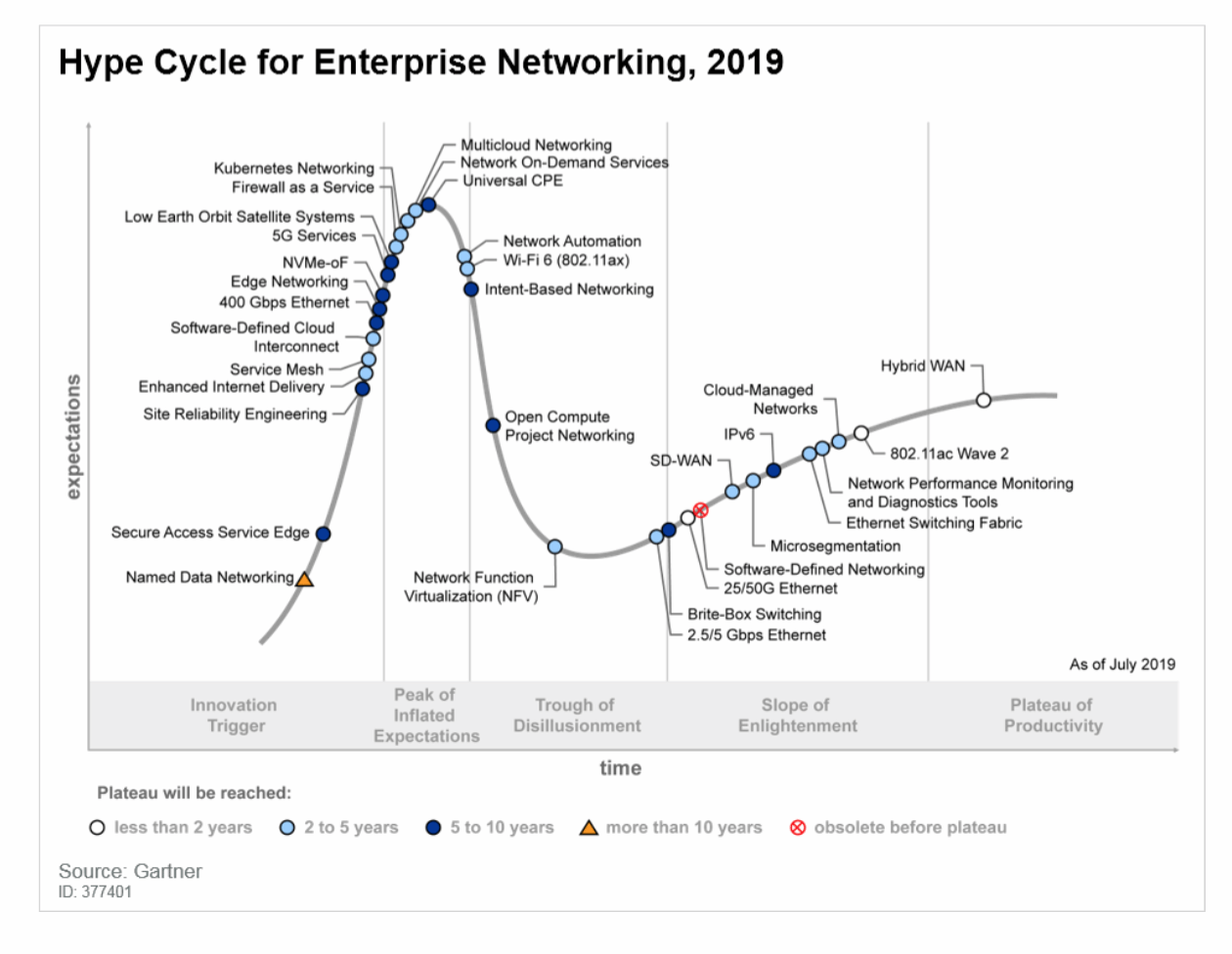
According to Gartner, after a period of building hype, 5G is about to enter a possibly-inevitable period of disillusionment that might last for a few years or more. 

Perhaps some of that explains the productivity paradox, which sometimes includes the observation that the introduction of advanced technology can lead to lower productivity for a period.

For that reason, one would be right to remain skeptical that 5G, in and of itself, will dramatically boost productivity beyond the benefits of fast 4G. The hoped-for advantages of 5G-related edge computing and internet of things use cases will require rethinking and retooling the way organizations and people work. So we might not see clear advantages from those technologies until 6G is well underway. 

That said, productivity often eventually does show up, after a decade or more. The productivity paradox was seen very prominently in the United States in the 1970s and 1980s when there was a big uptake of information technology, but productivity growth slowed down over the same period.

Labor productivity growth came down from about three percent in the 1960s to about one percent in the 1990s despite the increase in computing and information technology investment. 


One possible explanation is that productivity is increasing, but we simply cannot conveniently measure it. It is difficult to quantify the value of better computers that cost the same, but increase in performance, for example.

Another possible explanation is that it takes organizations and people a while to adjust to much-better technology. In that view, organizations have to retool the ways they work before the IT investments actually can help. 

U.S. Consumers Might Reap as Much as $32,000 Each Year in Economic Value from Internet Apps, Services

The actual amount of consumer welfare from new digital products and services might be quite high, even if measures of gross domestic product value them at zero. 

Products with zero price are difficult to value. Measures of gross domestic product measure goods with prices, so any products with a zero price are not reflected in our GDP or productivity statistics. 

Although information goods have become increasingly ubiquitous and important in our daily lives, the official share of the information sector as a fraction of the total nominal GDP (about four percent to five percent) was the same in 2016 as it was 35 years earlier. That might strike you as odd, and that is precisely the problem. 

Facebook users spent 50 minutes per day on Facebook and Instagram, up from zero in 2005. The same might be noted for any number of other digital apps. They either created completely new goods that did not exist before,  or replaced and significantly improved previously existing non-digital goods. 

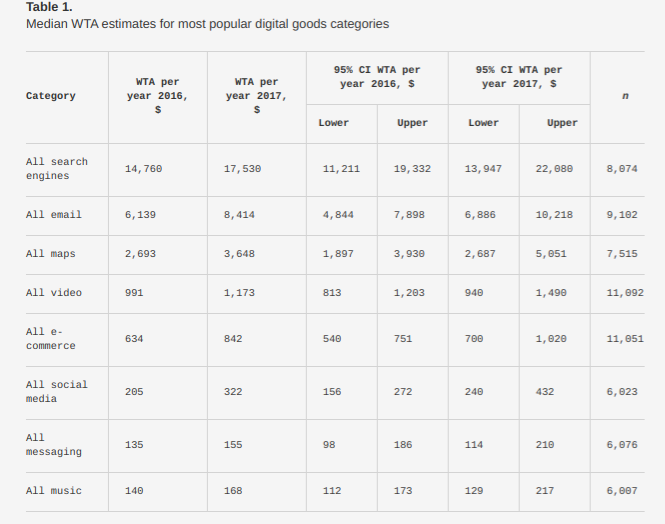
The average American spent about  22.5 hours each week online as of 2018, according to Erik Brynjolfsson, Avinash Collis, and Felix Eggers in an article in the Proceedings of the National Academy of Sciences, but much of the value of that time cannot be captured by normal GDP metrics. 

In many areas, such as music, media, and encyclopedias, people substitute zero-price online services such as Spotify, YouTube, and Wikipedia for goods with a positive price such as CDs, DVDs, and Encyclopedia Britannica

As a result, the total revenue contribution of these sectors to GDP figures can fall even while consumers get access to better quality and more variety of digital goods, the authors note.

The authors estimate that digital products actually add as much as $32,000 in actual economic value per person. 


SDN is an Architecture, Not a Product

Every now and then, a promising technology either is subsumed by other platforms and technologies, or simply fails to gain traction. Gartner believes software defined networking has reached that stage, in part because its fundamental premise--separating the data plane from the control plane--now is simply the foundation of network design, not a “product.”

Network functions virtualization in the communications networking space provides an example of how that basic principle--separation of control and data planes--simply is an architectural principle for modern networking. But some had hoped SDN would abstract hardware from software in ways that would foster an awful lot more innovation in software. That arguably has not happened so much, some would argue. 

At least in the communications networking space, SDN influence has lead to NFV, where the ability to separate data and control planes is allowing service providers to operate with lower cost, using generic hardware in some cases, and control software that is more centralized than before, meaning less-complex network elements can be deployed. 


Access Network Limitations are Not the Performance Gate, Anymore

In the communications connectivity business, mobile or fixed, “more bandwidth” is an unchallenged good. And, to be sure, higher speeds have ...