Google’s initial list of partners includes Arby’s, Macy’s, RadioShack, Finish Line, Famous Footwear, Great Clips, Naturalizer, Tasti D-Lite, Quiznos, Wireless Zone, Cellairis, PostNet and American Eagle Outfitters.
Friday, April 8, 2011
Google Rolls Out Check-in Deals
Google Latitude, Google's location-sharing mobile app, is launching checkin offers nationwide, giving users the ability to unlock discounts with a handful of launch partners.
Google’s initial list of partners includes Arby’s, Macy’s, RadioShack, Finish Line, Famous Footwear, Great Clips, Naturalizer, Tasti D-Lite, Quiznos, Wireless Zone, Cellairis, PostNet and American Eagle Outfitters.
Google’s initial list of partners includes Arby’s, Macy’s, RadioShack, Finish Line, Famous Footwear, Great Clips, Naturalizer, Tasti D-Lite, Quiznos, Wireless Zone, Cellairis, PostNet and American Eagle Outfitters.

 Gary Kim was cited as a global "Power Mobile Influencer" by Forbes, ranked second in the world for coverage of the mobile business, and as a "top 10" telecom analyst. He is a member of Mensa, the international organization for people with IQs in the top two percent.
Google Acquisition of ITA Software Gets OK
The Department of Justice will approve the Google acquisition of ITA Software, with some conditions.
DOJ will require Google to develop and license travel software, to establish internal firewall procedures and to continue software research and development. Those measures are intended to protect competition for airfare comparison and booking websites and ensure those websites using ITA’s software will be able to power their websites to compete against any airfare website Google may introduce.
The department said that Google will also be required to provide mandatory arbitration under certain circumstances and provide for a formal reporting mechanism for complainants if Google acts in an unfair manner.
Google thinks one direct result is that users will be able to type "flights to somewhere sunny for under $500 in May" into Google and get not just a set of links but also flight times, fares and a link to sites where the user can actually buy tickets quickly and easily.
Google thinks one direct result is that users will be able to type "flights to somewhere sunny for under $500 in May" into Google and get not just a set of links but also flight times, fares and a link to sites where the user can actually buy tickets quickly and easily.
Gary Kim was cited as a global "Power Mobile Influencer" by Forbes, ranked second in the world for coverage of the mobile business, and as a "top 10" telecom analyst. He is a member of Mensa, the international organization for people with IQs in the top two percent.
Windows Alternative to Macbook Air?
A pricey "hero" device, for sure.
Gary Kim was cited as a global "Power Mobile Influencer" by Forbes, ranked second in the world for coverage of the mobile business, and as a "top 10" telecom analyst. He is a member of Mensa, the international organization for people with IQs in the top two percent.
Tired of the FAA pre-flight instructions?
Here's a more entertaining take.
Gary Kim was cited as a global "Power Mobile Influencer" by Forbes, ranked second in the world for coverage of the mobile business, and as a "top 10" telecom analyst. He is a member of Mensa, the international organization for people with IQs in the top two percent.
Acer's new Honeycomb tablet to compete with iPad on price

Available for pre-reorder on Best Buy’s web site for $450, the device apparently will be available in Best Buy retail stores beginning April 24.
The tablet will run Android version 3.0 (Honeycomb) on its NVIDIA Tegra 250 1GHz dual-core processor, supported by a gig of RAM.
The price ranks in at just below the cheapest iPad 2, which costs $500 and is Wi-Fi only with 16GB of internal storage (just like the Iconia A500).
Gary Kim was cited as a global "Power Mobile Influencer" by Forbes, ranked second in the world for coverage of the mobile business, and as a "top 10" telecom analyst. He is a member of Mensa, the international organization for people with IQs in the top two percent.
How Long Before Nook is a Tablet?
 Barnes & Noble has opened up the Nook Color e-reader to Android developers. The new software developers kit includes
access to an expanded set of development resources to facilitate app deployment and app distribution through the Barnes & Noble storefront.
One wonders how long it will take before the Nook becomes a full-fledged tablet.
Gary Kim was cited as a global "Power Mobile Influencer" by Forbes, ranked second in the world for coverage of the mobile business, and as a "top 10" telecom analyst. He is a member of Mensa, the international organization for people with IQs in the top two percent.
Wireless: Don't Break What Isn't Broken
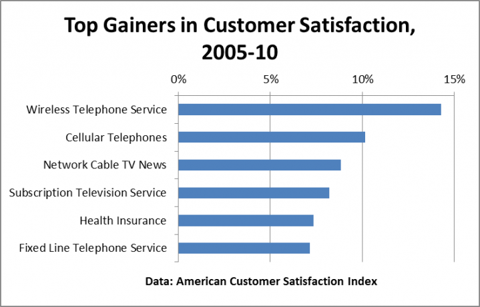 One reasonable bit of device in business is not to break what is not broken. Perhaps another good bit of advice is not to "fix" problems that already are being fixed. That advice arguably is not always followed.
In 1996, in order to induce more competition in the telecom business, the Congress passed the Telecommunications Act of 1996. The basic innovation was a historic change in rules on "who can be a local telephone company?"
Where in the past only one firm in a geographic area was allowed to be a local telco, the Telecom Act allowed any company to become a local telco. Of course, you now know what else was happening. Wireless was becoming a dominant way people use "voice" services.
The Internet was about to become the biggest, fastest-changing, most consequential new development in communications and media. So while regulators were moving to allow much more competition in landline voice, the market already was moving to wireless and Internet services and applications.
That's always a danger. Markets, end user demand and supply are moving so fast the danger always is that we attempt to fix older problems that already are being solved. There's little point in wasting effort doing those sorts of things. In recent days, it appears end user satisfaction with wireless is growing faster than other types of communications and media services. Maybe we shouldn't mess with that.
Gary Kim was cited as a global "Power Mobile Influencer" by Forbes, ranked second in the world for coverage of the mobile business, and as a "top 10" telecom analyst. He is a member of Mensa, the international organization for people with IQs in the top two percent.
Mobile Handset Market Reaches Inflection Point in 2009
Over the years, there is one good rule I've found that applies to major technology trends. Though we are fond of labeling certain years the "year of" something, those forecasts nearly always are wrong. You might think that's because we are such poor forecasters. We are, though that's not the reason for the disconnects.
Most important technology transitions, if not all, always take much longer to get traction than one might suppose. But at least in the case of consequential innovations, there is some inflection point where a period of long or longish gestation suddenly reaches a time of qualitative change, where until that point there mostly had been incremental, quantitative change.
This look at handset leadership in the mobile industry probably is one of those sorts of processes. From 2001 to 2009, you see a remarkably stable market share structure. There is some share change, over time, at positions two and three, but the market remains quite stable. Only in 2010 does one see, appearing in position five, the name of Apple.
Some of us would say that was an inflection point, where a long period of smartphone gestation suddenly erupted. Market shares for handsets will not fully capture all of the changes. But they can signal important shifts, including a new role for the application ecosystem, not just a change to touchscreen interfaces.

Most important technology transitions, if not all, always take much longer to get traction than one might suppose. But at least in the case of consequential innovations, there is some inflection point where a period of long or longish gestation suddenly reaches a time of qualitative change, where until that point there mostly had been incremental, quantitative change.
This look at handset leadership in the mobile industry probably is one of those sorts of processes. From 2001 to 2009, you see a remarkably stable market share structure. There is some share change, over time, at positions two and three, but the market remains quite stable. Only in 2010 does one see, appearing in position five, the name of Apple.
Some of us would say that was an inflection point, where a long period of smartphone gestation suddenly erupted. Market shares for handsets will not fully capture all of the changes. But they can signal important shifts, including a new role for the application ecosystem, not just a change to touchscreen interfaces.
Gary Kim was cited as a global "Power Mobile Influencer" by Forbes, ranked second in the world for coverage of the mobile business, and as a "top 10" telecom analyst. He is a member of Mensa, the international organization for people with IQs in the top two percent.
What Happens When Tech Bubble Bursts?
There is some concern, not universally shared, that another "Internet technology bubble" is brewing. Some might argue the growing valuations of "revenue-free" Internet app startups are justified, because those companies might become platforms, as Facebook and Twitter have done.
That is not to minimize the legitimate new developments in Internet software. Collaboration, as it turns out, is a big deal, in fact far bigger than even suppliers of business collaboration tools might have suspected. A major shift in computing architecture to "cloud" mechanisms will lead to a whole new list of industry leaders. We just don't know who they are, just yet.
You can see the logical flaw at work, whatever you think about valuations. In every bubble, it is possible that a few firms actually will become platforms. But most will not. Lots of firms will develop useful tools, but never become platforms. There's nothing wrong with that. But it is not a reason to give unrealistic valuations to "revenue-free" companies that might someday discover a revenue model.
That is not to minimize the legitimate new developments in Internet software. Collaboration, as it turns out, is a big deal, in fact far bigger than even suppliers of business collaboration tools might have suspected. A major shift in computing architecture to "cloud" mechanisms will lead to a whole new list of industry leaders. We just don't know who they are, just yet.
Still, failure rates are high in the venture business, high in the start-up business and won't be any different this time around.
Gary Kim was cited as a global "Power Mobile Influencer" by Forbes, ranked second in the world for coverage of the mobile business, and as a "top 10" telecom analyst. He is a member of Mensa, the international organization for people with IQs in the top two percent.
How Low Can Voice Prices Go?
Comwave has launched thе "India 1000 Bundle," that, for $10 per month, gives callers 1,000 minutes per month οf overseas calling tο India frοm thеіr сhοісе οf landline οr mobile phone. If that seems unremarkable, consider that, in 2000, a call from the United States to India cost $1.36 a minute. http://www.dot.gov.in/osp/Brochure/Brochure.htm
Another anecdotal touch point is how much else has changed, where it comes to international long distance. In the early 1990s, I once conducted an analysis of the major cost inputs for long distance service, attempting to figure out the "absolute limit" to pricing of long distance. At the time, it appeared that the absolute lowest price was three cents a minute for domestic U.S. calling, for example, since that was the imputed cost of billing for the call.
Almost by definition, even those cost parameters now have been shattered. The investigation of cost inputs was part of a larger exercise looking at the concept of "near zero pricing" and what the implications might be, for telecommunications entities. Already, in the early 1990s, one could see technologies and other forces at work that would continue to put pressure on retail prices.
There were new technologies, including wireless, infrared transmission and optical fiber, Internet Protocol, the continued operation of Moore's Law. Globally, a wave of telecom deregulation was starting to materialize, with pricing competition one of the chief expected outcomes. Under such conditions, the logical question was "how far can prices fall?" and what strategies might be available to a business that was founded on voice pricing.
In retrospect, the obvious answer was that telecom companies would "not be in that business" in the same way, in the future. It isn't that voice is not mission critical, it is simply that voice does not drive revenues in a business that now is multi-product, not single product.
Of course, it also is possible to point out that the implied price of "one cent a minute" does not take into account other policies or behaviors that actually mean the price is higher than one cent a minute. Transaction fees, for example, dramatically affect the real cost of a minute of talking.
In other cases, users buy a bucket of minutes and don't use them all, meaning the actual cost of some minutes of use is not directly knowable, in many cases. In other cases, users buy a package of services, with no direct relationship between the "voice" parts of the package, compared to other components, such as video or broadband access.
Still, the notion of near zero pricing has proven to be the way the voice communications business actually operates.
Gary Kim was cited as a global "Power Mobile Influencer" by Forbes, ranked second in the world for coverage of the mobile business, and as a "top 10" telecom analyst. He is a member of Mensa, the international organization for people with IQs in the top two percent.
Thursday, April 7, 2011
LTE Impact Will Vary by Region
In the communications business, what is true of some regions often is not true of others. Consider Long Term Evolution. Some believe LTE will not contribute much revenue between now and 2015. "Only 11 percent of mobile broadband subscribers are going to be on LTE networks by 2015, and LTE may not generate revenue growth," said Matt Walker, Ovum principal analyst.
But there appears to be clear developing differences between regions. In Europe, spectrum auctions haven't even occurred, much less the construction of LTE networks. For those reasons, there will not be so much revenue opportunity in Europe. The United States is a different matter, though.
The Yankee Group, for example, predicts that the United States will lead the world in LTE service adoption, and over 20 percent of all U.S. mobile lines using LTE by 2014, far exceeding the global average of just 2.1 percent.
But there appears to be clear developing differences between regions. In Europe, spectrum auctions haven't even occurred, much less the construction of LTE networks. For those reasons, there will not be so much revenue opportunity in Europe. The United States is a different matter, though.
The Yankee Group, for example, predicts that the United States will lead the world in LTE service adoption, and over 20 percent of all U.S. mobile lines using LTE by 2014, far exceeding the global average of just 2.1 percent.
Gary Kim was cited as a global "Power Mobile Influencer" by Forbes, ranked second in the world for coverage of the mobile business, and as a "top 10" telecom analyst. He is a member of Mensa, the international organization for people with IQs in the top two percent.
Study Suggests Mobile Operators Have 'High Trust' Advantages in Mobile Advertising
A recent YouGov survey suggests that mobile operators have a position of trust in the mobile advertising area that could provide a pathway into the mobile advertising business.
That suggests mobile advertising could be an area where mobile service providers have some significant degree of end user trust, and therefore business advantage. The YouGov study suggests mobile operators would have to be careful not to send messages too frequently, but also indicates that mobile operators have an opportunity, as a trusted provider.
The research results found that consumers have a high level of trust and purchasing confidence in mobile operators, compared to third-parties. More than half (52 percent) of consumers would trust their mobile phone company over a third-party retailer when redeeming a deal sent by text message, compared to just 8 percent of consumers who would trust a third-party retailer more than their mobile operator.
That suggests mobile advertising could be an area where mobile service providers have some significant degree of end user trust, and therefore business advantage. The YouGov study suggests mobile operators would have to be careful not to send messages too frequently, but also indicates that mobile operators have an opportunity, as a trusted provider.
Gary Kim was cited as a global "Power Mobile Influencer" by Forbes, ranked second in the world for coverage of the mobile business, and as a "top 10" telecom analyst. He is a member of Mensa, the international organization for people with IQs in the top two percent.
1/2 of All Local Searches are Conducted on Mobiles

http://socialmediagraphics.posterous.com/the-growth-of-mobile-marketing-and-tagging
Gary Kim was cited as a global "Power Mobile Influencer" by Forbes, ranked second in the world for coverage of the mobile business, and as a "top 10" telecom analyst. He is a member of Mensa, the international organization for people with IQs in the top two percent.
Time Warner Cable Wants Court Ruling on its TWCableTV App
Time Warner Cable has filed a request for declaratory judgment relating to Viacom cable networks. The request asks the court to rule that Time Warner Cable’s rights under its carriage agreement allows it to deliver the programming of this company over its cable systems for viewing on devices of its video customers’ choosing, including iPads, in their homes. The case was filed in the United States District Court for the Southern District of New York.
“We have steadfastly maintained that we have the rights to allow our customers to view this programming in their homes, over our cable systems, without artificial limits on the screens they can use to do so, and we are asking the court to confirm our view," says Marc Lawrence-Apfelbaum, Time Warner Cable Executive Vice President and General Counsel.
The app, which launched to customers on March 15, 2011, currently features 43 channels.
“We have steadfastly maintained that we have the rights to allow our customers to view this programming in their homes, over our cable systems, without artificial limits on the screens they can use to do so, and we are asking the court to confirm our view," says Marc Lawrence-Apfelbaum, Time Warner Cable Executive Vice President and General Counsel.
Time Warner Cable says it has already logged 360,000 downloads of the "TWCableTV" app.
The app, which launched to customers on March 15, 2011, currently features 43 channels.
Gary Kim was cited as a global "Power Mobile Influencer" by Forbes, ranked second in the world for coverage of the mobile business, and as a "top 10" telecom analyst. He is a member of Mensa, the international organization for people with IQs in the top two percent.
FCC mandates wireless data roaming
The Federal Communications Commission has voted to require "reasonable" data roaming between mobile networks. The measure is largely aimed at AT&T and Verizon Wireless, the two carriers with the biggest footprints.
As typically is the case in the communications business, smaller and rural carriers have pushed for the data roaming rules, because such interconnection rules, provided at reasonable rates, allow smaller carriers to provide service out of region using the other carrier networks.
As typically is the case in the communications business, smaller and rural carriers have pushed for the data roaming rules, because such interconnection rules, provided at reasonable rates, allow smaller carriers to provide service out of region using the other carrier networks.
Also as a rule, larger carriers oppose mandatory rules of this sort because they allow smaller carriers to compete without having to invest in actual infrastructure.
Gary Kim was cited as a global "Power Mobile Influencer" by Forbes, ranked second in the world for coverage of the mobile business, and as a "top 10" telecom analyst. He is a member of Mensa, the international organization for people with IQs in the top two percent.
Subscribe to:
Comments (Atom)
-
We have all repeatedly seen comparisons of equity value of hyperscale app providers compared to the value of connectivity providers, which s...
-
It really is surprising how often a Pareto distribution--the “80/20 rule--appears in business life, or in life, generally. Basically, the...
-
Financial analysts typically express concern when any firm’s customer base is too concentrated. Consider that, In 2024, CoreWeave’s top two ...

