Friday, May 20, 2011

Geosocial Business Hinges on Mobile Devices

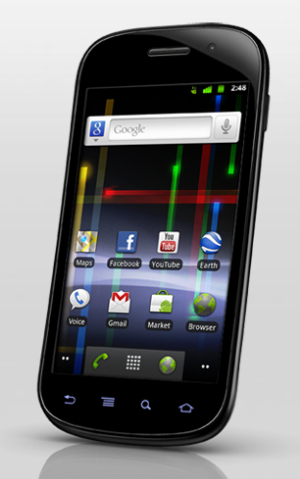
If you look at this graphic, mobile devices are at the center, the applications enabled by mobile devices are orbiting.

That neatly illustrates the issue mobile service providers face. They are fundamental to the ecosystem, but it is the devices at the center, not so much the connectivity, though connections also are essential.

That observation also applies to direct revenue models.

Ghana, Kenya, Philippines, Tanzania Top Mobile Banking Countries in Developing World

Ghana, Kenya, the Philippines and Tanzania have achieved mobile banking adoption rates above 10 percent of their population, according to the World Economic Forum.

BilltoMobile Launches Global Carrier Billing

BilltoMobile, the leading provider of carrier billed payments for online purchases in the United States, is launching its BilltoMobile payment service globally, offering U.S.-based online digital goods and services merchants the ability to process web purchases on 200 carriers in more than 60 countries.

BilltoMobile says it is the leading e-commerce mobile payments platform in the U.S., and is contracted with the top three U.S. carriers (Verizon Wireless, AT&T and Sprint) for its "Direct Carrier Billing" service.

BilltoMobile merchants now have access to more than 200 mobile operators and billions of mobile subscribers in the EU, Asia and South America. The new global service offering will launch next month.

Liberty Media offers $1 billion for Barnes & Noble

Liberty Media has offered $17 per share to buy all of Barnes & Noble.

The company, which operates 720 bookstores, as well as a chain of college campus stores, might seem an unlikely fit for Liberty Media, an owner of video content networks. But sometimes one has to look under rocks to find diamonds, Liberty Media seems to think.

Liberty Media might see the value in the Nook reader and the app store, as well as the potential for online commerce. In that view, the bookstores are just a way to generate cash flow, while the strategic assets are the online commerce and apps capability, plus the Nook.

Can Telcos Build a Transaction Business Out of Their Platform?

Designing%20the%20Platform2.pngAs telco executives continue to look for significant revenue opportunities, they seem to have latched onto mobile commerce, payments and transactions as a logical possible business.

In fact, say analysts at Telco 2.0, seven questions can be answered by mobile network operators, and each answer can contribute to one or more revenue streams.


It also is worth noting that other application or device providers will be able to answer some, and in some cases, many of the same questions, though. 


That’s why Facebook, Google, Apple, Amazon and PayPal already are getting ready for their own transaction services and applications.


Still, the ability to answer questions still might prove the foundation for new transaction-based businesses. Among the key questions are:


Who are you?
Where are you?
How are you?
Do you have credit?
How can we reach you? Operators not only can reach you via their own communications services, but often can associate together multiple addresses or identifiers.
Who do you know?
Any questions?


http://www.telco2.net/blog/2008/03/telcos_future_in_seven_questio.html

Imagining a Whole Business as a Transaction Processing Platform

Amazon.com: the Hidden Empire
View more presentations from faberNovel
Amazon is a transaction machine. Some would argue that's what retail service providers all day long, only the transactions are call detail records. Hence the interest in mobile payments and commerce. The big issue will be ability to scale and offer very-attractive processing costs for partners. That has not typically been the case for telco billing.

Consumers Ready for Mobile Wallet, MasterCard Says

Consumers are now ready to use  their smart phones as mobile wallets, according to a new survey by MasterCard Worldwide. The study, conducted by Kelton Research, shows 62 percent of Americans who use a mobile phone would be open to using their device to make purchases wherever their errands may take them.

Younger users are expected to take the lead, as 18 to 34 year-olds are particularly ready to use mobiles for commerce, payments and credential storage.

According to the study, 63 percent of 18 to 34 year olds would be at ease using mobile phones to make purchases, compared to 37 percent of  those age 35 or older.

Between 2009 and 2010, respondents showed a 67 percent increase in the number of purchases made with their mobile phones.

As the mobile wallet goes mainstream, gender will play a role in how it’s perceived and used.  While men see their phones as functional necessities, women take a more personal approach to their mobile devices.

More men than women (51 percent vs. 40 percent) who have a mobile phone would be at ease using it to make purchases.

Despite reliance on mobile devices and general consumer readiness for mobile payments, the survey revealed that overall safety is a significant comfort factor in the decision to pay by phone. Some 62 percent of respondents said they need confirmation that their personal information is safe in order to be comfortable making a transaction, underscoring trust and privacy as paramount factors in changing payment behaviors.

http://newsroom.mastercard.com/press-releases/mastercard-survey-finds-consumers-particularly-trend-setting-18-34-year-olds-have-sights-set-on-mobile-phone-payments/

Thursday, May 19, 2011

96% of Social Media Messages Embed or Link to Content

About 96 percent of the social media sharing that happens online is of content, a study by AOL and Nielsen Online 10,000 social media messages suggests.

About 60 percent of social media messages consist of links to published content, while 36 percent of shares were of content directly embedded into the messages. Only about four percent of social media messages contained links to URLs for brands or corporate websites. As its name suggests, social media really are a form of media.

Enterprises Will Need Less Office Space in Future, More Remote Communications

“The future of work will involve organizations moving toward a more flexible work model where employees will be allowed to buy their own office space, according to Regus, a provider of flexible workspaces, and consultancy Unwired.

Regus and Unwired surveyed 600 enterprise executives from around the world and found that 60 percent of survey respondents forecast a decrease in the need for office space in the future, with seven percent predicting an increase in space required. About 51 percent indicated that the office will become a place for occasional use.

“As the utilization of an office today is typically only 45 percent, empty desks no longer make sense in a world where mobility and agility will become accepted by people as the most effective and sustainable way of working,” says Philip Ross, Chief Executive Officer, Unwired.

About  59 percent of respondents said they no longer struggle to work effectively outside the workplace. On the other hand, just 12 percent of people would like to work from home.

Fully 64 percent of respondents believe the ideal commute to work is under 20 minutes and 25 percent want less than a 10 minute commute. Currently, 32 percent of respondents that work for large organizations spend 41 minutes to an hour commuting every day and 27 percent spend over an hour.

About 71 percent of those surveyed believe that younger workers, the millennials and the generation still at school, will be more accepting of virtual working and reject the traditional office.

http://www.regus.presscentre.com/Press-Releases/REGUS-AND-UNWIRED-LAUNCH-GLOBAL-WORKPLACE-REPORT-2242.aspx

The Future of Media: Brands Are Publishers Now

High-end group shopping service Gilt Groupe has just launched its own cooking magazine.

The Gilt Groupe offering, which is called "Gilt Taste," is interesting in part because it is targeted at a very specific market: namely, the high-end food afficionado. It looks and reads like a high-quality food or recipe-based magazine that might come from a regular publisher, but it is obviously designed to help promote offers from the Gilt Groupe (which recently closed a $138-million financing that values the company at $1 billion).

It’s more than just a catalog, however, as Gilt hired the former editor of Gourmet magazine to run it, and it clearly wants to be the equal of any traditional food magazine.

Verizon Hints at Possible Family Plan for Mobile Data

Verizon Communications CFO Fran Shammo says a shift to data "family plans" is “inevitable,” but didn’t say when it might happen.

“I think it’s safe to assume that at some point you are going to have mega-plans (for data) and people are going to share that mega-plan based on the number of devices within their family,” Shammo said. “That’s just a logical progression.”

Family calling plans have long been an an industry standard for voice services and texting, allowing people on the same contract to share a bucket of minutes or messages.

Some might also suggest there eventually will be data plans that combine a mix of landline broadband access and mobile access as well.

Isis Says It Will be a "Delivery Engine"

Isis, the mobile payments venture owned by AT&T, Verizon Wireless and T-Mobile USA, now says it will be a “delivery engine” for banks and payment networks to provision and manage their applications on NFC phones.

Isis also said it will serve as a distribution channel for merchants and consumer product companies for their digital coupons, loyalty programs and other offers.

Isis expects to charge fees to the banks and payment service providers for managing their applications on the carriers’ SIM cards or other secure chips that the telcos control on the phones.
Isis would also take a small fee when it delivers a coupon or enables consumers to receive advertising or other offers on their phones, Hughes said.

Instead of creating a new retail payments brand and back office, Isis now appears to be setting out to be a social shopping platform and ad network.

Much hinges on ability to retain control of the credentials management process, though. Carriers obviously would like that process to center on the mobile handset subscriber information module. Handset manufacturers want to control the process themselves.

Citi and MasterCard to Launch NFC Payment on Google’s Nexus S

Citigroup and MasterCard Worldwide will soon announce a near field communication mobile payment service with Google, NFC Times reports. Citi reportedly will issue a prepaid MasterCard PayPass application to be loaded onto Google’s Nexus S and perhaps other Android phones.

The initiative will put the Citi-issued PayPass application inside Google’s new mobile wallet, where it will be stored on the embedded secure chip in the Nexus S.

Google is expected to have overall control of the secure chip. That particular choice is an area of contention between mobile service providers and handset manufacturers, each of which want to control the credentials loading process.

Large U.S.-based processor and merchant acquirer First Data will also work on the project, including providing trusted service management. The actual launch of service might not happen until next fall.

ITU Forecast Shows U.S. Service Provider Growth is All Mobile

This forecast by the International Telecommunications Union for the U.S. service provider market suggests why fixed-line network broadband investments are contentious.

If the ITU forecast is correct, the balance of revenue between mobile and fixed sources will shift dramatically in the direction of mobile services by about 2014.

The issue is how much capital a company ought to invest in a declining business, when it has another growing business.

Few service providers with both wireless and wired network assets will be able to ignore the change. Put simply, the financial return from just about any type of fixed-line investment is going to be sharply limited over the next decade, at the very least. If the ITU forecast is correct, fixed-line revenue is going to keep declining between now and 2015.

AT&T' U-verse Build Virtually Over

AT&T is scheduled to reach 30 million U-verse homes passed by the end of the year with their U-Verse service, or roughly 55 percent to 60 percent of homes.

AT&T President John Stankey now suggests that is about the limit of AT&T's intentions for U-verse. He suggested that 25 percent to 30 percent of AT&T homes will continue to use ADSL and that 20 percent of homes are "not a heavy emphasis for investment."

Those figures illustrate a couple of important strategic considerations. AT&T serves many lower-density customers where a fiber-to-neighborhood approach does not provide an adequate return on the investment.

That doesn't necessarily mean AT&T cannot provide higher bandwidth using other platforms. As often is the case in developing regions, wireless can make the most sense.

But that also suggests why, over the long term, it remains likely that satellite video providers might wind up being the preferred linear video delivery channel, irrespective of whether either or both leading U.S. providers wind up as actual parts of either AT&T or Verizon.

Clear AI Productivity? Remember History: It Will Take Time

History is quite useful for many things. For example, when some argue that AI adoption still lags , that observation, even when accurate, ig...