Tuesday, January 3, 2012

Kindle Fire Cut Into iPad Sales

As many as two million fewer iPads were sold this holiday season because of Amazon's Kindle Fire tablet, according to Morgan Keegan analyst Tavis McCourt.

That wouldn't strike many people as unexpected. Amazon says it sold more than four million Kindles in December 2011.

Selling at $199, compared to $499 for the lowest priced iPad, the Kindle Fire would be expected to take some "tablet" share, even if some observers would say the Kindle Fire is an e-reader, not a tablet. Kindle Fire Cut Into iPad Sales

McCourt now estimates sales of 13 million iPads in the quarter, down from 16 million, while boosting his projection on iPhone sales to 29 million, from 27 million. He now estimates that the company sold 4.8 million Macs in the quarter, down a hair from his previous projection of 4.9 million. iPad sales down

He estimates the Amazon Kindle Fire sold four million to five million units this holiday season, likely trimming iPad sales by one to two million units.

Is Communications Spending Growing, or Not?

As a practical matter, it often is difficult to ascertain whether consumer or business spending on particular communications services or products, though up or down in nominal terms, actually represent growth or decline. The reason is that nominal increases in spending over time sometimes reflect broader price changes in the whole economy, rather than changes in demand or spending as a percentage of total spending.

Also, even nominal spending can be deceptive. If a flat dollar amount of spending over time also is accompanied by large decreases or increases of overall income, for example, the nominal spending can disguise “real” changes.

Ignore for the moment changes in product value or features over time that also complicate comparisons. If “X” amount of spending on any product also is accompanied by significant changes in a household or national budget, for example, then the implications can be quite significant.

As a percentage of spending, a flat amount automatically will represent a larger percentage of spending.

In other words, the product of a fraction always changes as either the nominator or denominator changes. That noted, it is possible that spending patterns are changing, for the first time in decades. There is evidence that between 2007 and 2010, for example, U.S. households were spending much more on “telephone equipment,” which has to represent purchases of mobile phones. That should, in principle, lead to higher spending on mobile communication services.

There also was a predictable increase in spending on “communication services,” which probably reflects increases in video subscription rates, plus some incremental spending on mobile services for all those mobile devices people seem to be buying.

Keep in mind that those percentage increases might, or might not, represent a significant change in the percentage of household spending on services or devices.

Logic might suggest that most people do not spend much, in any given year, on fixed line phones or fax machines, for example.

So a 16-percent change on a small base might not represent much actual sales volume. A four-percent growth of spending on “information processing” equipment, which presumably includes personal computers, tablets and possibly other personal mobile devices, might represent a bigger change in dollar volume. 


On the other hand, logic also would suggest that people are spending more on tablets and smart phones, which could mean they are maintaining spending on legacy products, and adding new devices (increasing spending overall), substituting new products for older products (substituting new products for older products), or cutting back someplace else in budgets to add the new products. 

Looking back at the 1990 to 2008 period, for example, one can note “huge” increases in nominal consumer spending on communications and information technology.  

Since 1990, though, those changes also  have been more than matched by broader increases in household income, holding the percentage of household spending on communications flat over the entire period.


One might also note that such figures also are not typically “inflation adjusted” to show changes in constant dollar terms.


Since 1990, consumer spending on information and communications technology has grown from $197 billion to $545 billion, 5.1 percent of national disposable income in 1990, peaking at 5.9 percent in 2000, and falling to 5.4 percent in 2008. Those figures include both recurring spending on services and product purchases.


Spending on communications services has tripled over the same period, from $77 billion to $243 billion, and at 2.3 percent of national disposable income, up from 1.8 percent in 1990 but below its peak of 2.5 percent in 2001.


Basically, the story is one of large increases in consumer value. Consumers are spending more on communications and information technology, but a steady percentage of disposable income. Yet consumer value has grown exponentially in the intervening years, one might argue.


The problem is that changes in product quality are not reflected in retail price metrics. That is a common “problem” where we look at software and computing devices, where a constant dollar amount buys more processing power and features every 18 months to 24 months.


U.S. communications expenditures as a share of national disposable income has been flat since 1997, but users have added over 100 million broadband and video connections and over 100 million wireless connections, according to the Bureau of Economic Analysis.


Such potential changes bear watching. It would be a very-big deal indeed if typical consumer spending on communications services and mobile devices were to deviate from their historical patterns in a markedly upward direction.


One might argue we already have seen a slight upward trend, measured as a percentage of total household spending. The other angle is that communications spending always will represent a very-small fraction of overall household spending, dwarfed by housing, food, medical care and other categories, for example.


Ultrabooks, Not Tablets, will be Center Stage at CES

ULTRABOOKThe upcoming Consumer Electronics Show will likely be dominated more by "ultrabooks" than tablets, though some might say "ultrabooks" are the latest iteration of the notebook form factor and user interface, not a "distinct category" of devices.

That's okay. People clearly are getting used to devices that boot up fast, and a slim notebook that boots fast is a definite improvement. Others would note that "ultrabooks" draw inspiration from the Apple Mac Air, and that's okay as well.

Among the advantages tablets demonstrate to most users is that they boot up fast. CES


.

People Like Siri, but Don't Use It

By my non-scientific survey of family members who use iPhone 4s, Siri is deemed interesting, but it doesn't get used. I find the same thing to be true of Google's "voice search" on my Androids. I think the speech-to-text function works remarkably well. I enjoy having the feature.

But I typically still type in Google search terms. I can't explain why all of us seem to be using text input where speech input is available. In my case I've had the feature for two years, and never have abandoned text entry when searching.

You might argue that Siri is a better, more natural way to "ask questions," rather than "a way to search." But it doesn't seem to have changed behavior much.


Growing Roles for Devices for Mobile Commerce, Content

A January 2012 Apple event will focus on the Apple iBooks platform, observers are speculating.

Robust Kindle Fire sales over the month of December (Amazon already has said it sold four million of the devices before the end of December 2011) illustrate both the role of content consumption and mobile commerce as lead applications for tablets and other mobile devices.

Separately, Apple says it will hold a media event in late January 2012, with speculation that it has something to do with either advertising or content. That would illustrate the growing content consumption role of devices in general, with a strong tie to mobile commerce.

The Kindle Fire interface, for example, features tabs for “Newsstand, Books, Music, Videos, Docs, Apps, Web.” That is perhaps the most-logical way to organize a content consumption device.

But each tab is a gateway to commerce, namely, the ordering of new content to put in user libraries.

Kindle Fire users seem quite happy with the product, in general, according to analyst Gene Munster.

Piper Jaffray analyst Gene Munster said half of the 8,529 Fire reviews he surveyed gave the tablet 5 out of 5 stars, compared with 48 percent of those polled who gave the tablet a 5-star review on 13 December and 47 percent who gave the tablet a 5-star review on December 8, 2011.

The point is that both content consumption and commerce are becoming defining features of most mobile devices. We have been fond of saying mobile phones have become "computers."

It might be more appropriate to say they have become content consumption and mobile commerce platforms.

Google+ Keeps Growing, Despite Skepticism

A reasonable person could have argued, and many did argue, that the "world does not need another social network" when Google+ launched.

Many predicted Google+ would fail. That doesn't seem to be happening. According to Experian Hitwise, Google+ not only has grown significantly since the summer 2011 launch, but has hit a record new peak of visitors in December 2011.

One hears almost nothing, in early January 2012, about Google+ "failing" to get traction.

GPlusDec11.png

Monday, January 2, 2012

Sprint Grants LightSquared 30-Day Extension

Sprint Nextel Corp. has given LightSquared a 30-day extension to a Dec. 31, 2011 deadline to get Federal Communications Commission clearance to operate its network. It isn't quite clear what the extension means, as Sprint could simply grant additional extensions. Nor do most believe LightSquared can get FCC approval that quickly. GPS industry interests are adamant in their claims that LightSquared will cause interference with some GPS receivers.

Getting FCC clearance is a condition of a 15-year spectrum-and-equipment-sharing deal between the two companies, allowing LightSquared to use the Sprint national network, and giving Sprint rights to user LightSquared spectrum. Sprint Grants LightSquared gets 30 more days

Tumblr Changed Blogging

If you have been blogging a while, you probably noticed Tumblr. Tumblr, though perhaps a better platform for visual content than for text content, nevertheless seems to have changed the way most of us think about blogs.

Expectations have shifted from text to images, while the use of "tiled" layouts also have become an issue. Tumblr made a difference It remains unclear to me whether Tumblr formats, though much better looking, as a rule, are as workable as more-linear text formats for text-rich content.

Most Tumblr content tends to consist of shorter text elements, with better use of images. That works fine for many purposes. I'm not so sure it works as well for content that is mostly narrative in scope, where search is helpful and when it might be useful to know, quickly, what other users have consumed.

97% of U.S. Homes Use Broadband, Ofcom Says

Only three percent of U.S. households do not use some form of broadband, a new study by Ofcom suggests. 


About six percent of households appear to use mobile only, while four percent use both fixed and mobile broadband. 


Ofcom data


Mobile Broadband Revenues Nearly Equal Fixed Line Revenue in 2010


It is not news that text messaging rivals voice as a typical communications method, or that more people are using mobile broadband. What might be new is the extent to which both types of services drive service provider revenues, not just activity. Texting now dominant?

By some measures, service providers now make nearly as much money from mobile broadband services as they do from fixed broadband. Ofcom analysis Over time, mobile broadband is likely to become even more important, if for no other reason than that mobile broadband is sold on a per-device, nearly a per-user basis, while fixed broadband is sold per household.

Granted, fixed mobile connections generate more revenue per line. But mobile units will outnumber fixed connections by such a margin that aggregate revenue will continue to shift in the direction of mobile services.

How Big Does a Distributor Have to Be?

How big does a video content distributor have to be, to gain the upper hand in licensing deals with content owners? The answer matters where it comes to any potentially big changes in video entertainment distribution.

Up to this point, even the largest U.S. cable operators, though able to win volume discounts, have not had the dominant role in the business relationship, at least in recent decades, one might argue. The largest programmers, with the "anchor" channels, essentially have been able to dictate placement on programming tiers and force bundling of multiple networks.

In other words, contracts generally forbid sales of channels a la carte, which would represent one potential source of innovation. So far, Comcast, Time Warner Cable, AT&T, DirecTV, Dish Network, Verizon and others have lacked leverage.

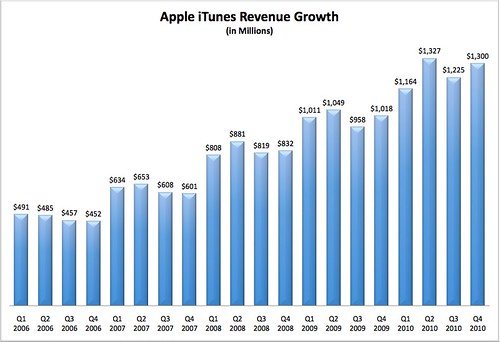
But then there's Google, Apple and Amazon. Apple's iTunes customer base arguably got to be so large that music publishers had to do business with Apple, on the general terms Apple wanted. That includes such basic matters as retail pricing, royalty rates and ability to "unbundle" discs and sell songs one at a time.

Video content owners "learned" from that experience and do their best to avoid ceding power to the newer distributors. But some might argue that some distributors have potential to grow so large that the potential audience simply cannot be ignored.

Some might argue that, over time, content owners "must" lose power to the huge new distributors. In that view, Amazon, Apple and possibly some others will amass audiences so large that the distributors will gain the upper hand. Who "owns" video distribution?

Certainly many would argue that perpetual annual price increases for video entertainment services at their current  rate are unsustainable. And one almost-certain way to put a brake on costs is for distributors to gain the ability to say "no" to programmer demands.

Network economics would change, of course. If programmers cannot "force" distributors to buy channel bundles, and distributors do not restrict channel bundles so rigidly, programming choices could explode.

Though telco, cable and satellite distributors might not prefer to sell smaller packages of channels, or simply programs, newer distributors might well prefer to sell that way. Think iTunes rather than a Comcast video subscription.

Many lightly-viewed networks would no longer be viable. Many shows would have a harder time getting exposure to an audience. But new promotion methods would arise. YouTube Channels might become more important venues for specialty networks.

Some might question the long-term viability of the channel metaphor. But channels are akin to "genres" of music. People have favorite artists and songs. But they also have preferences for genres. The same will be true for video and movies. Both channels and a la carte can coexist.

Cable operators, though, are not likely to be as supportive of a la carte access to discrete programs as will Amazon and Apple, who have device and business ecosystems well suited to a la carte buying. Apple and Amazon have numerous other ways to make money than by selling advertising.

Video distributors make money on subscriptions and advertising, and both revenue streams potentially are disrupted by a la carte sales.

But the question remains: how big does a distributor have to be before content providers must be on the platform? In music, the answer has been "as big as Apple." So far, nobody in the video distribution business has yet reached that scale, apparently.

But there are lots of potentially-huge channels. In the online world, Apple, Amazon and Google might come to mind. In the physical world, Wal-Mart, Target or Best Buy already have tried to make a move. So far, though, all we have seen is cracks. The old order is not yet crumbling.


Sunday, January 1, 2012

Time Warner Cable Takes Stand on Sports Programming Cost

Madison Square Garden Co.'s sports networks won't be available for Time Warner Cable Inc. subscribers in 2012, meaning New York Knicks and Rangers games apparently will not be available on Time Warner Cable systems in the New York area. The unusual inability to come to terms is significant.

Though programmers and content providers obviously would prefer to be paid more, every year, for access to their content, distributors are in a bind as programming costs continue to drive retail end user prices higher, reducing demand for the product. More affordable packages?

And since sports programming generally is considered to be a principal driver of programming cost increases, the carriage discussions have an added significance. Apparently, as important as Knicks and Rangers games are in the New York market, Time Warner Cable is "drawing a line in the sand" against what it sees as ever-higher programming costs. Programming cost squeeze

The gamble is not without risk. Few cable, satellite or telco video distributors would be willing to risk losing anchor programming such as ESPN, considered a staple of video service packages.

On the other hand, regional or "specialized" sports packages, at least in this case, are viewed by Time Warner Cable as a place to start changing the conversation. Some might argue the conversation is long overdue. Sports programming costs an issue


Saturday, December 31, 2011

Apple iPhone Gets 66% Share at AT&T Retail Stores

AT&T Device Share from 12/1/2011 to 12/27/2011It looks like the Apple iPhone dominated sales of devices at AT&T stores in December 2011. Apple iPhone rules at AT&T


Cable Bills "Tripled" in 10 Years?

The problem with measuring price changes for all sorts of products is that, quite often, products change. That can lead to an "apples to oranges" comparison that actually misses the mark. One might argue that such misunderstandings are inevitable, now that SNL Kagan has produced figures arguing that the "average cable bill" has grown from about $40 a month in 2001 to $78 in 2011.


There are a couple of obvious issues. Those are nominal prices, not adjusted for inflation. Using a rough rule of thumb about prices doubling every decade, a $40 inflation-adjusted price in 2001 would be about $80 in 2011, which is about what SNL Kagan says is the case.


Beyond that, there is the other problem also experienced by PC suppliers, namely that performance increases are not captured by the retail sales data. The 2011 channel line-up is, generally speaking, much more extensive than in 2001.


Whether that actually provides value for end users is another question. But the "product" itself is different. Also some will compare the "total bill" for all services in 2001 with the total monthly bill in 2011, and argue for a "tripling" of bills. That also is erroneous.


In 2001 arguably few subscribers were buying triple-play packages of voice, video and data. In 2011 that was more the norm than the exception. So the price for a three-service package is compared to what essentially was a one-service package in 2001. 


One easily can argue that nominal cable retail prices have climbed. But it also is true that consumers are buying a different mix of "products," including high-definition services and devices, digital video recorder service and service at more outlets, for example. Cable bills


[CABLEDEAL]

A Tablet Christmas

If you based your conclusions on Apple and Android activations, Christmas day was "tablet and smart phone day," according to Flurry data. Apple iOS, Android activations

It would be reasonable to assume that the Kindle Fire represented much of that activity. Amazon says it sold more than four million Kindles during the month of December, for example. That means 59 percent of activation events could have been for the Kindle Fire alone. 

iOS and Android new device activations, Christmas 2011

"Lean Back" and "Lean Forward" Differences Might Always Condition VR or Metaverse Adoption

By now, it is hard to argue against the idea that the commercial adoption of “ metaverse ” and “ virtual reality ” for consumer media was in...