Thursday, August 16, 2012

Apple Bought AuthenTec: It Needed NFC Fingerprint Sensors, Quickly

Screen Shot 2012 08 16 at 11.17.05 520x309 Why Apple really bought AuthenTec: It wanted new technology for upcoming products, and quicklyApple now owns AuthenTec, which has a fingerprint authentication technology.

One would suspect that means Apple wants to use the capability in some way related to its new Passbook mobile wallet.

Fingerprint sensors can be used in many ways of course, but linking purchase authorizations to fingerprints obviously would make sense to people making mobile purchases.

Some of us have argued that the one company that could really shake up the mobile payments or mobile wallet businesses would be Apple, simply because Apple tends to create markets, rather than share them.

The issue, if that is what one believes, is that Apple creates new device markets. So what new device market could Apple create?

The closest analogy so far would be Apple's reshaping of the existing mobile phone market. As Apple now gets the majority of its revenue from phone sales, perhaps the mobile wallet effort is simply a feature designed to maintain that dominance.

Or perhaps Apple has something else in mind.


$1.3 Trillion Worth of Mobile Payments by 2017, Mostly for Physical Goods, Local or Remote

It makes sense that most of the transaction value in the mobile payments business will be for purchases of physical goods, either bought locally or on a remote basis. One percent of a very big number--consumer spending--is always a big number. Four percent of a very big number, which is the percentage of total consumer purchases Juniper Research expects will be transacted on a mobile device, represents about $1.3 trillion in transaction volume.

That would be about a 400 percent growth to 2017, from current 2012 levels. Physical goods purchases   will account for 54 percent of the total value of mobile payments by 2017,  Juniper Research predicts.

Not all forecasts are so optimistic. The Aite Group projects $214 in U.S. mobile transactions by about 2015. Aite Group predicts each one of the multiple categories of mobile payments will experience double-digit growth, with a 68 percent compound annual growth rate between 2010 and 2015.

Wednesday, August 15, 2012

U.S. Broadband Access Median Speeds Increase 20% a Year

Despite some amount of complaining about how slow U.S. high speed access is, and how much it costs, the clear trend over time is in the direction of faster speeds and lower prices, on a dollars per megabit per second basis.

The latest example appears to be packaging changes Comcast will be making, beginning with areas where Comcast competes directly with Verizon's FiOS network.

Apparently, customers currently buying 25 Mbps access and 50 Mbps access will get their speeds doubled, for the same price.

Other tiers will be reconfigured as well. Comcast's 300 Mbps service will sell for $119 a month, when Comcast had previously stated the tier would be 305 Mbps at around $300 a month.

The point is that broadband access speeds keep getting upgraded. And though formal price reductions no longer are very common, as they once were before 2004, for example, the faster speeds now are offered at much more affordable prices, on a dollars per Mbps basis, especially for FiOS customers and cable modem customers.

Since 1994, median advertised speeds have risen steadily, at about a 20 percent compound annual rate.

FCC report on U.S. broadband use

Exhibit 4-C: Select Fixed  Broadband Infrastructure Upgrades


Big U.S. Retailers Join Forces to Develop Mobile Wallet

Wal-Mart Stores, Target Corp., 7-Eleven Inc. and Sunoco are among a dozen retail companies launching their own mobile payments system, the Wall Street Journal reports. 

The Merchant Customer Exchange, or MCX, is at an early stage, and represents the biggest move uet by retailers to take the lead in the mobile payments business that has largely featured initiatives by payment networks, though Google, PayPal, Intuit, Square and Isis (the mobile service provider consortium) also have competing services under development. 

Little can be gleaned about the specific approaches MCX will pursue. The main point is that the MCX venture shows the jockeying by ecosystem participants to lead or control the developing mobile payments business in ways that favor a particular segment. 

Retailers likely are most concerned about the costs. Processing networks are most concerned about preserving their transaction revenue streams. Banks are most worried about their fees. 

Point of sale providers are worried about replacement or substitute retail checkout systems. Mobile service providers and application providers are most interested in what could be gained in either the transaction revenue streams or new marketing and advertising services. 

E-commerce providers see opportunities to increase their sales share over physical brick and mortar retailers, while place-based retailers want to boost their share of online sales volume. 

Virtually all the contestants likely see upside in the area of customer knowledge, engagement and experience. 

Cable Prices Grow 70% Faster Than CPI, 1995 to 2011

Some products are difficult to assess, in terms of value for money. The problem occurs in the computer industry, where nominal "price" does not actually capture qualitative changes in the product. A standard PC sold in 2012 is much more capable than a PC sold in 1995, for example, whatever the nominal price.

Something of that problem is reflected in the prices consumers pay for cable TV service, to the extent that the channel line-ups are not equivalent between 1995 and 2012, for example. Cable operators argue that the dramatically higher number of channels in expanded basic accounts for the price hikes.

The argument is not without merit. But it arguably is a more subjective matter whether most consumers find the product qualitatively "better," in relationship to the quantitative increases in price.

Tuesday, August 14, 2012

Slow High Speed Access Gains in U.S. Market, Second Quarter 2012

The seventeen largest cable and telephone providers in the United States, representing about 93 percent of the market, acquired about 260,000 net high-speed Internet subscribers in the second quarter of 2012, according to Leichtman Research Group.

That is the fewest of any quarter in the eleven years LRG has been tracking the industry. The top cable companies added about 330,000 subscribers. 

The top telephone companies lost about 70,000 subscribers, LRG says. 

AT&T and Verizon added 669,000 fiber-based high speed subscribers, though, while having a net loss of 763,000 DSL subscribers. 

Broadband Internet ProviderSubscribers at End of 2Q 2012Net Adds in 2Q 2012
Cable Companies
Comcast18,738,000156,000
Time Warner11,208,00072,000
Cox*4,555,00025,000
Charter3,839,00037,000
Cablevision3,032,00025,000
Suddenlink979,400(3,200)
Mediacom894,0007,000
Cable ONE462,426(1,017)
Other Major Private Cable Companies**1,951,00010,000
Total Top Cable45,658,826327,783
Telephone Companies
AT&T16,434,000(96,000)
Verizon8,776,0002,000
CenturyLink^5,763,00018,000
Frontier^^1,751,0005,000
Windstream1,361,600(2,200)
FairPoint320,8122,302
Cincinnati Bell257,600400
Total Top Telephone Companies34,664,012(70,498)
Total Broadband80,332,838257,285
Sources: The Companies and Leichtman Research Group, Inc. 

46% Of U.S. Bank Account Holders Will Use Mobile Banking By 2017

According to a new Forrester Research report, mobile banking will be used by 108 million U.S. usersby 2017. That’s about 46 percent of all U.S. bank account holders. That should not come as a surprise. What percentage of people now use automated teller machines?

Today, perhaps 13 percent of U.S. and 9 percent of European mobile phone owners regularly use their banks’ mobile banking tools.

forrester_data_mobile_banking_08_12

Hits to Legacy Services Continue in 2nd Quarter 2012

DirecTV had never lost customers, on a net basis, ever, until the second quarter of 2012. Cable companies have losing video customers for about 16 consecutive quarters. 

And now it appears U.S. telcos might have lost digital subscriber line customers, on a net basis, for the first time. 

The eight largest American phone companies collectively lost 70,000 net DSL subscribers between April and June 2012. 

AT&T lost 96,000, while the other seven on average added a few thousand each. During that same period, the top four public cable ISPs, including industry giant Comcast, reported a gain of 290,000 subscribers. 

To be sure, you can attribute the second quarter loss virtually entirely to AT&T. But the fact remains that, where it comes to high speed broadband access, cable operators are adding customers, while telcos are struggling to keep pace. That doesn't mean telcos necessarily are "losing."

Keep in mind there is a huge nuance here. AT&T U-verse high speed Internet delivered a second-quarter net gain of 553,000 subscribers to reach a total of 6.5 million, helping offset losses from DSL.

In other words, legacy DSL is losing consumer favor. But U-verse and Verizon's FiOS are growing. So the cable lead in high speed access is not necessarily as stark as it might at first appear. 

In fact, you might argue that AT&T and Verizon are "trying" to lose DSL customers in favor of U-verse and FioS customers. 

Apple Grows Tablet Share to 70% in Second Quarter 2012

 Apple during the second quarter of 2012 shipped 17 million iPad 2 and new iPad tablets, up 44.1 percent from 11.8 million the first quarter of 2012, according to IHS  iSuppli.

As a result, Apple gainhed 11.5 points of market share during the quarter, boosting Apple’s second-quarter 2012 global tablet share to 69.6 percent, up from 58.1 percent in the first quarter.

Verizon Acquisition of Cable Spectrum Will be Approved

The U.S. Justice Department will drop its objections to the proposed Verizon purchase of spectrum from leading U.S. cable operators,  after the companies agreed in principle to limit the duration of the joint ventures to five years or less, after which they will have to reapply for antitrust clearance, people familiar with the discussions told the Wall Street Journal

Verizon and Comcast have also agreed not to implement the joint marketing agreement in areas where the two companies currently provide fixed network Internet, TV and phone services. As a practical matter, the firms would likely have done so in any case, to avoid drawing regulatory ire, it might be argued.

Under the new plan, Verizon Wireless stores won't sell Comcast's Xfinity service in regions where its parent company, Verizon Communications, already offers its FiOS service, for example.  That will alleviate concerns that the agency marketing deals effectively would end competition between cable and Verizon, in regions where they now compete head to head.

The new concessions mean that, as many had predicted, the agency deals will be aimed at AT&T and other competitors. Essentially, the new way the agency agreements are implemented will mean that cable operators can sell Verizon wireless products to bolster their triple play offerings, except where one of the cable companies competes with a Verizon fixed network. 

In some cases, cable companies will be able to sell Verizon Wireless products, while in other areas they cannot. The revised framework, in other words, does not represent, either for Verizon or the cable operators, a clear "in region only"or "out of region only" framework. 


"Post-PC" Notion is Driven by Changing Content Consumption Preferences

It will come as no surprise that people in the United States, United Kingdom and Australia are shifting many PC activities to their tablets and smart phones, according to a new survey by Gartner.

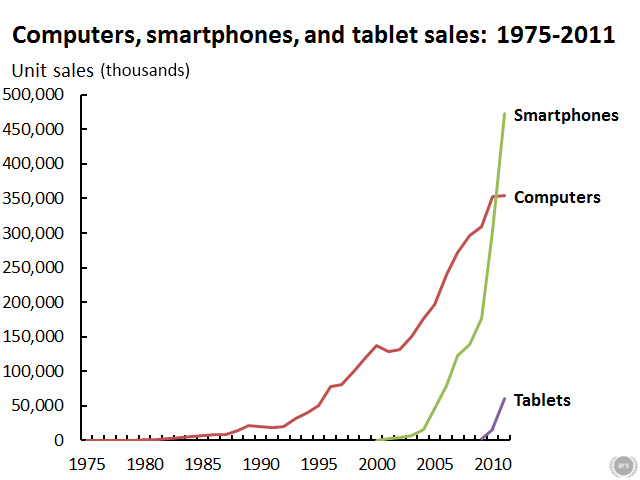
The results also confirm that PCs have become media consumption devices. In fact, you might well argue that the spectacular adoption of a range of media consumption devices, from iPods to iPads and tablets to smart phones, has much to do with those key end user activities.

In terms of the notion that we are entering a “post-PC era,” the key idea is probably less that tablets are displacing PCs as it is the notion that people use computing appliances largely for entertainment, social networking, email, messaging and content consumption.

The survey found that the main activities moving from PCs to media tablets are checking email (81 percent of respondents), reading the news (69 percent), checking the weather forecast (63 percent), social networking (62 percent) and gaming (60 percent).

“The rapid adoption of media tablets is substantively changing how consumers access, create and share content,” said Carolina Milanesi, Gartner research VP. . ”The survey found that more than 50 percent of media tablet owners prefer to read news, magazines and books on screen, rather than on paper.”

“On average, one in three respondents used their media tablets to read a book, compared with 13 percent for mobile PCs, and 7 percent for mobile phones,” Milanesi said.

Media tablets play a more dominant role in the home than mobile phones or PCs, with the highest usage taking place in the living room (87 percent), the bedroom (65 percent) and the kitchen (47 percent). “Weekday evenings are the most popular time to use media tablets, and this usage flattens out during the weekend as people tend to be away from home,” said Ms. Milanesi.

The survey confirmed that the main reason for buying a media tablet is the form factor. More specifically, respondents purchase a media tablet, in preference to a PC, for its convenience, small size and light weight. The survey also found that 45 percent of respondents do not share their tablet at all. This confirms that a media tablet is almost as personal as a mobile phone in terms of usage and consumer attitude.

“The mobile phone is the most personal device in the hands of users, and it enables more private activities,” said Annette Zimmermann, principal research analyst at Gartner. “It is the device that the respondents use most throughout the day, with the average user in the survey using it eight times a day for tasks requiring connectivity. This compares with an average usage frequency of twice a day for media tablets and three times a day for mobile PCs.”

Mobile phones play a role both inside and outside the home. Within the home, users recorded the most activities on their phones when in their living room (78 percent). Sixty-five percent used them outside the home or while in transit, and 66 per cent used them at work.

Across all activities conducted on the Internet, checking email (74 percent) and social networking (57 percent) are the most common activities on mobile phones. Gaming is in fourth place (42 percent), and appears more popular than checking the news (40 percent) and listening to music (40 percent). Watching live TV remains a very limited activity for mobile phone users (5 percent), but on-demand content has a slightly broader reach (15 percent).

The survey also found that both male and female adopters show similar attitudes toward the use of mobile devices. Both groups use the Internet more at home than elsewhere, and they use it for research, shopping, learning and socialising. However, the women in the study connect significantly less than the men when outside the home, and the difference in location might be partly linked to gender-specific usage patterns. While men seem to prefer to gather information, women use their devices more for personalised entertainment activities like gaming and socializing via Facebook or Twitter.

When do iPhone Owners Use Brand, Price Comparison Apps?

When do most Apple iPhone owners use  branded retail apps? On weekdays, a study by IDC using Onavo data has found. When do Apple iPhone owners use price comparison apps? On weekends. But when do they spend money? Perhaps Sundays, the study suggests.

The single biggest day of comparison app usage is Saturday, and the single biggest day of retail app usage is Sunday. This potentially implies that more mobile price checking and “showcasing” are done on Saturdays and more actual mobile purchases are being done on Sundays.

The second highest day of retail app usage is Monday. With Sunday as the number one day for retail app usage, it would have been expected that Saturday or Friday would be the number two day, IDC argues. This implies that Sunday retail app usage has a positive carry-over effect on Mondays.

The IDC study used anonymized U.S. iPhone usage data for the months of June and July 2012, and looked at use of BarCode Reader, PriceCheck by Amazon, RedLaser by eBay, and ShopSavvy.

Retail brand apps analyzed included Best Buy, Target, Walgreens, and Walmart.

"One of the most surprising findings was that different mobile commerce app types have distinctly different usage patterns based upon days of the week," noted Scott Ellison, vice president, Mobile & Consumer Connected Platforms at IDC. "Users spend more time with retail brand apps during the workweek than pricing comparison apps, but that pattern reverses itself on the weekends when price comparison app usage soars past retail app usage."

Computer for the Next 3 Billion? Coming

Some of us can remember great "handwringing" an concern in international policy circles about how to bring telephone service to two billion people who never had made a phone call. You don't hear such concern anymore, since we rapidly are solving that problem with mobile communications, a solution not envisioned in the 1970s and 1980s. 

Two decades ago the question largely had shifted to the problem of how to get computing into the hands of the next three billion people. There was some work around the notion of special devices optimized for rural villagers that would be low cost, perhaps $150 or so.

For many at the time, likely most knowledgeable observers, the prevailing thinking was that it couldn't really be done. And that remained true even as recently as the middle of the 2000 decade. 

But as we stumbled upon a solution to the problem of getting communications to people at prices they could afford, we are about to solve the problem of getting computers to people, also at prices they can afford.

The notion, for some time, has been that in many parts of the world, the smart phone would be "the computer" most people used. That might turn out to be largely correct, for at least a time.

But it also now is possible that we know how to create and sell computers to people that cost no more than $150. Consider that the prototype "One Laptop Per Child" device had a screen of 7.5 inches diagonal and flash memory, with no keyboard.and used Wi-Fi for Internet connectivity.

Oh, that's right, we now call that a tablet, and it is made and sold commercially by the likes of Amazon, Barnes & Noble, and soon Google and likely Apple. 

There is an important principle here. The communications and computer industries have solved a very hard problem that stumped global policy makers for decades. Smart people, working creatively, without any guidance or direct support from government entities, simply solved the problem of communications for people who never before had made a phone call. 

Those people and firms are about to solve another really big problem, and they don't even know it, yet. 

Though it is unpopular in some circles, the notion that really-big problems often can be solved by creative human beings themselves, entirely by market mechanisms,  without the dead hand of government dicta or bloated programs that waste lots of money. 

There are other lessons to be learned, for people honest enough to ponder them. For most of my life, it seems, government officials, policy makers and foundations have wrestled with the idea of how to jumpstart economic development in places such as Africa, spending, by probably conservative estimates, a trillion dollars, at the the rate of $50 billion to $150 billion a year. 

The "aid establishment" won't like to hear it, but many believe the aid actually has harmed development in Africa. It isn't just that the aid largely has been ineffective, it has made things worse. 


This is the argument made by Dambisa Moyoa Zambian economist with a masters from Harvard, a doctorate from Oxford, and eight years experience as an economist for Goldman Sachs.

“You essentially have a problem whereby African governments are getting aid because they, the donors, are worried about the levels of poverty in those countries," Moyo says. "But that aid then tends to spew out a lot of corruption, it creates a lot of bureaucracy, it kills off entrepreneurship, and it disenfranchises voters in those countries,”  she says.

Her solutions include the notion that we should first stop doing harm. In other words, the objective should be to "be good," not "feel good." We have to stop doing what is harmful, even if those actions make us feel virtuous, so we can actually be virtuous, which is to say provide real help. 

The earlier success of the communications industry in solving the communications problem is about to be joined by the computing and applications industries solving the problem of computing for billions of users around the world. Nobody deliberately set out to solve those problems. 

But the solutions have arisen because creativity was allowed to flourish, Moore's Law operates and market drivers and the rule of law have operated. We tend to take those things for granted in North America. We should not. Marvelous things are possible. 

Without realizing it, Amazon and others have solved the problem of computers for the third world. 


Out of the Box

Monday, August 13, 2012

BBC Sees Huge Video Streaming Jump from London Olympics

You would expect the recent London Olympics to have driven higher use of Internet and Internet video content. It did. 

An average 9.5 million global daily uniques to the BBC Sport website is almost a quarter higher than the previous record level for BBC. 

Video requests doubled from those seen during any previous event (106 million) and were higher than the 2008 games (32 million) and 2010 World Cup (38 million).


      Usage by hour across the day by device - for 28 July to Aug. 9

A third of Web visits came from mobile devices. But only a tenth of video requests were mobile.

Most interestingly, the majority of video requests (62 million) were for live streams. Only eight million were for on-demand live streams, 35 million were for short-form clips.

The BBC, which adapts streaming quality to viewers’ bandwidth, says the average bitrate was “the highest the BBC has ever delivered online” at 1Mbps.

There were some notable changes in device usage as well. The BBC data shows that PC usage was at its peak during the week at lunch time and during the mid-afternoon.

Mobile usage becomes dominant around 6 pm as people leave the office.
Tablet usage reaches a peak at around 9 pm when people seem to be using them as a second screen experience as they watch the Games on their TVs and also as they continue to watch in bed, BBC says.


But consumption of video content on mobile has been  the key takeaway from the two weeks, according to the BBC, which saw 12 million requests for video on mobile across the whole of the Games.


Biggest-Ever Drop in Subscription Video Accounts

Keep it in perspective, but in the second quarter of 2012 the U.S. subscription video entertainment business, accustomed to growing every year, suffered its biggest-ever decline in subscribers.

Net U.S. subscriber additions for subscription TV fell by 350,000 in the second quarter. These results were slightly worse than the 340,000 decline during the same period in 2011. You can make up your own mind about why the decline is happening. The second quarter is seasonally the toughest quarter of the year, but most of us would argue there is some combination of less interest in the product, affordability issues and use of substitute products at work. 

U.S. satellite providers also lost subscribers during the first quarter, down 62,000.  DirecTV's loss of 52,000 subscribers was its first-ever decline. 

Cable TV operators lost 600,000 subscribers in  the second quarter. And it is no fluke. Cable subs have decreased during each of the last 21 consecutive quarters.

Yes, Follow the Data. Even if it Does Not Fit Your Agenda

When people argue we need to “follow the science” that should be true in all cases, not only in cases where the data fits one’s political pr...