Thursday, August 23, 2012

55% Say They Order Restaurant Food Using an Online or Mobile App at Least Monthly

More than half of the respondents in a national survey said they use an online or mobile application to order food from a restaurant on at least a monthly basis.

Splick-it, a Colorado-based food ordering services provider, queried 7,122 American consumers for the survey. The sample included 70 percent of respondents between 20 and 40.

Only 25 percent of respondents said they never use online or mobile food ordering services, while a combined 21 percent reported using those services on a daily or weekly basis.


Will 60 Million U.S. Households be Using Peer-to-Peer Payments in 2014?

Javelin Strategy & Research expects 60 million American households to be using person-to-person payments by 2014, a forecast some might find aggressive. PayPal, which launched in 1999, has offered P2P payments using the Web, initiated by use of a PC, for some time. 

Since then, PayPal has extended that capability to smart phones. But what will it take for millions of households to acquire the habit? That's the rub, some would say. 

As with many other new behaviors, it helps if the transactions are the sorts of activities that a user frequently has to conduct. That is one reason transit payments seem to make a lot of sense. Other apps often seen as driving such behavior, such as paying a friend when a restaurant bill is split, might not happen so often. And that will raise the hassle factor, and lower the perceived value. 

Then there is the question of business model. Lots more people will adopt the behavior if there are no transaction fees. But some services do require payment of a fee. 

Popmoney charges 95 cents per payment to send. If a request for money is made and the money is delivered, the same charge applies. Dwolla charges 25 cents to receive money in amounts greater than $10. 

Is that a big barrier? For some it might be. In developing markets the use case is much more clear. Where it is very time consuming, or dangerous, to send money to an organization or a person, mobile P2P transfers offer high value, with or without a transaction fee. 

In developed markets, the value might be relatively slight, and any transaction cost might be viewed as unacceptable by many users. Bill payment might provide some insight. Lots of people pay bills using e-banking. But those transactions generally do not impose fees, so the barrier to adoption is low, and users can see the advantage of not paying a check cashing fee, paying for postage and getting mail to a postal drop-off location. 

Most people probably can point to instances where e-payments requiring a significant fee (several dollars, for example) don't happen, though lots of other payments, not requiring a transaction fee, are made. 

Business Smartphones FBN 

Areas of Potential Verizon, Cable Company "Lessened Competition" are Few, Really

The Department of Justice has been concerned about potential lessening of competition if Verizon, Comcast, Cox Communications, Time Warner Cable and Bright House Networks were allowed to fully sell each other's services. 

With the caveat that many of the areas of overlap, shown in this map in purpose, are areas of high population density, the potential danger was largely concentrated in Verizon's fixed network footprint in the U.S. Northeast, with the addition of some areas of Southern California and the Tampa, Fla. area. 

According to J.D. Power, LTE "Works Better" than 2G, 3G, WiMAX

Wireless customers who use 4G LTE-enabled devices experience fewer data-related issues, especially with slow connection speeds, than do customers who use 3G and other 4G-enabled devices, according to  J.D. Power. In many ways, that is logical. The salient feature of 4G is that it is faster than 3G. 

The study finds that the number of data-related problems, especially those related to slow connection speeds, is significantly lower among customers using 4G LTE-enabled devices than among those using devices with older 3G or 4G technology standards, such as WiMAX and HSPA+.  

For example, among customers with 4G LTE-enabled devices, the problem incidence for excessively slow mobile Web loading is 15 problems per 100, compared with the industry average of 20 PP100. If you have used either HSPA+ or WiMAX, you might agree. 

Perhaps oddly, though, the overall problem incidence for excessively slow mobile Web loading is even higher among customers with WiMAX and HSPA+ technology (22 PP100 and 23 PP100, respectively). 

There are no substantial differences in problem rates for other data-related issues between 4G LTE and WiMAX and HSPA+ technologies, such as Web and email connection errors.

The analysis was based on 10 problem areas that affect the customer experience (in order of importance): dropped calls; calls not connected; audio issues; failed/late voicemails; lost calls; text transmission failures; late text message notifications; Web connection errors; email connection errors; and slow downloads. 

Network performance issues are measured as problems per 100 (PP100) network connections, with a lower score reflecting fewer problems and better network performance. Carrier performance is examined in six geographic regions: Northeast; Mid-Atlantic; Southeast; North Central; Southwest; and West.

Is the FCC Ignoring its Own Data to Justify More Regulation Over Broadband?

Some believe the Federal Communications Commission deliberately is ignoring its own data to justify more regulation over the broadband business, when the facts might suggest a lighter touch is justified.

In fact, analysts at the Phoenix Center for Advanced Legal & Economic Public Policy Studies go so far as to argue that "ubiquitous availability is today an unreasonable expectation and unreasonable goal."

The Phoenix Center argues that since the FCC analysis requires an expenditure of $50,000 or more, on top of actual and accepted industry investments for a new broadband access line, to serve the last 200,000 or so U.S. locations, the reasonable and proper goal of fostering widespread broadband access descends into an improper specifying of how that access is to be accomplished, in essence. 

The economists at Phoenix Center do not argue "nothing" can be done to serve the remaining five percent or so of isolated locations. Satellite services can reach most of those remaining locations now, with improvements coming, for example. 

That is not to say any of the satellites now delivering satellite broadband are as fast as we would like, cost as little as we might prefer, or can literally reach "every" location in rural areas. Some of the spot beam transponders can become fully loaded, meaning no more customers can be added within the footprint of a particular spot beam. 

Some of the locations could be in areas where a particular satellite does not have any spot beams aimed at the ground. But the launch of new satellites by ViaSat and HughesNet does mean existing load on the older satellites will, over time, be alleviated, allowing some locations to once again buy service, while likely also allowing faster service, even using the older satellites. 

Satellite broadband isn't perfect, nor does it offer speeds as fast as fiber to the home networks. But satellite broadband is getting much better, and already is built. In many areas, that means speeds "up to" 12 Mbps or 15 Mbps can be purchased. Coverage is not 100 percent, by any means. But coverage is quite substantial, and no taxpayer or service provider expenditure of an incremental $50,000 per location, whether a person buys, or doesn't buy, is required. 


PayPal, with Discover Tie, Can Be Used at 7 Million U.S. Retail Locations

In the open-end (general purpose, as opposed to systems that support only one retail brand) mobile payments business, scale really does matter, simply because it is difficult to create a brand new habit unless people can use their new mobile payment features most of the places they ordinarily want to shop.

That’s the reason why the new business agreement between PayPal and Discover is important. Even though Discover lags behind Visa, MasterCard and American Express in terms of active account holders and users, Discover has a big network. PayPal has about 50 million active users.

And although Discover handles fewer transactions than credit-card industry leaders Visa, American Express, and MasterCard, the Discover penetration rate at retail merchants in the U.S. is 95 percent.  That means PayPal can be used at most of the places most people will be shopping, and that is a big deal, indeed.

That represents about seven million retail locations nationwide in the United States. The other angle is that the way PayPal handles the mobile payments also means merchants do not have to buy and install new point of sale gear. That’s another traditional impediment to adoption of mobile payments by merchants.

PayPal users will be able to make purchases using their phone number and a security pin code, a major advantage compared to systems that require installation of new POS terminals.

It's Hard to Figure Out What People Want

Helping people find new experiences they wouldn't otherwise know about is a value location-based apps often try to provide. But do people often want to do so? As it turns out, one app, Roamz, actually wasn't being used that way.

What Roamz creators found, instead, was that users knew what they wanted and were just looking for some guidance and some idea of what other people like. So  Roamz is "pivoting" its approach. Instead of emphasizing discovery of "new" experiences, Roamz tries to provide guidance about experiences or products about which a given user already has a use case.

In other words, it turns out that when people leave the house in the morning, they aren't terribly interested in exploring the world around them. They have to get to work.  As it turns out, "serendipity" apps and features aren't terribly useful at times when people are engaged in purposeful activities.

It reminds us of how bold Steve Jobs really was, designing products we didn't know we needed. It's very risky to do so.

Wednesday, August 22, 2012

IEEE Can Foresee 100X More Bandwidth Demand by 2020

According to a study by a working group of the Institute of Electrical and Electronics Engineers (IEEE), it is possible that bandwidth demand could grow by two orders of magnitude by 2020, from 2010 levels. 

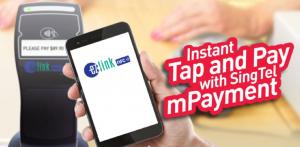
Singapore Mobile Operators Launch Mobile Payments

SingTel, Singapore’s largest mobile operator, along with telco M1, today announced availability of mobile payment service using new subscriber information modules (SIMs) for NFC-enabled Android phone models including the Sony Xperia S and Samsung Galaxy S Advance. M1 is also offering NFC service on the Samsung Galaxy S III.

SingTel and Mi are enabling subscribers to pay for retail purchases payment service provider EZ-Link Pte. M1 subscribers also will be able to use M1’s new co-branded prepaid card application, which supports MasterCard PayPass.

The launches follow StarHub’s  launch of its mobile payment system SmartWallet in early August 2012.

The SmartWallet will offer three payment applications that mirror the M1 choices.

StarHub plans to make three Android NFC phones available, as well, including the Samsung Galaxy S III.

All three telcos are part of a consortium chosen by Singapore telecoms and information services regulator Infocomm Development Authority to build an interoperable NFC infrastructure.

Mobile Commerce is E-Commerce

Some of us would argue that, over time, "mobile commerce" will subsume e-commerce. Others, of course, will argue that e-commerce will become mobile commerce. It works, either way. 

Apple: Biggest Equity Value, Ever

IaaS is Amazon, 19 Companies Earning $20 Million Annually, Lots of Firms Making Only $10 Million

Once you eliminate Amazon from the list of infrastructure as a service suppliers, you have a list of 19 vendors that earn $20 million annually. There are many earning $10 million in annual revenue, according to Lydia Leong, Gartner analyst. 

The data suggests that to succeed in this market, you have two possible routes, Leong argues. A company needs a giant sales channel with a ton of feet on the street and existing relationships, or a company needs excellent online marketing and instant online sign-ups. 

A third possible route is that you make it easy for people to white-label and resell your service, says Leong. 

As with most other new businesses, there will be a ton of consolidation as surviving providers amass enough scale to survive. 

Are Millennials Really Different?

Millennials, people between the ages 18 to 29 or so (some would include people up into the mid-30s), are "different," many would argue. 

Gen Y in the Workplace

Nearly Half of US Consumers Think They Don't Need LTE

About 47 percent of consumers polled by Piper Jaffray say they "don't need 4G Long Term Evolution," and another 26 percent think all 4G network technologies are the same. 

About 15 percent of those polled said that 4G LTE is the best network technology, the survey by Pipe Jaffray suggests. 

The findings should not be surprising. One could have gotten similar results about third generation services for quite a long time in markets such as Western Europe, or the United States, as well.

That is hardly unusual. Even though China reached a milestone in February 2012 when the number of mobile phone users in the country surpassed one billion, representing penetration of 74 percent, the 3G penetration rate is still low at 14 percent, for example, China Daily reported.

The total number of 3G subscribers in India is just about 2% of the total number of cellphone users. India has 893.8 million cellphone users according to the Telecom Regulatory Authority of India, (TRAI).

2006 study of 3G adoption in Western Europe, at a time when nearly 90 percent of 3G license holders in six Western European markets had launched 3G services three years prior,  3G penetration rates were still generally low, ranging from one percent to 12 percent, with a median of about 3.5 percent adoption. 

The big problem was "lack of 3G content and applications." That should be qualitatively different with 4G, as it is the Internet that generally will supply content and applications. But will it be any different in the early going?


LTE
Piper Jaffray's survey also found that consumers are ambivalent about which U.S. carrier has the best 4G LTE network. Among those polled, 51 percent indicated they don't know who has the best 4G network, or that all 4G networks are the same. 

That finding should not be surprising, either. Few consumers likely have a good grasp of the differences, or have had a chance to test and use most of the services for a length of time. 

As Tablet Sales Reach 400 Million Units in 2016, Will Apple iPad Keep Lead?

When one includes Android and other tablets as well as e-readers, nearly 100 million tablets were sold in 2011. But 400 million units will be sold by 2016, Business Insider predicts, 400 times the number sold in 2011. 

Through the first six months of the year, tablet prices have seen a pretty steep drop off, despite the iPad's continued dominance. The average selling price of the iPad is down more than 11 percent from its 2011 price. The introduction of mini tablets, beginning with the Kindle Fire, disrupted the pricing dynamics of the market and will drive the huge drop in ASP over the next few years, BI says. 

Tablets are poor substitute for PCs if you are trying to run data intensive spreadsheets, but they vastly improve upon the media consumption experience, BI says. That is one reason some argue that tablets are a new product category of computing device, not a "replacement" for PCs, as such. As it turns out, what people want to do on computing appliances has changed over the last couple of decades. They work less, they consume media more. 
tablet sales

Yes, Follow the Data. Even if it Does Not Fit Your Agenda

When people argue we need to “follow the science” that should be true in all cases, not only in cases where the data fits one’s political pr...