Friday, December 21, 2012

"Broadband Access" is More Nuanced, These Days

Evaluating use of the Internet and broadband is getting more complicated by the day. For starters, mobile now represents a majority of Internet access activities. And it sometimes is hard to comprehend just how fast that has happened.

Consider that, in the G-20 countries, mobile broadband went from negligible to a majority of all access connections in just five years, between 2005 and 2010, according to Business Insider.

In five more years, in 2015, mobile G-20 Internet connections will be about 80 percent of all connections, Business Insider estimates. That has some clear implications for the way we evaluate “broadband” penetration. For starters, “mobile” access might be more important, more of the time, than fixed modes.

Traditionally, the reason for buying broadband access services was for fast Internet access for some sort of PC, at a fixed location. These days, there are other reasons beyond “PC access,” and many more situations where “mobile broadband” is preferred.

Some users might want a fixed connection, solely or in part, to offload data sessions from a mobile network to a fixed network, to get access to the Internet from some other devices, such as a tablet or iPod.

Some might want broadband access to support Internet access for game playing consoles or some other video device (Roku, for example) that displays Internet video on a TV. In other words, there are many more devices, other than PCs,  that derive value from a fixed network broadband connection.

Notably, a Business Insider poll suggests 45 percent of users are doing their browsing on a tablet, 24 percent on a notebook and 17 percent on desktop PCs. About 14 percent of browsing now is conducted on a smart phone.


There are other implications, such as our notions about “digital divides.” Approximately nine out of ten Hispanics have access to the Internet, when  extended family, work, school, and other
public places are included, according to Nielsen.

But Hispanics are less likely to have Internet access at home  compared to the U.S. average (62 percent  and 76 percent, respectively).  So is that a problem? Yes, but a problem that is solving itself, it appears. Over the past year (2011 to 2012), Hispanics increased home broadband use by 14 percent, which is more than double the six percent growth  of broadband use in the general market.

But there are other important “demand” angles. Hispanics are three times more likely to
have Internet access using a mobile device, but not have Internet at home (nine percent
compared to three percent, respectively). In other words Hispanices, as blacks and Asians, “overindex” for mobile broadband.

Overall, Hispanics are 28 percent more likely to  own a smart phone than non-Hispanic
whites.  

In other words, many segments of the U.S. population, for example, prefer to buy mobile broadband than fixed broadband.

When Cutting Price Won’t Help

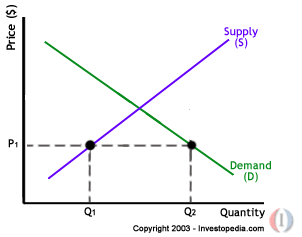
It is a truism of economics that price and sales are directly and inversely related . In other words, lower the price of a product and consumers tend to buy more; raise the price and consumers buy less. In fact, the whole point of some public policy policies (taxes, rebates, subsidies, penalties, credits, tolls, fees) is to dampen demand for some products or encourage demand for some products.


Communications markets are not exempt. Raise prices and people can be expected to consume less; drop prices and people theoretically buy more. But that only works up to a point.

Demand for the product, and ability to supply it, has to exist. And that is getting to be a problem for some communications or entertainment products.

Demand for streamed versions of items in the Netflix catalog is growing; demand for disc rentals is shrinking. Presumably Netflix could drop prices for “DVD only” versions of the product. But consumer preferences are shifting, and it is not clear whether even significant price drops would reverse the streaming versus DVD by mail volume changes.

You might argue something similar is happening with mobile voice and fixed network voice, or video entertainment subscriptions.

To be sure, there’s a relatively simple reason people globally prefer to use mobile for voice. In many markets, mobile is the only way to make a call. In 2010, about 90 percent of total call volumes in Brazil, Russia and China occurred on a mobile device. That is a market where there is no functional substitute product, so fixed network voice pricing isn’t relevant.

In other markets where both mobile voice and fixed voice are available, mobile is cheaper than using fixed services. In these markets, retail pricing and packaging, not just user preferences, drive usage.

Classical economics would suggest the suppliers could increase buying and use of fixed network voice services by dropping the price. Some would argue that is precisely what Skype and cable digital voice services have done.

In the video entertainment business, the price and volume consumed trends are not so pronounced, yet. But some surveys suggest not only that the problem of actual cord cutting is growing, but that demand is the issue.

The implication is that even a price cut for video subscriptions might not work to stimulate demand, on the part of some growing percentage of consumers.

About 33 percent of people who have “cut the cord” on their video entertainment subscriptions would not buy again, even if prices were cut in half, a study by TechBargains.com has  found.

That opinion illustrates the level of growing dissatisfaction with video entertainment services sold by cable, satellite and telco TV providers, at least in some consumer segments.

Despite the fact that 83 percent of surveyed cord cutters abandoned their video entertainment services because of the “high cost,” even a price cut in half would not be enough to entice many cord cutters to buy again.

Significantly, the study also suggests that video entertainment services are not even viewed as providing the best quality and variety of programming by 17 percent of people who disconnected their  cable TV or satellite TV services. For an industry that claims to provide the best quality and variety, that is a problem.

Another possibly-significant finding is that consumers who abandoned their fixed network phone service were two times more likely to eliminate their cable TV or satellite TV subscription than those who have not disconnected their home telephone.

Of respondents who have gotten rid of their landline, 36 percent  also discontinued their cable TV or satellite TV service. Of respondents who still have their landlines, 19 percent have cut the cable cord.

The survey found that 60 percent  of respondents no longer have a landline telephone service, either.

Although the survey also found  that 57 percent of people that still have a landline voice service  do not plan to disconnect their landline in the next year, that statistic might be only mildly reassuring, since it suggests that 43 percent might cut the cord on their fixed network voice service within a year or two.  

The Federal Communications Commission Technology Advisory Council has estimated that  U.S. time division multiplex fixed consumer access lines could dip to perhaps 20 million units by about 2018.

Others, such as Kent Larsen, CHR Solutions SVP, think lines overall could dip to about 50 million over the next five years, then to about 40 million on a long term and somewhat stable basis.

Keep in mind that the U.S. market supported about 150 million voice lines  in service around the turn of the century. One might argue, under such circumstances, that even lower prices would not entice many consumers to buy fixed network voice again.

What Does Dish Actually Want from LTE?

Lots of investors operate on the premise that spectrum has value, even if the owner doesn't really want to be in the service provider business. In fact, some would argue, with good reason, that entrepreneurs such as Craig McCaw always have operated on the theory that it always is good to acquire spectrum, as it is good to acquire land, irrespective of the immediate ability to build an operating business using such spectrum.

If fact, much spectrum originally licensed to support non-profit educational purposes (Multichannel Multipoint Distribution Service, for example) has been redeployed to support mobile communications. Leading U.S. cable operators also have invested in mobile spectrum ownership over the past couple of decades, eventually selling that spectrum rather than building operating businesses. 

For that reason, many observers have insisted that Dish Network's actual objective is to sell its now more-valuable spectrum to another service provider, rather than building and operating its own mobile network.

According to that view, Dish Network will do enough to deploy an AWS-4 network, at minimum cost, to meet the FCC’s construction criteria, to persuade a potential buyer such as AT&T to purchase either Dish Network in total or at least the 4G spectrum assets.

Others argue that Dish really is serious about getting into the high-speed access business, and therefore does need to create a 4G network. 

Still, there has been an argument argument for decades that, sooner or later, both Dish Network and DirecTV would be acquired by AT&T and Verizon, both to bolster video entertainment business market share. 

If so, then the mobile spectrum would simply be added value for the buyer. 

Will UK 4G Auction Change Market Structure?

There often is hope that major spectrum auctions will increase the amount of competition in a market, sometimes by enticing and enabling new entrants to enter a market. Regulators often specify that some blocks of spectrum are reserved for such new entrants, for example. 

The upcoming U.K. 4G spectrum auctions are likely to see "new" bidders, but the actual amount of impact on the mobile market is likely to be rather insignificant, some would argue. Already, three new names have surfaced as bidders, including BT, which has been barred from the mobile business by regulator action.

Everything Everywhere; HKT Company, a subsidiary of Hong Kong operator PCCW; Three owner Hutchison 3G; MLL Telecom; Niche Spectrum Ventures (BT Group); O2's parent firm Telefónica UK and Vodafone are the seven bidders that have paid the entry fee for the auction


That naturally raises speculation about whether BT might try and get back into the mobile business as a facilities-based provider, where it today operates as a virtual mobile network operator.

That appears to be unlikely, as BT is probably more interested in using spectrum to reach households it cannot get to using its fixed network. 

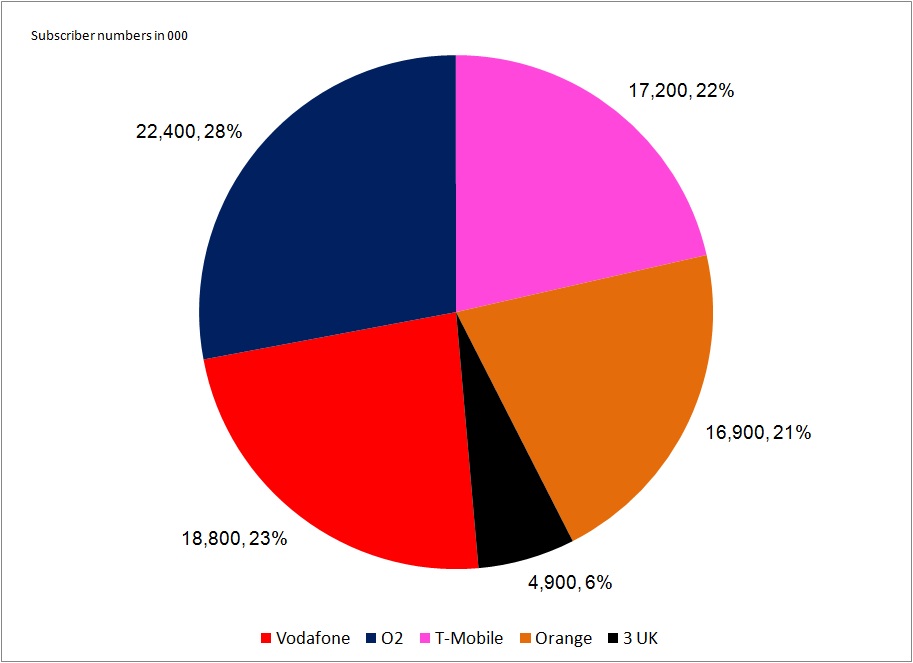
So some might argue the auctions have little chance of upsetting the current market structure in the United Kingdom. Wireless Intelligence predicts that, by 2014, the same four leaders of the 3G market also will top the 4G market. 


Thursday, December 20, 2012

Is Advertising a Violation of Network Neutrality?

Is advertising a violation of network neutrality? It's a rhetorical question, since advertising is not, as such, a network neutrality issue. 

But there are applications of advertising, in an Internet access context, that can appear to be such violations. 

Some object, for example, to ISPs making deals with advertisers or content companies regarding use of bandwidth to show movie trailers or other content. 

In other words, some service provider executives think it is reasonable to allow third party advertisers to "sponsor" use of bandwidth, as advertisers now sponsor and help defray the cost of content consumption by end users.


Service providers use the analogy of "toll free" calling, where the cost of network use or a session is paid for by a third party, not the end user. In principle, two-sided business models, where a service or application provider earns revenue both from subscribers and business partners is an essential part of many content and media business models. 

And advertising is why most users do not pay direct fees to use Google search, Facebook, Twitter or other popular Internet apps and sites.  

That is not to say any such retail charging mechanisms would be easy to implement, or easy for users to understand or embrace. It might be easier to create plans that provide clear incentives to use video only on Wi-Fi networks, such as offering "no-video" plans that are cheaper than other plans that are unrestricted.

Where such proposals are tricky is when they raise the issue of predatory activity on the part of access providers. But it is tricky. On any IP network, it is possible to provide both "Internet access" and "managed services" such as carrier voice or entertainment video and messaging. 

Those tricky issues aside, advertising, sponsorship or other forms of third party revenue are not  violations of network neutrality, which has to do with issues such as blocking of applications or other potential gate keeping functions. 

Advertising, sponsorship and other third party revenue sources are just that, revenue sources. Over time, ISPs contending with ever-higher bandwidth consumption related specifically to video might be compelled to turn to third party sources of revenue, as there are limits to how much consumers will pay for some apps and services. 


"Voice" Increasingly is Synonymous with "Mobile"


There’s a relatively simple reason people globally prefer to use mobile for voice. In many markets, mobile is the only way to make a call. In 2010, about 90 percent of total call volumes in Brazil, Russia and China occurred on a mobile device.

In other markets where both mobile voice and fixed voice are available, mobile is cheaper than using fixed services. In these markets, retail pricing and packaging, not just user preferences, drive usage. In addition to convenience, where mobile calling is cheaper than fixed calling, there is less incentive to use the fixed network.


On the other hand, where fixed network calling is quite cheap, users tend to use the fixed network more.

France and Spain were the only countries where the mobile premium, compared to fixed network calling, increased in 2010. In France, the cost of mobile calls relative to fixed voice calls has been increasing since 2006, while in Spain this has been true since 2008, Ofcom, the U.K. communications regulator, says.

In both countries the average cost of mobile calls also has been falling, meaning that the increase in the mobile premium is a result of the rate of decline in fixed prices being greater than that of mobile calls.


Wednesday, December 19, 2012

Can Carriers Afford "Unlimited" Internet Access?

With the caveat that retail price is not necessarily directly related to cost, it sometimes might be possible for an Internet service provider to offer truly limitless Internet access, for a while. That tends to happen only when a brand-new network, operated by an upstart trying to take share, first comes to market.

Under those conditions, the network has plenty of capacity, and it is customers that are in short supply. Assuming that service provider actually is able to make a business of Internet access, the number of customers soon will force a change in such policies at some point, to encourage customers to make choices about how much they use.

Also with the caveat that some think there really is not a bandwidth issue faced by major ISPs, Internet access actually is more akin to many other network services, and unlike a few that charge the equivalent of "flat rates."

The classic example of a "flat rate" network service is cable TV, which allows users "unlimited" use of all the channels, on multiple sets or devices, for the same charge. But that is a multicast service, which has important bandwidth implications. 

Essentially a multicast service sends one copy, usable by all users, on a point to multipoint basis. Satellite TV, broadcast TV and broadcast radio work the same way. Metering doesn't matter, because there are zero bandwidth implications for usage, high or low. 

No more bandwidth actually is consumed no matter how many customers decide to watch at once, or how many customer devices are in use at any one time. 

Internet access is a point-to-point medium, like a voice call, a videoconference, water, waste water or electrical service. There, each unit of additional usage really does have network implications. 

At least in part, that is why unlimited Internet access is disappearing. On networks with high usage, there are "peak" hour and "peak day" dimensions to usage. And though it often seems "unfair" to some observers that usage is metered at some level even when the networks are lightly used, that isn't the point.

Every communications network (point to point) has to be sized for "peak" usage, not "average" usage.

So ISPs will have to shift to some form of metered usage over time, even if only to encourage people to use the network at off peak hours, rather than peak hours. Mobile ISPs have been bigger problems, as some parts of their networks have very-high usage on a sustained basis, while other parts are more lightly used.

Any cell site right beside a major highway will become congested during rush hour. Some suburban cells might not become seriously congested at any hour of the day. Some downtown urban sites with high foot traffic might be heavily used during working hours, but lightly used during non-work hours, and on weekends. 

The whole point of metering is that metering also allows service providers to create incentives for using the network at times when capacity is not a problem. That's the whole theory behind weekend and evening calling  rates, which were important in the past. 

The other problem is video, which has bandwidth implications an order of magnitude or two orders of magnitude greater than voice, for example. While nobody seems to think retail rates actually can rise by an order of magnitude or two orders of magnitude, even if usage does grow that much, the additional usage carries real costs, and those costs have to be recovered. 

So can a typical ISP, with a serious number of customers, actually afford to offer truly unlimited access, if those customers start watching Internet-delivered video? Probably not. An order of magnitude worth of network is an expensive thing. 

One might hope more-efficient suppliers might enter any local market, but any large ISP will over time, experience higher costs "per unit," even if that supplier originally started out as a low-cost supplier. 

We can quibble about the cost elements, but those elements will develop, over time, especially in highly-competitive markets such as Internet access. 

People Access the Internet Everywhere, All the Time

A survey of abourt 60,000 U.S. users simply confirms what you would assume, namely that people now use their smart phones to use the Internet virtually everywhere, Forrester Research reports. 

Mobile Data Plans Will Grow 10 Times Bigger by 2015

Real-time entertainment applications on mobile devices (smartphone and tablets) being used on fixed access networks accounted for nine percent of all traffic in North America, according to Sandvine

By 2015, Sandvine believes mobile devices will account for 20 percent of all traffic on North American fixed access networks. 


In the past three years on North American fixed access networks, real-time entertainment has almost doubled its share of traffic, now accounting for 58.6 percent of all peak period traffic, Sandvine says. 

Sandvine expects real-time entertainment will account for over two thirds of peak period traffic by 2015.

For those reasons, Sandvine predicts mobile users will demand service packages with ten times the monthly quota that is available in 2012. The clear business problem for mobile ISPs is that virtually nobody believes service providers can charge an order of magnitude more for mobile broadband. 

LTE Smart Phones Will Grow 300% in 2013

The global LTE smart phone market will triple in size during 2013, according to Strategy Analytics, exceeding a quarter billion units for the first time. 

Some service providers a bit later to make the move to Long Term Evolution 4G networks might start feeling the pressure as sales volumes might reach an inflection  point, growing 100 percent a year for the next several years. 


Should Investors Worry About U.K. 4G Spectrum Auctions?

For some observers, the Long Term Evolution spectrum auctions just beginning in Europe are starting to look like the disastrous 3G auctions of the 2000 period, when mobile operators vastly overbid for spectrum rights, causing financial distress that threatened some of the leading firms with banrkuptcy.

It looks like the same thing is happening again, and the upcoming United Kingdom auctions might confirm the story. The precursor in this case was the Netherlands auction, which cost mobile service providers more than anybody really had expected. 


The first day of stock trading after the completion of the Netherlands spectrum auction, shares of winning bidders fell, across the board. 


KPN fell nearly 15 percent, the steepest drop in more than a decade. Shares of Vodafone were down 1.7 percent by the close of the day. Deutsche Telekom fell 0.3 percent in Frankfurt, and shares of Tele2 declined one percent in Stockholm. 


Up next are similar spectrum auctions in the United Kingdom market, which more than a decade ago witnessed a huge overbidding problem. 


KPN said it wouldn't be able pay its promised end-of-year dividend, because of new spending on the specgtrum. 


KPN bid €1.35 billion for 120 MHz of 4G spectrum covering the Netherlands, The Register reports. 

That doesn't necessarily mean Netherlands service providers have spent too much to acquire 4G spectrum. That can only be assessed over time. 

But there is recent precedent for the entire European mobile industry overspending for 3G spectrum, and some might say the industry is heading for that same mistake again. 

On April 27, 2000, the United Kingdom auctioned off five licenses for 3G wireless spectrum, raising $35 billion. 

Over the next year, a half-dozen other European countries held their own auctions, raising a combined $100 billion in a frenzy of overbidding Ever since then, some have worried about the potential downside of "winning" a major spectrum auction.

The 3.8 billion euros ($4.97 billion) proceeds were much than observers anticipated, far surpassing  the EUR400-500 million the government had expected.


< European mobile phone companies spent $129 billion six years ago to buy 3G licenses  that were expected to trigger new revenue-generating services. As recently as 2006, though, that had not proven to be the case. 

The U.K.’s 3G auction raised£22.5 billion ($35.7 billion) in 2000, amounts that nearly bankrupted many firms. 

Spectrum auctions, especially those enabling the next generation of networks, are strategic matters, of course. But the temptation to overpay is ever present. If European service providers guess wrong, again, and pay more than the business case can support. a period of financial distress is coming. 

Is Facebook, and Mobile Advertising, at an Inflection Point?

Is U.S. mobile advertising at an inflection point? During 2012, ad spending for mobile campaigns grew about 180 percent, mostly because Facebook seems to be reaching a potential inflection point for its own advertising efforts. 

Facebook’s third quarter seems to have been decisive.  Facebook offered no mobile ad inventory at the beginning of 2012 but grew its mobile business at an astonishing rate.

Research firm eMarketer expects overall spending on mobile advertising in the United States, including display, search and messaging-based ads served to mobile phones and tablets, will have risen 180 percent in 2012 to top $4 billion.

As recently as September 2012, eMarketer though market growth would be "only" 80 percent. Now eMarketer expects US mobile ad spending to reach $7.19 billion next year and nearly $21 billion by 2016, a significant upward revision.

U.S. mobile ad spending is growing more quickly than previously expected, due in large part to the success of so-called “native” ad formats like Facebook’s mobile news feed ads and Twitter’s "Promoted Products."


Tuesday, December 18, 2012

How We Measure Service Provider "Success" Will Have to Change

It seems a virtual certainty that investors will change the way they evaluate telecom access provider assets in the future, as they have done in the past. The reason is that the older metrics provide less value in assessing service provider prospects.

Once upon a time, access lines were a predictable indicator of telco performance, globally. With no competition and set prices, the primary variable was the number of access lines in service.

Once upon a time, basic video subscriptions likewise were a reliable indicator of how well a cable TV provider was doing or was expected to do.

That began to change with the advent of IP-based services, competition and multiple product lines. Because of competition, no provider formerly used to having 70 percent to 95 percent take rates could make those assumptions any longer. Instead, business plans had to be based on take rates as low as 20 percent to 30 percent, for any single product.

Also, with multiple products being sold, revenue per unit, or revenue per account, became more relevant than sheer numbers of accounts in service. Overall, “lines” or “subscribers” have become less meaningful measures.

At some point, especially as the IP transition continues, it is likely that newer metrics will start to emerge. Specific services, such as voice or messaging, might, or might not, be “revenue” sources in the same way.

When “bandwidth” begins to be an underpinning for all the other applications and services, it might be desirable, or necessary, to devise new metrics that correlate use of the network with revenue.

Some might argue that is a mere application of value based pricing to communications products, where retail prices are set based on customer perception of the value, not the cost of creating the products or the historical prices paid for those products.

Value-based pricing is predicated upon an understanding of customer value, a concept that will not be especially common for telecom executives, who for legacy reasons have set prices based on “cost.” In the monopoly period of industry operations, carriers made profits based on a cost-plus basis, so that made sense.

These days, matters are more complex. “Today, everything is about pricing, not cost,” says CHR Solutions SVP Kent Larsen. What he means is that “customer experience” now underpins the ability to price and sell products. One reason triple play offers work is that consumers rightly consider that they are getting a discount.

In other cases, offering free features is an obvious way to boost perceived value, even if, in fact, there is full cost recovery overall. But costs are an issue.

Here’s a really scary way of looking at how mobile and fixed network operating metrics might have to change: “costs per gigabyte must decrease by 90 percent every three to four years” just to keep service provider revenues and costs in the same relationship as they are now, according to Norman Fekrat, former IBM Global Business Services partner and VP.

And the bad news, says Fekrat, is that, at the moment, service provider costs are “increasing when it needs to decrease.”

“The cost structures need to be reduced significantly,” not incrementally, he says. And that will not be easy, Fekrat argues.

He thinks service providers will have to move to an alternative notion of “profit per gigabyte per service type,” where the actual cost of delivering a service is matched to the bandwidth consumed, for example.

That will be challenging. Consider the problem of pricing for consumption of video entertainment, the most bandwidth-intensive service. Though a two-hour movie might consume 3.8 Gbytes, the consumer might expect to pay about $5 for a viewing, or about $1.31 per gigabyte of revenue.

On the other hand, a month’s worth of voice might consume only hundreds of megabytes. Even if a user talks on the phone for 24 hours per day, every day for a month, using a high-quality codec, it would consume about a gigabyte each day, or perhaps 45 Mbytes for an hour.

If a user talks for an hour a day, that might represent consumption of about 1.35 Gbytes a month. On a flat rate $30 a month voice plan, that would work out to revenue of about $22 per gigabyte.

That shows only one aspect of value-based pricing. Some of the applications have high value, but consume little bandwidth. Other apps consume lots of bandwidth, but have only moderate value.

Simple pricing based on bandwidth consumed will not work, in a value-based scenario. But neither, over time, can service providers ignore their profitability delivering services that ultimately are related to bandwidth.


For some services, especially entertainment video, some combination of subscription and advertising probably will eventually be adopted, much as "free" over the air TV has traditionally been supported, as video subscription services and audio services now are supported.

Those approaches do not put the full retail cost of using the network on the end user, but partly on advertisers and business partners.

Can Service Providers Raise Prices?

Though it might sound almost silly, one wonders whether, given the key structural changes happening in the fixed network communications industry, service providers must not raise retail prices, somewhere, somehow, to offset both declining legacy revenues and growing costs.

And, one might add, do so at a time when many competitors will continue to attack prices.

In some real ways, fixed network service providers--especially smaller independent and rural providers--are being squeezed in a vice. Though demand for broadband remains high, and demand for video entertainment is relatively strong, the core voice product is a declining revenue source. And as demand dwindles, per-customer costs rise, since the fixed costs have to be spread over a smaller base of customers.

Raising prices would be one logical way of recovering costs, under such circumstances, in part because the customers that remain tend to be the customers who value the product more than the customers that have left.

Bundling, to sell more units to the same customer, is another tested and proven  approach, even if price discounting is unavoidable.

But there is a paradox. “If you might characterize large telcos as being contemptuous of their customers, you might characterize rural telcos as being afraid of their customers,” says Kent Larsen, CHR Solutions SVP.

What Larsen means is that many in the rural portion of the business shy away from package deals, teaser rates or other inducements seen as devaluing the product. “Customers want those deals and even might expect it,” says Larsen.

The point is that marketing matters. Larger cable companies and telcos found out long ago that consumers value triple-play packages for one important reason: they save money. One can argue about “devaluing” the products, but the apparent reality is that consumers now have come to expect the fundamental triple-play promise: “buy in bulk and save money.”

Sometimes the “answer” is simply to hide the actual cost of products. Giving a customer something of value that is viewed as “free” is one such tactic, even if, in actuality, all costs must be recovered.

Verizon Wireless has made domestic U.S. voice and text messaging a sort of “network access fee,” the prerequisite for using a network, while broadband is now the variable cost part of the service. In essence, to use the network, customers pay a flat fee for unlimited U.S. voice and texting, and then select from a variable bucket of data usage across all devices.

At some level, customers for fixed network voice services will have to be enticed to keep the voice service, and bundling with video and broadband probably is the easiest way to do so. Yes, that will “devalue” voice. But the alternative is to lose the customer. And there is another advantage: less churn.

It might be hard to measure triple-play customer satisfaction. But one fact remains: triple-play customers tend to be more “loyal,” or at least to churn less. If that is the outcome, it might not matter how satisfied those customers are. They are satisfied enough not to choose another provider, despite what they might say.

And make no mistake, Fixed line telephone service routinely ranks as among the U.S. industries with the lowest consumer satisfaction scores, as measured by the American Customer Satisfaction Index, for whatever reason.

It simply is a fact that surveys of U.S. consumer satisfaction routinely show low scores for fixed line telephone service, compared to most other products people buy, and which are tracked by the American Customer Satisfaction Index.

Subscription TV scores rank even lower, but at least those typical scores have risen since 1994. Likewise, reported satisfaction with mobile phone service has risen since 2004.

Reported satisfaction with phone service has fallen 13.6 percent since 1994, the greatest drop for products in any industry, followed by newspapers, which have seen an 11 percent drop since 1994.

Industry executives might not like the comparison, since, by most accounts, the U.S. newspaper industry has been shrinking for decades, with economics that grow worse over time.

On the other hand, low satisfaction scores do not necessarily lead to product abandonment, either.  Airlines routinely get low satisfaction score, but people continue to buy airline tickets. But prices are rising, in part because there is no other way for airlines to stay in business.

But all might agree that, other things being equal, low satisfaction is a potential problem, and high satisfaction is the preferred outcome of business operations.

On the other hand, both airlines and fixed network telcos might face structural problems. Some might argue that U.S. domestic airlines cannot simultaneously provide “high quality, highly-satisfying service” and also offer customers the lower fares they prefer. In other words, airlines cannot afford to make their customers “extremely happy” and stay in business.

Some might argue that fixed network communications providers are in something of a similar situation. With customers abandoning the product, it is more difficult every year to raise investment in service attributes that might boost satisfaction. And costs are growing.

Could the service be made better? Some would argue it can, providing high-definition voice, or calling features, for example. But some might not want to make the investment. In that case, lower prices and bundling might be the other course of action.

The larger issue is whether the fixed network telephone industry now has attributes similar to the airline industry, namely an inability to provide “excellent” service and “low fares” at the same time.

The other issue is how prices can rise to cover growing costs, at a time when consumer demand is shifting away from the legacy voice product. Broadband is the obvious candidate.

Whether retail video prices can be raised, long term is an issue. And fixed network voice is going to face price pressures, no matter what service providers do, even if features and value are enhanced.

Time Warner Cable Drops One Lightly-Viewed Channel, Others Obviously will Follow

Time Warner Cable is dropping arts TV channel Ovation from its channel lineup on Dec. 31, 2012 the first channel to suffer removal as part of Time Warner Cable's policy of not carrying lightly-viewed channels.

"Steeply escalating programming costs are forcing us to closely assess each network as it comes up for renewal,"  Time Warner Cable said. Ovation is not the only channel that doesn't get many viewers. Time Warner Cable says the channel is watched by "less than one percent of our customers on any given day."

The new policy is one step the cable operator is taking in an effort to halt the escalating cost of programming fees that threaten to make its video subscription service too expensive, relative to value, for many customers. 

Smaller networks without significant viewership will face similar problems, though the big test will come later, when the major network contract negotiations occur, some occurring several years from now. 

Of course, cable operators have other concerns than simply rapidly-escalating costs of video programming. The bandwidth used to deliver video progrramming could be used in other ways, such as to beef up the capacity available for business and consumer high-speed access services.

In fact, the conversion from analog to digital delivery formats was driven, in part, by the upside from freeing up capacity precisely to support high-speed access and voice services. 

Google, Blackstone Create TPU "as a Service" Business

Google and Blackstone’s TPU-as-a-service venture is important for any number of reasons: it turns TPUs from a mostly Google-hosted product ...