Wednesday, March 20, 2013

Will Austrian Spectrum Set Aside Work?

Reserving spectrum for new competitors is a relatively common tactic regulators take when trying to encourage competition when new blocks of communications spectrum are to be licensed.

Austria in 2013 will be holding an auction of 28 blocks of spectrum in the 800MHz, 900MHz and 1.8GHz bands, for launching Long Term Evolution networks.

Two of the 800-MHz blocks will be set aside for a new mobile firm not already in the market. The minimum reserve price for this spectrum will be €45.6 million.

Some think such spectrum set asides are not economically effective, essentially denying use of spectrum to the providers who can put resources to work most efficiently.

Nor is it clear that spectrum set asides actually wind up changing market structures long term. One might argue Illiad’s Free Mobile is shaking up France’s mobile market, but the full story is not to be told, yet.

One might argue the auction of personal communications service spectrum did enable firms such as Sprint to enter the U.S. market, and Sprint remains the number three provider, in terms of market share.

But it also is possible to argue that Sprint’s final story also is yet to be written. On the other hand, Sprint’s market entry was not enabled by a set aside, either. Typically, set asides do not allow a new contestant to amass enough total spectrum to really challenge market leaders.

The financial backers of a “set aside” firm do stand to profit. They do. But whether markets actually are changed, long term, is far from clear.


It is likely more nearly the case that a new competitor, using set aside spectrum, can introduce some amount of competition in a market, at least for a time. What remains unclear is whether such firms can affect the structure of a market over the long term.

Tuesday, March 19, 2013

5 Billion New Internet Users Next 10 Years?

"Only about two billion of the world's seven billion people have an internet connection, and I believe the remaining five billion will get one in the next decade," says Eric Schmidt, Google chairman.  "Almost one billion of them will come online in India."

Whether Schmidt is precisely right about the timing, adding five billion people to the ranks of Internet users in just a decade is a huge and obviously significant undertaking. 

Developing nations will become the focus of broadband growth over the next decade or two, building on a substantial amount of growth since about 2005.

By the end of 2011, 2.3 billion people (around a third the world’s population) accessed the internet globally, almost double the 1.2 billion figure recorded in 2006, according to Ofcom.

Over this period growth in internet use was fastest among developing countries, and by 2011 62 percent of Internet users were located in 
developing countries , an increase from 44 percent in 2006.

developing nation broadband will double between 2011 and 2015, for example.


Tablet Penetration Reaches 50% of Internet Homes

Tablet penetration of U.S. Internet-using homes has reached 53 percent, according to the NPD Group. 

PC penetration among U.S. Internet connected households is nearly ubiquitous at 93 percent.  

Smart phone penetration now stands at 57 percent of mobile phone users. 

What Problem is Network Neutrality Solving?


Not everybody has been convinced that "network neutrality" rules are a terribly good way to solve the problem of unfair business competition. 

As a practical matter, U.S. "network neutrality" rules mean that Internet service providers can sell consumers one type of Internet access service, namely a "best effort" class of service that does not prioritize any packets, at any time, for any reason save security. 

For a person who wants to watch video or use VoIP at times of network congestion, that is not terribly helpful. 

DSL Leads Cable in Rural Markets


Cable high speed access might hold the largest market share in many urban markets, but that does not seem to be the case in rural markets, where digital subscriber line access has the largest market share, a study using 2010 data suggests.

In 2010, DSL had 28 percent share in rural areas, while cable services had about 20 percent share. Fiber to home services had about one percent share.

Mobile broadband access had gotten six percent share, while satellite services had three percent share, and “others” had about one percent share.

It is possible, perhaps likely, the study says, that use of mobile broadband has grown since 2010. In fact, mobile phones were used for broadband access more frequently than satellite connections in 2010.

Rates of broadband adoption in non-metropolitan households increased from 10 percent to 57 percent, mirroring an increase of adoption for people in metro regions, between 2003 to 2010. By 2010, household broadband adoption in metro areas had grown to about 70 percent of homes.

Despite that huge increase in broadband adoption since 2003, the broadband adoption gap between metro and non-metro areas is about 13 percent in 2010, about the same as the gap was in in both 2003.

But the most rural counties experienced significant improvements in broadband adoption between 2008 and 2011, a study conducted by Brian Whitacre (Oklahoma State University), Roberto Gallardo (Mississippi State University),and Sharon Strover (University of Texas), has found.


Monday, March 18, 2013

Pay for Performance for Cable Networks?

Just how much the subscription TV business will change over the next decade is not at all clear.  There is the obvious lure and threat of Internet distribution. 

Somewhat ironically, TV distributors themselves may be helping to push networks toward Internet distribution. In some part, that is especially going to be the case for "niche" programming networks of all types, as video distributors increasingly are not able to continue spending as much as programming costs as they have in the past.

That new limit is directly caused by growing consumer resistance to the size of their monthly bills. 

Verizon Communications, for example, reportedly has begun talks with several "mid-tier and smaller" networks about paying for their channels based on actual ability to attract an audience, according to a WSJ.com report. 

In the past, fees have generally been set based on "subscribers," (the distributor's customer base, and then the tier of service on which a particular channel is carried) rather than "viewers." (ratings) with some allowances for popularity.

The new Verizon proposal obviously will mean lower revenue for networks that are not watched very much. The principle might someday also help distributors with the other parts of their content acquisition cost problem, namely the costs of carrying the most-viewed channels, such as ESPN. 

But a switch to ratings-driven payments is directly affected by the way video distributors package their content. So long as ESPN is carried on the tier with the broadest distribution, it probably won't make much difference whether distributors pay by ratings or "per subscriber."

But all bets would be off if the major distributors created "sports tiers" that allowed subscribers to opt out of paying for ESPN and the other sports channels.

Of course, ironically, such efforts by distributors will increase the attractiveness of online distribution channels such as YouTube, Netflix and other alternatives. 

By optimizing the current business, service providers are creating the foundation for tomorow's business, which will use Internet delivery. 


Saturday, March 16, 2013

Mexico's 1984 Moment Coming?

The year 1984 was significant for the U.S. communications business because it was the year the AT&T monopoly was broken up. 

It now appears at least possible something similar could happen in Mexico, as the legislature considers a bill that would create a new agency with the authority to literally break up the dominant telecom company, America Movil. 

The thinking is that doing so will lead to more competition. That should be the case. Sometimes, though, breaking up a monopoly has different outcomes than were expected. You might argue that the AT&T breakup lead to success for MCI and Sprint.

The divestiture also lead to the creation of the seven regional Bell operating companies, all of which eventually were recombined to form Verizon and AT&T (SBC having gobbled up several of its sisters before buying the formerly independent AT&T). 

After nearly three decades, there are two dominant telcos, both the progeny of the original AT&T. 


Myanmar is the Hottest New Telecom Market on the Planet

Myanmar in 2013 already has emerged as the hottest new telecom market on the planet. Mobile penetration in the country of 60 million is estimated to be a meager five percent to 10 percent.

Myanmar says it has gotten statements of interest from 91 companies interested in one of two initial new communications licenses to be issued by Myanmar.

The new national
licenses do not appear to specify which network technologies can be used to build the new networks. But most observers would tend to agree that mobile will be the only logical way to build new networks from scratch, and that Long Term Evolution 4G mobile networks will be the choice.

It appears that a total of four 
licenses will ultimately be issued, two to domestic firms and two to foreign firms.

Myanmar, where nine percent of the population has a mobile phone, wants to boost telecom communication availablitiy to as much as 80 percent of the country by 2016.

Myanmar is among the countries in Asia with the least availability of communications services. Cambodia has a services penetration rate of 70 percent, Laos 87 percent and Thailand more than 100 percent.

What is AT&T's Core Competency?

AT&T apparently has told investors and analysts it would consider selling its tower network: or stakes in America Movil if needed to continue paying its dividend, or buying back stock

Neither type of move--selling towers or selling international assets--would be unprecedented.  T-Mobile USA has done so.

Sprint did the same. Other carriers, such as Saudi-owned PT Axis Telekom Indonesia, have sold off tower networks.

In fact, the sale of tower assets seems to be a global trend.

And lots of service providers have bought out of territory assets, and then sold those assets to raise cash and reduce debt. Most service providers in Europe with out of market assets are thinking about it, or are doing so.

In most cases, such sales are for purposes of reducing debt.

Nor are tower sales, or disposing of international assets, the only steps service providers are taking. VimpelCom has signed a five-year managed services contract with Ericsson that has Ericsson managing network operations on VimpelCom's behalf at more than 10,000 sites.

The deal suggests that network operations are not viewed as a core competency by VimpelCom. It isn’t that the network is unimportant; simply that it is not the unique source of perceived value.

Likewise, Reliance Communications signed a similar deal with Alcatel-Lucent in India. Such developments might have been unthinkable back in the monopoly era of telecommunications, when executives might have argued that network operations were the core competency. The phrase can be misunderstood.

In common usage, a core competency might be understood as “something we do well.” That is not quite what business strategists might mean.

A core competency is a single, specific competence that not only is essential, but offers a key way of differentiating from other contestants in the same market. A core competence therefore is a subtle thing. It is not just “something we do well,” not only the “singular advantage” a company might possess, but a capability that also distinguishes a firm from all others in the same business.

That is what makes a “core competence” hard to pin down. Firms might have key skills in the regulatory area, for example. But other leading firms might also have such skills. That means skill at managing the regulatory process is not a “core competency.”

What is a bit shocking is that “running a network” is no longer seen by every carrier as a “key competence,” much less a core competence. That is not to say the network is unimportant, only that it is not uniquely important.

But such sales also raise the issue of what a telco’s “core competence.” What is the unique capability a tier-one carrier such as AT&T possesses?

It actually is a hard question to answer. Is it marketing, regulatory management, strategic vision, financial  management, scale or something else?

These days, it seems more clear that the answer is quite subtle. Carriers can dispense with towers or even network operations. Few seem willing to part with spectrum or physical access networks. Perhaps that remains key to answering the question of core competence.

Tier-one telcos have to be good at managing all processes relating to acquisition and control of scarce access assets.

Friday, March 15, 2013

Voice Business "Rapidly Collapsing?"

Whether a service provider executive is convinced the voice business is growing, shrinking or collapsing sort of depends on which segment of the business that executive is in. Many places in the world, voice revenue still is a growth business. In other places, voice revenues are flat, or slowly declining. 
In some regions, such as Europe, the problems are viewed as acute. Some would even say the voice business is “rapidly collapsing”, with fixed revenues nearly halving between 2010 and 2012.
Mobile service providers have the same long term problems as fixed network service providers, again with the distinction that some regions face more immediate problems than others. 
To a greater extent, service providers are changing the retail packaging of voice so that it almost becomes a feature of use of the network, rather than a discrete revenue-generating service. That's the whole idea behind the way Verizon Wireless packages use of voice and texting apps. 
Users get access to the network for an initial fee that also includes unlimited domestic voice and texting, with the amount of data bandwidth becoming the variable part of the package. 
Telefonica O2 Germany  offers free voice and messaging on all of its four mobile data tariffs. Buckets of usage range from €19.99 for basic service at 3.6 Mbps, with a 1 Gbyte bucket of usage, up to €50 for 50 Mbps service and a bucket of usage of 5 GBytes.
STL Partners tends to concur that voice is quite challenges in the European market. 


European Core Mobile Services Revenue
Euro Voice Brutal Image 2 Chart Euro 5 Oct 2012.png

Thursday, March 14, 2013

Galaxy S4 Shows Samsung and Apple Have Some Common Problems

It would have been hard for the Galaxy S4 to break totally new ground over the Galaxy S3, and some will argue Samsung has launched a device that does not innovate as much as some might have preferred. That would mean both Apple and Samsung have had that reaction with recent updates of their leading devices. 

Some new features, such as eye motion-sensing that allows users to pause video and scroll through pages using eye movements alone, provide one example. 

The optional wireless charging feature is interesting.  

I have to say I am constantly finding features on the Galaxy S3 that I didn't know I had, or even know how to use for some productive or even fun reason. I know users of the Galaxy Note who have the same experience. 

There are, in other words, plenty of features. The issue is how many of them will be discovered by most users. 


3 Billion Global Members of Middle Class by 2020?

If the global middle class does hit three billion by about 2020, it will be a big deal for service providers, any way you look at it.
Global Middle Class To Hit 3 Billion by 2020


Global Middle Class To Hit 3 Billion by 2020 infographic by sramzee.


Mobile Payments Growing Faster Among Small, Distributed Businesses

The issue with mobile payments adoption always is the ability to align clear value propositions for several key constituencies, simultaneously. So far, the clearest example of that alignment is small business (or distributed retail units of enterprises) use of mobile credit card readers.

Square's mobile payments volume, for example,  rose to $10 billion in 2012, up from $2 billion in 2011. 

The point is that mobile card readers have solved the adoption conundrum by immediately aligning consumer, retailer, bank and processor interests. 

Consumers don't need new phones; they keep using their existing debit and credit cards. But small retailers get a low-cost way to accept credit and debit card payments even at non-traditional locations. 

The value to retailers is more "time to processed payment" than "lower payment processing fees," though. 

In fact, the value of mobile card readers is the ability to accept card payments at non-traditional locations, for small merchants to take such payments for the first time, or to reduce the float time between transaction and receipt of funds. 

That value can outweigh even the alternate value of "lower transaction fees" that can be another driver for adoption of mobile payments by retailers. 

For card-issuing institutions, processes don't change, but transaction volume grows. And transaction clearing is unaffected. 

The point is that a clear value proposition has to exist, and that value has to be significant for at least one of the key segments of the payments ecosystem, to succeed. One might argue that value for retailers is what has made mobile card readers so successful, so fast. 

Wednesday, March 13, 2013

Urbanization is a Big Deal for Communications Service Providers

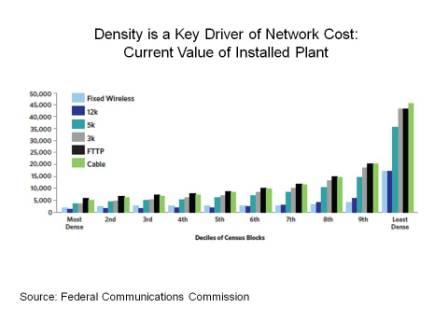
Urbanization is a big deal for communications service providers, since cities create both a critical mass of potential customers and lower the costs of infrastructure to connect those potential customers. 

Urbanization also tends to be associated with higher economic growth and household incomes, also trends that are helpful for communications service providers.

So the global urbanization trend is an important and powerful underpinning for communications in the 21st century. 


All Enterprises Have Faced Cyberattacks: They Just Don't Talk About It

Though JPMorgan Chase (JPM) and BB&T (BBT) are the only big banks to confirm a denial of service attack in March 2013, roughly a half dozen institutions endured digital assaults at around the same time, according to Radware

Cyber attacks in fact have become a regular fact of life fact of life

If You are Uncomfortable with Paradox and Mystery, You Might be Uncomfortable with Life!

One of the most distinctive habits of Catholic thought is its refusal to resolve complex moral questions by choosing one pole of a tension a...