Wednesday, October 16, 2013

Does Mobile Broadband "Cause" Economic Growth?

Though correlation is not causation, it might also be said that, in terms of the relationship between mobile broadband adoption and gross domestic product, the correlation might be positive, neutral or negative.

That is not what people tend to believe, or want to believe. But neither does evidence necessarily support the notion that mobile broadband causes, or leads to, economic growth.

Consider that a United Nation’s Broadband Commission report includes the standard view that broadband deployment leads to economic growth.

That is not to argue against robust adoption of mobile broadband. The point is that it is not clear broadband adoption, in and of itself, actually leads in a direct way to economic growth.

That is not what one typically hears. Ericsson sponsored a study conducted by Arthur d. Little and Chalmers University of Technology to quantify the economic impact of broadband speed upgrades, at both the country and household levels.

The main conclusion was that doubling the broadband speed for an economy can increase gross domestic product growth by 0.3 percent on average in Organization for Economic Cooperation and Development economies.

The average increase in household income for a broadband speed upgrade of 4 Mbps to 8 Mbps is US$120 per month in OECD countries.

Households in Brazil, Russia, India and China benefit most by upgrading from 0.5 Mbps to 4 Mbps, at US$46 per month.

For households in OECD countries, there is a threshold broadband access speed to increase in earnings, somewhere between 0.5 Mbps and 2 Mbps on average. The greatest expected increase in income is for the transition from being without broadband to gaining 4 mbps, the
difference being around US$2,100 per household per year (equivalent to US$182 per month).

In BRIC households, the threshold level seems to be 0.5 Mbps. Rround US$800 additional annual household income is expected to be gained by introducing 0.5 Mbps broadband
connection in BRI country households, equivalent to US$70 per month per household.

But other data suggests that, for the 20 countries with the highest mobile broadband penetration, there is actually a negative relationship between GDP growth and broadband penetration.

Some might facetiously argue that limiting mobile broadband use might promote economic growth.  Nor is it completely clear that economic growth and fixed network broadband are causally related. People tend to assume that is the case, but it is tough to prove.

The point is that although the conventional wisdom is that broadband availability--fixed or mobile--”must” lead to economic growth, statistics do not uniformly support that conclusion.

There is no one obvious factor predicting mobile broadband penetration in these major countries, or the relationship to economic growth, one might well argue.


"There are just too many other factors that affect GDP growth for mobile broadband to have any significant and measurable effect,” said Yankee Group Research VP Declan Lonergan.

U.S. Mobile Business Becoming a Price Game?

Is the U.S. mobile market heading further in the direction of becoming a price game, despite all efforts by service providers to avoid that scenario? Ask French mobile service providers, who have seen revenues and profit margin plummet after the market entry of Illiad’s Free Mobile.

Vivendi experienced a 60 percent net income drop in one quarter of 2012, for example.

In the U.S. market, contestants including Republic Wireless and FreedomPop are trying to disrupt mobile pricing. But many observers expect the real changes to come from the likes of T-Mobile US or Sprint, both anxious to gain market share, and both newly fortified by their German and Japanese financial backers.

The result is that the relatively stable U.S. mobile market, stable for a decade, is going to face attempts at disruption, and price is expected to be a huge part of the effort.

Unless the U.S. Department of Justice has an unexpected change of analytical framework, there is no chance a merger between T-Mobile US and Sprint would be allowed, a move that would fuel even more competition. That leaves organic growth as the only way to make a material difference in U.S. mobile market share.

Denied further opportunity to merge, and facing quite modest remaining acquisition opportunities, the four leading national carriers have no choice but to attempt organic growth in a saturated market.

Also, the two smaller national carriers have just made billions worth of new investment in their networks and businesses, and will be seeking a financial return by growing their market share.

If you knew nothing but the history of competition in saturated markets, you know what will happen. Price competition will reach new levels. Executives can deny any interest in doing so all they want. Rarely does new competition make serious inroads into any market without upsetting established pricing.

Also, there is the further issue of what happens to prices in a mature market. Some believe the U.S. mobile phone market is nearing saturation. What markets can you think of where saturated demand and abundant supply has failed to put pressure on prices?

Typically, a mature market is characterized by excess capacity, increased difficulty of maintaining product differentiation, increased intensity of competition, and growing pressures on costs and profits.

That is not to discount the value of human agency. Talented and creative executives might be able to create value that run counter to the other trends. But that will occur against a backdrop of heightened retail pricing pressure.

Tuesday, October 15, 2013

How Much Video Piracy is Caused by Lack of Legal Streaming and Rental?

Movie and video content owners have a notably complex way of allowing people to view new content. And some might argue content owners would suffer less content piracy if those content owners were a bit more flexible about the ways people could view content. 

downloadedcopiesA look at piracy rates for specific titles for a recent three week period shows that none of the most pirated titles were available for legal streaming and only 53 per cent were available to buy at all. About 20 percent of those titles were available to rent, according to researchers at the Mercatus Center. 

So content owners might be able to slash piracy rates by simply making content easily and legally available, rather than trying legal and technological hacks to sustain its current release model, in other words. 

The analysis of file-sharing news was based on TorrentFreak's weekly top-10 most-pirated media, cross-referenced with statistics on legitimate media buying and streaming, shown at Piracy Data.

Would legal alternatives halt all piracy? Probably not all piracy, one might guess, but nearly all of it. 

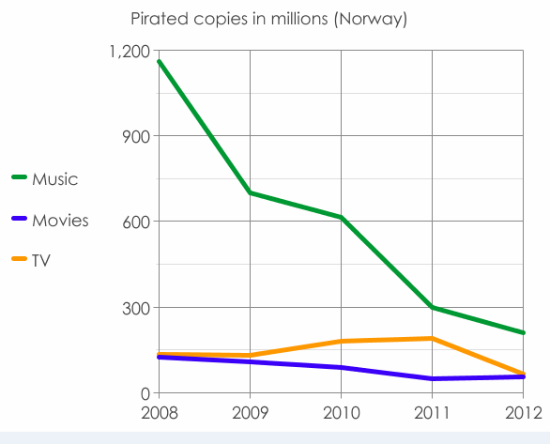
In Norway, where tough anti-piracy measures were put into place in June 2013, music piracy rates have been dropping dramatically, while TV and movie pirarcy also has dropped since 2008. 

Many would say that is because legal alternatives are more compelling.

Amazon Working on Smart Phone with HTC

Though Amazon continues to deny it is developing one or more smart phones, another report suggests Amazon is working with HTC to develop a range of smart phones. But some think the recent Amazon denial of any device "in 2013," could well be developing one or more devices for 2014 introduction. 

Some will question the wisdom or need for such devices, but to the extent Amazon wants to retain relevance and sales in the content business, a branded device, optimized for Amazon's own content store, would be similar in intent to Amazon's Kindle line of devices. 


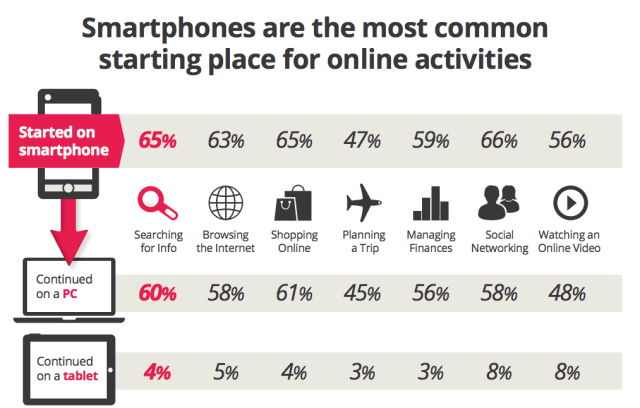
The point is that what people do on tablets, they do on smart phones. And many online activities start on smart phones, and are finished on other devices such as tablets and PCs. 

Amazon might not want to miss that part of the transaction value chain. 


Verizon Wireless Tests 80-Mbps Service in Manhattan

If you have enough bandwidth, you can offer really-fast Long Term Evolution. That is notably true for LTE networks. In that regard, Verizon Wireless seems to be testing LTE at 80 Mbps in Manhattan. 

How Much Difference Will LTE Make in U.K. Market?

U.K. consumers increasingly are using mobile devices to connect to the Internet, but as is the case elsewhere, increasingly they also are using Wi-Fi to do so. In fact, some studies suggest as much as 80 percent of U.K. Internet access using a mobile handset uses a Wi-Fi connection for access.

That could have important implications for fourth generation network Long Term Evolution demand. If 80 percent of Internet access is at home, on a Wi-Fi network, what is the value of out of home 4G access?

Even if 4G access provides a better experience than 3G, what is the value of better experience 20 percent of the time, especially if the out of home use is mostly for applications that do not necessarily require or benefit much from the faster speed?

According to the Oxford Internet Institute, 57 percent of web users in Great Britain will access the Internet using a mobile device in 2013.

Some observers including eMarketer, think the increased availability of 4G access will change consumer behavior. Others might be so sure.


Is Nokia a Metaphor for European Mobile Business?

Is Nokia in some ways a metaphor for Europe’s mobile industry? On the supply side, what I mean by that is simply that Nokia had such a great understanding and leadership of the feature phone market that it could not shift to the different smart phone market.

On the demand side, it might be argued that consumer preferences in Europe and the United States simply are different. Nokia had such a lead in many markets because Nokia supplied what consumers wanted.

In that sense, are we at a point where European consumer demand for 4G services actually is limited, in the way demand for 3G once was limited, irrespective of supply?

In other words, though regulators and mobile service providers alike seem to agree more can be done to stimulate deployment of 4G Long Term Evolution networks in Europe, one wonders whether consumer preferences create barriers in that regard.

U.S. consumers use five times more voice minutes and nearly twice as much data as European consumers on a monthly basis. But Stéphane Téral, Infonetics Research principal analyst notes that mobile broadband is the revenue growth driver, even if European consumers seem to prefer to spend less on mobile Internet access than U.S. consumers prefer.

On the other hand, the question might be whether, at the moment, 3G is viewed by consumers as satisfactory. In the absence of a 4G alternative, it is hard to know for sure.

LTE broadband is growing the fastest of any mobile services category, Téral says. That might be why AT&T sees European expansion as potentially lucrative, and why regulators want faster 4G network deployment.

U.S. consumers might be more engaged with Internet apps than consumers in Europe might be, and use and value mobile broadband and fast data access more than European consumers do, at least for the moment.

That is not a matter of “ahead or behind,” but simply of “difference.” And demand can change.

As U.S. consumers once valued mobile phones and text messaging less than Europeans, that eventually changed. European demand for LTE 4G could change as well. The issue, for some, might be “when” demand changes.

To be sure, a lag in LTE is viewed as a problem. In May 2013, GSMA issued a report arguing Europe was “falling behind” the United States in next generation mobile deployment. Ignoring for the moment past claims of that sort that had the United States lagging Europe, which only suggests markets change, the GSMA worries about fourth generation network in Europe.

On average, U.S. consumers spend more each month than their EU counterparts and use mobile services much more intensely, consuming five times more voice minutes and nearly twice as much data.

Average mobile data connection speeds in the U.S. are now 75 per cent faster than those in Europe and by 2017 will be more than twice as fast.

One expression of the problem is that mobile Internet access revenue in Europe is not growing fast enough to offset losses of voice revenue, though some hope the decline can be arrested.

But why that is the case is the strategic issue, with respect to 4G investment. Perhaps mobile data consumption is not growing as fast because that is what consumers prefer, and not because the networks are limited in some way. If that is the case, building 4G will only cause more financial losses.

And it might be hard to dismiss the argument that consumers are being careful about paying more for mobile service because of current economic conditions, suggesting a slower introduction of LTE is not as big a problem as the level of consumer demand.

Mobile accounts continue to shrink in Spain, for example, a problem that some hoped had reached an end in May 2013, when accounts actually grew after 10 months of decline. But June 2013 showed another drop.

Spanish mobile accounts in service were 51.9 million at the end of June 2013, down 4.9 percent from 54.6 million for the same month of 2012. With the exception of acquisition-aided growth, every mobile operator lost customers.

Movistar, Spain’s biggest mobile operator, lost 102,000 lines during the month, Vodafone lost 90,000, and Yoigo lost 121,900 lines. Orange gained 41,000 based on acquired firm Simyo.


         EU27: Average Revenue Per User (ARPU) 2007-2010

Monday, October 14, 2013

How Big a Problem are Smart Phone Device Subsidies?

Device subsidies are an issue for mobile service providers, as they are a drag on earnings, but device subsidies might not as big a problem as being viewed as a commodity provider of dumb pipe access.

Some argue mobile service providers would be better off not subsidizing devices at all. Others might agree in principle, but note that the device subsidies reduce a key barrier to end user adoption of more-capable devices that drive mobile Internet access revenue.

So mobile service providers might be said to face a “lesser of two evils” problem. Not subsidizing smart phones would improve operating results, but at the risk of slower adoption of mobile devices benefiting from mobile Internet access plans that now drive revenue growth.

And that is why, problem or not, mobile service providers face significant challenges getting “out of the device subsidy business.” Device subsidies or installment plans are a problem, but probably a lesser problem than jeopardizing demand for mobile Internet access.

There are other imponderables as well. Historically, it has been very difficult to create a positive brand image for a service provider. Consider, by way of comparison, the intense or at least significant importance of brand affiliation for personal care products, clothing, automobiles or other “personal” products.

You might argue that the smart phone is the first tangible expression, in the history of the telecommunications business, of an attribute of the communications experience that is truly “personal.” The problem is that the affiliation still is with a device, not with the actual “access service” or the provider of the access service, necessarily.

In getting out of the device business, service providers might forfeit even more distinctiveness in the market, shift end user affiliation even further in the direction of emotional bonding with the device, not the access provider brand, and have less leverage over consumer accounts.

So, yes, the cost of financing handsets is a “problem,” but it might well be less a problem than becoming more of a dumb pipe supplier of access than mobile service providers already face.

“Mobile carriers are subsidizing handsets, but not reaping the return on investment as over the top service providers take revenue share,” says ABI Research. That is true, but is true of the business, in some parts of the world, not a particular function of the device subsidies or installment plans.

That might be true even if a device subsidy is the single largest cost for a carrier over the lifetime of a subscriber’s contract. ABI Research argues that 68 percent of the revenue derived from a typical 24 month contract has to cover the cost of the device.

Some might quibble with the precise figure, but the point is that a device subsidy or installment plan does represent a significant part of the cost of customer account over a two-year period.

Some might argue the mobile cost of service is high “because of the subsidies.” Others might disagree. The posted retail prices in any country are hard to compare directly. What makes more sense is the affordability or cost of mobile service in terms of local purchasing power or income.

In fact, some might argue the price of mobile service in the United States is among the lowest in the world, expressed as a percent of personal income.

One might argue that is a good reason for improving the transparency of the device purchase. But one might also argue that mobile service providers already are doing so, creating installment plans that separate device acquisition from recurring service cost, for example.

U.S. Mobile Service Prices Actually are Quite Low

Comparing retail prices for anything across countries is difficult, largely because income and costs for anything are different across countries. For that reason, some believe the better gauge is not actual prices for anything, but the price as a percentage of income and costs in any single country.

The bottom line is that where a U.S. mobile service customer might represent a percent or two percent of income, in many countries in the Americas mobile service costs five percent to 15 percent of income, and the same situation prevails in many of the Pacific Islands, for example.

Beyond that, there are lots of other issues that make such determinations complicated. Light users will spend less than heavy users, prepaid users might pay less than postpaid users. Feature phone users might pay less than smart phone users. Users on shared service plans might pay less, per user, than single-person accounts.


Structural or Cyclical Problems?

One good reason for studying and understanding economics is that it can concentrate the mind and alleviate any tendencies to think “one side or the other” is evil and incompetent, as so much of U.S. political discourse would illustrate.

And with the caveat that long-term trends are difficult to discern without lots of data, collected over long periods of time (I am sitting at 5,278 feet, in an area that once was an inland sea), a rational person might at least hold open for discussion the notion that something “big” has changed, regarding the U.S. economy.


Look at the history of labor force participation rates (recessions marked by gray columns). The data might suggest there is something structural going on. And that is a tougher problem than a shorter-term cyclical problem.

If you care about people being able to find jobs, this is a big problem.

Australia to Study Impact of Broadband: Issue Really is Cost, Timing

The Australian government will conduct an independent cost-benefit analysis of the National Broadband Network and a review of the regulations relating to broadband, as new questions about the cost of the fiber-to-home network has come into question. 

The more-abstract study of economic benefits of faster broadband is almost beside the point. It is not likely any truly-useful predictions can be made about the economic impact of various speeds and network architectures.

The more-important conclusions are likely going to be the projected cost of fiber-to-home versus fiber-to-neighborhood network architectures, speed to market and projected growth of consumer demand for higher speeds that would justify spending more, immediately, on one access method versus the other. 

The Australian National Broadband Network has been unable to meet its planned construction targets, and the government now questions the cost, as well. 


The change to a less fiber-intensive network is said to represent a final cost of A$20.4 billion (US$18.4 billion), well below the A$38 billion ($33.8 billion) originally stimated for the fiber to home plan, and far less than the $94 billion critics now say the former network would cost.


Some critics estimate that the Australian National Broadband Network (NBN) will cost A$94 billion dollars, not the A$44 billion its supporters have claimed. At least in part, that is because
of delays of several types and overly-optimistic assumptions.


The original business plan assumes wholesale revenue will start at $22 per month and then climb to $62 by 2020 or 2021 when the NBN is finished. That is growth of nine percent a year beyond inflation. 
Other major ISPs might say average prices for Internet access do not climb more than nine percent a year.


So critics say revenue projections are wildly overestimated.
What study of the benefits of broadband access has ever found anything but "it is a good thing?" The choice in this case is between faster networks and slower networks, not so much between the "fastest network" and a "fast network."
The problem is that the Internet is an ecosystem. So upgrading access speeds on one end of a connection delivers only so much benefit, if the rest of the ecosystem is not upgraded for those speeds, at the same time. And, of course, that never happens. Change comes incrementally.
Still, some would argue it is better to "waste" bandwidth and capital by moving immediately to fiber-to-home architectures. Others would say the immediate benefits, for consumers, businesses and the economy, would not be so much greater for fiber to home that the extra time and capital should be invested.

What probably will happen is that a mix of technologies will be used, as originally was planned. Satellite will continue to be used in rural areas. Fiber to home will continue to be used where it is feasible. But a greater percentage of locations might use fiber to the neighborhood.

It never was envisioned that fiber to home would be the architecture for all areas.

Do Phablets Cannibalize Tablet Sales?

The Samsung Galaxy Note was the first successful “phablet” (a smart phone with a big screen). Notably, though Flurry suggests about seven percent of devices globally are phablets, in South Korea the percentage of phablets is 41 percent.

Also notably, the use of phablets seems to depress adoption of tablets. Globally, 19 percent of the devices tracked by Flurry are tablets, compared to only five percent  in South Korea.

That might suggest that phablets cannibalize some amount of tablet demand.

Even as growth in its domestic market has slowed, Samsung continues to dominate the South Korean connected device market. It had a 60 percent share of a random sample of devices tracked by Flurry in South Korea that run iOS or Android apps.

Between them, two other South Korean device manufacturers, LG and Pantech, had another 25 percent of the market, meaning that the vast majority of the smartphones and tablets being used in South Korea (85 percent) are manufactured in South Korea.

That dominance of local manufacturers is unique in the world, so there is room to disagree about whether the phablet trend will reach similar levels, or whether tablet demand also will be affected in the same way.


Goldens in Golden

There's just something fun about the historical 2,000 to 3,000 mostly Golden Retrievers in one place, at one time, as they were Feb. 7,...