Sunday, January 26, 2014

$15 a Month Discount for Unbundled Mobile Service Plans is the Right Number

You might wonder why AT&T gives customers who choose not to buy bundled phones a $15 a month discount on recurring costs of service. That amount fairly closely tracks the amount of the device subsidy for a customer on a bundled plan.

A report by the Organization for Economic Cooperation and Development suggests that, in those those countries where both bundled and “buy your own device” options exist, such as in France or the United States, the bundled option (including discounted smartphone) was, on average, between $10 and $20 a month more expensive than the “buy your device separately” option.

Looking at recurring costs, one can see the potential impact of device subsidies on recurring costs. A $600 device, sold at $200, implies a $400 subsidy. At $20 a month, that further implies 20 months to recoup the cost of what is in essence an installment plan.

Take that $20 out of the monthly cost and U.S. service plans cost the same as European plans. AT&T’s $15 a month discount for “access only” service tracks that figure closely.

The OECD report, however, concludes that, in broad terms, service pricing is only slightly affected by the presence of bundled discounts for popular smart phones.


Saturday, January 25, 2014

Will U.S. Mobile Price War Survive a Sprint Acquisition of T-Mobile US?

Some observers now are worried about a "price war" in the U.S. mobile industry, with T-Mobile US launching cost of service attacks that AT&T, Verizon Wireless and Sprint have responded to in different ways. 

All the carriers have matched T-Mobile US no-contract plans to some extent, and all have embraced forms of "faster device upgrade" programs.

Given the generally robust revenue growth Verizon Wireless and AT&T Mobility have seen in recent years, some equity analysts naturally fear a protracted price war will harm earnings for Verizon and AT&T, even if T-Mobile US currently seems to be benefiting. 

What SoftBank will do at Sprint is the big unknown. Virtually all observers have expected that Sprint would launch its own attack on the U.S. market, presumably involving an assault on prevailing pricing.

But with T-Mobile US now doing the attacking, with success, the room for SoftBank to do so is made more difficult. Some might argue that is why there is talk about an acquisition bid by Sprint for T-Mobile US. 

Certainly, Deutsche Telekom wants to sell T-Mobile US entirely. So a willing seller is likely to attract motivated buyers. But regulation and antitrust concerns are likely to loom large. U.S. antitrust authorities have made clear a preference for four suppliers in the market, not just three. 

So some think a clever bid would structure the acquisition in a way that also enables Dish Network to enter the market as a new provider, keeping the market at four national providers. 

SoftBank and Sprint likely would have to take other steps to persuade regulators that the T-Mobile US assault also would continue. 

So in any outcome, even if analysts think the only way to stop a ruinous price war is for Sprint to acquire T-Mobile US, the price war is unlikely to abate. 


Comcast, Charter Probably Will Team to Buy Time Warner Cable

With Charter Communications maneuvering to buy Time Warner Cable, Time Warner itself has signaled a preference for an acquisition by Comcast.


But that would be risky, in regulatory terms, as Comcast already is the largest U.S. cable company, with market share just above 30 percent, and gobbling the number-two U.S. operators would likely trigger a negative antitrust response.


So Charter Communications hopes Comcast will join Charter in a joint bid, with a prior agreement on how Time Warner Cable assets would be divided. 


Cable operators have experience with joint bids, and have in the past done precisely that. 


For Comcast, such an approach has benefits. For starters, Comcast would not acquire all of Time Warner Cable, just the New York assets. So while Comcast would get bigger, it would not get substantially bigger. That might mollify regulators and antitrust authorities.


Also, the New York market would have strategic value for Comcast, which would then be able to expand its business customer operations in a market with high business customer potential. 


Owning the metro New York assets also would better position Comcast for an eventual bid to buy Cablevision Systems, which operates on Long Island. 

Will Apple Transform Mobile Payments?

I have in the past argued that the one technology company that could really shake up mobile payments was Apple. At least so far, though, Apple has not made a move, for sensible reasons. 


Apple's services approach has always been structured in ways that help Apple sell devices in the consumer market, and it hasn't been so clear how an industry-leading mobile payments capability necessarily would create a new device market. 


One might argue such a capability would help Apple sell more iPhones and iPads, but that is a different matter, something more incremental, and not the foundation for a whole new product category Apple can re-imagine and reinvent. 


But that might be changing, as there now are reports Apple is looking at creating a service handling payments for physical goods and services on its devices. Apple's iTunes and Apple Store already process remote payments, though indirectly, linking credit or debit cards to iTunes accounts. 


But Apple perhaps senses the growing role of commerce in providing both direct revenue and indirect business benefits is reaching a point where it could make a big difference. 


Consider the fact that, for the first time in history, major technology leaders have revenue models anchored on advertising (Google) and retailing (Amazon). Now "payments" creates the revenue model for firms such as Square. 


Now we might see whether Apple can transform retail payments and thereby create a major new revenue driver for a technology firm. 


One Good Reason Why Disruption of Any Media or Communications Business Still is Possible

Incomplete knowledge makes rational decision making quite difficult. In fact, some would say incomplete knowledge means it is not possible for people to behave completely rationally, even when they want to do so. 

But since it is a statement of fact that nobody can know everything, there always is the possibility that somebody, with a particular set of domain knowledge, can "see" something other practitioners--with different domain knowledge--cannot perceive. 

For that reason, disruption of any market in media or communications remains possible. 

Hola: Peer to Peer Virtual Private Network

Hola, a new peer-to-peer virtual private network service, is bound to be used by people who want to watch content they are not able to access because that content is not licensed in the nation where they reside.

On a larger level, though, Hola is a way to provide the benefits of a content delivery network without actually using a CDN. It makes the Internet more efficient as well. 

Perhaps intriguingly, Hola also makes it harder for government authorities to track your IP address. 

With the disclaimer that I am not advocating anybody violate copyright rules, the networking approach, and the ability to change an IP address, might in some cases be quite useful, particularly in countries where governments are heavy handed, and where dissent is considered a crime.

Hola is the latest practical implication of P2P techniques historically used by content sharing apps and services, but which have other important ramifications. 

Hola Graphic_05

Friday, January 24, 2014

Asia Regulators: Flexibility Now Key in Regulating Spectrum

Shin-Yi Peng
Shin-Yi Peng
There might just be growing recognition among national communication regulators that spectrum policy requires much more flexibility than in the past.

“Old approaches are ill suited to quickly changing environments,” said Chinese Taipei National Communications Commission Commissioner Dr. Shin-yi Peng, who also is a professor of law at National Tsing Hua University.

As one example, Peng noted that when Taiwan finalized its 4G license rules, it chose a technologically neutral approach that does not specify what technologies must be used, allowing operators to move quickly.  

“Stakeholders asked us whether the licenses would be tradeable,” and Peng said that will be possible. “A secondary market will exist.”

And though large incumbents traditionally have dominated spectrum auctions, Thailand is looking at ways to help smaller and local Internet access providers, for whom free Wi-Fi is most important.

Jesada Sivaraks
Jesada Sivaraks
But backhaul is an issue, said Jesada Sivaraks, National Broadcasting & Telecommunications Commission of Thailand Secretary. The reason is that many smaller ISPs try to use existing unlicensed frequencies for backhaul, which causes interference issues. So Thailand is looking at whether it can use the E band at 60 GHz, to help small and local providers with backhaul.

Another new line of thinking concerns ways to increase usable spectrum without using the traditional approach of clearing spectrum, relocating existing licensed users, and then auctioning or allocating the cleared spectrum.

“Moving licensees is viewed as difficult,” said Peng. So “spectrum sharing turns out to be an important policy tool.”

“Dynamic spectrum access is new, and we are looking at it,” said Pricilla Demition. National Telecommunications Commission of the Philippines Chief, Frequency Management Division.
Pricilla Demition
Priscilla Demition


Even in the area of mobile backhaul, there is new thinking. The issue is how to get middle mile connections to serve remote areas.  It isn’t as though access spectrum scarce. But middle mile facilities often are lacking

“Licensed mobile operators know it will be years before they get out there,” says Robert Pepper, Cisco VP. “So they are partnering, using LTE for backhaul, then using Wi-Fi to distribute signals in the village.”

“Regulators are starting to see advantages to cooperation between licensed and unlicensed operators,” said Pepper.

Commissioner Peng noted that Taiwan allows use of 3G in 1.8 GHz for backhaul, but only in rural areas.

“LTE for backhaul might be only 1 Mbps to 10 Mbps, which will not be enough bandwidth for local use,” said Sevaraks. “Mesh Wi-Fi might work as well, as might C-band repurposing for mobile or terrestrial communications.”

“The crux of the matter is how to create more useful spectrum,” said Peng.

Is there a Spectrum Crunch?

It might seem odd to question whether there actually is a spectrum or capacity problem in the mobile communications business. 

After all, “globally, we are seeing continued significant (Internet data consumption) growth at 50 percent to 90 percent compounded rates over five years,” said Cisco VP Robert Pepper.


And consumption is increasing, with each new generation of mobile networks. “An LTE user consumes 19 to 25 times as much data as a 3G user,” said Pepper.


And that happens under circumstances where “about 66 percent of mobile data is offloaded to Wi-Fi,” Pepper added. So, to nobody’s surprise, Cisco argues that the gap between available spectrum to support growth and what is needed shows a widening gap.

Still, some might argue the future spectrum gap is the issue, not any immediate current bandwidth shortages. Forecasts of mobile Internet user growth illustrate the potential size of the challenge.


To be sure, there are ways to increase the supply of spectrum. “Possibly 50 percent of the frequencies useful for communications are licensed to government entities,” said Rob Frieden, a professor of telecom law at Pennsylvania State University. “The U.S. government can help free up spectrum, or keep it.”
That will not be an easy process. “In much of the (Asia-Pacific) region, there still is a PTT mindset,” said David Satola, The World Bank USA Lead Counsel and VP. “Equity sometimes is viewed more importantly than efficiency.”


Still, there is “huge demand for mobile Internet,” meaning there will be “lots of battles over who will get to use it,” Satola noted.


Releasing spectrum also will be costly. As always, that raises issues about how to encourage new entrants. 

“How do you encourage entities other than the carriers to acquire the spectrum?” asked Tim Hewitt. KVH Co.senior international legal counsel.


Issuing unlicensed spectrum, of course, is one way of encouraging new application, service and product providers to enter the market.


In that regard, the industry will “need more licensed and unlicensed spectrum, especially short range (5 GHz) for unlicensed” spectrum, in part because “we will be using 80 MHz to 100 MHz wide channels,” said Pepper.


One thing is clear: we should not underestimate the amount of growth. We have done that in the past, though it also is fair to note there have been times when mobile bandwidth consumption forecasts have been overstated.

Should Content Delivery Networks be Illegal?

Have you ever heard anybody argue that Akamai and all other content delivery networks should be outlawed?


After all, a content delivery network gets paid money by some app providers--not all--to speed up delivery of packets over the backbone, providing a better quality of experience for end users.


That isn’t a violation of the notion of an open Internet. Everybody can get all lawful content, either best effort or enhanced by use of a content delivery network.


So, seriously, have you ever heard anybody argue that CDNs should be outlawed, as a violation of the open Internet?


The reason one asks the question is that “network neutrality” rules are the same thing. The only difference is that the CDN function extends not only from data center to data center across the backbone, but extends to the end user location.


By outlawing anything but “best effort” access at the end user location, one also prohibits optimizing a Skype video session while that session is underway, even if that is what the end user wants.


“Best effort only” rules likewise prevent a user from specifying that voice calls get priority when calls are in progress, or that a Netflix viewing gets priority when the family is watching a movie.


So it is disheartening that Reed Hastings, who has done a marvelous job at Netflix, confounding his critics time after time, makes statements that are, to be polite, untruthful.


Hastings, like many application providers, has a position on network neutrality opposite that of Verizon.


So it is unfortunate that his latest letter to shareholders literally distorts and misrepresents existing U.S. Federal Communications Commission policy on impeding or blocking lawful content.


Since 2004, it has been clear that consumers have the right to use all lawful content. The FCC reiterated the policy in 2005.


In 2010 the FCC again clarified that content cannot be blocked. The FCC also said that “A person engaged in the provision of fixed broadband Internet access service, insofar as such person is so engaged, shall not unreasonably discriminate in transmitting lawful network traffic over a consumer’s broadband Internet access service.”


As a practical matter, that means no lawful applications can be blocked or impeded, the exception being measures taken to manage the network.


In practice, that means any ISP that actively tried to “slow down” a competing service’s packets would quickly run afoul of the FCC, just as much as if it had tried to block a lawful application. Some skeptics might argue the FCC would not act, but many would find little incentive or precedent for that position.


Hastings argues in the letter that, “ In principle, a domestic ISP now can legally impede the video streams that members request from Netflix, degrading the experience we jointly provide.”


To put matters politely, that seems a clear misreading of the FCC rules. The FCC’s are based on three principles, transparency, “no blocking,” and “no unreasonable discrimination.”


The “no blocking” principle is that “fixed broadband providers (such as DSL, cable modem, or fixed wireless providers) may not block lawful content, applications, services, or non-harmful devices.”


“Mobile broadband providers may not block lawful websites, or applications that compete with their voice or video telephony services.”


The “no unreasonable discrimination” rule says that “fixed broadband providers may not unreasonably discriminate in transmitting lawful network traffic over a consumer’s broadband Internet access service.”


“Unreasonable discrimination of network traffic could take the form of particular services or websites appearing slower or degraded in quality.”

With all due respect, the way Hastings characterizes what now is possible--”legally impeding video streams”--is in no way accurate or truthful.

The irony is that Netflix runs its own content delivery network!

Wi-Fi Offload Means "Don't Use Our Product"

What does one make of a business that encourages people not to use the key growth product the industry sells?

Perhaps the key growth product has a huge business model problem: if people really used it, the supplier couldn’t keep up with demand, and customers would become massively dissatisfied with both prices and experience.

Some might say that is precisely why mobile service providers encourage Wi-Fi offload: neither networks nor business models would survive actual usage of the product.

Consider the growing consumption of video on mobile networks. At some point, adding more capacity, in the form of spectrum, does not work. To be sure, mobile operators have other tools, including better air interfaces and more-intensive coding and small cell architectures.

Still, current mobile operator behavior continues to suggest there is a huge strategic issue here: the high-margin apps, such as messaging and voice, are being displaced by medium-margin Web browsing and transaction apps and a huge amount of low-margin video apps.

And there is almost a direct inverse correlation between bandwidth consumption and profit margin.


The problem actually is intensified as mobile networks introduce next generation networks. One constant in the mobile or fixed Internet access business is that when a faster network is made available, users consume more data.

Most observers would likely agree that the reason is better user experience. When content can be retrieved more quickly, people spend more time interacting with apps. That is the reason Google is so focused on encouraging faster Internet access.

And a new study conducted by JDSU’s Location Intelligence Business Unit suggests not only that LTE encourages more data consumption, but also dramatically increases the consumption of the heaviest users. Overall, heavy LTE users consume 10 times more data than similar heavy 3G users.

iPhone 5s users demand seven times as much data as the benchmark iPhone 3G users in developed markets, and twenty times as much data in developing markets, the study suggests.

Apple iPhone 5s users demand 20 percent more data than iPhone 5 users  in developed markets and 50 percent more data in developing markets, the study suggests.

Samsung Galaxy S4 users generate five times as much data as iPhone 3G users in developed markets, and eleven times as much data in developing markets.
The extreme one percent of all users consume over half of the downlink data in both developing and developed markets.
LTE users are ten-times more extreme: 0.1 percent of all users consume over half of
the LTE downlink data.

In 2011, one percent of 3G users consumed half of the entire downlink data. In 2012 the findings were the same: one percent of 3G users still consumed about half of the data.

On the 4G LTE networks, 0.1 percent of 4G users consume more than half of the entire LTE downlink data: an order of magnitude smaller group of users.

“The faster the speeds that mobile operators provide, the more consumers swallow it up and demand more,” JDSU says.

Perhaps significantly, the study revealed that users in developed and developing markets had similar overall rankings in terms of smartphone data consumption, but also little use of data cards and dongles or tablet connections.


Thursday, January 23, 2014

South Korea to Build 5G network 1,000 Times Faster Than LTE

Though there is no formal fifth generation network standard, South Korea plans to move ahead anyhow, investing 1.6 trillion won (US$1.49 billion) through 2020 to build a fifth generation network (5G), the communications technology ministry says. 

The 5G network is expected to be 1,000 times faster than the existing Long Term Evolution network.

A trial 5G network is due to be rolled out in 2017, with full commercialization in 2020.

Perhaps one way to look at the effort, aside from Korea's determination to lead mobile network evolution, is that 2G networks were lead by voice, 3G by data (messaging, email, Internet access), 4G possibly by video. Will 5G be lead by the "Internet of Things" or machine-to-machine applications. We'll see. 

The initiative also seems a way for Korean firms to attempt what Huawei has achieved, namely getting a significant share of global telecom infrastructure share. 

Huawei recall, had by 2012 gotten about 26 percent share of global telecom infrastructure sales. Today, Korea mostly serves its domestic market, and has about four percent share of infrastructure sales. 

Wednesday, January 22, 2014

Okay, There are a Few Places Where There Really is No Spectrum Crunch

Is there really a spectrum “crunch?” Actually, the answer is more nuanced than you might think.

Certainly, there are places--such as the South Pacific--where spectrum seems not to be an issue, and is not considered to be a major concern even in the future. But that likely is an exception to the rule.

There are some who argue there really is not generally a problem, though that view seems a distinctively small minority opinion. And "when?" is a key qualifier.


Whether there is a spectrum problem today--in larger nations-- is a different question than whether there will be a problem later, unless multiple approaches are used to supply more spectrum.

Most observers agree that demand for mobile and untethered Internet access is growing fast, and will grow even faster as people consume more full motion video on untethered and mobile  devices.

Perhaps the better question is whether ISPs will need much more spectrum in the future to meet demand, even if they aggressively re-farm existing spectrum, redesign networks and have access to better network gear.

There is widespread agreement that mobile will become the primary way most people use the Internet, perhaps as early as 2017.

And if people start to use mobile Internet connections as they do fixed Internet connections, demand for spectrum will qualitatively change our notions of how much spectrum will be required.

Reasonable people can agree that spectrum ought to be “hoarded” only to deprive potential competitors of the assets. But reasonable people also can agree that present trends point to a clear need for more spectrum.


source: KPCB

U.S. Fixed Line Market Illustrates Mobile Importance

If you believe this access line forecast by JSI Capital Advisors is close to accurate, you will grasp the importance of mobile and wireless access technologies and revenue streams. 

Though up to this point firms such as Verizon Communications and AT&T, Comcast and Cox Communications have been able to maintain aggregate fixed line revenues by selling more services to a smaller number of accounts, one would be on safe ground in arguing that continued declines will, at some point, undermine that strategy.


The other observation is the important role now played by cable TV operators in the Internet access and voice businesses. Once upon a time it might have been thought new "telco" providers would be the big winners from the Telecommunications Act of 1996, which legalized local access competition.

In the early going, in fact, it was AT&T and MCI, then the dominant long distance companies, that represented most of the competitive local exchange carrier industry's leaders. Since then, both AT&T as an independent long distance company, and MCI, have disappeared, absorbed into other firms (AT&T was bought by SBC, which rebranded itself), while Verizon acquired the MCI assets. 

In voice or Internet access segments of the local access market, cable TV operators are the single most important category of "new" providers. 

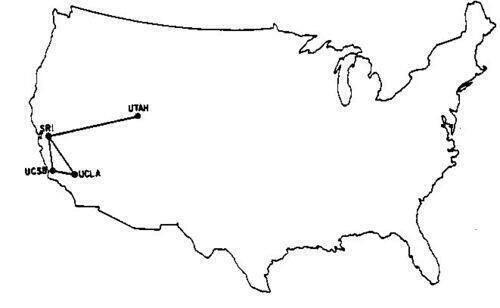
The Internet in 1969

Embedded image permalinkSometimes it is helpful to remember just how far one has come. 

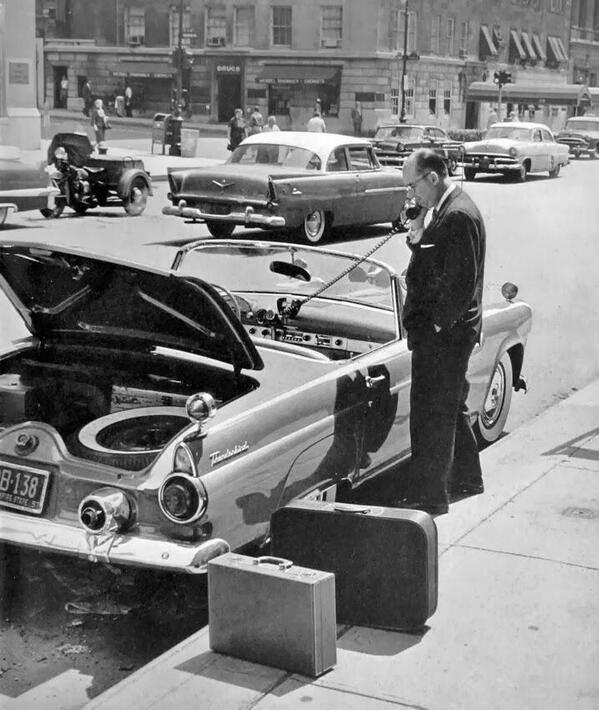
Mobile communications was a concept, before it became a commercial service. 

In 1985, when the CTIA  first began keeping statistics, there were about 200,000 mobile phone customers in the whole United States.

Consider mobile adoption rates now. 

Earlier, the big problem had been access to "telephone service" at all. In 1996, phone phone penetration was about 1.9 percent in Africa, for example. 

Today, mobile adoption in Africa is at least 67 percent. 

Consider the size of the Internet in 1969: four nodes. Today, two billion people, at minimum, use the Internet. 

To twist a commonplace phrase, "progress happens."

Embedded image permalink


Tuesday, January 21, 2014

Comcast to Double Existing Speeds for Some Users

Comcast will be doubling Internet access speeds for at least some customers, boosting the "Performance" tier from 25 to 50 Mbps, the "Blast" tier from 50 to 105 Mbps, and the "Extreme" service from 105 Mbps to 305 Mbps.


Prices will vary by local market competition and rival offers, and probably will only be available to customers who buy double or triple play packages.


Comcast isn't the only major ISP making speed investments and boosting offers for customers.Verizon Communications is doing so, as well.


By the end of fourth-quarter 2013, 46 percent of Verizon Communications consumer FiOS Internet customers subscribed to FiOS Quantum, which provides speeds ranging from 50 Mbps to 500 Mbps, up from 41 percent at the end of third quarter 2013.


In the fourth quarter of 2013, 55 percent of consumer FiOS Internet sales were for speeds of at least 50 megabits per second.


The point is that, although there seems continual grousing about how slow and expensive U.S. broadband access is, that complaint is being addressed.  You can credit Google Fiber for stimulating such behavior, but history alone might have suggested speed improvements would continue.


Unbelievable though it might seem, typical access speeds have grown at about a rate you would predict, based solely on Moore's Law. That should strike you as highly improbable, given the fact that access networks, in particular fixed access networks, are construction projects. 


In 2007, Technology Futures Technology Futures made this prediction for bandwidth growth in the U.S. market, at a time when typical speeds ranged from 1.5 Mbps to 6 Mbps. If anything, the forecast seems to be turning out to be conservative. 


Broadband Households by Nominal Data Rate*

Will AI "Eat Enterprise Software?"

If you are an investor in enterprise software , you are aware there is a fear that language models are going to disrupt the traditional ent...