Tuesday, April 23, 2019

Millimeter Wave Performance Will Keep Getting Better

It would be fair to say that U.S. mobile operators deploying millimeter wave spectrum remain in a learning mode. So far, it seems there is evidence of signal attenuation worse than expected as well as better than expected.

T-Mobile US, which has significant low-band assets with which to deploy 5G, argues that millimeter wave will never be used in rural areas for 5G support. But we are just at the beginning of commercial use of millimeter waves for mobile communications.

Historically, one would have been more accurate being an optimist than a pessimist about microwave signal propagation, it is fair to say. And we will have to use millimeter waves, to increase the amount of bandwidth mobile networks can supply.

Ignoring the vested interests and assets each mobile service provider possesses and touts,  many note there is a lack of available U.S. lower-band spectrum to devote to 5G.

In this illustration by Anokiwave, the orange blocks represent the 11 GigaHertz of new spectrum to be allocated by the U.S. Federal Communications Commission, and most nations eventually will do something similar. The big takeaway is how much more new spectrum will be available, compared to all mobile spectrum available up to 4G.

The skinny blue bands to the far left show currently-allocated mobile spectrum. Basically, more than an order of magnitude (10 times) more mobile bandwidth is being commercialized. And that new bandwidth is more efficient, in terms of bits per Hertz, than in the sub-3 GHz bands by perhaps three times, based on antenna techniques, alone. Modulation also makes a difference, but sheer bandwidth also matters.

The Nyquist rate  


The red and green blocks show spectrum already allocated to defense entities, for satellite or aerospace purposes.

Even as some argue 5G will be spectrum agnostic and can use “all frequencies,” some insist there is a real disadvantage to using millimeter "versus" lower-frequency spectrum. Ignore for the moment the obvious marketing stances taken by firms with different assets. Firms will tout what they have.

Some larger realities are not changed by 5G. There always is a trade off between capacity and coverage, when using wireless spectrum at any frequency. Networks always can get more-extensive coverage using lower frequencies, at the expense of potential bandwidth. Conversely, they always can get greater capacity, at the expense of lesser reach, with higher frequency spectrum.

And since “everyone” agrees a wide variety of low, medium and high frequency spectrum will be used by 5G operators, it makes sense to figure out what use cases (beyond coverage and capacity in general) are best suited to which frequency bands.

The area of greatest discovery will be in the millimeter wave bands, which have never been commercially viable for mobile services in the past. Millimeter wave spectrum will enable the greatest changes in capacity (bandwidth), and likely will be the area where the greatest number of new use cases will be developed.

Generally speaking, the gigabit speeds touted by 5G backers will be possible only when using millimeter wave assets. Generally speaking, lower-frequency spectrum will offer speeds higher than 4G, but perhaps not typically more than twice as fast.

That might suggest it is fruitful to look at 5G using lower or mid-band spectrum as important for supplying faster mobile internet for smartphone users, but not, in itself, a huge driver of new applications. One might argue that the higher bandwidth will make visual apps more compelling, and that is correct, so long as tariffs allow the higher usage.

In other words, much-faster speeds will not lead to as much innovation unless tariffs for usage are low enough that barriers to usage are not created. As one example, 5G might enable mobile TV. But consumers will constrain usage unless tariffs and usage plans encourage--or at least do not discourage--such usage.

Different use cases beyond “faster consumer smartphone access”  will tend to require millimeter wave. It will be hard to make a decent business case for fixed wireless--as a substitute for fixed network internet access--without using millimeter wave assets. There simply is no way to replicate the low cost per bit of fixed network services without millimeter wave capacity gains.

Latency performance should not vary between services at any frequency, but will be affected by the presence or absence of infrastructure edge computing facilities. Enterprises using their own edge computing platforms and private 5G will not generally have to worry about latency.

Visual applications and real-time control operations likewise are areas where millimeter wave should have relevance, often in conjunction with edge computing to control overall latency when analytics must be applied.

What sometimes is overlooked in discussions of “millimeter versus lower-band spectrum” is that many new use cases depend as much on edge computing as they do on bandwidth or latency. Millimeter wave communications will have a huge advantage where bandwidth intensity is high, but also will tend to be use cases where local processing also is necessary, hence edge computing will be necessary.

And many use cases said to be candidates for millimeter wave and edge computing (virtual reality, augmented reality, visual health applications) also will occur either indoors or in stationary or low-speed settings ideally suited to private 5G or small cell supported public networks, with local processing (edge computing).

The point is that many of the brand-new use cases (beyond faster mobile internet) will happen in settings where millimeter wave coverage is not a great issue. Most usage happens in a small number of cell sites for any network (2G to 5G). Those cell sites always are in urban areas. So 5G “coverage” is a bit of misplaced concern.

Even when wide area 5G coverage is supported, the really-high bandwidth features (gigabit or higher) will not be supported everywhere. The trade offs of coverage versus capacity remain.

So the place to look for truly-new use cases is in areas other than “faster smartphone access.” It is the urban places, indoors and outdoors, where millimeter wave and edge computing exist, where the new use cases and revenue opportunities will emerge.

The point is that ubiquitous 5G coverage is not necessarily required for the development of most new 5G-enabled apps and use cases. Those are going to happen in the dense urban areas--or inside enterprise facilities--where most economic activity takes place.

Telecom Long Ago Left "Regulated Monopoly" Behind, Only to Encounter a Possibly Worse Regime

There have been brief periods over the past couple of decades when it might have seemed possible some parts of the telecom business might escape the utility characterization (slow growth dividend stocks). In some part, the burgeoning growth of the mobility business in developing parts of the world produced revenue growth fast enough to fuel that belief.


Some specialized providers might claim to have done so (they grow faster and do not pay dividends), and innovation in new technologies and services will continue.


But many tier-one service providers--most clearly in the developed countries--have not escaped their slow-growth roots. The changes have largely been for the worse.

While some providers might have chafed at their regulated roles, and a few considered themselves lucky enough to operate as unregulated monopolies, the main service providers in developed nations continue to operate in tough markets that produce flattish to negative revenue growth rates.


The four largest European markets--United Kingdom, Italy, France and Germany--are shrinking, as are the U.S. market and India. China continues to show higher growth rates, according to STL Partners.  


Keep in mind that telecom revenue tends to grow at about the rate of growth for the economy. So we should never be too surprised when industry revenue growth anywhere hovers at or just below the overall rate of economic growth.


No alt text provided for this image


In fact, it must be noted that the telecom industry now faces an arguably-worse environment than it did in the highly-regulated markets it once faced. Rate of return regulation produced slow innovation and slow growth, but highly-predictable revenue and profit. 

Exposure to competition produces none of those advantages, but also increases risk and uncertainty. The unexpected rise of the internet, in addition to service provider competition, has not helped, either. But it is what it is. 

Saturday, April 20, 2019

Spectrum Prices are Dropping Because Business Model Requires Lower Prices

Some regulators are going to be shocked to find out that the historically high value of spectrum used for mobile communications is unsustainable. Bidders now have many reasons to value even needed spectrum at lower rates than in the past.


And the reasons have everything to do with supply and demand. End user and customer demand for use of internet data keeps climbing. So one might think spectrum prices also must keep climbing. Not so, because supply and demand is changing.


It is increasingly possible to use spectrum more efficiently. Small cell architectures, for example, allow more intensive spectrum reuse.


Also, an order of magnitude more spectrum is going to be commercialized, and that spectrum will feature wider channels that are more spectrally efficient. Coding also is more efficient. It is easier to aggregate unlicensed spectrum, which becomes a functional substitute for licensed spectrum.


Mergers will mean that specific companies will find they have more available spectrum to use. And new spectrum sharing techniques mean previously unusable spectrum becomes available.


Also, the characteristics of millimeter wave spectrum mean that more effective bandwidth is possible for every megaHertz of available spectrum


In other words, if ways to use fair amounts of spectrum without a license become possible; if the physical supply of spectrum grows substantially and the cost of using small cell architectures grows, we should expect lower spectrum prices.


To make an analogy, spectrum is beachfront property, but we are making more beach. Over the past few years, some have worried about the cost of 5G spectrum, although spectrum prices are dropping, generally speaking, in part because there is a huge increase in supply, and because mobile operators must now more carefully weigh the cost of new spectrum against expected financial return.  


Also, firm strategies now vary. Some firms believe use of unlicensed spectrum will be more important. Others substitute small cells for additional spectrum. Some need additional spectrum more urgently than others, based on present holdings.


On the demand front, if it becomes clear that revenue per bit continues to decrease, then the ability to wring revenue out of any fixed amount of spectrum decreases as well. That means mobile operators simply cannot afford to pay higher prices for spectrum, as the expected return on those assets is effectively lower.


If average revenue per account keeps dropping, then average cost to supply bandwidth also has to decrease. Architecture can help. But spectrum prices also must drop.


Demand also is affected by the fact that early adopters tend to spend more than later adopters. That applies to whole regions and countries as well as between regions and countries. Later adopters are lighter users, either for behavioral reasons (they use the internet less) or for cost reasons (they have less money to spend on internet access).


The big takeaway is that we should expect spectrum prices to fall, as demand increases dramatically. 


Thursday, April 18, 2019

T-Mobile US Becomes a Bank

T-Mobile US is getting into the mobile banking business. More important, perhaps, it is becoming a bank. That move, as much as anything beyond its earlier move into the video subscription business, illustrates the moves T-Mobile US and other connectivity providers feel they must make to generate revenue growth as the mobile business reaches saturation.

Canadian telecom firm Rogers has been a bank for some years, though it does not appear to generate appreciable revenue. In structuring its offers, T-Mobile US might not actually believe th move will generate much revenue, either. But the offers could increase new subscribers and contribute to lower account churn.

T-Mobile MONEY is available nationwide. The no-fee, interest-earning, mobile-first checking account is smartphone based and apparently available to non-T-Mobile US customers.

Under some circumstances, T-Mobile will pay four percent interest on the first $3,000 of deposits, with one percent on every dollar over $3,000, so long as the customer is a current T-Mobile US postpaid mobile user and agrees to deposit at least $200 monthly into the account.


To be sure, there are many aspects to mobile banking, ranging from using a mobile banking app to mobile payment. T-Mobile has chosen to become an actual banking entity. Verizon and AT&T once tried to become mobile payment platforms, but have abandoned the effort.

T-Mobile US is betting that banking is a very sticky feature, and that its way-above-market interest rates will be doubly attractive.

U.S. Consumers Do Not See Compelling Need for Gigabit Access, Study Suggests

Consumers show interest in gigabit speeds but that interest does not necessarily translate to adoption, a new study by Parks Associates suggests. Consumers fail to see a compelling need for gigabit services, as few households require the performance levels of these services, the firm says.

Some 22 percent of U.S. broadband households buy a service operating with speeds ranging from 100 Mbps and 999 Mbps, the most common service tier cited by survey respondents who say they know their speeds, according to Parks Associates.

Some six percent of respondents say they buy a gigabit service.

About 39 percent of respondents do not know their broadband speed.

But Parks Associates also says interest in upgrading to that speed of service has declined over the past two years.

“Interest in gigabit speeds has declined, due partly to limited availability, but also as households prioritize cost over speed,” said Craig Leslie, Senior Research Analyst, Parks Associates. “Of the US broadband households that switched services in the past year, 50 percent did so to get a better price, while 36 percent switched to get better speeds.

“Households are not seeing the benefits to speed upgrades,” Parks Associates says.

Parks Associate gigabit speed Chart

Wednesday, April 17, 2019

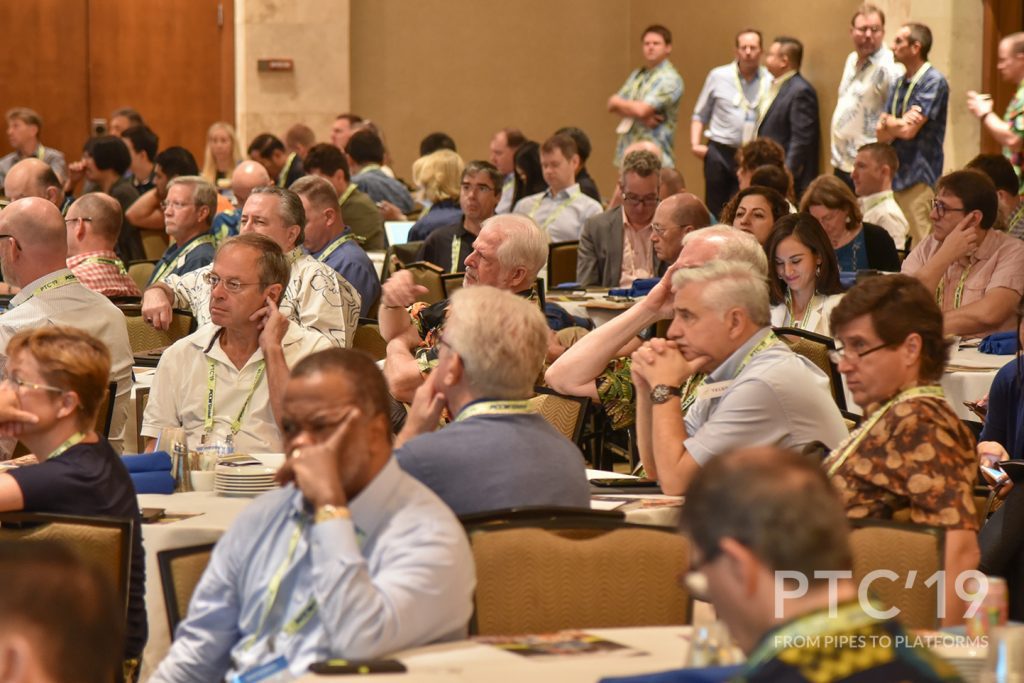
The Pacific Telecommunications Council now is soliciting content for its 42nd Annual Conference, PTC’20: Vision 2020 and Beyond, to be held from 19 to 22 January 2020 in Honolulu, Hawaii.


PTC’20: Vision 2020 and Beyond will look broadly at the  telecommunications sector, technologies, applications, and benefits in 2020, and also explore trends and discontinuities in the years beyond.


PTC’20: Vision 2020 and Beyond will bring into focus what otherwise would be a blur of disruptive technologies, emerging applications, shifting regulatory policies, dynamically-changing cultural norms, and new business models.


PTC invites industry executives, business strategists, financial analysts, technologists, innovators, policy makers, regulatory and legal experts, and consultants to submit proposals on forward-looking views and implications on topics representing the breadth and depth of the industry. Those include applications, technology, and policy issues for network-centric or network-enabled products, services, and uses.


New to the upcoming PTC Annual Conference are the PTC HUB Presentations and Cross-discipline/Cross-sector sessions.


The PTC HUB will be the core of the conference, offering the opportunity to conduct brief and lively 10-minute talks, tutorials, debates, presentations or interactive sessions on a variety of key issues. The sessions will demonstrate how industry functions and developments interact across ecosystems to create value, and how changes contribute to use cases.


The conference program will also incorporate a variety of formats, including presentations, interviews and moderated discussion panels. Proposals for consideration can be submitted for topical sessions, workshops, tutorials or “managed” sessions. The deadline for submission is 12 July 2019.


Academics and Researchers are invited to submit their research paper abstracts by 12 July 2019, either on a topic of interest provided or for one that fits the conference theme. Students may submit full papers by 15 September 2019. Accepted research papers are also eligible for PTC’s Research Awards, the Meheroo Jussawalla Research Award and the Yale M. Braunstein Student Award.


For more information on the PTC’20 Call for Participation and details regarding proposal options and a complete listing of topics, visit www.ptc.org/ptc20/cfp.

Market Share and Profit Margin Typically are Directly Related

Among the principles that applies to most analyses of market share in connectivity markets, especially for tier-one retail suppliers, is the relationship between market share and profit margin.

In most markets, two suppliers have 80 percent of the profits, researchers note. More pointedly, the market leader can have 60 percent of total profits in the industry. That obviously leaves little share for the other contenders.

This is a nice illustration of the concept.

Looking at market share in the Netherlands mobile market in 2006, one can see that KPN had roughly twice the market share as the second-largest provider, which in turn had share roughly double the number three provider.


Not every market has a perfect match, but over time, at least historically, the pattern has been quite common.


Can Cable Win, Long Term, Without Mobility?

Cable execs keep stressing they are communications companies--and arguably leading companies--rather than video entertainment distributors. But it might be hard to do that, long term, without a key position in mobility, which drives the bulk of revenue in the U.S. communications business, unless an alternative international growth strategy is the alternative.

The Sky purchase, though increasing Comcast exposure to video distribution, might suggest the early focus.

The issue for Comcast, as for some other firms, is whether a “fixed network only” or “mobile only” strategy is sustainable.

To be sure, cable companies are positioned to take market share in business services and consumer broadband. In fact, the whole growth story for cable companies in communications is “taking market share” from telcos faster than video revenue is lost.

But the bucket is leaking. Cable has to add new revenues simply to replace lost video revenues. Net growth beyond that replacement is the issue.

SNL Kagan forecasts residential cable industry revenues will rise from $108.38 billion in 2016 to $117.7 billion in 2026, a $9.32 billion increase over the 10-year period, even as video revenues shrink.

Commercial services revenues will push total industry revenue from $130.57 billion to $140.99 billion, a $10.42 billion increase, SNL Kagan suggests.

That forecast assumes consumer broadband subscriptions grow by more than eight million over the next 10 years, largely by market share gains at the expense of telcos. That is why fixed wireless and 5G mobile substitution are such a big potential change for telcos. If 5G reduces share losses to cable TV, the consumer revenue growth estimate for cable is too high.

The SNL Kagan forecast also is sensitive to the rate of linear video subscription losses. Basic video subscriptions are projected to drop by an annual compounded growth (CAGR) rate of 1.5 percent to 45.4 million by 2026. Accelerated losses, which most likely expect, will damage the overall growth forecast as well.

SNL Kagan anticipates total revenues generated from residential video services to fall at a CAGR of -0.5 percent over the next 10 years, totalling $55 billion annually in 2026. Again, that could be overly optimistic.

Advertising revenue is expected to grow at a 4.3% CAGR through 2026 to reach $6.3 billion, but is not a big enough contributor to offset bigger losses in the core services areas.

So the strategic issue is whether the cable industry can sustain a position at the top of service provider rankings without serious mobile revenues and profits, even if taking market share in enterprise and business markets will help.

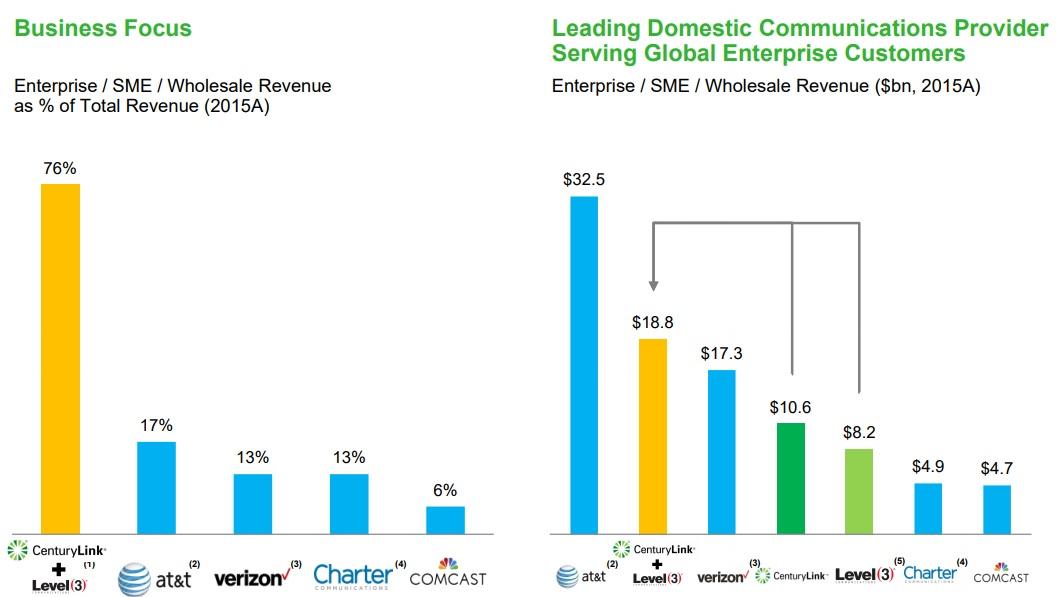
That might be likened to the position CenturyLink finds itself in: it already earns more than 76 percent of total revenues from enterprise customers on its global networks and metro enterprise services.  

Its entire national footprint of mass market customers is essentially a drag on company profitability.


Mobile remains the growth engine globally, but the relative scale and importance of the mobile, fixed broadband, and entertainment TV  markets varies hugely by country and region. In 2021, the mobile market will generate 87 percent of total connectivity and video revenues in Africa and 70 percent in the Middle East, compared to 50 percent in North America and 49 percent in Western Europe, according to Informa Ovum. The differences stem largely from revenues generated from fixed networks.

Cable dominates consumer broadband, has a strong, if declining video business and is growing its share of commercial revenues. But the other leading incumbents are fighting for their lives as well, and will not easily yield market share in voice and data, least of all AT&T and Verizon, which appear to be holding their own in consumer internet access share, for example, while most of the telco industry losses come from smaller providers relying mostly on digital subscriber line for internet access.

Almost without exception, such providers also have no mobile exposure. How long such firms can compete against cable, which arguably offers better value for consumers, is an open question.

Conversely, cable can compete against weaker telcos without mobile assets quite well. Whether cable can challenge AT&T and Verizon, though, is a bigger question at the moment, so long as no clear mobile strategy at scale.

Tuesday, April 16, 2019

Malaysia Broadband Faster by 300% in a Year, Prices Down Sharply

In February 2019, Speedtest Global Index by Ookla reported that fixed broadband download speeds in Malaysia increased almost 300 percent to 70.18 Mbps, up from 22.26 Mbps in 2018, the Malaysian Communications and Multimedia Commission says.

Prices are lower by almost half, as well. 

The number of fixed broadband subscriptions with download speeds of more than 100 Mbps also grew by an order of magnitude between 2017 and 2018, the Malaysian Communications and Multimedia Commission reports.

The Mandatory Standard on Access Pricing resulted in dramatically-lower wholesale network pricing,  which allowed the internet service providers in the industry to lower their retail prices as well.

Broadband subscriptions in Malaysia almost doubled over the last five years to reach 39.4 million in 2018.

The upsurge has been mainly triggered by wider access to 3G and 4G/LTE coverage, improved network quality and increased competition in broadband market. As at 31 December 2018, 3G and 4G/LTE network expanded to 94.7 percent and 79.7 percent population coverage, respectively. Meanwhile, High Speed Broadband (HSBB) covered more than 5.5 million premises nationwide as compared with 3.5 million in 2015.
Malaysian Communications and Multimedia Commission


Saturday, April 13, 2019

More Intellligence for Net Operations, Back Office?

Does this sound like your company? A better question: if you are in network operations, information technology, operational support, customer service or some back office role, does this resonate?

Perhaps these are trends that impinge on those sorts of job functions and roles. None of them seem more-broadly top of mind for line of business mangers. 

source: Infiniti Research 

What's Worse: Protecting Producers or Consumers; Business or People?

The scope of antitrust action seems to be a growing issue. Some now argue that dispersing private power should be the main objective; others hold for the current role of protecting consumers. In essence, the issue is whether antitrust is a matter of preventing bigness or preventing consumer harm. They are related, but not identical.

And some propose that multiple purposes be served: protecting privacy, restricting the impact of money in politics, or methods of market oligopoly that are exercised through non-price means.

Some might abbreviate the new approach to a “bigness is bad” framework that assumes consumer welfare is harmed by bigness itself, even if big firms are able to provide greater variety of goods at lower prices (or for free, in the case of ad-supported app platforms and services).

Ignore for the moment that markets lead to concentration precisely because consumers prefer the products supplied by more-successful firms. Ignore the efficiency gains from scale. Ignore the quantifiable reality of lower prices possible precisely because some firms have been able to leverage scale.

The new standards aim to shift the burden of protection from buyers to sellers; from users to suppliers; from price to non-price mechanisms. One might question whether greater reliance on human agency and courts is superior to the action of markets propelled by consumers.

But there cannot be any doubt that protecting suppliers, by restraining bigness, also will introduce greater amounts of human judgment and values into a process that arguably runs better when people are free to vote with their pocketbooks.

That argument might be more true in an era when products are intangible, not tangible, and innovation is very rapid, with few moats to protect inefficient producers. In fact, one might continue to ask why inefficient producers should be protected. “Quality” is usually some major part of the answer some offer. “Local” producers are better than remote producers, even if local producer prices are higher than remote suppliers can offer.

That is part of the charm of local hand-crafted products, for example. Still, restraining price competition will introduce or maintain some amount of inefficiency, and therefore, higher prices. The impact on variety of traded goods will be more varied, but at least some products might not be available if remote and big producers are barred.

Using the consumer welfare standard, action is required only when consumers are harmed, largely by measures of harm from higher prices. Under the “new Brandeis” perspective, bigness alone is sufficient for action, even if consumer prices are lower.

The new Brandeis approach aims to protect suppliers; the consumer welfare framework says it is consumers who need protection. The issue, I suppose is “who do you fear most: big government or big business?

What if Advanced Technology Does Not Matter?

Virtually everyone “believes” (or at least acts as though they believed) that advanced technology (faster broadband, artificial intelligence, IoT, 5G) leads to an increase in productivity. People, organizations, firms and countries that have and use more of such assets are presumed to make faster productivity gains, and generate more economic growth.

The problem, aside from inability to measure precisely, seems to be that the evidence is suspect. It still does not appear that better, faster, more extensive broadband adoption actually is related to productivity gains.


To be sure, productivity measurement always is difficult, in part because there are so many inputs that could contribute. We simply have no way of conducting a controlled experiment.

If there is a direct relationship between broadband and productivity it is hard to measure.


In fact, almost nothing seems to have positively lifted productivity in OECD countries since perhaps 1973.

                                    % growth in GDP/hours worked, 1971–2015


Still, “everyone” acts as though application of advanced technology matters; that better and ubiquitous broadband matters. Perhaps it does. Perhaps productivity would be even lower in the absence of those tools. We simply cannot prove the case.

Indirect Monetization of Language Models is Likely

Monetization of most language models might ultimately come down to the ability to earn revenues indirectly, as AI is used to add useful fe...