Wednesday, July 24, 2013

Chromecast: Internet TV is Not About the Display

"Internet TVs" sometimes are thought of as being about the display device. That is one reason many believe Apple is working on, or should be working on, some sort of receiver, otherwise known as a "TV."

In truth, Internet TVs might be more about the appliance that allows the display to show Internet-accessed content. 

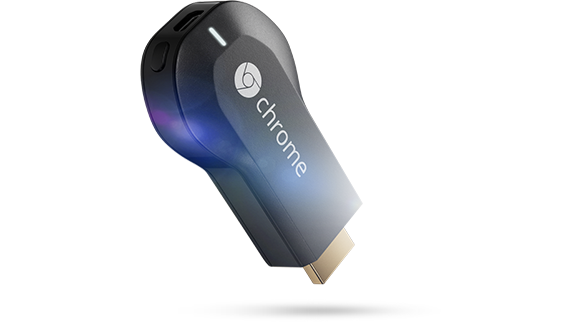
Google's Chromecast is a $35 plug in that allows Internet-compatible TVs to show content accessed by a local Wi-Fi network connected to the Internet.

It requires an HDMI port, and also that the user has Wi-Fi communications with the Internet, and a CPU that can access the Internet. 

Essentially, a user orders up a web page and then the content is delivered over the Internet connection directly to the Chromecast. 

To be sure, "receiver" or "processing" functions traditionally have been integrated with displays. That's what a "TV" has been. Notebooks, smart phones, iPods and other devices come integrated with screens. 

Cable set-tops traditionally have substituted their own tuners for the tuners built into the TVs. 

But desktop PCs traditionally have been sourced unbundled from the display. Some might argue that is the way Internet TV will become popular. 

In other words, the display arguably is just a dumb component, where the intelligence is supplied by the decoder device. YouTube content, for example, though controlled by some other CPU in the home, is sent directly to the display through the Chromecast device. 

Chromecast YouTube diagram

U.S. Average Internet Access Speed Grows 69% Last 12 Months

It always is hard for regulators to keep up with the pace of change in the Internet and even telecom ecosystems. Not so long ago, the Federal Communications Commission decided to base its broadband measurements on speeds of 4 Mbps. 

To be sure, there is a difference between a ceiling and a floor, so regulatory officials recently have been talking about how to get to 100 Mbps as a goal. 

Already, though, about 25 percent of U.S. locations are connecting at speeds higher than 10 Mbps, Akamai says, while peak rates are above 36 Mbps. 

Year over year, average bandwidth is increasing 69 percent, Akamai also says. 


Yuilop Calling/Texting App Launches in U.S.

Yuilop, a cloud-based communications app popular in Europe, has launched in the U.S. market, offering unlimited, national calls and text messages in the domestic U.S. market, and no incremental charge international calling (you need to earn credits to do so), even to friends and family who don’t have the app.

Yuilop’s business model based on use of a virtual currency that is earned when users talk to to non-Yuilop users  or convince them to join the network. Credits also are earned when talking with another Yuilop user, using the app, or engaging with promotions such as sponsored content or ads.

Yuilop has not yet gone with a “freemium” model that would allow users to buy credits, but that certainly is within the realm of possibility and logic.

In the United States, Germany and Spain, yuilop provides users with a free unique yuilop mobile number called yuilop.me. Having a number enables users to receive credit for most inbound calls and SMS and reduces or eliminates the need for credit for makes outbound calls or SMS. Currently, SMS from Germany and Spain to the United States, and text messages sent within the United States are free.

Yuilop says it has “built the whole architecture on open standards” such as xmpp and the mobile number (MSISDN).

That means Yuilop users can call and message non-Yuilop users at no incremental charge.

Yuilop  is available for download for iOS, Android, Blackberry and Windows Phone.

Spectrum Sharing or Not in 1755 MHz to 1780 Mhz Band?

Spectrum sharing is a relatively new concept in the licensed spectrum arena, and we might soon get a glimpse of how well it works if U.S. mobile operators and government users wind up sharing access to the 1755 MHz to 1780 Mhz band, as its current users say they are willing to do.

Mobile operators would prefer exclusive access, as usual, but the more interesting scenario would be sharing. If it works, it would then be more feasible to consider sharing of spectrum across other frequency bands, between current non-profit users and commercial operations.

As always, spectrum clearing costs are an issue. The U.S. Department of Defense estimates it will cost $3.5 billion to retrofit radios within the 25 MHz of shared spectrum.

But such costs always come into play when existing users have to move out of a band.

Fiber to Home Grows 15%, Mobile Broadband 14% in 2012

Fixed wired broadband subscriptions reached 321 million in the Organization for Economic Cooperation and Development area in June 2012, for an average penetration of 26 subscriptions per 100 inhabitants, a 1.4 percent increase over the previous six months.

Fiber to the home subscriptions also now represent 14.9 percent (48.7 million) of total fixed network connections. Fiber to home deployments grew by 12.7 percent in 2012, four times as much as fixed broadband at 3.27 percent.

Luxembourg (324 percent), Austria (193.9 percent), United Kingdom (169.9 percent) and Switzerland (149.6 percent) had the strongest annual growth in fiber connections, while seven countries had growth rates above 100 percent year over year and 11 countries grew fiber connections more than 50 percent.

Throughout the OECD, there also are about five million fixed wireless connections.

Mobile broadband increased by 13.8 percent year over year and reached a penetration of 62.75 lines per 100 inhabitants, up from 58.6 in June 2012.

The total number of mobile broadband subscriptions in the OECD area is just above 780 million. Finland (106.5), Sweden (104.8), Australia (103.4) and Korea (103.0) have over one subscriber per capita, the OECD says.

OneGigabit in Vancouver, B.C.

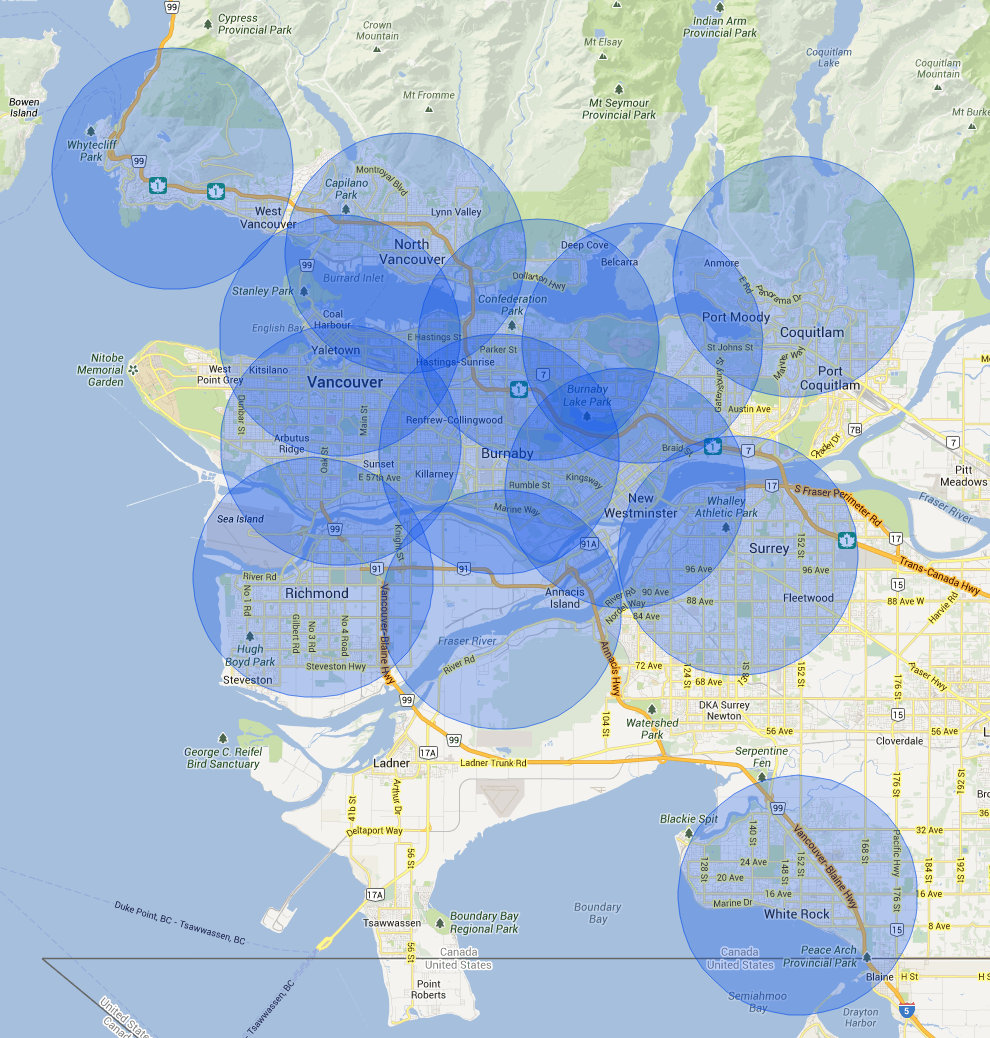
OneGigabit in Vancouver, BC is the latest ISP to announce it is going to provide 1-Gbps Internet access connections, focusing as many other ISPs are on targeted deployments.

OneGigabit plans to provide service on a wholesale basis only (no direct retail sales) to apartments, condominiums and office buildings throughout the Vancouver metro area, using a combination of optical fiber and microwave radio operating in the 24, 38 and 80 GHz frequency bands.

Also, as many other ISPs are doing, OneGigabit is partnering to build its network, in this case doing wholesale deals with building owners.

The 1 Gbps FTTH service is available for apartment and condominium buildings located within 20 kilometers of downtown, with pre-existing Ethernet cable from each suite to a basement wiring demarcation point.

OneGigabit also assists property owners with the process and costs involved in upgrading a building’s premises wiring for optical fiber access throughout the building. OneGigabit also works with new building owners to install optical distribution networks within the structures.

OneGigabit's plan is to negotiate with real estate owners, managers and developers and hook up entire small and medium-sized apartments, condominiums and office buildings that don't currently have an optical fiber connection.

Where that is not possible, OneGigabit is planning to use microwave radio as an alternative, using Ubiquiti “AirFiber” systems.


“Even if your building is located too far from the nearest source of underground fiber to make a fiber-optic connection economical, OneGigabit's rooftop mounted high-capacity microwave systems can provide access at 2 Gbps speeds at any location within a 15 kilometer to 20 km radius of the downtown core,” the company says.

According to OneGigabit, the wireless network can transmit data at up to two gigabits per second over distances of up to eight kilometers.

The firm basically has a “fiber to the basement” or “fiber to the building” business plan, and apparently will try to share access costs with building owners.

Shared Internet Access Important Even for Developing Nation Users with Access at Home

It appears that access speed might be a major reason large number of developing market public access users use shared computing services, even when they also have computers and Internet connections at home, a study suggests.

In Brazil, home Internet penetration at home among shared venue users was 40 percent, compared with the 24 percent national average. In other words, a significant percentage of people with at-home connections still use shared Internet access centers.

In Chile, 33 percent of public access users had Internet connections at home, as did about 25 percent of users in Ghana and the Philippines.

Users said “better equipment,” “faster connections,” and availability of “help” were key reasons for using a shared center.

To be sure, at-home Internet access varies. Of eight countries in the Global Impact Study of Public Access to Information & Communication Technologies study , home access ranges from a low of three percent to a high of 62 percent.

In Bangladesh, Botswana, and Ghana, about three percent to six percent of people say they have Internet access at home. In Lithuania, Chile, and Brazil, 38 percent to 62 percent have at-home Internet access).

In the middle are people in the Philippines and South Africa, where 10 percent to 15 percent of people say they have at-home Internet access.

Some 70 percent to 80 percent of the world’s poor now live in middle income countries such as theses (with the exception of Bangladesh, which is not classed as a middle income country).

Though fixed network at-home Internet access is an important indicator of the level of Internet access, it is not the only indicator. Mobile access already is becoming the primary way most people use the Internet, even when it is not the “only” way people do so.

That points up the importance of shared forms of access, ranging from libraries and  telecenters to cybercafés, the study authors maintain. In many cases, the shared access is provided by entrepreneurs, in other cases by government-related organizations.

One way of quantifying the perceived value of such access is to measure the amount of money people spend to get to a shared Internet access location. In purchasing power parity terms, this amount ranges from annual expenditures of $15 in Ghana to $83 in Brazil.

At Alphabet, AI Correlates with Higher Revenue

Though many of the revenue-lifting impacts of artificial intelligence arguably are indirect, as AI fuels the performance of products using ...