Thursday, May 19, 2011

Isis Says It Will be a "Delivery Engine"

Isis, the mobile payments venture owned by AT&T, Verizon Wireless and T-Mobile USA, now says it will be a “delivery engine” for banks and payment networks to provision and manage their applications on NFC phones.

Isis also said it will serve as a distribution channel for merchants and consumer product companies for their digital coupons, loyalty programs and other offers.

Isis expects to charge fees to the banks and payment service providers for managing their applications on the carriers’ SIM cards or other secure chips that the telcos control on the phones.
Isis would also take a small fee when it delivers a coupon or enables consumers to receive advertising or other offers on their phones, Hughes said.

Instead of creating a new retail payments brand and back office, Isis now appears to be setting out to be a social shopping platform and ad network.

Much hinges on ability to retain control of the credentials management process, though. Carriers obviously would like that process to center on the mobile handset subscriber information module. Handset manufacturers want to control the process themselves.

Citi and MasterCard to Launch NFC Payment on Google’s Nexus S

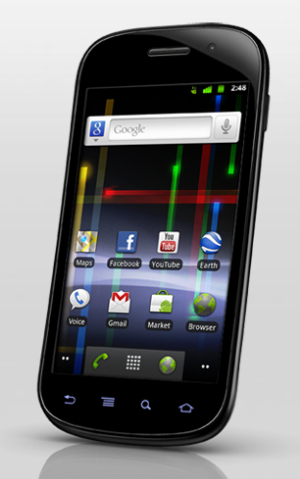
Citigroup and MasterCard Worldwide will soon announce a near field communication mobile payment service with Google, NFC Times reports. Citi reportedly will issue a prepaid MasterCard PayPass application to be loaded onto Google’s Nexus S and perhaps other Android phones.

The initiative will put the Citi-issued PayPass application inside Google’s new mobile wallet, where it will be stored on the embedded secure chip in the Nexus S.

Google is expected to have overall control of the secure chip. That particular choice is an area of contention between mobile service providers and handset manufacturers, each of which want to control the credentials loading process.

Large U.S.-based processor and merchant acquirer First Data will also work on the project, including providing trusted service management. The actual launch of service might not happen until next fall.

ITU Forecast Shows U.S. Service Provider Growth is All Mobile

This forecast by the International Telecommunications Union for the U.S. service provider market suggests why fixed-line network broadband investments are contentious.

If the ITU forecast is correct, the balance of revenue between mobile and fixed sources will shift dramatically in the direction of mobile services by about 2014.

The issue is how much capital a company ought to invest in a declining business, when it has another growing business.

Few service providers with both wireless and wired network assets will be able to ignore the change. Put simply, the financial return from just about any type of fixed-line investment is going to be sharply limited over the next decade, at the very least. If the ITU forecast is correct, fixed-line revenue is going to keep declining between now and 2015.

AT&T' U-verse Build Virtually Over

AT&T is scheduled to reach 30 million U-verse homes passed by the end of the year with their U-Verse service, or roughly 55 percent to 60 percent of homes.

AT&T President John Stankey now suggests that is about the limit of AT&T's intentions for U-verse. He suggested that 25 percent to 30 percent of AT&T homes will continue to use ADSL and that 20 percent of homes are "not a heavy emphasis for investment."

Those figures illustrate a couple of important strategic considerations. AT&T serves many lower-density customers where a fiber-to-neighborhood approach does not provide an adequate return on the investment.

That doesn't necessarily mean AT&T cannot provide higher bandwidth using other platforms. As often is the case in developing regions, wireless can make the most sense.

But that also suggests why, over the long term, it remains likely that satellite video providers might wind up being the preferred linear video delivery channel, irrespective of whether either or both leading U.S. providers wind up as actual parts of either AT&T or Verizon.

How Brands Use Facebook

Social Media: Some Channels Seen as More Important Than 2 Years Ago

Over the last two years, it appears that business perceptions of the value of social media have shifted. Some channels, such as a company blog, Facebook, YouTube and Twitter, now are deemed more important than in 2009. Other tools are seen as less important. The one consistent theme is that all of the more-popular social media channels involve content creation.

Social Media Site or Blog that Is Critical or Important According to Companies in North America, 2009 & 2011 (% of respondents)

Android, iOS Lead Apps Market

paidContent Mobile 2011: Flurry On Trends In Apps

How Do You Price Mobile Content Subscriptions?

Nielsen suggests consumers are willing to pay $10 a month or less for mobile content subscriptions. That's an unexpected result. Lots of consumers will say they are willing to consider purchases at that level. The issue is getting them to follow the stated willingness with an actual purchase.

That is harder than it sounds. In consumer markets, getting customers to pay an extra $5 to $10 a month for anything is a pretty significant accomplishment.

Mobile Content Subscriptions Work At $9.99 Or Less - Nielsen Survey | Peter Kafka | MediaMemo | AllThingsD

Smart Phone Share Shifts

It isn't news anymore when smart phone sales grow. What is probably a more-watched indicator is shifts in sales share. In that regard, Gartner reports that in the first quarter of 2011, Nokia’s share has dipped to 25 percent, Samsung is down to 16 percent, and LG dipped to 5.6 percent.

Apple had 3.9 percent share, Research in Motion had three percent, HTC had 2.2 percent, Motorola had 2.1 percent, and Sony Ericsson had 1.9 percent.

Apple and HTC are among handset manufacturers whose share has grown, relative to the same quarter of 2010. Nokia is the biggest loser.

Amazon.com Now Selling More Kindle Books Than Print Books

Since July 2010, Kindle book sales have surpassed hardcover book sales, while Kindle books overtook paperback books early in 2011, Amazon.com says. Less than four years after introducing Kindle books, Amazon.com customers are now purchasing more Kindle books than all print books.

As with the growth of streaming views of Netflix content, the shift is simply one more brick in the foundation of online media, online commerce and mobile content consumption.

Wednesday, May 18, 2011

Mobile's share of email up 81% since October 2010

The share of emails accessed by mobile devices increased by 81 percent from October 2010 to March 2011, according to a survey by Return Path.

Sixteen percent of emails were accessed via mobile devices in March 2011, up from 9.2 percent last October, according to the survey. Web mail accounted for 48 percent of all emails accessed in March, while desktops represented 36 percent of activity.

What Marketers Can Learn from Consumers’ Sharing Habits - eMarketer

Paul Adams, global brand experience manager at Facebook, said that the average person has four different friend or influence groups. Each has an average of 10 people and they are based around life stages, experiences or hobbies.

“We are highly influenced by people who are up to three degrees away from us,” he said, which presents a tremendous word-of-mouth marketing opportunity via social sharing.

By studying the ways in which consumers share content online, marketers can determine the best ways to reach consumers and make an impact on social sites or via advertising.

Additionally, the study found that 60 percent of shares were links to published content, such as a news or media site. Meanwhile, 36 percent of shares consisted of embedded content, such as branded experiences on a social network, enabling users to share content without leaving the platform or social network.

Embracing Shorter Attention Spans

Shorter attention spans are having a profound impact on marketers, who have to work harder to win and sustain attention, and have to get to the point right away.

Steve Rubel of PR firm, Edelman, recently gave a speech on how brands can gain authority in an age of digital information overload. The point is that attention now has be earned, because it is harder to buy.

We used to think of brand trust as a necessary condition for believability. Now it is a necessary condition to be heard at all. Marketers are spending more time thinking about how they can be authentic and add meaning to their marketing, and less on how to "break through" with a message.

A tactical corollary is that messages have to make their key points right up front, clearly and unmistakably. Recent studies of video consumption show, for example, that users will not watch much more than about two minutes of any typical video, and most often do not watch an entire video.

So content and other marketers have to make their points quickly, and upfront.

Embracing Shorter Attention Spans | Millennial Marketing

Shorter attention spans are also forcing brands to pare down their messages. In today’s brand strategy, mantras and vision are more useful than sentence-long positioning, especially if that positioning has more than two benefits.

U.S. Smart Phone Penetration 36%, Tablets at 5%


Tablets, though multi-purpose devices, seem to be driving digital content consumption in new ways. Consumers who use tablets watch more video and read books, according to Nielsen. They also are more accepting of advertising and are more likely to make a purchase after viewing an ad, than users on smartphones or other devices.

Nielsen’s survey also showed that tablets had the highest proportion of people using the device while watching TV: 70 percent. The next-highest simultaneous TV usage was with smartphones, which proved to be the most-used device in almost all other scenarios presented by the researchers (the exception was bed, where eReaders won out).

Study claims telcos can overtake cable

With the caveat that consumer satisfaction scores are not always an especially accurate predictor of consumer behavior, a new consumer satisfaction study by the Cloes Fornell International Group suggests that consumers will consider a service bundle sold by a telecom company over one sold by a cable company.

The study was conducted by Michigan-based CFI Group. It finds higher customer satisfaction scores for telecom players, based on their history of providing better customer service, said Phil Doriot, one of the study’s authors.

That is consistent with other studies, but might be of limited predictive value. Cable "satisfaction" scores generally are low, but that has not lead to wholesale abandonment by consumers, even when satellite and telco alternatives are available.

"Not so happy" does not lead directly to switching behavior, it would seem.

OpenAI, Azure, Alphabet: Comparing Apples and Oranges

The adage about comparing apples and oranges is well illustrated by the many news reports suggesting the “AI trade” is alive and well after...