Monday, November 21, 2011

Timothy Geithner: US Must Make Choices

"We're facing a very consequential debate about some fundamental choices as a country," says Treasury Secretary Timothy Geither. "Those choices are fundamentally about what role can government play and what role can government not play and should not play in trying to create conditions for stronger growth and better opportunity, and how are we going back to a point where we're living within our means as a country." decisions the country must make

Though it is reasonable to criticize the White House and the Congress for failing to act resolutely ("why can't they reach a compromise?"), it also is reasonable to note that there is a huge, virtually unbridgeable gap between competing visions for the future, including the size and role of government. Some believe the size of government itself is a key problem. Others want government to do more. You can agree or disagree with either position. But if you really believe in one of the positions, compromise is not an option, is it?

Under such conditions, compromise is likely to be viewed as surrender. Hence, no compromise. But some big issues are not amenable, fundamentally, to compromise, even when agreement on smaller issues often is possible.


Friday, November 18, 2011

Is Clearwire Headed for Bankruptcy?

Clearwire Corp. is weighing whether to make a big debt payment that comes due in two weeks, a decision that could ultimately lead to a bankruptcy, a danger Clearwire has been warning in its quarterly reports for some time, as the company's full business plan remains substantially unfunded. 


The $237 million payment is due Dec. 1, 2011, and Clearwire, with $698 million in cash and short-term investments on Sept. 30, 2011 can afford to make it.

But the company needs to raise lots of money if it is to stay in business after the next 12 months. Clearwire May Skip Big Debt Payment

Sprint, which owns 53 percent of Clearwire, recently has suggested it could help Clearwire with an additional cash infusion. Will Sprint throw Clearwire a Lifeline? But it also has been argued that Sprint, or any other potential investor, would be better off waiting until Clearwire actually goes bankrupt, and then buy the asset then.


Clearwire has never completed its national WiMAX network, and now says it will build an LTE network as well. Some believe even AT&T or Verizon might invest, under some circumstances, or that Clearwire could attract another major anchor customer other than Sprint. Would AT&T invest? 


Consumer Brand Videos Do Best on Tablets

Online videos produced by consumer brands to promote their brand, products, or services appear to be least engaging when viewed on smart phones, most engaging when watched on tablets, according to Ooyala. 


But that might not indicate much other than that mobile users are more likely to have more distractions than users of tablets or PCs.Viewers watching on a game console are at home, not at work, and not commuting. Tablet users are much more likely to be relaxing, and sitting on a couch. 

Data from the “VideoMind Video Index Report” indicates that although the consumer brands vertical reflects some of the highest viewer engagement numbers of the industry segments studied, relative to other devices, viewer engagement is lowest on mobile devices.

Roughly 75 percent of tablet viewers watched one-quarter of a consumer brand video, with tablets also leading mobiles, desktops, and connected TV devices and game consoles among viewers who watched half or three-quarters of a video. ooyala-consumer-brand-engagement.jpg

However, less than half of tablet viewers completed a consumer brand video, slightly less than the proportion of connected TV devices and game console viewers. Mobile trailed all devices in every completion rate studied. Brand Videos on Mobile


One might also argue that viewership is highest on the largest screens, ranging from TVs to PC and tablet screens. 

Canadian Regulators Try to Help, Might Harm

One of the enduring challenges of "regulating" in the public interest is that it is not always possible to foresee all outcomes. The Canadian
CRTC capacity-based billing plan could double consumer Internet rates: Tek...Radio-television and Telecommunications Commission has been grappling with rules on wholesale pricing of broadband capacity sold to third parties who use that wholesale capacity to provide retail broadband service.


Metered pricing has been among the issues. Wholesalers, especially Bell Canada, wanted a metered system of rates, where wholesale customers pay based on the volume of data their customers actually use. ISPs oppose that scheme. 


If the goal was to stimulate competition by helping third parties create new retail plans for end users, that goal might be unattainable under the new rules, at least according to independent ISPs. 


“A key component of our costs [under the rate plan for business access] just went up 70 per cent,” said Michael Garbe, president of Accelerated Connections, a Toronto-based ISP that serves business customers. CRTC's broadband pricing rules will lead to price hikes


Whether that will be the case for consumers isn't entirely clear. 

AT&T: churn unaffected after rivals got the iPhone - MarketWatch

AT&T customers, apparently including many of those who use iPhones and might have complained at some point about inconsistent service, seem not to have defected to either Verizon or Sprint, AT&T says.


There is no question that iPhone exclusivity seemed to help AT&T reduce its churn rate. But many expected churn to increase once Verizon got rights to sell the iPhone. 


"Churn has not moved at all," said Glen Lurie, president of emerging devices for AT&T. Of course, aggregate or "net" churn might not entirely tell the story.


It is theoretically possible that more customers left, but even more customers signed up, producing no adverse effect on overall churn. AT&T churn unaffected after rivals got the iPhone

Technically, it appears AT&T churn has been inching upwards, but by an amount small enough that the overall trend is "flat."


Patent Lawsuits Might Decline Under New Rules

The explosion of umber of mobile handset patent lawsuits in U.S. courts went from 24 cases in 2006 to 84 in 2010, said David McDonald, an attorney at K&L Gates. It might be argued that the number of lawsuits has climbed because companies and people profit from such lawsuits. But the volume of such suits already is pinching the legal system in a purely logistical sense, and that is leading to changes that will undercut the profit motive for filing many cases.


That is not to say it is easy to design a mobile device without possibly using intellectual property of an astounding quantity. "Today, it's a lot more complex to resolve the IP gap between what you own and what you need," said Mario Obeidat, head of licensing for telecommunications at Intellectual Ventures, a company that primarily acquires patents and earns revenue by licensing them.

A mobile phone today requires 70,000 to 100,000 patents, he said. Spike in Mobile Lawsuits Spurs Changes

Among some of the changes, the U.S. International Trade Commission now can require litigants to   submit information regarding the impact of a case on the public interest. The new rule will also allow more public comment on the potential public impact of cases before the ITC. Such submissions could allow the ITC to decide against considering some cases if it finds that they are unlikely to have much impact on the public.


With potentially less incentive, fewer lawsuits are likely to be filed. 

Thursday, November 17, 2011

"Untethered" Versus "Mobile" Apps, Devices, Access

Mobile or remote collaboration once was a matter of users communicating using enterprise-approved smart phones and PCs, with a couple of key applications. 

These days, non-standard devices including tablets, over-the-top and non-authorized applications now are quite common. A mobile worker's toolkit includes a combination of smartphones, tablets, laptops, netbooks, corporate devices and a bunch of applications.

True mobility is the ability to work from anywhere over any device and then be able to switch them when the user wants. This breaks the link between "wireless" and "mobility," Cisco tends to argue. In other words, there is a difference between "untethered" communications and collaboration, and "mobile" collaboration. 

Workers at a desk might start a video on a tablet and then move to the PC or move other content around between devices. Some of that activity might use or require a "mobile" device, connected to a mobile service provider's network. In other cases, Wi-Fi connections are sufficient. Most people, most of the time, prefer untethered or cordless devices, even when an access connection uses the fixed network. Collaboration in a Post-PC World


Much the same situation prevails in the consumer market as well. Most of the devices consumers now use, or will use increasingly in the future, can use Wi-Fi, which means the dominant connectivity requirement for a consumer is the fixed broadband connection, with wireless "tails" inside the house. 


In fact, given the growing use of mobile devices to consume content, most consumers will benefit from switching even their mobile phones to Wi-Fi connections when at home. 

That provides one obvious clue about the future value of the fixed network. Though mobile broadband and voice might be sufficient for many people, much of the time, the value-price relationship will, in all likelihood, "always" favor untethered use of the fixed network.
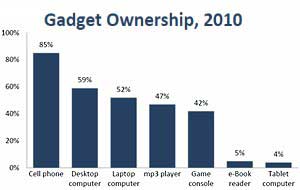
Generations and their gadgets - Pew Internet
Untethered device ownership

Sony Considers Internet Rival to Cable TV

Sony Corp. is considering launching an Internet-based alternative to cable-TV service, the Wall Street Journal reports.


The Japanese electronics and entertainment company apparently has approached several big media companies that own TV channels to negotiate the rights to offer TV channels over the Web to U.S. consumers, the people say.


But what Sony wants to purchase is rights to a selected number of core channels that would allow Sony to sell the package at less cost than s typical cable TV, satellite or telco video subscription.


It isn't clear how much chance Sony will have to get the programming it wants. Content owners, particularly the networks, have been unwilling to license channels on terms less favorable than what now is the case for cable, telco and satellite providers. 


It seems unlikely that networks will want to jeopardize their substantial legacy revenue streams even to pick up one additional distributor such as Sony. 


Sony also wants to distribute only to Sony-made devices including PlayStation gaming consoles, television sets and Blu-ray players.


Sony has sold approximately 18.1 million PlayStation 3 consoles in the U.S., according to the latest data from tracker NPD Group Inc., and many homes have other Internet-connected Sony devices as well.

Wednesday, November 16, 2011

Steve Jobs Originally Wanted iPhone on its own Network

When Steve Jobs first dreamed up the iPhone with his team at Apple, he didn't want it to run on AT&T's network. He wanted to create his own network, says venture capitalist John Stanton, who spent a good deal of time with the late Apple CEO during the phone's development period.

Jobs wanted to replace carriers completely, Stanton says, instead using the unlicensed Wi-Fi spectrum. Jobs would not have been the first executive to think about how Wi-Fi could literally replace use of mobile networks for mobile voice and data. There was a fair amount of such speculation in the late 1990s and earlier 2000s. Wi-fi for mobile service?

By about 2005, most began to see Wi-Fi as a complementary access alternative to mobile service. Wi-Fi becomes complementary Republic Wireless, the new mobile service provider, is the latest example of that line of thinking. 


For ubiquity, no service provider yet has shown an ability to completely displace mobile networks. 
On the other hand, for consumers, most important personal devices are equipped, or increasingly will be equipped, with Wi-Fi capability. 


So even though it remains a challenge to design a mobile phone's connectivity around Wi-Fi-only connections, the in-home environment is becoming a "Wi-Fi mostly" sort of environment. 

Steve Jobs wanted iPhone on its own network

Future of Fixed-Line Telephony?


Generations and their gadgets - Pew Internet

It is clear fixed line telephone services in the United States are beginning a rapid decline, with users favoring mobile phones and computer-enabled telephony, some would argue. Bill Reidway, Neustar Vice President of Numbering Services Product Management Reidway, is among them.


“As the fixed line network begins to fall by the wayside” explained Reidway, “the notion of telephone numbers associated with a specific geography falls with it.” Neustar’s Vision on the Future of Telephony That doesn't mean numbers are less important, just useful in a new way. 


Reidway also explained that although telephone numbers no longer have rigid location sensitive significance, users still generally prefer to associate their phone numbers with a location, and that is particularly important for business users. While it is certainly possible for a business or individual to use an area code, or even country code from any point in the world, he believes an area code “still says something about the identity behind the number.”


One might argue that, over time, the role of a fixed network will change, with users relying on fixed networks for some services and features that are superior to wireless, including bandwidth, cost and features. Business users are likely to derive higher value from fixed line voice than consumers will, for example. 


Most popular personal consumer devices will sport Wi-Fi capability, for example, meaning that "untethered" connectivity is becoming more important over time. 


Fixed networks, in other words, will become the primary broadband connection used inside homes. Given the existence of mobile data caps, it will make sense for most consumers to switch even their mobile devices to Wi-Fi connections when at home.

Most consumer devices use, will use, Wi-Fi

E-Reader Sales Grow Connected Devices Opportunity

A new report by analyst firm Juniper Research forecasts that e-reader shipments will reach 67 million by 2016, nearly triple the 25 million devices the company expects to reach the market in 2011.

While this is less than half the 55.2 million tablets that will be shipped this year, the price of the market-leading Kindle has fallen significantly (from $349 to $79) since it was launched, and electronic ink technology will ensure that the device continues to carve out a niche for itself in the wireless device ecosystem. eReader Shipments to Reach 67 million by 2016

Separately, Machina Research predicts wireless wide-area connected tablets and e-readers will grow from 66 million in 2011 to 230 million in 2020. Mobile service providers gain two ways from e-reader usage. There is the business-to-business revenue contributed by the e-reader partners, who use mobile networks to deliver content to the readers. 


There also is end user revenue supplied by connected devices. If half of the 2020 devices are e-readers, and just 15 percent of e-readers actually are mobile broadband connected, that is 17.25 million incremental broadband accounts in service. If, by 2020, half of the e-readers are capable of network connections, and are used as part of "family"-style mobile data plans that represent incremental revenue, then as many as 57.5 million new broadband accounts could be in service. 

Such trends are directly important for mobile service providers as many of those devices are equipped to work on mobile networks, and therefore represent a new class of devices that can be converted into new and incremental mobile broadband accounts. Greater use of Wi-Fi-only devices has relevance for fixed-network broadband providers to the extent that use of such devices increases the value of a fixed broadband connection.


Tuesday, November 15, 2011

Why Google should buy Barnes & Noble — Tech News and Analysis

Google should acquire Barnes & Noble, argues Michael Wolf at Gigaom. For some, that will seem like another source of channel conflict. As Google has to be careful about the relationship between its Android licensees and its owned Motorola Mobility division, so Google might have to avoid further potential conflict if Google were to become the owner of a content retailer such as Barnes & Noble.

In principle, Google ought to be able to figure out ways to leverage that asset on behalf of the Android community, much as iTunes or the App Store or Apple's network of retail locations benefits Apple. Which is to say that highly-successful smart phone, e-book and tablet ecosystems seem at the moment to require a robust content offering. The Barnes & Noble asset could help with the commerce part of Android's business , as well.

Sales of Smart Phones Up 42% Since 2010

Smart phone sales to end users reached 115 million units in the third quarter of 2011, up 42 percent from the third quarter of 2010. Sequentially, smar tphone sales slowed to seven percent growth from the second quarter of 2011 to the third quarter of 2011.

Smart phone sales accounted for 26 percent of all mobile phone sales, growing only marginally from 25 percent in the previous quarter. Smart phone Sales Increased 42 Percent

In many ways, you can say that "smart phones" now are a mobile service provider's "lead offer." It might have been "voice" in the past. For fixed networks, broadband and video have become the lead offers.

Monday, November 14, 2011

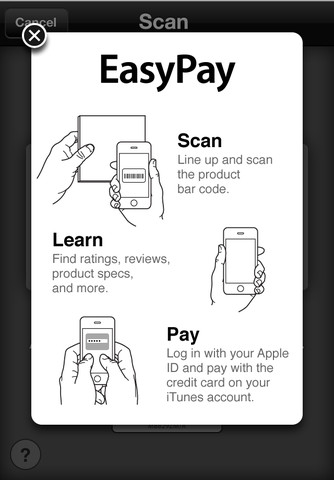
Apple Launches EasyPay for Some iTunes Purchases

Apple has introduced a new feature for the iPhone in its Apple Store app called EasyPay. EasyPay allows people to take a picture of the bar code of a product with the phone’s camera and then buy the product on the spot, using their iTunes account. Apple EasyPay


Previously, the app could be used to research products and order them, but the products had to be picked up from an employee in the store. Inevitably, some will see the move as a challenge to Google or PayPal Wallet offerings, which Apple's EasyPay is not.

Whatever Apple might decide to do in the future, it is not yet ready to launch a full-scale mobile payment service, at least not yet.


Nor does Apple appear to want to encourage use of the system for larger purchases, such as computers or tablets. Not for big purchases

Average U.S. Smart Phone Price Falls


Nearly two-thirds of U.S. smart phone buyers paid less than $200 for their devices during the third quarter of 2011 according to a recent study published by consumer-electronics researcher NPD. 

And much of that was driven by sales of the iPhone 4 and iPhone 3GS, which outsold competing phones from HTC, Motorola (NYSE: MMI), and Samsung despite their advanced age, NPD says.  Average Smartphone Price Falls Again In U.S.

The share of U.S. mobile handset sales that were smart phones reached 59 percent in the third quarter of 2011, an increase of 13 percentage points since the third quarter of 2010.

Based on the latest data from NPD’s monthly Mobile Phone Track service, average selling prices for smartphones have declined for four consecutive quarters, reaching $135 in the third quarter.
.
Among U.S. consumers who considered purchasing phones in the $200 to $250 price range, 64 percent ended up purchasing a phone for less than $200. Smart phone prices fall.

Yes, Follow the Data. Even if it Does Not Fit Your Agenda

When people argue we need to “follow the science” that should be true in all cases, not only in cases where the data fits one’s political pr...