You might not be too surprised if told that about a third of U.S. mobile phone users have used mobile payments of some sort over the last year or so. You might not be surprised if a significant percentage of those sales were of digital goods such as games, apps or music.
But a new study found surprising behavior. Despite the popularity of digital downloads, such as apps and music, more respondents reported buying physical goods with their phones than online services, digital goods, or virtual currency, IDC reports.
That would be a significant finding, indeed, at least for remote payments made from a mobile device.
The IDC Financial Insights study found that mobile payments have more than doubled in popularity, reaching over 33 percent of survey respondents. Of those that had made a mobile payment, more than half used PayPal Mobile (56 percent), with Amazon Payments and Apple's iTunes service statistically tied at about 40 percent.
The findings are important for mobile payments providers and merchants, as the behavior shows increasing adoption of the mobile payment habit for products not traditionally associated with mobile device content and application purchases.
Sunday, July 29, 2012
Surprising Findings about Mobile Payments

 Gary Kim was cited as a global "Power Mobile Influencer" by Forbes, ranked second in the world for coverage of the mobile business, and as a "top 10" telecom analyst. He is a member of Mensa, the international organization for people with IQs in the top two percent.
O2 London Small Cell Network Will Offer Free Access After Olympics
 U.K. mobile service provider has built a network of 100 free Wi-Fi hotspots in West London as part of the Olympics. As always is the case after an Olympic event is held, the purpose-built facilities are reused in new ways. That will be the case for O2's network as well.
 The Wi-Fi network, serving the West End, offers service at speeds up to 24Mbps.
Users will have to register, but unlike Virgin Media's network on the London Underground, O2's hotspots will remain free after the Olympics are finished. So you might well wonder what the revenue model will be.
O2 aims to support its investment by selling advertising to local businesses, probably adding location features to craft deals based on end user location. There is another difference.
O2 is using the 100 Wi-Fi hotspot deployments as the foundation for a future small cell network that will use O2's 3G network, reinforcing the macrocell network where it is most congested.
As a matter of engineering, that has meant locating the Wi-Fi hotspots in locations where eventual conversion to a GSM small cell network will be compatible with the macrocell network.
Gary Kim was cited as a global "Power Mobile Influencer" by Forbes, ranked second in the world for coverage of the mobile business, and as a "top 10" telecom analyst. He is a member of Mensa, the international organization for people with IQs in the top two percent.
Predictably, Dish Network alters AutoHop
Dish Network has made a series of software upgrades to its DVRs embedded with the "AutoHop" feature, that automatically removes all advertising from prime time broadcast TV network programming recorded using the DVR feature.
Subscribers now have the ability to choose which channels to record among the "Big Four" networks, where previously they were all automatically recorded.
Subscribers now have the ability to choose which channels to record among the "Big Four" networks, where previously they were all automatically recorded.
Subscribers also can choose to delete programming off the hard drive at a time of their choosing, as opposed to accepting a default-delete date.
A third change switches the cursor default from "yes" to "no" when presented with the option to skip ads.
All those changes presumably are intended to bolster Dish Network's defense of its technology, as it faces major lawsuits from broadcasters who claim the AutoHop feature is a violation of their copyrights and also a breach of affiliate contracts Dish Network has signed with the broadcasters.
The broadcaster challenges were entirely predictable. Whenever an upstart has challenged the over the air broadcast business model, there have been legal and regulatory challenges. In the mid-twentieth century, for example, broadcasters successfully convinced the Federal Communications Commission that some core cable TV industry values, such as offering out of market TV signals, were impermissible.
Broadcasters and movie makers also challenged the legality of such devices as the video cassette recorder. So the challenge to the lawfulness of AutoHop was inevitable.
That incumbent legal and regulatory resistance always is predictable when new technologies or business models pose a challenge to either communications or entertainment industry business models.
Dish Network presumably hopes the changes will bolster the Dish Network argument that AutoHop only provides consumer choice and convenience, and does not constitute any sort of copyright infringement.
Gary Kim was cited as a global "Power Mobile Influencer" by Forbes, ranked second in the world for coverage of the mobile business, and as a "top 10" telecom analyst. He is a member of Mensa, the international organization for people with IQs in the top two percent.
Some Parts of the Telecom Business Are Shrinking
Virtually all experienced observers of the global telecom business are familiar with the notion that, over time, there always is consolidation. In large part, that is because there are scale effects in the business, meaning that the more volume a supplier has, the lower its costs typically are, per unit delivered.
But there is something more at work, as well. Generally speaking, global service provider revenues, overall, are flat. Some regions are growing, while some are shrinking. But if you assume any public company must continually grow its revenues, acquisitions simply are the only way to grow revenue, long term. That leads to supplier consolidation.
There are changes beyond the tier-one service provider level, as well. Smaller or more specialized service providers likewise are consolidating. And so is the channel.
"The channel is shrinking," argues channel expert Dave Michels. "Enterprises are buying less, prices are dropping, models are changing."
"There will be fewer dealers tomorrow than there are today," he says. "There is still plenty of channel opportunity, in fact huge."
"Just not as huge as it once was," argues consultant Dave Michels.
Some of us might argue that the revenue opportunity might not be so much "huge," as it is "significant." The reason is that distribution by channel partners historically has made sense in the medium-sized business segment.
Consumers and small businesses are best reached using mass media and now the Web. Enterprises can be sold direct. In the middle is where the channel has made financial sense.
But some of us would argue that cloud-based application delivery will shift more of the mid-sized business opportunity away from channel partners and towards direct delivery as used in the mass markets. Not all mid-market applications can be delivered that way, to be sure. But a significant portion will shift. And that means suppliers will "go direct" rather than using channel partners.
Veritical specialities also are likely to become more important, once cloud deliver makes it easier for enterprises, mid-market firms and small businesses to "buy direct" and provision from the Web.
But there is something more at work, as well. Generally speaking, global service provider revenues, overall, are flat. Some regions are growing, while some are shrinking. But if you assume any public company must continually grow its revenues, acquisitions simply are the only way to grow revenue, long term. That leads to supplier consolidation.
There are changes beyond the tier-one service provider level, as well. Smaller or more specialized service providers likewise are consolidating. And so is the channel.
"The channel is shrinking," argues channel expert Dave Michels. "Enterprises are buying less, prices are dropping, models are changing."
"There will be fewer dealers tomorrow than there are today," he says. "There is still plenty of channel opportunity, in fact huge."
"Just not as huge as it once was," argues consultant Dave Michels.
Some of us might argue that the revenue opportunity might not be so much "huge," as it is "significant." The reason is that distribution by channel partners historically has made sense in the medium-sized business segment.
Consumers and small businesses are best reached using mass media and now the Web. Enterprises can be sold direct. In the middle is where the channel has made financial sense.
But some of us would argue that cloud-based application delivery will shift more of the mid-sized business opportunity away from channel partners and towards direct delivery as used in the mass markets. Not all mid-market applications can be delivered that way, to be sure. But a significant portion will shift. And that means suppliers will "go direct" rather than using channel partners.
Veritical specialities also are likely to become more important, once cloud deliver makes it easier for enterprises, mid-market firms and small businesses to "buy direct" and provision from the Web.
Gary Kim was cited as a global "Power Mobile Influencer" by Forbes, ranked second in the world for coverage of the mobile business, and as a "top 10" telecom analyst. He is a member of Mensa, the international organization for people with IQs in the top two percent.
Saturday, July 28, 2012
12.5% of Western Europe Smart Phone Users Buy from Phone
Of smart phone users in France, Germany, Italy, Spain and the United Kingdom, about 12.5 percent have made a purchase from their devices during the last year, according to the comScore MobiLens service.
The study showed that the mobile retail audience in those countries nearly doubled over the past year, with 1 in 6 smartphone users accessing online retail sites and apps on their device, comScore reports.
The study showed that the mobile retail audience in those countries nearly doubled over the past year, with 1 in 6 smartphone users accessing online retail sites and apps on their device, comScore reports.
| Mobile Retail Activity Among Smartphone Owners 3 Month Average Ending May 2012 Total EU5 (FR, DE, IT, ES and UK) Smartphone Audience: Age 13+ Source: comScore MobiLens | ||
| Target Audience (000) | % of Smartphone Audience | |
| Total Smartphone Audience: 13+ yrs old | 117,609 | 100.0% |
| Purchased goods or services | 14,552 | 12.4% |
| Type of goods or services purchased | ||
| Clothing or accessories | 5,036 | 4.3% |
| Books (excluding e-books) | 3,806 | 3.2% |
| Consumer electronics / household appliances | 3,698 | 3.1% |
| Tickets | 3,639 | 3.1% |
| Personal care / hygiene products | 2,452 | 2.1% |
Gary Kim was cited as a global "Power Mobile Influencer" by Forbes, ranked second in the world for coverage of the mobile business, and as a "top 10" telecom analyst. He is a member of Mensa, the international organization for people with IQs in the top two percent.
Friday, July 27, 2012
Is "National Broadband Policy" Needed, or in Need of Adjustment?
U.S. broadband prices are not the lowest in the world, by any means, and some worry that neither speeds nor prices will improve much, in the future. That inevitably will lead to calls to “do something” about national broadband policy.
There are a couple issues there. The first is whether, under present fiscal circumstances, the federal government and U.S. States can do much of anything about direct investment of their own. Like it or not, the answer is that policy frameworks can be adjusted, but that there is precious little “investment” possible, from government quarters.
The more contentious issue is likely around what incentives properly can be provided for cable operators and telcos to voluntary boost their own investment, and how much those incentives matter, where it comes to investment decisions.
Some might say that almost no amount of incentives would convince a rational executive to invest “too much” in a business that cannot return a market rate of return, compared to all other alternatives that promise a higher return. It is not easy to balance end user welfare and industry incentives, under conditions of great uncertainty.
A new FCC study released in July 2012 does show that progress is being made. As always, the issue is whether the progress is fast enough.
Whether Google Fiber in Kansas City, Kan. and Kansas City, Mo. will have the intended effect of spurring more investment by telcos and cable operators remains to be seen. So some might say handwringing about the state of progress in the U.S. broadband market are overblown.
That is not to say issues exist. There clearly is an argument to be made that most telcos cannot outline a solid business rationale for aggressive fiber to the home upgrades, in many, if not most cases. In part the problem is that financial return is questionable. In other cases the argument is simply that alternative capital investments in mobile assets will drive a higher return.
Also, unlike the situation in many other markets, a powerful, facilities-based competitor with arguably better cost structure (both in terms of capital requirements for bandwidth upgrades, and workforce cost issues), competes head to head in virtually every market, with two powerful satellite contenders that reduce the potential gain from offering video entertainment services, a key element of the telco business case for deploying fiber to the home.
As far as the retail pricing, where the U.S. never ranks among the “best” providers, measured in terms of price per megabyte of access speed, one problem is simply that costs are higher in the U.S. market.
Population density might be the single most important factor determining the cost of any fiber to home network build. A related issue is average “loop length,” a metric that is roughly related to population density.
U.S. service providers have to supply service over much longer average loops than service providers in Europe, or in many “city states” that feature high-density housing. Basically, retail cost everywhere is related rather directly to network investment cost.
So Google Fiber’s $70 a month benchmark for symmetrical 1-Gbps access, along with a similar offering by Sonic.net, probably are best viewed as “stretch goals” for most U.S. telcos, arguably less a stretch for cable operators, and out of reach, for technical reasons, by satellite broadband providers.
Perhaps progress in the U.S. broadband market is not “the best of all possible worlds.” But options simply are not unlimited, or investment drivers very easy.
There are a couple issues there. The first is whether, under present fiscal circumstances, the federal government and U.S. States can do much of anything about direct investment of their own. Like it or not, the answer is that policy frameworks can be adjusted, but that there is precious little “investment” possible, from government quarters.
The more contentious issue is likely around what incentives properly can be provided for cable operators and telcos to voluntary boost their own investment, and how much those incentives matter, where it comes to investment decisions.
Some might say that almost no amount of incentives would convince a rational executive to invest “too much” in a business that cannot return a market rate of return, compared to all other alternatives that promise a higher return. It is not easy to balance end user welfare and industry incentives, under conditions of great uncertainty.
A new FCC study released in July 2012 does show that progress is being made. As always, the issue is whether the progress is fast enough.
Whether Google Fiber in Kansas City, Kan. and Kansas City, Mo. will have the intended effect of spurring more investment by telcos and cable operators remains to be seen. So some might say handwringing about the state of progress in the U.S. broadband market are overblown.
That is not to say issues exist. There clearly is an argument to be made that most telcos cannot outline a solid business rationale for aggressive fiber to the home upgrades, in many, if not most cases. In part the problem is that financial return is questionable. In other cases the argument is simply that alternative capital investments in mobile assets will drive a higher return.
Also, unlike the situation in many other markets, a powerful, facilities-based competitor with arguably better cost structure (both in terms of capital requirements for bandwidth upgrades, and workforce cost issues), competes head to head in virtually every market, with two powerful satellite contenders that reduce the potential gain from offering video entertainment services, a key element of the telco business case for deploying fiber to the home.
As far as the retail pricing, where the U.S. never ranks among the “best” providers, measured in terms of price per megabyte of access speed, one problem is simply that costs are higher in the U.S. market.
Population density might be the single most important factor determining the cost of any fiber to home network build. A related issue is average “loop length,” a metric that is roughly related to population density.
U.S. service providers have to supply service over much longer average loops than service providers in Europe, or in many “city states” that feature high-density housing. Basically, retail cost everywhere is related rather directly to network investment cost.
So Google Fiber’s $70 a month benchmark for symmetrical 1-Gbps access, along with a similar offering by Sonic.net, probably are best viewed as “stretch goals” for most U.S. telcos, arguably less a stretch for cable operators, and out of reach, for technical reasons, by satellite broadband providers.
Perhaps progress in the U.S. broadband market is not “the best of all possible worlds.” But options simply are not unlimited, or investment drivers very easy.
Gary Kim was cited as a global "Power Mobile Influencer" by Forbes, ranked second in the world for coverage of the mobile business, and as a "top 10" telecom analyst. He is a member of Mensa, the international organization for people with IQs in the top two percent.
Notice What is Missing on Google Fiber
Virtually unmentioned in discussions about Google Fiber as it is being deployed in Kansas City, Kan. and Kansas City, Mo. is that voice is available as part of the service. That’s largely because the really unique aspect is the 1-Gbps broadband access.
Even the video service is a relatively basic offer lacking many channels many consumers will prefer.
But voice is less than an afterthought. it’s just something users can supply themselves, using over the top applications such as Google Talk.
That tells you much about potential future models for at least some access providers, if Google Fiber proves it can make an actual profit, offering 1-Gbps symmetrical Internet access and entertainment TV, on its own fiber to the home network.
Broadband access will be the foundation. Google Fiber believes video entertainment is a crucial service to drive higher average revenue per user. Sonic.net believes Internet access and voice is the more logical bundle for it to offer.
In either case, the real top draw is Internet access at 1 Gbps for $70 a month. Basically, voice or video are complementary services.
Cable operators and telcos, with higher operating costs, might always feel it necessary to offer the triple play as a way of creating enough gross revenue to support their services. But some service providers might try and optimize their offerings around broadband access, using either voice or video as a complement, but not both.
Even the video service is a relatively basic offer lacking many channels many consumers will prefer.
But voice is less than an afterthought. it’s just something users can supply themselves, using over the top applications such as Google Talk.
That tells you much about potential future models for at least some access providers, if Google Fiber proves it can make an actual profit, offering 1-Gbps symmetrical Internet access and entertainment TV, on its own fiber to the home network.
Broadband access will be the foundation. Google Fiber believes video entertainment is a crucial service to drive higher average revenue per user. Sonic.net believes Internet access and voice is the more logical bundle for it to offer.
In either case, the real top draw is Internet access at 1 Gbps for $70 a month. Basically, voice or video are complementary services.
Cable operators and telcos, with higher operating costs, might always feel it necessary to offer the triple play as a way of creating enough gross revenue to support their services. But some service providers might try and optimize their offerings around broadband access, using either voice or video as a complement, but not both.
Gary Kim was cited as a global "Power Mobile Influencer" by Forbes, ranked second in the world for coverage of the mobile business, and as a "top 10" telecom analyst. He is a member of Mensa, the international organization for people with IQs in the top two percent.
Will Google Fiber Economics Work?
“There’s no sense selling a product at a loss,” says Google CFO Patrick Pichette. “But it’s not only about profits, it’s about changing the access costs,” Pichette also has said.
Assuming you believe that Google is serious about "making money" selling symmetrical 1-Gbps connections at $70 a month, and video service starting at $50 a month, the issue is what Google can do that cable operators or telcos have not been able to do to get capital investment and construction and other costs down to a point where retail prices at such levels still turn a profit.
Sonic.net might agree that it is possible, under some circumstances, to offer very high speed broadband access at shocking prices. Sonic.net already offers consumers 1-Gbps service for $70 a month. But Sonic.net also notes that its construction cost is about $500 for each home passed. And since Sonic.net gets about 33 percent take rates, the effective network cost for each customers is about $1500.
If Google gets similar economics for the network, and few observers are likely to think Google has found some magical way to avoid the actual costs of installing cabling, and also gets about 33 percent penetration, it should be possible to make money at $70 a month for a 1-Gbps service.
Of course, operating costs will have to be kept in check as well, and that is an area of potential friction for Google, which arguably will not have the infrastructure a service provider might normally be expected to support.
On the other hand, significant portion of the cost of delivering service is not the actual backbone network, but the drop network and then customer premises equipment. Google's "$300 connection fee" suggests the cost of activating a drop is that amount.
Then there is the cost of the customer premises equipment. Some might argue Google has a cost advantage in that area. To be sure, building custom boxes, in low volume, is not generally the key to low costs.
But perhaps Google has built a really simple box, using its new Motorola expertise, that dramatically lowers CPE investment. On the other hand, some observers will note that Google actually supplies three separate boxes, plus a Nexus 7 tablet, for a customer buying the 1-Gbps plus video entertainment service.
Some will argue it is hard to see significant cost savings when using a discrete approach such as Google is employing, but perhaps that saves significant money.
Others might argue that Google will save on marketing costs or other overhead, and that might be a more-reasonable argument. Sonic.net probably does not spend as much money on marketing as Comcast, Time Warner Cable or Verizon does. Google might be able to do as well as Sonic.net
Assuming you believe that Google is serious about "making money" selling symmetrical 1-Gbps connections at $70 a month, and video service starting at $50 a month, the issue is what Google can do that cable operators or telcos have not been able to do to get capital investment and construction and other costs down to a point where retail prices at such levels still turn a profit.
Sonic.net might agree that it is possible, under some circumstances, to offer very high speed broadband access at shocking prices. Sonic.net already offers consumers 1-Gbps service for $70 a month. But Sonic.net also notes that its construction cost is about $500 for each home passed. And since Sonic.net gets about 33 percent take rates, the effective network cost for each customers is about $1500.
If Google gets similar economics for the network, and few observers are likely to think Google has found some magical way to avoid the actual costs of installing cabling, and also gets about 33 percent penetration, it should be possible to make money at $70 a month for a 1-Gbps service.
Of course, operating costs will have to be kept in check as well, and that is an area of potential friction for Google, which arguably will not have the infrastructure a service provider might normally be expected to support.
On the other hand, significant portion of the cost of delivering service is not the actual backbone network, but the drop network and then customer premises equipment. Google's "$300 connection fee" suggests the cost of activating a drop is that amount.
Then there is the cost of the customer premises equipment. Some might argue Google has a cost advantage in that area. To be sure, building custom boxes, in low volume, is not generally the key to low costs.
But perhaps Google has built a really simple box, using its new Motorola expertise, that dramatically lowers CPE investment. On the other hand, some observers will note that Google actually supplies three separate boxes, plus a Nexus 7 tablet, for a customer buying the 1-Gbps plus video entertainment service.
Some will argue it is hard to see significant cost savings when using a discrete approach such as Google is employing, but perhaps that saves significant money.
Others might argue that Google will save on marketing costs or other overhead, and that might be a more-reasonable argument. Sonic.net probably does not spend as much money on marketing as Comcast, Time Warner Cable or Verizon does. Google might be able to do as well as Sonic.net
Gary Kim was cited as a global "Power Mobile Influencer" by Forbes, ranked second in the world for coverage of the mobile business, and as a "top 10" telecom analyst. He is a member of Mensa, the international organization for people with IQs in the top two percent.
Mobile Device Sales Hit by Economy, Globally
As much as people love their mobile devices, economic stringency is having an effect.But some would say tougher service provider policies, such as ending device subsidies or making upgrades at affordable prices more difficult, also are having an effect,
Oddly enough, some service providers have concluded that they do better, financially, by slowing the rate of smart phone adoptions. Others have concluded they simply need to shift demand to smart phone brands that provide more favorable operator economics.
The global figures also suggest that current demand now is driven by smart phones, rather than feature phones that traditionally have represented the sales volume.
Global mobile phone shipments grew a modest one percent annually to reach 362 million units in the second quarter of 2012, Strategy Analytics reports.
Samsung was the top performer, shipping 93.0 million handsets worldwide and capturing a record 26 percent marketshare to solidify its first-place lead.
Nokia’s global handset shipments continued to decline, at a negative five percent annually, reaching 83.7 million units in Q2 2012.
Apple shipped 26 million handsets worldwide in the second quarter of 2012.
Samsung was the star performer during the quarter, capturing a record 26 percent marketshare.
Other findings from the research include:
Oddly enough, some service providers have concluded that they do better, financially, by slowing the rate of smart phone adoptions. Others have concluded they simply need to shift demand to smart phone brands that provide more favorable operator economics.
The global figures also suggest that current demand now is driven by smart phones, rather than feature phones that traditionally have represented the sales volume.
Global mobile phone shipments grew a modest one percent annually to reach 362 million units in the second quarter of 2012, Strategy Analytics reports.
Samsung was the top performer, shipping 93.0 million handsets worldwide and capturing a record 26 percent marketshare to solidify its first-place lead.
Nokia’s global handset shipments continued to decline, at a negative five percent annually, reaching 83.7 million units in Q2 2012.
Apple shipped 26 million handsets worldwide in the second quarter of 2012.
Samsung was the star performer during the quarter, capturing a record 26 percent marketshare.
Other findings from the research include:
- ZTE captured 5 percent of global handset shipments as shipments slipped minus 16 percent annually, partly because of weakened demand in major markets of Western Europe and China;
- LG’s shipments nearly halved year-over-year to 13.1 million units, as its feature phone volumes continued to slip. However, its global smartphone shipments encouragingly improved on a sequential basis.
Global Handset Vendor Shipments and Market Share in Q2 2012
| Global Handset Shipments (Millions of Units) | Q2 ’11 | Q2 '12 |
| Samsung | 74.0 | 93.0 |
| Nokia | 88.5 | 83.7 |
| Apple | 20.3 | 26.0 |
| ZTE | 19.6 | 16.5 |
| LG | 24.8 | 13.1 |
| Others | 130.8 | 129.7 |
| Total | 358.0 | 362.0 |
| Global Handset Vendor Marketshare % | Q2 ’11 | Q2 '12 |
| Samsung | 20.7% | 25.7% |
| Nokia | 24.7% | 23.1% |
| Apple | 5.7% | 7.2% |
| ZTE | 5.5% | 4.6% |
| LG | 6.9% | 3.6% |
| Others | 36.5% | 35.8% |
| Total | 100.0% | 100.0% |
| Global Handset Shipments Growth Year-over-Year % | 11.9% | 1.1% |
Gary Kim was cited as a global "Power Mobile Influencer" by Forbes, ranked second in the world for coverage of the mobile business, and as a "top 10" telecom analyst. He is a member of Mensa, the international organization for people with IQs in the top two percent.
Thursday, July 26, 2012
Apple Still Leads in Enterprise
While Android smartphone usage within the enterprise nearly doubled during the second quarter of 2012, iOS continues to be the dominant smartphone platform, led primarily by the iPhone 4S, a Good Technology study suggests.
On average, the two most recently released iPhones and iPads drove the majority of activations between April 1 and June 30, 2012. The iPhone 4S was the top device, driving nearly twice as many activations as any other smartphone, with 30.8 percent of activations for the quarter.
 Apple iOS device activations still account for more than twice the number of Android activations in the enterprise when it comes to overall platform activations. iOS accounted for 70.8 percent, Android was 28.3 percent and Windows Phone 7 was 0.9 percent.
Corporate use of Android smart phones nearly doubled quarter over quarter, capturing 36.9 percent of total activations, led by the popular Samsung Galaxy SII, which ranked fifth in “Top 10” devices this quarter at 4.6 percent.
Other “Top 10” Android devices include Samsung’s Galaxy SII and the Motorola Droid Razr which claimed the fifth and sixth spots. Both of these Android smartphones outpaced the original iPad and iPhone 3S, which ranked seventh and eighth, down slightly from their respective fifth and sixth place spots last quarter.
Additionally, while tablet adoption by the enterprise continued to grow—dominated by the iPad, which accounted for 94.5 percent overall tablet activations— smart phone usage still outnumbered tablet usage by three to one, accounting for 73 percent of total mobile device activations.
Android saw another increase in this category for the quarter, as Android tablets captured 5.5 percent of total tablet activations, up from 2.7 percent last quarter.
Gary Kim was cited as a global "Power Mobile Influencer" by Forbes, ranked second in the world for coverage of the mobile business, and as a "top 10" telecom analyst. He is a member of Mensa, the international organization for people with IQs in the top two percent.
U.S., Korea, Japan Represent 90% of LTE Subs
 Operators in the United States, South Korea and Japan have established themselves as the early leaders in Long Term Evolution, jointly accounting for almost 90 percent of the world’s LTE connections in the second quarter of 2012, according to Wireless Intelligence.
It is estimated that global LTE connections topped 27 million at the end of the second quarter, up from around 10 million at the end of 2011.
U.S. operators accounted for 47 percent of the total, followed by South Korea (27 percent) and Japan (13 percent).
Wireless Intelligence estimates that the number of global markets with live LTE networks has grown from 30 at the end of 2011 to over 40 six months later, with LTE launching for the first time in 2012 in major markets such as India and Russia.
The world’s largest LTE operator is currently the US market leader, Verizon Wireless. The U.S. number-one first launched its next-generation network at the end of 2010 and it is now live in 337 regional markets, covering nearly 75 percent of the US population (233 million POPs).
Last week, Verizon announced that it had sold 3.2 million LTE devices in Q2, bringing its cumulative total past 10 million, and representing over 12 percent of retail postpaid connections. Its major rivals are playing catch-up.
AT&T launched LTE in September last year and is currently live in 47 markets, with plans to complete rollout by the end of next year. It claims its 4G-branded network (HSPA+/LTE) covers 260 million of the population; it had a third of its postpaid smartphone subscribers (2.5 million) using its '4G' devices by Q2.
Number-three US operator Sprint switched on its first LTE networks in 15 markets earlier this month, while several US regional operators have also launched, including the two largest, MetroPCS and Leap Wireless.
Meanwhile, the South Korean market leader SK Telecom announced this week that it had surpassed 4 million LTE subscribers, adding the last million in just 44 days (it hit the 3 million mark on 6 June), with an average of 41,000 LTE users signing up per day in July.
It is targeting 7 million in total by year-end. The operator also claims to be the first in the world to launch multi-carrier LTE, planning to roll-out the technology across Seoul and six other metropolitan cities this year.
Japan’s largest operator, NTT Docomo, launched LTE in December 2010 and also this week announced it had hit the 4 million milestone. The Xi-branded network passed the 4 million subscriber mark on 22 July, around one and a half months after reaching 3 million.
Gary Kim was cited as a global "Power Mobile Influencer" by Forbes, ranked second in the world for coverage of the mobile business, and as a "top 10" telecom analyst. He is a member of Mensa, the international organization for people with IQs in the top two percent.
Google Fiber Offers "Free" 5 Mbps Broadband Access in Kansas City
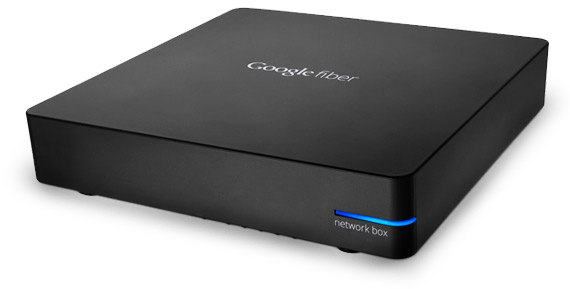
 Google Fiber, which is launching service in Kansas City, Kan. and Kansas City, Mo., will offer consumers a "free" broadband access services, offering downstream speeds up to 5 Mbps, with a 1Mbps upload speed, with free service guaranteed for at least seven years.
Users have to pay a one-time $300 "construction fee," optionally payable in 12 monthly payments of $25), plus applicable taxes and fees.
The "standard" symmetrical 1 Gbps upload and download service, with no data caps, requires a one-year contract and costs $70 a month, plus taxes and fees.
The "entertainment television and 1-Gbps service costs $120 a month, and includes a number of standard video channels. The nominal pricing of the video service is $50 a month. A number of the leading networks, including ESPN, Disney and Fox channels are unavailable at that price.
But Google Fiber at launch will be a "beta" in some ways, so programming line-ups might change, over time.
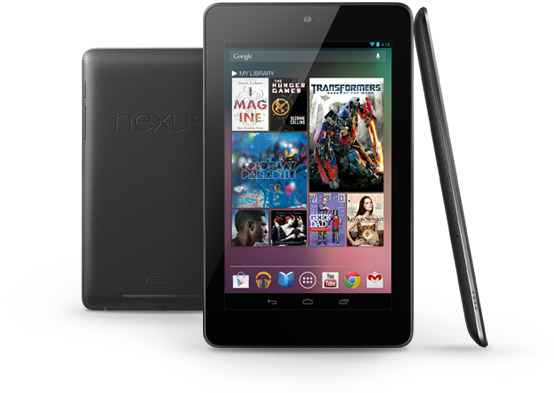
 The standard package also includes a free Nexus 7 tablet, though, at least in part because the tablet provides remote control features, as well as the ability to eamlessly watch on your tablet in other rooms of a customer's house.
Of course, users who want broadband access and television will have three different boxes, one for broadband, one for TV decoding, and a third to provide digital video recorder functions.
There are some ways in which the Google video service offers advantages. There is no separate box or fee for HDTV viewing, for example. Many service providers charge extra for DVR functionality as well. Google video service does not have those add-on fees.
- 3Net
- A&;E
- Action Weather
- Animal Planet
- Antenna TV
- Bandamax
- BET
- BET Gospel
- Biography Channel
- BlueHighways TV
- Bounce TV
- Bravo
- C-SPAN
- C-SPAN 2
- C-SPAN 3
- CBS Sports Network
- Centric
- Chiller
- cloo
- CMT
- CMT Pure Country
- CNBC
- CNBC World
- Comedy Central
- Cooking Channel
- Create
- Crime & Investigation Network
- Current TV
- De Pelicula
- De Pelicula Clasico
- Destination America
- Discovery
- Discovery en Espanol
- Discovery Familia
- Discovery Fit & Health
- DIY
- E! Entertainment
- Encore
- Encore Action
- Encore Drama
- Encore Espanol
- Encore Family
- Encore Love
- Encore Suspense
- Encore Westerns
- Flix
- Food Network
- FOROTv
- G4
- GAC
- Galavision
- Game Show Network
- Golf Channel
- H2
- Hallmark Channel
- Hallmark Movie Channel
- Halogen
- HGTV
- History
- IndiePlex
- INSP
- Investigation Discovery
- ION Life
- KCPT (PBS)
- KCTV 5 (CBS)
- KCWE 29 (CW)
- KMBC 9 (ABC)
- KMCI 38
- KPXE 50 (ION)
- KSHB 41 (NBC)
- KSMO 62
- KUKC 48 (Univision)
- La Familia Cosmovision
- Lifetime
- Lifetime Move Network
- Lifetime Real Women
- Live Well
- LOGO
- MeTV
- MGM
- Military Channel
- Military History
- MLB Network
- MoviePlex
- MSNBC
- MTV
- MTV Hits
- MTV Jams
- MTV tr3s
- MTV2
- MTVU
- mun2
- NASA
- NBC Sports Network
- NFL
- NFL Redzone
- NHL
- Nick 2
- Nick Jr.
- Nickelodeon
- Nicktoons
- Olympics Channel 1
- Olympics Channel 2
- Outdoor Channel
- OWN
- Oxygen
- Palladia
- PBS Encore
- PBS Kids Sprout
- qubo
- QVC
- REELZChannel
- RetroPlex
- Ritmoson Latino
- Science channel
- Sho2
- Showtime
- Showtime Beyond
- Showtime Extreme
- Showtime Family Zone
- Showtime Next
- Showtime Showcase
- Showtime Women
- Smithsonian
- Spike TV
- Sportsman Channel
- Starz
- Starz Cinema
- Starz Comedy
- Starz Edge
- Starz in Black
- Starz Kids and Family
- Style!
- SyFy
- TBN Enlace
- Teen Nick
- Telefutura
- Telehit
- Telemundo
- Tennis Channel
- The History en Espanol
- The Hub
- This TV
- TLC
- TMC Extra
- TMC: The Movie Channel
- Travel Channel
- TV Land
- TVG
- Universal
- Univision Deportes
- Univision tlnovelas
- USA Network
- VH1
- VH1 Classic
- VH1 Soul
- WDAF 4 (FOX)
- WealthTV
- Weather channel
- WGN
- Youtoo TV
Gary Kim was cited as a global "Power Mobile Influencer" by Forbes, ranked second in the world for coverage of the mobile business, and as a "top 10" telecom analyst. He is a member of Mensa, the international organization for people with IQs in the top two percent.
Mobile Tops Consumer Spending for Technology
Consumer spending on mobile products tops all consumer categories in 2012, according to analysts at Gartner, who point out that "the three largest segments of the consumer technology market are, and will continue to be, mobile services, mobile phones and entertainment services," according to Amanda Sabia, principal research analyst at Gartner.
Mobile services are expected to generate 37 percent of total worldwide consumer technology spending in 2012, $0.8 trillion, rising to almost $1 trillion by 2016.
Mobile phones will account for 10 percent of total spending in 2012, about $222 billion, rising to almost $300 billion by 2016.
Similarly, entertainment services including cable, satellite, IPTV and online gaming, will account for 10 percent of total consumer spending on technology products and services in 2012, at $210 billion, rising to almost $290 billion in 2016.
Gartner predicts that consumer spending on mobile apps stores and content will rise from $18 billion in 2012 to $61 billion by 2016, and that spending on e-text content (e-books, online news, magazines and information services) will rise from $5 billion in 2012 to $16 billion by 2016.
Consumers will spend $2.1 trillion worldwide on digital information and entertainment products and services in 2012, according to Gartner, Inc. This amounts to a $114 billion global increase compared with 2011, and spending will continue to grow at a faster rate than in the past, at around $130 billion a year, to reach $2.7 trillion by the end of 2016.
The $2.1 trillion consists of what the consumers will spend on mobile phones, computing and entertainment, media and other smart devices, the services that are required to make these devices connected to the appropriate network, and software and media content that are consumed via these devices.
Mobile services are expected to generate 37 percent of total worldwide consumer technology spending in 2012, $0.8 trillion, rising to almost $1 trillion by 2016.
Mobile phones will account for 10 percent of total spending in 2012, about $222 billion, rising to almost $300 billion by 2016.
Similarly, entertainment services including cable, satellite, IPTV and online gaming, will account for 10 percent of total consumer spending on technology products and services in 2012, at $210 billion, rising to almost $290 billion in 2016.
Gartner predicts that consumer spending on mobile apps stores and content will rise from $18 billion in 2012 to $61 billion by 2016, and that spending on e-text content (e-books, online news, magazines and information services) will rise from $5 billion in 2012 to $16 billion by 2016.
Consumers will spend $2.1 trillion worldwide on digital information and entertainment products and services in 2012, according to Gartner, Inc. This amounts to a $114 billion global increase compared with 2011, and spending will continue to grow at a faster rate than in the past, at around $130 billion a year, to reach $2.7 trillion by the end of 2016.
The $2.1 trillion consists of what the consumers will spend on mobile phones, computing and entertainment, media and other smart devices, the services that are required to make these devices connected to the appropriate network, and software and media content that are consumed via these devices.
Gary Kim was cited as a global "Power Mobile Influencer" by Forbes, ranked second in the world for coverage of the mobile business, and as a "top 10" telecom analyst. He is a member of Mensa, the international organization for people with IQs in the top two percent.
Subscribe to:
Posts (Atom)
Calls for AI Safety Ironically Benefit Politicians, Investors, Model Developers
Perhaps oddly, there now is a symmetry of interests for U.S. frontier-model developers, the financial community and politicians to call for ...

-
We have all repeatedly seen comparisons of equity value of hyperscale app providers compared to the value of connectivity providers, which s...
-
It really is surprising how often a Pareto distribution--the “80/20 rule--appears in business life, or in life, generally. Basically, the...
-
Financial analysts typically express concern when any firm’s customer base is too concentrated. Consider that, In 2024, CoreWeave’s top two ...

