Google revealed yesterday that its mobile business is now generating revenue at a run rate of $8 billion a year. If you assume Google's share of app revenue is roughly 30 percent of gross, that implies developers collectively are earning roughly $26.7 billion in revenue.
This is up from the US$2.5 billion figure given a year ago, but also now includes sales generated from Android’s Google Play: store as well as mobile advertising income.
“This time last year, I announced that our run-rate for mobile advertising hit US$2.5 billion. That seemed like a pretty big number even for Google. But now we have built up additional mobile revenue from users paying for content and apps in Google Play,” explained Google CEO Larry Page.
Monday, October 22, 2012
Google Generating $8 Billion from Google Play, Implies Developers Earning $26.7 Billion

 Gary Kim was cited as a global "Power Mobile Influencer" by Forbes, ranked second in the world for coverage of the mobile business, and as a "top 10" telecom analyst. He is a member of Mensa, the international organization for people with IQs in the top two percent.
AT&T Distributes "PayPal Here"
You might wonder why AT&T would do so, since it is not a formal partner of PayPal Here in other respects. In fact, the move is not directly part of the Isis mobile wallet service, either.
AT&T began selling the Square mobile point of sale dongle in August 2012 as well.
The obvious upside for AT&T is that Square and PayPal Here dongles only can be used on Apple iPhone and Android smart phones, and that the availability of the dongles helps AT&T sell some incremental number of devices and service plans, to customers who generally represent higher average revenue per account.
At the same time, the move better positions AT&T as a supplier of small business mobile solutions.
Gary Kim was cited as a global "Power Mobile Influencer" by Forbes, ranked second in the world for coverage of the mobile business, and as a "top 10" telecom analyst. He is a member of Mensa, the international organization for people with IQs in the top two percent.
Sunday, October 21, 2012
New Google, Apple, Microsoft Devices Coming Week of Oct. 23, 2012
Apple’s ‘iPad mini’ release on October 23 will be followed by Microsoft’s Windows Phone 8 introduction on October 29, will be matched by Google's introduction of a number new devices. The new Google devices include a 10-inch tablet "Mini."


Gary Kim was cited as a global "Power Mobile Influencer" by Forbes, ranked second in the world for coverage of the mobile business, and as a "top 10" telecom analyst. He is a member of Mensa, the international organization for people with IQs in the top two percent.
Google Results Show Mobile Danger to PC-Based Revenue Models
 Eric Jackson, founder and managing member of hedge fund Ironfire Capital, has argues that it is not impossible for Google to substantially fail in five to eight years, as advertising shifts to mobile apps. There are two angles to the looming danger.
First, people now are "finding things" using apps other than search. That threatens the search advertising business that underpins Google's current success. The other angle is that attention and advertising revenues already are starting to shift to mobile formats, as opposed to "PC-based" online venues.
Jackson's forecast might be a bit more aggressive than some others think, as search continues to grow, as a percentage of total online ads. But there is widespread thinking that mobile is where the growth will occur.
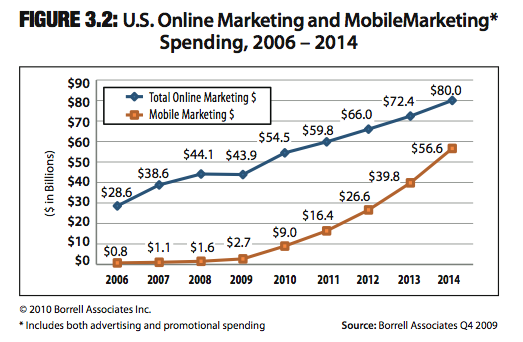
According to the company’s earnings report, Google's profit losses in the quarter were caused by flagging ads revenue, in which the amount paid by advertisers to Google’s click-per-click has decreased by 15 percent, earnings report suggests.
On the other hand, some might counter, Google is making a transition rather well. About half of all U.S. mobile ad spending goes toward search ads, more than the roughly 47 percent of total digital spending in Web search, according to eMarketer Inc.
Google takes a 95 percent share of mobile-search revenue in the U.S., estimates eMarketer.
Gary Kim was cited as a global "Power Mobile Influencer" by Forbes, ranked second in the world for coverage of the mobile business, and as a "top 10" telecom analyst. He is a member of Mensa, the international organization for people with IQs in the top two percent.
Saturday, October 20, 2012
U.S. Consumers Pay More for LTE, But What Does it Mean?
U.S consumers pay more for their Long Term Evolution service than consumers in other markets, a study by the GSM Association shows.
LTE data is pricier in the United States than in Europe, according to a recent report from London-based GSM Association subsidiary Wireless Intelligence.
On average, Europeans pay about $2.50 for 1 gigabyte of data downloaded on an LTE, or Long Term Evolution network, according to Wireless Intelligence.
In contrast, Verizon Wireless charges $7.50 per gigabyte in an unlimited shared data plan and $5.50 per gigabyte in a regular, data-only plan.
Analyst Roger Entner argues that scarce spectrum explains the pricing differences.
LTE data is pricier in the United States than in Europe, according to a recent report from London-based GSM Association subsidiary Wireless Intelligence.
On average, Europeans pay about $2.50 for 1 gigabyte of data downloaded on an LTE, or Long Term Evolution network, according to Wireless Intelligence.
In contrast, Verizon Wireless charges $7.50 per gigabyte in an unlimited shared data plan and $5.50 per gigabyte in a regular, data-only plan.
Analyst Roger Entner argues that scarce spectrum explains the pricing differences.
| USA | Germany | France | Spain | UK | Italy | South Korea | |
| Subscribers in millions | 322.8 | 109.8 | 63.2 | 57.3 | 75.7 | 91.2 | 51.8 |
| Spectrum Assigned in MHz | 409.5* | 615 | 375 | 625 | 375 | 270 | 270 |
| Potentially Usable Spectrum in Pipeline in MHz | 50 | Recently auctioned 350 | 250 | 59.6 and recently auctioned 250 | 310 | 250 | 120 |
| MHz/million subscribers | 1.3 | 5.6 | 5.9 | 10.9 | 4.9 | 3.0 | 5.2 |
| * Figure includes AWS‐1, 700 MHz spectrum not yet in use and 55.5 MHz of spectrum at 2.5GHz | |||||||
Source: 4G Americas, Bank of America Merrill Lynch, regulatory and company websites, press reports and Recon Analytics
Others might argue that mandatory wholesale policies account for the retail price differences.
Even if you think U.S. wireless data prices are “too high” today, the competitive process should work, over time, as it has with other services.
Consider the competition for wireless voice services, which has played out over a decade.
According to Merrill Lynch, the United States enjoyed a lower price for voice services on a per-minute-of-use basis ($0.03) than France ($0.10), Germany ($0.08), or the UK ($0.08) in the fourth quarter of 2011.
Still, as a rule, retail service prices are priced in some direct relationship to costs of creating the underlying networks. And costs are higher in the United States.
Others have argued that "lack of competition" has in the past accounted for higher prices.
Others might argue that mandatory wholesale policies account for the retail price differences.
Even if you think U.S. wireless data prices are “too high” today, the competitive process should work, over time, as it has with other services.
Consider the competition for wireless voice services, which has played out over a decade.
According to Merrill Lynch, the United States enjoyed a lower price for voice services on a per-minute-of-use basis ($0.03) than France ($0.10), Germany ($0.08), or the UK ($0.08) in the fourth quarter of 2011.
Still, as a rule, retail service prices are priced in some direct relationship to costs of creating the underlying networks. And costs are higher in the United States.
Others have argued that "lack of competition" has in the past accounted for higher prices.
Broadband Service Speed and Price (High Tier)
Country
|
Downstream
|
Upstream
|
Price
|
Canada[3]
|
25
|
7
|
$67
|
Denmark[4]
|
40
|
2
|
$72
|
Finland[5]
|
24
|
1
|
$67
|
Hong Kong[6]
|
100
|
Unlisted
|
$38
|
Japan[7]
|
200
|
100
|
$60
|
South Korea[8]
|
100
|
Unlisted
|
$29
|
Sweden[9]
|
100
|
100
|
$46
|
Taiwan[10]
|
100
|
5
|
$37
|
U.K.[11]
|
50
|
Unlisted
|
$57
|
United States[12]
|
50
|
20
|
$145
|
Some have noted that in 2010, for example, he United States was the most expensive of the ten countries surveyed for high tier broadband service.
The broadband services available internationally include prices as low as $26 a month for a 100 Mbps connection in South Korea and speeds as fast as a 200 Mbps connection in Japan for $60 a month.
While broadband service with speeds of 100 Mbps is available in Taiwan for $37 a month, $38 a month in Hong Kong, and $46 a month in Sweden, broadband is half the speed for over three times the price in the United States, where 50 Mbps service costs $145 a month.
Other countries surveyed joining the U.S. in the slower half of high tier speeds cost less than half the price
Country
|
Downstream
|
Upstream
|
Price
|
Canada[13]
|
2
|
800 Kbps
|
$31
|
Denmark[14]
|
2
|
512 Kbps
|
$30
|
Finland[15]
|
1
|
512 Kbps
|
$36
|
Hong Kong[16]
|
1.5
|
Unlisted
|
$13
|
Japan[17]
|
1
|
512 Kbps
|
$34
|
South Korea[18]
|
8
|
640 Kbps
|
$26
|
Sweden[19]
|
1
|
1
|
$19
|
Taiwan[20]
|
3
|
768 Kbps
|
$14
|
U.K.[21]
|
10
|
Unlisted
|
$30
|
United States[22]
|
1
|
1
|
$35
|
When comparing the low tier broadband service offerings of other countries the United States has in the past faired slightly better with prices closer to the middle of the pack but often for slower speeds.
The United States was among the most expensive of the countries surveyed when comparing the price per megabit for low tier broadband service.
All of those arguments have some merit. Still, one still has to account for the relative level of retail prices in markets around the world, as well, as well as the "cost" of products as a percentage of income or discretionary income, for example.
The absolute level of prices across different countries might be less significant than the relative cost of communications goods in terms of consumer purchasing power.
In other words, one country might have costs per megabyte that are twice as high as another country, but average income might also be twice.
Finally, retail pricing might also reflect the underlying cost of construction or operations, inlcludin such matters as government subsidies or funding.
Gary Kim was cited as a global "Power Mobile Influencer" by Forbes, ranked second in the world for coverage of the mobile business, and as a "top 10" telecom analyst. He is a member of Mensa, the international organization for people with IQs in the top two percent.
Friday, October 19, 2012
"The End of Windows?"
Salesforce CEO Marc Benioff quips that Microsoft’s Windows 8 operating system will be “the end of Windows” and that “Windows is irrelevant.” Hyperbole aside, there is a clear shift of consumer interest toward tablet devices for what we used to call "computing."
Tablets aren't likely to displace PCs for many content creation and work tasks anytime soon, though.


Tablets aren't likely to displace PCs for many content creation and work tasks anytime soon, though.
Gary Kim was cited as a global "Power Mobile Influencer" by Forbes, ranked second in the world for coverage of the mobile business, and as a "top 10" telecom analyst. He is a member of Mensa, the international organization for people with IQs in the top two percent.
Windows Phone 8 Phones Could be Delayed On Verizon Network
Windows Phone 8 on the Verizon Wireless network could be delayed or could even be canceled, according to Daily Mobile, because Verizon Wireless wants remote device management and Microsoft seems not to want to do so.
it seems odd for matters to get this far without being resolved, but that's the rumor.

it seems odd for matters to get this far without being resolved, but that's the rumor.
Gary Kim was cited as a global "Power Mobile Influencer" by Forbes, ranked second in the world for coverage of the mobile business, and as a "top 10" telecom analyst. He is a member of Mensa, the international organization for people with IQs in the top two percent.
Now "Cows Can Text"
 "Cows can text," thanks to machine-to-machine communication tools supplied by Deutsche Telekom and sensors such as the Vel'Phone and HeatPhone solutions supplied by French monitoring solutions experts MEDRIA Technologies.
The application notifies farmers when calving begins or when a cow is on heat and ready for insemination.
Deutsche Telekom and MEDRIA have formed a partnership and agreed to cooperate in equipping 5,000 farms around Europe with the application and with Telekom SIM cards.
Gary Kim was cited as a global "Power Mobile Influencer" by Forbes, ranked second in the world for coverage of the mobile business, and as a "top 10" telecom analyst. He is a member of Mensa, the international organization for people with IQs in the top two percent.
Sprint Rules Out Use of Huawei
Sprint Nextel CEO Dan Hesse says Sprint Nextel would avoid using network equipment made by Huawei, in deference to concerns expressed by some in the U.S. Congress about potential security issues.
"Sprint is a big supplier to the U.S. government and that aside, I wouldn't put in any equipment that would raise any security concerns," Hesse said.
As the Sprint/Softbank deal moves forward in the regulatory approval process, some might suggest that Softbank's use of Huawei as an equipment supplier could draw objections. Sprint obviously will want to avoid that potential issue.
"Sprint is a big supplier to the U.S. government and that aside, I wouldn't put in any equipment that would raise any security concerns," Hesse said.
As the Sprint/Softbank deal moves forward in the regulatory approval process, some might suggest that Softbank's use of Huawei as an equipment supplier could draw objections. Sprint obviously will want to avoid that potential issue.
Gary Kim was cited as a global "Power Mobile Influencer" by Forbes, ranked second in the world for coverage of the mobile business, and as a "top 10" telecom analyst. He is a member of Mensa, the international organization for people with IQs in the top two percent.
Are Price Controls Good for Broadband?
The Federal Communications Commission recently has started looking at re-regulating special access tariffs, possibly leading to new price controls for those products. To be sure, buyers of special access might like that. Sellers will not. To be sure, special access is a business-to-business product. But some would say pressures have been mounting in the consumer services arena as well.
Objections to usage caps and metered consumption provide examples of what some call . “inherently anti-consumer” or “anticompetitive” practices.
Actually, “by aligning costs more closely with use, usage-based pricing may effectively shift more network costs onto those consumers who use the network the most,” argues Daniel A. Lyons in “The Impact of Data Caps and Other Forms of Usage-Based Pricing for Broadband Access,” Lyons, an assistant professor of law at Boston College Law School, argues that a return to price controls for communications would be monumentally misguided.
Data caps and usage-based pricing are forms of what economists refer to as “price discrimination, that term being used in an objective sense of “difference, not invidious difference.”
Price discrimination is a mainstay of the travel industry, where airlines and hotels know some potential customers will pay more, while some can be enticed to spend only if prices are lower. Price discrimination is the process of charging different prices to different customers.
At first blush, it sounds wrong. But it is really a concept at the heart of value-based pricing. For example, travellers who won’t endure an overnight Saturday stay are presumed to be travelling on business, charging the ticket to someone else, and therefore are less price-sensitive. So itineraries with Saturday stays are often much cheaper than those without.
Although viewed with suspicion by some policymakers and regulatory-minded academics and activists, price discrimination is widely recognized to improve consumer welfare by calibrating supply and demand, Lyons says.
Price-differentiated and prioritized services also are seen in prioritized shipping services, amusement park passes, and fuel and energy pricing. Economists agree that price discrimination represents a sensible way to calibrate supply and demand while ensuring the fixed costs of doing business get covered.
The Mercatus-published study argues that consumers benefit from such pricing because they have more options.
But service providers also gain more certainty about investment and service decisions. When such pricing practices become annoying to some consumers and they show a clear desire for alternatives, it sends a signal to rivals to offer a differentiated service.
With a high fixed cost problem to deal with, it is unsurprising that broadband providers have started experimenting with new pricing methods to balance the exploding demand for Internet services with the need to cover ongoing network investment.
“If we want to reap the benefits of new and innovative tech products, we must be prepared to accept price discrimination at least some of the time,” says researcher Eli Dourado of the Mercatus Center.
“There are products that are viable with price discrimination that are not viable without it—and if we ban price discrimination like some people thoughtlessly advocate, we won’t get them,” says Dourado.
This is precisely why experimentation with different pricing methods and business models must be allowed to continue if we hope to ensure ongoing investment in new networks and better services, under circumstances where the government simply cannot finance the networks.
Christopher Yoo argues that “private corporations cannot be expected to undertake such investments unless they have a reasonable prospect of recovering their upfront costs from consumers who are using the increased bandwidth and other enhancements to the existing network.”
Yoo points out that price discrimination can help solve this problem, primarily by ensuring that heavier users cover the costs they impose on networks.
Sandvine estimated last year that the heaviest one percent of downstream users account for 15.2 percent of total North American fixed downstream broadband traffic, while the heaviest one percent of upstream users account for almost 43 percent of total upstream use. By comparison, the lightest 60 percent of consumers account for only 10% of total North American fixed broadband traffic.
About one percent of mobile data users consume 26.8 percent of upstream usage, while consuming 21.3 percent of downstream mobile traffic. By comparison, the bottom 80 percent of users account for only 10 percent of total traffic combined.
By pricing those users differently than others, costs can be more fairly covered and demand balanced over time. In turn, says Lyons, “usage-based pricing may also make entry-level broadband access more affordable” since providers can offer lower rates to light or low-income users.
Objections to usage caps and metered consumption provide examples of what some call . “inherently anti-consumer” or “anticompetitive” practices.
Actually, “by aligning costs more closely with use, usage-based pricing may effectively shift more network costs onto those consumers who use the network the most,” argues Daniel A. Lyons in “The Impact of Data Caps and Other Forms of Usage-Based Pricing for Broadband Access,” Lyons, an assistant professor of law at Boston College Law School, argues that a return to price controls for communications would be monumentally misguided.
Data caps and usage-based pricing are forms of what economists refer to as “price discrimination, that term being used in an objective sense of “difference, not invidious difference.”
Price discrimination is a mainstay of the travel industry, where airlines and hotels know some potential customers will pay more, while some can be enticed to spend only if prices are lower. Price discrimination is the process of charging different prices to different customers.
At first blush, it sounds wrong. But it is really a concept at the heart of value-based pricing. For example, travellers who won’t endure an overnight Saturday stay are presumed to be travelling on business, charging the ticket to someone else, and therefore are less price-sensitive. So itineraries with Saturday stays are often much cheaper than those without.
Although viewed with suspicion by some policymakers and regulatory-minded academics and activists, price discrimination is widely recognized to improve consumer welfare by calibrating supply and demand, Lyons says.
Price-differentiated and prioritized services also are seen in prioritized shipping services, amusement park passes, and fuel and energy pricing. Economists agree that price discrimination represents a sensible way to calibrate supply and demand while ensuring the fixed costs of doing business get covered.
The Mercatus-published study argues that consumers benefit from such pricing because they have more options.
But service providers also gain more certainty about investment and service decisions. When such pricing practices become annoying to some consumers and they show a clear desire for alternatives, it sends a signal to rivals to offer a differentiated service.
With a high fixed cost problem to deal with, it is unsurprising that broadband providers have started experimenting with new pricing methods to balance the exploding demand for Internet services with the need to cover ongoing network investment.
“If we want to reap the benefits of new and innovative tech products, we must be prepared to accept price discrimination at least some of the time,” says researcher Eli Dourado of the Mercatus Center.
“There are products that are viable with price discrimination that are not viable without it—and if we ban price discrimination like some people thoughtlessly advocate, we won’t get them,” says Dourado.
This is precisely why experimentation with different pricing methods and business models must be allowed to continue if we hope to ensure ongoing investment in new networks and better services, under circumstances where the government simply cannot finance the networks.
Christopher Yoo argues that “private corporations cannot be expected to undertake such investments unless they have a reasonable prospect of recovering their upfront costs from consumers who are using the increased bandwidth and other enhancements to the existing network.”
Yoo points out that price discrimination can help solve this problem, primarily by ensuring that heavier users cover the costs they impose on networks.
Sandvine estimated last year that the heaviest one percent of downstream users account for 15.2 percent of total North American fixed downstream broadband traffic, while the heaviest one percent of upstream users account for almost 43 percent of total upstream use. By comparison, the lightest 60 percent of consumers account for only 10% of total North American fixed broadband traffic.
About one percent of mobile data users consume 26.8 percent of upstream usage, while consuming 21.3 percent of downstream mobile traffic. By comparison, the bottom 80 percent of users account for only 10 percent of total traffic combined.
By pricing those users differently than others, costs can be more fairly covered and demand balanced over time. In turn, says Lyons, “usage-based pricing may also make entry-level broadband access more affordable” since providers can offer lower rates to light or low-income users.
Gary Kim was cited as a global "Power Mobile Influencer" by Forbes, ranked second in the world for coverage of the mobile business, and as a "top 10" telecom analyst. He is a member of Mensa, the international organization for people with IQs in the top two percent.
Global Mobile Subs are 6.8 Billion, 5.9 Billion or 3.2 Billion, Depending on How You Count
In the fourth quarter of 2012, total mobile connections globally stood at 6.8 billion, including machine-to machine (M2M) accounts, or 5.9 billion excluding M2M and inactive SIM cards, according to GSMA Wireless Intelligence.
The role of users with multiple subscriber identification modules (SIMs) cannot be overestimated. Wireless Intelligence estimates that consumers use an average of 1.85 SIM cards each.
That suggests the actual number of mobile users (not "accounts”) actually is about 3.2 billion, not 6.8 billion or 5.9 billion, other methods of counting might suggest.
Global penetration based on total connections is set to exceed 100 per cent in 2013, with mobile subscriber penetration standing at only 45 per cent by the end of 2012, Wireless Intelligence says.
The study found that future mobile subscriber growth will be driven by demand among currently “unconnected” populations in developing countries, particularly those in rural areas, which the research estimates to be 1.8 billion people throughout the next five years.
By 2017, subscriber penetration in developed countries is set to have passed 80 per cent and growth in these markets is expected to slow. In contrast, subscriber penetration across developing economies is forecast to increase from 39 per cent in 2012 to 47 per cent in 2017, and will be the largest factor spurring the global growth of mobile over the next five years.
Europe has the highest mobile penetration in the world, , with countries such as Denmark, Finland, Germany and the UK already averaging close to 90 per cent subscriber penetration.
Africa currently has the lowest penetration, with only one out of three people in the region subscribing to mobile services in 2012, a figure that is expected to increase to 40 per cent in 2017. In Asia, subscriber penetration stands 40 per cent, and is expected to grow to 49 per cent by 2017.
In China, the world’s largest mobile market, subscriber penetration will grow from 43 per cent to 52 per cent over the next five years.
Wireless Intelligence predicts that the mobile industry will reach the five billion users milestone over the next decade as network expansion continues to progress in developing markets and as people in rural areas, many of whom currently live on less than $2 a day, subscribe to mobile services.
In India, according to figures from the World Bank and Telecom Regulatory Authority of India (TRAI), approximately half a billion people in the country’s rural areas are unconnected to mobile networks, with rural mobile penetration of 39 percent.
The role of users with multiple subscriber identification modules (SIMs) cannot be overestimated. Wireless Intelligence estimates that consumers use an average of 1.85 SIM cards each.
That suggests the actual number of mobile users (not "accounts”) actually is about 3.2 billion, not 6.8 billion or 5.9 billion, other methods of counting might suggest.
Global penetration based on total connections is set to exceed 100 per cent in 2013, with mobile subscriber penetration standing at only 45 per cent by the end of 2012, Wireless Intelligence says.
The study found that future mobile subscriber growth will be driven by demand among currently “unconnected” populations in developing countries, particularly those in rural areas, which the research estimates to be 1.8 billion people throughout the next five years.
By 2017, subscriber penetration in developed countries is set to have passed 80 per cent and growth in these markets is expected to slow. In contrast, subscriber penetration across developing economies is forecast to increase from 39 per cent in 2012 to 47 per cent in 2017, and will be the largest factor spurring the global growth of mobile over the next five years.
Europe has the highest mobile penetration in the world, , with countries such as Denmark, Finland, Germany and the UK already averaging close to 90 per cent subscriber penetration.
Africa currently has the lowest penetration, with only one out of three people in the region subscribing to mobile services in 2012, a figure that is expected to increase to 40 per cent in 2017. In Asia, subscriber penetration stands 40 per cent, and is expected to grow to 49 per cent by 2017.
In China, the world’s largest mobile market, subscriber penetration will grow from 43 per cent to 52 per cent over the next five years.
Wireless Intelligence predicts that the mobile industry will reach the five billion users milestone over the next decade as network expansion continues to progress in developing markets and as people in rural areas, many of whom currently live on less than $2 a day, subscribe to mobile services.
In India, according to figures from the World Bank and Telecom Regulatory Authority of India (TRAI), approximately half a billion people in the country’s rural areas are unconnected to mobile networks, with rural mobile penetration of 39 percent.
Gary Kim was cited as a global "Power Mobile Influencer" by Forbes, ranked second in the world for coverage of the mobile business, and as a "top 10" telecom analyst. He is a member of Mensa, the international organization for people with IQs in the top two percent.
"Next-Generation"Pricing Models?
Any number of observers have speculated or argued for "innovative" pricing models for broadband access services, with some arguing for "value-based" pricing. Some might argue mobile service providers are using Long Term Evolution to shift in that direction. Others might not agree.
Based on a survey of 65 mobile operators offerng LTE services, about half "have used the deployment of LTE as an opportunity to introduce a new form of pricing for mobile broadband services."
The new strategy, which supersedes the earlier unlimited data model, uses download/upload speeds as well as data allowances to differentiate on price, says Wireless Intelligence.
The speed-based tariffs are most common in Europe, where 90 percent of mobile service providers surveyed offer them. These tariffs are less popular across the Middle East, Asia Pacific and Africa, and least prevalent in North America and Latin America.
It might be one thing to price access differently, based on speed or size of consumption allowance. It might be quit another matter to craft plans that are more closely tied to the value of the applications people are using, the value of those activities, the time of day or setting where apps are used.
That service providers have not done more in those areas is partly explained by the challenges of tracking usage and billing based on that usage. But some observers might not think it is quite so "innovative" to bill based on access speed or size of a consumption quota.
Basically, billing by volume (speed essentially is a volume metric) is not different from the ways electricity or water are billed. Calling that "innovative" is stretching matters, one might argue.
Based on a survey of 65 mobile operators offerng LTE services, about half "have used the deployment of LTE as an opportunity to introduce a new form of pricing for mobile broadband services."
The new strategy, which supersedes the earlier unlimited data model, uses download/upload speeds as well as data allowances to differentiate on price, says Wireless Intelligence.
The speed-based tariffs are most common in Europe, where 90 percent of mobile service providers surveyed offer them. These tariffs are less popular across the Middle East, Asia Pacific and Africa, and least prevalent in North America and Latin America.
It might be one thing to price access differently, based on speed or size of consumption allowance. It might be quit another matter to craft plans that are more closely tied to the value of the applications people are using, the value of those activities, the time of day or setting where apps are used.
That service providers have not done more in those areas is partly explained by the challenges of tracking usage and billing based on that usage. But some observers might not think it is quite so "innovative" to bill based on access speed or size of a consumption quota.
Basically, billing by volume (speed essentially is a volume metric) is not different from the ways electricity or water are billed. Calling that "innovative" is stretching matters, one might argue.
Gary Kim was cited as a global "Power Mobile Influencer" by Forbes, ranked second in the world for coverage of the mobile business, and as a "top 10" telecom analyst. He is a member of Mensa, the international organization for people with IQs in the top two percent.
Thursday, October 18, 2012
Bank of America Gets into Deals Business
Some of us would argue that U.S. banks really cannot make incremental revenue from retail mobile payments, for the same reason one could have argued telcos will have a tough time making incremental revenue from VoIP. For starters, banks and telcos already make money from retail payments and voice, so a new way to pay or make calls cannibalizes the older ways of doing things.
Nor can banks or telcos stop supporting customers using the older tools. They have to add additional channels to support what they already have been doing, without gaining any new revenue. In fact, VoIP typically produces less revenue, and retail payments will follow that same path, over time.
But there are other angles to mobile commerce, in the marketing services and advertising areas, for example. That, in fact, is precisely the tack Google Wallet and Isis now are taking, focusing on marketing and promotion revenues rather than transaction fees.
Though it might initially sound far fetched, some of us also have argued that banks will get into advertising and marketing services, because that is a business which could potentially represent incremental revenue, rather than simply another channel to support.
Now Bank of America proves the point. Bank of America is launching a deals service. The new service, called BankAmeriDeals, will offer discounts awarded in the form of cash payments once a month.
Customers need not sign up for emailed coupons or check a separate web site, as bargain hunters do with offerings from Groupon Inc and others.
When customers log in to Bank of America's online banking site, they will see discount offers -- a percentage off the amount spent at a retailer -- embedded in their statement and under a separate tab. They can accept the offers they want to use.
When customers make their purchases, they pay full price, but at the beginning of the next month they receive cash back in their accounts. Customers can only use Bank of America debit or credit cards to trigger the savings.
The bank may end up holding money for a period of time in the settlement process, but making money off that float time is not part of the program's "core strategy," Godsman said.
Customers can choose to receive alerts about offers and how much money they have saved. They also can opt out of the service.
BankAmeriDeals differs from coupon services offered by other companies because the discounts are based on past spending habits at specific stores and do not require customers to print out coupons, Godsman said.
The bank is not disclosing participating retailers but said they include large discount department stores, fast food chains and local restaurants.
Nor can banks or telcos stop supporting customers using the older tools. They have to add additional channels to support what they already have been doing, without gaining any new revenue. In fact, VoIP typically produces less revenue, and retail payments will follow that same path, over time.
But there are other angles to mobile commerce, in the marketing services and advertising areas, for example. That, in fact, is precisely the tack Google Wallet and Isis now are taking, focusing on marketing and promotion revenues rather than transaction fees.
Though it might initially sound far fetched, some of us also have argued that banks will get into advertising and marketing services, because that is a business which could potentially represent incremental revenue, rather than simply another channel to support.
Now Bank of America proves the point. Bank of America is launching a deals service. The new service, called BankAmeriDeals, will offer discounts awarded in the form of cash payments once a month.
Customers need not sign up for emailed coupons or check a separate web site, as bargain hunters do with offerings from Groupon Inc and others.
When customers log in to Bank of America's online banking site, they will see discount offers -- a percentage off the amount spent at a retailer -- embedded in their statement and under a separate tab. They can accept the offers they want to use.
When customers make their purchases, they pay full price, but at the beginning of the next month they receive cash back in their accounts. Customers can only use Bank of America debit or credit cards to trigger the savings.
The bank may end up holding money for a period of time in the settlement process, but making money off that float time is not part of the program's "core strategy," Godsman said.
Customers can choose to receive alerts about offers and how much money they have saved. They also can opt out of the service.
BankAmeriDeals differs from coupon services offered by other companies because the discounts are based on past spending habits at specific stores and do not require customers to print out coupons, Godsman said.
The bank is not disclosing participating retailers but said they include large discount department stores, fast food chains and local restaurants.
Gary Kim was cited as a global "Power Mobile Influencer" by Forbes, ranked second in the world for coverage of the mobile business, and as a "top 10" telecom analyst. He is a member of Mensa, the international organization for people with IQs in the top two percent.
Sparring Over Softbank, Sprint, Clearwire Begins
AT&T is urging regulators to take a close look at Sprint's recent deals with Softbank and Clearwire, a normal part of business lobbying when a competitor looks to be gaining some advantage in the market.
AT&T is making a point about a "foreign company" owning a large chunk of the nation's airwaves. Most observers that will not be a factor in regulatory thinking, as Germany's Deutsche Telekom and the United Kingdom's Vodafone already have a large U.S. presence, and therefore "ownership" of U.S. airwaves.
AT&T is making a point about a "foreign company" owning a large chunk of the nation's airwaves. Most observers that will not be a factor in regulatory thinking, as Germany's Deutsche Telekom and the United Kingdom's Vodafone already have a large U.S. presence, and therefore "ownership" of U.S. airwaves.
Gary Kim was cited as a global "Power Mobile Influencer" by Forbes, ranked second in the world for coverage of the mobile business, and as a "top 10" telecom analyst. He is a member of Mensa, the international organization for people with IQs in the top two percent.
1/3 of Verizon PostPaid Net Adds Were "Internet" Devices
Among the 1.5 million net adds Verizon Wireless got in the third quarter of 2012, about a third were "Internet devices," including USB modems, jetpacks and postpaid tablets, Verizon says. Roughly 95 percent of Verizon's postpaid internet device activations were 4G LTE.
Most observers will attribute that performance to the Verizon "Share Everything" plans, which Verizon says now have been adopted by about 13 percent of its postpaid customer base.
Most observers will attribute that performance to the Verizon "Share Everything" plans, which Verizon says now have been adopted by about 13 percent of its postpaid customer base.
Gary Kim was cited as a global "Power Mobile Influencer" by Forbes, ranked second in the world for coverage of the mobile business, and as a "top 10" telecom analyst. He is a member of Mensa, the international organization for people with IQs in the top two percent.
Subscribe to:
Posts (Atom)
-
We have all repeatedly seen comparisons of equity value of hyperscale app providers compared to the value of connectivity providers, which s...
-
It really is surprising how often a Pareto distribution--the “80/20 rule--appears in business life, or in life, generally. Basically, the...
-
Financial analysts typically express concern when any firm’s customer base is too concentrated. Consider that, In 2024, CoreWeave’s top two ...

