Thursday, July 25, 2013

Smart Phones and Tablets Lead Consumer Electronics Sales

Mobile connected devices, including smart phones and tablets, continue to drive consumer electronics (CE) industry sales, according to the Consumer Electronics Association, representing 32 percent of all revenue in the consumer electronics industry in 2013.

Overall consumer electronics industry revenue will hold steady relative to 2012 levels, growing an estimated 0.2 percent in the United States in 2013.

Once upon a time, consumer electronics sales were lead by TVs and TV-related appliances. More recently, sales of personal computers took the lead.

But if you want to know why people in the mobile industry now attend the Consumer Electronics Show, it is because mobile devices now lead sales.

New categories such as fitness technology, desktop 3D printers and Bluetooth/airplay-enabled speakers are among the product categories CEA now tracks.

Smart phones are expected to maintain their position as the leading revenue driver for the industry in 2013, with unit shipments projected to reach 127 million in 2013.

Smart phone revenues are expected to surpass $37.8 billion in 2013, a 14 percent increase from 2012 levels.

Tablet computing will continue double-digit growth in 2013, with unit sales of tablets projected to reach 87.1 million in 2013 and revenues expected to surpass $27.3 billion.

Separately, researchers at Parks Associates estimate that 48 percent of U.S. broadband households own at least one tablet.

Tablet ownership increased by nearly 33 percent in one year, with 22 percent of households reporting a tablet purchase. About seven percent of households bought an e-reader in 2012, down from about nine percent of households in 2011.

Tablet purchases surpassed desktop purchases for the first time in 2012 and will match or exceed laptop purchases in 2013.


VDSL2 Gets Traction

VDSL2 vectoring is rapidly taking ground in the race to provide added bandwidth to meet the broadband needs of consumers. This was the conclusion reached at the TNO DSL Seminar held last month in Scheveningen in the Netherlands.

But service providers differ about their own plans to deploy G.fast or “fiber to the distribution point” (FTTdp) as prefered methods of upgrading all-copper networks.


How Much Traffic Will Carrier Wi-Fi Offload from the Mobile Network?

Mobile service provider use of Wi-Fi for data offload will  grow at a 215 percent compound annual growth rate from 2012 to 2017.

User-driven Wi-Fi offload, using at-home, at-work or other connections, will also grow at a significant growth rate of 49 percent.

Perhaps significantly, iGR predicts Wi-Fi-only connections from devices such as tablets, laptops, ereaders, and handheld gaming consoles will decline. That represents a predicted shift to more mobile carrier connections, something that already is seen as users shift to shared access data plans that allow a single account to use a shared bucket of data usage, across all devices on the account.

mostly driven by user preference for at-home, at-work or other Wi-Fi connections not directly provided by a service provider.

But the amount of Wi-Fi offload provided directly by a service provider, in high traffic locations, will grow as well, according to researchers at iGR.

Analysts at iGR estimate that in 2012, Wi-Fi-only devices consumed a total of about 0.38 gigabytes (380 Mb) each month, per active device. The analysts say this form of access is the smallest of the Wi-Fi offload usage scenarios.

User-driven Wi-Fi offload, where a subscriber or end user chooses to use a Wi-Fi connection outside the home or office in place of a mobile broadband connection, represented in 2012 about 0.41 GB (410 Mb) per month per active device of usage. This is the predominant form of Wi-Fi offload at the moment.

But carriers also are shifting to use of their own Wi-Fi offload services, directly shifting user access off a mobile network and onto a local Wi-Fi connection, either outdoors or indoors.

Analysts at iGR estimate that in 2012, a total of about 0.04 GB (40 Mb) per month per active device was offloaded to carrier Wi-Fi.

Some service providers, notably NTT, are less sanguine about such offload potential. In part, that is because high density in many Japanese urban areas also means high signal interference, which limits the effectiveness of Wi-Fi hotspots for traffic offload.

Wednesday, July 24, 2013

Chromecast: Internet TV is Not About the Display

"Internet TVs" sometimes are thought of as being about the display device. That is one reason many believe Apple is working on, or should be working on, some sort of receiver, otherwise known as a "TV."

In truth, Internet TVs might be more about the appliance that allows the display to show Internet-accessed content. 

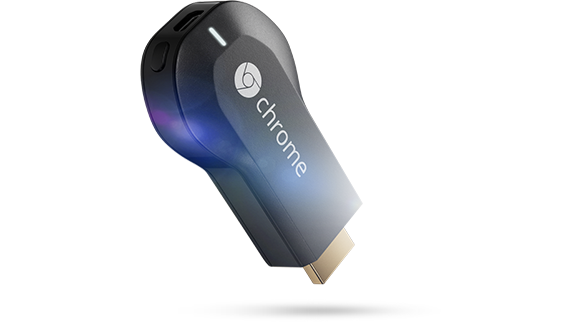
Google's Chromecast is a $35 plug in that allows Internet-compatible TVs to show content accessed by a local Wi-Fi network connected to the Internet.

It requires an HDMI port, and also that the user has Wi-Fi communications with the Internet, and a CPU that can access the Internet. 

Essentially, a user orders up a web page and then the content is delivered over the Internet connection directly to the Chromecast. 

To be sure, "receiver" or "processing" functions traditionally have been integrated with displays. That's what a "TV" has been. Notebooks, smart phones, iPods and other devices come integrated with screens. 

Cable set-tops traditionally have substituted their own tuners for the tuners built into the TVs. 

But desktop PCs traditionally have been sourced unbundled from the display. Some might argue that is the way Internet TV will become popular. 

In other words, the display arguably is just a dumb component, where the intelligence is supplied by the decoder device. YouTube content, for example, though controlled by some other CPU in the home, is sent directly to the display through the Chromecast device. 

Chromecast YouTube diagram

U.S. Average Internet Access Speed Grows 69% Last 12 Months

It always is hard for regulators to keep up with the pace of change in the Internet and even telecom ecosystems. Not so long ago, the Federal Communications Commission decided to base its broadband measurements on speeds of 4 Mbps. 

To be sure, there is a difference between a ceiling and a floor, so regulatory officials recently have been talking about how to get to 100 Mbps as a goal. 

Already, though, about 25 percent of U.S. locations are connecting at speeds higher than 10 Mbps, Akamai says, while peak rates are above 36 Mbps. 

Year over year, average bandwidth is increasing 69 percent, Akamai also says. 


Yuilop Calling/Texting App Launches in U.S.

Yuilop, a cloud-based communications app popular in Europe, has launched in the U.S. market, offering unlimited, national calls and text messages in the domestic U.S. market, and no incremental charge international calling (you need to earn credits to do so), even to friends and family who don’t have the app.

Yuilop’s business model based on use of a virtual currency that is earned when users talk to to non-Yuilop users  or convince them to join the network. Credits also are earned when talking with another Yuilop user, using the app, or engaging with promotions such as sponsored content or ads.

Yuilop has not yet gone with a “freemium” model that would allow users to buy credits, but that certainly is within the realm of possibility and logic.

In the United States, Germany and Spain, yuilop provides users with a free unique yuilop mobile number called yuilop.me. Having a number enables users to receive credit for most inbound calls and SMS and reduces or eliminates the need for credit for makes outbound calls or SMS. Currently, SMS from Germany and Spain to the United States, and text messages sent within the United States are free.

Yuilop says it has “built the whole architecture on open standards” such as xmpp and the mobile number (MSISDN).

That means Yuilop users can call and message non-Yuilop users at no incremental charge.

Yuilop  is available for download for iOS, Android, Blackberry and Windows Phone.

Spectrum Sharing or Not in 1755 MHz to 1780 Mhz Band?

Spectrum sharing is a relatively new concept in the licensed spectrum arena, and we might soon get a glimpse of how well it works if U.S. mobile operators and government users wind up sharing access to the 1755 MHz to 1780 Mhz band, as its current users say they are willing to do.

Mobile operators would prefer exclusive access, as usual, but the more interesting scenario would be sharing. If it works, it would then be more feasible to consider sharing of spectrum across other frequency bands, between current non-profit users and commercial operations.

As always, spectrum clearing costs are an issue. The U.S. Department of Defense estimates it will cost $3.5 billion to retrofit radios within the 25 MHz of shared spectrum.

But such costs always come into play when existing users have to move out of a band.

Fiber to Home Grows 15%, Mobile Broadband 14% in 2012

Fixed wired broadband subscriptions reached 321 million in the Organization for Economic Cooperation and Development area in June 2012, for an average penetration of 26 subscriptions per 100 inhabitants, a 1.4 percent increase over the previous six months.

Fiber to the home subscriptions also now represent 14.9 percent (48.7 million) of total fixed network connections. Fiber to home deployments grew by 12.7 percent in 2012, four times as much as fixed broadband at 3.27 percent.

Luxembourg (324 percent), Austria (193.9 percent), United Kingdom (169.9 percent) and Switzerland (149.6 percent) had the strongest annual growth in fiber connections, while seven countries had growth rates above 100 percent year over year and 11 countries grew fiber connections more than 50 percent.

Throughout the OECD, there also are about five million fixed wireless connections.

Mobile broadband increased by 13.8 percent year over year and reached a penetration of 62.75 lines per 100 inhabitants, up from 58.6 in June 2012.

The total number of mobile broadband subscriptions in the OECD area is just above 780 million. Finland (106.5), Sweden (104.8), Australia (103.4) and Korea (103.0) have over one subscriber per capita, the OECD says.

OneGigabit in Vancouver, B.C.

OneGigabit in Vancouver, BC is the latest ISP to announce it is going to provide 1-Gbps Internet access connections, focusing as many other ISPs are on targeted deployments.

OneGigabit plans to provide service on a wholesale basis only (no direct retail sales) to apartments, condominiums and office buildings throughout the Vancouver metro area, using a combination of optical fiber and microwave radio operating in the 24, 38 and 80 GHz frequency bands.

Also, as many other ISPs are doing, OneGigabit is partnering to build its network, in this case doing wholesale deals with building owners.

The 1 Gbps FTTH service is available for apartment and condominium buildings located within 20 kilometers of downtown, with pre-existing Ethernet cable from each suite to a basement wiring demarcation point.

OneGigabit also assists property owners with the process and costs involved in upgrading a building’s premises wiring for optical fiber access throughout the building. OneGigabit also works with new building owners to install optical distribution networks within the structures.

OneGigabit's plan is to negotiate with real estate owners, managers and developers and hook up entire small and medium-sized apartments, condominiums and office buildings that don't currently have an optical fiber connection.

Where that is not possible, OneGigabit is planning to use microwave radio as an alternative, using Ubiquiti “AirFiber” systems.


“Even if your building is located too far from the nearest source of underground fiber to make a fiber-optic connection economical, OneGigabit's rooftop mounted high-capacity microwave systems can provide access at 2 Gbps speeds at any location within a 15 kilometer to 20 km radius of the downtown core,” the company says.

According to OneGigabit, the wireless network can transmit data at up to two gigabits per second over distances of up to eight kilometers.

The firm basically has a “fiber to the basement” or “fiber to the building” business plan, and apparently will try to share access costs with building owners.

Shared Internet Access Important Even for Developing Nation Users with Access at Home

It appears that access speed might be a major reason large number of developing market public access users use shared computing services, even when they also have computers and Internet connections at home, a study suggests.

In Brazil, home Internet penetration at home among shared venue users was 40 percent, compared with the 24 percent national average. In other words, a significant percentage of people with at-home connections still use shared Internet access centers.

In Chile, 33 percent of public access users had Internet connections at home, as did about 25 percent of users in Ghana and the Philippines.

Users said “better equipment,” “faster connections,” and availability of “help” were key reasons for using a shared center.

To be sure, at-home Internet access varies. Of eight countries in the Global Impact Study of Public Access to Information & Communication Technologies study , home access ranges from a low of three percent to a high of 62 percent.

In Bangladesh, Botswana, and Ghana, about three percent to six percent of people say they have Internet access at home. In Lithuania, Chile, and Brazil, 38 percent to 62 percent have at-home Internet access).

In the middle are people in the Philippines and South Africa, where 10 percent to 15 percent of people say they have at-home Internet access.

Some 70 percent to 80 percent of the world’s poor now live in middle income countries such as theses (with the exception of Bangladesh, which is not classed as a middle income country).

Though fixed network at-home Internet access is an important indicator of the level of Internet access, it is not the only indicator. Mobile access already is becoming the primary way most people use the Internet, even when it is not the “only” way people do so.

That points up the importance of shared forms of access, ranging from libraries and  telecenters to cybercafés, the study authors maintain. In many cases, the shared access is provided by entrepreneurs, in other cases by government-related organizations.

One way of quantifying the perceived value of such access is to measure the amount of money people spend to get to a shared Internet access location. In purchasing power parity terms, this amount ranges from annual expenditures of $15 in Ghana to $83 in Brazil.

Android 4.3 Apparently Will Dramatically Boost Battery Life 500%

Android 4.3 might boost battery life as much as 500 percent, if results experienced by tester Joe Levi are repeatable.

"On Android 4.2 I can typically expect four to six hours of use before I need to recharge," Levi says. "On Android 4.3, without changing my usage habits, I was surprised to see the phone last all day, all evening, and still had charge enough to get me to work the next morning. I was able to eek out 25 hours."


Europe Telco Revenue Decline is Momentarily Unstoppable

Global telecom revenue growth has been slowing for some time, in most markets other than emerging countries, it is safe to say.

It also is safe to say the worst-hit region globally is Europe, where service providers with significant exposure to Europe reported worse results in 2012 than they did in 2011, according to Ovum analyst Adaora Okeleke.

In fact, “the primary goal of Europe’s telcos is to stabilize their performance,” said Steven Hartley, Ovum telco strategy analyst. As is the case for other service providers facing maturing legacy revenue streams, European service providers face the challenge of growing new revenues in emerging markets faster than revenues decline in their core European markets.

And the problem there is that average revenue per user will be lower in the new markets. So European carriers are losing high gross revenue and higher margin customers while trying to gain lower gross revenue, lower margin customers.

“The overall revenues of European telcos were substantially lower, and growth in their emerging market operations was not enough to offset the losses in their domestic markets,” says Okeleke.

Even efforts to gain greater scale could backfire, though. European regulators and service provider executives also favor consolidation in Europe as one way of boosting performance. That’s logical.

Telecom is a scale business, so additional scale should help. The emphasis, Ovum might say, has to be placed on the word “should.”

Scale strongly correlates with net debt, number of employees, revenues, capital employed, and EBITDA, says Emeka Obiodu, Ovum principal analyst. That’s just another way of saying that bigger operators are larger, quantitatively, on every financial or operating dimension other than profit margin, return on capital or earnings per share, for example.

But that’s the problem. Ovum analysis suggests scale is not directly correlated to better financial performance on the profit margin, return on capital, earnings per share or
net debt as a percentage of EBITDA.

Ovum forecasts that telco revenue growth will slow to a compound annual growth rate of two percent between 2012 and 2018. Most of the actual growth will happen in emerging markets, while revenue is likely to stay stuck in a declining mode in Europe.

The growth that does occur will largely come from emerging markets, with China playing a major role, Ovum says. Mobile services, and especially mobile data, are key as well.

Telcos in the Asia-Pacific region and emerging markets experienced some growth but at a slower rate than in 2011, Ovum says. The exceptions were China Telecom and China Mobile, which both reported significant revenue uplifts in 2012.

Service providers in Japan, North America, and South Korea also fared better than their counterparts in Europe, though the revenue growth rates are expected to slow until at least 2018.

The conventional wisdom for most telcos is that they must develop new revenues while becoming much more operationally lean. It’s hard to disagree. But it also is hard to envision that telcos can do what some suggest, namely becoming as efficient as application providers.

“Telcos could feasibly play a role as service enablers, but they first need to adopt the leaner structures of over-the-top players such as Google.” says Okeleke.  

One might say that is virtually impossible. A more reasonable goal would be to operate a high-bandwidth access network as efficiently as a cable operator does.

Tuesday, July 23, 2013

Government Policy Uncertainty Slows China Cable Industry

Public communications businesses, whether of the mobile, fixed network telco, cable TV, satellite, fixed wireless or Wi-Fi and TV white spaces varieties, always require the approval, and sometimes the support, of government regulators and legislators.

The reason is the need for spectrum, rights of way and a legal framework to enable those businesses.

“The biggest challenge facing cable operators in China has nothing to do with technology or competition. Instead, it’s politics that will make or break Ethernet over Coax rollouts,” says  Jeff Heynen, principal analyst for broadband access and pay TV at Infonetics Research.

“After last year’s turnover among Communist Party leadership, as well as in key positions within SARFT, the emphasis on China’s NGB (next-generation broadband) network project has been called into question, and it’s adversely impacting infrastructure build-outs and subscriber additions,” Heynen says.

Despite aggressive pricing and service bundling, Chinese cable operators are having a difficult time adding new subscribers, Infonetics Research says.  

As of June 2013, nearly 25 million homes had been passed with EoC services, with only 4.9 million subscribers, a take rate of less than 20 percent.

Broadband Strategy Has Worked for AT&T, Verizon

For more than a decade, one big question about new service efforts conducted by telcos has been the basic issue of whether revenues from new services would be earned at magnitudes big enough to offset losses in the legacy voice business.

You might argue results have been mixed. AT&T and Verizon have made the strategy work, shifting revenue generation in the fixed network business to broadband services, at least in the consumer lines of business

Overall, both AT&T and Verizon have been powerfully assisted by the advantage of growth driven by mobile services. But that should not distract from the important fact that both have replaced lost fixed network revenues with new sources.

Smaller providers, unable to leverage the benefits of scale that seem essential for video entertainment services, arguably have not been so lucky.

In large part, the AT&T and Verizon successes have been driven by market share shifts.

For some time, cable TV providers and telcos have been trading market share; cable ceding video customers to telcos while telcos shed voice customers to cable operators. Both industries have relied upon those market share gains to offset legacy product revenue declines.

In the high-speed access market, telcos mostly have been losing the market share battle to cable. On the other hand, high speed access is a key part of the broadband services revenue story.

U-verse revenue growth contributed to a two percent year-over-year increase in
AT&T’s consumer wireline revenues during the first quarter of 2013. Consumer U-verse revenues grew 30.8 percent over 2012 and now represent 48 percent of wireline consumer revenues.

Verizon’s consumer wireline revenue growth of 4.3 percent was driven by FiOS revenues, which grew 15 percent in the first quarter of 2013 and generated 69 percent of consumer revenues.

The importance of video revenues can be contrasted with first quarter results at CenturyLink, which has not in the past provided video entertainment services across its legacy Qwest Communications network footprint.

CenturyLink reported a 3.4 percent year-over-year revenue decline for its Consumer Group during the first quarter.

Those broadband revenues, especially television revenues, will continue to be important, as U.S. telcos lost 0.966 million wireline voice connections during the first quarter of 2012, compared to a net loss of 1.105 million for the same quarter of 2012.

Verizon’s residential voice connections declined by 5.6 percent on a year-over-year basis, while AT&T’s consumer voice connections dropped 12.5 percent. CenturyLInk’s overall access line loss was 5.7 percent.

And though telcos generally lag cable in net new high speed account gains, the largest telcos collectively added 290,000 broadband customers during the first quarter, about 98 percent of their same quarter 2012 net additions.

AT&T and Verizon continue to take video-service subscriber share from the cable companies. AT&T video service penetration now is 19.4 percent of eligible homes, while Verizon video penetration is 34.1 percent of eligible homes.


Operating Results "Stable" for Leading U.S. Telcos, Cable

Despite all the challenges, ranging from mature markets to limited sources of new revenue to heightened competitive pressure, U.S. telecom and cable companies still are expected by Fitch Ratings to turn in stable operating results that are resilient to changes in the economy.

But Fitch also believes the service providers have a bit of wind in their sails, as Improvements in economic conditions, particularly stronger employment and housing trends, will lead to a healthier overall operating environment.

That stability is perhaps surprising given recent trends. Overall, wireless net additions among the three largest mobile service providers dropped 77 percent to 596,000 units during first-quarter 2013, year over year.

To the extent there were gains, Fitch Ratings points to tablet accounts as the driver, creating a more stable and predictable revenue stream for mobile operators. But subscriber gains are not seen as the way mobile service providers will make revenue gains. Instead, it is more spending on usage plans that will be key.

Big slowdowns also occurred in the video services segment. Fitch estimates that the largest video service providers gained 201,000 net video subscribers in the first quarter of 2013, representing a 53 percent decline year over year.

The slower growth reflects the high penetration of video subscription households in the U.S., the mature video service product, tepid economic and housing recovery and, to a lesser extent, competition from alternative distribution platforms.

Fitch points out that the largest incumbent local exchange carriers “continue to transform their consumer businesses into broadband- and video-focused models.” In fact, at Verizon and AT&T, those gains are “sufficiently mitigating the ongoing secular and competitive pressures of their respective consumer landline businesses.”

That is not so much the case for much-smaller telcos, as video entertainment is a scale business. Under those conditions, lack of scale also means lack of margins.

Such prospects are one reason the AT&T Project Velocity IP initiative will extend IP-based wireline broadband service to approximately 57 million customer locations (both consumer and small business) representing 75 percent of the customer locations within the company’s 22-state service area by year-end 2015.

In the remaining 25 percent of customer locations where it will not be economically feasible to upgrade the wireline network to faster broadband speeds, the company will offer a 4G Long Term Evolution solution instead.

AT&T intends to expand its U-verse platform to a potential market of 33 million
customer locations as part of the initiative, adding 8.5 million customer locations to the 24.5 million locations already able to buy U-verse service.

About 90 percent of U-verse customers will have the capability to receive speeds up to 75 Mbps and 75 percent will be able to buy 100 Mbps service.

In other cases, where AT&T has concluded it cannot afford to build full U-verse connections, and DSL has to be used (about 24 million locations), speeds up to 45 Mbps will be available to 80 percent of DSL-served locations, while half will be able to receive 75 Mbps service.

AT&T estimates that 75 percent of its U-verse TV subscribers have triple- or quad-play service with the company, pointing out the strong reliance on video and broadband services in driving AT&T revenues. U-verse triple-play subscribers generate $170 of average revenue per user a month.

Verizon likewise reports that 66 percent of its FiOS subscriber base buy a triple play package and generate $150 a month ARPU. The need for broadband and video revenues is obvious.

In aggregate the ILECs lost approximately 0.966 million wireline voice connections during the first quarter of 2012, compared to a net loss of 1.105 million for the same quarter of 2012.

Verizon’s residential voice connections declined by 5.6 percent on a year-over-year basis, while AT&T’s consumer voice connections dropped 12.5 percent. CenturyLInk’s overall access line loss was 5.7 percent.


How do Computing Products Sold Close to Marginal Cost Recover Capital Investment?

Marginal cost pricing has been a common theme for many computing industry products. The concept is that retail pricing is set in relation t...