Tuesday, October 29, 2013

If There is a Spectrum Bubble, Does it Martter?

Spectrum is not the only cost input for a mobile service provider, nor is it the largest cost input. As a rule of thumb, operating expense might be in the range of 45 percent of revenue, while all network related capex might be in the range of eight percent of revenue. So spectrum acquisition costs are not a huge driver of overall costs, typically.


What really matters is revenue. Still, the cost of spectrum matters in an environment where service provider costs threaten to exceed revenues earned from such spectrum.

Depending on the country and the population density and terrain, a fully functioning 3G network, for example, might cost between several hundreds of dollars per customer, to a few thousands of dollars per customer.

Spectrum costs are a fraction of that. Assume a service provider has 20 MHz of spectrum in an area of three square miles, paid for whether all of the capacity is being used or not (spectrum reuse is necessary to avoid signal interference).

Assume people reached by signals from that one tower number cover three square miles, where the density is 600 persons per square mile. That implies a population of 5,400 people, each representing 20 MHz per pop. At prices of 10 cents per MHz pop, that works out to $2 per person, or $10,800 in spectrum costs in that area.

At 33 percent market share, implying 1782 paying customers, the cost per customer is about $6 per customer. Even paying interest on such an investment is a small part of the total cost of providing service.

But you can see the sensitivity to price per MHz pop. At $1 a Mhz pop, the spectrum would represent $108,000 in spectrum costs, or $61 per customer. At $4 per MHz pop, spectrum costs would represent $244 per customer.

Amortized over 10 years, with monthly revenue of $50, that still is not unworkable, at reasonable market share. But as with any fixed cost, market share really matters. At 16 percent share, spectrum cost grows to about $488 per customer.

If revenue earned from the leading services sold by mobile service providers is dropping, and if market share is fragmented, the cost impact of spectrum acquisition is magnified.

In that sense, revenue per MHz pop, though not a metric anybody uses, likewise will drop. In the end, that is the key issue: revenue per MHz pop, not cost of spectrum per MHz pop, at a high level.

Whether Long Term Evolution 4G auctions will become a spectrum bubble is anybody’s guess, at the moment. But industry observers with long memories will recall that vast overbidding nearly bankrupted leading European mobile service providers when 3G auctions were held.


There are some signs of price inflation in the Netherlands, Ireland, Taiwan, in Austria and in the Czech Republic, for example. In Taiwan, bid prices were about three times what regulators set as the minimum price. The Czech Republic suspended its auction when prices grew too quickly.

The U.K. 4G spectrum auctions generally are considered reasonable, compared to Czech prices before the auction suspension. The May 2013 U.K. auction raised around EUR0.18/MHz/pop. The Czech auction had reached EUR0.25/MHz/pop, about 30 percent higher than the actual U.K. prices.

MHz per pop is a way of measuring capacity per person, and cost per megahertz per pop is a way of measuring spectrum cost, per unit of capacity, per person.

Even that pales in comparison to 3G auction prices in some markets, where past prices have been measured in tenths of cents or cents. In some cases, Western European 3G prices were measured in dollars.

Of course, the “right price” for spectrum hinges on any number of business and market factors. The value of Clearwire spectrum provides a recent example.

Some recent 700-MHz spectrum in the U.S. market has sold for dollars per MHz pop, a “high” price by world standards. But that spectrum also has coverage and wall-penetrating advantages bidders believed justified the price.

Whether spectrum was acquired at prices “too high” can be determined only after the capacity is put into service and revenue generated by that spectrum can be assessed. Prices of dollars per MHz pop might be quite reasonable if the new spectrum allows a service provider to gain customers, raise profit margins or gross revenue, cut churn or create uniqueness.

In other words, 3G prices were an order of magnitude to two orders of magnitude above spectrum prices paid before, or after. To be sure, the value of spectrum generally is affected by the actual frequencies: lower frequencies are more valuable than higher frequencies.

That is a function of signal propagation, not bandwidth potential. Signals at lower frequencies attenuate less, and hence travel further, with better ability to penetrate walls. On the other hand, signals at higher frequencies are capable of providing much more bandwidth, using any specific coding technique.

Still, prices for 3G spectrum awarded in more recent auctions also was measured in the dollars per MHz pop. The 3G auctions in India provide a recent example.

Also, some spectrum, licensed for backhaul applications rather than end user services, generally costs less than spectrum enabling actual end user services.

For example, 3.5 GHz spectrum intended to support  fixed wireless access applications, rather than mobile applications, often was sold at prices an order of magnitude less than spectrum for mobile apps.


3.5 GHz Spectrum Band Pricing Examples
Country
Band
Price of 10 MHz
Per MHz-PoP
Italy
3.5 GHz
€ 10,793,651
€ 0.0189
Germany
3.5 GHz
€ 4,325,397
€ 0.0053
UK
3.5 GHz
£1,750,000
£ 0.0030
UK
3.8 GHz
£744,048
£ 0.0012
Netherlands
3.5 GHz
€ 500,000
€ 0.0030
Switzerland
3.5 GHz
CHF 1,416,667
CHF 0.0178
Canada
3.5 GHz
$2,877,402
$ 0.0049


On the other hand, 2.5 GHz spectrum made recently available in many European countries (and Canada in 2004 and 2005) cost more than 3.5 GHz spectrum, but they are much lower than prices fetched in the 800 MHz spectrum band (which range between € 0.5 – € 0.8 per MHz-PoP in most countries).

2.5 GHz Spectrum Band Pricing Examples
Country
Band
Price of 10 MHz
Per MHz-PoP
Sweden
2.5 GHz FDD
€ 14,867,475
€ 0.159
France
2.5 GHz FDD
€ 66,866,394
€ 0.106
Italy
2.5 GHz FDD
€ 35,996,667
€ 0.059
Belgium
2.5 GHz FDD
€ 5,025,455
€ 0.046
Belgium
2.5 GHz TDD
€ 5,002,222
€ 0.045
Italy
2.5 GHz TDD
€ 24,678,367
€ 0.041
Sweden
2.5 GHz TDD
€ 3,416,868
€ 0.037
Spain
2.5 GHz FDD
€ 12,334,753
€ 0.027
Germany
2.5 GHz FDD
€ 18,412,643
€ 0.023
Germany
2.5 GHz TDD
€ 17,303,600
€ 0.021
Netherlands
2.5 GHz FDD
€ 2,627,000
€ 0.0012
Canada WCS
2.3 GHz WCS
$ 6,136,598
$ 0.018
Looking at spectrum pricing in the higher spectrum bands, 2.5 GHz assets typically sell at a discount of up to 92 percent that of 800 MHz spectrum, while 3.5 GHz spectrum sells at around 82 percent discount to that of 2.5 GHz.


3.x GHz Spectrum Band Pricing Examples
Country
Band
Price of 10 MHz
Per MHz-PoP
Italy
3.5 GHz
€ 10,793,651
€ 0.0189
Germany
3.5 GHz
€ 4,325,397
€ 0.0053
UK
3.5 GHz
£1,750,000
£ 0.0030
UK
3.8 GHz
£744,048
£ 0.0012
Netherlands
3.5 GHz
€ 500,000
€ 0.0030
Switzerland
3.5 GHz
CHF 1,416,667
CHF 0.0178
Canada
3.5 GHz
$2,877,402
$ 0.0049

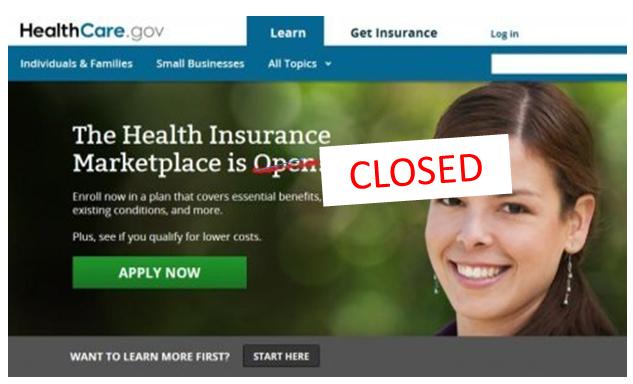
Verizon Terremark Outage Blocks Healthcare.com Access

Outages in the Internet ecosystem are a fact of life. But a high-profile outage doesn't help. 

Verizon Terremark, which is providing services to Healthcare.com, failed on Sunday, Oct. 27, 2013, one of many technology failures with the website supposedly allowing consumers to comparison shop and buy health insurance.


Motorola Ara: Smart Phones Like Legos

Ara is a radical new approach to creating smart phones using a modular design that enables the creation of devices with different features in much the same way people create objects using Lego building blocks.

Led by Motorola’s Advanced Technology and Projects group, Project Ara is developing a free, open hardware platform for creating highly modular smartphones. 

"We want to do for hardware what the Android platform has done for software: create a vibrant third-party developer ecosystem, lower the barriers to entry, increase the pace of innovation, and substantially compress development timelines," Motorola's blog says.

The design for Project Ara consists of an endoskeleton (endo) and modules. The endo is the structural frame that holds all the modules in place.

A module can be anything, from a new application processor to a new display or keyboard, an extra battery, a pulse oximeter--or something not yet thought of!

The objective is to develop a phone platform that is modular, open, customizable, and made for the entire world.

Monday, October 28, 2013

Amazon's "Profitless" Strategy is its Strategy

Amazon confounds many observers, who worry that Amazon “never” will improve its profit margins, or perhaps even make any profits. Supporters might say the profit margin strategy is intentional, structural and part of Amazon’s core approach to future domination of retail.

Others say Amazon could become profitable if it chose, but simply chooses not to do so. But Amazon profit margins are a part of its business strategy, even detractors might agree.

AT&T Delays Special Access Rate Changes

Shutting down the public switched network, specifically the time division multiplex network, remains a contentious issue, even though everybody agrees that the next generation network based on Internet Protocol has to be activated sooner rather than later, given the increase in stranded assets TDM now represents.

AT&T encountered customer resistance in October 2013 as it announced it would delay for about a month a planned change in special access pricing specifically pricing for legacy time division multiplex connections (T1 and DS3 lines) with contract durations of more than three years, given AT&T's announced intention to stop selling TDM special access connections entirely in 2020.

In the past, AT&T has offered seven-year contract pricing with discounts reflecting the term commitments. 

The problem is that as users move off the PSTN, the common costs of that network are growing, for the remaining customers. 

The Technical Advisory Council to the Federal Communications Commission in 2011 estimated that only six percent of the U.S. population will be using the legacy PSTN by 2018, all the rest of the users moving to next-generation IP and mobile networks.

By 2014, the United States was projected to  have fewer than 42 million TDM access lines in service, for example. 

So AT&T faces tricky issues as it prepares to shut down TDM special access, part of the wider effort to shut down the rest of the TDM network.

"Harvesting" Might be All Most Service Providers can Do About Messaging and Voice

Service providers face a few recurring strategy issues related to their legacy products, including the problem of how much to invest, and how to invest, in legacy products. When VoIP first became a commercial reality, the issue was whether service providers should become VoIP providers themselves, immediately and on a wide scale, or do little, while investing capital elsewhere.

The advent of email provided even fewer options, as email accounts initially were an amenity tied to the use of a particular access service. Many would say it was email that drove adoption of dial-up Internet access.

But users quickly figured out they could avoid the hassle of constantly-changing email addresses by switching to web mail. And that largely has converted email to a non-revenue feature of an Internet access service, used mostly only to communicate for customer service purposes, with a service provider, if used at all.

Now mobile text messaging is facing pressures from third party, over the top apps. So once again, the issue is how to respond. In some cases, service providers are essentially choosing not to respond by entering the over the top messaging business. In other cases, service providers have launched their own branded services.

In either case, the issue of how to create revenue has been an issue. In most cases, a rational service provider executive would conclude there is no way to create a viable revenue model in competition with the other well-known OTT providers.

In a growing number of cases, ISPs choose to partner in some way, hoping for indirect benefits.

In the U.S. mobile market, up to this point, service providers have concluded that they cannot compete, that there are some small benefits to partnering with OTT providers and therefore a “harvesting” strategy makes the most sense (hopefulness about Rich Communications Service notwithstanding).

These days, most service plans--and all the lead offers--of the four leading mobile service providers essentially make unlimited domestic calling and texting a feature of access to the network, with most of the revenue driven by Internet access fees.

In other words, voice and data are part of a basic $30 to $40 “right to use your phone on the network” fee. The variable costs are dictated by consumer choices about Internet access.

That does not mean every service provider faces precisely the same set of circumstances. In many markets, so much messaging market share has been lost to OTT providers that some mobile operators think they must compete, at some level, with their own branded alternatives.

Still, a key strategic problem for service providers is that it is difficult to compete, and earn revenue, with new OTT voice and messaging alternatives. At least in part, consumer preference for the alternatives seems to be based on features of those services, and at least in part, on the “no incremental cost” feature of those services.

A standard response to any challenge to a legacy service is to “add more features,” to make the legacy service more desirable. At least so far, the returns from such strategies are hard to pin down.

Nor, some might say, does a new survey offer absolutely clear guidance in that regard.

About seven percent of surveyed U.S. users prefer social messaging to carrier-provided messaging, while 13 percent of respondents in the United Kingdom prefer over the top, third-party messaging apps. For some observers, that will suggest that carriers still have an opportunity to enhance carrier messaging and retain user allegiance.

The issue, perhaps, is just how much operators can afford to invest, and how much better the experience has to become, to wean users off “free or cheap to use” alternatives, especially when the over the top alternatives have obtained the necessary network effects and scale.

Of respondents who prefer to communicate using social messaging applications, the majority in both the U.S. market (43 percent) and U.K. market (39 percent) say they prefer them because they have more enhanced features.

But users who prefer social or over the top messaging also prefer the lower costs. Some 34 percent of respondents in the U.S. and U.K. indicated they prefer social messaging
applications because they  are free or cheaper.

That suggests an opportunity for service providers to maintain market share if they can enhance the messaging experience, Infinite Convergence Solutions suggests. But users also will consider application prices or fees as a key part of the decision to use a particular messaging mode.

In contrast, 45 percent of survey respondents in the United States prefer mobile operator-provided messaging services for communication, compared to social messaging applications, a bit more than the 42 percent who also prefer mobile operator-provided messaging services.

About 22 percent of U.S. respondents say their preference depends on the situation, and 27 percent in the United Kingdom likewise say preference depends on the use case.

Some 26 percent of U.S. respondents have no preference, as well as 18 percent of  U.K. respondents.

Although social messaging applications are threatening mobile operators' revenues and customer base, mobile operators still have an opportunity to provide a more compelling messaging experience to subscribers, argues Infinite Convergence Solutions, a next-generation wireless messaging and mobility solutions provider that sponsored the survey.

The strategy implications are not completely clear. Respondents say both enhanced features and lower cost are attractive. So should service providers work to enhance the experience or simply harvest revenues as long as possible, on the assumption users will gravitate to third party apps in any case?

Or should mobile service providers simply assume users will choose to use both types of services, and simply work to provide the carrier services at low cost, while emphasizing the universality of carrier messaging (everybody can send and receive text messages)?

The study found 35 percent of smart phone owners in the United States and 43 percent in the United Kingdom say the inability to chat with people who aren't using the same social messaging application is their least favorite aspect of using such apps.

Some might argue the third party apps already have adoption wide enough to make it tough for carriers to regain share.

In the United States, Facebook chat or message threads are used by 60 percent of respondents on their phones. Some 42 percent use  iMessage while 25 percent use Skype.

In the United Kingdom, 56 percent of respondents use Facebook messaging features on their phone. Some 36 percent use WhatsApp and 27 percent use Skype.

When asked what feature is most important for mobile messaging, 45 percent of U.S. respondents and 40 percent of U.K. respondents rank the ability to communicate with all contacts regardless of device or carrier service highest.

New Licensed, Unlicensed, Shared Spectrum Proposals Have Business Implications

Unlicensed spectrum for Internet access contributes to perhaps $50 billion to $100 billion in economic value in the U.S. economy, some argue. For Internet service providers, the more immediate issue is precisely how and when unlicensed access to spectrum for Internet access helps or harms the ISP’s business, since that directly affects willingness to promote and rely upon such access.

Those attitudes furthermore will condition and shape ISP attitudes towards deployment of additional spectrum that can be used on an unlicensed basis. As you might guess, many argue that bandwidth exhaustion of the current Wi-Fi resources will occur as soon as 2014.

As you also might guess, there are other potential uses for new Wi-Fi spectrum, so a policy debate is inevitable. Automotive communications, for example, is one rival use of spectrum that might otherwise be deployed to support end user access, service provider backhaul or access operations.

Nobody doubts that as phones become Internet access devices, traffic demand will shift. Already, perhaps 66 percent to 80 percent of all smart phone data consumption occurs on Wi-Fi networks, for example.

And that means Wi-Fi is both a competitor to, and complement to, carrier access networks, both fixed and mobile. To be sure, fully mobile access remains important for voice and messaging, as well as for some Internet applications. But most content consumption, especially of video, seems to happen in fixed locations where Wi-Fi works well as an access medium.

In addition, some advocates of additional unlicensed spectrum licensing argue that licensed spectrum useful for traditional “macrocell-based” communications is quite limited in availability, and will not keep up with demand growth.

To be sure, spectrum is but one element determining the amount of useful communications spectrum. Network design, signal compression and air interface efficiency are other relevant inputs.

And reasonable observers argue that a mix of all those approaches will help maximize raw spectrum resources by improving the effective use of any amount of physical spectrum. Frequency reuse is among the more important approaches for any network approach.

Some might argue the proponents of additional Wi-Fi spectrum have solid business reasons for making such arguments” spectrum is the foundation for business models, and licensed models of course favor the licensees, while unlicensed spectrum supports the business models of competitors.

In other words, Wi-Fi is a primary revenue driver for some providers, and a helpful indirect revenue driver for many others.

To use the most obvious example, unlicensed Wi-Fi spectrum allows offload of most mobile traffic to fixed networks, potentially creating a new role for fixed networks in the untethered communications business, and possibly a new role as well in the mobile business.

Some might argue that the licensing mode primarily dictates the Wi-Fi use mode (unlicensed inherently is better for small cells and coverage areas). In part, that is true because of power limitations imposed on unlicensed spectrum devices. Lower power means a smaller coverage area.

In principle, that is a technology choice not determined directly by the mode of licensing, with the exception of the low-power requirements to limit interference.

Business models also can take any number of forms. For some time, providing public Wi-Fi access has been an amenity to increase the value of a fixed network ISP. Such access likewise is an amenity intended to similarly enhance the value of a particular mobile ISP service.

More recently, fixed network Wi-Fi access has become a “capital investment reducing” way of supporting growing mobile Internet access demand.

That is driving the “small cell” and “heterogenous network” trends, whereby a mobile “macrocell” transmission infrastructure is reinforced by use of small cells using mobile frequencies or actual Wi-Fi spectrum.

But there still will be contention over the proper licensing model, and furthermore over the mix of licensing modes (how much spectrum is licensed, how much unlicensed).

At the same time, there will be some degree of contention over the use of shared spectrum, where licensed non-commercial users share access with new commercial users. As with all other spectrum policies, it is possible to conceive of a mix of licensing modes.

In the U.S. regulatory setting, policymakers are looking at a mix of increased licensed spectrum (fallow former broadcast TV spectrum), new Wi-Fi spectrum in the 5-GHz band and shared spectrum  (3550-to-3700 MHz) in some cases.

As always, there will be advantages for specific providers and business models as each of the spectrum decisions are made. Cable TV operators see a chance to create new revenue models based on providing public Wi-Fi services. Mobile service providers see an opportunity to both increase their control of licensed spectrum, and provide "quality assured" services.

Other contestants, including application providers and independent ISPs, might see new opportunities for access or backhaul applications, especially for new machine-to-machine services. 

But some other interests (automobile industry) might see the foundation for new services as well, requiring that some spectrum not be released for licensed or unlicensed general purpose communications.

Sunday, October 27, 2013

All 4 U.S. Leading Mobile Providers Abandon Metered Voice

With a recent move by AT&T, all four of the leading U.S. mobile service providers now offer the overwhelming number of subsctribers service plans that offer unlimited domestic calling and texting, with variable revenues now supplied by Internet access services.

Though a few plans (and customers on legacy plans) might include "metered" voice or text buckets, most of the plans now simply make domestic voice and text message usage a basic part of the service, without metering usage, while it is Internet access that is the metered service and revenue driver. 

Though it has been clear for some time that voice has passed the peak of its product cycle, the full ramifications sometimes are not clear. 

Service providers some time ago transitioned to revenue growth lead by mobile services, then to revenue growth lead by mobile Internet access revenues. The new primary packaging approach in the U.S. market now reflects that change in substantial form.

Domestic voice and texting essentially are unlimited use features of mobile service, while revenue is driven by the amount of Internet access data consumed by users. 

On the other hand, making voice and messaging a flat fee feature of access to the network also preserves some of the revenue that once underpinned industry revenues. 

Now that all four leading U.S. mobile service providers have substantially adopted the unlimited domestic voice and data approach, it is clear evidence that those services do not, and will  not, drive future revenue growth. 


Voice and messaging now are features of mobile network access, more than representing the primary value of service, or the key variable cost driver. 


Google Wi-Fi Passport: One More Way Google is Enabling Internet Access

Google Wi-Fi Passport is a new Android app that allows people in Djakarta, Indonesia to get access to participating Wi-Fi hotspots. Users buy credits to use Wi-Fi Passport from online payment system Mogplay.

Vouchers are sold at retail outlets in Djkarta.

It is one more way Google is expanding the ways people can get online, aside from becoming an Internet service provider itself, as Google does in Kansas City, Kan. Kansas City, Mo., Austin, Texas and Provo, Utah, offering Google Fiber, or by providing Wi-Fi access at Starbucks coffee shops.

Beyond that, Google has experimented with providing Wi-Fi access in some parts of U.S. cities as well, and also is exploring non-traditional forms of access as part of Project Loon.

Few companies whose business model is based on advertising ever have made such investments in getting everybody online, at the fastest speeds possible. 

The only other real example is AOL, whose original revenue model was based substantially on access revenues, even though it has transitioned largely to an advertising model at present.


Friday, October 25, 2013

Can You Really Compete with "Free?"

In some ways, piracy of movie or TV content is a bit akin to problems communications service providers have, namely “how to compete with free products.” And as is the case in the communications industry, the impact is complex.

In part, free alternatives cannibalize existing “for fee” products. On the other hand, such free alternatives probably also stimulate sales of “for fee” products as well.

That is not to say there are no revenue losses, or that content products are completely the same same as communication products, in terms of demand environment. Movie and content products are not “real time,” where communications products often are.

Movie and other video content products often have “release windows” that stagger availability on different platforms. Most communication products are simultaneous, not sequential, so the abiltiy to differentiate audiences is vastly less.

Still, there are some similar principles. There are “see now” versions of movie products, “see on smaller screen” versions, “own and rent” versions, “see later” versions and “see in specialized environment” versions (airline pay per view, hotel pay per view).

In the communications business, there are professional, high end videoconferencing products and experiences as well as Google Hangouts, PSTN calls and Skype calls.

Users have text messaging as well as instant messaging and email, with different user experience and “real time” aspects. Also, fixed network and mobile service providers increasingly also are service suppliers in the video entertainment business, able to fill multiple roles in the content distribution process, with different usage segments.

The point is that though “competing with free” is not fun or as lucrative as when such free products were not available, competition is possible.

At least some researchers believe movie studios indeed compete  with “free” (pirated) versions of their content through product differentiation and customer segmentation.

In other words, to some significant extent, television broadcast of a movie does not reduce DVD sales, suggesting the TV viewing and DVD viewing market segments are distinct. And, in fact a study suggests even piracy of movie content still being shown in theaters does not depress later DVD sales. At least in part, movie piracy stimulates demand for later DVD sales.

That is not to say such piracy does not reduce box office revenues, only to say such piracy could, among other things, also stimulate later sales.

Online piracy undoubtedly cannibalizes some content sales or rentals. What is not so clear is how extensive such losses might be, nor does piracy necessarily entail only “losses.” In fact, for lesser-known movie titles, piracy might actually help drive sales and rentals, At least that is what another study suggests.

The evidence is what happens to DVD sales, one week after a movie is shown on television networks. Sales climb. That is, at least in part, the effect of content sharing commonly called piracy: it stimulates downstream demand, even if it cannibalizes some amount of theatrical release revenue.

Content industry executives are not likely to change their thinking based on one or two studies.

In 2010, the Government Accountability Office examined piracy in the film industry and could  not substantiate the level of losses claimed by industry executives.

Additionally, a study published in 2012 by researchers at Wellesley College and the University of Minnesota found no link between the emergence of BitTorrent and declining box office revenues in the U.S.

The point is that competing with free is a complex process, with both revenue losses and gains possible.

Price's Law: 10% of People Produce 50% of Outcomes

Price's Law states that half of the literature on a subject will be contributed by the square root of the total number of authors publi...