Monday, November 11, 2013

Mobile Data Demand will Grow an order of Magnitude in 6 Years

It is no secret that mobile broadband features now drive mobile service provider revenue growth in developed economies. 

And even if sheer growth of subscribers continues to drive growth in developing markets, revenue from Internet access is becoming more crucial there as well.

Global mobile broadband subscriptions are predicted to grow 400 percent by 2019, reaching eight billion accounts, up from about two billion in service in 2013, according to Ericsson.

While mobile subscriptions globally grew seven percent, year over year, in the third quarter of 2013, mobile broadband subscriptions grew at a rate of 40 percent year over year. 

That trend is fueled by a changing mix of device sales. About 55 percent of all mobile phones sold in the quarter were smart phones, according to the Ericsson Mobility Report. And that in turn drives demand for mobile Internet access.


As a result, mobile data traffic is expected to grow at a compound annual growth rate of around 45 percent (2013-2019). This will result in an increase of around 10 times by the end of 2019.

The number of mobile subscriptions for mobile PCs, tablets and mobile routers is expected to grow from 300 million in 2013 to around 800 million in 2019, as well.

Between 2013 and 2019, mobile data traffic will grow seven times in North America, 11 times in Latin America, nine times in Western Europe, 11 times in Central Europe and Middle East and Africa, as well as in the Asia Pacific region.

Fixed data traffic will grow about 25 percent between 2013 and 2019, on a compound annual growth rate basis, and will remain the dominant way most data is transferred to end users.

Mobile data traffic represents five percent of total Internet end user traffic in 2013, and will grow to 12 percent in 2019.

That, one might suggest, shows the long term value of fixed network access, which will continue to account for most of the total volume of access traffic.

The largest and fastest growing mobile data traffic segment is video, as you have come to expect, expected to increase by around 55 percent annually up until the end of 2019, by which point it is forecasted to account for more than 50 percent of global mobile traffic.

Use of streaming on-demand and time-shifted content, including YouTube, is ubiquitous.
About 41 percent of people aged between 65 and 69 stream video content over mobile and fixed networks on at least a weekly basis, the Ericsson Mobility Report says.

By the end of 2019, total mobile subscriptions will reach around 9.3 billion.

Total global mobile subscriptions, including subscriber information modules and full prepaid or postpaid accounts, numbered 6.6 billion in the third quarter of 2013.

By 2019, almost all handsets in Western Europe and North America will be smart phones, compared to 50 percent of handset subscriptions in the Middle East and Africa.

Mobile phones account for around 50 percent of total mobile data traffic volume in the measured networks. In many European networks, mobile PCs represent 10 percent to 30 percent of the
subscription base and generate 50 percent to 80 percent of the traffic.

In contrast, North America is typically dominated by smart phone traffic, with mobile
PC subscriptions only representing a small share of traffic. Fixed network access, using routers ranges between usage of 1 GB to 42 GB each month.

Mobile PCs represent usage of  0.5 GB to 8 GB while tablets represent monthly usage between 150 MB and 2,200 MB. The largest average traffic volumes for smart phones were measured on Android devices, using up to an average of 2.2 GB per month.


Without Small Cells, Video Conferencing and Streaming Do Not Work in Office Buildings

Without use of indoor mobile network cells and outdoor small cells, Internet apps such as video conferencing on smart phones might work only two percent of the time, while video streaming does not work at all.


That illustrates the dramatic impact support for Internet access on mobile devices now has on the design of mobile networks. Traditional networks were designed to support adequate voice app coverage. That doesn’t work for mobile Internet access.


Indoor application coverage is a bigger issue than voice coverage. In a high-rise office building, serviced strictly by traditional macrocells, voice service might work about 85 percent of the time, according to the Ericsson Mobility Report.

But video streaming rarely works, and video conferencing might only work about two percent of the time. Outdoor small cells will help. Adding public small cells improves video conferencing app availability to about 41 percent of locations inside a high-rise building.


Ability to use video streaming might improve to perhaps 21 percent. But coverage can, in principle, be increased to 100 percent, for all apps, when indoor pico cells also are added.


While median speeds in cities studied by Ericsson can be 10 Mbps and higher in a given cell, throughput is generally much lower at cell edge (only a few hundred kilobits per second). That is a function of signal strength, network load and device capability.


Of the cities Ericsson studied, only Copenhagen and Oslo have a 90 percent probability of getting a 1 Mbps downlink throughput or higher. In Shanghai, Jakarta, Beijing, Moscow, São Paulo, Cairo and Delhi, the corresponding speed is less than 100 Kbps.


In all of the cities studied, there is a large difference between the 10 percent (peak), 50 percent (median) and 90 percent probability downlink speeds, Ericsson notes.


In all areas of the city, except for in the home, where Wi-Fi access often is available, Internet satisfaction is falling behind voice satisfaction.


In some cities, such as Istanbul, the difference between voice and Internet access satisfaction is extensive, varying by up to 20 percentage points in some places.


For shopping malls and restaurants, satisfaction with Internet connections is at just over
50 percent on average. In these locations there is a difference in satisfaction levels of almost 10 percentage points for voice, compared to Internet use.


In Tokyo, London and New York as many as 50 percent to 60 percent of surveyed users are dissatisfied with voice and internet on the subway, for example.


That illustrates why indoor and urban coverage is so important for mobile service providers. Internet access performance now is a clear “pain point” for consumers.


A clear majority of mobile Internet access occurs indoors. In many countries, as much as 80 percent of total mobile device Internet access occurs indoors.


The other driver of traffic is cities, where most people live and work.


Sunday, November 10, 2013

Larger, Curved, More Sensitive Screens for iPhone?

It isn’t necessarily clear whether bigger screens, more sensitive screens or curved screens might emerge as the important innovation for the next generation of Apple iPhones. But it is probably worth noting that Samsung, arguably Apple’s biggest competitor, “leads” Apple in all three of those dimensions, including screen size,m curved screens and sensitivity to pressure applied to the screen.

The Galaxy Note series of phones, which first came out in late 2011, have large screens that are sensitive to different levels of pressure from the stylus. Samsung also is going to produce devices with curved screens as well.

Though some thought the large Galaxy Note screens would not be embraced by consumers, the Norte is one of Samsung’s most successful models.

None of that necessarily settles the issue of whether Apple has lost at least a bit of its innovative edge. But some might be uncomfortable that Apple now is, in some ways, “following” Samsung.

Mobile Broadband Grows Between 27% and 82% Annually

Mobile broadband adoption is the big story in the global Internet access business, representing compound annual growth at rates no lower than 27 percent, and ranging as high as 82 percent, according to the International Telecommunications Union.


Fixed Network Broadband Costs Have Fallen At Least 82% Since 2008

People will disagree about whether fixed network broadband is "too expensive" in developed nations. Part of the reason is that prices often are quoted in absolute terms, rather than as a percentage of average monthly income in any nation. 

The latter arguably is a better way of comparing costs across regions and nations, as that method shows the relative cost of Internet access compared to other goods and services. 

In that regard, one might argue that fixed network Internet access prices are reasonable in virtually every nation. Since 2008, developed nation fixed network broadband access prices have declined from about 2.5 percent of per capita gross national income to about 1.7 percent. 

And though broadband access supplied by fixed networks remains prohibitively expensive in many developing nations, since 2009 prices in developing nations have been falling fast. 

IN 2009 broadband access cost 165 percent of per capita income. By 2012 that had fallen to 30 percent of income. That still is too high for mass adoption, but the declining cost trend remains intact. 


Friday, November 8, 2013

Own the Desktop, Living Room, Platform or Experience?

The war to “win the livingroom” arguably has been key to strategies of any number of service or device suppliers, ranging from cable TV companies to suppliers of TVs and game consoles. The issue is whether that “war” is worth winning, or can be won.

Netflix integration with video service provider set-top boxes might also be seen as one example of that strategy.

Traditionally, such arguments were made by firms with big stakes in the video or gaming ecosystems. One might argue the value of such a strategy is a bit less unclear now that content consumption of many types occurs on a variety of devices and networks, in a user environment where multitasking is the norm.

In other words, many devices, apps and networks all provide search, content, apps and communications value used “in the livingroom.”

These days, more attention seems to be placed on platform strategies. As Best Buy is becoming a platform for various “store within a store” revenue streams, so operating systems, browsers and devices remain key for some platform strategies.

That is not to say an “own the desktop” or “own the livingroom” strategy cannot be part of a broader effort to create a winning platform. But either the desktop or living room metaphors are likely less useful than once appeared to be the case.

In part, that is because the growth of mobile devices (smart phones and tablets) make “owning the customer experience” more valuable than once was the case, since the same tools and environments are used at home, at work and “out and about.”

Telenor Users to Get Free Wikipedia Access in Myanmar

Myanmar is the latest country where mobile phone users will be able to get mobile access to Wikipedia free of charge (without paying data plan charges), provided by Telenor Group.

Telenor and Oredoo recently won licenses and spectrum to create two new mobile networks in Myanmar.

The partnership between Telenor and the Wikimedia Foundation was established in February 2012 and was founded on a shared commitment to bring Wikipedia to Telenor customers free of data charges.

The initiative is part of the Wikimedia Foundation’s mobile strategy, which focuses on reaching the billions of people around the world whose primary opportunity to access the Internet is by means of a mobile device.

Following the agreement, special versions of Wikipedia for mobile phones were launched in Thailand, Malaysia and Montenegro. In addition, Telenor aims to launch Wikipedia Zero in Pakistan, Bangladesh, India and Serbia in 2014.

The initiative is similar to Google Free Zone, which makes mobile search available to any mobile phone equipped for Internet access, without requiring a data plan.

Google South Africa TV White Spaces Trial Ends, No Interference Encountered

As you probably would expect for a high-profile TV white spaces trial with regulatory implications, the Google-sponsored trial of white spaces technology in Cape Town, South Africa has ended in success, connecting 10 schools using TV white spaces without interference, a key issue for TV white spaces systems that must dynamically select which frequencies to use in a particular area.


The trial partners included Google, the Wireless Access Providers' Association, a non-profit industry representative for more than 170 independent wireless operators in South Africa, CSIR Meraka, TENET, e-Schools Network and Carlson Wireless.

The trial was intended to demonstrate the value of TV white spaces technology, helping to persuade regulators that TV white spaces can be licensed for use in South Africa.

Microsoft also is running TV white spaces trials in Africa as well, in Kenya and South Africa.

Thursday, November 7, 2013

Device Preferences Shape Service Provider Opportunities

“Screens” are important to Internet service providers, telcos, cable TV companies and satellite video and Internet providers for one simple reason: ownership and use of various screens is a precondition for service demand.


For decades, the primary screen used by most consumers was the television. Then followed the PC, then the mobile phone, MP-3 player and now the tablet. Whole industries, ranging from broadcast TV and cable TV to DVD rentals and sales and the Web were created by use of those screens.


So changes in device preferences should shape demand for services provided to those devices.


And though the data remains fragmentary, it appears younger consumers see less need to own and use desktop or notebook PCs and televisions, and more often substitute a mobile device for both TVs and PCs.


Nearly half of all people 18 to 34 in the United Kingdom, for example,  consider mobile a more important screen than television for media consumption, a study by Weve has found.


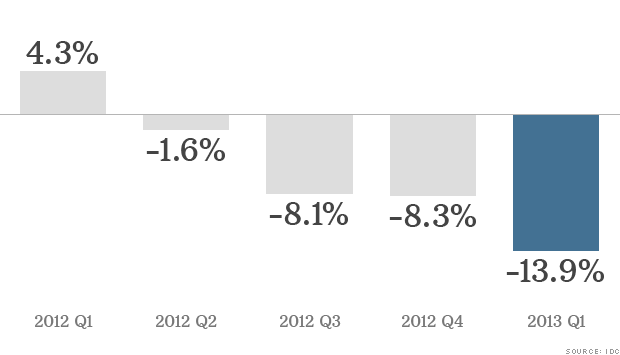
Separately, Gartner estimates PC shipments in Western Europe declined 12.8 percent from the same period in 2012.  PC sales have been dropping since at least 2011.


"The PC market in Western Europe continued to shrink, declining faster than expected," said Meike Escherich, principal research analyst at Gartner. To be sure, demand has shifted to tablets, so even if mobile and desktop PC shipments declined by 14.5 percent and 9.8 percent, respectively, users can use tablets as functional substitutes.


Those trends bear watching. If people don’t own and use TVs, they don’t need a video subscription service aimed at TVs. If people don’t own and use PCs and the Internet, they will have no need for Internet access. If people do not want to use landline phones, they don’t need landline phone service.


On the other hand, demand could be shaped in new ways. In the past the primary reason for buying Internet access was access to email (dial-up era) and in the broadband era has morphed into access to the Web.


In the future there could be multiple reasons for buying Internet access, ranging from offload of mobile device data usage to the fixed connection, support of in-home Wi-Fi for tablets and PCs, as well as video consumption on all devices, including TVs.


Historically, device penetration created a ceiling for service adoption. In any given market, if 15 percent of households find no reason to use the Internet or PCs, those households are not going to be prospects for buying Internet access.


Roughly the same argument applies to ownership of televisions, with the caveat that televisions can be used without video subscriptions, as displays for non-connected game players, DVD and Blu-ray devices.


chart pc salesWhat is new is that widespread use of a variety of connected devices changes the demand driver for Internet access, even if use of some dedicated (TV) or general purpose (PC) devices is lessening, to some extent, in some demographic groups.


One wild card is the suitability of mobile and fixed networks to support the range of devices and use cases many users will have.

The data also suggests mobile devices now are firmly established as competitors to conventional media channels in the United Kingdom, Weve argues. Assuming people prefer to use their mobiles as content consumption devices on the Wi-Fi connection, rather than the mobile network, while in the home,


When including screens used for work or personal purposes, 40 percent of respondents surveyed consider the PC the most important screen, especially for work activity,


But 28 percent of respondents say that mobile devices are now their first screen for media consumption, ahead of TV at 27 percent.


And demographics matter, as 46 percent of respondents 18 to 34 year consider their mobile device as their first and most important screen.


Over a quarter of surveyed consumers turn to their mobile first to interact with online content, rising to 45 percent among 18-34 year olds.


Nearly 10 percent of consumers turn to their mobile first to make online purchases.


The nationwide survey of 2,000 adults between the ages of 18 and 55 (or older) found that
about 39 percent say their mobile device is the screen they look at most often.


One might argue those findings could have implications beyond the advertising and media business, and affect fortunes for video entertainment providers.


Many would note that rates of television ownership among Millennials are lower than might have been expected in past decades, mirroring a trend to rent rather than own homes and cars.


Nielsen found in 2011 that U.S. television ownership actually dropped for the first time.


That is a break from past behavior, as in 2010, Nielsen estimated the typical U.S. home owned more than two TV sets each.


One might argue, impressionistically, that younger people view televisions as quite optional, when forming their own households. 

Though lack of income is an issue for some, quite often, even consumers who can afford to own televisions simply do not buy them, getting most of their video from streaming sites, viewed on tablets, PCs and phones.


Ironically, less demand for some devices might change consumption in ways that create new use cases for service provider products.


Traditional video subscription services might be supplanted, eventually, by streaming alternatives that make the Internet access connection more valuable, while devaluing the legacy service.


In some other cases, a mobile connection might supplant the fixed connection.


But all the trends mean that the historic market ceiling for PC-based Internet access, or the historic floor for video subscriptions, potentially are changing. Increasingly, even households that do not use “the Internet” might discover broadband access is useful to support their mobile device usage, supply TV and voice services.


Put simply, the way Internet access in any market potentially grows to 100 percent is not “use of PCs” or “use of the Internet” but any of those apps, plus “use of mobile phones,” “use of tablets” or “want to watch TV.”

Wednesday, November 6, 2013

Inhabitants Per Household Drives Bandwidth Demand, Study Finds

Number of users per household is likely to emerge as the key driver of bandwidth demand, according to consultants Robert Kenny & Tom Broughton, in a study conducted for the U.K. Broadband Stakeholders Group.

A single-person household in 2023 will require require only about 5 Mbps and 8 Mbps to 10 Mbps for shorter periods of time. Also, the broadband connection is idle for most of the time.

A multi-person household with four occupants using high-definition streaming will experience appreciable usage almost constantly during the busy hours, with approximately 90 minutes of
demand of 25 Mbps or more per month, the study suggests.

Usage of video streaming, and especially use of higher-definition video sources, also will affect bandwidth consumption, but the key factor will be number of users per connection, one might reasonably conclude.

Looking across all households, the model indicates that the median household will require bandwidth of 19 Mbps by 2023, while the top one percent of high-usage households will have demand of 35 Mbps to 39 Mbps.

Those forecasts will strike some as low, given expectations that many consumers will have access to much-higher speeds by 2020 or perhaps 100 Mbps or higher.

But the analysts note that 64 percent of U.K. households are composed of just one or two people, limiting the effective amount of required bandwidth.

For example, even if two people are each watching their own HDTV stream, each surfing the web and each having a video call all simultaneously, the total bandwidth for this use
case is 15 Mbps in 2023.

Also, the growth of video consumption will be matched, to some extent, by improvements n video compression techniques that will reduce required bandwidth by about nine percent annually, for standard definition, high definition and 4K TV alike.

In addition,  an increase in traffic does not necessarily equal an increase in maximum bit rate requirements. Up to a point, higher usage can occur without necessarily requiring an upgrade of top speeds.

The other issue is that the crucial parameter is peak usage, not average usage, which tends to be quite low, across a whole network. Even when data consumption per connection, over a month, is 23 GB, most of that consumption occurs in a “spiky” manner.

About 34 percent of monthly consumption happens in the 6 pm to 12pm period. During those “busy hours,” data consumed per connection is 7.8 GB.
Traffic per hour during the busy hours is 43.4 MB, but average usage is just 0.10 Mbps. Likewise, average modem sync speed is 12.7 Mbps, while average utilisation of the network is just 0.9 percent.

On the other hand, the study deliberately excluded the top four minutes a month of usage (peak demand) to get a better sense of sustained or typical demand. Accommodating the absolute four minutes of peak usage would boost a four-user household speed threshold up to 50 Mbps.

The authors also note that changing end user expectations could significantly affect supplier requirements. For example, For example, the analysis assumes users will tolerate 10 minutes waiting time for a console game to load. If that load time was reduced to 2.5 minutes, then 16 percent  of households would require 83 Mbps.

Reducing the waiting time further would quickly take demand over 100 Mbps for those households.

Perhaps wisely, the study notes that “one cannot predict the future with exact certainty.” So the study conclusions do not include any impact of demand stimulation by providers or potential new applications that could boost demand for faster connections.

“In some cases we believe that current usage was constrained by current bandwidth, rather than reflecting what might be reasonably expected absent this constraint,” the authors note. In other words, actual future levels of demand could vary significantly from past consumer behavior.

That is key. Economists couch their conclusions using an important qualifier, “ceteris paribus” (all other things being equal). Of course, when new applications, new devices, new retail offers, new bandwidth and new access technologies become available, they change existing behavior. So behavior in the real world tends not to reflect “ceteris paribus.”

As with the Heisenberg Principle (often called the “uncertainty principle”), which stipulates that, when attempting to measure a particle’s position, the more precisely the position is determined, the less precisely the momentum is known in this instant, and vice versa. In other words, one can know where a particle is, or its momentum, but not both with equal precision.

A related “observer effect” is probably more germane. The problem, in essence, is that the act of measurement changes the process or thing being observed. The reason is that use of measurement instruments necessarily changes the quantity of the measured process or object.

An easy example is the use of a tire pressure gauge to measure tire pressure: applying the gauge lets some air out of the tire, changing the status of tire air pressure somewhat.

For Internet apps, almost anything “new,” ranging from an app or device to the way retail services are priced and packaged, can change user behavior.

AI is Solow Paradox at Work

An analysis of 4,500 work-related artificial intelligence use cases suggests we are only in the very-early stages of applying AI at work a...