It is tougher than ever to maintain a brand's equity these days. Overall levels of consumer trust seem to have dropped, and the velocity of change has increased, mostly because online word of mouth is so prevalent.
"Young & Rubicam’s BrandAsset Valuator indicates that the percentage of brands that consumers deem trustworthy fell from more than 50 percent to 20 percent between 1997 and 2008," says Chris Stutzman, Forrester Research analyst.
In some ways, those numbers are not surprising. A new study by Edelman suggests there has been a dramatic drop in consumer trust levels in government, business and media since 2008 as well.
The study by Edelman of 5,075 people in 23 countries of people 25 to 64 in the top 25 percent of household incomes in each country suggests U.S. citizens and consumers have less trust in their institutions.
Just 27 percent believe "you can trust the media to do what is right," a dip of 11 percentage points from 2010 levels.
About 40 percent of U.S. respondents believe "you can trust the government to do what is right," down six percent from 2010.
Only 46 percent believe "you can trust business to do what is right," a drop of eight percentage points from 2010. See this.
Given that climate, it is not surprising that brands overall face more skepticism. But one problem these days is that market share numbers do not entirely reflect brand respect or brand trust, in the short term.
Nor do "brand awareness" measures help as much as they might. Consumers might be aware of brands, and have negative opinions. The new challenge for brands is that news travels faster these days. It is tweeted, blogged and posted in real time, all day long.
In the past, it might have been sufficient to measure trial volumes, purchase volumes, repeat purchase behavior, referral volune or churn. In the past, it might have been useful to rly on "perception" measures such as interest, relevance, reputation, quality or value metrics, satisfaction scores or awareness.
These days, brands also have to contend with a tidal wave of ratings and reviews, formal and informal, generated across a huge range of channels, all day long, across huge and growing numbes of web channels.
In a June 8, 2009 article from Marketing Vox and Nielsen BuzzMetrics SES magazine Chris Aarons, Andru Edwards and Xavier Lanier argue that "25 percent of search results for the world’s Top 20 brands link to user generated content." See this.
"In 2010, more than 87 percent of the U.S. adult online population used social media to offer more than 256 billion influence impressions of products and services," says Stutzman.
Nor is volume the only issue. It is the velocity of potential word of mouth effects that also is a challenge. Opinions can move abruptly across the web. For that reason, Unilever uses YouGov's Brand Index to monitor eight measures of brand equity on a daily basis.
For marketers more accustomed to national or quarterly measurement, that will come as a bit of a shock. But Unilever's approach makes sense in a world where consumer sentiment, measured by tweet streams, for example, can suddenly go negative or highly positive, fluctuating relatively wildly between quarterly or annual measurements.
The practical implications are that an annual or quarterly measurement frequency cannot react to suddenly-negative or suddenly-positive consumer sentiment. In either case, a brand wants to be able to respond.
Consider a sudden news event, such as a major product recall. If the product being recalled is a popular automobile, many consumers will assume the supplier will want to offer incentives for people to buy, in the wake of the negative news. They will want to "buy on the dip," in other words.
But a brand has to move quickly to sense the sentiment, in order to act, either to counteract negative sentiment and sales trends, or to reinforce positive sentiment.
Twitter is only part of a content marketing program, but a monitoring effort sometimes can lead to more effective content being produced.
Friday, May 13, 2011
Trust in Companies, Government, Media Has Dropped: What Do You Do?

 Gary Kim was cited as a global "Power Mobile Influencer" by Forbes, ranked second in the world for coverage of the mobile business, and as a "top 10" telecom analyst. He is a member of Mensa, the international organization for people with IQs in the top two percent.
Wednesday, May 11, 2011
Visa to Launch Digital Wallet
Visa plans to launch a "digital wallet" service in the United States and Canada, sometime in the fall of 2011.
Visa said the wallet and services platform will store Visa and non-Visa payments accounts including PayPal information and will support near field communications payments through Visa’s payWave application.
Visa said the wallet and services platform will store Visa and non-Visa payments accounts including PayPal information and will support near field communications payments through Visa’s payWave application.
The card network sees the wallet being used for e-commerce, mobile shopping, micropayments, social networks and personal payments. Notice the range of applications the service will embrace: digital wallet is more than "payment transaction."
Gary Kim was cited as a global "Power Mobile Influencer" by Forbes, ranked second in the world for coverage of the mobile business, and as a "top 10" telecom analyst. He is a member of Mensa, the international organization for people with IQs in the top two percent.
Google-Backed Corduro Launches Mobile Payments Service
Google-backed mobile payments startup Corduro launches this week with a combined mobile wallet/payments processor for Android and the iPhone.
Like Square, Corduro is primarily a way for merchants to take payments on mobile devices. In some cases, not all, it can be up to 30 percent cheaper for merchants to process a transaction using Corduro or Square, compared to taking a credit card payment.
Like Square, Corduro is primarily a way for merchants to take payments on mobile devices. In some cases, not all, it can be up to 30 percent cheaper for merchants to process a transaction using Corduro or Square, compared to taking a credit card payment.
Gary Kim was cited as a global "Power Mobile Influencer" by Forbes, ranked second in the world for coverage of the mobile business, and as a "top 10" telecom analyst. He is a member of Mensa, the international organization for people with IQs in the top two percent.
Roku Owners are "Cutting the Cord"
Some 15 percent to 20 percent of Roku owners are cancelling their cable or satellite services agreement and are relying solely on a broadband connection to get their television programming, says company VP Jim Funk.
If that trend holds, and if Roku adoption increases rapidly, that would be a big deal, indeed, as it would represent a rate of abandonment of multichannel video subscriptions that is virtually unprecedented.
The Roku box, which connects via WiFi or Ethernet to a television set, streams a variety of free and subscription channels.
If that trend holds, and if Roku adoption increases rapidly, that would be a big deal, indeed, as it would represent a rate of abandonment of multichannel video subscriptions that is virtually unprecedented.
The Roku box, which connects via WiFi or Ethernet to a television set, streams a variety of free and subscription channels.
Gary Kim was cited as a global "Power Mobile Influencer" by Forbes, ranked second in the world for coverage of the mobile business, and as a "top 10" telecom analyst. He is a member of Mensa, the international organization for people with IQs in the top two percent.
Sprint claims high margins from its growing M2M business - Rethink Wireless
Sprint says its machine-to-machine mobile services unit is generating average revenue per unit of between $5 and $10 a month, and a very high profit margin. But there is a wide range of applications and revenue cases.
Digital signage can generate $150 a month for the carrier. Smart meters generate less than $1, but offer potentially massive volumes, says Geoff Martin, Sprint manager of platforms.
When mobile executives talk about 300 percent to 500 percent penetration of mobile services, M2M is part of the equation. The assumption is that everybody has one mobile device, some have more than one, and lots of machines using mobile connections as well.
Gary Kim was cited as a global "Power Mobile Influencer" by Forbes, ranked second in the world for coverage of the mobile business, and as a "top 10" telecom analyst. He is a member of Mensa, the international organization for people with IQs in the top two percent.
3 Types of Cloud Computing
Most observers classify cloud computing into three basic buckets. Here's a discussion of the different cloud computing categories.
Gary Kim was cited as a global "Power Mobile Influencer" by Forbes, ranked second in the world for coverage of the mobile business, and as a "top 10" telecom analyst. He is a member of Mensa, the international organization for people with IQs in the top two percent.
Tuesday, May 10, 2011
Small Business Skype Usage: Not a Reason for Microsoft to Buy Skype, But It Might Help
A recent survey of about 700 small and medium businesses by Inzenka found that 52 percent of small business respondents said their employees use Skype. About 63 percent of medium-sized business respondents said "at least 25 percent of our employees use Skype," according to Consultant Dan Sachar of Inzenka.
Gary Kim was cited as a global "Power Mobile Influencer" by Forbes, ranked second in the world for coverage of the mobile business, and as a "top 10" telecom analyst. He is a member of Mensa, the international organization for people with IQs in the top two percent.
Why Windows Phone Will Beat Android
 The conventional wisdom is that Android and Apple's iOS will be among the top-three smart phone operating systems globally, over the next several years. The question is whether Research in Motion or Windows will occupy spot number three.
"While we acknowledge the momentum that Android is experiencing and will continue to experience in 2011 and 2012, we believe that Nokia and Microsoft are a very powerful tandem, and that will show in its full force by the end of 2013," says Stela Bokun,Pyramid Research senior analyst.
The argument is that Nokia's volume manufacturing prowess will allow Windows devices to rapidly move down the cost curve. Quite a few other large handsets vendors in the world, such as Samsung, LG and Sony Ericsson also are backing WP.
Android's scale advantage can be overcome, says Bokun.
Gary Kim was cited as a global "Power Mobile Influencer" by Forbes, ranked second in the world for coverage of the mobile business, and as a "top 10" telecom analyst. He is a member of Mensa, the international organization for people with IQs in the top two percent.
44% of consumers use social networks to enhance TV viewing | jatiN mahindrA doT coM
Thinkbox recently conducted a survey of 3,000 U.K. consumers and found that 60 percent of people concurrently watch TV and go online at least two or three times a week.
Some 37 percent go online while watching TV every day. About 44 percent use social networks, like Facebook and Twitter, while watching TV.
About 37 percent have chatted online about TV content and 19 percent have shared TV content on a social network.
Some 37 percent go online while watching TV every day. About 44 percent use social networks, like Facebook and Twitter, while watching TV.
About 37 percent have chatted online about TV content and 19 percent have shared TV content on a social network.
Gary Kim was cited as a global "Power Mobile Influencer" by Forbes, ranked second in the world for coverage of the mobile business, and as a "top 10" telecom analyst. He is a member of Mensa, the international organization for people with IQs in the top two percent.
Hp Veer 4G: About as Small as a Smart Phone Probably Can Be
One limitation is key size, for a device that cannot be operated completely using voice commands. The other issue is screen size, a more important consideration now that people are watching more video and using web apps. Bigger screens drain batteries faster, and might take up more room in a pocket or purse. But when working with web apps, or watching video, bigger is better.
Gary Kim was cited as a global "Power Mobile Influencer" by Forbes, ranked second in the world for coverage of the mobile business, and as a "top 10" telecom analyst. He is a member of Mensa, the international organization for people with IQs in the top two percent.
Google I/O Opening Keynote
If you have about 54 minutes, here is the complete opening keynote at Google I/O, Google's developer conference.
Gary Kim was cited as a global "Power Mobile Influencer" by Forbes, ranked second in the world for coverage of the mobile business, and as a "top 10" telecom analyst. He is a member of Mensa, the international organization for people with IQs in the top two percent.
IP Telephony Remains a PBX Business, But Hosted is Taking Share

Based on a survey of 700 small and medium businesses, Inzenka, a management consultancy, estimates that about 33 percent of small and medium business IP telephony deployments use hosted IP telephony.
About half of those respondents who have deployed IP telephony report they have adopted a premises solution. About 19 percent of respondents indicated they are buying a converged access service of some sort, including SIP trunking, bonded copper. It isn't completely clear what IP telephony solution is being used, for those 19 percent of respondents.
But it would seem logical that there is an IP PBX on premises at those locations, or the purchase of a SIP trunk or other access method that would qualify as "IP telephony" would not make much sense.
That assumption would be in line with past surveys that suggest 75 percent of so of new IP telephony deployments use a premises system, while about 25 percent use hosted IP telephony.
Gary Kim was cited as a global "Power Mobile Influencer" by Forbes, ranked second in the world for coverage of the mobile business, and as a "top 10" telecom analyst. He is a member of Mensa, the international organization for people with IQs in the top two percent.
Small, Mid-Size Business Embrace Social Media
 In 2011, 80 percent of U.S. businesses with 100 or more employees will use social media marketing, according to eMarketer. In 2008 42 percent of companies marketed using social
Nearly half of mid-sized businesses are using Facebook, Twitter and LinkedIn to find new customers, according to the American Express OPEN “Small Business Monitor.” Some 35 percent of U.S. small businesses reported using online social networking for marketing, up from 15 percent in fall 2009, that report suggests.
In addition, 12 percent of respondents were using blogs, nearly double the figure from fall 2009.
Gary Kim was cited as a global "Power Mobile Influencer" by Forbes, ranked second in the world for coverage of the mobile business, and as a "top 10" telecom analyst. He is a member of Mensa, the international organization for people with IQs in the top two percent.
User Time is Valuable; Don't Waste It
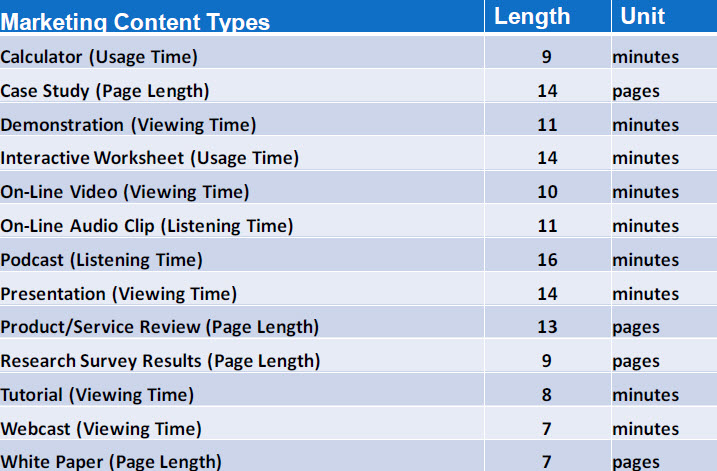 People are busy. But many marketing messages do not take that fundamental observation fully to heart. A study by analysts at IDG, for example, suggests the "ideal" length for an online video is 10 minutes. Some of us would say that overstates the "dwell time" by five times.
A typical viewer will not finish a video available online, and in fact will likely watch for just a bit over two minutes.
Another shocking finding is webcast viewing time. Webcasts routinely run 30 minutes in length. Even IDC suggests the optimal viewing length is just seven minutes. And if IDC is off as much as it might be for online video, less than seven minutes of interest might be the reality.
The point is that content intended to engage a user has to be kept short, much shorter than most assume.
read more here
Gary Kim was cited as a global "Power Mobile Influencer" by Forbes, ranked second in the world for coverage of the mobile business, and as a "top 10" telecom analyst. He is a member of Mensa, the international organization for people with IQs in the top two percent.
Screens Now Equal to Paper as Reading Media
The time people spend reading on a digital screen is now almost equal to the time spent reading printed paper text, according to a recent survey by Gartner. You might think that this is a pure substitution effect, but the Gartner survey found that consumers do not generally see print and online content as direct and functional substitutes.
“There are concerns that digital media will cannibalize print media, based on the general decline in newspaper sales and take-up of online news services in many parts of the world, but the evidence from our research is that print and online are not generally regarded as direct substitutes by consumers,” said Nick Ingelbrecht, research director at Gartner. “Something more complicated than a straightforward substitution of print to digital media is taking place."
That suggests "online content" could develop as a new and different media format, not simply a transposed electronic version of offline products. Multimedia likely is one way of describing the difference. It is possible that users instinctively understand that online experiences are inherently interactive, inherently a multimedia format.
The huge majority of tablet and iPad users say they find screen reading either easier than reading printed text (52 percent) or about the same (42 percent). However, 47 percent of laptop users find screen reading harder than reading printed text, and 33 percent reported it was about the same.
Gartner surveyed 1,569 consumers in six countries, the United States, United Kingdom, China, Japan, Italy and India.
The huge majority of tablet and iPad users say they find screen reading either easier than reading printed text (52 percent) or about the same (42 percent). However, 47 percent of laptop users find screen reading harder than reading printed text, and 33 percent reported it was about the same.
Gartner surveyed 1,569 consumers in six countries, the United States, United Kingdom, China, Japan, Italy and India.
Gary Kim was cited as a global "Power Mobile Influencer" by Forbes, ranked second in the world for coverage of the mobile business, and as a "top 10" telecom analyst. He is a member of Mensa, the international organization for people with IQs in the top two percent.
Microsoft Buys Skype, Illustrates Changes in Access Business
Microsoft has bought Skype for $8.5 billion, in an all cash deal. It is the biggest acquisition in the 36-year history of Microsoft.
Microsoft might would want Skype for a number of reasons. Read more about the deal here: http://www.carrierevolution.com/articles/209963/microsoft-buys-skype/.
A decade ago, one could have found much speculation about the extent to which application providers such as Google, Apple, Microsoft or others might "want to become telephone companies." As it turns out, that was the wrong way to phrase the question. A better way would have been to ask whether firms such as Microsoft, Apple or Google might "want to become communications providers."
Clearly, the answer to that question is "yes." None of them want to be "telephone companies," even though video collaboration, voice communications and messaging have become core features for a mobile device, a mobile operating system, email, social networking and other apps.
But that also should raise new questions. What is a "telco, cable company or mobile service provider," when devices, apps and to a lesser extent operating systems also offer communications features?
As it turns out, the unique role in the application ecosystem for telcos, mobile service providers and cable companies is "access" to the global Internet. That doesn't mean those sorts of firms do not also create and sell apps; they do. Voice, texting and video entertainment are apps created and sold by the access providers.
But as the Microsoft purchase of Skype shows, communication applications can be supplied by any number of entities, so the app function is not the "unique" role. The unique role is "access."
That does not mean access providers are restricted from the applications role, simply to note that apps are not the unique role. That also suggests access providers might in the future find sustainable revenue models that build on that unique access role. And many of those applications logically will grow from the unique access role.
Each contestant also can build on a core "app" competency. For mobile providers, location is obvious. For cable providers, many of which also have become content owners, content is a core "app" competency. For fixed line telecom providers, business services remain an area of key competence.
But as Microsoft's move illustrates, "communication services" no longer are a unique competence for access providers. A key competence, to be sure; simply not a unique and irreplaceable competence.
Microsoft might would want Skype for a number of reasons. Read more about the deal here: http://www.carrierevolution.com/articles/209963/microsoft-buys-skype/.
A decade ago, one could have found much speculation about the extent to which application providers such as Google, Apple, Microsoft or others might "want to become telephone companies." As it turns out, that was the wrong way to phrase the question. A better way would have been to ask whether firms such as Microsoft, Apple or Google might "want to become communications providers."
Clearly, the answer to that question is "yes." None of them want to be "telephone companies," even though video collaboration, voice communications and messaging have become core features for a mobile device, a mobile operating system, email, social networking and other apps.
But that also should raise new questions. What is a "telco, cable company or mobile service provider," when devices, apps and to a lesser extent operating systems also offer communications features?
As it turns out, the unique role in the application ecosystem for telcos, mobile service providers and cable companies is "access" to the global Internet. That doesn't mean those sorts of firms do not also create and sell apps; they do. Voice, texting and video entertainment are apps created and sold by the access providers.
But as the Microsoft purchase of Skype shows, communication applications can be supplied by any number of entities, so the app function is not the "unique" role. The unique role is "access."
That does not mean access providers are restricted from the applications role, simply to note that apps are not the unique role. That also suggests access providers might in the future find sustainable revenue models that build on that unique access role. And many of those applications logically will grow from the unique access role.
Each contestant also can build on a core "app" competency. For mobile providers, location is obvious. For cable providers, many of which also have become content owners, content is a core "app" competency. For fixed line telecom providers, business services remain an area of key competence.
But as Microsoft's move illustrates, "communication services" no longer are a unique competence for access providers. A key competence, to be sure; simply not a unique and irreplaceable competence.
Gary Kim was cited as a global "Power Mobile Influencer" by Forbes, ranked second in the world for coverage of the mobile business, and as a "top 10" telecom analyst. He is a member of Mensa, the international organization for people with IQs in the top two percent.
Monday, May 9, 2011
Do-Not-Track Bill Introduced In Senate
The head of the Senate Commerce Committee on Monday introduced a new privacy bill that would require ad networks and other companies to honor consumers' requests to opt out of online tracking.
The Do-Not-Track Online Act, unveiled by Sen. Jay Rockefeller (D-W.Va.), directs the Federal Trade Commission to craft rules establishing standards for a universal do-not-track mechanism.
The Do-Not-Track Online Act, unveiled by Sen. Jay Rockefeller (D-W.Va.), directs the Federal Trade Commission to craft rules establishing standards for a universal do-not-track mechanism.
There is no question users deserve protections of their personally-identifiable data, as one would expect protection of credit card and other personal data. As with all well-intentioned objectives, it will be tough to craft rules that are effective for those purposes, yet flexible enough to be implemented by application and service providers without excessive externalities and unintended consequences.
Gary Kim was cited as a global "Power Mobile Influencer" by Forbes, ranked second in the world for coverage of the mobile business, and as a "top 10" telecom analyst. He is a member of Mensa, the international organization for people with IQs in the top two percent.
YouTube Enters Online Movie Rental Business
YouTube is adding around 3,000 new movie titles users can view, in the U.S. market. The inventory will include short movie trailers, funny movie parodies and full-length blockbuster films.
YouTube also says it is hiking investment in the content that’s already being viewed by hundred of millions of people on YouTube, especially support for 20,000 partners that already are producing original content and whose work appears on YouTube.
YouTube also says it is hiking investment in the content that’s already being viewed by hundred of millions of people on YouTube, especially support for 20,000 partners that already are producing original content and whose work appears on YouTube.
Gary Kim was cited as a global "Power Mobile Influencer" by Forbes, ranked second in the world for coverage of the mobile business, and as a "top 10" telecom analyst. He is a member of Mensa, the international organization for people with IQs in the top two percent.
Better Broadband a 2-Edge Sword for Mobile Service Providers
 You won't find too many people arguing that Long Term Evolution, WiMAX or 4G in general is a bad thing, long term. You can find lots of people who might say the timing of the investment is an issue, that the danger of overpaying to acquire spectrum is an issue, or that protocol decisions carry some risk.
One hears less talk about the impact on voice services as lower-latency mobile broadband services are introduced. One advantage LTE offers application providers and access providers is much better latency performance, which means better real-time services performance. That means better voice and video.
But that lower latency is better for all providers of real-time services, not just the mobile broadband provider.
"Because LTE is all-IP and offers lower latency, it puts mobile calling services from OTT providers like Skype on more equal footing with existing carrier wireless voice services," says Tole Hart, Yankee Group senior analyst.
In other words, though LTE is strategic for mobile service providers, it also means a better platform for over-the-top application providers who have services requiring good latency performance.
Yankee Group forecasts smart phone penetration reaching 50 percent by the end of 2011 and 70 percent by 2013, meaning there will be more customers using their smart phones to download alternative calling apps from application providers like Skype, Vonage and Google Voice, and possibly from social communities like Facebook in the future.
The standard "advice" for mobile service providers is to enhance the value of their captive voice services. It's good advice, though strategically problematic, since the application providers will continue to enhance the value of their own services as well.
Obviously, at stake for carriers is a portion of the approximately $730.4 billion in global mobile voice service revenue. But there also will be danger from application providers who bundle text messaging with their voice services, as well.
Text messaging generates about $74.7 billion worth of revenue, and very-high profit margins.
Text messaging generates about $74.7 billion worth of revenue, and very-high profit margins.
Mobile service providers have important advantages in terms of creating bundles of services that will tend to keep customers "glued" to a basket of features including voice, text messaging and broadband access. That would be a simple adoption of the fixed-line "triple play" strategy, where the incremental cost of any one service is relatively low, in a package of three or four services.
Of course, in some markets mobile service providers might also be able to apply native quality of service mechanisms that provide meaningful experience advantages for end users, and are not available to other application providers. In other cases mobile service providers might want to sell those capabilities to third-party voice providers as a revenue-generating product.
The point is that there is no simple, fool-proof way to "firewall" a mobile voice service from more-effective application provider competition once an LTE network is in place. Bundles and quality assurance are likely to be important weapons, though.
Gary Kim was cited as a global "Power Mobile Influencer" by Forbes, ranked second in the world for coverage of the mobile business, and as a "top 10" telecom analyst. He is a member of Mensa, the international organization for people with IQs in the top two percent.
77% of Tablet Users Say the Device Replaces PC Actions

Those findings do not necessarily settle the issue of whether a tablet can completely replace a PC. That will be true in some, perhaps many cases over time, especially as tablets become devices that work right out of the box and do not have to rely on a PC for configuration or updates.
read more here
Gary Kim was cited as a global "Power Mobile Influencer" by Forbes, ranked second in the world for coverage of the mobile business, and as a "top 10" telecom analyst. He is a member of Mensa, the international organization for people with IQs in the top two percent.
Subscribe to:
Posts (Atom)
-
We have all repeatedly seen comparisons of equity value of hyperscale app providers compared to the value of connectivity providers, which s...
-
It really is surprising how often a Pareto distribution--the “80/20 rule--appears in business life, or in life, generally. Basically, the...
-
Financial analysts typically express concern when any firm’s customer base is too concentrated. Consider that, In 2024, CoreWeave’s top two ...

