Monday, November 28, 2011

AT&T Revising T-Mobile USA Bid?


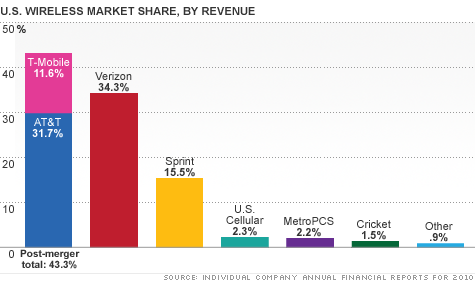
AT&T is revising its proposal to buy T-Mobile USA, emphasizing asset sales that could reach 40 percent of T-Mobile USA assets. Presumably the plan would build on AT&T’s argument that the deal should be considered market by market, and involve asset divestitures in some local markets.

That might bolster the argument that some more regional players, such as MetroPCS Wireless and Leap Wireless, could become more-national challengers with the new assets.  AT&T proposes T-Mobile USA sales

The issue, some would note, is that the local divestiture has been a staple of mobile acquisitions in the recent past, and none of that activity appears to have slackened the growing concentration at the top of of the mobile market, as much competition might be argued to exist more broadly within the mobile market, or in the broader communications market.

In city after city, and in the country as a whole, Federal Communications Commission data show the wireless market has grown more highly concentrated.. Possible divestitures


To measure market concentration, the Department of Justice uses a formula known as the Herfindahl-Hirschman Index. It considers markets to be highly concentrated when the index tops 2500. The score for the U.S. wireless industry as a whole at last measurement, in June 2010, was 2848, up from 2151 in 2003.

Some cities score much higher, including Oklahoma City at 3100; Springfield, Mo., at 3662; and Lafayette, La., at 4703.

The Justice Department says if AT&T were allowed to buy T-Mobile, the index would rise to more than 3100 nationally, including significant increases in 91 of 97 major markets.

The Federal Communications Commission also appears to believe the market is too concentrated. Ironically, then, the FCC’s 15th “Annual Report and Analysis of Competitive Market Conditions With Respect to Mobile Wireless, Including Commercial Mobile Services”  makes no formal finding as to whether there is, or is not, effective competition in the industry.”

That report contains  no stated conclusion on the U.S. wireless market, in terms of effective competition, a surprise to some observers, who had predicted that the FCC report would declare the U.S. market “not competitive” in some substantial respects. FCC report doesn't mention "market concentration"

On the other hand, one standard test of industry concentration shows a "high degree of concentration." But many observers would simply ask what other state of affairs could possibly be the case.

The report does use the “Herfindahl-Hirschman Index,” (HHI), which is calculated by summing the squared market shares of all firms in any given market, and is a commonly used measure of industry concentration.


Antitrust authorities in the United States generally classify markets into three types: Unconcentrated (HHI < 1500), Moderately Concentrated (1500 < HHI < 2500), and Highly Concentrated (HHI > 2500).

In the mobile wireless services industry, the weighted average of HHIs (weighted by population across the 172 Economic Areas in the United States) was 2811 at the end of 2009, compared to 2842 at the end of 2008.

By that measure, the U.S. wireless market is “highly concentrated.” But observers will argue about what that means. Access services of any type are “highly concentrated” in almost every market, in the sense that there are typically two dominant wired providers.

Wireless markets typically have more providers than that, but even wireless is “highly concentrated.” Whether access markets, wireless or wireline, can be anything but highly concentrated seems to be the issue. There is a good reason why access markets traditionally have been “monopoly” markets. Until recently, it was thought impossible to have facilities-based competition in access markets.

In fact, in most markets globally, that will still generally be the case. Hence we see wholesale networks being built in several countries, the theory being that markets will not support more than one optical access network.

Mobile voice coverage would not strike most observers as being anything but competitive. The report states that 89.6 percent of consumers can buy service from five or more suppliers, for example. To be sure, the number of competitors is higher, across the board, in more-populated areas, as you would expect.

Wireless broadband coverage is relatively consistent with the voice findings, as 68 percent of U.S. consumers have a choice of four or more providers. The caveat is that the. competition is mostly confined to more-densely-populated areas, again as you would expect. Rural consumers clearly do not have as many choices.


Sunday, November 27, 2011

Telcos Will Lead, App Providers Will Gain, in Mobile Payments

The existence of mobile wallet services operated by Google, PayPal and Isis raises an obvious question: which contestants will “win” the battle to become the dominant or leading wallet services? In principle, one might argue that over-the-top application providers, mobile service providers, clearinghouse networks such as Visa or MasterCard, banks or other payment specialists could emerge as the leading providers of such services.


Researchers at ABI Research say it is the likes of Google and Apple that ultimately will lead the market, though mobile service providers are highly likely to claim the most share initially.


While mobile service providers will havethe majority of NFC-based mobile wallet users early on, their market share will erode between 2012 and 2016 as Google and Apple assume greater share.

“By the end of 2012, Google will prove that Google Wallet is a hit with consumers,” says Mark Beccue, ABI Research senior analyst. “By 2014, we will see Google Wallets supported alongside competing MNO offerings globally.”


Mobile service providers might have 75 percent mobile wallet share in 2012, shrinking to 63 percent in 2016.  Over the top providers will win wallet war


Google Wallet also will succeed in markets where mobile service providers prefer not to spend capital to develop and support mobile wallet infrastructure. In such cases, application providers such as Google, Apple and others will have an advantage.


Though Apple is not yet in the market, ABI Research believes Apple will enter the market. “Apple will launch a mobile wallet product in 2012,” Beccue argues.


ABI Research also predicts that near field communications will support 594 million users in 2016.

That is not to say banks, payment providers or merchants will fail to attempt their own offerings. Starbucks, for example, operates one of the most-successful mobile wallet and payment programs in 2011.


In most cases, such efforts will have suffered in the face of successful programs offered by the likes of Google, Apple and the mobile service providers, ABI Research believes. Who wins wallet war?


Apple has yet to launch a mobile payment service, though it is widely believed from patents and whispers in the corners of the industry that the company will equip its iPhones with payment-enabling NFC sensors and software in 2012.


As with Google and its carrier partners, AT&T and Verizon will allow Apple to offer its mobile wallet to consumers who have iPhones, regardless of whether or not the carrier has a competing mobile wallet, Beccue noted.


Still, most observers believe PayPal says 2016 will be the year when some industry executives believe U.K. shoppers will be able to use their mobile phones to shop, instead of using cash, checks or credit and debit cards.


PayPal’s conclusions are based on a Forrester Consulting survey of 10 senior executives from major U.K. retailers and other businesses.


Some 49 percent of mobile buyers surveyed by Forrester Consulting use their mobile phones to purchase products at least once every three months.


“By 2016, you’ll be able to leave your wallet at home and use your mobile as the 21st century digital wallet,” says Carl Scheible, Managing Director of PayPal UK.


“We’re not saying cash will disappear entirely, but we’ll increasingly use our phones and other devices rather than our wallets to pay in-store as well as online,” argues Scheible. 2016 key for U.K. mobile payments


Some might even argue  that mobile wallet functions will have more substantial impact on the retail shopping experience, however. “Payment” using a mobile device might be the least-important new reason people use new mobile commerce applications.


In fact, some might argue, consumers will be using mobile payment apps because the value of the mobile wallet offers clear value.


“PayPal’s vision is a one-stop shop for retailers to engage their customers directly during every part of the shopping lifecycle, generating demand from consumers through location-based offers, making payments accessible from any device, not just from the mobile phone, and offering more flexibility to customers even after they’ve checked out,” Scheible says.


“As well as paying for goods without having to queue, the report reveals shoppers can look forward to being able to carry digital loyalty cards, promotional offers and receipts on their phones – keeping everything in one place creating a virtual shopping hub,” PayPal says.

Saturday, November 26, 2011

What Next for T-Mobile USA?

AT&T easily will survive any failure of its bid to buy T-Mobile USA. T-Mobile USA, on the other hand, will continue to face strategic problems. A distant fourth in the U.S. mobile market, with no spectrum available to launch a fourth-generation network, T-Mobile USA either has to spend lots more money to try and catch up to AT&T and Verizon Wireless, or must exit the U.S. market. Few think its parent, Deutsche Telekom, has the appetite for investing.


That suggests T-Mobile USA will still be looking to sell, in the event of a failure of the AT&T bid to buy T-Mobile USA. One issue is the pool of potential buyers. But a significant strategic issue is the value of the asset in a mobile market where being "in the middle" is difficult.


AT&T and Verizon Wireless clearly lead the higher end of the market. Many other larger-regional providers lead the lower end of the market, especially the prepaid segment. That leaves firms such as Sprint and T-Mobile USA in an arguably exposed position, vulnerable to lower-cost providers on the lower end and pressure from the market leaders at the top. 


At a practical level, competing with the larger national contestants means heavy advertising and marketing costs. In some cases, the regional providers can be more targeted about such spending. And that's part of the rub. The providers of lower-cost prepaid services succeed in part by controlling their overhead costs, allowing them to offer lower prices. 


The contrast is perhaps not so stark as the positioning of a mass market retailer between Tiffany and Wal-Mart, or between Tiffany and Amazon.com, but it is the same general problem. 

T-Mobile USA has lost 850,000 contract customers in 2011. In the third quarter, sales fell 2.3 percent to $5.23 billion, though earnings rose 3.8 percent to $332 million. One wonders if earnings rose because T-Mobile USA essentially stopped investing as it would have, if it thought it was going to be an on-going business.

T-Mobile gained 826,000 prepaid customers in this year's first nine months of 2011. The problem is that profit margins for such customers are lower than margins for prepaid customers. Also, T-Mobile USA is the only service provide of the top four without the ability to sell the Apple iPhone. Deutsche Telekom's unsolved problem
Spectrum assets are another issue. T-Mobile USA’s CEO, Philipp Humm, made the point at a May 2011 hearing on the merger before the Senate Judiciary Committee. “As data usage continues to explode, spectrum is becoming a constraint to our business, with T-Mobile facing spectrum exhaust over the next couple of years in a number of significant markets,” Humm said. “Moreover, our spectrum holdings will not allow us to launch [Long Term Evolution]. ” No independent future?


Mobile Wallet: Consumers Are Hesitant, For Good Reason

A new survey by Compete suggests most consumers are not yet inclined to use mobile wallet services, despite apparent awareness of around two thirds of respondents. 


About two thirds of people who use debit cards and credit cards say they aren’t planning to start anytime soon. Just seven percent of banking consumers indicated that they would be very or extremely likely to start using their phone or tablet to make a bill payment. 


About five percent of banking consumers said they would be likely to start using their mobile device to make a deposit. Most also say they aren’t likely to start using their mobile device to make a point-of-sale purchase.


None of that should be surprising. Consumers need a clear value proposition, and it still isn't clear that has been established. Mobile Wallet: Consumers Are Hesitant Few wallet services have been able to fully develop the features they believe will clearly add significant value for consumers, and few retailers are able to support those features, either. 


Beyond that, few consumers actually are able to use near field communications, for example, since their current devices are not equipped to do so. 


Although current use and intended adoption rates for mobile services are low, once consumers adopt mobile financial or money services and start using their phone as a mobile wallet, they use the services frequently, the survey also shows. Some 16 percent of consumers using "Mobile tap and pay" do so daily and another 36 percent use it weekly. A full 87 percent of consumers using mobile couponing do so at least once a month.


There is one important element to keep in mind for any brand-new service such as mobile wallets, namely that it usually is quite impossible for end users to understand or to quantify their possible use of a product they have not yet experienced. 


Apple, for example, has not had a history of conducting market research about any of its new products, on the theory that consumers cannot really describe their possible use of a product they never have seen.


Friday, November 25, 2011

40% Drop in SMS revenue by 2015

EMEA Nov 2011 Event Report Slides v3 Messaging decline.pngIndustry executives surveyed by Telco 2.0 believe it is possible that over the top messaging services will displace about 40 percent of text messagin revenue by 2015, at least in Europe and the Middle East.

In part, that might be a function of generally higher costs in such markets. Costs for consumers in North America tend to be lower than in Europe, for example.

The main cause is competitive pressure from Facebook, Skype, Google and BBM. Mobile voice isn’t that far behind, with a 20 percent decline foreseen by surveyed executives. 40% drop in SMS revenue by 2015

Economic Eras are Rough During the Transition

Fundamental economic transitions always are times of social stress. The transition from agriculture to manufacturing was hugely disruptive. We might be in the midst of another great transformation from manufacturing to "information" as the basis of the economy. If history is any guide, the disruptions we are seeing are a byproduct.

The good news about information technology, according to Erik Brynjolfsson and Andrew McAfee, the authors of  Race Against the Machine: How the Digital Revolution is Accelerating Innovation, Driving Productivity, and Irreversibly Transforming Employment and the Economy  is that it’s making America more innovative, productive and richer.

But the bad news, the two MIT professors add, is that this new wealth, innovation and productivity is being spread unequally, so that only a minority of Americans are reaping the benefits from it. The Internet Is Making Us Both Richer and More Unequal

Thursday, November 24, 2011

Ofcom Describes Net Neutrality Policies

A new position paper by U.K. regulator Ofcom on network neutrality relies heavily on competition to maintain an open Internet access business, while at the same time generally allowing Internet service providers to use network management tools so long as they are transparent about such practices.

At the same time, Ofcom says it will watch for any signs that “best effort” Internet access, which does not allow any packet prioritization, does not coexist with any managed services ISPs may offer.

In fact, the Ofcom rules are less restrictive than current U.S. rules, which do not allow any packet prioritization on fixed networks, at all. What Ofcom does seem to warn against is forms of management that have the business result of favoring an ISP's own services, over competing services offered by other contestants.

Mobile and fixed network operators can meet new demand for high-speed Internet access either by investing in new capacity and partially by rationing existing capacity, in part by using traffic management tools,  Ofcom says in a new position paper explaining its thinking on network neutrality policy.

“The question is not whether traffic management is acceptable in principle, but whether
particular approaches to traffic management cause concern,” Ofcom says. The U.K. communications regulator rightly notes that just two broad forms of Internet traffic management exist, either a “best effort” approach that simply randomly slows down under load, or some form of “managed” access that could include priorities for delay-sensitive or higher value traffic.

Ofcom generally argues that access providers can do quite a lot where it comes to traffic management, so long as they are transparent about it and communicate those practices to end users. There is an expectation that users will have access to all lawful applications, of course.

While recognizing that best-effort and managed services will coexist, Ofcom says it would consider intervening if the amount of “managed” bandwidth jeopardized the amount of “best effort” access Ofcom considers key to continued innovation.

Likewise, Ofcom says it would be concerned if any particular management technique was applied in a way that harmed competitors to ISP-owned services. Ofcom network neutrality statement

AT&T Giving Up on T-Mobile USA Bid?

On November 23, 2011, AT&T and Deutsche Telekom withdrew their applications to combine spectrum owned by both companies, something that would be required if AT&T were to succeed in acquiring T-Mobile USA.

AT&T also says it will take a pretax accounting charge of $4 billion ($3 billion cash and $1 billion book value of spectrum) in the 4th quarter of 2011 to reflect the potential break up fees due Deutsche Telekom in the event the transaction does not receive regulatory approval.

AT&T says it still is pursuing the deal, but the taking of the charge and withdrawal of applications indicate, at the very least, that AT&T thinks prospects are dimming, if not a definitive recognition that the bid will fail.  AT&T Throwing in Towel on T-Mobile USA?


Given the fact that the accounting charge will be taken in advance of the time the Department of Justice antitrust hearing would occur, some will speculate that AT&T plans to withdraw its bid to buy T-Mobile USA before the hearing. 


It is starting to look as though AT&T is preparing to abandon its acquisition attempt. 

Wednesday, November 23, 2011

50% Of E-commerce Site Visitors Are Logged In To Facebook

A new study shows 50 percent of visitors to e-commerce sites are currently logged in to Facebook. 50% Of Ecommerce Site Visitors Are Logged In To Facebook


"On average in October (2011), 50.8 percent of traffic was logged into Facebook while visiting our customers’ ecommerce sites.  Across all customers, this rate ranged from approximately 40 percent to 60 percent, SocialLabs says. Facebook visitors on e-commerce sites.

"While users on our clients’ sites are logged in to Facebook slightly less during the workday and slightly more during the evening, the percentage of logged in users is still very high during the workday," SocialLabs says. "For example, during the work week of October 17 to 21st, on average 51 percent of users on our e-commerce deployments were logged in to Facebook from 9AM to 7PM."

Using Facebook social plugins and Connect integrations, sites can leverage Facebook data to show visitors what friends bought or shared, what products relate to their Likes, and which friends they might want to invite. The study was conducted by Sociable Labs, which helps websites implement social functionality, and looked at 456 million visits to over a dozen ecommerce sites catering to different demographics.


Rocks, Hard Places for U.S. Mobile Service Providers

The next year will continue to be a story of being caught between rocks and very-hard places for a few of the leading U.S. mobile service providers. AT&T seems to be facing higher obstacles as it continues to try and convince regulators that its proposed purchase of T-Mobile USA would not harm competition.

The possible rejection of the deal might cost AT&T $3 billion in cash and an equivalent amount of spectrum. For T-Mobile USA, a failed deal means not only that it has failed to exit the U.S. market, failed to free up valuable capital that it needs to deploy elsewhere, but also has lost well more than a year of marketing blocking and tackling. The cash and spectrum might prove small consolation.

Sprint seems to have gambled its future on what the Apple iPhone can do for it, and continues to have a complicated relationship with Clearwire, which it owns, with 53 percent of the equity, but cannot control. Clearwire is running out of money, hasn't finished building its national WiMAX network and now says it has to build a Long Term Evolution network as well.

Clearwire also says it might not make a coming debt service payment, which would raise questions about whether bankruptcy is coming. Clearwire seems to want help from Sprint, which has pressing capital needs of its own, as it is pushing hard on a key network upgrade that will allow Sprint to build its own LTE network.

Sprint might be happy to see Clearwire restructure, under bankruptcy protection or not. What Sprint can’t afford is for Clearwire’s network to shut down. As many as eight million Sprint customers would lose service should that happen. But a chapter 11 bankruptcy would allow those services to continue.

Some argue Sprint would do better to have Clearwire go into chapter 11 bankruptcy, then buy the company. If Clearwire files for bankruptcy protection, the company’s spectrum licenses go to the bondholders, though, not to Sprint. That doesn't mean Sprint could not then try and buy the spectrum from bond holders. But there is risk. Sprint, Clearwire

LightSquared still hasn't managed to satisfy the U.S. GPS industry that its own launch of LTE services will avoid signal interference with the GPS system. So much hangs in the balance for LightSquared and its wholesale customers as well.


Tuesday, November 22, 2011

"Telcos will Compete with Banks"?

Smartphones using encryption and biometrics will enable telecom companies to compete with banks and credit card companies for retail payment transactions, argues Futurist Patrick Dixon. That might not seem to be the way providers of mobile wallet services such as Google, Isis and PayPal are heading. In most cases, all of those providers require the existing payment providers to provide a complete solution. 


But there might be a difference between the ways new contestants side step into a market, and the efforts such firms might make in the future. As many strategists could argue, a common way new firms get into a market is by starting at the "low end," and then, over time, adding more and more capabilities until, at some point, full head to head competition is feasible. 


Rogers, in Canada, provides an example. Rogers is becoming a "bank," though it likely will confine its early efforts only to some highly-focused applications related to its current customer base. But it would require little imagination to suggest that, once successful, additional functions would become attractive. 


With the caveat that predicting the future is an often-perilous undertaking, and that predictions about the future are more often wrong than right, Dixon thinks big things can happen in mobile commerce, mobile payments and shopping. 


Mobile payments could generate commissions of up to EU2 billion a year in countries like France, Germany, Italy and the UK, he says.  Mobile Payments Future

What is a Facebook Fan Worth?


The old quip about advertising spend--namely that half is wasted, but nobody can tell you which half--remains true, it seems.

According to social media agency SocialCode, a Facebook fan is worth about $10. Looking at more than five million Facebook ads placed by over 50 clients (spanning verticals, but mostly in consumer packaged goods, auto and finance) from between May 2011 and September 2011, the study looked at the cost of acquiring new fans, and what it took to get them to perform a desired action. Value of a "fan"

The study  found that fans perform desirable actions such as installing an app, voting in a contest and making a purchase at a much higher rate, and it's significantly cheaper to prompt them to do so, using advertising, than it is to prompt non-fans.


Facebook fans also are more likely to engage in actions that suggest more involvement. .

The study looked at seven actions a user might perform on a Facebook fan page: app install, contest submission, contest voting, fan acquisition (which encompasses "liking" a sub-brand for existing fans), program sign-up, purchase and sweepstakes.

The cost per acquisition, calculated by dividing the total cost of clicks by the total number of actions, for fans and non-fans is $9.56.


The total conversion rate for fans, obtained by dividing the total users who performed an action by the total who clicked on an ad, is 19 percent, compared to seven percent  for non-fans.

But other studies come up with different figures. Values range from two cents to $136, depending on how one wishes to tally the presumptive value. It all hinges on the assumptions.
  • 2 cents: (offer for 500 new fans for $10.51; eBay).
  • 57 cents: (offer for 1000 new fans for $57 by this fan-creating agency).
  • $1.07: (the cost of advertising on Facebook that encourages a user to become a “fan”; Webtrends).
  • $3.60: (as a media buy to reach 1 million fans; Vitrue).
  • $9.56: (extra cost per acquisition for "conversion" of fan/non-fan into a purchase or other action; calculated by SocialCode).
  • $71.84: (extra amount fans spend vs. non-fans; Syncapse)
  • $136.38: (average annualized value of total fan purchases; Syncapse).
  • 20 extra visits to your web site: (vs. one visit from a non-fan; Hitwise).

None of the studies address the obvious fact that a person willing to become a Facebook fan of an advertiser is probably already buying that company's brand. In other words, the extra value Facebook fandom adds for advertisers is $0 if the fan was already locked in. Value of a fan varies

The Facebook Phone is Coming

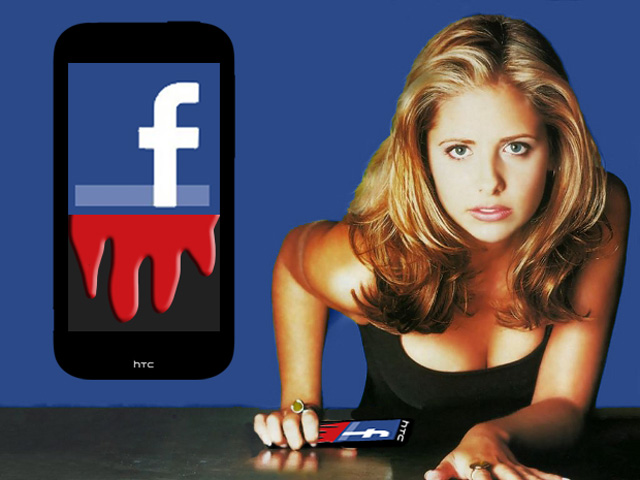
After years of considering how to best get into the phone business, Facebook has tapped Taiwanese cellphone maker HTC to build a smartphone that has the social network integrated at the core of its being.

Code-named “Buffy,” after the television vampire slayer, the phone is planned to run on a modified version of Android that Facebook has tweaked heavily to deeply integrate its services, as well as to support HTML5 as a platform for applications, according to sources familiar with the project. The Facebook Phone

Precisely how all this will play out is hard to envision. People now can use Facebook on virtually all smart phone operating systems and devices. So what Facebook seeks is a much-deeper integration of the Facebook experience with the devices. It might be way too simplistic to say Facebook probably is looking to control a fuller range of the end user experience on a Facebook-optimized mobile, but that is as close to an explanation as seems possible, right now.


The whole point of Android, the Google ecosystem; and Apple and the iOS ecosystem, is to leverage user experience on mobiles into mobile commerce, mobile advertising and other developing revenue streams. Facebook probably assumes its own experience likewise needs to become a business platform, as Google and Apple seem to be attempting. 

Monday, November 21, 2011

One in Three Online Consumers to Use a Tablet by 2014 - eMarketer

US Tablet Users and Penetration, 2010-2014One in three people who are online will use a tablet device in 2014, eMarketer predicts. That would represent 90 million people.


That could have many consequences. Beyond the obvious benefits for firms that make and sell tablets, some percentage of those devices will be connected to mobile broadband networks. That means incremental revenue for access providers. 


Application providers will have to create user interfaces that do not require use of a mouse or keyboard. Content providers will have 90 million new screens that are primarily content consumption devices. App stores will have a chance to sell more content of all types to those new devices. 


Mobile marketers will be "freed" from the "tyranny" of small screens and will have a new potential audience of 90 million people whose attention partly will be shifted from other devices and might also represent some incremental new attention as well. 


Tablets also will blur the lines between "mobile" and "fixed" usage. Tablets are likely to be used while people are on couches, and not so much when people actually are in transit or out and about. 


More than the screen size, that usage pattern will create distinct marketing opportunities different than the location-driven smart phone screen or the "work-oriented" PC screen. Where devices tend to be used, screen size, storage and output and input methods will tend to shape smart phone, tablet and PC environments as distinct venues.


Right now, eMarketer estimates that 33.7 million Americans use a tablet device at least monthly. 


Growth will slow to double digits beginning in 2012, but the number of users will rise to nearly 90 million, or 35.6 percent of all Internet users, by 2014. One in Three Online Consumers to Use a Tablet by 2014


Chorus, New Zealand Wholesaler, Goes Public

On Nov. 23, 2011, Chorus, the wholesale business including assets that once were part of Telecom New Zealand, will start trading on the New York Stock Exchange.

The listing means Telecom New Zealand now is now longer a facilities-based service provider, but will lease capacity from Chorus, as will other New Zealand service providers competing in the fixed-network business.

There was an earlier BT precedent for thinking about structural separation, SingTel also operates under similar principles, and though most people don't realize it, Rochester Telephone in New York also agree to structural separation, in exchange for freedom to pursue unregulated business opportunities.

Despite the changes, Telecom New Zealand will retain its ownership of mobile services, making Telecom a more-focused mobile play, in a sense.


Yes, Follow the Data. Even if it Does Not Fit Your Agenda

When people argue we need to “follow the science” that should be true in all cases, not only in cases where the data fits one’s political pr...