The European Union’s Commissioner For The Digital Agenda Neelie Kroes argues that the EU needs to invest about $64 billion in 4G networks, in the form of loans, to overcome current spectrum incompatibilities that affect use of Apple iPhone and iPad devices.
At the moment, both devices have only limited connectivity in the EU, where spectrum differences and, in some cases, no 4G networks, force the LTE-capable devices to use 3G connections.
There are larger issues. If Europe remains a region where LTE and 4G are "problems" for suppliers such as Apple, they won't drive their decisions by European concerns.
Tuesday, October 2, 2012
In EU, 4G Frustrates Apple Device Users

 Gary Kim was cited as a global "Power Mobile Influencer" by Forbes, ranked second in the world for coverage of the mobile business, and as a "top 10" telecom analyst. He is a member of Mensa, the international organization for people with IQs in the top two percent.
Browser News Content Consumption Surges
There has been movement over the last year toward using the browser rather than apps for tablet news consumption, the Pew Research Center has found, despite the new popularity of mobile apps.
Fully 60 percent of tablet news users mainly use the browser to get news on their tablet, just 23 percent get news mostly through apps and 16 percent use both equally. In 2011, 40% got news mostly through a browser, 21 percent mostly through apps and 31 percent used both equally, the Pew Research Center says.
But as was revealed in the 2011 survey, app news users-and those who use both apps and the browser equally-remain in many ways more engaged and deeper news users than those who mostly use their browser. The browser is preferred on the smartphone as well (61 percent get news mostly through a browser, 28 percent mostly through apps and 11 percent use both equally).
Fully 60 percent of tablet news users mainly use the browser to get news on their tablet, just 23 percent get news mostly through apps and 16 percent use both equally. In 2011, 40% got news mostly through a browser, 21 percent mostly through apps and 31 percent used both equally, the Pew Research Center says.
But as was revealed in the 2011 survey, app news users-and those who use both apps and the browser equally-remain in many ways more engaged and deeper news users than those who mostly use their browser. The browser is preferred on the smartphone as well (61 percent get news mostly through a browser, 28 percent mostly through apps and 11 percent use both equally).
Gary Kim was cited as a global "Power Mobile Influencer" by Forbes, ranked second in the world for coverage of the mobile business, and as a "top 10" telecom analyst. He is a member of Mensa, the international organization for people with IQs in the top two percent.
60% of Mobile Users Research Purchases from Their Phones
Six out of 10 people who own a mobile device use it to research products, while an additional 44 percent use it to purchase goods, a research study published today by digital publisher SAY Media has found.
Users aged 18 to 24 do so at slightly-higher rates. Some 64 percent of users 18 to 24 research products from their mobiles and 58 percent purchase from their phones.

Users aged 18 to 24 do so at slightly-higher rates. Some 64 percent of users 18 to 24 research products from their mobiles and 58 percent purchase from their phones.
Gary Kim was cited as a global "Power Mobile Influencer" by Forbes, ranked second in the world for coverage of the mobile business, and as a "top 10" telecom analyst. He is a member of Mensa, the international organization for people with IQs in the top two percent.
Mobile Consolidation is Coming in U.S. Market in 2013, 2014
Raymond James analyst Ric Prentiss predicts that both Sprint and T-Mobile USA will engage in a rather furious wave of acquisitions in 2013 and 2014 to bulk up.
“We do think M&A in the U.S. wireless space will occur over the next 12 to 18 months," says Pentiss.
“We think the September 19 announcement of the new T- Mobile USA CEO hired externally and the $2.4 billion tower sale to Crown Castle on September 28 are strong indicators that T-Mobile USA, and its owner Deutsche Telekom, are not interested anytime soon in network sharing or merging with Sprint," Prentiss says.
"We believe T-Mobile is more likely a competing bidder against Sprint for smaller M&A deals that bring spectrum, cash flow, synergies, and the potential for public currency,” he says.
“We do think M&A in the U.S. wireless space will occur over the next 12 to 18 months," says Pentiss.
“We think the September 19 announcement of the new T- Mobile USA CEO hired externally and the $2.4 billion tower sale to Crown Castle on September 28 are strong indicators that T-Mobile USA, and its owner Deutsche Telekom, are not interested anytime soon in network sharing or merging with Sprint," Prentiss says.
"We believe T-Mobile is more likely a competing bidder against Sprint for smaller M&A deals that bring spectrum, cash flow, synergies, and the potential for public currency,” he says.
Gary Kim was cited as a global "Power Mobile Influencer" by Forbes, ranked second in the world for coverage of the mobile business, and as a "top 10" telecom analyst. He is a member of Mensa, the international organization for people with IQs in the top two percent.
When Will Programming Costs Subside?
It's an almost certain bet that retail prices for video entertainment services will increase in price, virtually every year, driven, video entertainment service executives say, by ever-higher costs of programming. That doesn't mean immediate changes are coming in the video business. But observers would say a day of reckoning awaits.
At 10 percent per year rates of growth, the $40 wholesale cost of goods sold today would more than double, to about $80, in another seven years," says Craig Moffett, Bernstein Research analyst.
With an average retail subscription price of about $80, you might assume the retail price is double the wholesale price, implying a $160 a month subscription price in seven years, should nothing else change. Some think that is unlikely.

At 10 percent per year rates of growth, the $40 wholesale cost of goods sold today would more than double, to about $80, in another seven years," says Craig Moffett, Bernstein Research analyst.
With an average retail subscription price of about $80, you might assume the retail price is double the wholesale price, implying a $160 a month subscription price in seven years, should nothing else change. Some think that is unlikely.
Gary Kim was cited as a global "Power Mobile Influencer" by Forbes, ranked second in the world for coverage of the mobile business, and as a "top 10" telecom analyst. He is a member of Mensa, the international organization for people with IQs in the top two percent.
Ultrabooks Not Selling as Hoped, Globally
Global ultrabook shipments are falling short of expectations in 2012, according to IHS iSuppli. High prices are partly to blame, but also industry ability to cut through all the clutter around new devices. Tablets and smart phones are getting most of the attention, in okther words.

An estimated 10.3 million ultrabooks will ship worldwide in 2012, according to IHS iSuppli.
That is a reduction from the previous forecast issued earlier this year of 22 million units. In the newly adjusted forecast for 2012, more than half of the shipments for the year are expected to come in the fourth quarter.
Along with the revised figures for 2012, shipments have also been modified for the next year, projected to rise to 44 million in 2013, down from the older outlook of 61 million.
“There once was a time when everyone knew the‘Dude you’re getting a Dell’ slogan. Nowadays no one can remember a tag line for a new PC product, including for any single ultrabook,” says Craig Stice, senior principal analyst for compute platforms at IHS.
“So far, the PC industry has failed to create the kind of buzz and excitement among consumers that is required to propel ultrabooks into the mainstream," says Stice.
Gary Kim was cited as a global "Power Mobile Influencer" by Forbes, ranked second in the world for coverage of the mobile business, and as a "top 10" telecom analyst. He is a member of Mensa, the international organization for people with IQs in the top two percent.
Monday, October 1, 2012
Half of U.S. Adults Use Mobile Broadband
 Half of all U.S. adults now have a mobile connection to the web using either a smart phone or tablet, significantly more than a year ago, according to the Pew Research Center's Project for Excellence in Journalism and The Economist Group.
Nearly a quarter of U.S. adults, 22 percent, now own a tablet device-double the number from a year earlier.
Another three percent of adults regularly use a tablet owned by someone else in their home. And nearly a quarter of those who don't have a tablet, 23 percent, plan to get one in the next six months.
Some 44 percent of U.S. adults have smart phones, up from 35 percent in May 2011, the Pew Center says.
Gary Kim was cited as a global "Power Mobile Influencer" by Forbes, ranked second in the world for coverage of the mobile business, and as a "top 10" telecom analyst. He is a member of Mensa, the international organization for people with IQs in the top two percent.
Will FreedomPop become a "Free Mobile" Catalyst in U.S. Market?
With the launch of FreedomPop, a reasonable question to ask is whether FreedomPop can pull an "IIlliad Free" and disrupt pricing in the mobile market.
There might not be a direct causal relationship, but beginning Oct. 7, 2012, AT&T "GoPhone" smart phone customers will have a new rate plan featuring unlimited talk and text, with 1 GByte of data for $65 per month. Unlimited text messaging to Mexico, Canada and over 100 other countries is also included.
This new plan is specially designed for smart phone users, and saves them $10 per month compared to previously available options.
The $50 monthly plan with unlimited talk and text and the $25 monthly plan with 250 minutes and unlimited nationwide text with optional data packages will continue to be available to smartphone customers.
There might not be a direct causal relationship, but beginning Oct. 7, 2012, AT&T "GoPhone" smart phone customers will have a new rate plan featuring unlimited talk and text, with 1 GByte of data for $65 per month. Unlimited text messaging to Mexico, Canada and over 100 other countries is also included.
This new plan is specially designed for smart phone users, and saves them $10 per month compared to previously available options.
The $50 monthly plan with unlimited talk and text and the $25 monthly plan with 250 minutes and unlimited nationwide text with optional data packages will continue to be available to smartphone customers.
Gary Kim was cited as a global "Power Mobile Influencer" by Forbes, ranked second in the world for coverage of the mobile business, and as a "top 10" telecom analyst. He is a member of Mensa, the international organization for people with IQs in the top two percent.
Windows Challenging RIM in Europe
Windows now is challenging RIM for third place in smart phone share in Europe, as low-end devices such as the Nokia 610 drive sales in key markets such as Italy and France, according to Kantar Worldpanel ComTech.
“Lower end devices are driving sales of the platform as consumers seek value, resulting in growth rates of 6.6 percent in Italy, 3.5 percent in France and 2.3 percent in Great Britain, Dominic Sunnebo, global consumer insight director at Kantar Worldpanel ComTech, says.
In Italy, Windows now holds a double-digit market share, 10.4 percent, a first in the European market,” Kantar Worldpanel reports.
“Lower end devices are driving sales of the platform as consumers seek value, resulting in growth rates of 6.6 percent in Italy, 3.5 percent in France and 2.3 percent in Great Britain, Dominic Sunnebo, global consumer insight director at Kantar Worldpanel ComTech, says.
In Italy, Windows now holds a double-digit market share, 10.4 percent, a first in the European market,” Kantar Worldpanel reports.
Gary Kim was cited as a global "Power Mobile Influencer" by Forbes, ranked second in the world for coverage of the mobile business, and as a "top 10" telecom analyst. He is a member of Mensa, the international organization for people with IQs in the top two percent.
2% of India Mobile Subscribers Use 3G
Today just two percent of India’s 971 million mobile phone users are using 3G, Maravedis Rethink says.
Despite that, new Long Term Evolution networks are coming as well. Ironically, 4G introduction might be the trigger for 3G adoption.
By the end of 2013 there will be 74 million 3G users, up from 18 million now, and Maravdeis expects active 3G subscribers in India to reach 371 million by the end of 2017.
Despite that, new Long Term Evolution networks are coming as well. Ironically, 4G introduction might be the trigger for 3G adoption.
By the end of 2013 there will be 74 million 3G users, up from 18 million now, and Maravdeis expects active 3G subscribers in India to reach 371 million by the end of 2017.
Gary Kim was cited as a global "Power Mobile Influencer" by Forbes, ranked second in the world for coverage of the mobile business, and as a "top 10" telecom analyst. He is a member of Mensa, the international organization for people with IQs in the top two percent.
How Enterprise Workers Communicate
Email remains mission critical for enterprise workers, even if email is considered outmoded by Millennials. On a daily basis, globally, an order of magnitude more emails are sent than telephone calls made, according to analysts at Gartner.
Corporate Email: 82.7 billion
Corporate Telephone Calls: 5.4 billion ( over public PSTN and Cellular networks*)
Instant Messages: 26 billion
Corporate Email: 82.7 billion
Corporate Telephone Calls: 5.4 billion ( over public PSTN and Cellular networks*)
Instant Messages: 26 billion
Gary Kim was cited as a global "Power Mobile Influencer" by Forbes, ranked second in the world for coverage of the mobile business, and as a "top 10" telecom analyst. He is a member of Mensa, the international organization for people with IQs in the top two percent.
Businesses Think Cloud Computing is "Immature"
Cloud computing remains a developing science, a new survey has found. The poll included responses from 250 participants in nearly 50 countries, representing a global group of cloud users, providers, consultants and integrators from 15 industry segments
Nearly one in four (24 percent) survey respondents indicated that there is no or limited levels of innovation in the market. Nearly all respondents said they felt cloud computing was far from reaching maturity, with only software as a service (SaaS) cautiously placed at the earliest state of growth level.
Among the top problems are:
Nearly one in four (24 percent) survey respondents indicated that there is no or limited levels of innovation in the market. Nearly all respondents said they felt cloud computing was far from reaching maturity, with only software as a service (SaaS) cautiously placed at the earliest state of growth level.
Among the top problems are:
- Government regulations keeping pace with the market (1.80)
- Exit strategies (1.88)
- International data privacy (1.90)
- Legal issues (2.15)
- Contract lock in (2.18)
- Data ownership and custodian responsibilities (2.18)
- Longevity of suppliers (2.20)
- Integration of cloud with internal systems (2.23)
- Credibility of suppliers (2.30)
- Testing and assurance (2.30)
Gary Kim was cited as a global "Power Mobile Influencer" by Forbes, ranked second in the world for coverage of the mobile business, and as a "top 10" telecom analyst. He is a member of Mensa, the international organization for people with IQs in the top two percent.
Mobile Network Optimization Can Increase Capacity 43%
 [Source: Dialogic.com]
Gary Kim was cited as a global "Power Mobile Influencer" by Forbes, ranked second in the world for coverage of the mobile business, and as a "top 10" telecom analyst. He is a member of Mensa, the international organization for people with IQs in the top two percent.
[Source: Dialogic.com]
Gary Kim was cited as a global "Power Mobile Influencer" by Forbes, ranked second in the world for coverage of the mobile business, and as a "top 10" telecom analyst. He is a member of Mensa, the international organization for people with IQs in the top two percent.
FreedomPop Launches 4G Service in Public Beta
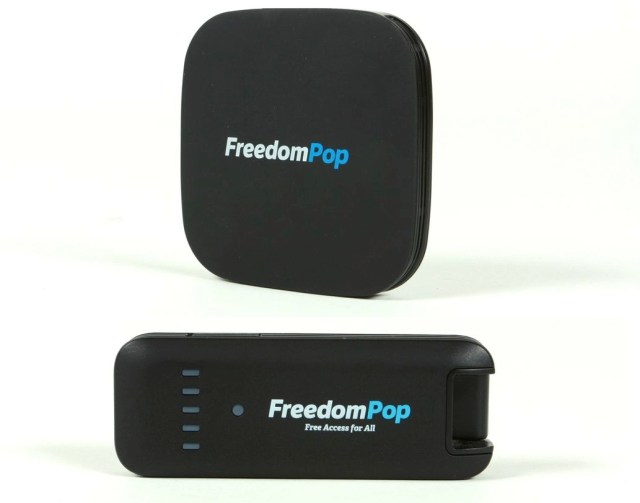 FreedomPop, the U.S. 4G provider using a "freemium" pricing model, has launched its public beta offering, though initially only as a personal Wi-Fi hotspot service. The "sleeves" for iPhones and iPods will be available in a month or two.
 FreedomPop is offering 500 megabytes of free monthly 4G service provided by Clearwire on two devices, a wireless hotspot and a USB stick. Both devices will technically be available for free, though you’ll have to put down a refundable security deposit of $49 for the USB stick and $89 for the hotspot.
FreedomPop is also offering monthly plans starting at $17.99 for 2 gigabytes of data and $28.99 for 4GB.
Gary Kim was cited as a global "Power Mobile Influencer" by Forbes, ranked second in the world for coverage of the mobile business, and as a "top 10" telecom analyst. He is a member of Mensa, the international organization for people with IQs in the top two percent.
Windows 8 Users Prefer Windows 7, Which is Trouble for Microsoft
 More than half of early users of Windows 8 seem to prefer Windows 7, a poll finds. That could portend trouble for Microsoft.
 Forumswindows8, which claims to be the web's largest Windows 8 help and support forum, says it conducted a poll of 50,000 people using Windows 8 and found that 53 per cent voted Windows 7 as their favorite Windows operating system.
Windows 8 came second, with 25 per cent, polling just ahead of Windows XP on 20 per cent.
The new Windows 8 user interface, sometimes referred to as "Metro" or "Modern," is one of the least appealing features, with just 22 per cent of those surveyed saying they liked Windows 8's touchy rectangle interface.
Those results are not necessarily indicative of what the general base of users might think, but it isn't a good sign. Remember "Vista?" By most estimates, early Vista adoption by enterprises never exceeded 10 percent. Adoption later increased, most estimates would suggest.
But Windows 7 arguably has been a more successful operating system than Vista ever was. So the issue is whether Windows 8 is more like Vista, or more like Windows 7, in terms of adoption. Visually, it is a sharp break.
Gary Kim was cited as a global "Power Mobile Influencer" by Forbes, ranked second in the world for coverage of the mobile business, and as a "top 10" telecom analyst. He is a member of Mensa, the international organization for people with IQs in the top two percent.
Subscribe to:
Posts (Atom)
-
We have all repeatedly seen comparisons of equity value of hyperscale app providers compared to the value of connectivity providers, which s...
-
It really is surprising how often a Pareto distribution--the “80/20 rule--appears in business life, or in life, generally. Basically, the...
-
Financial analysts typically express concern when any firm’s customer base is too concentrated. Consider that, In 2024, CoreWeave’s top two ...

