Tuesday, July 23, 2013

LTE is Going to be a Fixed Network Alternative

You always can get an argument about whether broadband Internet access provided by Long Term Evolution networks is a reasonable substitute for fixed network high speed access. But it already seems clear that the substitution of LTE for fixed network fiber access is going to become a reality for quite a substantial number of potential customers.

AT&T's Project Velocity will extend IP-based wireline broadband service to approximately 57 million customer locations (both consumer and small business) representing 75 percent of the customer locations within the company’s 22-state service area by year-end 2015.

In the remaining 25 percent of customer locations where it will not be economically feasible to upgrade the wireline network to faster broadband speeds, the company will offer a 4G Long Term Evolution solution instead.

That is one way of saying that up to 25 percent of households located within AT&T's fixed network footprint ultimately will only be able to buy LTE for higher-speed access, and will not have access to a hybrid fiber-copper network.

As always, different network solutions make sense in higher-density areas, such as cities and suburbs, compared to what is feasible in rural areas. One size never fits all. That mixed network approach virtually assures that LTE will be used as a substitute for fixed network high speed access.

The debate is over, for practical purposes. In at least some cases, LTE will be a functional substitute for fixed network access.

Growth, not Liquidity is Issue for U.S. Telcos, Cable

A review of U.S. cable and telco firms suggests liquidity is not a problem for most, according to Fitch Ratings. But mature markets, limited opportunities for revenue growth and heightened competition are issues.

In the first quarter of 2013, liquidity in both telecom and cable TV segments overall remained strong, with 89 percent of committed facilities available for borrowing and total liquidity exceeding aggregate 2013, 2014 and 2015 maturities, Fitch Ratings said.

In other words, most of the firms have sufficient cash to operate their businesses. But the report also points out the key concerns contestants face.  

For AT&T, the concerns are competitive pressures, particularly associated with switched access lines. Also, the weak economy is affecting business revenues. AT&T also faces long-term spectrum requirements, which will cause it to spend money to catch up. Meanwhile, AT&T also is stepping up its spending on share repurchases.

At Comcast, limited revenue growth opportunities outside of its core triple-play service offering and its aggressive policy of returning capital to shareholders are seen as issues.

At DirecTV, an aggressive policy of returning capital to shareholders and lack of revenue diversity, plus a narrow product offering are issues. As with the cable providers, a mature U.S. video entertainment business also is an issue.

Time Warner Cable faces a weak economy and competitive pressure negatively affecting its free cash flow margin, subscriber growth and revenue. Financial leverage is another issue.

For CenturyLink, the issue is limited ability to drive new revenue growth.

At Charter Communications, elevated financial leverage is an issue, especially if Charter succeeds with its plans to grow by acquisition. Also, Charter has relatively weaker service penetration than most of its peers. Competition is an issue, as it new revenue growth outside of its core triple-play offerings.

Will Regulators Allow Consolidation Wave to Begin in Europe?

An important test of regulator will to allow significant consolidation in the European Union telecom business is about to begin.

KPN has agreed to sell its German operation E-Plus to Telefonica Deutschland, in an 8.1 billion euros ($11 billion) deal that has to be approved by European Commission authorities.

If approved, Telefonica Deutschland would have 30 percent mobile market share. Deutsche Telekom and Vodafone each would have 35 percent share.

Equally important, regulator approval undoubtedly will stimulate additional deals. An important matter is the number of major providers in each market, as some national regulators have insisted that four is the minimum number of providers necessary for competition. The Telefonica Deutschland deal obviously would reduce the number of strong national mobile players in Germany to three.

In recent deals such as in Austria where operators sought to take markets from four to three players, regulators have demanded concessions such as spectrum divestments and pledges to offer competitive wholesale access to rivals.

So approval is by no means assured. But KPN’s competitive situation in Germany illustrates the importance of spectrum and customer assets, as KPN trails its other competitors in that respect. Simply, KPN’s operation is too small.

As of the end of March 2013, E-Plus (KPN) and Telefónica Germany had a combined 43.3 million mobile customers in Germany.


E-Plus had around 24 million customers, with eight million postpaid. O2 has just under 20 million clients, with around 10 million postpaid customers.

What really seems to matter is the number of postpaid customers, since the average revenue per user for a postpaid account is so much higher than a prepaid account. 

Prepaid ARPU is  is six euros a month, while post-paid ARPU is 27 euros a month.  

Also, prepaid accounts tend to churn more than postpaid accounts.

Monday, July 22, 2013

Verizon Introduces 500 Mbps Service

If you think Google Fiber shows Google is crazy like a fox, think again: Verizon has begun deploying a new top-tier FiOS Quantum Internet access service, featuring speeds of 500 megabits per second download and 100 Mbps upload.


The 500/100 Mbps speed is initially available in parts of every FiOS market, and Verizon will deploy the service throughout the entire FiOS footprint into 2014.


For consumers, the 500/100 Mbps speed is available as part of a bundle or in stand-alone fashion, starting at $309.99 per month for a double play or $329.99 per month for a triple play with a two-year agreement.


For small businesses, the new top speed is only offered on a stand-alone basis, starting at $369.99 per month with a two-year agreement. The service also is available to consumers and small businesses on a no-contract, month-to-month basis.

Verizon's 500 Mbps service is an obvious response to Google Fiber’s ability to change consumer expectations on the speed front, though Verizon will not try to compete directly on the price front.

Indonesia Regulators to Raise SIM Prices Two Orders of Magnitude

One of the more basic economic insights is that raising the price of a product reduces demand for that product. 

So it is that Indonesia’s Telecommunications Regulatory Body plans to hike the price of subscriber information modules to a minimum of IDR 100,000 ($10), from current prices as low as IDR 2,000 ($0.2).

That might sound like a clear anti-consumer move. But the rationale is more nuanced. Monthly churn in the Indonesian mobile market is about 20 percent a month, meaning the equivalent of a complete turnover of the national customer base every five months.

Whatever difficulties that poses for service providers, it also is a consumer problem to the extent that all that churn is accompanied by a high rate of customer telephone number turnover.

The culprit would seem to be the high use of prepaid service enabled by mobile SIMs. In this case, the regulator hopes to reduce the amount of churn, and the associated number of inactive telephone numbers.

There is another angle, though. Regulators say higher SIM prices will reduce the use of “SIM boxes” that can fraudulently route international calls so that it appears to the telco to be a local call.

Such practices are not terribly unusual, and cause an estimated service provider revenue loss of US$77 million every year in Indonesia.

Southeast Asia Tablet Sales Up 100%

Sales of tablet computers across Southeast Asia have doubled over the last 12 months to reach 6.1 million units, according to GfK Asia. About 43 percent of all computing appliances sold in Southeast Asia were tablets.

Across Singapore, Malaysia, Thailand, Vietnam, Indonesia and Philippines, sales of tablet devices between June 2012 and May 2013 increased 101 percent, GfK Asia says.

Indonesia was among the volume leaders for tablet sales, accounting for nearly 1.3 million units, marking a 141 percent rise year-on-year. In the Philippines, tablet sales grew 322 percent over 12 months.

Sales of Tablets, Especially Smaller-Screen Tablets, Grow 61% in Myanmar

New devices and new networks, often unforeseen by the telecommunications industry, have played a huge role in overcoming the problem of supplying voice services to billions of people in the developing world.

In 2000, one might still have looked at tele-density figures for Africa and south Asia and still have concluded that not much was happening, in terms of adoption.

But that changed, sometime around 2004, when a growth inflection point was reached, both in terms of income and use of mobile phones. Some of us would argue that something quite similar will happen with Internet access.

The question is how the massive adoption of Internet apps will happen. The simplest answer is that people will get Internet the same way they got voice services: by way of the mobile network.

In that view, the smart phone will be the way most people will use the Internet. But tablets are a wild card. For decades, development experts have tried hard to create a $100 PC, on the not unfounded assumption that the price of a PC is a barrier to adoption.

But tablets, especially lower-priced tablets with seven-inch screens, might also be quite important.


It now appears tablet devices now are making it possible for people to acquire and use computing devices other than smart phones, while Wi-Fi hotspots are the network those tablet users rely on for Internet access.

In Myanmar, for example, a country with extraordinarily low mobile phone and fixed broadband adoption, tablets are proving to be a crucial device for Internet usage. Total fixed and mobile voice penetration, for example, is 10 percent.

From January to May of 2013, tablet sales in Myanmar grew 61 percent, according to  GfK. Those 450,000 tablet sales represented 170,000 more purchases than in the same period of 2012.

GfK says at least 78,000 tablets were sold monthly since the start of 2013, possibly driven by a 20-percent drop in retail price.

Given Internet penetration less than one percent, with most of those few users concentrated in only the two largest cities, Yangon and Mandalay, it also might not be unusual that more users are starting to rely on Wi-Fi for Internet access.

GfK says Wi-Fi-only tablet sales were about 22 percent of all units sold between June and November 2012. In the December 2012 to May 2013 period, Wi-Fi-only tablet sales were about 25 percent of all sales.

And it appears wireless and mobile networks account for those changes. "The vast improvement in wireless broadband in Malaysia has increased the number of hotspots available, which helps drive the uptake of Wi-Fi only models especially with its lower price tag,” says Selinna Chin, Managing Director for GfK in Malaysia. Chin.

In addition to the use of hotspot Wi-Fi, smart phones, used in tethered mode, also appear to be driving use of Wi-Fi-only tablets. The role larger smart phones might play, compared to seven-inch tablets, is not yet clear.

Both the use of tablets as the Internet access device, and the reliance on wireless networks, especially Wi-Fi or tethered smart phones, shows the impact of non-traditional access methods in a country with exceptionally low adoption of the Internet, mobile phones or even fixed telephone service.

Wi-Fi access blurs the line between public and private networks, fixed and mobile access modes. But Wi-Fi will likely remain an important form of Internet access in many developing countries where mobile broadband is too expensive and fixed networks are not built.

It now appears Internet cafes and public Wi-Fi hotspots could play a similar role in many rural areas of developing countries. With the growing adoption of smart phones, tablets and PCs, many users who would once have used a cybercafe arguably have begun using the mobile network.

That is less the case in rural areas, though, where the traditional reasons people have used cybercafes (they don’t own a PC, for example) might still be relevant issues. Still, tablets are interesting in that they represent, in many ways the illusive $100 PC. In that case, the key problem shifts to “Internet access,” especially place-based access that allows tablet use with Wi-Fi networks.

Lower prices are important drivers of tablet adoption. In Myanmar, tablet prices dropped from US$497 in June 2012 to US$397 in June 2013, a price drop of 20 percent in a year.

Smaller screen devices, probably because they sport lower price tags, seem to be a big factor. In the first five months of 2013, demand for seven-inch devices (or smaller) has grown from 37,000 units sold in January to around 57,000 units sold in May.

The preference for smaller screen devices also is shrinking sales of larger-screen devices. In 2013, eight-inch to 10-inch device share shrunk from 38 percent in 2012 to 16 percent in 2013.

Sunday, July 21, 2013

What I'd Rather be Doing Right Now....

It's summer. News flow is slow. That's me, surfing Topanga Canyon, south of Malibu. Not recently! These days, boogie boarding is fine. 

Is Google Fiber a Big Revenue Opportunity for Google?

How big a business might Google Fiber eventually represent for Google? The question has been asked ever since Google launched Google Fiber in Kansas City, Kan. and Kansas City, Mo.

You might say the questions are larger now that Google Fiber is going to operate in Austin, Texas and Provo, Utah.

So far, Google Fiber in the Kansas City markets seems already to have passed the threshold for a sustainable Internet service provider operation. About 33 percent of 200 homes part of a survey by Bernstein Research are taking the service, and three-quarters of the rest are considering doing so.

That’s a very healthy take rate so early in the marketing effort of the first year. Some 85 percent of respondents are buying the gigabit service, and about 15 percent have opted for the free 5 Mbps service.

So some might argue Google Fiber could well expand to other cities, even if doing so would require triple-digit billions over time. That has lead to skepticism about just how extensive Google Fiber might eventually become, as a product for Google.

On its earnings call for the first quarter of 2013, Google executives were asked about prospects for Google Fiber. Carlos Kirjner, analyst at Sanford C. Bernstein & Co. asked about Google Fiber impact, noting that even if Google invested billions, and managed to pass 20 million U.S. homes, Google “would be at best and mid-sized provider in a market that accounts for less than half of your current business.”

There is another way to look at matters, and that is that if Google Fiber managed to generate revenues equivalent to 50 percent of Google’s current total revenues, that might well make it a meaningful business for Google.

Larry Page, Google CEO, answered that “we would love to find businesses much bigger than our entire current business to invest in, but I think there's only a very small number of such companies that even exist.”

But fiber-based Internet access might just be one of those “very small number” of businesses big enough to be significant for Google. “We look at places where we can provide products that can make really big difference in peoples' lives and we can make a lot of money and resources doing it,” Page said.

“We're not in a business to lose money, cross subsidize or any of these things,” Patrick Pichette, Google CFO, said on Google’s second quarter 2013 earnings call. In other words, Google intends to make money on Google Fiber.

“We really look at every incremental profit dollar that creates shareholder value and really focused on these profit dollars rather than the percentage margins,” Pichette said.

“Many of the new opportunities that we may be exploring whether it be hardware, whether it be Play, whether it be – many of these will have different margins in our core business, but they actually offer great kind of – huge revenue pools, huge margin pools in absolute dollars and then create much shareholder value and in many cases with Larry and the product area leads, great synergistic value between the products to create this great experiences,” Pichette said.

Pichette also reiterated that Google expects Google Fiber to be profitable. “We did Kansas City because we know as a city was going to be very profitable,” even if the ventures are not profitable on day one.

To be sure, Google Fiber already is changing ISP behavior. But Google executives also seem to be suggesting that if Google Fiber winds up being as successful as some believe, it could generate significant revenue for Google, with acceptable margins.

Google Fiber Enables Sightdeck

One reason Google Fiber was launched was to show what innovations are possible when gigabit Internet access is available. 

Sightdeck, developed by iMatte, is one such example.

Sightdeck is a fully integrated display system, camera system, compositing system, presentation system, full HD production system and broadcast studio; all in one system for one price, and made possible by symmetrical gigabit Internet connections.

Sightdeck suggests the system can be used for collaboration, distance learning, real-time editing and business conferencing, for example.

So far, those are some concrete examples of new apps or services enabled by gigabit speeds. By extension, the same should be true of any other cloud-based service.

Saturday, July 20, 2013

It's Wrong to Borrow Today, Stick the Repayment on Your Kids and Grandkids

The reason many U.S. voters are outraged by $17 trillion in federal government deficits is that it represents inter-generational borrowing: simply, older people borrow to support their benefits today, while leaving the repayment for their children, grandchildren and great grandchildren.

It’s wrong. It’s just that simple.

High unemployment and debt loads arguably have led to a decreased ability to save for a down payment or qualify for a mortgage.

Between 2006 and 2011, those 25 to 34 experienced the largest decline in home ownership rates in the country, according to a USA Today analysis of Census Bureau data.


Source: U. S. Census Bureau, Monthly Labor Review, Project on Student Debt, Institute for College Access and Success, Consumer Financial Protection Bureau

Hadley Malcolm and Frank Pompa, USA TODAY

5G Might Not be About Layer One

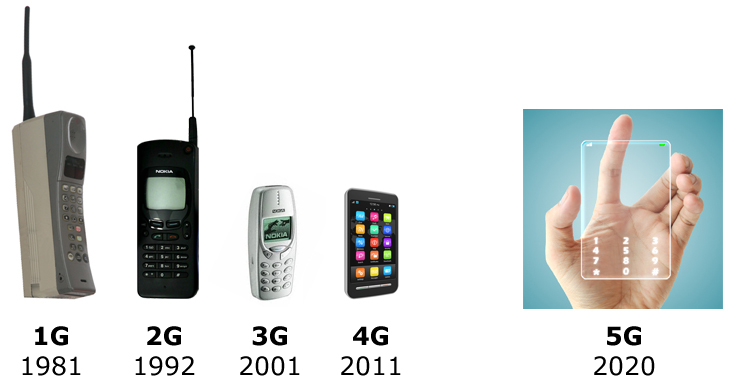
Up to this point, mobile network generational advances have largely been about layer one access, especially the air interface, on the subscriber-facing side of the network. 

Whether that will be the case in the future now is seen by some as the defining issue for future potential 5G networks, which in principle might for the first time not directly be defined by a different air interface.

At least, that is how Intel Labs views the matter. Instead, Intel seems to believe, 5G will be about pervasive connectivity, and therefore network features at layers other than layer one.

5G technologies will, in intel's view, focus more on uniform experience throughout the network by offering a consistent level of connectivity and connection quality, across networks and air interfaces. 

Intel also believes 5G will be more about user personalization, the sort of thing standards bodies will not be able to define with much precision, if at all. For that reason, some question the claims by some, such as Samsung, about what 5G will be, sometime in the future. 

As Intel sees matters, 5G will be about a network of networks that enables personalized and ubiquitous connectivity, across networks, more than network speed or air interface protocols. 

Friday, July 19, 2013

"Less Change Than You Think, Near Term; More Than You Think Later"

Important innovations in the communications business often seem to have far less market impact than expected. 

That is one reason why the Gartner notion of the “hype cycle” resonates. 

In most cases, innovations are expected to have large impact “soon,” and often fail to deliver on those expectations, leading to a period of disillusionment and then finally to useful deployment. 

Even really important and fundamental innovations (steam engine, electricity, automobile, personal computer, World Wide Web) can take much longer to produce measurable changes. 

Quite often, there is a long period of small, incremental changes, then an inflection point, and then the whole market is transformed relatively quickly.

Mobile phones and broadband are among the two best examples. Until the early 1990s, few people actually used mobile phones, as odd as that seems now. 

Not until about 2006 did 10 percent of people actually use 3G. But mobiles relatively suddenly became the primary way people globally make phone calls and arguably also have become the primary way most people use the Internet, in term of instances of use, if not volume of use. 

 Prior to the mobile phone revolution, policy makers really could not figure out how to provide affordable phone service to billions of people who had “never made a phone call.” 

That is no longer a serious problem, and the inflection point everywhere in the developing world seems to have happened between 2002 and 2003. 

Before 2003, one could assume that most people in the developing world could not make a phone call easily. 

A decade later, most people use mobile phones. That would have been impossible to envision, in advance of the reaching of the inflection point.

What is Impact of Early Device Upgrade Plans?

The competitive impact of new device upgrade plans launched by T-Mobile USA, AT&T and Verizon Wireless is hard to determine at the moment. T-Mobile USA might have hoped its plan would not soon be copied by the other leading national service providers, but with the exception of Sprint, the competitive response came quickly.


Also, there are signs that consumers are upgrading their devices more slowly than they had been doing in the past several years.


According to analysts at UBS, replacement rates actually turned negative in 2012, when device upgrades dropped about nine percent, year over year.

UBS predicts upgrades will fall again in 2013. So it is unclear how much demand exists for more-rapid upgrade cycles on smart phones. In principle, the new plans allow for upgrades as often as every six months to a year, depending on the service provider and the payment plans subscribers choose.


Nor is it entirely clear whether handset subsidies are “good” or “bad” for consumers who choose to buy service plans featuring bundled devices. 

A study by the Organization for Economic Cooperation and Development suggests the advantages of unbundled device plans are somewhat nuanced and subtle.


For those countries where both bundled and “bring your own device” options exist, such as in France or the United States, the report concludes that the bundled option (with discounted smartphone) was, on average, between $10 and $20 a month more expensive than the BYOD option.


“This is not unexpected,”  a new OECD report shows. When service providers bundle or subsidize a device over time, they essentially are loaning the customer money. The difference in cost over three years essentially represents the cost of credit.


There are other consumer advantages, but they are a bit subtle. Unbundled phone sales can have a positive impact on both consumers and the ecosystem that exists around smartphones, the report suggests, in the area of price transparency, for example.


But the report also concludes that, in broad terms, service pricing is only slightly affected by the presence of bundled discounts for popular smart phones.


On the other hand, in many cases, consumers possibly pay higher costs over three years, when purchasing a device that is bundled with a service plan.


But bundled devices are beneficial for consumers by removing high upfront payments that are a deterrent to use of high-end smart phones.


In some cases, there also are service provider effects. The report notes that there is some evidence that when one mobile service provider provides subsidized devices, and others do not, the non-bundling carriers suffer marketplace damage.


In Spain, Telefonica and Vodafone, the two operators with the largest market share, decided to remove handset subsidies in February 2012 (Cinco Dias, 2012).This action was not followed by Orange (Spain) which gained market share from Telefonica and Vodafone during the first half of that year.


Possibly as a result of this experience Vodafone reintroduced what it described as a short term special offer, which included the price of a handset, at the end of July 2012.

The point is that benefits and costs for early device upgrade plans, or bundled or unbundled device sales, are quite subtle.

How do Computing Products Sold Close to Marginal Cost Recover Capital Investment?

Marginal cost pricing has been a common theme for many computing industry products. The concept is that retail pricing is set in relation t...