Friday, October 18, 2013

U.S. Connected Device (Tablet, E-Reader) Adoption 43%

The number of Americans ages 16 and older who own tablet computers has grown to 35 percent, and the share who have e-reading devices like Kindles and Nooks has grown to 24 percent, according to the Pew Internet and American Life Project. 

Overall, the number of people who have a tablet or an e-book reader among those 16 and older now stands at 43 percent. 

In some cases, that will be important for reasons other than device adoption. Some market watchers consider connected tablets and e-readers to be part of the machine-to-machine services business. 

Those who own the devices are especially likely to live in upper-income households and have relatively high levels of education. In addition, women are more likely than men to own e-readers. 

Hispanics and Asians are more likely to own tablets than blacks or whites, the study found. Blacks, Hispanics and Asians are more likely to own a mobile phone than white users. 

Those sets of findings are instructive. It now has become commonplace for mobile networks to be the way most people, everywhere, get access to voice, messaging and Internet apps. That also seems to be the trend in the U.S. market, for Asians, Hispanics and black users. 

That also has implications for understanding voice, messaging and Internet access usage patterns. Simply, some groups tend to prefer use of mobiles for Internet access more than others, and more than average. 

That, in turn, has implications for understanding the voluntary actions of citizens and consumers. We should not expect rational consumers to use every form of high-speed access in the same way. 
Who owns tablets
Who owns ereaders
Who owns cell phones and smartphones

$22 Billion in M2M Revenues in 2017

“What drives revenue after mobile Internet access?” is a question mobile service providers and telcos have been asking themselves, and working on,  for some time. Of the myriad potential opportunities, machine-to-machine (M2M) revenue seems to be percolating to the top of every list of potential sizable medium-term revenue growth.

With the caveat that people differ on what M2M services and apps include (some prefer the term “Internet of Things,” which in some cases seems to include use of mobile networks by tablets; others tend to define M2M as sensor apps operating without a direct human end user actively involved), there is a good reason for the optimism.

The easiest path forward for any business is a simple line extension that builds off existing competencies. And use of mobile networks for sensor operations and applications simply builds off communications capabilities originally designed to connect people.
The number of cellular M2M connections will more than triple by the end of 2017, according to IHS, growing to 375 million in 2017, up from 116 million in 2012.

As a result, revenue generated by mobile M2M services will grow to $22.4 billion in 2016, up from $9.6 billion in 2012. Those are significant amounts, if you assume a tier-one carrier generally is interested in new revenue sources capable of driving at least $1 billion in new annual revenues.
 
Mobile service providers of course benefit from providing access services. But much of the M2M business involves a mix of horizontal (access, security) and vertical (line of business) industry segment expertise.

In many cases, that means service providers will partner with industry specialists with domain expertise in a particular industry vertical. Generally, mobile service providers also will be looking to create M2M platforms such partners can use.

Volume will be key for the new business. Consumer smart phone accounts might generate $80 a month revenue. Sensor connections will be a fraction of that amount, perhaps $5 a month.

Operating costs might also be a key operating cost input, since sensors, unlike smart phones, might need to be repaired or replaced in the field.

People tend to bring their failed devices to a retail store for repair or exchange, so there is no need for a truck roll.
And where phones get replaced every couple of years, on average, sensors might be in place for considerably longer periods of time, necessitating a longer-term view of device capabilities and end user business objectives.

Mistakes will be costly. So the emphasis will be on deploying network sensor elements that can be provisioned remotely, by the customer, and monitored remotely, using simple application programming interfaces.


Google Core Revenue Driver Now is Advertising; Could Commerce Lead in Future?

Google's development of products and services has sometimes confounded observers who wondered what the heck those developments had to do with the core advertising business.

The answer seems to be that not everything Google works on is related, even tangentially, to the core advertising business. The self-driving car is the best example of that. 

But even when there is a somewhat-clearer relationship between operating systems, devices, apps and capabilities, it is not always immediately clear what value Google sees. 

Some might argue that operating systems, browsers, devices, maps,  search, Google Now, Google Wallet and  the Play store could be assembled as a complete ecosystem for finding and buying products and services.

In that sense, all the various pieces would add up to a commerce, or shopping, revenue capability. 

41 Percent of YouTube Viewing is on Mobiles

Some idea of the rapidly-growing traffic demand represented by video can be gleaned from one bit of news: 41 percent of YouTube traffic now occurs on mobile devices (phones and tablets), up from about six percent of total traffic in 2011.

To be sure, that traffic appears mostly to happen when mobile devices are connected to Wi-Fi networks. 

In part, increased mobile viewing of mobile video will help justify or spur adoption of mobile broadband. For the most part, mobile devices will be used to watch video while connected to Wi-Fi networks in peoples' homes. 

source: Mobidia
That does not yet appear to the case on every mobile network, in every country. 

Still, the dominant trend is for users to switch to use of Wi-Fi when they can, especially in the home, and especially when they will be watching video.


Thursday, October 17, 2013

Mobile Customers, Accounts, Lines, Devices: What are We Counting?

For whatever combination of reasons, Verizon Wireless has been outpacing AT&T, Sprint and T-Mobile US at adding net new “customers” since about 2010. That is especially crucial as overall net additions are shrinking since the end of 2011.


Perhaps 90 percent of all new net additions now are taken from another service provider.

All that might raise a question: will Sprint and T-Mobile US take share from each other, from AT&T or from Verizon Wireless? It’s a hard question to answer, in part because the subscriber figures actually do not quite add up in a logical way.

Verizon Wireless, for example, added 1.1 million net retail connections, including 927,000 retail postpaid net connections, in the third quarter, to grow total retail connections to 101.2 million connections, up 5.5 percent year over year.


Some 95.2 million of those retail connections were postpaid connections.


If AT&T, T-Mobile US and Sprint report third quarter results in line with their second quarter reports, we might expect T-Mobile US to add a million customers, AT&T to gain half a million and Sprint to lose about half a million.

So we might expect about 2.5 million net adds at Verizon, AT&T and T-Mobile US, with Sprint losing about half a million. In other words, about two million net accounts would be added, of which possibly 1.8 million represent market share shift.

So where are those customers coming from? One suspects the issue is “accounts” or “users” rather than “customers.” That is about the only way to explain the numbers.


To be sure, the shift of postpaid users to prepaid is a complicating factor, but it seems likely that the carriers are reporting something more akin to “connected devices” (phones, tablets, data cards) rather than customer accounts (which often are family or shared plans) or “lines” (connected phones).


Those estimates assume the third quarter results from T-Mobile US, AT&T and Sprint will be about the same as their second quarter results.

T-Mobile US added 1.1 million customers in its second quarter of 2013, for example.

In its second quarter of 2013, Sprint lost about 520,000 net customers, though it gained 194,000 postpaid customers. AT&T, in the second quarter of 2013, gained a net 632,000 customers, including 551,000 postpaid customers.


Scratch Wireless Launches with "Wi-Fi First" Access Model

Add Scratch Wireless to the list of firms that believe Wi-Fi can be a primary access method for at least some smart phone users. 

The new U.S. service is based on “Wi-Fi first” mobile service, with passes used to get access to a Long Term Evolution network. So far, only one device is supported, the Motorola Photon, a 4.3-inch screen, Android-powered device outfitted with dual cameras, 4G LTE, and a slide-out keyboard for $269.

Scratch Wireless allows full-time use of text messaging, with voice and data available for no charge when a user is on a Wi-Fi network.


Scratch Wireless sells a day pass costing $1.99 for voice access, and a separate pass costing $1.99 for mobile data access. The 24-hour passes support a total of 30 minutes of calling, or 25 Mb of data usage.


Monthly passes are available for $14.99, using the same voice or data approach. The voice pass offers 250 minutes of talk for a 30-day period, while the data pass supports 200 Mb of data access.

The assumption is that much of the time, users will have access to Wi-Fi. Republic Wireless also uses a Wi-Fi first access model.

America Movil Abandons KPN Acquisition Effort

Telecommunications remains a business with perceived national interest implications. In recent days, America Movil has tried to buy incumbent Netherlands telco KPN. But America Movil has been blocked by the KPN Foundation, which had temporarily increased its stake in KPN to just under 50 percent in order to fend off the takeover. 

Liberty Global tried to buy German cable company KDG, as well as Netherlands cable company Ziggo, and also failed in both attempts. LIberty Global was successful at acquiring Virgin Media in the United Kingdom. 

But Telefonica successfully has concluded its acquisition of Germany's E-Plus (partially owned by KPN), at least in terms of the shareholder vote. Regulatory clearance still is required. 

If and when AT&T makes an acquisition bid of its own, national interest, or at least European interest concerns are expected to arise as well. 

Wednesday, October 16, 2013

Google Fiber Adds ESPN, Disney Streaming for Smart Phones, Tablets

Starting Oct. 16, 2013, Google Fiber TV customers can stream  the WatchESPN and WATCH Disney apps to their smart phones and tablets for free. The deal isn't unusual or exclusive, as WatchESPN and WATCH Disney are available from most Internet service providers. 

But the deal adds one more important ISP, and makes streaming direct to end users by a content provider more common. Eventually, the accumlated weight of such direct-to-consumer content offers is going to help create the foundation for widespread delivery of programming network content as well.

It will take a while, and Disney is more comfortable with such concepts than most other programming networks. But, little by little, the barriers to direct distribution over the Internet are being chipped away. 

WatchESPN provides live access to eight networks, including live events and all of ESPN’s sports and studio shows (including ESPN, ESPN2, ESPNU, ESPN3, ESPN Deportes, ESPNEWS, ESPN Goal Line and ESPN Buzzer Beater). 

WATCH Disney gives users live access to Disney Channel, Disney Junior and Disney XD networks. Just go to WatchDisneyChannels.com and log in using your Google Fiber username and password.

Mobile Is Reaching Parity with Online Content Consumption, Soon Will Trail Only Television

Mobile devices (smart phones and tablets) now account for about 20 percent of all U.S. consumer content consumption, exceeding the volume of print and radio consumption and rivaling online consumption.

That is a big deal. Soon, mobile consumption will exceed online content consumption.
What it means is that the next target for mobile content consumption is television volumes.

In other words, mobile devices will trail only televisions as platforms for content consumption.


Mobile Data Volume Mostly Carried on Fixed Networks

Mobile broadband might never be a completely satisfactory substitute for fixed broadband access. Many would argue it does not have to be a complete substitute, only a reasonable substitute in some cases. 

Nor, given current trends related to smart phone use of Wi-Fi access, is it necessarily the case that most users ever will want to use mobile Internet access as a primary alternative to fixed access. 

One might be tempted to argue the opposite position, that in fact fixed Internet access routinely handles as much as 80 percent of all smart phone data operations, in which case one might argue that mobile Internet access is, and always will be, supplemental to fixed network access. 

That said, it appears likely that though the volume of data consumed will remain a fixed network function, mobile could represent the vast majority of instances of use. In other words, most of the data will flow over the fixed access network, but most of the sessions could be mobile. 

Smart phone data consumption on Wi-Fi networks ranges from twice to 10 times the volume of data consumed by smart phones on the mobile network, one study has found. 


Does Mobile Broadband "Cause" Economic Growth?

Though correlation is not causation, it might also be said that, in terms of the relationship between mobile broadband adoption and gross domestic product, the correlation might be positive, neutral or negative.

That is not what people tend to believe, or want to believe. But neither does evidence necessarily support the notion that mobile broadband causes, or leads to, economic growth.

Consider that a United Nation’s Broadband Commission report includes the standard view that broadband deployment leads to economic growth.

That is not to argue against robust adoption of mobile broadband. The point is that it is not clear broadband adoption, in and of itself, actually leads in a direct way to economic growth.

That is not what one typically hears. Ericsson sponsored a study conducted by Arthur d. Little and Chalmers University of Technology to quantify the economic impact of broadband speed upgrades, at both the country and household levels.

The main conclusion was that doubling the broadband speed for an economy can increase gross domestic product growth by 0.3 percent on average in Organization for Economic Cooperation and Development economies.

The average increase in household income for a broadband speed upgrade of 4 Mbps to 8 Mbps is US$120 per month in OECD countries.

Households in Brazil, Russia, India and China benefit most by upgrading from 0.5 Mbps to 4 Mbps, at US$46 per month.

For households in OECD countries, there is a threshold broadband access speed to increase in earnings, somewhere between 0.5 Mbps and 2 Mbps on average. The greatest expected increase in income is for the transition from being without broadband to gaining 4 mbps, the
difference being around US$2,100 per household per year (equivalent to US$182 per month).

In BRIC households, the threshold level seems to be 0.5 Mbps. Rround US$800 additional annual household income is expected to be gained by introducing 0.5 Mbps broadband
connection in BRI country households, equivalent to US$70 per month per household.

But other data suggests that, for the 20 countries with the highest mobile broadband penetration, there is actually a negative relationship between GDP growth and broadband penetration.

Some might facetiously argue that limiting mobile broadband use might promote economic growth.  Nor is it completely clear that economic growth and fixed network broadband are causally related. People tend to assume that is the case, but it is tough to prove.

The point is that although the conventional wisdom is that broadband availability--fixed or mobile--”must” lead to economic growth, statistics do not uniformly support that conclusion.

There is no one obvious factor predicting mobile broadband penetration in these major countries, or the relationship to economic growth, one might well argue.


"There are just too many other factors that affect GDP growth for mobile broadband to have any significant and measurable effect,” said Yankee Group Research VP Declan Lonergan.

U.S. Mobile Business Becoming a Price Game?

Is the U.S. mobile market heading further in the direction of becoming a price game, despite all efforts by service providers to avoid that scenario? Ask French mobile service providers, who have seen revenues and profit margin plummet after the market entry of Illiad’s Free Mobile.

Vivendi experienced a 60 percent net income drop in one quarter of 2012, for example.

In the U.S. market, contestants including Republic Wireless and FreedomPop are trying to disrupt mobile pricing. But many observers expect the real changes to come from the likes of T-Mobile US or Sprint, both anxious to gain market share, and both newly fortified by their German and Japanese financial backers.

The result is that the relatively stable U.S. mobile market, stable for a decade, is going to face attempts at disruption, and price is expected to be a huge part of the effort.

Unless the U.S. Department of Justice has an unexpected change of analytical framework, there is no chance a merger between T-Mobile US and Sprint would be allowed, a move that would fuel even more competition. That leaves organic growth as the only way to make a material difference in U.S. mobile market share.

Denied further opportunity to merge, and facing quite modest remaining acquisition opportunities, the four leading national carriers have no choice but to attempt organic growth in a saturated market.

Also, the two smaller national carriers have just made billions worth of new investment in their networks and businesses, and will be seeking a financial return by growing their market share.

If you knew nothing but the history of competition in saturated markets, you know what will happen. Price competition will reach new levels. Executives can deny any interest in doing so all they want. Rarely does new competition make serious inroads into any market without upsetting established pricing.

Also, there is the further issue of what happens to prices in a mature market. Some believe the U.S. mobile phone market is nearing saturation. What markets can you think of where saturated demand and abundant supply has failed to put pressure on prices?

Typically, a mature market is characterized by excess capacity, increased difficulty of maintaining product differentiation, increased intensity of competition, and growing pressures on costs and profits.

That is not to discount the value of human agency. Talented and creative executives might be able to create value that run counter to the other trends. But that will occur against a backdrop of heightened retail pricing pressure.

Tuesday, October 15, 2013

How Much Video Piracy is Caused by Lack of Legal Streaming and Rental?

Movie and video content owners have a notably complex way of allowing people to view new content. And some might argue content owners would suffer less content piracy if those content owners were a bit more flexible about the ways people could view content. 

downloadedcopiesA look at piracy rates for specific titles for a recent three week period shows that none of the most pirated titles were available for legal streaming and only 53 per cent were available to buy at all. About 20 percent of those titles were available to rent, according to researchers at the Mercatus Center. 

So content owners might be able to slash piracy rates by simply making content easily and legally available, rather than trying legal and technological hacks to sustain its current release model, in other words. 

The analysis of file-sharing news was based on TorrentFreak's weekly top-10 most-pirated media, cross-referenced with statistics on legitimate media buying and streaming, shown at Piracy Data.

Would legal alternatives halt all piracy? Probably not all piracy, one might guess, but nearly all of it. 

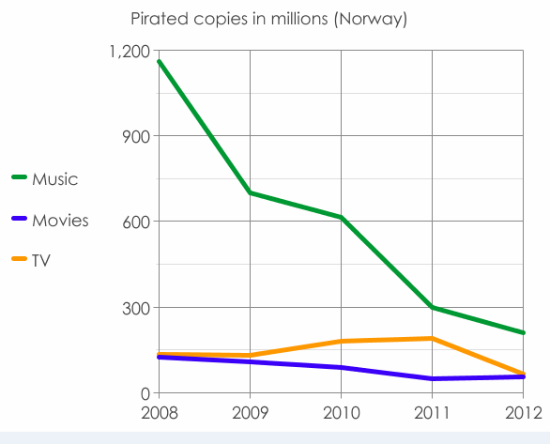
In Norway, where tough anti-piracy measures were put into place in June 2013, music piracy rates have been dropping dramatically, while TV and movie pirarcy also has dropped since 2008. 

Many would say that is because legal alternatives are more compelling.

Amazon Working on Smart Phone with HTC

Though Amazon continues to deny it is developing one or more smart phones, another report suggests Amazon is working with HTC to develop a range of smart phones. But some think the recent Amazon denial of any device "in 2013," could well be developing one or more devices for 2014 introduction. 

Some will question the wisdom or need for such devices, but to the extent Amazon wants to retain relevance and sales in the content business, a branded device, optimized for Amazon's own content store, would be similar in intent to Amazon's Kindle line of devices. 


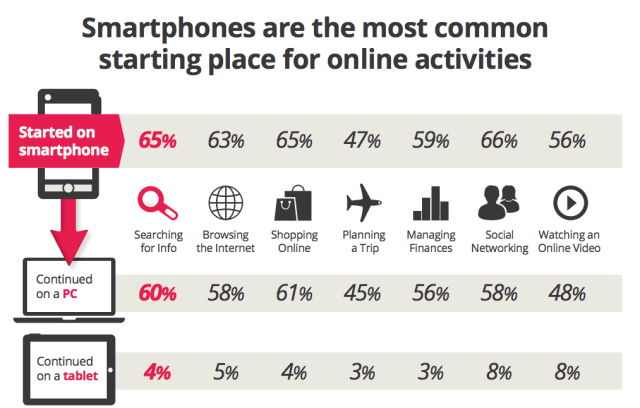
The point is that what people do on tablets, they do on smart phones. And many online activities start on smart phones, and are finished on other devices such as tablets and PCs. 

Amazon might not want to miss that part of the transaction value chain. 


Verizon Wireless Tests 80-Mbps Service in Manhattan

If you have enough bandwidth, you can offer really-fast Long Term Evolution. That is notably true for LTE networks. In that regard, Verizon Wireless seems to be testing LTE at 80 Mbps in Manhattan. 

Price's Law: 10% of People Produce 50% of Outcomes

Price's Law states that half of the literature on a subject will be contributed by the square root of the total number of authors publi...