Monday, January 30, 2012

Can Broadband Access be Segmented and Differentiated?

MetroPCS is among the few U.S. mobile operators that have embraced the idea of application-based charging, at least to the extent of offering plans aimed at light video consumers, heavy video consumers, and those in between.


Though it remains unclear precisely which new charging systems might gain favor, a survey of some 30 tier one service providers, sponsored by Tekelec and conducted by Heavy Reading, suggests several approaches are being considered.

Though the emphasis has been on simplicity and buckets of usage, there has been a change in thinking over the last two years, about the necessity of using differentiated charging mechanisms and plans to better manage and “monetize” mobile networks, in particular, says Mark Ventimiglia, Tekelec director.

“Usage problems and average revenue per user” are the main drivers of the new thinking, says Ventimiglia. But operating cost reduction also is part of the new thinking, especially as the dominant mobile service providers increasingly face upstart competitors willing to underprice existing tariffs.

“The higher end carriers can’t compete with ‘Free’ in France, for example, without innovating,” says Ventimiglia. Indeed, one has seen over the last decade an increase in segmentation in the French fixed network broadband business.

“Tunable networks” is one way to look at what marketing staffs want to create. But service providers also want simplicity, so consumes have clear value propositions and customer service personnel have an easier job supporting those offers.


The good news is that some marketing offers that might be more complex are not necessarily more complex “in the network,” says Ventimiglia. Lots of differentiated retail plans can be created that do not impose a new burden in terms of network managment complexity.

Some might say that if mobile or fixed network access providers do not want to be known as “dumb pipe” providers, then they just have to stop acting that way. And one way to do that is to tailor retail plans.

Even toothpaste and mouthwash now are sold to market segments with different lead values. There is no reason, in principle, why broadband access plans cannot be segmented the same way.

In any industry long accustomed to “usage-based billing,” it will come as no surprise that bandwidth caps prompt thinking about ways to offer temporary “overage protection,” for a fee.

More controversially, executives also are looking at application-based tiers, where customers pay based on the types of applications they want to use. Highly bandwidth intensive apps such as entertainment video or gaming might have one rate and usage quota, while email access and light web surfing might be billed at a different rate.

Plans that are optimized for social networking are another example of how retail plans can be tailored for users with different app profiles.

Speed-based tiers are common in the fixed line business, but might also find application in the mobile realm. Aside from different rates for faster and slower access, users might be offered various types of “speed boost” offers for users who only occasionally need high speed access, but most of the time can get by just fine with slower speeds.

Time-based tiers might charge more at peak hours and less at off-peak hours.

Family data plans of the sort now used for voice and messaging for multiple users and devices on a single account also are likely, allowing users on a single account to use multiple devices that share a single bucket of broadband usage.

One example might be a plan that supports each device with enough bandwidth to view 20 videos a month, with unlimited social networking and web browsing, and 200 hours of voice over Internet protocol calls per month, the study suggests.

In other cases, service providers might look at ways to create plans with “top ups” or “roll over” features on such family plans.

“Casual plans” that are easy to start and stop are another area where charging could change.

Services might mimic the out of home “hotspot” charging method, where users would be able to buy access for a day, for example.

Loyalty mechanisms also might be more common in the future, including birthday and service anniversary bonuses, free service top-ups twice a year, speed boosts, unlimited bandwidth during off-peak hours, or an extra five Gbps of data for six months with the purchase of a new tablet.

Special promotions to accelerate the adoption of new services or encourage
different mobile usage patterns might include unlimited access to a new application for three months, funded by advertisements, discounts on service tier upgrades, or unlimited services at certain times or days when the network is not congested.

Service providers might also want to “zero rate” some apps, while charging a premium for apps that require more bandwidth or will operate at peak hours.


ESPN Goes Mobile First

You'd expect ESPN Mobile to emphasize mobile content. But the more-important change would be if all of ESPN had that same perspective. It might be a bit early to say that has happened, but there is little doubt thinking is changing.

The thinking at ESPN is to "program and design from the mobile standpoint first, then extrapolate what could be applied for the PC, television and print experience,” says Michael Bayle, ESPN Mobile VP. Mobile First at ESPN 

That is a shift of perspective.

50% of Adults Used Mobiles In-Store While Shopping

More than half of all adult mobile phone owners used their devices for some shopping-related purpose during the last while they were in a store Christmas and holiday shopping season, the Pew Research Center reports.

Some 38 percent of mobile phone owners used their phone to call a friend while they were in a store for advice about a purchase they were considering making. Some 24 percent of mobile device owners used their phone to look up reviews of a product online while they were in a store. The rise of in-store mobile commerce

Some 25 percent of adult mobile owners used their phones to look up the price of a product online while they were in a store, to see if they could get a better price somewhere else. That is the aspect of mobile in-store shopping that seems to worry most brick and mortar retailers.

Taken together, just over half (52 percent) of all adult mobile phone owners used their phone for at least one of these three reasons over the Christmas and holiday shopping season and one third (33 percent) used their phone specifically for online information while inside a physical store, either to check product reviews or get pricing information.

Millennials Trust UGC

bazaarvoice-millennials-ugc.jpgAbout 51 percent of Millennials (born between roughly 1977 and 1995, by some estimates) say that recommendations from strangers through user-generated content on a company website are most likely to influence their opinion when making a purchase, compared to 49 percent who say that recommendations from friends and family is most influential, according to Bazaarvoice.

In contrast, Boomers (born between roughly 1946 and 1964, by some estimates) are almost twice as likely to favor recommendations from friends and family over user-generated content.

Some 66 percent of "Boomer" respondents say friends and family are influential when consumers are weighing purchases, compared to 34 percent who say recommendations from people they don't know are favored. Millennial Trust in UGC High


Yahoo Goes "Mobile First"

You can add Yahoo to the list of companies that have said their business strategy is "mobile first." Google executives have been saying that company's strategy is "mobile first" for some time. Most leading telecom service providers have been "mobile first," in terms of revenue, for some time as well.

Now Yahoo says "we’re moving forward with a 'mobile first' mindset."  Mobile first is simply a response to where revenue opportunities and growth now exist.


For Google, mobile first means new applications and initiatives are centered on mobile devices rather than PCs, mobile Internet rather than PC access to the Internet, and the mobile context instead of PC context.

That's why Android, Motorola Mobility and Google Wallet are associated with Google, where it might not have made so much sense in the past.


Inc. 500 Firm Blogging Down, Other Social Media Up?


For the first time since 2007, Inc. 500 firms seem to be blogging less, and shifting support to other forms of social media.

In 2010 half of the Inc. 500 had a corporate blog, up from 45 percent in 2009 and 39 percent in 2008.

In the 2011 study, the use of blogging dropped to 37 percent. The caveat is that the composition of firms in the Inc. 500 also has changed, and that makes a difference.

Companies in the advertising and marketing industry are most likely to blog, while companies in government services and construction make very little use of blogging. Still, it might be fair to note that firms across verticals are focusing more attention on Facebook and Twitter.

The platform most used by the 2011 Inc. 500 is Facebook, with 74 percent of companies using it.  But 73 percent use LinkedIn. About 25 percent of respondents said Facebook was the most effective social networking tool, while 24 percent said LinkedIn was the single most effective social networking platform.

Some 13 percent to 15 percent of respondents use text messaging, downloadable mobile applications and Foursquare.


Businesses do not use social media at the same levels. Since 2007, for example, studies by the University of Massachusetts have found significant differences between enterprise and smaller business use of blogging, for example.

In 2007, Inc. 500 firms were much more active users of blogging than enterprises were. At that time, eight percent of the Fortune 500 companies were blogging compared to 19 percent of the Inc. 500.

In 2008, 16 percent of the Fortune 500 used blogs, compared to 39 percent of the Inc. 500. The trend also held in 2009, with the Inc. 500 blogging at a rate of 45 percent, while the Fortune 500 had 22 percent of its list with corporate blogs. In 2010, half of the Inc. 500 were blogging, compared to 23 percent of the Fortune 500. 2011 Inc 500 Social Media

That seems to have changed in 2011. The latest study suggests use of blogging may have peaked as a primary social media tool in the U.S. business community, as adoption of blogging is declining for the first time since 2007 among the Inc. 500. The composition of the Inc. 500 has changed since 2007.


There has been an increase in companies providing "government services" and These companies are less likely to use certain social media tools, researchers suggest. It is unclear how much the changing composition of Inc. 500 firms affected the most recent findings.

Saturday, January 28, 2012

FTC To Host Workshop on Mobile Payments


The Federal Trade Commission will host a workshop on April 26, 2012 in Washington,D.C. to examine the use of mobile payments in the marketplace and how this emerging technology impacts consumers.

This event will bring together consumer advocates, industry representatives, government regulators, technologists, and academics to examine a wide range of issues, including the technology and business models used in mobile payments, the consumer protection issues raised, and the experiences of other nations where mobile payments are more common. 


By some surveys, consumer trust issues remain significant.


Topics may include:

What different technologies are used to make mobile payments and how are the technologies funded (e.g., credit card, debit card, phone bill, prepaid card, gift card, etc.)?

Which technologies are being used currently in the United States, and which are likely to be used in the future?

What are the risks of financial losses related to mobile payments as compared to other forms of payment? What recourse do consumers have if they receive fraudulent, unauthorized, and inaccurate charges? Do consumers understand these risks? Do consumers receive disclosures about these risks and any legal protections they might have?

When a consumer uses a mobile payment service, what information is collected, by whom, and for what purpose? Are these data collection practices disclosed to consumers? Is the data protected?

How have mobile payment technologies been implemented in other countries, and with what success? What, if any, consumer protection issues have they faced, and how have they dealt with them?

What steps should government and industry members take to protect consumers who use mobile payment services?

To aid in preparation for the workshop, FTC staff welcomes comments from the public, including original research, surveys and academic papers.

Electronic comments can be made here. Paper comments should be mailed or delivered to: 600 Pennsylvania Avenue N.W., Room H-113 (Annex B), Washington, DC 20580.

The workshop is free and open to the public; it will be held at the FTC's Satellite Building Conference Center, 601 New Jersey Avenue, N.W., Washington, D.C.

FTC To Host Workshop

Technologists Versus Hollywood: A Long History

On January 17, 1984, by a five to four vote, the the U.S. Supreme Court ruled that video cassette recorders (VCRs) did not infringe on Hollywood studios’ copyrights. Keep in mind the issue here: it wasn't the use of a VCR to create and sell illegal copies of content; it was the existence and use of the devices.

The ruling in Sony Corp v. Universal City Studios, though, was an important but not unusual case of new technology being opposed by Hollywood and other content interests. In some ways, the clash is inevitable.

New technology nearly always us seen as enabling infringement of copyright of artists, even though, as content owners found out, technology also can create the foundation for new and large content markets. Though its day has passed, Blockbuster Video and the ability consumers now have to lawfully buy and own copies of movies and TV shows was the result of the decision.

Keep in mind that the technology in question was not even a consumer product. In 1976 a VCR costing $3,000, adjusting for inflation, about $11,360 in 2010 dollars. 
.
But it also has to be said that the costly eight-year battle didn't help Sony, as its Betamax standard lost out to JVC’s rival VHS standard. Photocopiers provide another example of the tension. 


So do issues around game cartridge backup devices.

The point is that there is a long history of conflict between new enabling technologies and defenders of copyrights and intellectual property. There are legitimate issues, to be sure. But it also is true that copyright owners generally resist important new technologies related to the distribution of content and information.

In fact, some would say that the evolution of consumer consumption of video, for example, has been a story of ever-increasing ability of consumers to "watch what they want, when they want it," ever since the invention of the VCR.

Others would argue that better technology reduces consumer incentives to pirate content.


Technology and copyright interests often clash because copyright holders fear the new technologies will disrupt existing business models and will undermine intellectual property rights by enabling new forms of piracy. It is a legitimate concern, though some would say quite often overblown.

The recent battle over the "Stop Online Piracy Act" was one example of such tensions. The growing battle over Anti-Counterfeiting Trade Agreement will be the next fight. 

Friday, January 27, 2012

Amazon Kindle Fire is Having Quite an Impact

Android Tablets by SessionsThe Amazon Kindle Fire is having quite an impact on end user sessions. In just two months, the Kindle Fire has gone from zero sessions to 36 percent of all Android tablet sessions.

On the chart you can see that the Samsung Galaxy Tab dominated Android tablet application sessions as recently as November 2011.

Just two months later, In January 2012, Kindle Fire represented 36 percent of sessions, the same percentage as held by the Galaxy Tab.

Other data suggests that tablet and e-reader ownership doubled in just two months, as well. Unprecedented growth

The share of adults in the United States who own a tablet of some sort nearly doubled from 10 percent to 19 percent between mid-December 2011 and early January 2012.

The ownership of e-readers also surged from 10 percent to 19 percent over the same time period. Tablet ownership doubled in two months

That is an unprecedented growth rate for any consumer electronics device. Tablet ownership also had been on a strong adoption path earlier in 2011 as well, but doubling in 30 days from a base of 10 percent seems never to have occurred before.


Mobile Banking, For Many, IS banking

Mobile banking is becoming banking, a PwC survey suggests. Mobile banking will be the norm by 2015 and consumers will be willing to pay up to $15 per month for mobile banking services that offer convenience and value.

Key to the PwC research is its prediction that by 2015 mobile will overtake branch networks as the dominant channel of customer interaction with financial institutions.
Another finding is that the bar is getting raised: to attract Gen Y customers, financial institutions need to improve their digital banking products.
The PwC research is based on a survey of 3,000 customers globally.
“The research reveals that customers are willing to pay for social media notifications, an electronic wallet for loyalty cards and financial tools provided by banks," says PwC. 


Siri Getting Used?

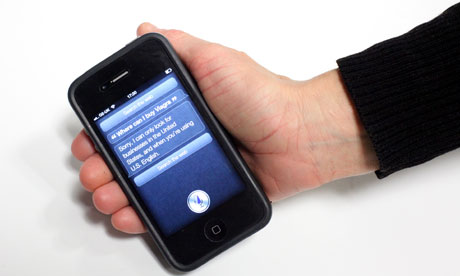
siri iphone jane martinson blogTell the truth: do you really do anything with Siri other than show people what a cool thing it is?

Maybe I'm hanging around with the wrong people, but I rarely encounter anybody who really uses it, other than to show somebody what it can do.

It's entertain  ing, and provides a "wow" factor, but really, who uses it?


Google Mobile Wallet Facing Headwinds?

Google’s head of consumer payments Vikas Gupta has resigned, AllThingsD reports. 


Separately, former vice president Stephanie Tilenius also has left to work in another position at Google. 


To be sure, it would not be unusual if an entrepreneur whose firm was acquired by Google eventually left to perhaps start another company. 


Nor would it be unusual if an executive gets moved to another post, at a firm as large as Google.


But some will wonder whether the changes mean Google has found it more difficult than originally expected to get traction for its Google Wallet initiative.

And, as part of that, Bedier will be taking on a larger role within Google Wallet, though his title will not be changing.

Gupta joined the Google about 18 months ago after Google acquired Jambool, a virtual goods payment platform where he was a founder and CEO.

Osama Bedier, Google’s VP of Payments appears to be assuming the leadership role for the Google Wallet effort. Nothing is easy where mobile payments and wallet efforts are concerned, it seems.

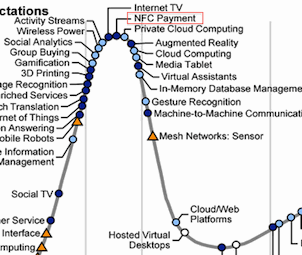
Nor should we expect a smooth, linear growth pattern. In fact, the normal expectation is for overheated expectations, followed by a period of disillusionment, before actual mass adoption begins.


Mobile payments and mobile wallet expectations likely are approaching a peak of inflated early optimism. The "crash" of expectations surely will follow, before the business actually materializes in robust form.

more Evidence That Texting is Displacing Talking

The latest data from CTIA: The Wireless Association provides more evidence that texting is displacing talking among U.S. consumers.

Since about June 2008 some 60 million additional users have become mobile subscribers.

Since that time, though, the amount of voice traffic has been flat. Usage has shifted dramatically to texting, rather than talking.

That doesn't mean a mobile device is useful "only" as a messaging device. People still do talk.

It's just that a greater percentage of total communications are occurring in text mode.

Latest CTIA data

Online Ads To Beat Print Spend For First Time

Online advertising will will exceed print spending in 2012 for the first time, eMarketer now predicts. 


U.S. online ad spending will grow by 23.3 percent in 2012, eMarketer projects, to $39.5 billion. It expects print advertising to reach $33.8 billion in sales, down from $36 billion in 2011. The shift has been a long time coming, and represents a key watershed for the media business.

Where a rational observer might have argued that online was a subsidiary medium, with print being primary, the crossover point now has been reached. One might now argue that online media are primary, and print is secondary.


At least in part, though, the shift is powered by growing digital revenues for former print publishers. Newspapers in 2012 will continue to be a bright spot. 


Researchers at eMarketer forecast that digital ad revenues for newspapers will grow 11.4 percent to $3.7 billion, after rising 8.3 percent to $3.3 billion last year. 


At the same time, print advertising revenues at newspapers will fall  percent to $19.4 billion in 2012, after dipping 9.3 percent to $20.7 billion last year.  

Google Has a Vested Interest in "Speed"

Though low latency, faster access networks often are seen primarily as an access provider issue, Google has a direct financial interest in the fastest-possible degree of end user Internet access, which would explain Google's experiments with, and support for, faster broadband access, ranging from municipal Wi-Fi to white spaces to fiber to the home.

It is more than a subjective matter of "better end user experience." Faster access, and lower latency, mean users can view more pages and content in a shorter amount of time. For a company that makes its money from advertising, that means a potential increase in the number of impressions.

Now Google appears to be testing ways to reduce page load time by 10 percent to 40 percent by changing the way the Transmission Control Protocol operates.TCP is a key protocol used by all users of the Internet, and all web pages.

Google also appears to be working on methods for speeding up error correction methods, which would likewise speed up end user experience and delivery of pages.

Google also is said to be developing algorithms to improve experience on “noisy mobile networks” by reducing latency.  Google working on faster web experiences.:

"Organized Religion" Arguably is the Cure, Not the Disease

Whether the “ Disunited States of America ” can be cured remains a question with no immediate answer.  But it is a serious question with eno...