Monday, October 31, 2011

Telecom NZ Shareholders Approve Structural Separation

Telecom New Zealand shareholders have voted to approve the structural separation of the company. Telecom shareholders approve structural separation 


The vote clears the way for the separated network business "Chorus" to list on the New Zealand stock exchange and raise NZ $929 million of government funding to lay fiber-optic cable to homes and businesses in 24 of the country's largest cities, including Wellington and Auckland.
The national network is expected to cost NZ $3.5 billion.
Telecom CEO Paul Reynolds said the separation vote was unprecedented. Structural separation 


Executives in Singapore might disagree, and Australia has been on a parallel track for years, as well. 

The idea hasn't been much of an issue in the U.S. or other western hemisphere markets, though the idea was raised briefly during the early 2000s. 

S. 1364, The Telecommunications Fair Competition Enforcement Act of 2001, introduced by then Sen. Ernest Hollings (D-S.C.), provides an example of the past interest in structural separation.

Sen. Hollings wanted to force the "Baby Bells" to separate their networks and retail business services functions into distinct companies, U.S. structural separation talks

Under structural separation, then-existing companies AmeritechBell SouthPacific Bell, SBC and Verizon, among others, would have to separate into two parts. The retail arm would have to buy and provision services from the wholesale arm.

States that also were serious, at the same time, included public utility regulators and state legislators in Alabama, Florida, Illinois, Kentucky, Louisiana, Maryland, Massachusetts, Michigan, Minnesota, Mississippi, Oklahoma, Pennsylvania, New Jersey, New Mexico, North Carolina, South Carolina, Tennessee, Virginia, and Wisconsin. States looked at structural separation

From time to time the issue still is raised by policy advocates, but it still does not appear there is any serious interest in exploring structural separation in the U.S. market. One key reason is simply the different market structure. The U.S. market has a highly-developed, ubiquitous and  successful cable industry that already has built national broadband networks that compete vigorously with telcos. 


At the same time, several national wireless networks also are competing to sell mobile and fixed broadband services, and while not perfect substitutes for fixed-line service, are credible substitutes for some applications and users. 


Structural separation so far has made much more sense where a credible, ubiquitous facilities-based network rival to the incumbent telco was not in place. In some isolated cases, an incumbent has been willing to give up its access network monopoly in trade for something the firm wanted more, namely the ability to compete in other non-regulated markets. 


New interest in structural separation

Enterprises Probably Have to Support Macs

Forrester Research last week recommended corporate IT departments let workers use Macs on their networks because these employees are more likely to be power users, the ones working longer hours, being more productive and making more money.Forrester Research analyst David Johnson says "it's time to repeal prohibition and take decisive action" and support Mac PCs in enterprises. Forrester says enterprises have t support Macs

"Mac users are your HEROes and you should enable them not hinder them," he says. Forrester uses the acronym HERO for Highly Empowered and Resourceful Operatives, what it finds are "the 17 percent of information workers who use new technologies and find innovative ways to be more productive and serve customers more effectively."

One might say that enterprises lost the battle decisively with the advent of the iPad, which is a tool enterprise workers are demanding and using in growing numbers.


The iPad once viewed as simply a consumer device for media consumption is gaining traction at the enterprise level. Some of the largest companies in the world already use or plan to use the device as an enterprise tool. The rate of enterprise adoption in Fortune 100 companies is reported to be 65 percent according the Wall Street Journal and 80 percent according to Network World. High enterprise iPad adoption


Google About To Launch Website Mobilizer "GOMO"

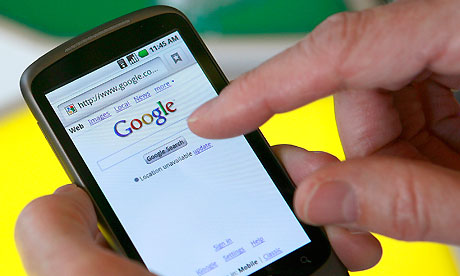
Google is preparing to launch a new service called GOMO that creates "mobilized" websites on demand. Mobile ads are an important revenue stream for Google, so much so that it offers a range of free tools to create mobile versions of existing websites. 


In addition to all these free services for mobilizing sites, Google is incentivizing good mobile content with its ad programs and even punishing sites that aren't mobile-friendly. Google is changing its AdWords program to reward mobile-optimized sites and adding +1 buttons to mobile ads.

Africa leads in mobile money deployment as users hit over 40 million | Mobile Money Africa

The United Nations Conference on Trade and Development (UNCTAD) says Africa is leading the trend with 51 mobile money systems in place, and as many as 37 of the deployments being in least developed countries (LDCs). Africa leads in mobile money


According to data from the GSM Association, some 109 such deployments had been implemented as of April 2011, spanning all developing regions. Only 11 of these are in developed countries, for perhaps logical reasons. 


Mobile payments systems that allow people to use their mobiles as a payment mechanism make the most sense in regions where banking and payments infrastructure is relatively undeveloped.

Africa is leading the trend with 51 mobile money systems in place, and as many as 37 of the deployments are in least developed countries, says the UNCTAD report.

Three broad categories of services now are coming to market. Money transfer services (domestic and/or international) are one type of application.

Payment services (for airtime top-ups, bills, salaries, and other goods and services) are a second type of application.

Use of mobiles to support financial services (savings, credit, insurance) are the third major type of application. Domestic money transfers, airtime and bill payments are the three most common services currently offered. You can view the report here. 

Mobile Content in the Shopping Process

consumer-pulseBrands now have to create and distribute content available "for free" when and where customers need it on social media platforms. The other corollary is that brands have to avoid  "pushing" promotional information when consumers are looking for answers.


While marketers like to use every media channel to deliver marketing promotions, you must understand consumers' shopping-related needs have evolved.

They now want and access information before, during, and after they make a purchase. 


With U.S. smartphone usage at 40 percent, it's critical to offer customers the information they want and need wherever they are in the purchase cycle and physically (since they may be in your store or your competitor's).

Gartner Says Cloud Banking Can Drive 'Creative Destruction' in the Banking Industry

A rapid shift in attitude towards cloud banking is happening within the financial services industry, according to Gartner. 


A Gartner survey found that cloud is the top priority for global financial services CIOs and that 39 percent of those surveyed expect that more than half of all their transactions will be supported via cloud infrastructure and software as a service (SaaS) by 2015.


In Europe, the Middle East and Africa (EMEA), 44 percent of FS CIOs expect that more than half of all their institutions' transactions will be supported via cloud infrastructure by 2015 and 33 percent of them expect that the majority of transactions will be processed via SaaS by 2015. Gartner Says Cloud Banking Can Drive 'Creative Destruction' in the Banking Industry:


“Early cloud adoption, especially in the FS sectors, may have been limited to non-core areas and proofs of concept, but it is set to go mainstream, moving the heart of the business, transaction origination and processing, into the cloud,” said Peter Redshaw, managing vice president at Gartner. “Cloud banking should be innovative, dedicated to this industry and transformative.”


As with most cloud initiatives, cloud banking might be disruptive. It can provide the ability for attackers or defenders to try completely new services and processes, such as reverse auctions and third-party core banking systems, for example. 


Successful new cloud services can displace the existing and dominant process for design, distribution or transacting in a disruptive way, rather than just incrementally improving them, says Redshaw. 


As banks progressively replace people in the value chain with algorithmic operations (AOs) to run processes and make decisions, their intellectual property increasingly resides in these algorithms. The value of people is not in running operations but in improving the AOs, Redshaw argues. 


At a more prosaic level, cloud banking should lessen investment in bank data centers. Data center investments affected

Android Was The Only OS That Grew Share In Last Quarter

Google AndroidAndroid is the only platform that has grown over the last year in all the key markets surveyed by Kantar Worldpanel ComTech. All the rest of mobile operating systems saw their market shares either stay flat or decline in at least one geography.


The figures, which compile smartphone sales for the last 12 weeks ended October 2, paint a pretty stark picture showing which platform is benefiting most from the growth in smartphone usage by consumers.

Taking the markets of Australia, Brazil, Germany, Great Britain, France, Italy, Spain and the U.S., the Android platform grew its share of smartphone sales anywhere between 19.3 percent and 50.4 percent).

Spain took the crown for the biggest amount of Android growth at 50.4 percent. Android Was The Only OS That Grew

Just under half of the U.K. population now owns a smartphone, and Google's mobile operating system Android is powering half of those those being sold,  followed by RIM's BlackBerry models with 22.5% and Apple's iPhone at 18.5 percent, for example.  Android grows share

Access Network Limitations are Not the Performance Gate, Anymore

In the communications connectivity business, mobile or fixed, “more bandwidth” is an unchallenged good. And, to be sure, higher speeds have ...