LightSquared Chief Marketing Officer Frank Boulben says there are roughly 500,000 commercial precision GPS devices in the U.S. that could be disrupted by its network. But the company has developed a device, which costs between $300 and $800 and will protect GPS devices from such disruptions.
Thursday, October 13, 2011
$400 Million to Fix LightSquared GPS Interference?
LightSquared says it will cost the commercial GPS industry as much as $400 million for gear that will eliminate the interference potentially caused by its planned next-generation network.
LightSquared Chief Marketing Officer Frank Boulben says there are roughly 500,000 commercial precision GPS devices in the U.S. that could be disrupted by its network. But the company has developed a device, which costs between $300 and $800 and will protect GPS devices from such disruptions.
LightSquared Chief Marketing Officer Frank Boulben says there are roughly 500,000 commercial precision GPS devices in the U.S. that could be disrupted by its network. But the company has developed a device, which costs between $300 and $800 and will protect GPS devices from such disruptions.

 Gary Kim was cited as a global "Power Mobile Influencer" by Forbes, ranked second in the world for coverage of the mobile business, and as a "top 10" telecom analyst. He is a member of Mensa, the international organization for people with IQs in the top two percent.
What Irritates People on Facebook

Yes, you can target content on Facebook. But marketers also need to show common sense and good judgment about doing so.
You need to respect people when advertising on social networks, and often, that does not seem to happen.
Gary Kim was cited as a global "Power Mobile Influencer" by Forbes, ranked second in the world for coverage of the mobile business, and as a "top 10" telecom analyst. He is a member of Mensa, the international organization for people with IQs in the top two percent.
Wednesday, October 12, 2011
Social Media Statistics
It's good to quantify, when thinking about mobile social media.
Gary Kim was cited as a global "Power Mobile Influencer" by Forbes, ranked second in the world for coverage of the mobile business, and as a "top 10" telecom analyst. He is a member of Mensa, the international organization for people with IQs in the top two percent.
"Products are Useless Without a Platform"
 "A product is useless without a platform, or more precisely and accurately, a platform-less product will always be replaced by an equivalent platform-ized product," says Steve Yegge at Google. Steve Yegge, Google software engineer.
 He rants about that matter in an "internal memo" that accidentally got published externally.
Google Platforms Rant
It might make most sense for those of you who do coding. The larger issue, for those of us who do not code is the importance of platforms. Some of us might use the term ecosystems.
Those of you who just like gossip will be amused as well.
It might make most sense for those of you who do coding. The larger issue, for those of us who do not code is the importance of platforms. Some of us might use the term ecosystems.
Those of you who just like gossip will be amused as well.
Gary Kim was cited as a global "Power Mobile Influencer" by Forbes, ranked second in the world for coverage of the mobile business, and as a "top 10" telecom analyst. He is a member of Mensa, the international organization for people with IQs in the top two percent.
T-Mobile USA Extends VoIP Features
T-Mobile’s Bobsled service, a VOIP-based communication platform that initially allowed smartphone owners to call their Facebook friends from their mobile device, has been expanded to provide free calls to any mobile or landline number in the U.S, Canada or Puerto Rico from anywhere in the world, simply by using their desktop browser.
The move is one more example of what normally happens in competitive markets, which is that the contestants lagging most in a market are most likely to embrace disruptive changes.
Whereas before, Bobsled would allow you to call Facebook friends from a dedicated smartphone application, the service has been adapted to give users the opportunity to call numbers in North America directly from the browser using their desktop computer and iOS or Android tablets or smartphones.
The Android/iOS version currently only supports calls direct to Facebook contacts, but that will be upgraded soon, one assumes. If an iPhone or Android user wants to make free general calls, users will need to log in through the browser interface instead of placing calls directly from the mobile.
Still, using the mobile apps, users already can make Bobsled to Bobsled calls, cross-platform between Android and iOS, and leave voicemails that show up on Facebook contacts’ walls.
It’s also possible to record a voice message and leave that pinned to someone’s wall, rather than actually talk to them.
In effect it’s a clever way for T-Mobile to potentially get onto hundreds of thousands of iPhone home screens, despite being the only major US carrier not offering the new iPhone 4S. The immediate revenue for T-Mobile is nil, of course, but the potential for mind share and awareness at least is enhanced.
"Bobsled Calling" allows users to make high quality calls to Facebook friends and any number in the United States, Canada or Puerto Rico from anywhere a user has an Internet connection, even when they phone isn't available. Bobsled
To download the application on your smartphone or tablet device, click here.
The move is one more example of what normally happens in competitive markets, which is that the contestants lagging most in a market are most likely to embrace disruptive changes.
Whereas before, Bobsled would allow you to call Facebook friends from a dedicated smartphone application, the service has been adapted to give users the opportunity to call numbers in North America directly from the browser using their desktop computer and iOS or Android tablets or smartphones.
The Android/iOS version currently only supports calls direct to Facebook contacts, but that will be upgraded soon, one assumes. If an iPhone or Android user wants to make free general calls, users will need to log in through the browser interface instead of placing calls directly from the mobile.
Still, using the mobile apps, users already can make Bobsled to Bobsled calls, cross-platform between Android and iOS, and leave voicemails that show up on Facebook contacts’ walls.
It’s also possible to record a voice message and leave that pinned to someone’s wall, rather than actually talk to them.
In effect it’s a clever way for T-Mobile to potentially get onto hundreds of thousands of iPhone home screens, despite being the only major US carrier not offering the new iPhone 4S. The immediate revenue for T-Mobile is nil, of course, but the potential for mind share and awareness at least is enhanced.
"Bobsled Calling" allows users to make high quality calls to Facebook friends and any number in the United States, Canada or Puerto Rico from anywhere a user has an Internet connection, even when they phone isn't available. Bobsled
To download the application on your smartphone or tablet device, click here.
Gary Kim was cited as a global "Power Mobile Influencer" by Forbes, ranked second in the world for coverage of the mobile business, and as a "top 10" telecom analyst. He is a member of Mensa, the international organization for people with IQs in the top two percent.
The Federal Reserve Plans To Monitor Facebook, Twitter, Google
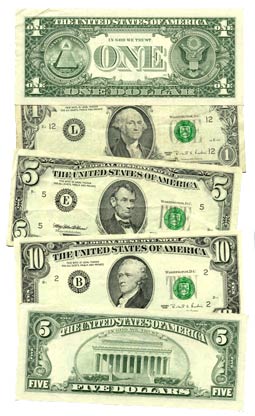 The New York Federal Reserve Bank is embarking on an ambitious social media monitoring project, starting in December 2010. The key phrase is "monitoring." At least so far, the New York Fed does not seem to have plans to do anything other than listen to what people are saying.
 The Fed will be monitoring Facebook, Twitter, and the broader Web to gauge public response to economic policy. The New York Federal Reserve Bank wants to know how they are perceived, so social media is one way to do so.
That's part of the larger way organizations can use social media. In this case, the aim is "listening," rather than content marketing that would be an outbound attempt to change whatever perceptions the Fed might find.
Gary Kim was cited as a global "Power Mobile Influencer" by Forbes, ranked second in the world for coverage of the mobile business, and as a "top 10" telecom analyst. He is a member of Mensa, the international organization for people with IQs in the top two percent.
22% of U.S. Smart Phones Sold were 4G Capable
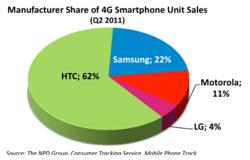 About 22 percent of smart phones purchased by U.S. consumers in the second quarter of 2011 were capable of running at 4G speeds.
 A year ago, just three percent of U.S. smart phones sold could run on a 4G network, according to the NPD Group.
The top four smart phone 4G manufacturers, based on consumer sales in Q2 2011:
1.HTC: 62%
2.Samsung: 22%
3.Motorola: 11%
4.LG: 4%
What the study did not look at, but seems correct, is that "4G" is not yet a distinct "service." It is faster than 3G, which is good, but not yet in any way a truly different "service" than 3G. So far, 4G is a "better pipe," but just that: a better pipe, as a 10 Mbps connection is better than a 5 Mbps connection.
For 4G is anything more than "table stakes" for mobile service providers, the end use experience will have to change. So far, that hasn't happened.
1.HTC: 62%
2.Samsung: 22%
3.Motorola: 11%
4.LG: 4%
What the study did not look at, but seems correct, is that "4G" is not yet a distinct "service." It is faster than 3G, which is good, but not yet in any way a truly different "service" than 3G. So far, 4G is a "better pipe," but just that: a better pipe, as a 10 Mbps connection is better than a 5 Mbps connection.
For 4G is anything more than "table stakes" for mobile service providers, the end use experience will have to change. So far, that hasn't happened.
Gary Kim was cited as a global "Power Mobile Influencer" by Forbes, ranked second in the world for coverage of the mobile business, and as a "top 10" telecom analyst. He is a member of Mensa, the international organization for people with IQs in the top two percent.
How to Estimate Your Social Media Return on Investment
The real problem for any manager, owner or executive when trying to quantify the return on investment from any social media investment is that the results are highly dependent on the assumptions. Change the assumptions and you change the "return" on any campaign or channel.
That can be especially tricky when trying to figure out the value of "avoided" activities. Any customer support group can estimate the cost of an average call simply by dividing wages or contract costs with the total number of "completed" calls. None of that will measure the effectiveness of call handling, though.
A firm might rationally want to process more calls per hour. What isn't so clear is how the value of those calls might change if the metric is simply "calls per hour." Handling calls faster might mean higher rates at which customers depart, fewer "account saves" or less "incremental new sales."
In the U.S., the average support call cost is approximately $10 to $25 per call, depending on the product, services and the vertical. So one way to create a metric is to forecast the number of support calls a firm believes it will get in the future, implement a social media program to circumvent those calls, and then measure the difference between the number of calls the firm actually received, versus the number it expected.
You see the conundrum. "Success" depends on the assumptions about future call rates. Set a high-enough expected future rate and a firm can "succeed" with or without a social media program. Set a low-enough rate and a firm will "fail," no matter how good its performance at avoiding calls in the first place.
It's a good thing, and often necessary, to measure social media effectiveness. The problem is simply that success or failure mostly is determined by the assumptions one makes.
Gary Kim was cited as a global "Power Mobile Influencer" by Forbes, ranked second in the world for coverage of the mobile business, and as a "top 10" telecom analyst. He is a member of Mensa, the international organization for people with IQs in the top two percent.
VoIP Will Cannibalize Mobile Voice
 VoIP always has been a troublesome issue for established voice providers. On one hand, it has promised the ability to create and deliver new and richer services. On the other hand VoIP has had the potential to essentially cannibalize the single most important revenue stream a telco or mobile service provider possesses. VoIP will cannibalize existing voice
O2's plans to offer VoIP technology are an example. O2 Connect is a new mobile service that allows smart phone users to use voice and text services over Wi-Fi networks from their mobile number. Users can call or text to any U.K. mobile or landline number using the service.
O2 Connect will initially be available on iOS and Android smart phones and will subsequently roll out to other devices. O2 Trials VoIP Service
The trial will commence in October 2011 by invitation only and will include O2 consumer and business customers. All of the traditional challenges are present in the test. O2 hopes to provide higher value and greater flexibility for its customers. But O2 Connect also can displace some of the revenue O2 otherwise might earn from voice and text messaging services.
The trial will commence in October 2011 by invitation only and will include O2 consumer and business customers. All of the traditional challenges are present in the test. O2 hopes to provide higher value and greater flexibility for its customers. But O2 Connect also can displace some of the revenue O2 otherwise might earn from voice and text messaging services.
Gary Kim was cited as a global "Power Mobile Influencer" by Forbes, ranked second in the world for coverage of the mobile business, and as a "top 10" telecom analyst. He is a member of Mensa, the international organization for people with IQs in the top two percent.
"Internet of Things" has Same Attraction as SMS, for Mobile Service Providers
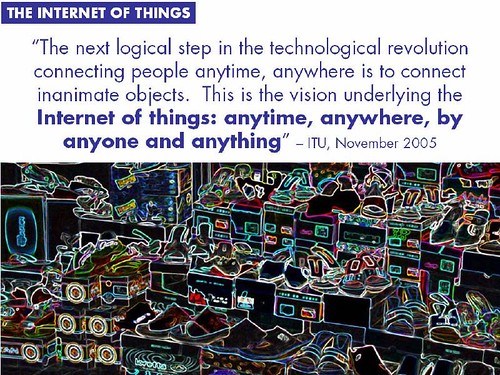 The "Internet of things" has gotten attention recently for several reasons.
 One reason is that analysts, academics and journalists, not to mention mobile service provider executives, need something new to talk about.
Another reason is that machines and sensors represent the clearest way for mobile revenue and services to grow. Most people who want a mobile device now have one.
Mobile broadband for smart phones and tablets will be an important source of revenue growth for some time. Beyond that, to keep the business growing, service providers must tap a whole new class of services and devices other than "phones" or other devices people use. That means sensors, security cameras and other telemetry devices.
But there are some other benefits as well. Many telemetry applications do not use much bandwidth. So the attraction is similar to that of short message service: high margins and low bandwidth consumption. Industrial and other specialized applications also will be more churn resistant.
“A machine is not going to churn as fast as a consumer,” said Robert Mesirow, CTIA vice president. In part, that is because specific sensor applications typically will be embedded in some larger business process with scale implications. One consumer can swap a phone or a service provider without hassle. That will not be true for large sensor networks.
There are challenges, to be sure. Many sensor applications will feature low gross revenue, which has significant implications for the design of such services. Sensors often will have to be very low cost, very easy to deploy and support, while the recurring service costs also will have to be optimized.
Still, when an industry runs out of customers, finding new customers is highly significant. That's why much attention will be paid to sensor networks and applications.
“A machine is not going to churn as fast as a consumer,” said Robert Mesirow, CTIA vice president. In part, that is because specific sensor applications typically will be embedded in some larger business process with scale implications. One consumer can swap a phone or a service provider without hassle. That will not be true for large sensor networks.
There are challenges, to be sure. Many sensor applications will feature low gross revenue, which has significant implications for the design of such services. Sensors often will have to be very low cost, very easy to deploy and support, while the recurring service costs also will have to be optimized.
Still, when an industry runs out of customers, finding new customers is highly significant. That's why much attention will be paid to sensor networks and applications.
Gary Kim was cited as a global "Power Mobile Influencer" by Forbes, ranked second in the world for coverage of the mobile business, and as a "top 10" telecom analyst. He is a member of Mensa, the international organization for people with IQs in the top two percent.
Enterprises Don't Generally Track Social Data
Of the 1,700 chief marketing officers that took part in face-to-face interviews for an IBM study, the vast majority (80 percent) said they rely on traditional market research channels and techniques or sales campaign analysis (68 percent) to guide marketing strategies.
About 26 percent also track blogs and 40 percent track "any online communications."
More than half of the respondents report they are not prepared to to manage social media or the shift to customer influence over reputation and branding processes.
And yet, despite being unable to use the tidal waves of consumer data generated by social media, 82 percent of CMOs said they plan to increase their use of the channel over the course of the next three to five years.
More than half of the respondents report they are not prepared to to manage social media or the shift to customer influence over reputation and branding processes.
Gary Kim was cited as a global "Power Mobile Influencer" by Forbes, ranked second in the world for coverage of the mobile business, and as a "top 10" telecom analyst. He is a member of Mensa, the international organization for people with IQs in the top two percent.
Tuesday, October 11, 2011
Square Targets Larger Retailers
 Up to this point, Square has had most success with smaller and independent retailers. But it now is looking at larger retailers. One indication is a change in its policy of delaying retailer payments exceeding $1,000 per week, a policy Square originally implemented to prevent fraud, according to company CEO Keith Rabois. "Now that we've been commercially available for a year, we can now spot statistical anomalies."
 Such an improvement stands to lure larger stores into Square's fold, since they won't have to wait up to one month to receive their money. At the moment, Square's base is mainly small businesses, 70 percent of which did not previously accept credit cards because of associated fees.
The San Francisco, Calif.-based company now boasts 800,000 merchants and processes $2 billion in payments, according to Rabois.
Gary Kim was cited as a global "Power Mobile Influencer" by Forbes, ranked second in the world for coverage of the mobile business, and as a "top 10" telecom analyst. He is a member of Mensa, the international organization for people with IQs in the top two percent.
North American Social Games To Total $2.4 Billion By 2014
 SuperData estimates the North American social games market to grow 35 percent in 2011, reaching $1.4 billion, and projects total consumer spending on social games to total $2.4 billion by 2014.
Gary Kim was cited as a global "Power Mobile Influencer" by Forbes, ranked second in the world for coverage of the mobile business, and as a "top 10" telecom analyst. He is a member of Mensa, the international organization for people with IQs in the top two percent.
SuperData estimates the North American social games market to grow 35 percent in 2011, reaching $1.4 billion, and projects total consumer spending on social games to total $2.4 billion by 2014.
Gary Kim was cited as a global "Power Mobile Influencer" by Forbes, ranked second in the world for coverage of the mobile business, and as a "top 10" telecom analyst. He is a member of Mensa, the international organization for people with IQs in the top two percent.
Zynga Is Launching Its Own Social Network
 People who weren't so keen on Google+ now will have "Zynga Direct" as one more social network to contend with.
The first component of Zynga Direct is a sign-in platform codenamed Project Z. It will launch later this year, Business Insider reports. It's quite a rational move, though. Zynga now is completely dependent on Facebook, and Zynga Direct should reduce that reliance.
Zynga Direct is a more general name describing Zynga's new direct-to-consumer strategy. The idea is that you can play Zynga games outside of Facebook, and across multiple platforms.
Gary Kim was cited as a global "Power Mobile Influencer" by Forbes, ranked second in the world for coverage of the mobile business, and as a "top 10" telecom analyst. He is a member of Mensa, the international organization for people with IQs in the top two percent.
A Clock Only for "Geeks"!
 Googlers would think up something like this, wouldn't they?
Gary Kim was cited as a global "Power Mobile Influencer" by Forbes, ranked second in the world for coverage of the mobile business, and as a "top 10" telecom analyst. He is a member of Mensa, the international organization for people with IQs in the top two percent.
Googlers would think up something like this, wouldn't they?
Gary Kim was cited as a global "Power Mobile Influencer" by Forbes, ranked second in the world for coverage of the mobile business, and as a "top 10" telecom analyst. He is a member of Mensa, the international organization for people with IQs in the top two percent.
Sprint Details LTE Plans As Clearwire’s Decline Accelerates | mocoNews
To say there is a bit of instability in much of the U.S. mobile backhaul market would be an understatement. After announcing it would buy about $20 billion worth of Apple iPhones, whether it can sell them or not, Sprint announced that it would expedite the building of its new Long Term Evolution network this summer, with completion by the end of 2013, a breath-taking time table. $20 billion worth of iPhones
Sprint also said it would no longer sell WiMAX devices after 2012, a clear indication Sprint intends to wean its customers off the Clearwire network. Clearwire and Sprint equities both tanked on the news.
Sprint also said it would no longer sell WiMAX devices after 2012, a clear indication Sprint intends to wean its customers off the Clearwire network. Clearwire and Sprint equities both tanked on the news.
Sprint executives say LTE devices would be available for its network in the summer of 2012. Sprint LTE plans
Clearwire insisted it wasn’t dead, and remains essential to Sprint's 4G plans. Investors clearly aren't so sure. But with LightSquared still facing serious objections to its own LTE launch plans, that means three national networks now face a bit of uncertainty about how much capacity they will be needing, and perhaps none of the three companies can provide complete assurance of financial success in the future, as independent entities.
Nor, for that matter, can any of the three completely shake concerns about bankruptcy. Three national networks that might not exist in the future is quite a lot of potential backhaul business that could evaporate.
Of course, Dish Network also says it wants to build a national LTE network, so add a fourth element to the dynamic situation.
Clearwire insisted it wasn’t dead, and remains essential to Sprint's 4G plans. Investors clearly aren't so sure. But with LightSquared still facing serious objections to its own LTE launch plans, that means three national networks now face a bit of uncertainty about how much capacity they will be needing, and perhaps none of the three companies can provide complete assurance of financial success in the future, as independent entities.
Nor, for that matter, can any of the three completely shake concerns about bankruptcy. Three national networks that might not exist in the future is quite a lot of potential backhaul business that could evaporate.
Of course, Dish Network also says it wants to build a national LTE network, so add a fourth element to the dynamic situation.
Gary Kim was cited as a global "Power Mobile Influencer" by Forbes, ranked second in the world for coverage of the mobile business, and as a "top 10" telecom analyst. He is a member of Mensa, the international organization for people with IQs in the top two percent.
What is gigabit broadband good for?
“If you put a gigabit in people’s homes they will be inspired to find new ways to use it," says Kevin Lo, Head of Google’s fiber access program. "We have no idea why you need a gigabit today, but when we all had dial up you could not possibly imagine watching video over them."
"It’s not about doing email faster, it’s about doing those new things that you don’t do today," he says. Video is the obvious practical application that could use bandwidth of that sort. Some of us might question whether new ways to watch TV is really such a huge innovation, though.
Unicast entertainment video, especially the same sorts of content you can watch on a subscription TV service, is a pretty dumb way to use bandwidth, some of us would argue. As any engineer will tell you, there always are multiple ways to solve any computing problem. You can process locally, or process remotely, substitute local processing for bandwidth, or bandwidth for local processing power.
If what a user wants to do is watch professional video on demand, then local storage such as provided by Tivo is a reasonable solution. Unicast is better suited to relatively low-volume types of content, or interactive content.
What also remains to be seen, as Google builds out its fiber to the home test markets, is whether Google really will try to build symmetrical 1-Gbps networks, as it has said, or will, for cost reasons, do something a bit less grandiose. The other angle is whether Google really will try to offer such bandwidth at prices roughly comparable to what telcos and cable companies might charge for 10 Mbps to 20 Mbps services.
It always has seemed unreasonable to think that Google has any magic answer to the costs of building such infrastructure. Sure, it will always make sense to choose test beds where aerial plant can be built, because that is cheaper than underground construction, unless there is universal duct space available, allowing any new provider to simply pull a new set of cables into the existing conduit.
So if construction cost is not amenable to significant cost reductions, one would have to look to revenue to make the business case. But here again, it has seemed unlikely that a sustainable business case can be built solely on "broadband access," in competitive markets, where the other contenders might have multiple services to sell.
Sure, Google is running science experiments, not trying to create a self-sustaining business. But you also have to wonder how much actual application innovation can happen if such isolated test cases.
Gary Kim was cited as a global "Power Mobile Influencer" by Forbes, ranked second in the world for coverage of the mobile business, and as a "top 10" telecom analyst. He is a member of Mensa, the international organization for people with IQs in the top two percent.
Wireless Broadband Incremental or a Substitute?
A recent analysis suggests more people are getting their broadband from wireless providers in the Twin Cities and fewer are using traditional services like cable and DSL, according to a new study by St. Paul-based ID Insight, which found that wireless broadband (both from mobile companies and the Minneapolis Wi-Fi network operated by US Internet rose 7.5 percent in the 12 months ending in March. Wireless broadband taking bigger slice of local market
To be careful, it actually isn't so clear whether what the data shows is simply that more people are buying mobile broadband plans, which is largely additive to the universe of broadband connections, or that people are starting to substitute wireless for fixed connections (which some of us do).
To see what was going on with wireless Internet access, compared to fixed-line access, ID Insight used "Broadband Scout" to look at access trends over the last couple of quarters. "What we found was that internet transactions through a wireless device increased by a factor of over 200 percent, whereas Cable and DSL diminished by a few percentage points." Wireless access grows fast
In and of itself, that simply means people are using their smart phones to do things on the Internet more than they used to do. The reported decrease in fixed network access would be expected to dropk as a percentage of total, if wireless usage is growing so fast.
The study shows transactions on Comcast's network was 37.6 percent of total and CenturyLink represented 27.8 percent of total. Both of those providers saw their share decline slightly, but again, it might be expected if wireless has grown so fast.
Wireless broadband, which includes the cellular providers and the Minneapolis Wi-Fi network, ranked third (16.6 percent, or about 152,000 households). The number for wireless customers does not include Wi-Fi networks inside homes.
Among Twin Cities wireless customers, about 131,000 appear to be smartphone, laptop or tablet computers users with data plans. The other 21,000 wireless customers belong to the Minneapolis Wi-Fi network, said Joe Caldwell, the CEO of USI Wireless of Minnetonka, which runs the network. Wireless grows
To be careful, it actually isn't so clear whether what the data shows is simply that more people are buying mobile broadband plans, which is largely additive to the universe of broadband connections, or that people are starting to substitute wireless for fixed connections (which some of us do).
To see what was going on with wireless Internet access, compared to fixed-line access, ID Insight used "Broadband Scout" to look at access trends over the last couple of quarters. "What we found was that internet transactions through a wireless device increased by a factor of over 200 percent, whereas Cable and DSL diminished by a few percentage points." Wireless access grows fast
In and of itself, that simply means people are using their smart phones to do things on the Internet more than they used to do. The reported decrease in fixed network access would be expected to dropk as a percentage of total, if wireless usage is growing so fast.
The study shows transactions on Comcast's network was 37.6 percent of total and CenturyLink represented 27.8 percent of total. Both of those providers saw their share decline slightly, but again, it might be expected if wireless has grown so fast.
Wireless broadband, which includes the cellular providers and the Minneapolis Wi-Fi network, ranked third (16.6 percent, or about 152,000 households). The number for wireless customers does not include Wi-Fi networks inside homes.
Among Twin Cities wireless customers, about 131,000 appear to be smartphone, laptop or tablet computers users with data plans. The other 21,000 wireless customers belong to the Minneapolis Wi-Fi network, said Joe Caldwell, the CEO of USI Wireless of Minnetonka, which runs the network. Wireless grows
"Over the past few months and quarters the notion of where my broadband connection resides has shifted, at least for me," says ID Insight's Adam Elliott, company president. "A few short months ago, I would have told you that my broadband provider was Comcast, as that was who provided internet access to my home."
"A few short months later, I am not so sure," says Elliott. "A few months ago, I bought one of those funky new Android smart phones on Sprint's 4G network. I am now seeing download speeds of 3 Mbps to 6 Mbps that exceeded my basic Comcast cable connection that was coming in around 3 Mbps." http://factactsolutions.blogspot.com/
Still, it is not possible to say with certainty that users are dropping fixed connections and relying solely on wireless broadband.
Other studies likewise have shown growing use of mobile broadband, but that does not, in and of itself, suggest anything definite about whether the usage is complementary to fixed line access, or a substitute.
The study suggests that 69 percent of respondents under 25 have used wireless broadband access, about 67 percent of those 25 to 34, and 65 percent of those who live in London.
For almost one in seven users of mobile broadband (14 percent), the use of a dongle or datacard is their only Internet access method. This figure rises to 21 percent of males, 31 percent of 18 to 24 year olds and over one third of Londoners (34 percent).

"A few short months later, I am not so sure," says Elliott. "A few months ago, I bought one of those funky new Android smart phones on Sprint's 4G network. I am now seeing download speeds of 3 Mbps to 6 Mbps that exceeded my basic Comcast cable connection that was coming in around 3 Mbps." http://factactsolutions.blogspot.com/
Still, it is not possible to say with certainty that users are dropping fixed connections and relying solely on wireless broadband.
Other studies likewise have shown growing use of mobile broadband, but that does not, in and of itself, suggest anything definite about whether the usage is complementary to fixed line access, or a substitute.
Early data from YouGov’s new “DongleTrack” study shows that 10 percent of respondents have used a dongle (USB modem) or a datacard to access the Internet outside the home or work. A mobile phone has been used as an Internet access device by more than one fifth of the online population (21 percent).
As often is the case, marketers will be looking at younger users for an indication that end user preferences could be changing. In that regard, younger users seem more willing to use wireless broadband services. U.K. trendsThe study suggests that 69 percent of respondents under 25 have used wireless broadband access, about 67 percent of those 25 to 34, and 65 percent of those who live in London.
For almost one in seven users of mobile broadband (14 percent), the use of a dongle or datacard is their only Internet access method. This figure rises to 21 percent of males, 31 percent of 18 to 24 year olds and over one third of Londoners (34 percent).
The study suggests that although much wireless broadband is complementary and supplemental to fixed broadband access, there is a significant adoption of wireless broadband as a substitute for fixed services.
 Gary Kim was cited as a global "Power Mobile Influencer" by Forbes, ranked second in the world for coverage of the mobile business, and as a "top 10" telecom analyst. He is a member of Mensa, the international organization for people with IQs in the top two percent.
Why T-Mobile is Going Over the Top for Voice

Bobsled, originally supporting VoIP conversations between Facebook users, now also supports VoIP calling to telephone numbers.
If you wonder why T-Mobile USA is taking an action that will cannibalize its voice revenues, the answer probably is that T-Mobile USA sees that as an inevitability.
Informa Telecom & Media predicts that North American consumer use of services such as Skype and Google Talk already accounts for 20 percent of all voice activity in 2011.
By 2014, that figure is expected to rise to 40 percent. Messaging also is moving to over the top mechanisms. Some three trillion messages will be sent using over the top apps in 2011, growing to nine trillion messages in three years. By 2015, IP messaging will surpass traditional cellular messaging, Informa predicts.
By 2014, that figure is expected to rise to 40 percent. Messaging also is moving to over the top mechanisms. Some three trillion messages will be sent using over the top apps in 2011, growing to nine trillion messages in three years. By 2015, IP messaging will surpass traditional cellular messaging, Informa predicts.
T-Mobile USA likely assumes that it has less to lose from cannibalizing its voice minutes of use, than it has to gain by becoming an application provider relevant on iPhones and other smart phone devices.
Gary Kim was cited as a global "Power Mobile Influencer" by Forbes, ranked second in the world for coverage of the mobile business, and as a "top 10" telecom analyst. He is a member of Mensa, the international organization for people with IQs in the top two percent.
In-Store Mobile Marketing Works, Mall Owner Says
General Growth Properties operates 166 shopping malls in 43 states and has found conversion rates from location-based email at its sites to range from 30 percent to 60 percent, says Jeff Cloud, director of customer relationships and mobile marketing at General Growth.
He cited the example of a program that sends text promotions, with a shopper’s permission, to customers when they’re at a General Growth mall; the shopper texts back a code to receive a discount at a mall store or restaurant. E-mail marketing using location
A survey in the first quarter showed 50 percent of General Growth mall shoppers owned smart phones, compared to 41 percent of U.S. consumers. The survey also revealed that six in 10 moms that shop General Growth malls check e-mail on a mobile device, 53 percent search for coupons and offers via mobile and one in four purchases on mobile phones or tablet computers.
Cloud also reported that 17 percent of the e-mail General Growth sends its customers is opened on mobile devices, with about two-thirds being opened on Apple iPhones. He says General Growth uses a tool called Litmus to track customer response to marketing programs and finds that 46 percent of consumers who open an e-mail on an iPhone read it, 17 percent skim it and 37 percent just glance at it or delete it; comparable figures for Android phones are 57 percent reading, 13 percent skimming and 30 percent glancing or deleting.
He says General Growth has narrowed the size of its e-mail messages to 600 pixels from 750 or more pixels so that they will fit on the small screen of mobile phones. The company also has concluded mobile e-mails are most effective when they are 60 percent text and only 40 percent images.
He cited the example of a program that sends text promotions, with a shopper’s permission, to customers when they’re at a General Growth mall; the shopper texts back a code to receive a discount at a mall store or restaurant. E-mail marketing using location
A survey in the first quarter showed 50 percent of General Growth mall shoppers owned smart phones, compared to 41 percent of U.S. consumers. The survey also revealed that six in 10 moms that shop General Growth malls check e-mail on a mobile device, 53 percent search for coupons and offers via mobile and one in four purchases on mobile phones or tablet computers.
Cloud also reported that 17 percent of the e-mail General Growth sends its customers is opened on mobile devices, with about two-thirds being opened on Apple iPhones. He says General Growth uses a tool called Litmus to track customer response to marketing programs and finds that 46 percent of consumers who open an e-mail on an iPhone read it, 17 percent skim it and 37 percent just glance at it or delete it; comparable figures for Android phones are 57 percent reading, 13 percent skimming and 30 percent glancing or deleting.
He says General Growth has narrowed the size of its e-mail messages to 600 pixels from 750 or more pixels so that they will fit on the small screen of mobile phones. The company also has concluded mobile e-mails are most effective when they are 60 percent text and only 40 percent images.
Gary Kim was cited as a global "Power Mobile Influencer" by Forbes, ranked second in the world for coverage of the mobile business, and as a "top 10" telecom analyst. He is a member of Mensa, the international organization for people with IQs in the top two percent.
Subscribe to:
Posts (Atom)
-
We have all repeatedly seen comparisons of equity value of hyperscale app providers compared to the value of connectivity providers, which s...
-
It really is surprising how often a Pareto distribution--the “80/20 rule--appears in business life, or in life, generally. Basically, the...
-
Financial analysts typically express concern when any firm’s customer base is too concentrated. Consider that, In 2024, CoreWeave’s top two ...

