Tuesday, December 4, 2007
No Rate Deregulation in 6 Verizon Markets
The Federal Communications Commission had concluded that there is not sufficient competition in six Verizon markets to lift rules regulating special access pricing. Essentially, the FCC concluded that the level of competition in those markets did not approach the threshold set by market conditions in Omaha, Neb. at the point Qwest was allowed to deregulate its special access prices.

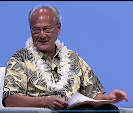 Gary Kim was cited as a global "Power Mobile Influencer" by Forbes, ranked second in the world for coverage of the mobile business, and as a "top 10" telecom analyst. He is a member of Mensa, the international organization for people with IQs in the top two percent.
Verizon Will Support Android Devices

Verizon Wireless CEO Lowell McAdam says the company will allow Android phones on its network, which is scheduled to open up next year to outside applications and devices, according to Business Week. Of course, that's what one assumes Verizon Wireless meant when it said it would open its CDMA network to all devices compliant with technical standards it has yet to release. Still, it is good to get confirmation.
"We're planning on using Android," McAdam says. "Android is an enabler of what we do."
It remains to be seen how active developers may want to get for devices and software on a network that Verizon has declared is not its future, however. Presumably Verizon has figured out that apps and devices compliant on the CDMA network can be authored in such a way that the air interface is not a problem as its planned LTE fourth-generation network is put into service in several years.
And, of course, some note that Verizon retains the ability to reverse course on LTE and choose some other air interface, in any case. It should be an interesting couple of months, as Google and Verizon dance around each firms' strategy for the 700-MHz auction.
Gary Kim was cited as a global "Power Mobile Influencer" by Forbes, ranked second in the world for coverage of the mobile business, and as a "top 10" telecom analyst. He is a member of Mensa, the international organization for people with IQs in the top two percent.
More Cord Cutters
The trend of young US wireless users opting to disconnect their home phone lines in favor of wireless-only options is growing, reports In-Stat. The typical cord cutter is under 35 years old with a small household and a lower income than the traditional phone user, the high-tech market research firm says. This was a notable finding from a recent In-Stat survey of US telecom consumers.
“The largest number of current cord cutters—those who do not have a landline, but rely solely on their mobile phone—are those one might expect: young, single, living alone, or sharing quarters such as a dormitory or rooming house,” says Jill Meyers, In-Stat analyst. “In many cases, these are people who are the least-likely candidates to have a landline phone.”
Recent research by In-Stat found the following:
* Current cord cutter respondents use 22% more cellular minutes than the average survey respondent, and 40% more than those not interested in surrendering their landline.
* Some 24% of those with a landline would consider replacing it with a mobile phone.
* Potential cord cutters have the highest penetration of family or group mobile rate plans—they also have the highest spending, averaging $111.41 per month.
“The largest number of current cord cutters—those who do not have a landline, but rely solely on their mobile phone—are those one might expect: young, single, living alone, or sharing quarters such as a dormitory or rooming house,” says Jill Meyers, In-Stat analyst. “In many cases, these are people who are the least-likely candidates to have a landline phone.”
Recent research by In-Stat found the following:
* Current cord cutter respondents use 22% more cellular minutes than the average survey respondent, and 40% more than those not interested in surrendering their landline.
* Some 24% of those with a landline would consider replacing it with a mobile phone.
* Potential cord cutters have the highest penetration of family or group mobile rate plans—they also have the highest spending, averaging $111.41 per month.
Gary Kim was cited as a global "Power Mobile Influencer" by Forbes, ranked second in the world for coverage of the mobile business, and as a "top 10" telecom analyst. He is a member of Mensa, the international organization for people with IQs in the top two percent.
Mobile Browser Share: iPhone Surprises

Okay, just to be clear about this: Apple's iPhone browser has grabbed a 0.09 percent share, which might not seem like much until you compare it to the competition. Windows CE, which encompasses every Windows Mobile device shipped, holds a 0.06 percent share; Danger Research's Sidekick product family holds a tiny 0.02 percent share; and the Symbian S60 smart phone platform, favored by Nokia, has 0.01 percent, according to Net Applications.
Gary Kim was cited as a global "Power Mobile Influencer" by Forbes, ranked second in the world for coverage of the mobile business, and as a "top 10" telecom analyst. He is a member of Mensa, the international organization for people with IQs in the top two percent.
Operating Systems Proliferate
 What this market share data supplied by Net Applications doesn't show is the huge growth in specialized operating systems run by device such as the iPhone and iPod, among others. Does anybody else think it is shocking that iPhone, in months, already has zoomed past Windows CE, which has been in the market for years?
Windows XP 78.37%
Windows Vista 9.19%
MacIntel 3.59%
Mac OS 3.22%
Windows 2000 2.97%
Windows 98 0.76%
Windows NT 0.63%
Linux 0.57%
Windows ME 0.43%
iPhone 0.09%
Windows CE 0.06%
Windows 95 0.02%
Hiptop 0.02%
Series60 0.01%
Pike v7.6 0.01%
Web TV 0.01%
PLAYSTATION 3 0.01%
PSP 0.01%
iPod 0.01%
SunOS 0.01%
Nintendo Wii 0.01%
Mobile/1A543a 0.00%
OSF1 alpha 0.00%
Gary Kim was cited as a global "Power Mobile Influencer" by Forbes, ranked second in the world for coverage of the mobile business, and as a "top 10" telecom analyst. He is a member of Mensa, the international organization for people with IQs in the top two percent.
Blockbuster, Netflix, Then What?
 "Blockbuster" is almost synonymous with "rent a movie." But it appears "Netflix" is more nearly synonymous with "rent a movie by mail." What isn't clear is whether either of the two movie rental players will dominate the third phase of movie distribution, the download or streaming delivery of such material. Cable companies might have hoped to dominate that niche, but "pay per view" has not yet emerged as a truly significant revenue generator, with the exception of some sporting events and X-rated material.
 Well, perhaps we should say that no sizable "legal" download business yet has emerged. There appears to be lots of illegal downloading going on. The fact that no name immediately jumps out as "synonymous" with downloading indicates the field remains open. There is no "category killer" yet in place.
Gary Kim was cited as a global "Power Mobile Influencer" by Forbes, ranked second in the world for coverage of the mobile business, and as a "top 10" telecom analyst. He is a member of Mensa, the international organization for people with IQs in the top two percent.
Monday, December 3, 2007
at&t Internet Outage in former BellSouth Areas
Users are reporting outages in the former BellSouth territory on Monday Dec. 3, apparently caused by a Domain Name Server issue. IP services are really useful. They just aren't generally as reliable as the old public switched telephone network, though. These days, end users have to spend at least some time, and some money, creating backup systems for their crucial communications and information services.
Outage reports are posted from Georgia, Florida, Louisiana, South Carolina and Mississippi.
Outage reports are posted from Georgia, Florida, Louisiana, South Carolina and Mississippi.
Gary Kim was cited as a global "Power Mobile Influencer" by Forbes, ranked second in the world for coverage of the mobile business, and as a "top 10" telecom analyst. He is a member of Mensa, the international organization for people with IQs in the top two percent.
Comcast, Time Warner Won't Bid for 700-MHz Spectrum
Google is in, Time Warner Cable and Comcast are out, at least in terms of submitting an initial bid for 700-MHz spectrum. The big issue is how many of the incumbent wireless carriers will participate in the initial round. Verizon has been seen as a certain bidder, at&t a possible bidder, T-Mobile a potential bidder as well.
Cable companies have bid for spectrum in the past, in partnership with Sprint. So far, though, financial results from the cable-Sprint collaboration in the consumer market have been disappointing, though it remains unclear how much of the sluggishness is attributable to operational or marketing issues, and how much to "core competency" issues.
Up to this point, cablers have been most successful with products that can be delivered over their own plant. Wireless is outside that realm. Wireless might also be an area where telecom companies simply have more "core competence" capabilities that force cable companies to compete where they have few natural advantages.
For the moment, cable executives seem unwilling to acknowledge that wireless services are strategic.
Consumers really don't want a quadruple-play bundle, Time Warner Cable CEO Glenn Britt insists. "I don't think the quadruple play is a big deal," he says. "So far we've not seen a great demand for that." Comcast likewise only says it continues to study the matter of wireless services closely and continuously.
Cable companies have bid for spectrum in the past, in partnership with Sprint. So far, though, financial results from the cable-Sprint collaboration in the consumer market have been disappointing, though it remains unclear how much of the sluggishness is attributable to operational or marketing issues, and how much to "core competency" issues.
Up to this point, cablers have been most successful with products that can be delivered over their own plant. Wireless is outside that realm. Wireless might also be an area where telecom companies simply have more "core competence" capabilities that force cable companies to compete where they have few natural advantages.
For the moment, cable executives seem unwilling to acknowledge that wireless services are strategic.
Consumers really don't want a quadruple-play bundle, Time Warner Cable CEO Glenn Britt insists. "I don't think the quadruple play is a big deal," he says. "So far we've not seen a great demand for that." Comcast likewise only says it continues to study the matter of wireless services closely and continuously.
Gary Kim was cited as a global "Power Mobile Influencer" by Forbes, ranked second in the world for coverage of the mobile business, and as a "top 10" telecom analyst. He is a member of Mensa, the international organization for people with IQs in the top two percent.
Big Changes Ahead in Entertainment Market

Up to a quarter of the entertainment consumed by people in five years time will have been created, edited and shared within their peer circle rather than coming out of traditional media groups, Nokia says. This phenomenon, dubbed 'Circular Entertainment', has been identified by Nokia as a result of a global study into the future of entertainment.
The study, carried out by The Future Laboratory, interviewed trend-setting consumers from 17 countries about their digital behaviors and lifestyles signposting emerging entertainment trends.
"The trends we are seeing show us that people will have a genuine desire not only to create and share their own content, but also to remix it, mash it up and pass it on within their peer groups: a form of collaborative social media," says Mark Selby, Nokia VP.
"We think it will work something like this; someone shares video footage they shot on their mobile device from a night out with a friend, that friend takes that footage and adds an MP3 file, the soundtrack of the evening, then passes it to another friend. That friend edits the footage by adding some photographs and passes it on to another friend and so on," he says.
Other findings:
- 23% buy movies in digital format
- 35% buy music on MP3 files
- 25% buy music on mobile devices
- 39% watch TV on the internet
- 23% watch TV on mobile devices
- 46% regularly use IM, 37% on a mobile device
- 29% regularly blog
- 28% regularly access social networking sites
- 22% connect using technologies such as Skype
- 17% take part in Multiplayer Online Role Playing Games
- 17% upload to the internet from a mobile device
Gary Kim was cited as a global "Power Mobile Influencer" by Forbes, ranked second in the world for coverage of the mobile business, and as a "top 10" telecom analyst. He is a member of Mensa, the international organization for people with IQs in the top two percent.
Major Multitasking
 If you try to add up all the hours people report spend online, consuming media, sending messages and so forth, you realize that if those people have jobs or go to school, they must be multi-tasking. More important for anybody whose business touches advertising, online advertising spending lags time spent by users on their media. Over time, that gets rectified as advertisers move more money in an online direction.
Hence Google's interest in the mobile Web.
Gary Kim was cited as a global "Power Mobile Influencer" by Forbes, ranked second in the world for coverage of the mobile business, and as a "top 10" telecom analyst. He is a member of Mensa, the international organization for people with IQs in the top two percent.
FTTH: No Business Case or No Investment Case?

British Telecom has to this point been unwilling to spend heavily on a new fiber to the home network for the UK. Even UK regulators have agreed with the thesis that clear evidence of demand, sufficient to provide a payback, is lacking.
"No one would be more delighted if a commercial incentive emerged that enabled us to fiber the nation," says Peter McCarthy-Ward, BT director. "We are not facing large numbers of people today who are constrained by their bandwidth."
BT also faces intense investor resistance. Everywhere service providers have pondered widesparead FTTH, investors have made their displeasure clear by hammering equity prices of the companies that have done so.
What does seem clear is that in cases where a national, or other units of government, do not subsidize FTTH programs heavily, the investment case is questionable, even if the strategic value might outweigh even the near-term pro forma. Investors might not appreciate the replacement of copper access networks with optical fiber networks, when the immediate outcome is simply a replacement of lost voice revenues with new service revenues made possible by the existence of the fiber.
But that's a better outcome than sustained decline, which might be the outcome if the upgrades are not made.
FTTH makes clear business sense, even if it does not always seem to make immediate investment sense, in markets where a national government is not heavily subsidizing the program.
Gary Kim was cited as a global "Power Mobile Influencer" by Forbes, ranked second in the world for coverage of the mobile business, and as a "top 10" telecom analyst. He is a member of Mensa, the international organization for people with IQs in the top two percent.
Sunday, December 2, 2007
Apple to Bid for 700-MHz Spectrum?

Technology pundit Mark Stephens insists Appls is going to bid for 700-MHz spectrum, most likely in concert with Google and possibly two additional partners brought in to lessen the amount of capital each partner has to kick in. So far, all we know is that Google will submit an opening bid at the reserve price. But Google has the ability to bring in other partners.
Perhaps Apple has decided it likes the recurring services revenue approach to life. Perhaps getting a portion of recurring revenues has whetted appetite for getting 100-percent of the recurring revenues (shared with the other partners, of course)?
Up to this point, "services" such as iTunes were simply a way to sell iPods. iPhone is the first product in Apple's history where recurring services revenue was a huge part of the business model, even though selling the devices obviously is primary. Like all other consumer products manufacturers and software providers, Apple knows that services are becoming a bigger part of the overall value proposition for any "product."
Can it be that access and services built on access are seen as a bigger part of Apple's future? One wonders. At least, Stephens does. Perhaps the other Stephens (Randall) also is wondering what is afoot. Wouldn't it be a shock if Google was not simply using the 700-MHz bid as leverage to get what it wants (openness) from the wireless service providers?
Gary Kim was cited as a global "Power Mobile Influencer" by Forbes, ranked second in the world for coverage of the mobile business, and as a "top 10" telecom analyst. He is a member of Mensa, the international organization for people with IQs in the top two percent.
Saturday, December 1, 2007
Broadband Access Revenue: Bad News
 Broadband access penetration might be climbing just about everywhere. Unfortunately, it looks like revenue is going to fall significantly, if Yankee Group analyst Vince Vittore is right. He projects Digital Subscriber Line revenue, which represents the overwhelming share of global revenue, is set to fall precipitously.
 You might think fiber-to-home (OLT)revenue or cable modem revenue (CMTS) is poised to take up the slack. Vittore doesn't think so.
It looks like broadband access is turning out to be a product just like the Internet: useful, ubiquitous, necessary and something service providers can't make much money on.
Gary Kim was cited as a global "Power Mobile Influencer" by Forbes, ranked second in the world for coverage of the mobile business, and as a "top 10" telecom analyst. He is a member of Mensa, the international organization for people with IQs in the top two percent.
European VoIP Market Soars
 Though VoIP might largely be driven by cable companies in the U.S. market, the 22 million-plus VoIP subs in the European market bear witness to dramatically different market dynamics. In part because of robust local loop unbundling rules, independent broadband competitors have had quite a field day, both as providers of broadband access and VoIP services.
In the French market, for example, France Telecom (Orange) is "the number two provider of VoIP in the world," says Carlos DeSilva, France Telecom director. "In France, 30 percent of all calls are VoIP and it is used by about eight million customers."
Gary Kim was cited as a global "Power Mobile Influencer" by Forbes, ranked second in the world for coverage of the mobile business, and as a "top 10" telecom analyst. He is a member of Mensa, the international organization for people with IQs in the top two percent.
Teens IM; Adults Send Email

About 25 percent of surveyed respondents send IMs from their cell phones, including one in three (32 percent) teens, according to the second annual AP-AOL Instant Messaging Trends Survey.
Keyboards make a difference, it seems. So do social networking services and the IM providers themselves, all of which now support IM-over-mobile capabilities. All of the major instant messaging services also let users have their instant messages forwarded directly to their cell phones when they're on-the-go. In addition, IM users are instant messaging from within their social networking profiles.
Workplace use also is becoming commonplace. More than one in four (27 percent) users say they use instant messaging at work. Further, half of at-work IM users say that instant messaging makes them more productive at work, a 25 percent increase over last year.
More than half (55 percent) of teen IM users have used instant messaging to get help with their homework. This is a 17 percent increase over last year. Meanwhile, 22 percent of teens say they have sent an IM to ask for or accept a date.
Forty-three percent of teen IM users say they have used instant messaging to say something they would not say to someone in person. Teenage girls are more likely than boys to do so. Nearly half of teenage girls surveyed have used instant messaging to say something they would not say in person, compared with just over a third of teenage boys.
Teens today are more likely to upload photos (42 percent in 2007 vs. 34 percent in 2006) while instant messaging. They are less likely to conduct online research for school (57 percent vs. 63 percent) or update their blog or social profile (33 percent vs. 42 percent) while sending IMs.
Nearly three in four teens (70 percent) and one in four adults (24 percent) send more instant messages than emails.
IM users tend to engage in multiple online activities while sending instant messages. Checking email is the most popular activity among eight in ten adult and teen IM users. After email, adult IM users most often conduct online searches (49 percent), while teens say they like to research homework assignments online (57 percent).
Nearly four in five (79 percent) at-work IM users say they have used instant messaging in the office to take care of personal matters. One in five (19 percent) IM users say they send more instant messages than emails to their co-workers and colleagues.
Gary Kim was cited as a global "Power Mobile Influencer" by Forbes, ranked second in the world for coverage of the mobile business, and as a "top 10" telecom analyst. He is a member of Mensa, the international organization for people with IQs in the top two percent.
Subscribe to:
Comments (Atom)
-
We have all repeatedly seen comparisons of equity value of hyperscale app providers compared to the value of connectivity providers, which s...
-
It really is surprising how often a Pareto distribution--the “80/20 rule--appears in business life, or in life, generally. Basically, the...
-
Financial analysts typically express concern when any firm’s customer base is too concentrated. Consider that, In 2024, CoreWeave’s top two ...

