Monday, June 13, 2011

Motorola Introduces "Televation" to Stream TV Around House

Motorola Televation BackMotorola Mobility announced "Motorola Televation," a broadband device that works with a Wi-Fi router to allow consumers to watch live TV on a connected IP device anywhere around the home, whether they are preparing food in the kitchen or relaxing in the backyard.

According to Motorola’s 2010 Media Engagement Barometer research, Americans watch an average of 21 hours of video content a week and about 86 percent pay for TV service. Furthermore, in May 2011, Motorola conducted focus groups with consumers in the New York and Los Angeles metro markets. In many cases, consumers liked the idea of watching live TV somewhere other than a traditional family room and felt it would allow them to spend more time with loved ones if they had the ability to watch different programs in the same room.


HP Working On Cloud Service For TouchPad

HP is reportedly working on an iCloud-like service for its new TouchPad tablet that will allow users to stream and download movies and music. Given that media consumption is a popular activity on tablets, if a brand wants to sell tablets, an in-house content storage, rental or purchase service is an obvious asset.

The service may work a lot like Sony's Qriocity, the service that allows users an all-you-can eat package of music and movies.

Google Chromebook Launch June 15

With so much attention focused on tablets, the new Google Chromebook is not likely to get as much attention from technology-forward observers, in part because of the "post-PC" thinking that now dominates much of the computing industry.


But tablets aren't always, maybe rarely, a fully functional substitute for a PC. Many tablets are used only at home or in offices where there is Wi-Fi connectivity, and primarily for light text entry such as email, and mostly for other forms of content consumption.


"Heavy lifting" in terms of content creation still occurs on PCs. But tablets have some advantages that Chromebook will also feature, for users who have "heavy lifting" chores and must rely on a PC. Chromebooks will boot up in eigher seconds, Google says.


If you talk to iPad users, one of the advantages quickly noted is that such devices boot up fast. The other issue is that Chromebooks are optimized for web use, cloud apps and storage, and will be most useful for people who do content creation, but "live on the web."


Chromebooks also will update automatically, when powered up and connected to Wi-Fi or 3G mobile networks.


read more here

Can Mobile Phones Interfere with Aircraft Safety?

A report by the International Air Transport Association, a trade group representing more 230 passenger and cargo airlines worldwide, documents 75 separate incidents of possible electronic interference that airline pilots and other crew members believed were linked to mobile phones and other electronic devices. The report covers the years 2003 to 2009 and is based on survey responses from 125 airlines that account for a quarter of the world's air traffic.

Twenty-six of the incidents in the report affected the flight controls, including the autopilot, autothrust and landing gear. Seventeen affected navigation systems, while 15 affected communication systems. Thirteen of the incidents produced electronic warnings, including “engine indications.” The type of personal device most often suspected in the incidents were cell phones, linked to four out of ten.

Samsung and Apple to end Nokia's smartphone reign | Reuters

Samsung Electronics will become the world's largest smartphone maker in the second quarter of 2011, overtaking struggling Nokia Oyj which has lead the market since 1996, Nomura analysts believe. Nomura also sees also Apple overtaking Nokia, pushing the Finnish company to number three in the rankings.

'Nokia looks set to relinquish its smartphone crown to Samsung and Apple,' Nomura analysts said in a research note. Research firms Gartner and Canalys both said they saw Nokia, which created the smartphone market with its 1996 launch of the Communicator model, losing smartphone volume leadership later this year.

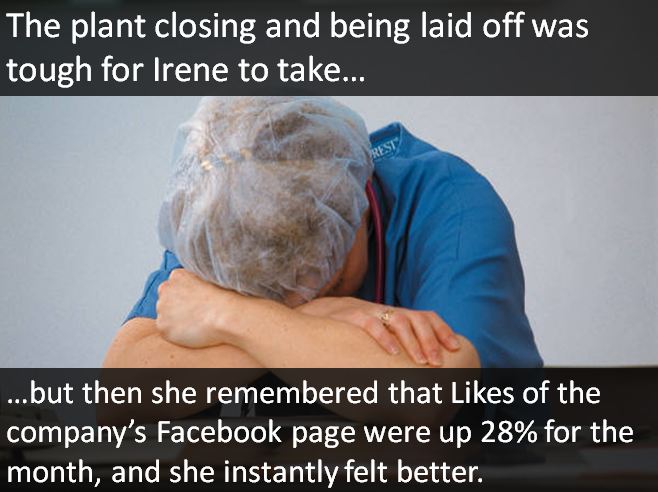
Social Media Doesn't Fix Crummy Products

For the last half decade, we’ve had it beaten over our heads that "it’s all about the conversation." That all a company has to do is "be social," to throw up a Twitter and Facebook account, and they have passed the marketing test.

Of course, this is utter crap, says consultant Mack Collier. "If your product sucks today, it will still suck tomorrow if you start using social media," he says. "The only difference is that more people will know about it."

Apple may offer unlocked iPhone 4 handsets

According to iOS developer Chronic, Apple plans to offer unlocked iPhone 4 models directly to consumers soon, in both black and white, with 16 Gbytes or 32 Gbytes of storage.

Worldwide Ad Market Approaches $500 Billion

Total Media Ad Spending Worldwide, 2010-2015 (billions and % change)Advertising spending around the world is projected to increase about four percent in 2011to more than $494 billion, eMarketer estimates.

Total spending on directories, internet, magazines, newspaper, outdoor, radio and TV advertising will continue to grow at steady single-digit rates through 2015, according to the forecast. By that year, advertisers worldwide will be spending almost $600 billion on these media.

Sarah Palin Email Gambit: Why People Hold Journalists in Such Low Regard

There's a reason journalists are held in such low public esteem, despite their own high self evaluations.

"The trove of more than 13,000 emails detailing almost every aspect of Sarah Palin’s governorship of Alaska, released late on Friday, paints a picture of her as an idealistic, conscientious, humorous and humane woman slightly bemused by the world of politics," says the U.K. Daily Telegraph.

"One can only assume that the Left-leaning editors who dispatched teams of reporters to remote Juneau, the Alaskan capital, to pore over the emails in the hope of digging up a scandal are now viewing the result as a rather poor return on their considerable investment," the Telegraph says.

"If anything, Mrs Palin seems likely to emerge from the scrutiny of the 24,000 pages, contained in six boxes and weighing 275 pounds, with her reputation considerably enhanced."

"The whole saga might come to be viewed as “an embarrassment for legacy media,” the Telegraph says.

In fact, repeated polls have confirmed the low and dropping esteem accorded to major media journalists. A 2004 poll by the First Amendment Center and American Journalism Review shows Americans remain critical of the professionalism and ethics of the people and organizations that deliver the news.

"They say that the press is biased, that it routinely falsifies and fabricates stories, and that it abuses its freedom," says the report. See http://www.ajr.org/article.asp?id=3731.

A 2009 study by the Pew Research Center found 63 percent of respondents said news articles were often inaccurate and only 29 percent said the media generally “get the facts straight” — the worst marks Pew has recorded — compared with 53 percent and 39 percent in 2007. See http://people-press.org/2009/09/13/press-accuracy-rating-hits-two-decade-low/.


In the 1997 Gallup Poll on honesty and ethics, two percent of respondents rated journalists as "very high" on honesty and ethics. About the same ranking gotten by members of Congress and car sales people. See http://www.gallup.com/poll/4294/honesty-ethics-poll-pharmacists-strengthen-their-position.aspx.
Honesty & Ethics: 26 Occupations
Nov 7-9, 1997
Very highHighAverageLowVery lowNo opinion
Druggists, pharmacists1653273*1
Clergy17%4231514
Medical doctors10%4636521
College teachers11%4435316
Dentists9%4537522
Policemen10%3940821
Engineers9%4040317
Funeral directors7%2945928
Bankers4%30511131
Public opinion pollsters4%19551228
Journalists2%21531743
TV reporters, commentators4%18551742
Business executives3%17551735
Local officeholders3%17561743
Building contractors3%17531845
Newspaper reporters2%17482463
Stockbrokers2%165414311
State officeholders2%15532442
Real estate agents3%13562044
Lawyers3%124131103
Labor union leaders2%134126126
Senators2%12502763
Advertising practitioners2%10492667
Congressmen2%10492883
Insurance salesmen2%10473083
Car salesmen2%63140192

Maybe Mobile Advertising Really is Mostly About Location

Some would argue that Apple's iAd initiative has failed to get significant traction, and might wonder whether it means anything particular, other than that Apple has not immediately been able to show its ability to reshape yet another industry. One way or the other, Apple has not shown sufficient value to get many advertisers to move budgets. See Looks Like the iAd Hasn’t Cracked Mobile Advertising.

Maybe the issue isn't necessarily Apple's prowess in the advertising business. The mobile advertising business remains quite small by overall industry standards. Of the possibly $600 billion U.S. advertisers spent in 2010, about $48 billion was spent on all forms of digital media.

Marketers invested a total $47.6 billion in digital advertising and marketing in 2010 according to the Jack Myers Media Business Report. 2020 Vision: Media, Advertising and Marketing Economic Health Report 2000- 2020.

U.S. mobile advertising spend was estimated at $743 million in 2010, according to eMarketer. That is expected to reach $2.5 billion by 2014, but that is a small number in the advertising market. Some estimate the mobile marketing market already is bigger than that, but most think the mobile ad market still remains diminutive.

About one online marketing dollar in every five spent in 2010 went to a mobile campaign, says Borrell Associates, one of the more-robust estimates. By 2015, the mobile share will have grown to almost two of every three dollars spent, according to Borrell Associates. See http://www.mobilemarketingandtechnology.com/2010/toppost/mobile-advertising-will-be-23-of-total-online-spending-by-2015/.

The Jack Myers study pegs the digital total spend at nearly eight percent share of all marketing communications investments in 2010, which were reported by Myers at $601 billion. That total includes all advertising, trade and consumer promotion, event and direct marketing, and public relations, though, and some would not include PR spending in the advertising total, nor good portions of event marketing.

Perhaps the biggest upside could come if mobile advertising comes to be seen as the best form of local advertising, rather than national campaigns. Google would like that, even if Apple probably would not.


Asian Microvendors Have 13% Market Share

According to the latest Strategy Analytics research, more than 200 emerging handset brands, such as Micromax, Spice Mobile and Yulong Coolpad, captured nearly 13 percent of global mobile handset market share, shipping 48 million units globally in the first quarter 2011. according to Strategy Analytics.

According to Neil Shah, Strategy Analytics analyst, “out of the 200-plus legitimate microvendors worldwide, the top 25 brands shipped nearly 21 million units in the first quarter of 2011."
Rising cellular subscriber growth in Asia and Africa has led to the rapid emergence of low-cost, mobile handset suppliers to fulfill rising handset demand, the firm says.

Sunday, June 12, 2011

Experts Trump Friends for Web Recommendations

According to research from Meebo, expertise trumps friendship when people are surfing the Web for content that matches their interests.

The study, which included a nationally representative sample of 1,473 people, found that 53 percent of Web users are looking for recommendations from 'everyday experts,' or strangers with knowledge on a specific topic. For questions about travel and cooking, the gap is even bigger: about 40 percent said they would connect with "everyday experts" while about 20 percent would ask people they know.

Groupon, LivingSocial Serve Somewhat Different Market Segments

Groupon & LivingSocial: Age & Gender Demographic ProfileGroupon and LivingSocial appear to attract different types of customers. Groupon’s visitor base skews somewhat more towards younger users and females while LivingSocial’s is more normally distributed around middle-age users and proportioned roughly equally between genders.

Groupon and LivingSocial account for over 90% of all visits among all group buying websites tracked by comScore.

Saturday, June 11, 2011

$10 Billion Location Based Services Revenue in 2016

Consumer and advertiser expenditures on location based services will  approach $10 billion by 2016, with search advertising accounting for just over 50 percent, predicts Strategy Analytics.

Much of the growth, obviously driven in part by the growing use of location services based on maps.

Separately, Gartner predicts that revenue from location-based services for consumers will reach $8.3 billion in 2014, with advertising being the dominant contributor of revenue, rather than subscription fees, for example.

Google recently said that 40 percent of all Google Map use takes place on mobile phones.

Read more here

Android Frist, Windows Second in Mobile OS Share in 2015

The mobile operating system market is in a huge state of flux. As recently as August 2010, for example, Gartner was predicting that Symbian would the world’s top operating system in 2014, with Windows fifth, at about four percent share.

In less than a year, based principally on Nokia’a abandonment of Symbian and promotion pof Windows, that OS is expected to climb to the number-two spot by 2015.

IDC expects Android, which passed Symbian as the leading operating system worldwide in the fourth quarter of 2010, to grow to more than 40 percent of the market in the second half of 2011.

But that won’t be the most-significant shift. Instead, some might argue, the prediction that Windows Phone will be in second place, with more than 20 percent share in 2015, might be as big a story as the virtual disappearance of Symbian, as Nokia moves forward using Windows Phone, and abandoning Symbian.


Nevertheless, assuming that Nokia's transition to Windows Phone goes smoothly, the OS is expected to defend a number 2 rank and more than 20% share in 2015.

Apple’s iOS was the number-three operating system OS at the beginning of 2011 and will retain that number-three ranking.

The BlackBerry operating system is expected to remain in the fourth spot. smartphone operating system over the forecast period. Like iOS, the BlackBerry OS will experience market share decline between 2011 and 2015.

http://www.idc.com/getdoc.jsp?containerId=prUS22871611

The Best Argument for Sustainable Neocloud Role in the AI Ecosystem

Perhaps the “best” argument for a permanent role for neocloud service providers is the relevance of enterprise private cloud inference serv...