Tuesday, November 1, 2011

New Nook, New Positioning?

Are there implications for Barnes & Noble as it prepares to launch its next generation of Nook e-readers? 

Some might say so, especially as Amazon’s new line of Kindles, especially the Fire, seem to be getting traction.
Up to this point, women have tended to be bigger buyers of e-readers than males. Also, Barnes & Noble is emphasizing more toys and goods for children in its retail stores.
The logical implication might be that Nook gets positioned as a device especially useful for families with children.
In the United States,  as recently as August 2011, tablet and eReader owners tended to be male and on the younger side. But according to Nielsen,  this is no longer the case.


In the third quarter of  2010, for example, 62 percent of tablet owners were under the age of 34 and only 10 percent were over the age of 55. 

By the second quarter of  2011, only 46 percent of tablet owners were under the age of 34 and the percentage of those over 55 had increased to 19 percent.


Looking at the data by gender underlines key changes in the e-reader category. Some 61 percent of all e-reader owners are now female, compared to 46 percent in the third quarter of  2010.


Smart phone owners are now evenly split between male and female and tablets remain primarily male. E-reader demographics


Monday, October 31, 2011

Global PBX Sales Surged to $59 Billion in 2010

Is Your Business in a PBX Upgrade Cycle?
Buying a PBX in 2010 equated to a vote for ratcheting-up employee productivity, argue analysts at the Eastern Management Group. 


A new PBX, costing $1,200 per seat on average, gave companies permission to hold the line in other areas, according to John Malone, Eastern Management analyst. 


The argument is that companies upgraded phone systems as an alternative to hiring people.


In part, that view is driven by information technology managers who say productivity improvement drove 38 percent of all PBX purchases in 2010. This was 15 percent more responses than the "needed a new PBX to replace an old one" justification.

Company relocation and company expansion were responsible for only a modest proportion of PBX sales worldwide, says Malone. 


But other explanations are possible. The survey data suggests that about half of respondents in four out of six size categories are in a "PBX upgrade cycle." Granted, many of us do not follow the PBX market, so perhaps that is a "typical" percentage of firms actually in an "upgrade" position in a single year. 


Many of us might guess the number of firms looking to "upgrade" ("replace") a business phone system in a given year might range between 14 percent and 16 percent. A response ranging from a low of about 35 percent up to about 50 percent might strike an observer as unusual. 


The global market for PBX systems in 2010 was $59 billion. This is $7.5 billion larger than 2009, Eastern Management says. 

Telecom NZ Shareholders Approve Structural Separation

Telecom New Zealand shareholders have voted to approve the structural separation of the company. Telecom shareholders approve structural separation 


The vote clears the way for the separated network business "Chorus" to list on the New Zealand stock exchange and raise NZ $929 million of government funding to lay fiber-optic cable to homes and businesses in 24 of the country's largest cities, including Wellington and Auckland.
The national network is expected to cost NZ $3.5 billion.
Telecom CEO Paul Reynolds said the separation vote was unprecedented. Structural separation 


Executives in Singapore might disagree, and Australia has been on a parallel track for years, as well. 

The idea hasn't been much of an issue in the U.S. or other western hemisphere markets, though the idea was raised briefly during the early 2000s. 

S. 1364, The Telecommunications Fair Competition Enforcement Act of 2001, introduced by then Sen. Ernest Hollings (D-S.C.), provides an example of the past interest in structural separation.

Sen. Hollings wanted to force the "Baby Bells" to separate their networks and retail business services functions into distinct companies, U.S. structural separation talks

Under structural separation, then-existing companies AmeritechBell SouthPacific Bell, SBC and Verizon, among others, would have to separate into two parts. The retail arm would have to buy and provision services from the wholesale arm.

States that also were serious, at the same time, included public utility regulators and state legislators in Alabama, Florida, Illinois, Kentucky, Louisiana, Maryland, Massachusetts, Michigan, Minnesota, Mississippi, Oklahoma, Pennsylvania, New Jersey, New Mexico, North Carolina, South Carolina, Tennessee, Virginia, and Wisconsin. States looked at structural separation

From time to time the issue still is raised by policy advocates, but it still does not appear there is any serious interest in exploring structural separation in the U.S. market. One key reason is simply the different market structure. The U.S. market has a highly-developed, ubiquitous and  successful cable industry that already has built national broadband networks that compete vigorously with telcos. 


At the same time, several national wireless networks also are competing to sell mobile and fixed broadband services, and while not perfect substitutes for fixed-line service, are credible substitutes for some applications and users. 


Structural separation so far has made much more sense where a credible, ubiquitous facilities-based network rival to the incumbent telco was not in place. In some isolated cases, an incumbent has been willing to give up its access network monopoly in trade for something the firm wanted more, namely the ability to compete in other non-regulated markets. 


New interest in structural separation

Enterprises Probably Have to Support Macs

Forrester Research last week recommended corporate IT departments let workers use Macs on their networks because these employees are more likely to be power users, the ones working longer hours, being more productive and making more money.Forrester Research analyst David Johnson says "it's time to repeal prohibition and take decisive action" and support Mac PCs in enterprises. Forrester says enterprises have t support Macs

"Mac users are your HEROes and you should enable them not hinder them," he says. Forrester uses the acronym HERO for Highly Empowered and Resourceful Operatives, what it finds are "the 17 percent of information workers who use new technologies and find innovative ways to be more productive and serve customers more effectively."

One might say that enterprises lost the battle decisively with the advent of the iPad, which is a tool enterprise workers are demanding and using in growing numbers.


The iPad once viewed as simply a consumer device for media consumption is gaining traction at the enterprise level. Some of the largest companies in the world already use or plan to use the device as an enterprise tool. The rate of enterprise adoption in Fortune 100 companies is reported to be 65 percent according the Wall Street Journal and 80 percent according to Network World. High enterprise iPad adoption


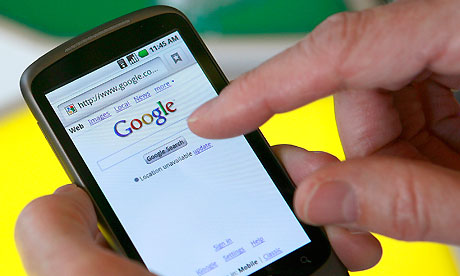
Google About To Launch Website Mobilizer "GOMO"

Google is preparing to launch a new service called GOMO that creates "mobilized" websites on demand. Mobile ads are an important revenue stream for Google, so much so that it offers a range of free tools to create mobile versions of existing websites. 


In addition to all these free services for mobilizing sites, Google is incentivizing good mobile content with its ad programs and even punishing sites that aren't mobile-friendly. Google is changing its AdWords program to reward mobile-optimized sites and adding +1 buttons to mobile ads.

Africa leads in mobile money deployment as users hit over 40 million | Mobile Money Africa

The United Nations Conference on Trade and Development (UNCTAD) says Africa is leading the trend with 51 mobile money systems in place, and as many as 37 of the deployments being in least developed countries (LDCs). Africa leads in mobile money


According to data from the GSM Association, some 109 such deployments had been implemented as of April 2011, spanning all developing regions. Only 11 of these are in developed countries, for perhaps logical reasons. 


Mobile payments systems that allow people to use their mobiles as a payment mechanism make the most sense in regions where banking and payments infrastructure is relatively undeveloped.

Africa is leading the trend with 51 mobile money systems in place, and as many as 37 of the deployments are in least developed countries, says the UNCTAD report.

Three broad categories of services now are coming to market. Money transfer services (domestic and/or international) are one type of application.

Payment services (for airtime top-ups, bills, salaries, and other goods and services) are a second type of application.

Use of mobiles to support financial services (savings, credit, insurance) are the third major type of application. Domestic money transfers, airtime and bill payments are the three most common services currently offered. You can view the report here. 

Mobile Content in the Shopping Process

consumer-pulseBrands now have to create and distribute content available "for free" when and where customers need it on social media platforms. The other corollary is that brands have to avoid  "pushing" promotional information when consumers are looking for answers.


While marketers like to use every media channel to deliver marketing promotions, you must understand consumers' shopping-related needs have evolved.

They now want and access information before, during, and after they make a purchase. 


With U.S. smartphone usage at 40 percent, it's critical to offer customers the information they want and need wherever they are in the purchase cycle and physically (since they may be in your store or your competitor's).

Gartner Says Cloud Banking Can Drive 'Creative Destruction' in the Banking Industry

A rapid shift in attitude towards cloud banking is happening within the financial services industry, according to Gartner. 


A Gartner survey found that cloud is the top priority for global financial services CIOs and that 39 percent of those surveyed expect that more than half of all their transactions will be supported via cloud infrastructure and software as a service (SaaS) by 2015.


In Europe, the Middle East and Africa (EMEA), 44 percent of FS CIOs expect that more than half of all their institutions' transactions will be supported via cloud infrastructure by 2015 and 33 percent of them expect that the majority of transactions will be processed via SaaS by 2015. Gartner Says Cloud Banking Can Drive 'Creative Destruction' in the Banking Industry:


“Early cloud adoption, especially in the FS sectors, may have been limited to non-core areas and proofs of concept, but it is set to go mainstream, moving the heart of the business, transaction origination and processing, into the cloud,” said Peter Redshaw, managing vice president at Gartner. “Cloud banking should be innovative, dedicated to this industry and transformative.”


As with most cloud initiatives, cloud banking might be disruptive. It can provide the ability for attackers or defenders to try completely new services and processes, such as reverse auctions and third-party core banking systems, for example. 


Successful new cloud services can displace the existing and dominant process for design, distribution or transacting in a disruptive way, rather than just incrementally improving them, says Redshaw. 


As banks progressively replace people in the value chain with algorithmic operations (AOs) to run processes and make decisions, their intellectual property increasingly resides in these algorithms. The value of people is not in running operations but in improving the AOs, Redshaw argues. 


At a more prosaic level, cloud banking should lessen investment in bank data centers. Data center investments affected

Android Was The Only OS That Grew Share In Last Quarter

Google AndroidAndroid is the only platform that has grown over the last year in all the key markets surveyed by Kantar Worldpanel ComTech. All the rest of mobile operating systems saw their market shares either stay flat or decline in at least one geography.


The figures, which compile smartphone sales for the last 12 weeks ended October 2, paint a pretty stark picture showing which platform is benefiting most from the growth in smartphone usage by consumers.

Taking the markets of Australia, Brazil, Germany, Great Britain, France, Italy, Spain and the U.S., the Android platform grew its share of smartphone sales anywhere between 19.3 percent and 50.4 percent).

Spain took the crown for the biggest amount of Android growth at 50.4 percent. Android Was The Only OS That Grew

Just under half of the U.K. population now owns a smartphone, and Google's mobile operating system Android is powering half of those those being sold,  followed by RIM's BlackBerry models with 22.5% and Apple's iPhone at 18.5 percent, for example.  Android grows share

A Sister’s Eulogy for Steve Jobs

If you only care about Steve Jobs "the legend" (and I mean that in the best possible way), and not about his personal foibles (he wasn't "perfect."), read Mona Simpon's eulogy. A Sister’s Eulogy for Steve Jobs


Stanford University Memorial Church, where the eulogy was delivered.


Memorial Church at Night - Stanford University, Stanford, California


Are Smartphone Sales Cooling Off?

Are U.S. smart phone sales growing or not? It's a bit of a rhetorical question, as the issue is not whether smart phone sales are growing, but rather whether sales rates are declining, flat or growing. 


Third quarter results might not be a completely-reliable indicator, though. Are Smartphone Sales Cooling Off?

Apple’s third quarter sales, for example, were most likely less than expected due to the coming iPhone 4S, which will have the likely impact of pushing third quarter sales into the fourth quarter.


New product introductions often cause consumers to see what’s coming before they decide to make a purchase.


In the market for Android-based phones, the situation is a little fuzzier. Most data shows healthy Android device growth. Android sales As with the iPhone, consumers wait to for the latest product, so a rapid pace of introductions can confuse consumers and slow sales, temporarily.


One suspects that tablet interest is also partly at work. Right now, tablets are "the" hot consumer product category, and that has to be shifting discretionary income away from smart phones, toward tablets, to some extent.  

Sunday, October 30, 2011

Google Offers Partners With 14 Deal Providers

Google has just announced a set of new partnerships with over a dozen niche daily deal providers, which will now be integrated into the Google Offers service, both on the Web and in the Google Shopper mobile applications for iOS and Android.

The new Google Offers partners include Dealfind, DoodleDeals, Gilt City, GolfNow, HomeRun, JuiceInTheCity, kgbdeals, Mamapedia, PlumDistrict, PopSugar Shop, ReachDeals, Active.com Schwaggle, TIPPR, and zozi.


Initially, these deals will be only available to those in the San Francisco Bay area, but this feature will soon arrive to other areas, says Google. Google Offers Partners With 14 Deal Providers 

Some are skeptical about the long-term staying power of "daily deals" services. Certainly not all of the current providers will survive. But if you believe mobile wallet services will succeed, it will be largely on the strength of deals, offers and other rewards consumers receive, as well as the loyalty, retention and customer acquisition retailers benefit from.

Mobile Wallet or Mobile Payment: What Wins in South Africa?

Sparring between contestants in competitive markets is not unusual. Neither are arguments that one or another approaches will not work, or that some approaches are "better." So it isn't unusual that a provider of one method argues the other methods "won't work" in a particular market


Standard Bank operates its own virtual currency "mimoney," which consists of a voucher number delivered to the recipient's cell phone using a text message. SMS. The bank has also teamed up with retailer Spar on a peer-to-peer money transfer service, in which SMS vouchers are redeemed at Spar stores throughout the country. 


Explosive growth in pre-paid money vouchers in South Africa has killed the mobile wallet as a viable payment instrument, says Herman Singh, CEO of Beyond Payments, a unit of Standard Bank.


Singh says that over R100 billion is generated in sales of prepaid airtime and electricity annually, while over 2.5 million money vouchers valued at over R4050 each, are created and redeemed every month in South Africa.

There are a couple of noteworthy angles here, including the use of a virtual currency mechanism and simple text messaging for communications, as well as the prepaid method of payment.

There is, to be sure, a clear argument that the leading developments in developed markets now are different than in developing markets. Mobile wallets and retail payments are bigger in developed markets because "banking and payments" are not "problems," while in developing markets these are key issues.

Likewise, the preferred communication technologies in developed markets are different from developing markets. Text messaging is ubiquitous for users of feature phones that are typical in developing markets. Other technologies are feasible in developed markets where smart phones rapidly are becoming the norm.

As a rule, mobile commerce, including both mobile payments and mobile wallet components, is a bigger issue in developed regions, while mobile banking--in particular remote payment--is a bigger opportunity in developing regions.

4G Mobile Backhaul: the Cartoon

This isn't the first time Accedian Networks has produced an animated approach to explaining a pretty esoteric technology topic. But it works. This time, Accedian looks at mobile backhaul for fourth generation mobile networks. 

Also, check out the return on investment calculator here. It's a practical tool for estimating the cost of various solutions, but also is crafted in a visually-appealing way. 


Saturday, October 29, 2011

SureWest Communications Revenue Shows Broadband Foundation

Third quarter earnings reported by SureWest Communications show how the independent telco business has changed over the last decade or two. The composition of revenue is most striking.


Of total quarterly revenue of $63 million, "telecom" services (voice) represented just $15 million, of which consumer voice was just $3.2 million. In other words, all voice-related revenue now represents 24 percent of total revenue. And consumer voice represents just five percent of total revenue.

Business voice accounted for $8.1 million and access fees added $3.6 million. What also is noteworthy is the emergence of new segments within the "business services" category.


Of $13.6 billion in business revenue earned by SureWest Communications in the third quarter of 2011, about 24 percent was earned directly from providing wireless backhaul service.

"Revenue growth from wireless carrier backhaul in the Sacramento market also provided a significant impact, and we are now billing for 280 connections that generate $3.2 million in annualized revenues," said CEO Steve Oldham. "We have contracts in place for 390 connections and anticipate over $4 million in annualized revenues when those sites are active."


Though the sources are different, at AT&T wireline voice is contributing something on the order of 20 percent of total revenue as well. 

Yes, Follow the Data. Even if it Does Not Fit Your Agenda

When people argue we need to “follow the science” that should be true in all cases, not only in cases where the data fits one’s political pr...