Friday, October 21, 2011

Twitter, Facebook, LinkedIn, Google+ are Not the Same


People use social networks in different ways, which might have implications for the ways brands use social media venues.

On Twitter, users “follow” other users (which may include businesses) to obtain information, share updates, and also to be social. Users are open to following brands, so Twitter is great for sharing links to content.

The tone is informal, and users commonly connect with brands for customer support, new content, contests, and offers. Who users choose to “follow back” is fairly open, and users are generally comfortable connecting with more people even if they don't "know" them.

Facebook users either create personal accounts or interact as brands using  business pages, but users on. Facebook are commonly more strict about who they connect and become "friends" with on Facebook.

Usually, Facebook "friendship" is limited to who a person already knows or is friends with in real life. Posts and updates in the network can be longer-form, but the network appreciates less frequent and more valuable updates from businesses, particularly updates that offer exclusive offers and content.

LinkedIn is a network that mainly attracts and suits the needs of business professionals, making it a perhaps uniquely  great fit for B2B marketers. The network has more of a business networking and career focus, and the way users connect is much more formal.

Content shared and discussions that start are usually more industry and business-focused.

Google+  currently attracts an audience that is more “digitally savvy” and  technology focused. The Google+ audience also is mainly male. But Google+ is the newest major social network and its audience profile probably will change over time. So far, Google has chosen deliberately to restrict “business accounts,” but that will come.

One might argue that Twitter is purpose built for content sharing. Facebook, always a “must use” network, is probably better suited to pormotions and branding. LinkedIn is the best B2B venue. Google+ is probably the most-important “new” venue, but its character is not yet fully shaped. Of the major networks, it is the place content marketers need to watch, even if it is not yet as important a venue as Facebook, Twitter or LinkedIn.  Social nets are used differently

Thursday, October 20, 2011

New Twists In Facebook Timeline Drama | paidContent

So when will Facebook's new "Timeline" interface be rolled out to end users? A recent wall posting from a Facebook employee sugggests the company is aiming for an “end of the year” rollout.


The public release of Timeline appears to be as far off as it was when Mark Zuckerberg announced on September 22, 2011 that the feature would arrive “in coming weeks.”


Some people think the delay is part of a deliberate strategy by Facebook to introduce the feature gradually. Others think a legal dispute is the reason for the delay. Lawsuit might delay Facebook Timeline launch


The reluctance of Facebook users to embrace change is an issue.  “Any time a company with 800 million active customers makes a change, a certain predictable percentage of them will not be happy. 


Timeline  puts all of your activity in chronological order in a visually pleasing way. Almost like a personal webpage for Facebook, this timeline is designed to highlight large photos, status updates, and activity. 


New Twists for Facebook Timeline

Mobile Commerce, Payments Inflection Point?

There have been a couple other mobile inflection points in the mobile business recently.

It appears as though 2008 was noteworthy in several respects. It was the year the global "Great Recession" hit. It also seems to have been the year for big changes in the global mobile phone business.

Notably, it seems to have been the year that the iPhone began to stamp its leadership on the device market. It also seems to have been the year that prior successful feature phone strategies began to unravel. 
iPhone inflection point

Mobile advertising remains a small part of overall spending on online advertising or advertising in general. 


But it is noteworthy that the Interactive Advertising Bureau now has started to track and report mobile advertising sales volume.

That is an indicator that mobile advertising has reached an inflection point. 
Mobile advertising inflection point

Think "turning point"  or "critical mass" or "escape velocity" instead of "inflection point" and you will get the idea. 

Content for Mobile Consumption

It stands to reason that consumers will interact differently with content when on a PC, a tablet or a smart phone. When consumers use different devices, the user experience dictates the types of words that are searched, for example.

It now is obvious that people do different things on smart phones than they do on PCs, and also behave differently when using tablets. That means content consumption patterns will be different as well. Smart phone content tends to be more frequently localized, more often related to some immediate purpose or activity. Sessions tend to be shorter. 


Content requests on a smart phone will tend to have a higher contextual angle as well. What people want to know more often hinges on where they are, what they are doing and what is around them. 


Having access to an actual keyboard makes it much easier to type longer keywords, in addition to not having GPS functionality to localize the search.

Tablets show to have the shortest keyword queries entered. With no keyboard, and it being slightly more difficult to type, "Google Instant" or voice search comes into play, and steers consumers towards shorter queries.


Mobile-specific landing pages are a good idea, when an organization has time and resources to create them, but these days a more-precise term would be "smart phone" landing pages, as a tablet landing page is virtually indistinguishable from a PC page, at least on a 10-inch screen. Whether it will make sense to format content in three ways, for small smart phone screens, seven-inch screens and then full-size PC and tablet screens remains to be seen. 


indexed-search-query-length

Fictional Characters for Content Marketing

perry-kathybethForced to compete with countless mediums for attention, brand marketers are using fictional characters on sites such as Facebook to create content with a marketing purpose.

Producing an interesting music video - or a web video or ad creative - is no longer enough, some would say. It's the unique way in which that promotional content is presented that remains in the minds of consumers and incites a sale.


Sony Pictures demonstrated this two years ago as it prepared to release its motion picture "2012." 


The entertainment company's marketing efforts included an official film website, a microsite, several blogs, a YouTube channel, a Facebook fan page, and a Twitter account, but other than the film site, every initiative was based on fictional characters and organizations from the movie.


A similar approach was taken earlier this year by Danish company SF Films A/S as it endeavored to promote its family film "Max Pinlig." Rather than run Facebook ads, SF Films elected to create Facebook pages for six of its fictional characters and link them to the primary Facebook page for the movie.

New Look for GMail

Those of you who use GMail, or love Gmail, will want to know about the new look and functionality Google is bringing to the email service.


The new Gmail interface isbased on the "preview" theme that's already available in Gmail.


There now is an action bar that uses icons instead of text labels, a completely new interface for conversations, profile pictures next to contacts, a flexible layout that adapts to any window size, display density options like in Google Docs, resizable chat/labels sections, new high-definition themes and an updated search box. 


Mobile Social Networking Grows 37%

Some 72.2 million Americans accessed social networking sites or blogs on their mobile device in August 2011, an increase of 37 percent in the past year, says comScore.

More than half read a post from an organization, brand or event while on their mobile device. U.S. Mobile Social Media Audience Grows 37 Percent

In August 2011, more than 72.2 million people accessed social networking sites or blogs on their mobile device, an increase of 37 percent from the previous year. Nearly 40 million U.S. mobile users, more than half of the mobile social media audience, access these sites almost every day, demonstrating the importance of this activity to people’s daily routines.

Research also indicated that although more people accessed these sites via their mobile browser, the social networking app audience grew five times faster in the past year. While the mobile browsing social networking audience grew 24 percent to 42.3 million users in the past year, the mobile social networking app audience surged 126 percent to 38.5 million.

Frequency of Use and Method of Access for Mobile Social Networking/Blog Audience
3 Month Avg. Ending Aug. 2011 vs. 3 Month Avg. Ending Aug. 2010
Total U.S. Mobile Subscribers Ages 13+ (Smartphone and Non-Smartphone)
Source: comScore MobiLens
Total Audience (000)
Aug-2010Aug-2011% Change
Accessed Social Networking Site or Blog Ever in Month52,73372,25237%
Accessed Social Networking Site or Blog Almost Every Day25,27239,85458%
Social networking Access Method:
Via Mobile Browser34,19242,25124%
Via Application17,00238,453126%

640 Million Mobile VoIP Users in 2016

There might be as many as 640 million mobile VoIP clients in use by 2016, but most will be voice apps used in conjunction with other social media, gaming or applications, according to Juniper Research.

Mobile VoIP clients downloaded to the smart phone will account for 80 percent of the 640 million mobile VoIP accounts in use by the end of 2016.

Mobile VoIP application providers are expected to seek alliances with social media, gaming and software partners, Juniper Research says.

There are some important implications. As has been predicted for some time, the role of voice within the broader communications market will change. Where "calling" once was a stand-alone application, voice increasingly will be available as a feature of other applications. It is not immediately clear whether "voice as part of an application" will primarily augment or displace existing stand-alone calling.

Similar questions might be raised about video calling as well. To what extent does video calling represent incremental activity, and how much will represent a displacement of legacy calling? The number of mobile video calling users also will exceed 130 million by 2016, spurred by the launch of mobile video calling, Juniper Research predicts. But what usage patterns those users will exhibit is unclear.

Google planning major upgrades to Google ‘within days’ • The Register

Google is planning to unveil a series of major upgrades to its social networking service starting in late October 2012, including the ability to use Google Apps accounts to access Google and set up brand pages for companies and the use aliases instead of real names.


Google co-founder Sergey Brin and Vic Gundotra, Google’s senior vice president of social business, said that the first month of open access to Google has seen 40 million users sign up, and 3.4 billion photos uploaded.

Gundotra said that the demand exceeded Google’s most optimistic projections, and this has meant some features are running late in the face of user demand.

“By Christmas (2011) you will see the Google strategy coming together,” Gundotra said. “The reality was that we had to prioritize doing some work and we didn’t anticipate such fast growth.” Google planning major upgrades to Google ‘within days’

BlackBerry Enterprise Share Will Drop from 52% to 36% in 2012

BlackBerry Market Share Dropping Fast
The BlackBerry may not be dead, but it's dying, some now say. New research from Enterprise Management Associates likewise indicates that 30 percent of BlackBerry users in companies with more than 10,000 users will move to a different mobile platform in 2012.

That would move Research in Motion's standing in large enterprise accounts into that of a minority operating system. Today, 52 percent of users in such organizations "actively" use a BlackBerry for work purposes, EMA reports; a 30 percent reduction would bring that total to 36 percent.

"We expected to see some market share loss by RIM, but these results were far more dramatic than we could have anticipated," reports Steve Brasen, EMA's managing research director. They come on the heels of a larger defection: Users of all stripes are moving away from BlackBerry, as its continually declining market share shows.

Wednesday, October 19, 2011

New Jersey Transit Embraces Google Wallet


NJ Transit  is the first public transportation agency to partner with Google Wallet, Google’s recently released contactless payment system.  Using Google Wallet, NJ TRANSIT rail and bus customers have the option to use their smart phones to tap and pay for transportation tickets at select locations.

Now, NJ TRANSIT customers can use Google Wallet to purchase transportation tickets at New York Penn Station ticket vending machines and ticket windows, Newark Liberty International Airport Rail Station (AirTrain), on bus route nos. 6, 43, 80, 81, 87, and 120, and on some buses on the 126 line.

Currently, Google Wallet is available on Sprint’s Nexus S 4G phone and supports Citi MasterCard credit cards and a Google Prepaid Card.

New Jersey Transit Takes Google Wallet

Sprint says iPhone 4S Isn't Congesting the Network

Fastest Mobile Networks: National
Sprint says reports that the Apple iPhone 4S is causing congestion on Sprint's network are in error.

"As always, Sprint is carefully monitoring the performance of the 3G network," Sprint said. "We are looking into a small number of reports of slow data speeds when using the iPhone 4S."

All speed tests are subject to handset performance, time of day and physical location and obstructions. And some tests have suggested that Sprint's 3G network, which supports iPhone devices, is not the fastest.

Google: 1% Of Searches Affected By Site Speed Ranking Factors

Slow-loading websites definitely hurt a site's search rankings, Google says. A recent study found that about one out of a 100 searches are affected by the site speed ranking factor. The sites loaded slowly enough that load speed alone would "actually change the ranking to a noticeable degree,” Google says.

That means about one in a 1,000 sites are affected. So only 0.1 percent of all websites have site speed issues that affect how well the site ranks.

The iPad Is Cannibalizing Macs, PCs, Smart Phones

4Apple CEO Tim Cook says Apple is seeing iPad sales cannibalize Mac sales to some degree. Of course, he also argues tablets are cannibalizing PC sales, which most people intuitively might guess is happening. To the extent that consumers have to choose between spending money on a new smart phone or a tablet, one would guess there is some shift of spending towards tablets as well.

It isn't that the tablet displaces a smart phone in terms of function, but only that tablets are the new "hot" consumer gadget, compared to smart phones.

“Yes, we’re seeing cannibalization," Cook says. "Some people are electing to buy an iPad rather than a Mac."

"However, I think a larger percentage are choosing iPad over a Windows-based PC," he says.


Bitcoin Value Massively Deflates

Any currency is vulnerable to changes in supply or demand. Also, like any other commodity, if a bubble erupts, inflating value in a basically irrational way, a bursting bubble always is possible. And that seems to have happened to Bitcoin, the world's first peer-to-peer digital currency, which has "suffered" from massive speculation.

Bitcoin value fell below $3 in mid-October 2011, a 90 percent fall since the currency hit its peak in early June 2011.

Supporters argue that Bitcoin has fundamental advantages over conventional currencies. The system is designed to transfer funds without a central authority, freeing Bitcoin users from bank fees and government regulations. The Bitcoin protocol offers robust anonymity, and the protocol guarantees that there will never be more than 21 million Bitcoins in existence, which supporters have argued would give the currency a stable value.

Unfortunately, the currency's value hasn't proven stable in practice. Since few retailers actually accept Bitcoins, the currency's value has fluctuated primarily as a bubble-driven commodity.

Spotify Gets Traction, Mobile a Big Factor?

blog_image-3.jpgSpotify, the music streaming service, seems to be getting traction, though it only launched in the U.S. market in July 2011. 


It still trails the computer-based online audiences of other music services like iTunes and Pandora by a sizeable margin. If it is to catch up with these other services, it will likely be due in large part to the company’s social strategy, which leverages Facebook for social music sharing.


There are some indications streaming music services are  getting traction as specifically mobile apps, as well. If Spotify users behave as Pandora users do, they are using the service on their mobile devices.

Half of Web Sales Will Use Mobile, Social Apps by 2015

By 2015, companies will generate 50 percent of Web sales from their social presence and mobile applications, according to Gartner.

All of that points up the many reasons mobile ecosystem participants are ramping up mobile commerce, mobile advertising, mobile payments and mobile wallet initiatives.

In many instances, the difference between a "Web" sale and a retail sale will blur, as well, many would argue. In other cases, a retail sale will be prompted or driven by mobile promotions as well, use a mobile loyalty or payment mechanism.

Vendors in the e-commerce market will begin to offer new context-aware, mobile-based application capabilities that can be accessed either from a browser or installed as an application on a phone.

"E-commerce organizations will need to scale up their operations to handle the increased visitation loads resulting from customers not having to wait until they are in front of a PC to obtain answers to questions or place orders," said Gene Alvarez, research vice president at Gartner. "In time, e-commerce vendors will begin to offer context-aware mobile-shopping solutions as part of their overall Web sales offerings."

Android 4.0 Will Unify Tablet, Smart Phone

The new Android 4.0, aside from a striking new visual feel, will be the first version that encompasses both tablets and smart phones.

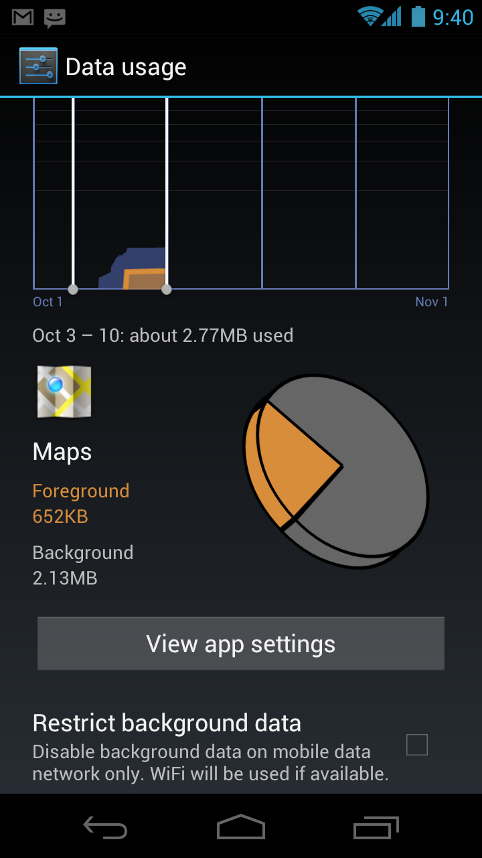
To meet the needs of users with tiered or metered data plans, Android 4.0 adds new controls for managing network data usage. In the Settings app, colorful charts show the total data usage on each network type (mobile or Wi-Fi), as well as amount of data used by each running application.

Google says Android 4.0 makes common actions more visible and lets users navigate with simple, intuitive gestures. Refined animations and feedback throughout the system make interactions engaging and interesting, Google says. An entirely new typeface optimized for high-resolution screens improves readability and brings a polished, modern feel to the user interface.

Virtual buttons in the System Bar let users navigate instantly to Back, Home, and Recent Apps. The System Bar and virtual buttons are present across all apps, but can be dimmed by applications for full-screen viewing. Users can access each application's contextual options in the Action Bar, displayed at the top (and sometimes also at the bottom) of the screen.

Multitasking is a key strength of Android and it's made even easier and more visual on Android 4.0. The Recent Apps button lets users jump instantly from one task to another using the list in the System Bar.

Bearish View of The Smart Phone Business

1Here's a bearish view about the smart phone business. Microsoft and Apple are extracting royalty payments from Google Android suppliers, squeezing their margins.

Apple missed targets for iPhone sales and sales of Research In Motion’s BlackBerry have "collapsed," not to mention the recent multi-day global outage.

Analysts may argue that the rise of products like powerful tablets have hurt smart phone sales. Some of us think that is partly true. Tablet sales have grown much faster than did sales of Apple iPhones or iPods.

4So attention now has been diverted to tablets, to some extent. But Mary Meeker, Kleiner Perkins Caufield Byers partner doesn't appear to share the pessimism.

But lower-cost smart phones now are about to pour onto the market, and the high penetration of mobiles means there still is a huge replacement market.

New Facebook Features Get Mixed Reviews from Teens


Teens have mixed reviews about the recent changes on Facebook, according to a survey by GrownUpThinking.

Overwhelmingly, teens are openly and seriously considering spending less time on Facebook as a direct result of the recent changes. Only four percent of teens plan to spend more time on Facebook. According to the  research, 47 percent will maintain the same level of usage, electing to “put up with the annoyances” in order to access the features that made the platform valuable to them in the first place: visiting friend pages, commenting on walls and engaging in chats.

The survey of 2,000 (14-17 year old) teens suggests many find the changes “confusing, annoying, disappointing and useless,” (among comments made repeatedly in our discussion forums).

Teens mention Facebook’s biggest strength is its simplicity and ease of use. Only 19 percent of teens felt that the interface was easier to navigate, with 45 percent saying the page feels cluttered by all of the new features.

Social media fatigue may become a bigger problem, with an onslaught of updates streaming through the newly-added ticker, causing 35 percent of teens to feel “uncomfortable” with the new level of sharing.

But “Timeline” gets a big thumbs up. Timeline received the most praise from teens in our study (27 percent said it was their favorite above all Facebook features). Securing a position on a teen’s Timeline will have meant that your brand achieved a defining connection in the life of a teen. In contrast, apps that are currently auto-posting their way on to Timelines of unsuspecting teens will need to quickly adapt in order to maintain long-term relevance and placement.

Since most teens have between 100 and 500 friends, the ticker scrolls too-fast to provide meaningful updates. The ticker is seen as a distraction, over-communicating their activities without providing any real value. Only 17 percent see any value in viewing friend activity this way, with 31 percent of teens trying to ignore its very existence on the page. They worry that a ticker provides information that “is not theirs to see” in the first place, with the word “stalker” being mentioned on several occasions.

Teens have mixed reviews about the recent changes on Facebook, according to a survey by GrownUpThinking.

Overwhelmingly, teens are openly and seriously considering spending less time on Facebook as a direct result of the recent changes. Only four percent of teens plan to spend more time on Facebook. According to the  research, 47 percent will maintain the same level of usage, electing to “put up with the annoyances” in order to access the features that made the platform valuable to them in the first place: visiting friend pages, commenting on walls and engaging in chats.

The survey of 2,000 (14-17 year old) teens suggests many find the changes “confusing, annoying, disappointing and useless,” (among comments made repeatedly in our discussion forums).

Teens mention Facebook’s biggest strength is its simplicity and ease of use. Only 19 percent of teens felt that the interface was easier to navigate, with 45 percent saying the page feels cluttered by all of the new features.

Social media fatigue may become a bigger problem, with an onslaught of updates streaming through the newly-added ticker, causing 35 percent of teens to feel “uncomfortable” with the new level of sharing.

But “Timeline” gets a big thumbs up. Timeline received the most praise from teens in our study (27 percent said it was their favorite above all Facebook features). Securing a position on a teen’s Timeline will have meant that your brand achieved a defining connection in the life of a teen. In contrast, apps that are currently auto-posting their way on to Timelines of unsuspecting teens will need to quickly adapt in order to maintain long-term relevance and placement.

Since most teens have between 100 and 500 friends, the ticker scrolls too-fast to provide meaningful updates. The ticker is seen as a distraction, over-communicating their activities without providing any real value. Only 17 percent see any value in viewing friend activity this way, with 31 percent of teens trying to ignore its very existence on the page. They worry that a ticker provides information that “is not theirs to see” in the first place, with the word “stalker” being mentioned on several occasions.

Overwhelmingly, teens view apps as not adding value to their news feed. They view apps as “clogging” their wall with “spam” and an unnecessary level of communication. At best, “it depends” on the type of app being used. The top apps on Facebook with teens are Twitter (27 percent), Ticketmaster (21 percent), Yahoo (24 percent), Netflix (20 percent) and Spotify (15 percent).

According to the survey, 25 percent of teens will be using Facebook less and Google+ more, with 10 percent saying they would drop Facebook completely. Among teens that are already using Google+, they rave about the platform as being cleaner and “more social” than Facebook.

Lack of knowledge about Google+ seems to be the biggest barrier to entry among teens who express interest in staying loyal to Facebook. Also, teens have opted for staying with Facebook over Google+ because the majority of their friends are already on it.

Screen Shot 2011-10-11 at 10.25.36 AM
Overwhelmingly, teens view apps as not adding value to their news feed. They view apps as “clogging” their wall with “spam” and an unnecessary level of communication. At best, “it depends” on the type of app being used. The top apps on Facebook with teens are Twitter (27 percent), Ticketmaster (21 percent), Yahoo (24 percent), Netflix (20 percent) and Spotify (15 percent).

According to the survey, 25 percent of teens will be using Facebook less and Google+ more, with 10 percent saying they would drop Facebook completely. Among teens that are already using Google+, they rave about the platform as being cleaner and “more social” than Facebook.

Lack of knowledge about Google+ seems to be the biggest barrier to entry among teens who express interest in staying loyal to Facebook. Also, teens have opted for staying with Facebook over Google+ because the majority of their friends are already on it.

Teens react to Facebook changes


Will the 2026 World Cup Create Any Long-Term Economic Benefit for Host Nations?

World Cup long-term economic effects will be negligible, economists at Goldman Sachs say. That might seem unlikely, given the 2026 FIFA Wor...