Wednesday, June 30, 2010
Google Revamps "News" to Allow More Personalization

 Gary Kim was cited as a global "Power Mobile Influencer" by Forbes, ranked second in the world for coverage of the mobile business, and as a "top 10" telecom analyst. He is a member of Mensa, the international organization for people with IQs in the top two percent.
Wi-Fi Access Plays Key Access Role for Apple Devices and Users

The iPod "Touch," of course, must use Wi-Fi, which accounts for its heavy profile.
Gary Kim was cited as a global "Power Mobile Influencer" by Forbes, ranked second in the world for coverage of the mobile business, and as a "top 10" telecom analyst. He is a member of Mensa, the international organization for people with IQs in the top two percent.
AdMob May 2010 Metrics
AdMob Mobile Metrics - May 2010 - Highlights
View more presentations from AdMob Inc.
Gary Kim was cited as a global "Power Mobile Influencer" by Forbes, ranked second in the world for coverage of the mobile business, and as a "top 10" telecom analyst. He is a member of Mensa, the international organization for people with IQs in the top two percent.
Droid X Ad "Hold The Phone Any Way You Like"
 Gary Kim was cited as a global "Power Mobile Influencer" by Forbes, ranked second in the world for coverage of the mobile business, and as a "top 10" telecom analyst. He is a member of Mensa, the international organization for people with IQs in the top two percent.
Android 2.2
In case you were wondering what new things it will allow you to do.
Gary Kim was cited as a global "Power Mobile Influencer" by Forbes, ranked second in the world for coverage of the mobile business, and as a "top 10" telecom analyst. He is a member of Mensa, the international organization for people with IQs in the top two percent.
Microsoft Kin: Fast Product Life Cycle

Apparently the Kin development team has been rolled into the Windows Phone 7 team and Microsoft does not plan to launch the device in Europe this year.
Gary Kim was cited as a global "Power Mobile Influencer" by Forbes, ranked second in the world for coverage of the mobile business, and as a "top 10" telecom analyst. He is a member of Mensa, the international organization for people with IQs in the top two percent.
Coding for Android Device Battery Life
Most of us have to pay attention to battery life these days. And as a dumb end user there is only so much I can do to regulate battery life. Turning devices off, dimming screens, shutting down wireless connections and, in general, just not using my devices are the sorts of things end users can control.
Of course, that sort of defeats the purpose of having always-on devices, doesn't it? Application developers can do some things to help when they create apps, and hardware engineers can do some things when they design devices.
Ironically, we are so "digital" these days that radio frequency engineering is almost a lost art, as you might infer from the antenna issues the iPhone 4 has been having.
But Android developers can do some things when they develop code that has a direct bearing on power consumption.
Of course, that sort of defeats the purpose of having always-on devices, doesn't it? Application developers can do some things to help when they create apps, and hardware engineers can do some things when they design devices.
Ironically, we are so "digital" these days that radio frequency engineering is almost a lost art, as you might infer from the antenna issues the iPhone 4 has been having.
But Android developers can do some things when they develop code that has a direct bearing on power consumption.
Gary Kim was cited as a global "Power Mobile Influencer" by Forbes, ranked second in the world for coverage of the mobile business, and as a "top 10" telecom analyst. He is a member of Mensa, the international organization for people with IQs in the top two percent.
Where Touchscreen Mobile Users Visit
 Gary Kim was cited as a global "Power Mobile Influencer" by Forbes, ranked second in the world for coverage of the mobile business, and as a "top 10" telecom analyst. He is a member of Mensa, the international organization for people with IQs in the top two percent.
Can Telx Outshine Industry Leader Equinix?
http://seekingalpha.com/article/212589-can-telx-outshine-industry-leader-equinix?source=feed
Sent to you via Google Reader
Gary Kim was cited as a global "Power Mobile Influencer" by Forbes, ranked second in the world for coverage of the mobile business, and as a "top 10" telecom analyst. He is a member of Mensa, the international organization for people with IQs in the top two percent.
What in Media is Growing; What is Not

Just about everything else shrunk in 2009.
Gary Kim was cited as a global "Power Mobile Influencer" by Forbes, ranked second in the world for coverage of the mobile business, and as a "top 10" telecom analyst. He is a member of Mensa, the international organization for people with IQs in the top two percent.
Consumers Use the Web, Companies Should Do the Same
 Gary Kim was cited as a global "Power Mobile Influencer" by Forbes, ranked second in the world for coverage of the mobile business, and as a "top 10" telecom analyst. He is a member of Mensa, the international organization for people with IQs in the top two percent.
Consumers, App Providers and Service Providers All Lose from Net Neutrality, Stratecast Argues

That would include streaming video, voice or any other real-time service.
Analysts at Stratecast do not believe the argument. Their analysis suggests application providers themselves, as well as end users and service providers, will be harmed if such policies are adopted.
In truth, nobody knows what might happen if all ability to prioritize bits were prohibited. The key thing, says Stratecast, is that there would be so much uncertainty that service providers would likely behave as though the downside were quite large in magnitude.
Higher prices for end users, less movement towards higher-speed access and ultimately even application experience degradation would occur, long term. The main reasons are the higher costs to "over-provision" physical networks, lower returns for such investment and less robust development of new services and revenue streams, Stratecast argues.
read the full position paper here
Gary Kim was cited as a global "Power Mobile Influencer" by Forbes, ranked second in the world for coverage of the mobile business, and as a "top 10" telecom analyst. He is a member of Mensa, the international organization for people with IQs in the top two percent.
Ancotel Buys LIDARC to Boost Trans-Atlantic Business
Frankfurt-based ancotel GmbH, operators of the largest and most important telecommunications and data network hub in Europe, has acquired the Long Island Data and Recovery Center, a Long Island-based collocation and interconnection facility located at 1025 Old Country Road (‘1025 OCR’), Westbury, NY.
This acquisition marks ancotel’s first foray into the United States’ data center and colocation market. The company will leverage the asset to compete for trans-Atlantic traffic
Long Island serves as a key landing point for submarine cables that connect North America to Europe.
This acquisition marks ancotel’s first foray into the United States’ data center and colocation market. The company will leverage the asset to compete for trans-Atlantic traffic
Long Island serves as a key landing point for submarine cables that connect North America to Europe.
Gary Kim was cited as a global "Power Mobile Influencer" by Forbes, ranked second in the world for coverage of the mobile business, and as a "top 10" telecom analyst. He is a member of Mensa, the international organization for people with IQs in the top two percent.
Allied Fiber Talks about Need for More Dark Fiber
If you have the time, this audio of Hunter Newby, Allied Fiber CEO, lays out the argument for why additional dark fiber capacity is needed in the U.S. market.
You might think there is plenty of fiber in the ground, and there is. The problem is that much of it is on routes, and in cables, that do not provide as much resiliency as you would think. Many fibers are in the same cable, and many cables are laid along the same rights of way.
In addition, it is tougher than you might think to buy dark fiber, as opposed to lit services, on diverse routes.
listen to the interview
You might think there is plenty of fiber in the ground, and there is. The problem is that much of it is on routes, and in cables, that do not provide as much resiliency as you would think. Many fibers are in the same cable, and many cables are laid along the same rights of way.
In addition, it is tougher than you might think to buy dark fiber, as opposed to lit services, on diverse routes.
listen to the interview
Gary Kim was cited as a global "Power Mobile Influencer" by Forbes, ranked second in the world for coverage of the mobile business, and as a "top 10" telecom analyst. He is a member of Mensa, the international organization for people with IQs in the top two percent.
Half of Internet Users Watch Online Video

About 85 percent of males 18-24 watch online video weekly or more and 67 percent of those between the ages of 18 and 34. That should grow about five percent more over the next year. Short form content continues to represent about 80 percent of content viewed.
About 76 percent of online video consumers report they watch professionally produced clips on a regular basis.
About 38 percent say they are interested in watching PC-delivered content on a TV screen.
link
Gary Kim was cited as a global "Power Mobile Influencer" by Forbes, ranked second in the world for coverage of the mobile business, and as a "top 10" telecom analyst. He is a member of Mensa, the international organization for people with IQs in the top two percent.
Zayo Group Buys American Fiber Systems

Terms of the deal were not publicly disclosed, but a knowledgeable source said AFS fetched between $185 million and $190 million.
Founded in 2000 by David Rusin, a former president of Frontier Communications Inc., the privately held AFS provides dark and lit fiber to businesses.
Zayo Group has grown fast by acquisition, and now operates fiber networks in 23 states, serving 141 markets, including 55 metropolitan markets in the Northeast, Pacific Northwest, Minnesota and Iowa.
Along the way, it has opportunistically gotten into the business voice business, collocation and enterprise communications. There's sometimes a fine line between filling out an adjacency and losing focus, but Zayo has proven to be adept, both at managing its acquisition activities, and taking advantage of business adjacencies.
Though as a general rule consolidation is occurring virtually everywhere in the U.S. communications business, there has been a noticeable pickup in regional fiber network mergers recently.
KDL Inc., of Evansville, Ind., a provider of fiber networks in 26 states; Houston-based Alpheus Communications (News - Alert), which builds and manages the fiber backbone that links major cities in Texas; and Fibertech Networks LLC, which leases fiber networks to banks, colleges and hospitals in the eastern U.S., have hired investment bankers and hope to sell themselves, the Wall Street Journal reports.
Though as a general rule consolidation is occurring virtually everywhere in the U.S. communications business, there has been a noticeable pickup in regional fiber network mergers recently.
KDL Inc., of Evansville, Ind., a provider of fiber networks in 26 states; Houston-based Alpheus Communications (News - Alert), which builds and manages the fiber backbone that links major cities in Texas; and Fibertech Networks LLC, which leases fiber networks to banks, colleges and hospitals in the eastern U.S., have hired investment bankers and hope to sell themselves, the Wall Street Journal reports.
Gary Kim was cited as a global "Power Mobile Influencer" by Forbes, ranked second in the world for coverage of the mobile business, and as a "top 10" telecom analyst. He is a member of Mensa, the international organization for people with IQs in the top two percent.
Hulu Plus Not a Danger to Netflix

Netflix still is heavy on movie content.
link
Gary Kim was cited as a global "Power Mobile Influencer" by Forbes, ranked second in the world for coverage of the mobile business, and as a "top 10" telecom analyst. He is a member of Mensa, the international organization for people with IQs in the top two percent.
Tuesday, June 29, 2010
Small Business Hiring up 4% for the Year, Pay is Down
Small business hiring continued to increase slightly in June ( 0.2 percent over May) while the average paycheck took a larger month-over-month dip (-0.6 percent over May) than we’ve seen since pay leveled off in March. That brings us to a year-to-date increase in small business hiring of 3.9 percent and a year-to-date pay decrease of -0.4 percent, says SurePayroll.
Gary Kim was cited as a global "Power Mobile Influencer" by Forbes, ranked second in the world for coverage of the mobile business, and as a "top 10" telecom analyst. He is a member of Mensa, the international organization for people with IQs in the top two percent.
Is Bit Prioritization Necessary?

Users of enterprise networks might react in shock to such notions, as shared networks often encounter latency and bandwidth constraints that are overcome precisely by policy control. And despite increasing bandwidth on mobile networks, users and network service operators already know that congestion is a major problem.
And the evidence does not seem to support the notion that applications are not affected by congestion, or that use of two or more applications does not create externalities that impair real-time application performance.
"I measured my jitter while using Netflix (Jitter occurs when an application monopolizes a router’s transmit queue and demands that hundreds of its own packets are serviced before any other application gets a single packet transmitted) and found an average jitter of 44 milliseconds and a worse case that exceeds 1000 ms," says Ou.
Gary Kim was cited as a global "Power Mobile Influencer" by Forbes, ranked second in the world for coverage of the mobile business, and as a "top 10" telecom analyst. He is a member of Mensa, the international organization for people with IQs in the top two percent.
HTC Evo Update System Working Again
Sprint and HTC had to suspend the over-the-air update for the Evo 4G earlier today, but whatever the problem was, it is now fixed, and users can download the patches and upgrade. Apparently something about the upgrade was "bricking" user devices.
I escaped the problem downloading and installing the update, which is among other things, supposed to improve signal reception, access speed and battery life.
I'm not so sure I notice any particular signal reception or speed differences, but the battery life improvement seems to be there.
Gary Kim was cited as a global "Power Mobile Influencer" by Forbes, ranked second in the world for coverage of the mobile business, and as a "top 10" telecom analyst. He is a member of Mensa, the international organization for people with IQs in the top two percent.
Verizon Wireless Says it Will "Rule the Air"
Gary Kim was cited as a global "Power Mobile Influencer" by Forbes, ranked second in the world for coverage of the mobile business, and as a "top 10" telecom analyst. He is a member of Mensa, the international organization for people with IQs in the top two percent.
U.S. Fixed-Line Voice Lines Rose for First Time Since 2000 in 2008

We will have to wait for 2009 data to see whether this is a new trend or an anomoly. Still, the news is that, for the first time since 2000, total fixed voice lines in service have grown, rather than contracted.
That doesn't mean the trend has reversed for incumbent telcos, though. All of the gain came from non-traditional suppliers, either cable companies or competitive local exchange carriers. But it seems clear cable companies were the clear winners.
The big jump between June 2008 and December 2008 were accounts provided over coaxial cable lines used by cable firms. Between June and December, coaxial cable VoIP accounts increased from slightly less than 10 million to 20 million.
At year-end 2008, there were 141 million end-user switched access lines in service and 21 million
VoIP subscriptions in the United States, or about 162 million wireline retail local telephone service connections in total.
Of these, 97 million were residential connections and 65 million were business connections.
By technology and customer type, the 162 million wireline retail local telephone service connections were: 48 percent residential switched access lines, 39 percent business switched access lines, 12 percent residential VoIP subscriptions, and one percent business VoIP subscriptions.
link
Gary Kim was cited as a global "Power Mobile Influencer" by Forbes, ranked second in the world for coverage of the mobile business, and as a "top 10" telecom analyst. He is a member of Mensa, the international organization for people with IQs in the top two percent.
Singaporeans Still Like Newspapers
If you're an advertiser who wants to reach the digital Singaporean consumer, you might well have to use a newspaper, says PricewaterhouseCoopers, which says advertisers spend almost 10 times as much on print media like newspapers as they do on Internet advertising in that market.
PricewaterhouseCoopers also expects growth in the amount spent on print ads to be vastly greater than the growth in digital over the next five years.
By 2014, print would still capture 49 per cent of advertisers' dollars and television 28 per cent, while Internet advertising would rise from 4 per cent to just 6 per cent of total spending.
PricewaterhouseCoopers also expects growth in the amount spent on print ads to be vastly greater than the growth in digital over the next five years.
By 2014, print would still capture 49 per cent of advertisers' dollars and television 28 per cent, while Internet advertising would rise from 4 per cent to just 6 per cent of total spending.
Gary Kim was cited as a global "Power Mobile Influencer" by Forbes, ranked second in the world for coverage of the mobile business, and as a "top 10" telecom analyst. He is a member of Mensa, the international organization for people with IQs in the top two percent.
Jeff Bezos Says iPad is a Different Product Category
One of the big questions about tablet devices such as Apple's iPad is whether it represents a new product category, as was the iPod, or whether it is the first product representing a new segment of the PC market. The answer matters greatly for hardware designers and marketers of PCs and e-book readers.
Jeff Bezos, Amazon CEO, clearly believes tablets are a new product category, separate from e-book readers and traditional PCs. That matters because, if correct, people are going to do different things with tablets than they do with other types of devices.
Apple might, or might not, agree. It appears the iPad already taken about 22 percent of the U.S. ebook content market, with downloads of five million books in the first 65 days of the iBooks store's existence.
" I think there are going to be a bunch of tablet-like devices," says Bezos. "It’s really a different product category."
" I think there are going to be a bunch of tablet-like devices," says Bezos. "It’s really a different product category."
Gary Kim was cited as a global "Power Mobile Influencer" by Forbes, ranked second in the world for coverage of the mobile business, and as a "top 10" telecom analyst. He is a member of Mensa, the international organization for people with IQs in the top two percent.
Consumers Like Map Apps on Mobiles
About 14 percent of mobile subscribers visited a mapping site on their smartphone or mobile device in April 2010, according to comScore. That represents more than 33 million consumers logging on to the mobile web for mapping information.
Smartphone map access increased by more than 175 percent year over year, according to comScore.
Nearly nine million users accessed mobile maps via a smartphone browser, a 93 percent increase year over year, while about 13 million used a mobile app. Most of those users (87 percent) do so from their cars, with 17 percent of exercisers (while walking, jogging, biking) also connecting to maps from their smartphones. Nearly 17 percent of public transit users also used mobile maps.
Gary Kim was cited as a global "Power Mobile Influencer" by Forbes, ranked second in the world for coverage of the mobile business, and as a "top 10" telecom analyst. He is a member of Mensa, the international organization for people with IQs in the top two percent.
Monday, June 28, 2010
What are Advertisers Planning for iAd?
 Gary Kim was cited as a global "Power Mobile Influencer" by Forbes, ranked second in the world for coverage of the mobile business, and as a "top 10" telecom analyst. He is a member of Mensa, the international organization for people with IQs in the top two percent.
Mobile TV Revenue Still Modest

In 2012, worldwide mobile TV revenues will approach $7 billion, exceeding $10 billion in 2013 and $15 billion in 2014 before reaching $20 billion in 2015.
Recent data from The Nielsen Company indicates the average amount of time U.S. mobile subscribers spent viewing video on a mobile phone per month was about three hours and 37 minutes.
Gary Kim was cited as a global "Power Mobile Influencer" by Forbes, ranked second in the world for coverage of the mobile business, and as a "top 10" telecom analyst. He is a member of Mensa, the international organization for people with IQs in the top two percent.
Mobile Growth Shifts to Content

The next wave of growth will come from commerce and content sales, PricewaterhouseCoopers now predicts.
Gary Kim was cited as a global "Power Mobile Influencer" by Forbes, ranked second in the world for coverage of the mobile business, and as a "top 10" telecom analyst. He is a member of Mensa, the international organization for people with IQs in the top two percent.
More than 55 Million Smartphone Shipments in the First Quarter of 2010
More than 55 million smartphones shipped during the first quarter of 2010, according to ABI Research. That's about a million fewer than were sold in the fourth quarter of 2009, a seasonally strong period for phone sales.
Much of the fastest growth is being seen in markets previously little penetrated by expensive, cutting-edge smartphones, suggesting that less-expensive smartphones will represent a larger share of new sales.
Much of the fastest growth is being seen in markets previously little penetrated by expensive, cutting-edge smartphones, suggesting that less-expensive smartphones will represent a larger share of new sales.
Gary Kim was cited as a global "Power Mobile Influencer" by Forbes, ranked second in the world for coverage of the mobile business, and as a "top 10" telecom analyst. He is a member of Mensa, the international organization for people with IQs in the top two percent.
U.S. Wireless Spectrum to Double?
The amount of wireless spectrum available in the United States would nearly double over the next 10 years as the federal government prepares to gradually auction 500 megahertz of federal and commercial spectrum.
In past decades, new spectrum auctions have been the foundation for potential assaults on industry structure, allowing new contestants to enter the market. Whether that will be the case in the forthcoming auctions remains to be seen.
Clearwire and Sprint have plenty of spectrum, while AT&T and Verizon Wireless are launching new Long Term Evolution networks that are far more spectrally efficient than the third generation networks they will supplement and then replace.
T-Mobile USA needs more 4G spectrum, but probably cannot afford to buy new licenses. The issue is whether any truly-new contestants are willing to take a chance on disrupting the business.
In past decades, new spectrum auctions have been the foundation for potential assaults on industry structure, allowing new contestants to enter the market. Whether that will be the case in the forthcoming auctions remains to be seen.
Clearwire and Sprint have plenty of spectrum, while AT&T and Verizon Wireless are launching new Long Term Evolution networks that are far more spectrally efficient than the third generation networks they will supplement and then replace.
T-Mobile USA needs more 4G spectrum, but probably cannot afford to buy new licenses. The issue is whether any truly-new contestants are willing to take a chance on disrupting the business.
Gary Kim was cited as a global "Power Mobile Influencer" by Forbes, ranked second in the world for coverage of the mobile business, and as a "top 10" telecom analyst. He is a member of Mensa, the international organization for people with IQs in the top two percent.
Samsung Galaxy S to Debut On All 4 Big Carriers

The Samsung Galaxy S will be called the Samsung Fascinate on Verizon, Samsung Captivate on AT&T, Samsung Vibrant on T-Mobile, and Samsung Epic 4G on Sprint.
Gary Kim was cited as a global "Power Mobile Influencer" by Forbes, ranked second in the world for coverage of the mobile business, and as a "top 10" telecom analyst. He is a member of Mensa, the international organization for people with IQs in the top two percent.
Is Apple an Annuity Business?

Is Apple in the annuity business? You might draw that conclusion from the results of a survey of Apple iPhone 4 buyers, given that 77 percent already were iPhone uses, and 84 percent already were on the AT&T network. The caveat is that anybody buying a new device on the first couple of days is a "fan," almost by definition.
Gary Kim was cited as a global "Power Mobile Influencer" by Forbes, ranked second in the world for coverage of the mobile business, and as a "top 10" telecom analyst. He is a member of Mensa, the international organization for people with IQs in the top two percent.
Should Nokia Abandon 90% of its Market?
One way you might read this is that Nokia needs to get "more social with its fans." The other way is that 90 percent of younger users are not fans. There are hazards either way. "Abandon" might be too strong a way of putting matters, but it is the obvious inverse of a strategy focused on the 10 percent of fans.
Gary Kim was cited as a global "Power Mobile Influencer" by Forbes, ranked second in the world for coverage of the mobile business, and as a "top 10" telecom analyst. He is a member of Mensa, the international organization for people with IQs in the top two percent.
Easy to Use Web Browser Impact

To the extent that Symbian and Research in Motion devices have been harder to use, their web usage shows the impact of the barrier, while Apple and Android devices indicate what happens when the barrier is removed.
Some will say this poses a potential problem for mobile service providers. But there is one problem worse than dramatically increased data demand: insufficient demand.
Gary Kim was cited as a global "Power Mobile Influencer" by Forbes, ranked second in the world for coverage of the mobile business, and as a "top 10" telecom analyst. He is a member of Mensa, the international organization for people with IQs in the top two percent.
Friday, June 25, 2010
World Cup Sets an Online Video Record
ESPN says 1.1 million people watched at least some of the USA-Algeria World Cup match. One suspects that is largely because the match was aired from 10 a.m. to noon EDT, during working hours for most of the United States.
One wonders what the impact was on enterprise Internet connections and local area networks.
Gary Kim was cited as a global "Power Mobile Influencer" by Forbes, ranked second in the world for coverage of the mobile business, and as a "top 10" telecom analyst. He is a member of Mensa, the international organization for people with IQs in the top two percent.
Debt Now is THE Economic Problem

The battle between borrowers and creditors may be the defining struggle of the next generation. If you have children or grandchildren, this is why "debt" suddenly has exploded as a major political issue in all developed economies, though it typically has been a "snoozer" of a voter issue.
Gary Kim was cited as a global "Power Mobile Influencer" by Forbes, ranked second in the world for coverage of the mobile business, and as a "top 10" telecom analyst. He is a member of Mensa, the international organization for people with IQs in the top two percent.
Net Neutrality is a Fight Over Ecosystem Revenue Share

And there are legitimate concerns about potential anti-competitive behavior.
But at its heart the arguments are about gaining the best positioning with the new ecosystem. Were it not for mobile services, communication service providers would be in big financial trouble.
Broadband services have helped, but are a fraction of the voice revenue now dwindling away. To replace lost voice revenues, access provider broadband revenues would have to triple. To many observers, that must mean revenue shared with business partners, as it is hard to see end-user payments tripling.
link
Gary Kim was cited as a global "Power Mobile Influencer" by Forbes, ranked second in the world for coverage of the mobile business, and as a "top 10" telecom analyst. He is a member of Mensa, the international organization for people with IQs in the top two percent.
U.K. Regulator Not Initially Convinced Net Neutrality Rules Needed

Ofcom's proceeding is noteworthy for its refreshing honesty about the "network neutrality" debate; namely that the stakes include the utlimate division of revenue and profit in the developing broadband ecosystem.
"As the telecommunications market, content sector and online sector change, points of friction will inevitably arise over who controls customer relationships and the rate of innovation," Ofcom said. "Firms across these sectors are also competing for a share of advertising revenues and consumers’ expenditure at a time when there are concerns about the sustainability of many of the existing business models, not just for traditional telco and content distribution businesses but also a surprisingly large number of online businesses."
"As the value chain is taking shape, network operators and content providers are bargaining over how future rents will be divided and technical measures such as DPI and DRM are being deployed in part to strengthen relative negotiating positions," Ofcom noted.
The situation is especially acute in the mobile space, where bandwidth consumed, and hence network cost, is growing far faster than revenue.
link
Gary Kim was cited as a global "Power Mobile Influencer" by Forbes, ranked second in the world for coverage of the mobile business, and as a "top 10" telecom analyst. He is a member of Mensa, the international organization for people with IQs in the top two percent.
RIM Co-CEO Promises "Quantum Leap"
BlackBerrry changed the experience of using a mobile once, and believes it can do so again. The BlackBerry 6 platform, and new devices based on it, will be available in the second half of 2010.
"You'll just be amazed that how it's a quantum leap over anything that's out there," says RIM co-CEO Jim Balsillie. That's a pretty-big claim, but it will be interesting to see what RIM can deliver. Quantum leaps are about sudden and dramatic changes of physical form, on the order of water turning to ice or steam, for example.
That would be a big thing indeed, if RIM can deliver.
Gary Kim was cited as a global "Power Mobile Influencer" by Forbes, ranked second in the world for coverage of the mobile business, and as a "top 10" telecom analyst. He is a member of Mensa, the international organization for people with IQs in the top two percent.
Phone Support as a Marketing Channel at Zappos
Zappos CEO Tony Hsieh thinks customer service and support can be an excellent marketing channel. "We believe the telephone is one of the best branding devices out there," he says. "We have the customer’s undivided attention for five to 10 minutes."
"If we get the interaction right, what we’ve found is that customers remember that for a very long time and tell their friends and family about us," says Hsieh.
One of the reasons such customer contacts, not typically thought of as a marketing channel, can have so much impact on a brand is that opinions about firms travel much more quickly in a social media context, he argues.
Gary Kim was cited as a global "Power Mobile Influencer" by Forbes, ranked second in the world for coverage of the mobile business, and as a "top 10" telecom analyst. He is a member of Mensa, the international organization for people with IQs in the top two percent.
Facebook Is Closing the Ad Revenue Gap with the Portals
 Gary Kim was cited as a global "Power Mobile Influencer" by Forbes, ranked second in the world for coverage of the mobile business, and as a "top 10" telecom analyst. He is a member of Mensa, the international organization for people with IQs in the top two percent.
77% of iPhone 4 Buyers Are Upgrading from Earlier Models
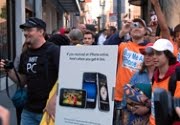
That's up from 56 percent last year and 38 percent in 2008, and represents brand loyalty that is likely unmatched in the mobile industry.
About 16 percent of buyers were switching to AT&T from other carriers, down from 28 percent last year.
Some 54 percent purchased the $299 32 GB model, up from 43 percent who bought the 32 GB iPhone 3GS last year.
About 28 percent of iPhone 4 buyers owned an iPad, which confirms that the people waiting in line were the most serious of the Apple fanatics. Of the 72 percent who did not own an iPad, 39 percent said they would probably buy one within the next year, while 61 percent said they would not.
About 65 percent were Mac owners, down from 75 percent at the first iPhone launch in 2007.
link
Gary Kim was cited as a global "Power Mobile Influencer" by Forbes, ranked second in the world for coverage of the mobile business, and as a "top 10" telecom analyst. He is a member of Mensa, the international organization for people with IQs in the top two percent.
iPhone 4 Reception Issues: Use a Bumper
One of the solutions to the iPhone 4 signal reception issue is to use a rubber bumper, which was designed to protect the phone from physical damage but also keeps skin from touching the antenna, which is the cause of the signal reception problem.
Apparently the left side of the iPhone 4 receives Wi-Fi signals while the right side picks up the 3G signal for calls. And human tissue blocks reception of radio waves. Holding the device, when the antenna is on the exterior of the device, also means the antenna's physical length is affected. That's important because antenna length is proportional to the wavelength of the signals a device is trying to capture.
What seems like long ago, when people used TV antennae on their roofs to pick up broadcast TV, the antenna array was fairly large: feet worth of antennae. That was because the broadcast TV signals had a fairly long wavelength, so one needed a fairly-long antenna to catch the signals.
Cell phone signals are higher frequency, with shorter wavelength, so antennae are correspondingly shorter, measured in inches. But touching the antenna can effectively shorten its length, thus affecting reception, aside from the absorption of some of the signal.
link
Apparently the left side of the iPhone 4 receives Wi-Fi signals while the right side picks up the 3G signal for calls. And human tissue blocks reception of radio waves. Holding the device, when the antenna is on the exterior of the device, also means the antenna's physical length is affected. That's important because antenna length is proportional to the wavelength of the signals a device is trying to capture.
What seems like long ago, when people used TV antennae on their roofs to pick up broadcast TV, the antenna array was fairly large: feet worth of antennae. That was because the broadcast TV signals had a fairly long wavelength, so one needed a fairly-long antenna to catch the signals.
Cell phone signals are higher frequency, with shorter wavelength, so antennae are correspondingly shorter, measured in inches. But touching the antenna can effectively shorten its length, thus affecting reception, aside from the absorption of some of the signal.
link
Gary Kim was cited as a global "Power Mobile Influencer" by Forbes, ranked second in the world for coverage of the mobile business, and as a "top 10" telecom analyst. He is a member of Mensa, the international organization for people with IQs in the top two percent.
iPhone 4 Reception Problems? Stop Holding It The Wrong Way, Apple Says

The advice? Stop holding the phone the wrong way.
Apple sent Engadget the following statement: "Gripping any mobile phone will result in some attenuation of its antenna performance, with certain places being worse than others depending on the placement of the antennas. This is a fact of life for every wireless phone. If you ever experience this on your iPhone 4, avoid gripping it in the lower left corner in a way that covers both sides of the black strip in the metal band, or simply use one of many available cases."
Gary Kim was cited as a global "Power Mobile Influencer" by Forbes, ranked second in the world for coverage of the mobile business, and as a "top 10" telecom analyst. He is a member of Mensa, the international organization for people with IQs in the top two percent.
Thursday, June 24, 2010
Marketing in a Broadband Context
You might be able to pull some nuggets from this presentation.
Gary Kim was cited as a global "Power Mobile Influencer" by Forbes, ranked second in the world for coverage of the mobile business, and as a "top 10" telecom analyst. He is a member of Mensa, the international organization for people with IQs in the top two percent.
Vote: Do You Have Signal Strength Issues on Your iPhone 4?

And don't forget to try it using both hands, left and right. You should get different results.
Gary Kim was cited as a global "Power Mobile Influencer" by Forbes, ranked second in the world for coverage of the mobile business, and as a "top 10" telecom analyst. He is a member of Mensa, the international organization for people with IQs in the top two percent.
Gap Between Revenue and Bandwidth is The Heart of the Matter
One doesn't have to love, or even like, any of the communication providers out there to acknowledge that there is a key business problem here that directly affects any user's ability to get the most out of their communication spending and experience.
The global voice market is declining, first on the fixed line networks and now starting on the mobile networks as well. You don't have to care about that. But if you want better services, you have to acknowledge that if current revenue gets cut in half, then perhaps to a third, the people who run networks will have a hard time investing in better networks. This is not a matter of sentiment but of economics.
Everybody knows that the replacement revenues will have to come from the broadband, video, content mobile, data and commerce services realms. So the practical issue providers have is to scale the new revenues at least up to the point where voice revenue is now. Along the way service providers will have to cut costs as well, but the key issue is new revenues.
And the problem there on the bandwidth services front is that across all networks, revenue does not scale linearly with bandwidth supplied. Since nobody seems to think that can be changed too much, the burden of growth will come on the new applications and services fronts.
That means most issues related to terms of service or price of service are simply efforts to better match cost and revenue for the access part of the business. Nobody thinks the whole problem can be fixed that way, but it is part of the solution, in addition to deploying more-efficient networks and creating new services that people are comfortable paying for.
You don't have to love or like any particular service provider to hope service providers can figure this out. Unless of course you have a way of creating your own services.
The global voice market is declining, first on the fixed line networks and now starting on the mobile networks as well. You don't have to care about that. But if you want better services, you have to acknowledge that if current revenue gets cut in half, then perhaps to a third, the people who run networks will have a hard time investing in better networks. This is not a matter of sentiment but of economics.
Everybody knows that the replacement revenues will have to come from the broadband, video, content mobile, data and commerce services realms. So the practical issue providers have is to scale the new revenues at least up to the point where voice revenue is now. Along the way service providers will have to cut costs as well, but the key issue is new revenues.
And the problem there on the bandwidth services front is that across all networks, revenue does not scale linearly with bandwidth supplied. Since nobody seems to think that can be changed too much, the burden of growth will come on the new applications and services fronts.
That means most issues related to terms of service or price of service are simply efforts to better match cost and revenue for the access part of the business. Nobody thinks the whole problem can be fixed that way, but it is part of the solution, in addition to deploying more-efficient networks and creating new services that people are comfortable paying for.
You don't have to love or like any particular service provider to hope service providers can figure this out. Unless of course you have a way of creating your own services.
Gary Kim was cited as a global "Power Mobile Influencer" by Forbes, ranked second in the world for coverage of the mobile business, and as a "top 10" telecom analyst. He is a member of Mensa, the international organization for people with IQs in the top two percent.
Is the Apple 4 Steel Band Antenna the Problem, or Something Else?
Users are reporting problems with signal reception when the Apple iPhone 4 is held in the left hand, as opposed to the right. But the earlier iPhone 3 also had reception issues, leading one to wonder whether it is a physical issue or a software issue.
It is starting to appear as though every new smartphone has some issues, despite the strengths. HTC Evo users will tell you that despite the bigger battery and beautiful screen, battery life is poor. Poor as in, if you do a lot of web operations, you might have to charge it more than once a day. Of course, iPhone 3 users probably would agree that heavy web use kills battery life as well.
It is starting to appear as though every new smartphone has some issues, despite the strengths. HTC Evo users will tell you that despite the bigger battery and beautiful screen, battery life is poor. Poor as in, if you do a lot of web operations, you might have to charge it more than once a day. Of course, iPhone 3 users probably would agree that heavy web use kills battery life as well.
Gary Kim was cited as a global "Power Mobile Influencer" by Forbes, ranked second in the world for coverage of the mobile business, and as a "top 10" telecom analyst. He is a member of Mensa, the international organization for people with IQs in the top two percent.
Nobody Likes ETFs, But Nobody Wants to Pay Full Retail, Either

Which option do you suspect most people will choose? If you want to know why the hated ETFs exist, it is the subsidy.
AT&T’s ETF on a smartphone like the iPhone is $325, up from $175 in May. Why? Some will carrier greed. But under the old pricing rules, a consumer could buy a phone for $99 on contract, instead of $600. Then the consumer could break the contract, pay the $175 fee, getting the device, without a contract commitment, for $274.
AT&T’s ETF on a smartphone like the iPhone is $325, up from $175 in May. Why? Some will carrier greed. But under the old pricing rules, a consumer could buy a phone for $99 on contract, instead of $600. Then the consumer could break the contract, pay the $175 fee, getting the device, without a contract commitment, for $274.
The customer then could sell the device on eBay or simply sign up for service with no contract.
Nobody likes contracts or ETFs. But nobody wants to pay full retail, either.
Gary Kim was cited as a global "Power Mobile Influencer" by Forbes, ranked second in the world for coverage of the mobile business, and as a "top 10" telecom analyst. He is a member of Mensa, the international organization for people with IQs in the top two percent.
Right-Handed Users May Have Signal Reception Problems on iPhone 4
Most people now know that when using a mobile device, moving the antenna just several feet can sometimes change signal reception. Most people may not know that physical objects such as hands can interfere with signal reception.
It appears Apple's new iPhone 4 may suffer from that problem. Apparently, the iPhone 4 signal strength drops when a user grips the phone by the metal antenna band. Gizmodo has over a dozen videos of users showing off this problem.
When held in the left hand with our fingers touching the metal band, the bars representing signal strength dropped from 5 to 1 in less than a minute.
The problem appears to involve finger-contact on certain parts of the metal band. When the phone is switched to the right hand, which put our fingers in different position, the signal strength remained the same. So for many people, user experience may depend on whether they are left-handed or right-handed.
Right-handed people are going to tend to hold the device in the left hand, and navigate with the fingers of the right hand. That means most people are going to be prone to block the signal themselves, simply based on which hand they are using to hold the device.
And you might have thought mobile phone design was easy!
It appears Apple's new iPhone 4 may suffer from that problem. Apparently, the iPhone 4 signal strength drops when a user grips the phone by the metal antenna band. Gizmodo has over a dozen videos of users showing off this problem.
When held in the left hand with our fingers touching the metal band, the bars representing signal strength dropped from 5 to 1 in less than a minute.
The problem appears to involve finger-contact on certain parts of the metal band. When the phone is switched to the right hand, which put our fingers in different position, the signal strength remained the same. So for many people, user experience may depend on whether they are left-handed or right-handed.
Right-handed people are going to tend to hold the device in the left hand, and navigate with the fingers of the right hand. That means most people are going to be prone to block the signal themselves, simply based on which hand they are using to hold the device.
And you might have thought mobile phone design was easy!
Gary Kim was cited as a global "Power Mobile Influencer" by Forbes, ranked second in the world for coverage of the mobile business, and as a "top 10" telecom analyst. He is a member of Mensa, the international organization for people with IQs in the top two percent.
Subscribe to:
Posts (Atom)
-
We have all repeatedly seen comparisons of equity value of hyperscale app providers compared to the value of connectivity providers, which s...
-
It really is surprising how often a Pareto distribution--the “80/20 rule--appears in business life, or in life, generally. Basically, the...
-
Financial analysts typically express concern when any firm’s customer base is too concentrated. Consider that, In 2024, CoreWeave’s top two ...

